
For travel photographers, Singapore is a dream destination. One of the first things that strikes a photographer in Singapore is the seamless fusion of cultures. Little India, Chinatown, and Kampong Glam are a feast for the senses and the lens. Moreover, Singapore’s skyline is nothing short of iconic. From the ultra-modern Marina Bay Sands to the artistic Supertree Grove at Gardens by the Bay, there’s no shortage of architectural wonders. Finally, Singapore’s street life is nothing short of dynamic. It’s a goldmine for street photographers. From bustling hawker centers to traditional markets, there are endless opportunities to capture candid moments.
There are a lot of top travel bloggers who take excellent travel photos that capture the imagination of their audience; however, there are a select few who really ‘standout’ from the crowd and take things to entirely new level. T-Roy, the man behind Fogg Odyssey, is certanly one of these individuals & I’m thrilled to be featuring a guest photo essay (he’s selected on Singapore) that showcases a variety of stunning shots he took back in 2009 while visiting one of the true pillar cities found in all of South East Asia.

In 2009 I had to exit Thailand for a visa run and decided it was time to explore Singapore. I packed a small bag, bought a cheap ticket from Air Asia and grabbed my camera to see what all the fuse was about on this tiny island nation.
I spent a full week there and even though it’s a lot more expensive then the rest of Asia I quickly fell in love with the country. Moreover, I spent most of my time walking around the city and taking random photos, this is what I got.
Singapore Photo Essay: Singapore Through Travel Photos
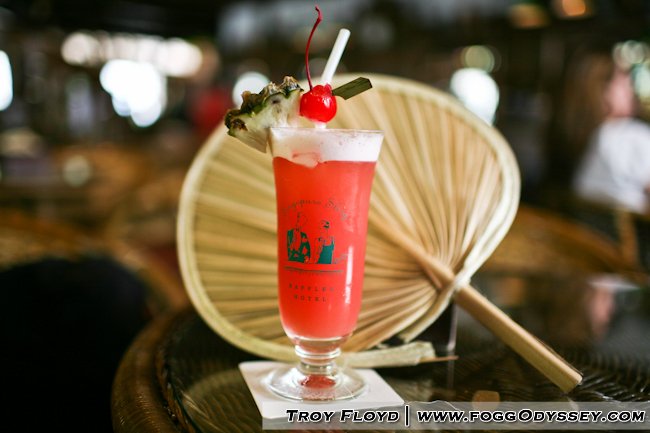
#1) Singapore Sling at the Long Bar in Raffles Hotel
“The original Singapore Sling drink at the famous Long Bar in the Raffles Hotel. Be warned though, one drink costs about $15 USD!”
A Timeless Tradition in an Iconic Setting
The Raffles Hotel, a colonial masterpiece that dates back to 1887. Thus, it holds a significant place in Singapore’s history. The Long Bar, where the Singapore Sling was born in 1915 by bartender Ngiam Tong Boon, is an essential stop to bridge Singapore’s colonial past.
- Colonial ambiance: The bar’s dark wood, old-fashioned fans, rattan furniture, and earthy tones offer rich textures and contrasts.
- Nostalgic decor: The quirky tradition of tossing peanut shells on the floor adds a sense of informality to an otherwise refined space.
- Candid moments: The casual interaction of patrons enjoying drinks and conversation offers numerous candid photographic opportunities.
Photography Tip: Use natural light streaming in from the windows during the late afternoon to capture the warm tones of the bar, enhancing the vintage vibe.
Capturing the Classic Singapore Sling
The Singapore Sling itself is a photographer’s delight. Its bright, vibrant pink color is eye-catching and offers great contrast against the vintage backdrop of the Long Bar. Whether you’re shooting the drink itself, the process of it being made, or someone enjoying it, there are numerous angles and perspectives to explore.
- The drink’s vibrant pink hue pops against the dark, rustic setting.
- The pineapple slice and cherry garnish add a touch of tropical flair to your shots.
- The making of the cocktail offers an action shot as bartenders shake and pour the famous drink.
- Customers sipping their Sling is perfect for lifestyle or candid travel photography.
Photography Tip: Use a shallow depth of field to focus on the cocktail while softly blurring the background, enhancing the drink’s bright, vivid colors.
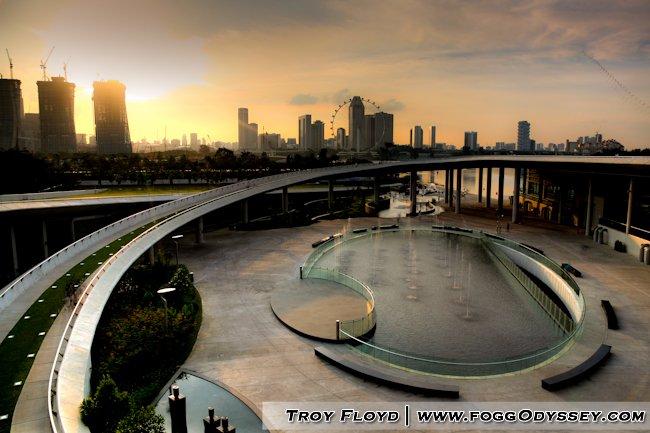
#2 Marina Barrage At Golden Hour
“Marina Barrage… would you believe this is an industrial water plant? Looks more like an art museum doesn’t it?”
Marina Barrage is a modern engineering marvel. Moreover, it serves as a vital part of Singapore’s water supply and flood control system. However, it is more than just a dam. It’s a sprawling, open space where locals and tourists come together to relax and enjoy the outdoors.
Stunning Panoramic Views of Singapore’s Skyline
Marina Barrage offers one of the most picturesque viewpoints of Singapore’s iconic skyline. From this vantage point, photographers can capture panoramic shots that include Marina Bay Sands, the Singapore Flyer, Gardens by the Bay, and towering skyscrapers.
- Sunset reflections: As the sun begins to set, the water surrounding Marina Barrage reflects the golden tones, adding a mirror-like effect to your images.
- Backdrop for portraits: If you’re shooting portraits, the skyline serves as a breathtaking backdrop, making every photo stand out with a mix of urban and natural beauty.
- Dynamic angles: The open space of the barrage allows you to move around and experiment with different angles, whether you’re capturing wide-angle shots of the city or zooming in on architectural details.
Photography Tip: Arrive early before sunset to secure the best spot for your shot and set up your tripod. The changing light during the golden hour moves quickly, so it’s good to be ready for those fleeting moments.
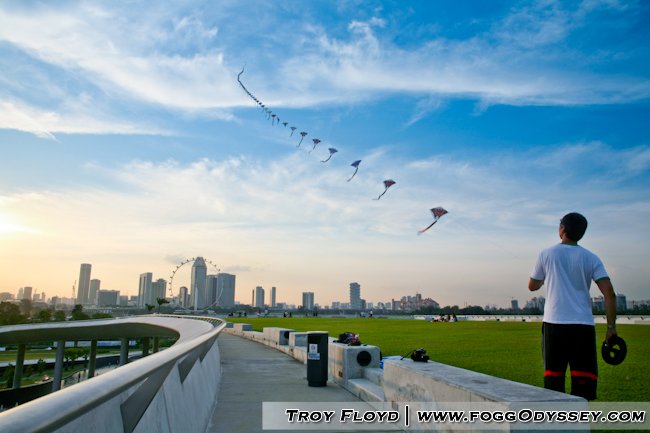
#3) Flying Kites At Grass Park (Marina Barrage)
“On top of the Marina Barrage is a grass park where people are famous for flying kites.”
One of the most memorable and visually captivating experiences for visitors to Marina Barrage is watching, and even participating in, the kite flying at Grass Park. This is an expansive green rooftop lawn area overlooking the skyline of Singapore. For travel photographers, this activity offers not only fun but also an amazing opportunity to capture dynamic, colorful, and candid moments.
A Playful Tradition in a Stunning Location
Kite flying has long been a popular pastime in Singapore. The open sky, combined with the lush green rooftop lawn and panoramic views of the Marina Bay Sands and Singapore skyline, creates an ideal backdrop for this activity.
For photographers, this scene provides endless opportunities for dynamic shots:
- Brightly colored kites soaring against the backdrop of the skyline or the sunset sky.
- Action shots of children and adults alike running and playing as they launch their kites into the air.
- Candid moments of families and friends enjoying a peaceful day outdoors.
Photography Tip: Use a fast shutter speed to freeze the motion of kites flying against the backdrop of the skyline, or try a slower shutter speed to create motion blur for a more artistic effect.
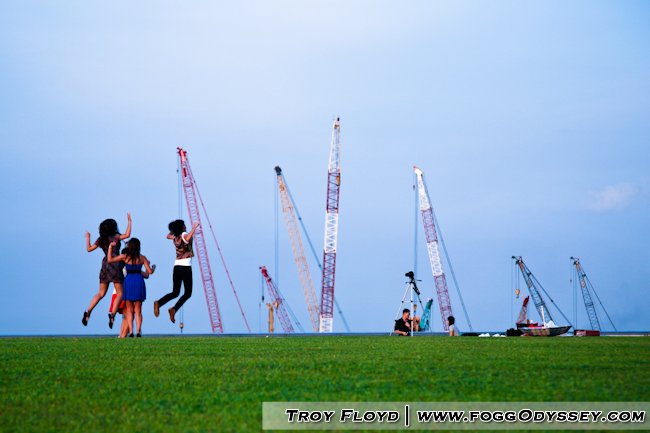
#4) Girls Jumping For A Photo With Cranes In The Background
“Girls jump for a photo with cranes in the background. This was taken on top of Marina Barrage.”
At Marina Barrage, it’s not unusual to spot groups of friends and tourists staging fun and dynamic photos against the backdrop of Singapore’s impressive skyline. One such shot is the “jumping photo”—a group of people leaping into the air with wide smiles, perfectly timed to capture the moment of suspension.
Dynamism and Action in the Photo
Capturing jumping shots brings a sense of action, fun, and energy to your photography. Add to that the cranes and skyline, and you’ve got a unique photo.
- Movement and emotion: These types of shots are great for capturing not only the jump but the joy and excitement of the moment, making for a candid and lively photo.
- Timing and skill: For photographers, capturing the exact moment of suspension in the air takes skill. The timing has to be just right, making the successful capture all the more rewarding.
- Multiple tries for perfection: Don’t be afraid to take several shots to get the perfect jump, as the multiple attempts themselves often lead to spontaneous, laughter-filled moments.
Photography Tip: Use a fast shutter speed (1/1000 sec or faster) to freeze the action, ensuring that you capture the girls mid-air in sharp focus against the scenic backdrop.

#5) Hindu Temple in Singapore
“People might not know it but Singapore is full of Indians and Hindu is a big religion there.”
Visiting the Hindu temples in Singapore is one of the most culturally immersive and visually captivating experiences that travelers and photographers alike can enjoy. As a city known for its multiculturalism, Singapore is home to several stunning Hindu temples that not only serve as places of worship but also as architectural marvels. These temples offer visitors a glimpse into the rich heritage of the local Indian community.
Vibrant Architecture and Intricate Details
The architecture of Hindu temples in Singapore is nothing short of spectacular. Many of the temples are adorned with intricate carvings, colorful statues of gods and goddesses, and towering gopurams (ornate entrance towers), all of which make for fascinating photography subjects.
- Gopuram towers: These towering structures are often the first thing that draws the eye. Covered in brightly painted statues of deities, mythical creatures, and symbolic figures, they are a work of art in themselves and make for stunning close-ups or wide-angle shots.
- Intricate carvings: The level of detail in the carvings found on temple walls, ceilings, and pillars is incredible. Photographers can capture these intricate designs to highlight the craftsmanship and devotion that went into building these temples.
- Colorful statues: Hindu temples are known for their use of vibrant colors. Statues of gods and goddesses are typically adorned in colorful paints, creating a lively and photogenic contrast against the backdrop of the temple.
Photography Tip: Use a zoom lens to capture the fine details in the statues and carvings, especially on the gopuram towers. A wide-angle lens will help you capture the grandeur of the entire temple facade.

#6) Cosplay Costume In Singapore
“A girl dressed up for an event called Cosplay. Big in Asia it’s where you dress up as your favorite cartoon character and you can see people who actually go to work looking like this sometimes.”
Cosplay—the practice of dressing up as characters from anime, manga, movies, and video games—has grown into a global phenomenon, and Singapore has become one of the key hubs for this creative expression in Southeast Asia. For travel photographers, capturing cosplay in Singapore offers a unique photographic experience that blends pop culture, artistry, and local creativity.
An Explosion of Color and Creativity
Cosplayers put an immense amount of effort into crafting their costumes. And this attention to detail translates into stunning visuals.
- Vibrant costumes: Many cosplay costumes feature bold, eye-catching colors that pop against the backdrop of Singapore’s urban landscape, creating striking and dynamic compositions.
- Handmade details: The majority of cosplayers create their costumes by hand, resulting in unique outfits with incredible detail. From elaborate wigs to intricately designed armor, these details make for fascinating close-up photography.
- Thematic variety: Whether it’s anime characters with pastel-colored wigs or superheroes with metallic suits, the diversity in costume themes means that photographers can capture a wide range of subjects, each telling a different visual story.
Photography Tip: Use a wide aperture (f/2.8 or lower) to create a shallow depth of field, isolating the cosplayer against the background and drawing attention to the details of the costume.

#7) The Durian AKA The Esplanade at night in Singapore
“The Esplanade is a theater center for performing arts. Like the Sydney Opera House it’s a national symbol for Singapore.”
The Esplanade – Theatres on the Bay, affectionately nicknamed “The Durian” because of its spiky, durian-like appearance, is one of Singapore’s most iconic landmarks. By day, the Esplanade is a bustling hub of art and culture. But at night, it transforms into a photographer’s paradise, bathed in stunning light and framed by the glittering skyline of Marina Bay.
Architectural Masterpiece Lit Up
The Esplanade’s distinctive spiky domes are a marvel of modern architecture. They resemble the thorny shell of the durian fruit, which is beloved (and occasionally feared) in Southeast Asia. At night, the domes are illuminated by soft, ambient lighting that highlights their intricate geometric patterns, creating a striking contrast against the dark sky.
- Illuminated spikes: The spiky domes of The Esplanade take on an otherworldly glow at night, creating stunning compositions for both wide-angle shots and close-up architectural details.
- Symmetry and structure: The unique symmetry of the structure, coupled with its modern design, provides photographers with endless opportunities to experiment with angles, leading lines, and reflections.
- Golden hour to blue hour: As night falls, photographers can capture the transition from golden hour to blue hour, a magical time when the warm glow of the setting sun meets the cool tones of the evening sky, enhancing the visual impact of The Durian.
Photography Tip: Use a tripod to capture sharp, long-exposure shots of the illuminated structure at night. This will allow you to capture the glow of the lights while also keeping the architectural details crisp.

#8) Boy Playing At A Fountain In Singapore
“A boy playing in a fountain inside a shopping center.”
In a bustling city like Singapore, there’s beauty not just in the architecture or iconic landmarks, but in the small, candid moments that unfold in public spaces. One such scenario is the sight of a a simple yet joyful moment that embodies the spontaneity of urban life.
Capturing the Joy of Everyday Life
- Emotional connection: These candid moments capture genuine emotion and tell a story beyond what posed shots offer. The interaction between the environment and the subject becomes a focal point for photographers to create evocative images.
- Cultural insight: Observing how locals interact with public spaces, such as fountains, parks, and open areas, gives photographers a chance to capture the everyday essence of life in Singapore.
Pro Tip: Use a fast shutter speed (1/1000 sec or faster) to freeze moments of motion, such as a child running through a fountain. This will keep the action sharp and lively, capturing the spontaneity of the moment.
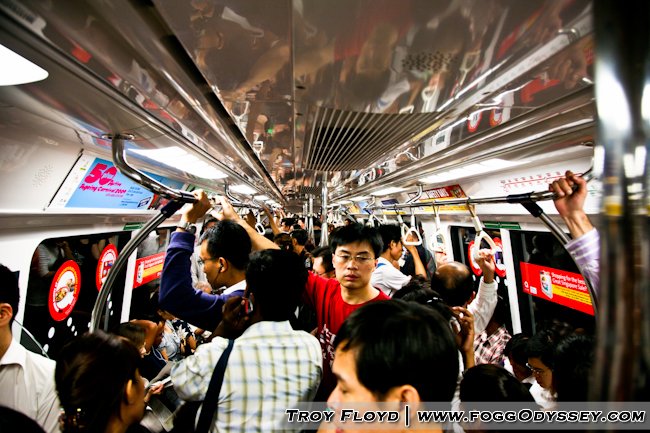
#9) Singapore Metro During Rush Hour
“The metro system in Singapore is one of the best in the world. Every 500m is a stop and it’s very affordable but yes it sometimes can get over crowded at certain times.”
The Singapore Metro, also known as the Mass Rapid Transit (MRT) system, is a convenient way to travel around the city. But it also is a vibrant, fast-paced environment that offers unique opportunities for travel photographers. During rush hour, the MRT transforms into a bustling hub of activity, with a sea of commuters navigating the efficient and clean system. For photographers, the MRT system offers a chance to capture the rhythms of daily life.
Capturing Urban Life in Motion
During rush hour, the Singapore Metro is alive with the motion of commuters. This offers photographers a chance to capture the bustling, kinetic energy of a global metropolis. The constant flow of people moving through the stations and train cars provides dynamic subjects for photographers who want to convey a sense of speed, movement, and purpose.
- Fast-paced environment: The sheer number of people moving through the MRT during rush hour creates a vibrant, dynamic atmosphere, perfect for capturing motion and action in your photos.
- Commuter culture: The diverse mix of commuters—business professionals, students, tourists, and families—gives photographers the chance to capture a snapshot of life in Singapore. This diversity reflects the cosmopolitan nature of the city.
- Flow of humanity: The long lines of people boarding and exiting trains, the rush through corridors, and the packed platforms create an ideal setting to capture the rhythm of urban life.
Photography Tip: Use a slow shutter speed (1/30 sec or slower) to capture the blur of moving commuters, while keeping stationary objects like the platform or signs sharp. This creates a dynamic contrast that emphasizes the energy and movement of the rush hour crowd.

#10) Singapore Distinct Architecture – Tall Modern Buildings – At Night
“…and one last shot of the beautiful city at night. It really is a photographers dream place!”
Singapore is often referred to as a city of the future. Nowhere is this more evident than in its distinct architecture. The city is a stunning blend of ultra-modern skyscrapers, futuristic designs, and green urban landscapes. The tall, modern buildings of Singapore, illuminated against the night sky, create a dazzling display of light and form, making it one of the best cities in the world for nighttime architectural photography.
Striking Skyline and Iconic Landmarks
- Marina Bay Sands: Arguably one of the most iconic buildings in the world, Marina Bay Sands stands out with its boat-shaped infinity pool perched atop three high-rise towers. At night, the building is lit in various colors, reflecting off the waters of Marina Bay and creating perfect symmetry for photographers.
- The Esplanade – Theatres on the Bay: Known locally as The Durian for its spiky architectural design, the Esplanade is a stunning structure to capture at night. With its unique geometric design, it contrasts beautifully with the other modern buildings around it.
- One Raffles Place: As one of the tallest buildings in Singapore, One Raffles Place adds to the dynamic skyline, providing a striking backdrop for nighttime photography. Its illuminated façade and reflections in the surrounding waters create ideal conditions for photographers looking to capture urban lightscapes.
Pro Tip: The best vantage points for capturing the skyline include Marina Barrage, Helix Bridge, and Merlion Park. Shooting from across Marina Bay provides the perfect opportunity to photograph the reflection of the skyline in the water.
Turning a Singapore Photo Stop into a Real Trip
If you’re scrolling through Singapore photos thinking, “Nice… but what would I actually do there?” you’re exactly who this add-on is for.
Singapore is one of those rare cities where you can land with jet lag, stumble into the heat, and still have a fantastic time with very little planning. It’s compact, safe, easy to navigate, and ridiculously photogenic – but it also rewards you if you slow down and poke around a bit beyond Marina Bay.
Think of it as a city where your camera is busy, your taste buds are spoiled, and your feet do just enough walking to justify another plate of chicken rice.
Neighbourhoods You Don’t Want to Miss
Singapore is small, but the neighbourhoods all have their own personality. If you only bounce between Marina Bay and your hotel, you’re missing the good stuff.
Here’s a quick cheat sheet:
| Neighbourhood | Vibe | Best For | How Long to Spend |
|---|---|---|---|
| Marina Bay | Futuristic, polished | Skyline shots, night photography | Half–1 day |
| Chinatown | Historic yet lively | Temples, shophouses, street food | Half–1 day |
| Little India | Color, chaos, incense | Markets, temples, portraits | Half–1 day |
| Kampong Glam | Hip + heritage | Street art, cafés, textiles | Half day |
| Tiong Bahru | Art deco + café culture | Brunch, quieter street scenes | 2–3 hours |
| Heartlands (HDB) | Everyday local life | Real-life Singapore, markets | 2–3 hours |
Marina Bay & The Civic Core
This is the Singapore that shows up on postcards.
You’ve got Marina Bay Sands, the ArtScience Museum, the Helix Bridge, Merlion Park, and the durian-shaped Esplanade all within walking distance of each other. If you’re into cityscapes, you could happily spend an entire afternoon into night just orbiting the bay.
A simple Marina Bay loop:
- Start late afternoon around the Esplanade.
- Cross the Helix Bridge as the light turns golden.
- Wander by Marina Bay Sands and the waterfront promenade.
- Swing around to Merlion Park for classic skyline reflections after dark.
If you’re chasing photos, golden hour and blue hour are your best friends here. The same skyline looks completely different as the lights come on and boats start streaking across the water.
Chinatown: Temples, Shophouses, and Food Stalls
Chinatown is where you get a dense mash-up of old shophouses, temples with incense curling into the ceiling, and neon-lit food streets.
Great things to do in Chinatown:
- Duck into a temple and spend some time watching the rituals (respectfully, of course).
- Wander the side streets rather than sticking to the main drag.
- Hit a hawker centre for cheap, gloriously good meals.
- Look up – some of the best details are above eye level on shophouse facades and balconies.
It’s worth coming twice if you can swing it: once in the daytime for the details and once at night for the lights and food stalls.
Little India: Colour Turned Up to Eleven
If your camera loves colour, Little India is non-negotiable.
Here you’ve got:
- Narrow streets packed with shops selling garlands, sweets, bangles, and spices.
- Temples with extremely detailed gopurams and constant movement around the entrance.
- Brightly painted buildings that feel like they were designed specifically for wide-angle lenses.
It’s a great place to:
- Practice low-light street photography inside markets.
- Capture portraits and details (ask permission and be respectful around temples).
- Take a break with a strong tea or a plate of something spicy and delicious when the heat catches up with you.
Go late afternoon, linger through dusk, and watch the lights slowly take over.
Kampong Glam & Arab Street: Heritage Meets Hipster
Kampong Glam is the old Malay–Arab quarter, but these days it also doubles as one of Singapore’s trendiest neighbourhoods.
Here you’ll find:
- The golden-domed Sultan Mosque anchoring the area.
- Narrow lanes filled with independent boutiques, cafés, and street art.
- A mix of traditional textile shops and very modern coffee culture.
This is a perfect “walk, snack, shoot, repeat” neighbourhood. The lanes are tight, the walls are colourful, and there’s always a corner where someone is painting, practicing music, or just hanging out in front of a shop.
Tiong Bahru & the Heartlands
When you’ve had enough of polished downtown Singapore, head to the “heartlands” – the HDB (public housing) estates where most people really live.
Tiong Bahru is the gentlest entry point:
- Art deco low-rise blocks.
- A wet market.
- Cool cafés and bakeries tucked between very ordinary shops.
From there, you can explore deeper into other HDB areas. Grab a drink at a kopitiam (local coffee shop), sit for a while, and just watch normal life unfold. For photos, this is where you get laundry on balconies, kids on playgrounds, uncles playing chess, and a completely different side of the city than Marina Bay.
Eating Your Way Around Singapore (Without Going Broke)
You can spend serious money on food in Singapore. But you really don’t have to.
Hawker centres are your best friend: open-air food courts where each stall specializes in one or two dishes and has been perfecting them for years. This is where you find noodles, rice dishes, satay, laksa, kaya toast, fresh juices – the good stuff.
Rough daily food expectations per person:
| Style | Breakfast | Lunch & Dinner | Snacks & Drinks | Approx. Daily Spend |
|---|---|---|---|---|
| Budget | Hawker kopi + toast | Two hawker meals | Water, occasional dessert | 20–30 SGD |
| Mid-range | Hawker + café mix | One hawker meal + one sit-down | Bubble tea / bar drink | 35–60 SGD |
| Foodie | Café brunch | Hawker lunch + restaurant dinner | Cocktails, desserts | 60+ SGD |
A simple “food lover’s day” might look like:
- Morning: Kopi and kaya toast at a local kopitiam.
- Late morning: Snack on a curry puff or pandan cake.
- Lunch: Chicken rice or laksa at a hawker centre.
- Afternoon: Iced coffee or bubble tea when the humidity crushes your soul.
- Evening: Satay, stingray, noodles, and beer at a night-time hawker spot.
You’re never more than a short walk or MRT ride from good food. The real trick is pacing yourself so you don’t peak by 2 pm.
Where to Stay in Singapore
The good news: almost everywhere is safe and well-connected. The less-good news: accommodation can eat a chunk of your budget.
Here’s a quick area comparison if you’re trying to decide where to base yourself:
| Area | Atmosphere | Good For | Pros | Cons |
|---|---|---|---|---|
| Marina Bay | Polished, futuristic | Short stays, “treat yourself” trips | Big views, central, iconic hotels | Pricey, can feel a bit corporate |
| Orchard Road | Shopping-centric | Shoppers, first-timers | Easy transport, lots of amenities | Less character, very commercial |
| Bugis/Bras Basah | Lively, youthful | Budget–mid travellers, museum lovers | Central, walkable, lots of food | Busy traffic and crowds |
| Chinatown | Historic, atmospheric | Foodies, night owls, budget to mid-range | Character, great eats, MRT nearby | Can be noisy near main streets |
| Little India | Colourful, slightly chaotic | Budget travellers, food & culture fans | Cheaper stays, lots of food options | Busy, sensory overload for some |
| Clarke/Robertson Quay | Riverside, nightlife | People who like bars, restaurants | Evening atmosphere, river walks | Night noise, mid–high prices |
If you’re only in town for a few days, somewhere around Bugis, Chinatown, or Bras Basah hits a nice balance between budget, character, and easy MRT access.
Getting Around Singapore Without Stress
The city is one giant lesson in how public transport should work.
MRT and Buses
The MRT (metro) is clean, fast, and intuitive. Buses fill in the gaps.
Practical pointers:
- Grab a stored-value transport card or use a contactless bank card so you can tap in and out.
- Trains and buses are air-conditioned – a minor miracle after walking in the humidity.
- Most tourist hotspots are on or near major MRT lines.
If you want to keep it simple: plan your days around MRT lines, then stretch into bus rides once you’re comfortable.
Taxis and Ride-Hailing
Taxis and ride-hailing apps are handy for:
- Early-morning flights.
- Late-night returns when you just can’t face another connection.
- Moving between less-connected neighbourhoods in the heat.
They’re more expensive than public transport, but shared between two or three people they’re still reasonable for the occasional splurge.
Best Time to Visit Singapore
Here’s the honest answer: Singapore is hot, sticky, and fairly wet all year round.
You don’t come here for crisp, cool air. You come for warm evenings, thunderstorms that roll in like clockwork, and the kind of humidity that gives your camera lens a free sauna session.
That said, you can still tilt things in your favour:
- Expect short, intense downpours rather than all-day rain.
- Carry a small umbrella or light rain jacket.
- Use rainy periods to duck into malls, museums, or long lunch breaks.
Festival seasons are particularly fun:
- Lunar New Year – Chinatown goes into full celebration mode.
- Deepavali – Little India bursts with lights and decorations.
- Hari Raya – Kampong Glam and Geylang Serai are especially lively.
The trade-off: more crowds and higher hotel prices, but also maximal atmosphere. If you don’t like crowds, target shoulder months between major holidays and school breaks.
Simple Singapore Itineraries You Can Steal
You don’t need a complicated plan, but having a rough structure helps you avoid zigzagging around the map.
2-Day Singapore Stopover
Perfect if you’re using the city as a gateway to Indonesia, Malaysia, or beyond.
Day 1 – Icons and Skylines
- Morning: Arrive, drop your bags, get a feel for your neighbourhood.
- Midday: Head towards Marina Bay, grab lunch en route.
- Afternoon: Walk the bay loop – Helix Bridge, Marina Bay Sands, ArtScience Museum.
- Evening: Blue hour and night shots of the skyline from Merlion Park or across the water.
Day 2 – Culture & Hawker Food
- Morning: Start in Chinatown – temple, shophouses, coffee.
- Lunch: Hawker centre feast.
- Afternoon: Hop to Little India or Kampong Glam for more neighbourhood contrast.
- Evening: Pick a busy hawker spot or riverside area for a final dinner and people-watching.
4-Day “Slow” Singapore
This is a nicer pace if you actually want to breathe between meals.
Day 1 – Marina Bay & The Esplanade
- Golden hour city views, long exposures, and a night walk around the bay.
Day 2 – Chinatown + Tiong Bahru
- Historic streets, temple visits, then cafés and markets in Tiong Bahru.
Day 3 – Little India + Kampong Glam
- Morning incense and markets.
- Afternoon coffee and street art near the Sultan Mosque.
- Evening stroll and dinner somewhere atmospheric.
Day 4 – Heartlands & Night Shoots
- Explore an HDB neighbourhood.
- Finish with one last “tour de lights” around Marina Bay, the Helix Bridge, or the Esplanade.
Beating the Heat and Staying Camera-Ready
You don’t fully understand Singapore humidity until you’ve watched your lens fog up the moment you step outside.
A few small habits really help:
- Alternate indoor and outdoor stops so you’re not roasting for hours.
- Carry a small microfibre cloth for both sweat and lens condensation.
- Refill your water bottle whenever you can; dehydration sneaks up on you here.
- Dress light, breathable, and comfortable – this isn’t the city to test-drive heavy denim.
For photographers:
- Give your camera a minute to acclimatize when you step from air-con into the heat.
- Early mornings and late afternoons are more forgiving for both you and your gear.
- Even if you’re not into heavy tripods, a small travel tripod or mini support is worth it for night shots.
Singapore Travel Photo Questions Answered: Practical Tips, Itineraries & Local Insights
Is Singapore really worth more than just a quick airport stopover?
Absolutely. Singapore works as a layover, but it really shines when you give it at least a couple of full days. Once you start wandering through Chinatown, Little India, Kampong Glam, Marina Bay and some of the heartland neighbourhoods, it stops feeling like a glossy stopover and more like a layered city you actually want to explore. If you’re into photography, food and easy logistics, it punches way above its “tiny country” reputation.
How many days should I spend in Singapore if I love photography?
It depends. If you’re on a tight schedule, two full days lets you hit Marina Bay, one or two cultural neighbourhoods and a hawker centre or three. Three to four days is the sweet spot for photographers: you can do Marina Bay day and night, mix in Chinatown, Little India, Kampong Glam, and still have time for Tiong Bahru or an HDB heartland stroll. A week isn’t overkill if you like slow mornings, night shoots and revisiting spots in different light.
When is the best time of year to visit Singapore for good weather and photos?
Technically, there isn’t a “bad” time because Singapore sits near the equator and is hot and humid year-round, with daytime highs usually around 30–32°C and warm nights. The wetter period tends to run roughly November to January, while February to April is often a bit drier and slightly more comfortable. July to September can be great for festivals, events and night shots around Marina Bay, even if showers still roll through. Whenever you come, plan for sudden downpours and use rainy spells as an excuse for long lunches, museums and editing sessions.
Is Singapore safe to wander around with a camera, even at night?
Yes. Singapore consistently ranks as one of the safest cities in the world, and walking around with a camera at night in busy areas like Marina Bay, Clarke Quay or around the major neighbourhoods generally feels very comfortable. Petty crime rates are low, public transport is well lit, and there’s a visible security presence. That said, I still treat my gear with the same basic common sense as anywhere else: don’t leave bags unattended, avoid wandering into deserted corners at 3 am, and keep an eye on your belongings in crowded MRT trains or malls.
What are the must-visit areas in Singapore if I want great photo spots?
For classic skyline shots, Marina Bay and the Esplanade waterfront are non-negotiable. For colour and culture, you want Chinatown, Little India and Kampong Glam, each with its own temples, street life and architecture. Tiong Bahru and the HDB heartlands give you more everyday local scenes, from markets to laundry-draped balconies. Add in Marina Barrage for sunset, Gardens by the Bay for futuristic silhouettes, and the riverside around Clarke and Robertson Quay for evening atmosphere, and you’ve got a pretty packed photo hit list.
Where should I base myself in Singapore as a first-time visitor?
If you want a good balance of character and convenience, areas like Bugis, Bras Basah, Chinatown and around City Hall make a great base. You’re close to multiple MRT lines, hawker centres and late-night food, and you can reach Marina Bay quickly without paying Marina Bay hotel prices. Little India is a good call for budget travellers who don’t mind a bit of sensory overload, while staying near Clarke or Robertson Quay works if you like riverside bars and restaurants. I only recommend Marina Bay itself if you’re happy to pay more for the view and hotel experience.
How expensive is Singapore really, and what’s a realistic daily budget?
Honestly, your biggest cost is usually accommodation. Food and transport can be surprisingly friendly if you lean into hawker centres and public transport. A bare-bones, budget-conscious traveller who mostly eats at hawker centres, uses MRT and buses, and picks a simple guesthouse or hostel might land around 70–100 SGD per day. A mid-range traveller who mixes hawker meals with cafés and restaurants, stays in a decent hotel and uses the occasional taxi is more in the 130–220 SGD range. If you’re chasing rooftop bars, big-name hotels and tasting menus, there’s really no upper limit.
How do I get around Singapore to reach all these neighbourhoods and photo spots?
The MRT does most of the heavy lifting. Lines are clearly marked, stations are air-conditioned, and most major photo spots sit within a short walk of an MRT stop. Buses fill in the gaps and are also clean and easy to use once you get the hang of the routes. For late nights, early flights or those “I’m melted and done” moments, taxis and ride-hailing apps are a nice backup. The city is compact, so you’re rarely more than 20–30 minutes away from your next shoot location.
Do I need a special card or pass for Singapore’s MRT and buses?
Not strictly. Many visitors now just tap in and out with a contactless bank card on the MRT and buses, which keeps things simple if your home bank doesn’t charge nasty foreign transaction fees. Alternatively, you can pick up a stored-value card like EZ-Link or NETS that you top up as you go, which is handy if you’re in town for a few days and riding a lot. There are also tourist passes that offer unlimited rides for one to three days, which can be good value if you’re criss-crossing the city non-stop.
Can I fly a drone in Singapore to get aerial shots of the skyline?
Not really. Singapore has pretty strict drone regulations and a lot of sensitive airspace, especially around Marina Bay, the port, and built-up areas. Recreational drone flying is heavily controlled, permits are required in many situations, and there are serious penalties for breaking the rules. If aerial photography is important to you, double-check the latest guidelines from the local aviation authority before you travel, and be prepared that central, iconic spots are often effectively off-limits for casual drone use.
What kind of camera gear works best for shooting Singapore?
You don’t need a huge kit, but a flexible one helps. A wide-angle lens is great for skylines, Marina Bay, temples and tight urban streets. A standard zoom or fast prime in the 35–50mm range works well for street photography, markets and portraits. A light telephoto is useful if you enjoy compressing cityscapes or isolating architectural details. Because Singapore shifts from blinding sun to dark thunderclouds and neon-lit nights, I like having a small tripod, spare batteries, a fast memory card and maybe a lens cloth permanently in my bag.
Are there any etiquette or cultural tips photographers should know in Singapore?
Yes. Singapore is very used to cameras, but it still pays to be thoughtful. Around temples and mosques, look for signage about photography, remove your shoes when required, and avoid shooting people in prayer at close range. In markets and on the street, a smile and a quick gesture to your camera goes a long way if you’re taking closer portraits. Avoid blocking busy entrances, escalators or MRT doors just to nail a shot, and dress modestly if you’re heading into religious or more traditional areas.
Is Singapore a good destination for families or solo travellers who love taking photos?
Absolutely. For families, the city ticks a lot of boxes: safe, clean, good healthcare, easy transport, and plenty of malls and indoor spaces when the heat gets too much. Kids tend to love things like Gardens by the Bay, Marina Barrage kite flying, the zoo and just riding the MRT. Solo travellers get the benefit of feeling very secure walking around with gear, even at night, while still having lots of social spaces like hawker centres, hostels and tours if they want to meet people. It’s an easy “soft landing” city that still feels exciting.
What should I pack and wear for walking and shooting in Singapore’s heat?
Lightweight is the name of the game. Think breathable shirts, shorts or light trousers, and footwear you can happily walk in all day. A small umbrella or packable rain jacket is handy for sudden showers, and a hat plus sunscreen will save you during midday walks. For your camera, bring a microfibre cloth to deal with fogged lenses when you step out of air conditioning, and maybe a small dry bag or pouch in case you get caught in a downpour between MRT stops. The vibe is casual, so there’s no need to dress up unless you’re hitting a fancy bar or restaurant.
Can I see much of Singapore on a long layover, or do I really need to stay overnight?
You can do a lot with a solid layover, especially if you’re already checked in for your next flight. A 6–8 hour daytime window can be enough to clear immigration, ride the MRT into town, do a simple Marina Bay loop on foot, eat at a hawker centre and get back with time to spare. An overnight or two just takes the pressure off, lets you photograph the skyline at blue hour, and gives you time for an extra neighbourhood like Chinatown or Little India. If your flights line up, treating Singapore as a mini city break instead of a rushed airport escape is usually worth it.
Little Things That Make Singapore Easier (and More Fun)
A few final bits that don’t fit neatly anywhere else but can make a big difference:
- Cashless is common, but having some small bills for hawker centres is still useful.
- Queues are a way of life; if you see a line at a food stall, it’s often worth joining.
- Dress modestly if you’re visiting temples (shoulders and knees covered); it’s appreciated.
- Singapore is incredibly safe, but still keep an eye on your bag in crowded MRT trains.
- Don’t try to cram everything into one visit – leave a few corners unexplored so coming back feels justified.
If those Singapore travel photos have already planted a seed in your mind, a short trip will likely turn it into a full-blown crush. The city has that effect. One minute you’re just here because the flights were cheap, and the next you’re plotting all the angles you didn’t shoot and all the dishes you didn’t get to eat.
That’s when you know a place has you.
Connect with Troy Floyd

T-roy is taking an extended holiday from being responsible. Quitting his 6-figure salary job that was killing him with 12hr work days, he decided that this wasn’t the life. He moved to Thailand and spent 3 months living a humble backpackers life and loved the experience so much he kept going. He’s currently hanging out in Medellin, Colombia doing photography work while running his own travel blog www.foggOdyssey.com. You can also connect with him on Facebook or Twitter.
Singapore isn’t “full of Indians”. If Singapore is full of Indians, then America is full of blacks. Most indians are in Singapore as foreign construction workers. Indians who are Singaporean citizens are less than 10% of the country. Singapore is 75% Chinese. We are also the only Chinese majority territory in the world outside of Greater China.
You have captured the best shots of Singapore. The lovely shots, I have ever seen. Singapore has always been a beautiful destination spot to travel.
Great shots…Singapore is at the top of my list…
Thanks DJ, it’s a very diverse and clean city to visit 🙂
Awesome…Singapore is very beautifully capture through the lenses…thanks for sharing…
Travel Service In Singapore
Great photos. It looks like I should spend more than 24 hours – possibly with Swine Flu – in Singapore next time I’m in the area! I think my favorite is Marina Barrage. Thanks for sharing!
Thanks Greg, I was really happy to have this photo essay by T-Roy on my site. He’s an awesome photographer.
Beautiful photography T-Roy!
I went to Singapore when I was young and really want to go back again soon – these photos just reinforce that want!
Thanks Nicole, it’s definitely an impressive gallery.
WOW – such vibrant, gorgeous photos! My favorite shot is the one of the Hindu temple – love how intricate they are =D
Maria, thanks for checking it out – T-Roy’s a talented dude!
I meant T-Roy:)
T-Roy’s photos are certainly stellar
Wow!!!! Singapore is one of those countries that you think you know something about, but really nothing at all comes close to what it really is.
You captured it beautifully!!!
These are absolutely stunning photographs! Singapore is one of my favourite big cities and being there was the first time on my current RTW trip that I wished I had a tripod when I saw the harbour at night.
Thanks for sharing these shots!
Lily
Thanks Lily, I appreciate T-Roy sharing them here.
The metro shot definitely reminded me of Hong Kong- and I love the kite flying one! Great selections
T-Roy did a great job of capturing the diversity of the city.
Great photo of Singapore. Troy’s images always ROCK.
Definitely agree with you on both counts 🙂
I’m a big fan of Troy’s — and images like these are the reason why 🙂
Raymond, so am I – he knows what’s he’s doing behind the lens.
Singapore has such an awesome nightlife too.
Michael, wish I could have experienced that! I was getting low on funds when I was went to Singapore in 2008 🙂
Gorgeous photos! Singapore has changed so much from when I was there (over ten years ago) – I really want to go back…
same to you girl, your work always gets my attention! 🙂
sorry that was for Beers and Beans! lol Been drinking.. again! 🙂
I love Troy’s photos too and these are fantastic!
ok, since I posted your reply on the wrong comment I’ll leave inspiringtravellers.com comment here to hep balance it out! lol
“I just check out your photos on Istanbul, way cool shots, esp the ones inside the church!”
Thanks Beth! He really captured Singapore well in this gallery. I was there in 2008 (prior to using a dSLR) and I wouldn’t dare show anything on my blog from that time 😛
Great collection – we’ve enjoyed following T-roy’s adventures and awesome photography.
Yeah, when I was discovering travel blogs I was instantly drawn to his photos.
Loved this but loved old Singapore even better. First visit was 2 weeks stay in ’74 and we loved the old owner operated shops along the now modern highways and streets. The smell of dried fish everywhere, the street vendors and food markets. A very modern city now, but it’s lost it’s appeal for us. However, it’s a great stopover city on those long haul flights from NZ to the rest of the world.
Jim, I can imagine the city has transformed itself and would look nothing like it did in ’74. I think that’s the story of many modern cities in Asia. I know in Seoul even a 5 year period brings about a lot of change.
I’ve always love Fogg Odyssey’s photos. They’re always amazing. Love the Marina Barrage photo during sunset. Singapore is such a futuristic city in a tropical surrounding. That’s why its so appealing to me. Been there like 20 times back when I used to live in Malaysia and will definitely go there again. Great article!
Thanks Amer, it’s a great city and quite unique in the region. I find it impressively clean and modern – although it lacks a bit of the hustle and bustle that make places like BKK & KL so fascinating.
Sweet pics man. Did you get any good shots of the Singapore flyer? I didn’t pay to get on in London so sure as heck not going to in Sing, but it looked impressive.
Singapore was so expensive. Wayyyy to expensive.
Mica, Singapore is really expensive! Especially compared to anywhere else in SE Asia. It’s the only place in SE Asia that I’ve ever stayed in a dorm (which was double the price of a normal guest house in neighbouring Malaysia).
Really amazing photos, Troy! When are you coming back to Vegas?
Vegas… heck I don’t know even when I’ll be back in the US. Plan to stay in South America till the end of the year I think. Afterwards who knows but always a trip to Vegas is fun. I wish it hadn’t been raining when I went last time. I’d like to do more photography when there this time. 🙂
Beautiful!!
Thanks Jordan – T-Roy has some skills!
Wow, these photos are unreal. I love that they capture so many aspects of the place as well. I’ve never been to Singapore but have been told that it’s a bit sterile- these photos seem to indicate that it’s anything but.
I heard the same thing but in a way I liked that it was so clean. Was a stark contrast to the rest of Asia that is for sure. Will say though that maybe they have a tad to many malls for my liking but thats all good i guess! lol 🙂
Postcard quality pictures! My first and last trip to Singapore was in October 2009. Hoping to go back soon! *fingers crossed*
Thanks… but if you want to see some postcards I have done you can actually check them out on my site. I did a bunch on India and have to say by the end I was getting better and better at making them. 🙂
Thanks… but if you want to see some postcards I have done you can actually check them out on my site. I did a bunch on India and have to say by the end I was getting better and better at making them.
These photos are adding colourful grist for the (Singapore) mill. Thanks, T-Roy and Sam!
Glad you liked but what is “Singapore mill”?
Incredible stuff, Troy!!
Thanks Phil, was a fun week there and ended up being some of my best shots in all of Asia.
Amazing images , Singapore is a vibrant city!
Thanks, I agree with you. I was last there in 2008.
Gorgeous shots. Reminds me a bit of Hong Kong – we’ll have to get to Singapore while we’re in Asia.
Agree, would love to go back to Hong Kong and photograph, esp now that I know what I am doing.