
There is a very specific kind of delirium that sets in around hour seventeen of an overnight bus ride down the Argentine coast. You wake up physically vibrating from the engine, staring out the window at an endless, dusty void of scrub brush, only to realize you are still six hours away from your destination. When Audrey and I finally stumbled off that bus in Puerto Madryn, operating in pure, unadulterated “zombie mode,” we bypassed the scenic waterfront entirely. Instead, we dragged our luggage three blocks inland, fueled by a primal need for survival, and ordered a massive pizza—half shrimp, half anchovy. That greasy, glorious, salt-heavy slice was our initiation into the physical toll of this region.
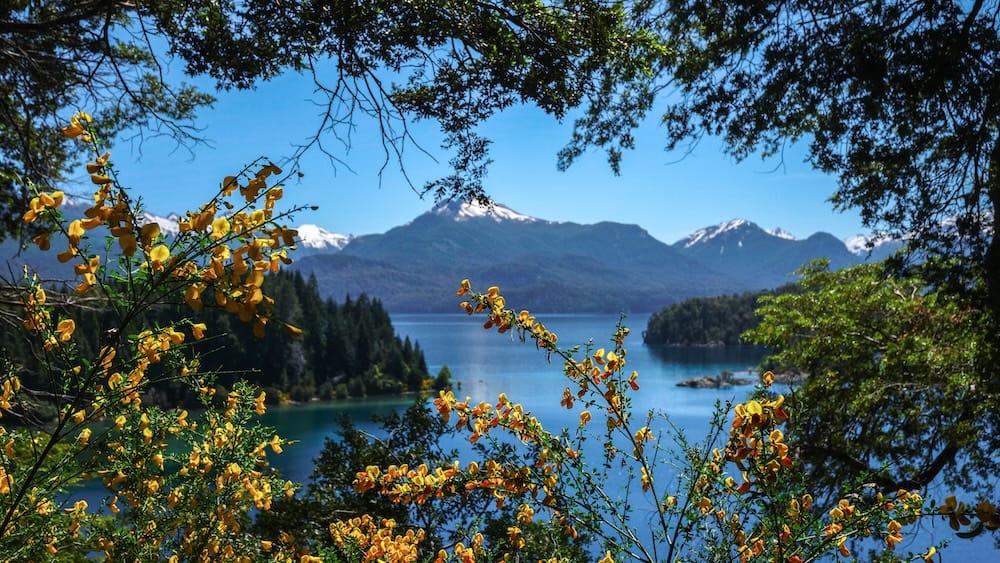
Patagonia does not care about your carefully curated Pinterest board. It is massive, unforgiving, and logistically punishing if you aren’t prepared. Over the years of building out our Samuel & Audrey YouTube channel, we’ve learned that the biggest mistake travelers make is treating this region like a single, easily navigable theme park. It is not. It is divided into two distinct biomes separated by hundreds of miles of empty steppe: the Atlantic Coast and the Andean Mountains.
If you are planning a trip down to the end of the world, you have a massive choice to make. Do you want marine safaris in a dusty, sun-scorched desert, or do you want world-class alpine trekking in a deep freeze? Let’s break down exactly what it costs, what it takes, and what nobody tells you about both sides of the Patagonian divide.
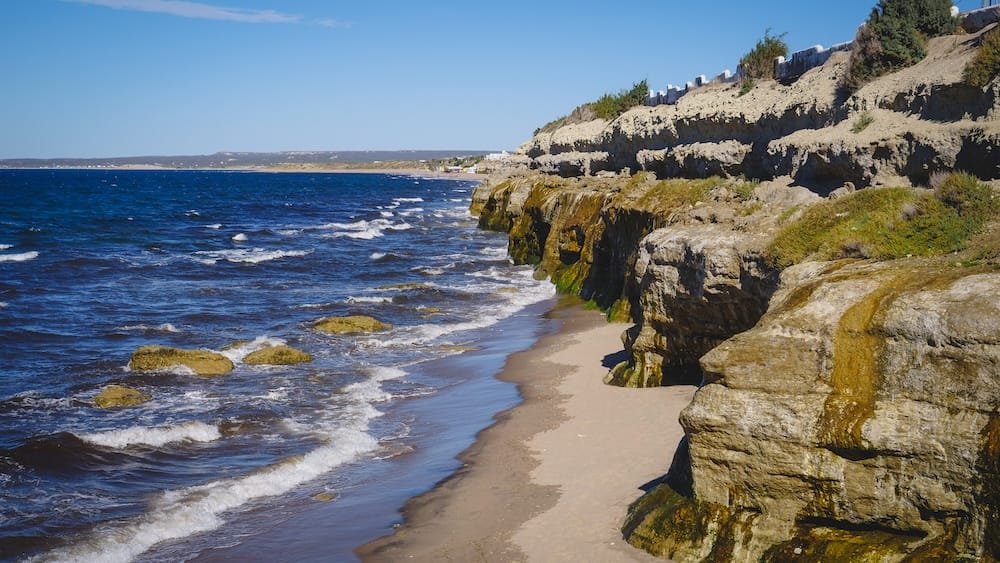
The Ultimate Patagonian Divide: Coast vs. Mountain
| The Reality Check | The Coastal Oven (Atlantic Side) | The Vertical Deep Freeze (Andean Side) |
| The Core Vibe | Horizontal, dusty, sun-scorched, and heavily marine-focused. Vast distances between small hubs. | Vertical, dramatic, freezing, and physically demanding alpine grandeur. |
| The Star Wildlife | Southern Right Whales, Orcas, Elephant Seals, Magellanic Penguins. | Pumas, Andean Condors, Huemul deer, Guanacos. |
| The Financial Toll | $195,000 ARS (~$140 USD) for boat-based marine safaris. | $45,000 ARS (~$32 USD) each for Los Glaciares (Perito Moreno) and the new El Chaltén trail fee. |
| The Physical Demand | Low-Impact, High-Transit: You are driving for hours on heavy gravel (ripio) and fighting 38°C (101°F) afternoon heat. | High-Impact, Brutal Ascents: You are scrambling up loose scree for 60-90 minutes just to finish the final kilometer of Laguna de los Tres. |
| The “Rotunding” Diet | The Seafood Triage: Pickled squid, $15 USD slabs of Atlantic salmon drowned in rich roquefort cheese sauce. | The Alpine Triage: $22,000 ARS wood-fired slow-roasted Patagonian lamb, massive sorentinos pasta, and sugar-spiked instant coffee. |
| The Hidden Friction Point | The Monday Ghost Town: Small historic Welsh towns completely shut down on Mondays, Tuesdays, and every day for siesta (14:00-17:00). | The Gear Destroyer: The relentless mountain wind will permanently snap cheap travel umbrellas and bite right through standard jackets. |
| The Logistical Nightmare | The “Death Bus”: Enduring the 26.5-hour overland route to the mountains with broken USB ports and non-functional bus toilets. | The Digital Paywall: You must pre-buy Chaltén hiking passes online before arriving, as the trailhead has zero cellular signal. |
| The Non-Negotiable Gear | Rental Car Windshield Insurance. The gravel roads will inevitably send a rock flying into your glass. | Gore-Tex Hard Shell & 40L Backpack. The cobblestone streets of El Chaltén will snap the wheels off a rolling suitcase in minutes. |
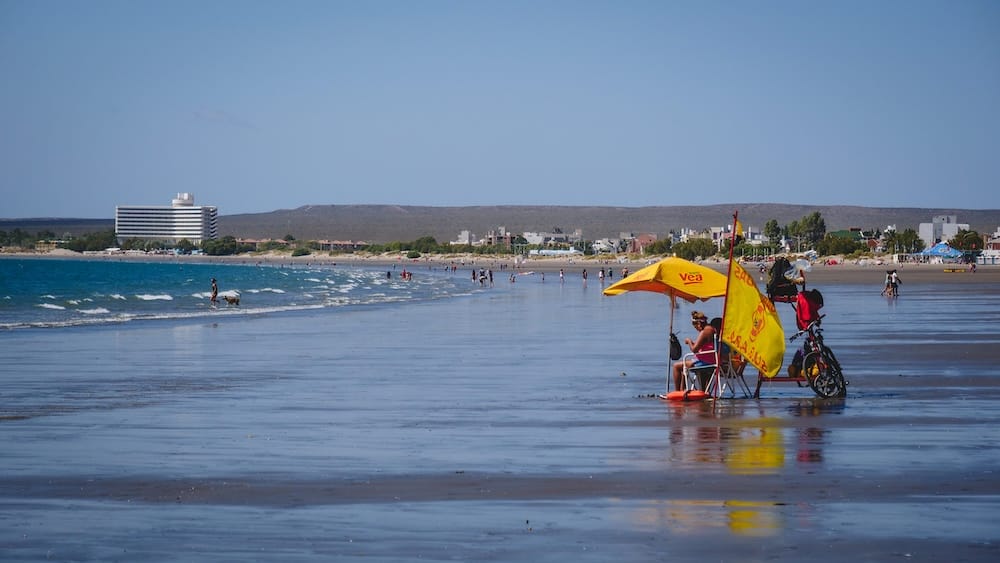
The Coastal Oven: Where the Arid Steppe Meets the Right Whale
If you look at photos of the Patagonian coast, you might assume it requires a light sweater and a breezy attitude. Do not make this mistake. We walked into Puerto Piramides expecting a crisp coastal stroll. Instead, we missed the trail turnoff coming back from the sea lion colony and found ourselves on a forced march down a dusty, unshaded highway in 38.5°C (101°F) heat. The sun out here is relentless, radiating off the pale gravel until your water bottle feels like it’s brewing tea.
That intense heat, however, is the price of admission for the greatest marine wildlife show on earth. Puerto Madryn and the Valdes Peninsula serve as the primary hubs for the Atlantic side. Most tourists immediately throw down 195,000 ARS (roughly $140 USD) for the classic boat-based whale watching tours. While incredible, these tours operate strictly from 08:00 to 18:00 and are highly weather-dependent. If the wind picks up, the port closes, and you are out of luck.
[Samuel’s Coastal Reality Check] Do not pay for a boat tour until you visit El Doradillo beach. Located about 15 kilometers outside of Madryn, the coastal shelf here drops off so steeply that Southern Right Whales bring their calves within 20 meters of the shoreline. It is entirely free to sit on the pebble beach and watch them. However, here is the critical logistical trap: you cannot just show up. The whales only come this close at high tide. You must check the local Puerto Madryn tide tables and arrive exactly one hour before peak high tide. If you go at low tide, you will be staring at an empty, distant ocean.
The physical reality of the coast is entirely horizontal. You are not climbing mountains, but you are covering vast distances. You cannot “walk” to the wildlife reserves from the city center. Renting a car is the most efficient method, but the terrain is predominantly ripio (heavy gravel). If you rent a car here, you will inevitably catch a rock from a passing truck. Windshield insurance is an absolute, non-negotiable add-on.
When you do finally escape the heat and the gravel, the coastal side rewards you with unmanageable volumes of food. After surviving our desert highway blunder, Audrey and I hit Cantina El Nautico in Puerto Madryn. For just under $30 USD total, we were subjected to the sheer weight of Argentine hospitality. We ordered a lunch special featuring pickled squid and a massive slab of salmon drowning in a rich, heavy roquefort cheese sauce, followed by towering desserts. The portions are so devastatingly large that I jokingly asked the waiter if they offered a wheelbarrow service to roll me back to our accommodation.
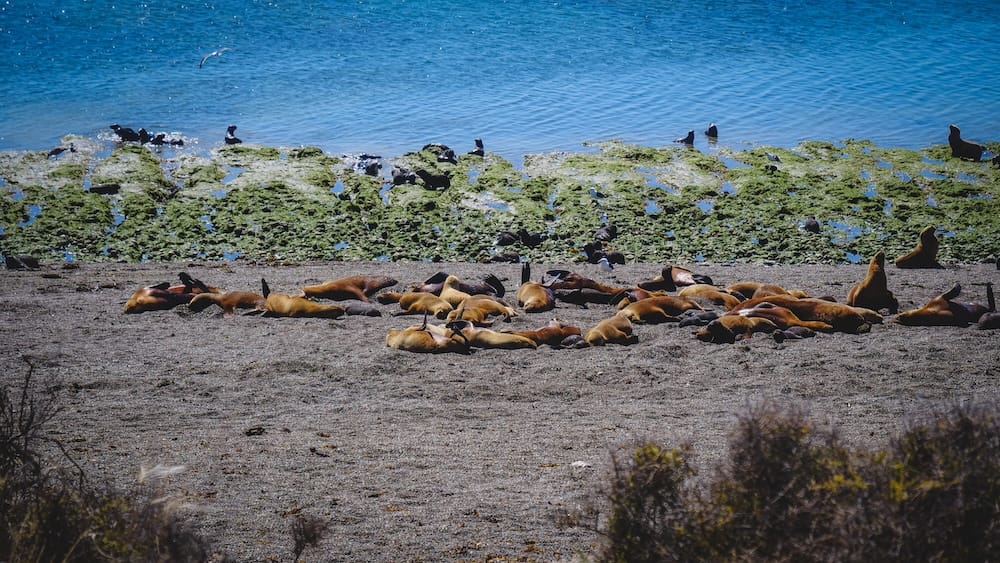
Coastal Metrics & Micro-Logistics
| Venue / Experience | Foreigner Price | Signature Feature & Vibe | The Unspoken Reality |
| Whale Watching Boat (Madryn) | $195,000 ARS (~$140 USD) | Up-close Southern Right Whales. | Port closes instantly if winds exceed safety limits. Book for your first available day. |
| El Doradillo Beach | Free | Whales within 20 meters of the shore. | 100% tide-dependent. Arrive 1 hour before peak high tide. |
| Punta Tombo Penguins | $18,000 ARS (~$13 USD) | Largest Magellanic colony on earth. | The “Guano Wind.” Wear a sealed windbreaker; the fishy smell will ruin wool sweaters. |
| Cantina El Nautico | ~$15 USD per person | Salmon in roquefort sauce. | Portions are built for fishermen, not light travelers. Prepare for an afternoon siesta. |
The Dead Zone: Surviving the Patagonian Steppe
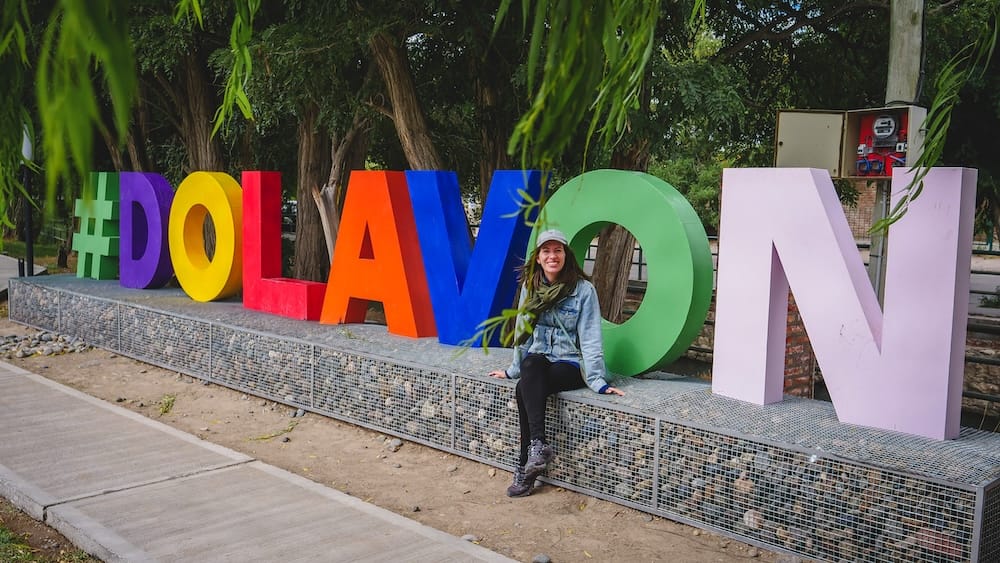
Moving between the coast and the mountains requires navigating the massive, empty interior of the Chubut and Santa Cruz provinces. There is a specific kind of logistical defeat that happens when you decide to explore the historic Welsh settlements scattered across this steppe. We traveled out to the quaint town of Dolavon, expecting to film a vibrant, historic 19th-century flour mill for our upcoming destination guides.
Instead, we found a ghost town. It was a Monday. We learned the hard way that in rural Patagonia, smaller towns completely shut down on Mondays and Tuesdays, and absolutely everything closes for siesta between 2:00 PM and 5:00 PM. We spent the entire afternoon sitting on a curb at the local YPF gas station, eating fast-food empanadas and drinking Paso de los Toros grapefruit soda because every single museum and restaurant was locked tight.
If you are transitioning from the Atlantic to the Andes, you will likely face the legendary 26.5-hour bus route from Puerto Madryn to El Calafate (via Comodoro Rivadavia). Backpackers call this the “Death Bus.” The suspension is rough, and the onboard toilets are frequently out of commission by hour twelve. You must book the “Coche Cama” (Full Sleeper) ticket via operators like Marga Taqsa or Don Atilio. However, do not trust the amenities list. The USB charging ports at the seats are notoriously broken. You must pack a dedicated “Bus Kit” featuring a fully charged 20,000mAh power bank and at least two liters of your own water.
The “Middle Ground” Transition: Trevelin & Esquel
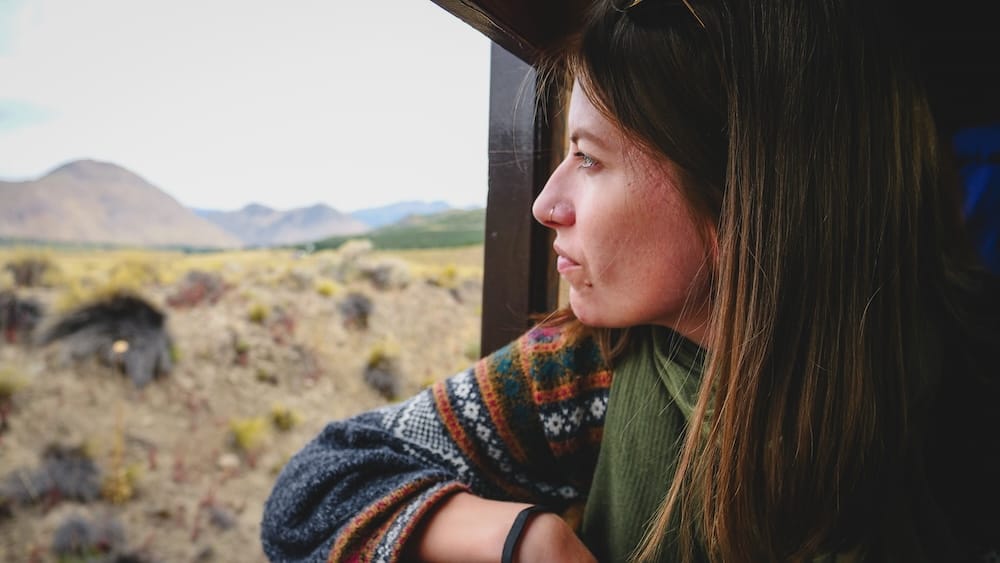
There is a distinct moment on the drive west from the Atlantic coast when the endless, dusty beige of the Patagonian steppe violently gives way to deep alpine green. We hit this geographical whiplash right as we rolled into the Chubut mountain valleys, our lungs still full of coastal dust. This central corridor is the ultimate transition zone, a bizarre micro-climate where arid winds crash into snow-capped peaks, creating a logistical middle ground that most generic itineraries completely skip over in their rush to get to the glaciers.
If you time your crossing for the brief window between October 7th and November 7th, you will slam headfirst into Trevelin’s famous Tulip Fever. Nestled right against the Chilean border, this valley erupts into a hyper-saturated grid of three million blooming tulips. But the days of just pulling over on the side of Ruta 259 for a quick photo are gone. For the season, accessing the main cultivation fields requires a mandatory $45,000 ARS entrance fee. The fields operate strictly from 9:00 AM to 7:00 PM, and if you want to completely bypass the ground-level crowds, you can now book the newly introduced hot air balloon tours that launch directly over the valley at dawn—provided the notorious Andean wind decides to cooperate.
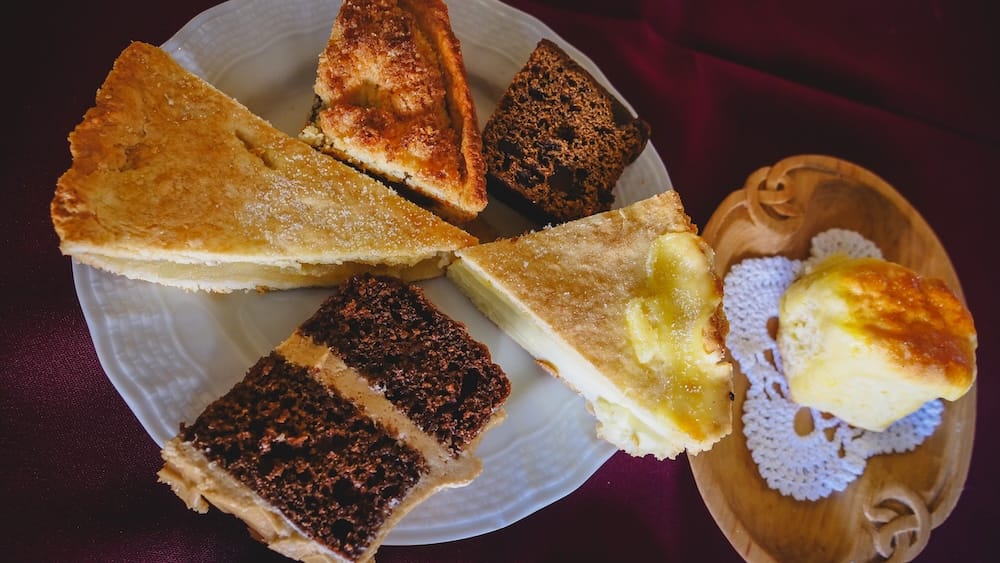
[Samuel’s Caloric Reality Check] Trevelin is a deeply Welsh town, which means the “rotunding” diet we started on the coast only accelerates here. Do not leave without partaking in traditional Welsh Tea (Té Galés). For about $18,000 ARS, you are seated in a cozy wooden tea house and assaulted with an unmanageable tier of black cake (torta negra), scones heavily buttered with regional jams, and thick cream. It is the perfect, dense caloric fuel required before you transition fully into the freezing mountain trekking zones.
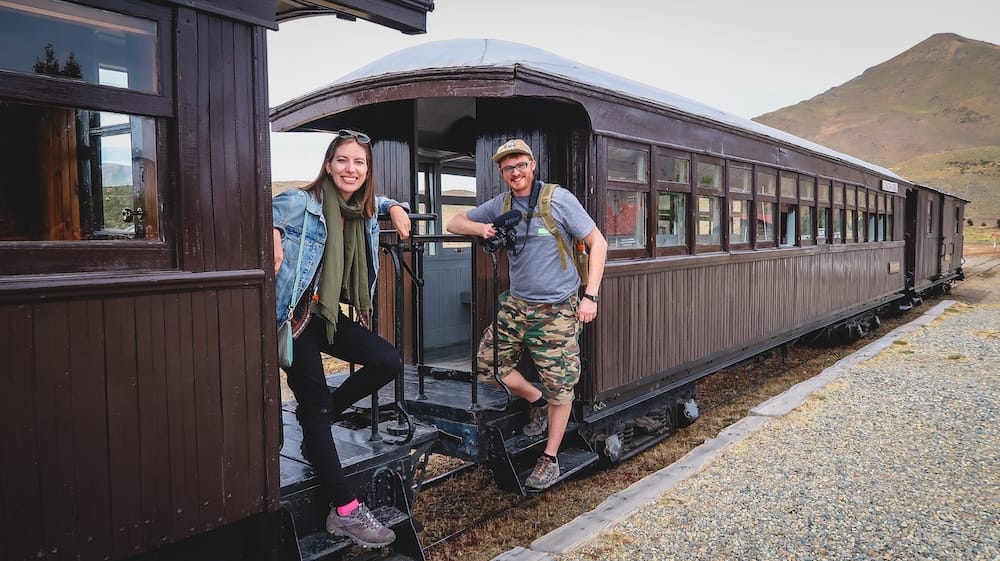
Just 25 kilometers north of Trevelin lies Esquel, the true logistical anchor of this middle ground and home to one of the rawest historical transit experiences left in South America. If you have watched the Patagonia transit series on our flagship Samuel and Audrey YouTube channel, you know we have an obsession with documenting slow travel. But riding La Trochita (The Old Patagonian Express) is an entirely different beast.
This narrow-gauge 1922 steam train still operates its original route through the high steppe. Securing a seat on the wooden benches for the three-hour round trip to Nahuel Pan currently costs foreigners exactly $35,000 ARS. You must book this days in advance at the Esquel station, as local tour groups buy out entire cars during peak season. But here is the unwritten “Wood-Burning Realism” that the vintage posters omit: the locomotive is fueled by raw timber and oil. The wind will whip the exhaust directly through the drafty wooden carriages. Your hair, your heavy jacket, and your backpack will smell deeply of industrial soot and woodsmoke for at least three days after the ride. It is gritty, loud, and absolutely brilliant.
The Transition Zone Data Matrix
| Venue / Experience | Foreigner Price | Operating Logistics | The Unspoken Reality |
| Trevelin Tulip Fields | $45,000 ARS | Open Oct 7 – Nov 7 only (09:00–19:00). | The new hot-air balloon flights are highly wind-dependent. Have a backup day planned. |
| Traditional Welsh Tea | ~$18,000 ARS | Afternoons (Usually 15:00–19:00). | Portions are devastatingly heavy. Skip lunch entirely if you plan to conquer the torta negra. |
| La Trochita (Esquel) | $35,000 ARS | 3-hour round trip to Nahuel Pan. | You will smell like a 1920s boiler room for days. Do not wear your premium Gore-Tex shell on the train. |
While many travelers treat this corridor simply as a place to sleep between overnight buses, leaning into the soot-stained trains and butter-heavy tea houses provides the exact cultural friction needed before you hit the pure, punishing wilderness of the deep south.
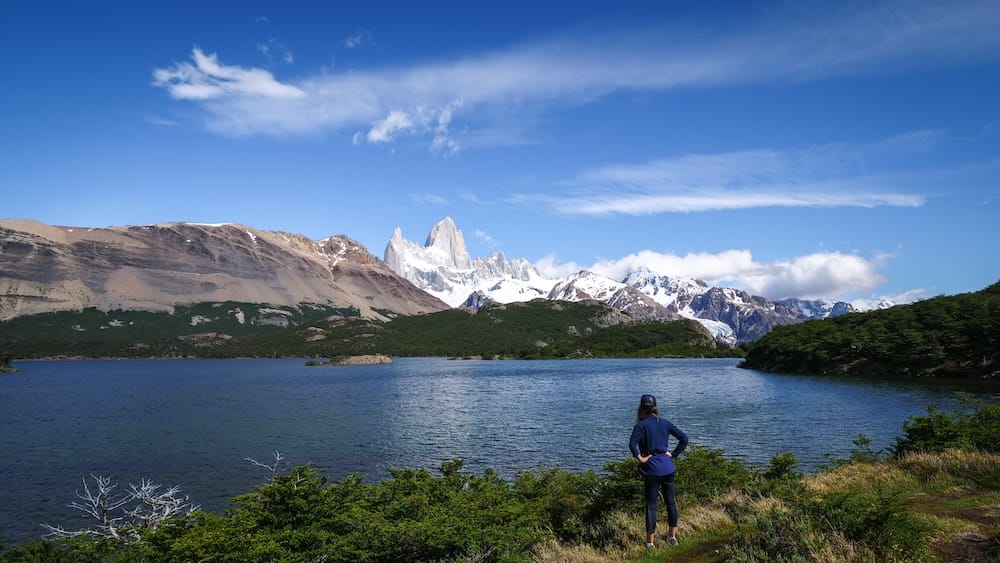
The Vertical Deep Freeze: Mountain Patagonia
The transition into the Andes is physically jarring. It is entirely possible to get heatstroke on the coast and, exactly four days later, find yourself shivering so violently in the mountains that you impulsively buy a thick, traditional wool Gaucho hat just to survive the morning.
I arrived in the mountain town of Esquel packed for the Buenos Aires summer, completely underestimating the raw, unforgiving power of the Andean weather. During a desperate ten-block walk in the freezing rain to secure our bus tickets, the Patagonian wind caught my cheap travel umbrella and instantly snapped the metal frame, bending it into an unrecognizable modern art sculpture. Do not bring cheap gear here. The mountains demand heavy-duty, windproof hard shells.
This side of Patagonia is defined by its alpine grandeur, towering granite spires, and world-class trekking. But accessing these trails in comes with severe new financial realities.
For years, the hiker’s paradise of El Chaltén operated as a free, open-access park. That era is over. Due to the crushing economic shifts in Argentina, the National Parks Administration has instituted aggressive new fee structures. Travelers arriving from El Calafate—where they already paid $45,000 ARS (roughly $32 USD) to see the Perito Moreno Glacier—often assume that ticket covers the entire region. It does not.
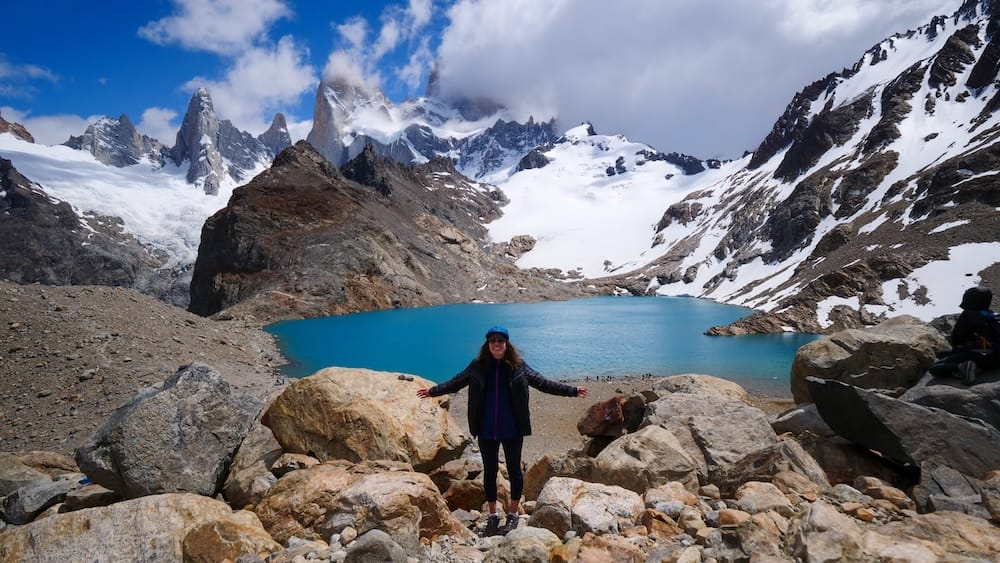
To hike the famous Fitz Roy trail (Laguna de los Tres) in El Chaltén’s “Zona Norte,” you must now pay a separate, mandatory $45,000 ARS fee. The payment portals are strictly digital, and you must purchase your entry online before arriving at the trailhead, as the cellular signal at the base is non-existent. If you plan to hike both Fitz Roy and Cerro Torre, you must buy a two-day “Flexipass” immediately, which grants a 50% discount on the second day.
[Samuel’s Caffeinated Warning] If you are waking up at 5:00 AM to beat the crowds to the Fitz Roy trailhead, you will need coffee. But Argentine grocery stores hold a dark secret: almost all affordable local instant coffee (like the popular Arlistán brand) is pre-mixed with heavy amounts of sugar during the roasting process (known as café torrado). If you want a normal, black coffee to fuel your vertical ascents, you must hunt down and pay a premium for imported Nescafé gold. Do not let the sugar-spiked coffee crisis ruin your alpine mornings.
Unlike the horizontal, driving-heavy reality of the coast, the mountain hubs require punishing physical exertion. In El Chaltén, the village itself is flat, dusty, and walkable, but the trails are merciless. The final kilometer of the Laguna de los Tres hike is a brutal, vertical scramble over loose scree that takes 60 to 90 minutes alone.
It is also vital to know when to quit. During our time in the mountains, Audrey and I attempted to hike Cerro de la Cruz. We took a wrong turn, got blasted by the freezing wind, and upon realizing the summit was still a grueling hour away, we looked at each other, abandoned the peak, and walked back down into town to eat pizza. Travel isn’t always about conquering the mountain. Sometimes it’s about acknowledging your limits and securing a warm table near a wood-fired oven.
Andean Friction & Trail Triage
| Trail / Venue | Foreigner Access | The Physical Reality | The Gear Mandate |
| Los Glaciares (Perito Moreno) | $45,000 ARS (~$32 USD) | Steel walkways, highly accessible. Very little physical effort required. | Standard layers. Sunglasses are mandatory to prevent snow-blindness. |
| El Chaltén (Fitz Roy) | $45,000 ARS (~$32 USD) | Punishingly steep final kilometer. 8-10 hour round trip. | Sturdy boots. The unpaved town roads will destroy rolling suitcases; bring a backpack. |
| Esquel/Bariloche Transit | Varies by Bus Operator | Terminals are often exposed to extreme winds. | Leave the umbrella at home. Invest in a sealed, Gore-Tex windbreaker. |
The “Rotunding” Reality: Patagonia’s Culinary Heavyweights
Whether you choose the coast or the mountains, there is one universal truth about Patagonia: you will gain weight. I have openly documented my fluctuating waistline on the channel, noting my goal to drop from 172 to 160 pounds. Patagonia actively works against this goal. I call it the “Rotunding” diet.
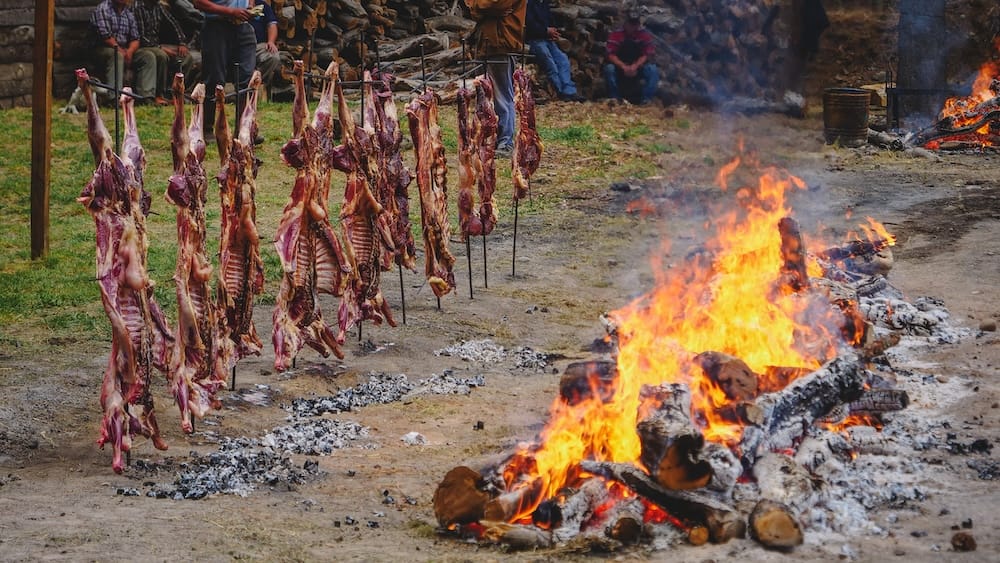
You do not come to this region for light salads. The caloric density required to survive the cold and the trails is immense. In the mountains, the seafood of the Atlantic is replaced by slow-roasted Patagonian lamb (cordero patagónico), butter-heavy sorentinos (massive, stuffed pasta rounds), and an endless supply of alfajores (dulce de leche cookie sandwiches).
Even when you hike for eight hours a day, the sheer volume of the dinners will leave you feeling heavy. You will find yourself befriending the stray dogs that wander the local parrillas, tossing them scraps of beef just to help manage the overwhelming portion sizes.
The Caloric Triage Menu (What to Order & What it Costs)
- The Coastal Seafood Platter (Puerto Madryn): Expect to pay around 18,000 to 25,000 ARS for fresh Atlantic salmon, often smothered in heavy cream or roquefort sauces. It is rich, salty, and demands a post-meal nap.
- The Mountain Parrilla (El Chaltén / El Calafate): A massive plate of slow-roasted Patagonian lamb will run you about 22,000 ARS. It is incredibly fatty, deeply smoky from the wood fire, and perfectly restores the calories burned on the Fitz Roy ascent.
- The Survival Carbohydrate (Anywhere): When the 9:00 PM Argentine dinner hour feels impossibly far away, the classic empanada de carne (around 1,500 ARS each) is your best friend. Keep a bag of them in your daypack for trail emergencies.
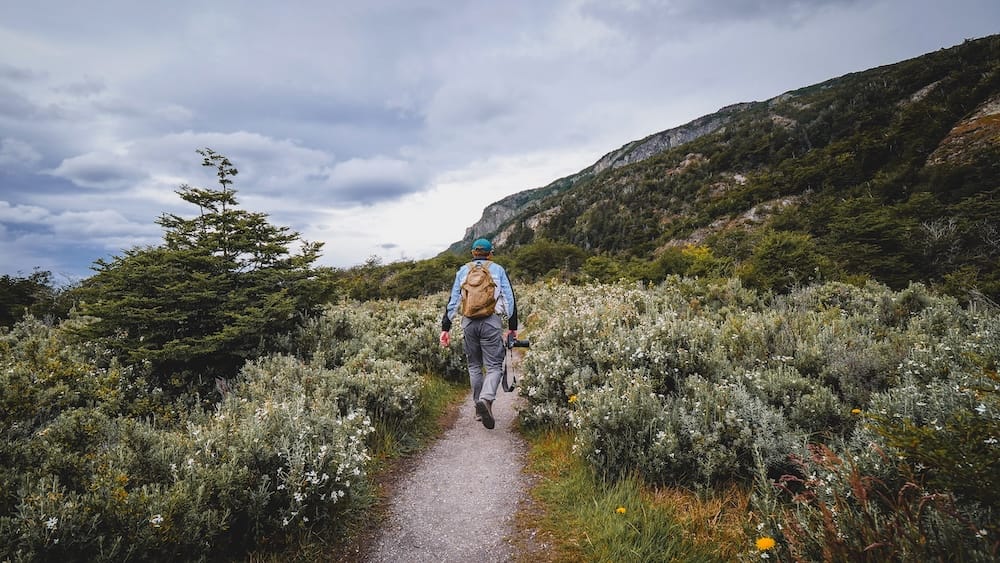
The Deep South: Ushuaia & The Chilean Fjords
While Audrey and I spent our most recent intensive filming trip navigating the Chubut and Santa Cruz provinces, our complete Patagonian dossier requires addressing the deep south and the Chilean side—regions we’ve researched extensively for upcoming itineraries and past border crossings.
If you push all the way south to Ushuaia to cross the Beagle Channel into Puerto Williams (Chile), you will hit one of the most obscure logistical friction points in the region. The one-way ferry crossing costs a steep $160 USD per person. However, the true trap is the Ushuaia Port Tax. It is exactly $10 USD, and it must be paid in physical, crisp US cash at the pier booth. They do not accept credit cards, and they often refuse Argentine Pesos. Every morning at 08:00 AM, panicked travelers miss their boat because they are frantically searching the port for an ATM that dispenses US currency (a rarity in Argentina). Keep a ten-dollar bill tucked inside your passport.
Over on the Chilean side, the crown jewel is Torres del Paine. For the season, CONAF (the Chilean park authority) has entirely overhauled the entrance system. You can no longer just show up. You must purchase your entry via pasesparques.cl at least 24 hours in advance. A pass for 3+ days will cost you roughly $49 USD.
But here is the reality check that generic brochures omit: the primary support town for Torres del Paine is Puerto Natales. While it serves its purpose, it is increasingly industrial, heavily concrete, and drastically overpriced. It lacks the cozy, walkable charm of Argentina’s El Chaltén. If your budget allows, bypass the town entirely and book accommodation inside the park boundaries or at a boutique lodge on the immediate outskirts to avoid the dreary, hour-long commute into the park each morning.
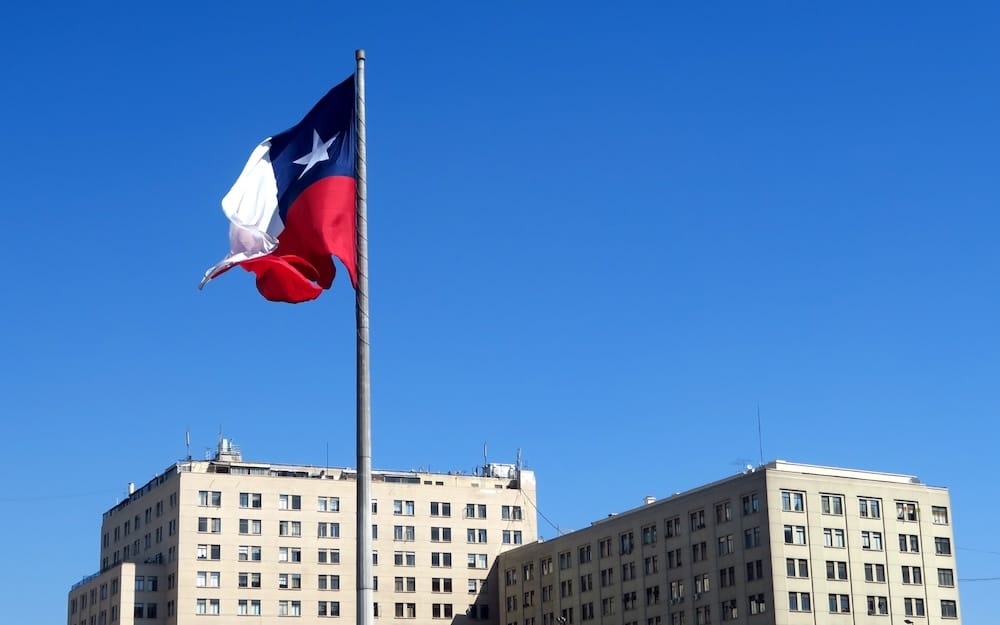
The Chilean Alternative: The Carretera Austral (Ruta 7)
While Audrey and I spent our most recent intensive filming trip getting wind-blasted across the Chubut and Santa Cruz provinces of Argentina, our complete Patagonian dossier demands we address the wilder, wetter, and infinitely more complicated Chilean side. We actively chose to skip driving the Carretera Austral (Ruta 7) on this specific run—frankly, my spine was still recovering from the Argentine “Death Buses,” and our rental car budget simply couldn’t absorb the inevitable windshield damage. However, we have spent the last six months ruthlessly extracting the logistical data for our upcoming Chilean destination guides, and the reality is stark.
If the Argentine coast is a dusty, sun-scorched oven and the eastern Andes are a dry deep-freeze, the Chilean fjords are a beautiful, unpaved logistical maze. The Carretera Austral is marketed as one of the world’s ultimate road trips. It stretches 1,240 kilometers from Puerto Montt down to Villa O’Higgins. But the brochures conveniently omit the physical toll this road exacts on both your vehicle and your sanity.
This is not a highway. South of Villa Cerro Castillo, the pavement simply gives up. You are thrust into the “Unpaved Reality,” navigating hundreds of kilometers of aggressive, washboard gravel (ripio), blind mountain curves, and sudden single-lane wooden bridges. Do not look at Google Maps and calculate your travel time based on standard highway speeds. Your average speed on the southern sections will actively refuse to exceed 25 km/h. If you push the speedometer to 40 km/h, you will lose traction on the loose gravel, puncture a tire, or completely blow out your suspension. You must bake an extra three hours into every single driving day just to account for the jarring, teeth-rattling pace.
[Samuel’s Rental Car Triage]
If you are tackling Ruta 7, renting a standard compact sedan is an act of pure hubris. You need high clearance, and more importantly, you need two full-sized spare tires. Space-saver spares will disintegrate on this gravel within ten kilometers. Furthermore, do not even think about declining the premium windshield insurance. Passing logging trucks will launch rocks at your glass with the velocity of a firearm. You will chip the windshield; it is just a question of when.
The driving is only half the battle. The geography of the Chilean coast is completely shattered by deep fjords, meaning the road physically ends, forcing you onto an intricate network of vehicle ferries. The most notorious bottleneck of the entire season is the Hornopirén to Caleta Gonzalo crossing.
This is not a simple boat ride; it is a multi-stage logistical gauntlet operated primarily by Somarco. It costs roughly $75 USD (around 72,650 CLP) per vehicle, plus extra fees for additional passengers. The journey requires loading your car onto a ferry in Hornopirén for a three-and-a-half-hour navigation to Leptepu. You then drive your vehicle off the boat, traverse a jarring 10-kilometer dirt peninsula for about forty minutes, and load onto a second, smaller ferry at Fiordo Largo for the final 45-minute push to Caleta Gonzalo.
Here is the ultimate friction point: “last-minute” is no longer a concept that exists here. In the peak summer months, you cannot simply roll up to the Hornopirén dock hoping to catch the morning boat. The subsidised resident slots fill up instantly, and commercial tourist tickets sell out weeks in advance. If you do not pre-book your specific vehicle slot online, you will find yourself sleeping in the driver’s seat at the port for three days, waiting for a cancellation.
Further south, the logistical headaches give way to one of the most visually staggering payoffs on the continent: the Marble Caves (Capillas de Mármol) on Lago General Carrera. The support town for this natural wonder is Puerto Río Tranquilo, a dusty, frontier-style outpost that completely overflows with tourists between December and February.
To actually see the caves, you are required to book an official boat or kayak tour. The standard motorized boat tours currently hover right around 25,000 CLP (roughly $26 USD) for a one-and-a-half-hour navigation, though prices wildly fluctuate based on whether you book the “short” or “long” route. But handing over your pesos is only the first step. The true secret to the Marble Caves is what we call the “Sunrise Mandate.”
Do not book a noon tour. Do not book a 2:00 PM tour. You must force yourself out of bed and book the 7:00 AM departure. Lago General Carrera is massive and highly susceptible to the Andean winds. By 11:00 AM, the wind aggressively whips through the valley, turning the lake dangerously choppy. When the water gets rough, the small boats cannot safely enter the intimate, narrow tunnels of the Marble Chapel. More importantly, the early morning sun hits the water at the exact, low angle required to reflect the surreal, glowing glacial blue light onto the smooth marble ceilings. If you go in the afternoon, the water is turbulent, the light is flat, and you are competing with twenty other fiberglass boats for a single photo.
The Chilean Logistics & Friction Matrix
| The Bottleneck / Venue | Pricing Reality | The Required Action | The Unspoken Friction |
| The Southern Gravel (Ripio) | Cost of 2 full-sized spare tires. | Limit daily drives to 150km. | Average speed drops below 25 km/h. The washboard roads will violently vibrate screws loose inside your vehicle. |
| Hornopirén to Caleta Gonzalo Ferry | ~$75 USD (72,650 CLP) per vehicle. | Book online via Somarco weeks in advance. | It is a two-ferry relay race with a forced 10km dirt road sprint in the middle. |
| Marble Caves (Boat Tour) | ~25,000 CLP ($26 USD) | Execute the “Sunrise Mandate” (7:00 AM). | Afternoon winds make the lake dangerously choppy, preventing boats from entering the deepest caves. |
| Puerto Río Tranquilo Accommodation | $70 – $160 USD for basic cabins. | Book lodging before arriving in town. | The town’s infrastructure cannot support the summer crowds. Wi-Fi is essentially a myth here. |
While we leaned heavily into the massive, heavy plates of Argentine beef and lamb on the eastern side, the culinary reality of the Carretera Austral requires a massive shift in expectations. You are trading the endless wood-fired parrillas for heavy, coastal Chilean comfort food. You will survive primarily on thick, deeply rich bowls of paila marina (a dense shellfish stew) and massive, buttery slabs of farmed Pacific salmon. It is a wetter, colder, and significantly slower travel experience, but if you have the patience to navigate the unpaved reality and the ferry schedules, the Chilean side offers a raw, untouched aesthetic that the highly trafficked Argentine hubs simply cannot match.
The Final Scorecard: Coast vs. Mountain
| Category | The Coastal Experience (Atlantic) | The Mountain Experience (Andes) |
| The Vibe | Arid, vast, horizontal, and heavily marine-focused. | Vertical, dramatic, freezing, and physically demanding. |
| The Friction | The sheer distances between wildlife hubs; extreme summer heat. | $45,000 ARS trail fees; unpredictable, gear-destroying winds. |
| The Food | Pickled squid, heavy salmon, Welsh tea houses. | Slow-roasted lamb, massive pasta, sugar-spiked coffee. |
| The Verdict | Best for wildlife photographers and road-trip enthusiasts. | Best for hardcore trekkers and alpine landscape lovers. |
The Verdict
You cannot “do” Patagonia in a single week, and you certainly cannot do both sides without surrendering at least two full days to brutal transit. If you crave deep, silent hikes, wood-fired cabins, and don’t mind dropping serious cash on park fees, head to the mountains. If you want to watch a four-ton Orca breach from a pebble beach, eat your weight in seafood, and drive across endless, dusty horizons, the coast is calling.
Whichever side you choose, pack a heavy windbreaker, double-check the operating hours of every small town, and leave the rolling suitcase at home. For more boots-on-the-ground visual guides, be sure to check out our full Patagonia video series on the Nomadic Samuel YouTube channel, where you can watch us actively fail to hike mountains and successfully eat entirely too much lamb.
FAQs: Coastal Patagonia vs Mountain Patagonia — Which Side Is Right for You?
Is it possible to see the highlights of both sides in a single week?
Nope. Patagonia is roughly the size of two Californias, and the transit between the coast and the mountains is a brutal endurance test. If you only have seven days, pick one side and do it right. Trying to combine Puerto Madryn and El Chaltén in a week means you’ll spend four of those days sitting on a bus or in an airport, leaving you approximately twenty minutes to actually look at a whale or a glacier before you have to leave.
Do I need to carry a lot of physical cash in Patagonia?
Absolutely. While recently there has seen more card acceptance in hubs like El Calafate, the “Blue Dollar” era and local connectivity issues mean cash is still king. Small shops in the mountains often have “broken” card machines when the wind blows too hard, and you’ll need crisp US Dollars for specific fees like the $10 port tax in Ushuaia. Always keep a “survival stash” of pesos and USD tucked in your passport.
Can I drink the tap water in the Patagonian mountains?
100%. In places like El Chaltén and Esquel, the water comes straight from glacial melt and is some of the purest on the planet. You’ll see hikers dipping their bottles directly into mountain streams. On the coast, however, the water is much harder and more chlorinated; it’s safe, but it tastes like a swimming pool. Stick to the mountain tap for the good stuff.
Is the Chilean side significantly more expensive than the Argentine side?
Generally, yes. Chile’s economy is more stable, but that translates to higher baseline prices for gas, food, and lodging. While Argentina’s prices fluctuate wildly with inflation, you can often find “steals” on high-end steak and wine. In Chile, expect to pay North American prices for almost everything, especially in remote areas like the Carretera Austral where every head of lettuce has to be shipped in by ferry.
Should I rent a 4×4 or is a standard car okay?
Depends. If you are sticking to the paved sections of Route 3 on the coast, a standard sedan is fine. But the second you hit the ripio (gravel) of the Valdes Peninsula or the Carretera Austral, you’ll regret not having high clearance. You don’t necessarily need a 4×4 for the grip, but you need the height to keep rocks from shredding your undercarriage.
Are the “Death Buses” really as bad as people say?
Mostly. The “Coche Cama” (sleeper) seats are actually quite comfortable—think of them like business class on an old airplane. The “death” part refers to the sheer monotony and the inevitable breakdown of the onboard Wi-Fi and USB ports. If you go into a 26-hour bus ride expecting a luxury experience, you’ll be miserable. If you go in with 2 liters of water and a massive power bank, you’ll survive.
Can I see penguins and whales year-round on the coast?
Nope. Patagonian wildlife is strictly seasonal. If you show up in June expecting penguins, you’ll be staring at an empty beach. For the best “double-header,” visit between late September and early December. This is the sweet spot when the Southern Right Whales are still nursing their calves and the Magellanic penguins have arrived to nest.
Is El Chaltén still the “Trekking Capital” now that there are fees?
Indeed. Even with the new $45,000 ARS hiking fee, the trails in El Chaltén are world-class and significantly more accessible than those in Chile’s Torres del Paine. You can still walk from your hotel front door directly onto a trail that leads to a granite spire. The fee is a localized friction point, but the “Chaltén vibe”—that mix of dusty hiker grit and post-hike craft beer—remains undefeated.
Project 23 Argentina: This guide is also available in Spanish. [Lea la versión en castellano: Patagonia Atlántica vs Patagonia Andina — ¿Qué lado es para vos?]