
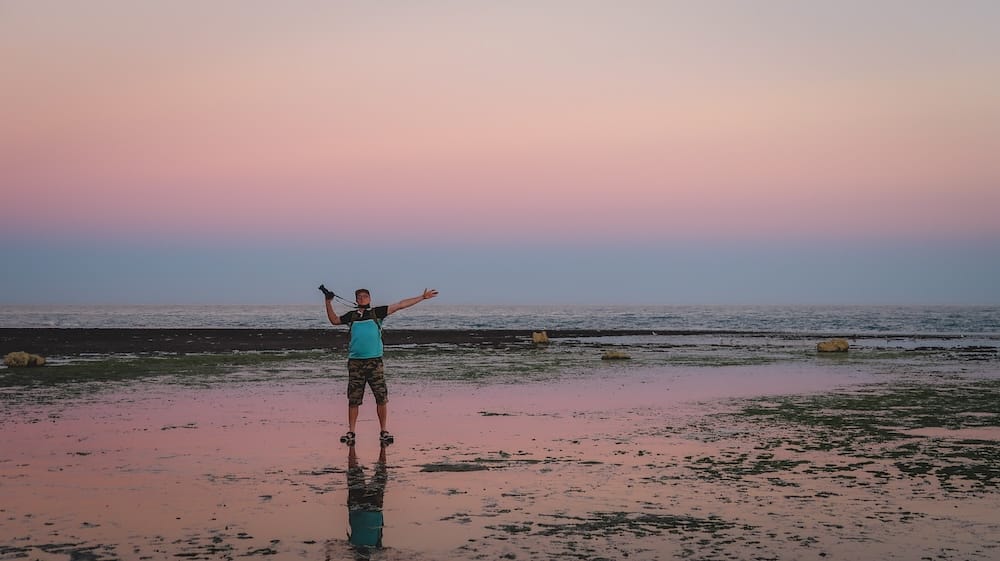
In the wild, the Patagonian Redhead has a distinct, desperate survival mechanism: strip down, panic, and aggressively slather on SPF 50 before the ozone hole strikes.
AKA me.
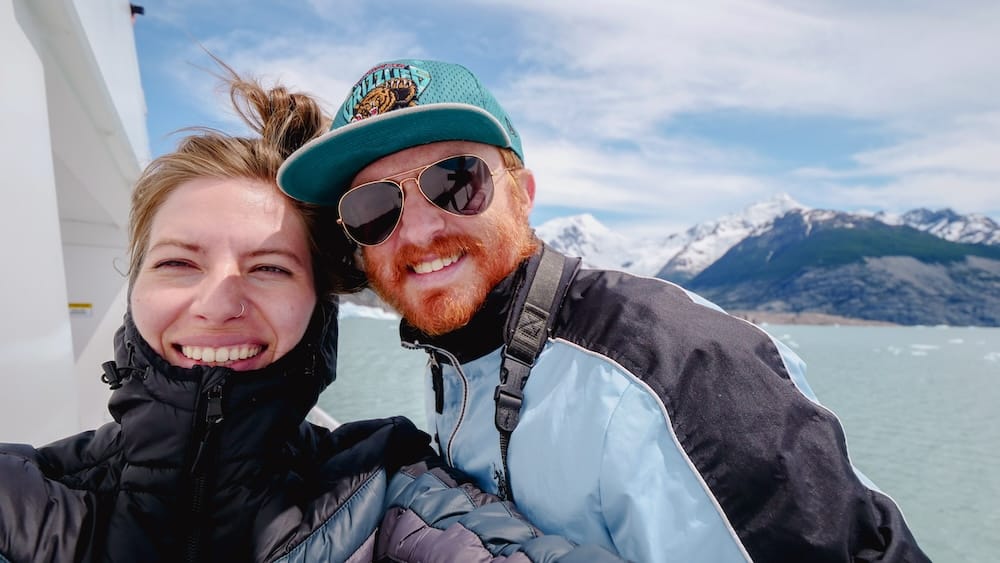
Audrey caught the whole humiliating ritual on camera during our time at Lake Puelo. The sun was out in full force, and I was frantically tearing through my daypack, peeling off layers, and trying to coat my aggressively pale skin in zinc before the UV radiation turned me into a peeling, screaming mess. If you’ve watched our flagship Samuel and Audrey YouTube channel, you know she loves documenting my suffering. But behind the comedic panic is a brutal, scientific reality that catches almost every first-time traveler off guard.
The Patagonian sun does not play by tropical rules. It is a sneaky, freezing microwave. You will be shivering in 5°C (41°F) winds, staring at a glacier, while simultaneously sustaining second-degree burns on the inside of your nostrils.
Here is the un-sugarcoated, granular reality of surviving the atmospheric anomaly at the bottom of the world.
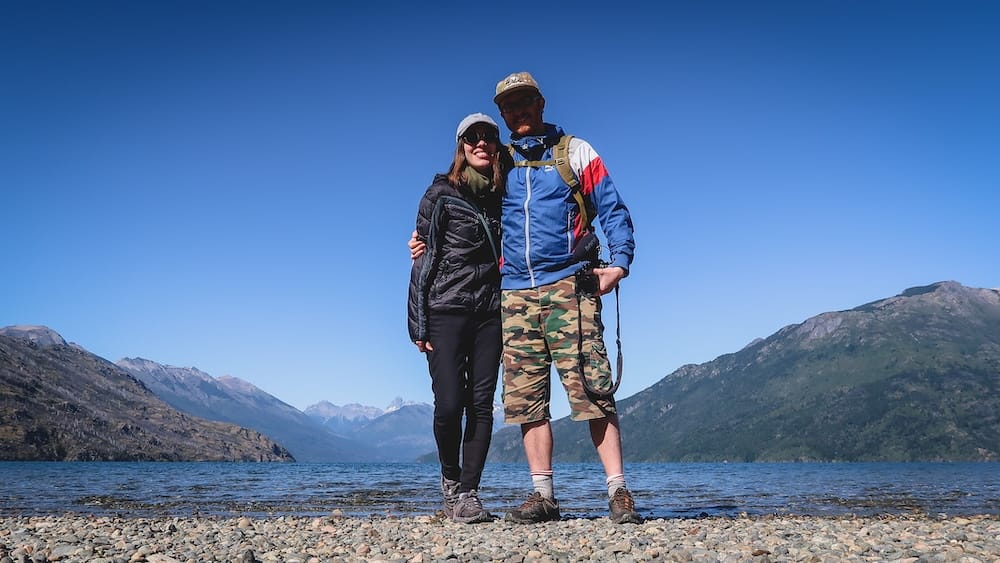
The Black Flannel Mistake and the Micro-Climate Whiplash
I came to southern Argentina expecting a permanent blizzard. My suitcase was packed with the kind of heavy, dark winter gear that looks great in moody Instagram photos but functions as a death trap in reality.
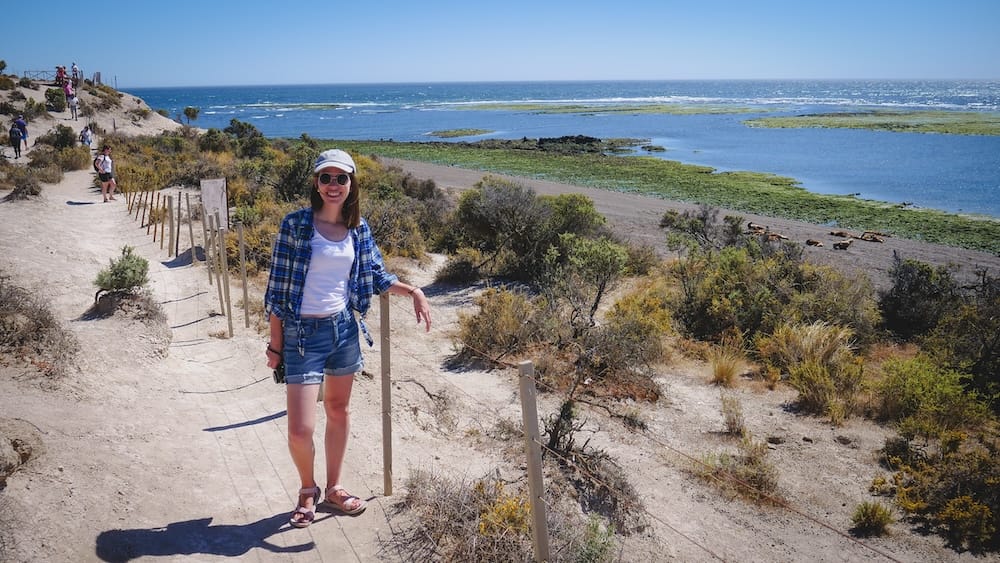
Case in point: Trelew and the Valdes Peninsula region. We stepped out of our air-conditioned room, expecting a brisk coastal breeze, only to walk headfirst into a 38.5°C (101°F) wall of heat. I was dressed in black flannel. It was a spectacular wardrobe malfunction. I was immediately pouring sweat, experiencing what climbers call the “Greenhouse Effect.” We had somehow missed the turnoff for the hiking trail in Puerto Piramides that cuts back into town, forcing us to hike along the exposed, shadeless highway just to see the sea lions. It felt like walking through a frying pan.
This is the daily reality of the region. You will freeze in the 7°C (45°F) morning air, stare in disbelief at locals wearing tank tops, and then find yourself boiling by 2:00 PM.
The solution to this extreme temperature whiplash is not thicker coats; it is the “Action Suit” method. You need layers that block the UV rays but allow heat to aggressively vent. If you wear a waterproof Gore-Tex shell while hiking the steep, dusty scree slope up to Laguna de los Tres in El Chaltén, you will trap 100% of your body heat.
[Samuel’s Gear Reality Check] > Do not bring a cheap umbrella to Patagonia thinking it will provide mobile shade. During a particularly blinding afternoon in Esquel, I popped open a cheap umbrella. The infamous Patagonian wind didn’t just break it; it insulted it. It was bent out of shape and destroyed in less than four seconds. Leave the umbrellas at home. Invest in wind-cutting textiles.
The Patagonian “Action Suit” Matrix
| Layer Type | The Technical Reality | Est. 2026 Cost (USD) | The “Friction & Fix” |
| UPF 50+ Sun Hoodie | Your primary defense. Must be highly breathable (e.g., Mountain Hardwear Crater Lake). | $60 – $90 | Friction: You sweat through it on the ascent. Fix: Buy antimicrobial fabrics so you don’t smell like an entire locker room in the refugios. |
| Breathable Wind Shell | Essential. Do not use waterproof rain jackets for dry wind. Use an ultra-light shell (e.g., Patagonia Houdini). | $100 – $130 | Friction: Trapping heat. Fix: Constant mechanical venting (zipping up and down as the wind gusts). |
| UPF Neck Gaiter (Buff) | Non-negotiable for glacier walks. Protects the neck, ears, and lower face from reflected light. | $25 – $35 | Friction: Glasses fogging up when pulled over the nose. Fix: Tuck the top edge under your sunglass frames. |
| Wrap-Around Sunglasses | Polarized Category 3 or 4 lenses. Do not forget them. | $150+ | Friction: Glare blindness. I forgot mine in Esquel and felt like a blind bat. |
The Wind-Chill Masking Effect
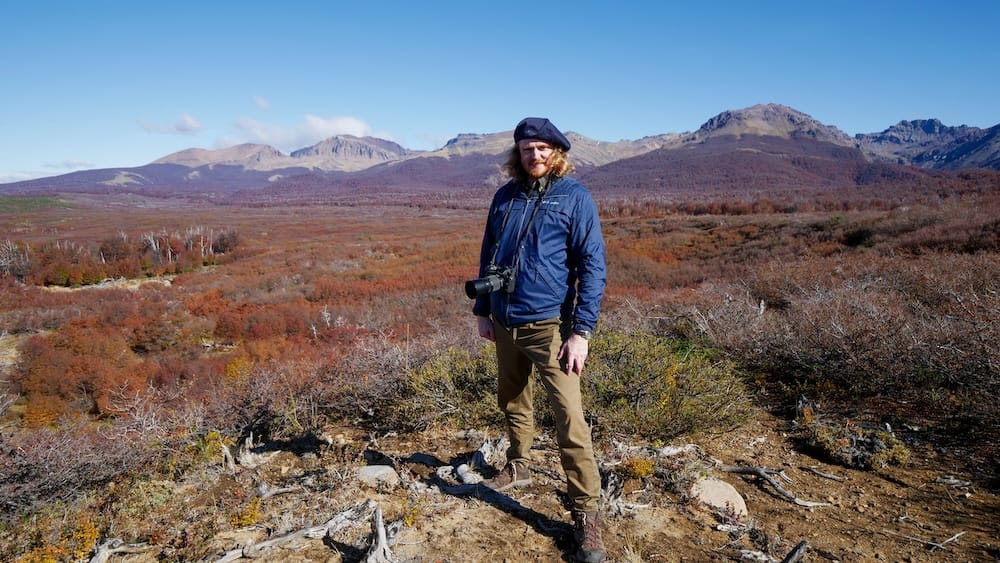
The most dangerous element of Patagonia isn’t the sun itself; it’s the Westerlies. The wind here frequently howls at 70km/h to 100km/h.
This creates a biological trap known as convective cooling. Because the wind keeps your skin surface temperature exceptionally low, your brain’s early-warning system—the hot, tight sensation that tells you to seek shade—completely shuts off. You do not feel yourself burning. Hikers on the W-Trek in Torres del Paine often trek for eight hours feeling perfectly chilled, only to step inside their tents, escape the wind, and suddenly realize their face is radiating heat like a furnace.
Furthermore, that same wind is actively stripping your protection away. High-velocity gusts accelerate the evaporation of skin oils and literally erode topical sunscreen. The standard “reapply every two hours” rule is useless here. You need to reapply every 60 to 90 minutes.
This brings us to a massive logistical hurdle: the aerosol ban. Do not bring aerosol spray sunscreen. First, spraying liquid in an 80km/h wind is a joke—it will end up on a guanaco three miles away before it hits your arm. Second, it is strictly banned on many catamaran tours (like the boat to Glacier Grey) because the overspray makes the metal decks lethally slippery and pollutes the pristine water.
You need a solid, wax-based SPF face stick (like a SunBum Face Stick). It rolls on like a deodorant stick, it cuts through the wind, and crucially, it keeps your hands clean. When you are hiking dusty trails, your hands will be covered in fine grit. Rubbing liquid lotion onto your wind-chapped face with dirty hands creates micro-abrasions. The stick allows for 100% hands-free application.
The Siesta Supply Trap and the Sunscreen Premium
If you are planning to stock up on dermatological supplies once you arrive, you need to understand the current economic and cultural logistics of Argentine and Chilean Patagonia. Sunscreen down here is treated, priced, and stocked like a luxury import.
After sweating on that exposed highway in Puerto Piramides, we finally dragged ourselves back into town around 4:30 PM. I desperately needed aloe vera and cold water. We walked up to the main strip only to find a complete ghost town. Everyone was either at the beach or sleeping. The pharmacies were locked tight.
This is the Siesta Supply Trap. Backpackers frequently roll into El Calafate or Puerto Natales on a 2:00 PM bus, planning to buy their SPF before a 6:00 AM glacier departure the next morning. They walk to the pharmacy, only to find the metal grates pulled down until 4:30 PM or 5:00 PM. By the time the shops reopen, the post-hike crowds returning from the mountains swarm the aisles.
If you are staying in a budget Airbnb on the outskirts of Puerto Natales, walking to the Plaza de Armas for supplies means a 20-minute trek over severely cracked sidewalks, leaning at a 45-degree angle into the wind. It is an exhausting chore. Buy your high-quality sunscreen in Buenos Aires or Santiago before you fly south.
The Patagonian Pharmacy Logistics
| Location & Venue | Exact Current Pricing (Est.) | Signature Item / Reality Check | Operating Hours & Peak Friction |
| El Calafate (ARG) Farmacity on Av. Libertador | ~$25–$35 USD for La Roche-Posay/Isdin. ~$15 USD for local Dermaglós. | Zinc-Oxide Pastes. The liquid sports sprays sell out instantly in peak season. | 9:00 AM – 9:00 PM. Danger Zone: 6:00 PM – 8:00 PM (Hikers clear the shelves). |
| Puerto Natales (CHL) Pharmacies near Plaza de Armas | ~$20–$28 USD (Converted from CLP). | The 40% Markup. Prices are significantly higher here than in Santiago. | 9:30 AM – 1:00 PM, Closed for Siesta, 3:30 PM – 8:00 PM. |
| Torres del Paine Refugios W-Trek Mini-Markets | ~$30–$45 USD (If in stock, 300% markup). | Emergency SPF Lip Balm. The #1 most forgotten item that ruins treks. | 8:00 AM – 10:00 PM. Warning: Stock arrives by horseback; frequently empty. |
The Albedo Effect and the Nostril Burn
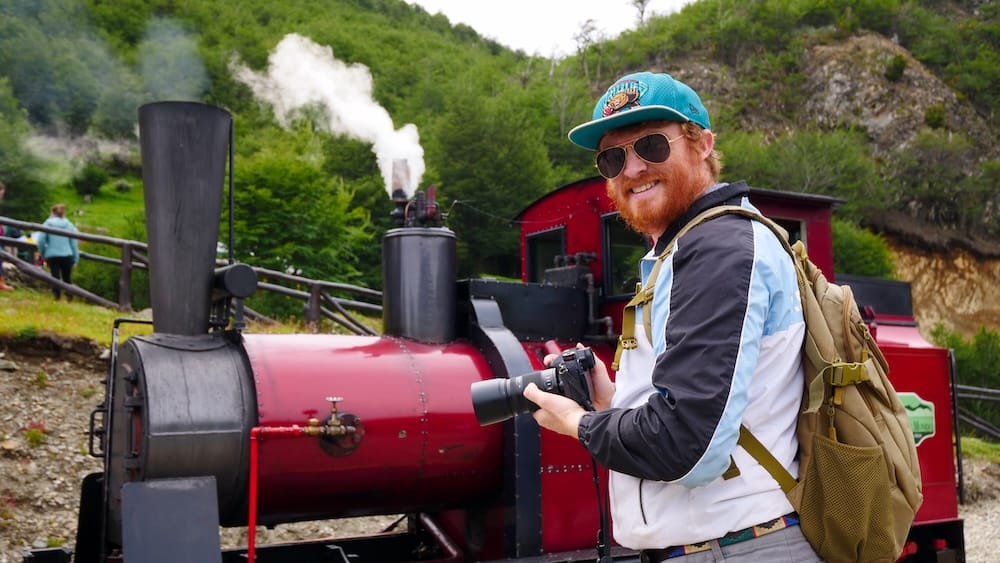
You don’t truly understand the sneaky, omnidirectional power of the southern sun until you look down at your feet after a month in Argentina and realize you’ve permanently branded geometric straps into your skin. I proudly documented Audrey’s “Teva Tan Line” for the camera—a ridiculous, blocky farmer’s foot tan that proved the sun was cooking me even when I wasn’t actively trying to catch rays.
But a funny tan on your feet is one thing. The Albedo Effect on the glaciers is entirely different.
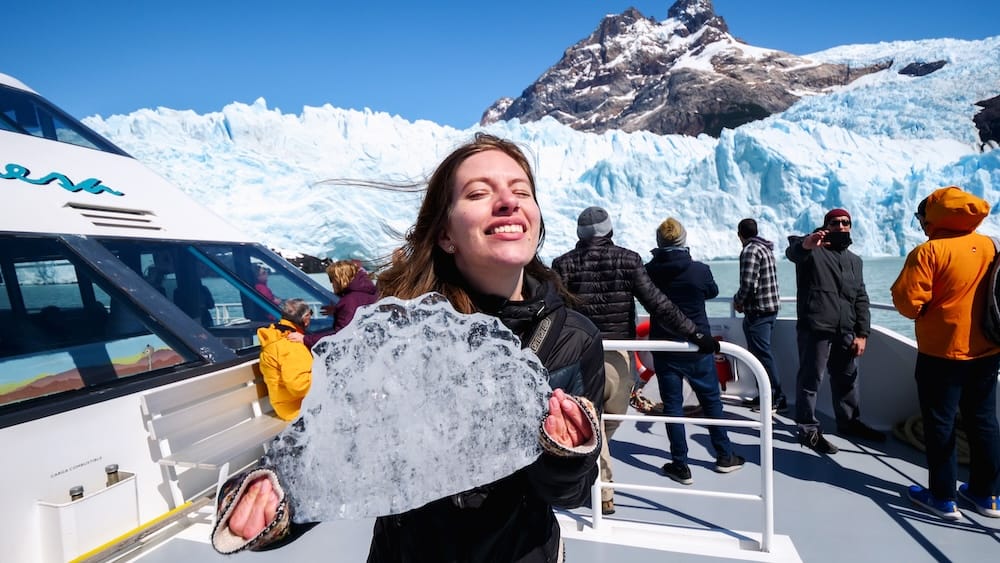
When you book an ice-trekking tour on Perito Moreno or the Southern Patagonian Ice Field, you are stepping onto a massive mirror. While a wide-brimmed hat does an excellent job protecting the top of your head, the clean glacial ice reflects up to 80% of the UV radiation straight back up.
This leads to the most painful, baffling injury in Patagonia: the under-chin burn. Hikers return to their hotels in El Calafate wondering why the underside of their chin, their earlobes, and literally the inside of their nostrils are blistered and peeling. The UV rays bounce off the ice and attack from below.
Interestingly, there is a bio-albedo paradox at play here. “Dirty” glaciers covered in cryoconite or ice algae actually have a lower albedo—they absorb more heat and reflect less light. The cleaner, more pristine, and beautifully blue the ice is, the more dangerous it is for your skin. The more breathtaking the view, the faster it will cook you.
[Samuel’s Albedo Triage Plan] > Pull your UPF neck gaiter all the way up over your nose, tucking the fabric under your sunglasses. Yes, you will look like a bank robber. Yes, your sunglasses will occasionally fog up. But you will save yourself days of agonizing pain when trying to eat a steak dinner with a blistered upper lip.
The Lens & Tech Survival Guide: Protecting Your Expensive Toys
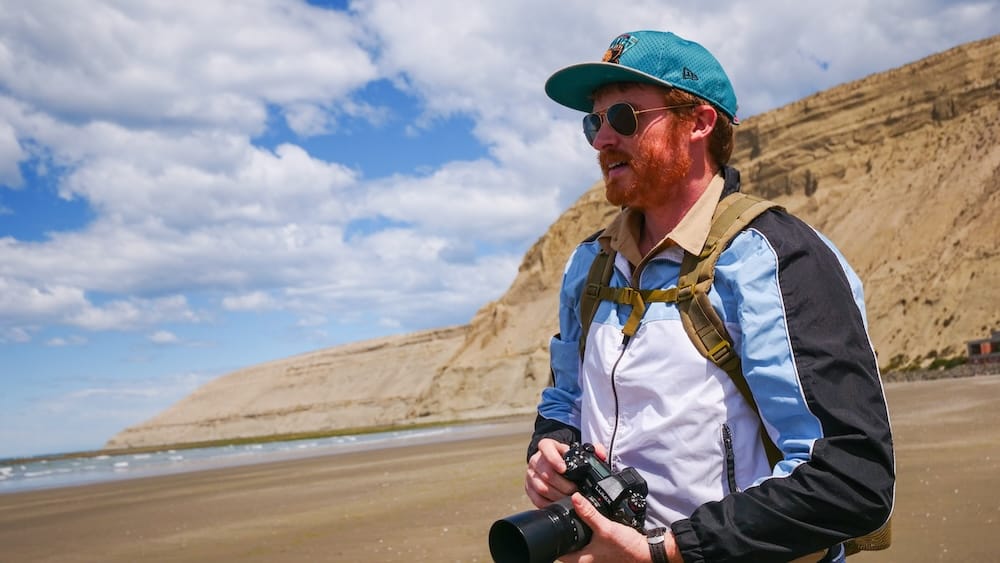
When you manage a photography archive of nearly 100,000 travel images across SmugMug and Flickr, you spend an uncomfortable amount of time zooming in on your past mistakes. As I’ve been migrating my massive catalog recently, I had to face a harsh reality: half of my early Patagonian glacier shots looked like they were taken inside a fluorescent light bulb. The Patagonian sun doesn’t just assault your skin; it is actively trying to murder your electronics and sabotage your exposures.
Let’s revisit that 38.5°C (101°F) wall of heat on the Valdes Peninsula. If you are carrying a professional, weather-sealed, matte-black camera body on a sling strap, you are essentially wearing a $2,000 solar oven. Black absorbs heat. The internal temperature of that camera will skyrocket as it bakes against your hip, leading to aggressive overheating warnings right at the exact moment a pod of orcas decides to breach.
Then, there’s the glare. We already talked about the 80% albedo reflection burning the inside of your nostrils. Now imagine what that does to your camera’s sensor. Trying to shoot the Southern Patagonian Ice Field in the middle of the afternoon without a filter is roughly equivalent to trying to photograph a flashbang grenade. Your camera meter will panic, and your highlights will be completely blown out.
Finally, we have the battery whiplash. Lithium-ion batteries absolutely despise the classic Patagonian 7°C to 38°C daily temperature swing. The freezing morning winds will trick your batteries into thinking they are dying, dropping their capacity rapidly. If you leave your spares in the outer mesh pocket of your daypack, you will arrive at the summit of Laguna de los Tres with a bag full of dead, expensive bricks.
[Samuel’s Archival Reality Check] > I have spent hours—literally days of my life—manually trying to rescue blown-out, overexposed glacier photos in Lightroom. Here is the unsexy truth: you cannot recover data from a pure white, sun-blasted pixel. Do not rely on “fixing it in post.” Spend the $60 on a high-quality CPL filter before you arrive, or prepare to have a photo album full of very crisp, very expensive white rectangles.
The Tech Triage Matrix
| The Gear Threat | The Physical Reality | The Nomadic Samuel Fix |
| The Glacier Glare (Blown Highlights) | Glacial ice reflects 80% of UV and visible light, completely confusing camera metering systems. | Mandatory CPL Filter. A Circular Polarizer cuts the glare and brings back the deep blues of the ice. Think of it as Category 4 sunglasses for your lens. |
| The Solar Oven Effect | Matte-black camera bodies absorb the intense UV and heat during afternoon hikes, causing sensors to overheat. | The Cover-Up. When not actively shooting, tuck the camera inside your light-colored sun hoodie or drape a white microfiber towel over it while hiking. |
| The Battery Death Drop | Freezing morning winds zap lithium-ion battery capacity by up to 40% before you even hit the trail. | Body Heat Incubation. Keep your spare batteries in the interior chest pocket of your base layer. Your body heat keeps the chemicals active. |
| The Micro-Grit Scratch | 80km/h winds turn trail dust into airborne sandpaper, destroying front glass elements. | The Sacrificial Shield. Keep a clear UV filter on at all times to take the physical damage, and strictly ban yourself from changing lenses in the open wind. |
The Damage Control Protocol: Surviving the Patagonian Double-Burn
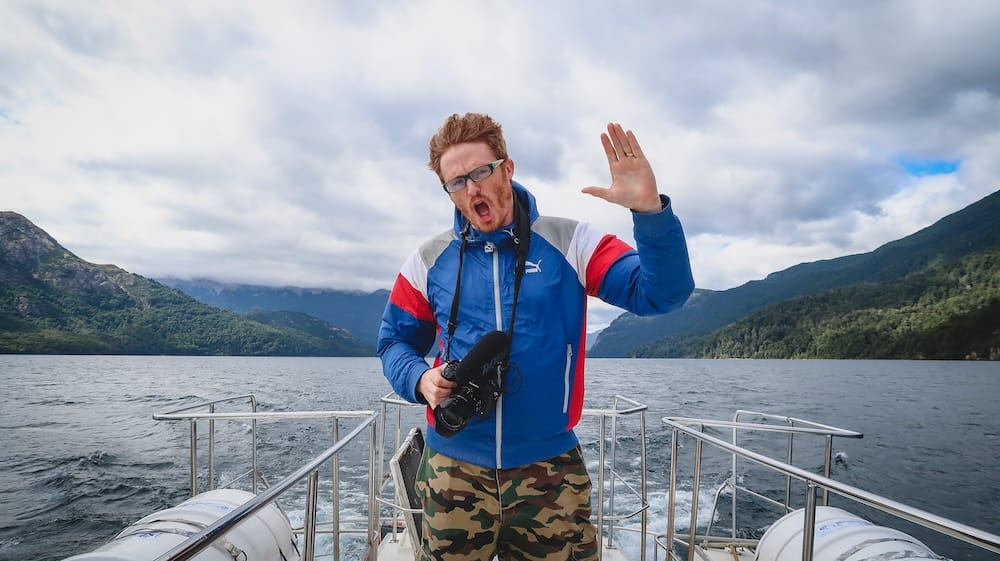
Let’s be brutally honest for a second. Despite reading the exhaustive “Action Suit” advice above, you are probably still going to mess up. I know this because I wrote the advice, and I still eff up.
You’ll take off your UPF neck gaiter for thirty minutes on the ice because you want a nice, unobstructed selfie in front of Perito Moreno. Or you’ll simply underestimate the reflection off Lake Argentino. Fast forward six hours: you are sitting on the edge of the bed in your El Chaltén Airbnb, staring into the bathroom mirror, looking like a boiled lobster, and realizing your face is radiating enough ambient heat to dry your hiking socks.
When this happens, your first instinct will be to run to the nearest pharmacy and buy the cheapest, brightest green bottle of aloe vera gel you can find. Do not do this. If you do, you are about to fall victim to the Patagonian Double-Burn.
Here is the microscopic reality of what just happened to your face: you don’t just have a sunburn; you have a windburn. The 80km/h Westerlies haven’t just dried your skin out—they have physically scoured and micro-lacerated your stratum corneum (your outermost layer of skin). You have tiny, invisible physical cuts all over your cheeks and nose.
Most commercial, cheap “after-sun” aloe gels are pumped full of alcohol to evaporate quickly and create a fake “cooling” sensation. If you smear an alcohol-based gel onto wind-chapped, micro-lacerated skin, it will feel like you just splashed gasoline on an open campfire. You will be peeling, and you will be screaming.
[Samuel’s Post-Hike Triage Warning] > I learned the Double-Burn lesson the hard way. I slapped a handful of cheap cooling gel onto a wind-scoured face after a brutal afternoon hike. I spent the next twenty minutes pacing around the hotel room flapping my hands at my own face in agonizing regret. You do not want “cooling.” You want “repair.” You need heavy, thick, boring lipids.
To fix the damage, you must navigate an Argentine farmacia. Pharmacies down here aren’t like a CVS where you just wander the aisles; the heavy-duty stuff is kept behind the counter with the pharmacists in the white coats. You need to know exactly what to ask for to fix the specific type of atmospheric damage you’ve sustained.
The Farmacia Triage Matrix
When you walk into a pharmacy on Avenida Libertador in El Calafate or near the Plaza de Armas in Puerto Natales, skip the touristy sunscreen displays by the door. Go straight to the counter and use this triage ledger:
| The Symptoms | What to Ask For (The Local Fix) | The Medical Reality | Est. 2026 Price |
| Tight, chapped, wind-scoured skin (No blistering) | “Cremas hidratantes gruesas” (Specifically ask for Dermaglós or Bagóvit). | These are the holy grail of Argentine skincare. They are thick, heavy lipid barrier creams packed with Vitamin A. They feel greasy, but they instantly seal the micro-abrasions caused by the wind. | ~$12 – $18 USD |
| Severe, radiating sunburn with potential blistering | “Platsul-A” | This is a heavy-duty silver sulfadiazine cream. In many countries, this requires a prescription for burn victims; in Argentina, pharmacists will frequently recommend it over the counter for severe glacial UV burns. It prevents infection and drastically cuts recovery time. | ~$15 – $22 USD |
| Cracked, bleeding lips | “Protector labial con manteca de cacao y filtro solar” | Do not buy standard Chapstick. The wind will strip it in ten minutes. You need heavy cocoa butter infused with SPF. Apply it violently and frequently. | ~$5 – $8 USD |
| Standard red burn, no wind-chapping | “Gel post solar (Sin Alcohol)” | If you somehow escaped the wind but got cooked by the sun, you can use aloe—but you must explicitly check the label to ensure it is 100% alcohol-free (sin alcohol). | ~$10 – $14 USD |
The ultimate post-hike triage priority is to take a lukewarm (not hot) shower to wash off the trail grit and immediately apply a thick layer of Dermaglós to repair your moisture barrier, followed by Platsul-A on the specific spots where the UV radiation did the most damage—usually the underside of your chin and the tips of your ears.
Accept that you are going to look shiny and greasy at the steakhouse that night. It is a much better alternative to shedding your skin into your Malbec over the next three days.
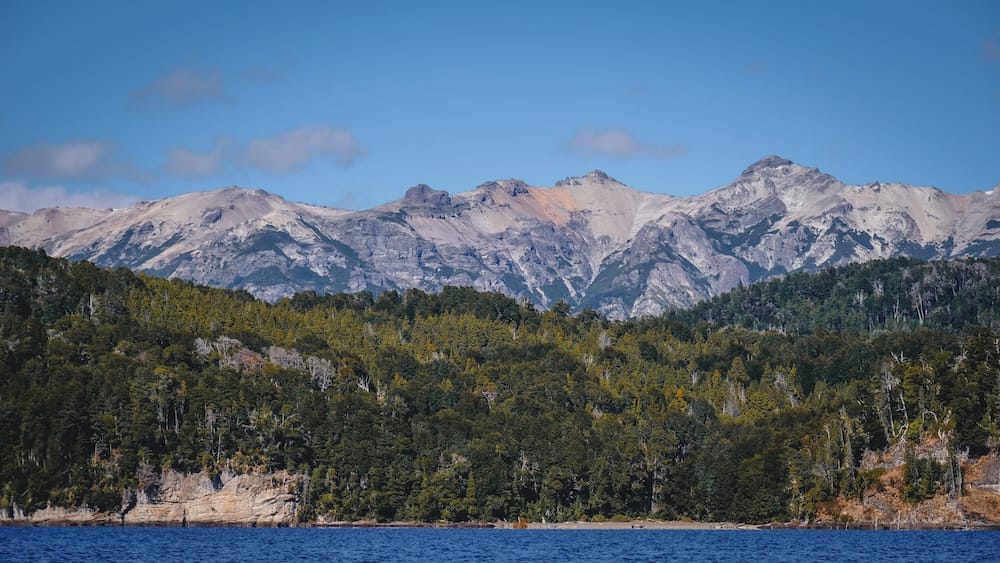
The Latitude Paradox: Why Sea Level in Patagonia Burns Like the High Andes
I used to think I understood extreme sun exposure because I’d spent time baking in the high altitudes of the Andes. When you are gasping for air at 3,400 meters in Cusco or sweating through the high-altitude deserts of Salta, you intuitively understand that you are physically closer to the sun. There is less atmosphere above you, so you burn faster. It’s basic geometry.
But Patagonia breaks this rule entirely.
Down here, you might be hiking right at sea level—like when walking the coastal trails of Tierra del Fuego or exploring the shores of the Beagle Channel. Your brain tells you that because you are at sea level, and because you are shivering in a fleece jacket, the sun is weak. You are dead wrong.
Because the Earth spins, the atmosphere is centrifugal; it bulges at the equator and thins out drastically at the poles. You literally have less physical “sky” protecting you in southern Argentina and Chile than you do in Colombia or Brazil. Combine that latitudinal thinning with the seasonal depletion of the ozone layer (the infamous Ozone Hole that actively peaks over Patagonia between September and November), and the physics of the burn change completely. You are getting blasted by high-altitude UV radiation at sea level, without the altitude sickness to serve as your early warning system.
The Atmospheric Reality Check
| The Environment | The Threat Mechanic | The Deceptive Reality | The “Friction & Fix” |
| The High Andes (e.g., Salta, Cusco) | Low Latitude / High Altitude: You are closer to the sun, but the ambient temperature often matches the sun’s intensity. | You feel the heat, so you naturally seek shade or put on a hat. Your body warns you. | Friction: Sweating off sunscreen. Fix: Standard waterproof SPF reapplication. |
| Southern Patagonia (e.g., Ushuaia, Punta Arenas) | High Latitude / Low Altitude: The atmosphere is physically thinner at the poles, and the ozone layer is depleted. | You feel 5°C (41°F) wind, so your brain turns off the “I’m burning” sensory alarm. | Friction: Zero heat warning. Fix: Setting a hard, 90-minute digital timer on your watch to reapply SPF, regardless of how cold you feel. |
The Ozone Hole and the “Semáforo UV”
While we didn’t make it as far south as Punta Arenas on this specific run, our research for upcoming destination guides revealed a critical piece of local infrastructure that perfectly encapsulates the severity of the atmosphere down here.
Because Patagonia sits directly under the seasonal thinning of the ozone layer (which peaks between September and November but remains a threat through March), the UV index regularly hits Extreme (11+). In response, the city of Punta Arenas installed the “Semáforo UV”—a network of UV Traffic Lights in public squares.
These aren’t tourist gimmicks; they are public health utilities. The physical light posts broadcast real-time radiation levels. When the light turns Red or Purple (Extremo), the locals disappear. They go indoors. Tourists, however, look up at the cloudy sky, feel the 10°C breeze, assume everything is fine, and march out into the microwave.
Never judge the Patagonian sun by the cloud cover or the temperature. The UV rays punch right through the thin, high-altitude overcast layers. If you are planning to tackle the O-Circuit or explore Tierra del Fuego, you must treat sun protection with the same logistical reverence you treat your water supply.
The 12-Hour Patagonian Daypack Matrix
Surviving a 12-hour push to Laguna de los Tres in El Chaltén or a long haul on the W-Trek requires militaristic organization. When the wind is howling at 80km/h, taking off your backpack to blindly dig for lip balm is a massive tactical error. If you open your main compartment facing the wrong direction, the wind will happily empty your bag across the steppe.
Everything must be perfectly compartmentalized. You need to access your “Armor” without stopping your forward momentum. Here is exactly how my daypack is loaded out to survive the atmospheric microwave, categorized by strictly functional zones.
The “Nomadic Samuel” Tactical Loadout
| Category | The Item | Exact Placement (Crucial) | The Logistics & Reality |
| THE CORE | 2L to 3L Water Bladder | Main compartment (hydration sleeve). | The Hydration Illusion: The wind flash-dries your sweat. You won’t feel sweaty, but you are losing massive fluid volume. Sip constantly. |
| THE CORE | Ultra-Light Wind Shell (e.g., Patagonia Houdini) | Stuffed into its own chest pocket; clipped to the outside of the pack via carabiner. | You will take this off and put it on 15 times a day. Do not bury it inside the bag. |
| THE ARMOR | Wax-Based SPF 50+ Face Stick | Right hip-belt pocket. | Zero-Stop Application: You can roll this on your nose and cheeks while walking, hands-free, without breaking stride. |
| THE ARMOR | UPF 50+ Neck Gaiter (Buff) | Worn around the neck or wrapped around the wrist. | Pull it up over your nose the second you step onto glacial ice to block the 80% under-chin UV reflection. |
| THE ARMOR | Polarized Cat 3/4 Sunglasses | On your face. Never on top of your head. | The wind will rip them off your head. Use a cheap neoprene retainer strap if you have to. |
| THE BAILOUT | Emergency SPF Lip Balm (e.g., Dermaglós Cacao) | Left hip-belt pocket. | The wind will crack your lips before it burns them. Apply every 30 minutes. |
| THE BAILOUT | Physical Cash (Pesos / CLP) | Hidden interior security pocket. | The Escape Plan: See the warning below. |
[Samuel’s Cash-in-Hand Warning] > Never hike in Patagonia relying solely on Apple Pay or a credit card for your post-hike logistics. If you get severe sun poisoning or your knees give out after 20 kilometers, you will desperately want to hail a local taxi or remise at the trailhead rather than walking the final 3 kilometers back to your hotel. Many local drivers in El Chaltén or on the outskirts of Puerto Natales operate strictly in cash, and the cellular data at trailheads is notoriously awful. Always carry the equivalent of $15 to $20 USD in crisp, local physical currency specifically designated as your “Bailout Fund.”
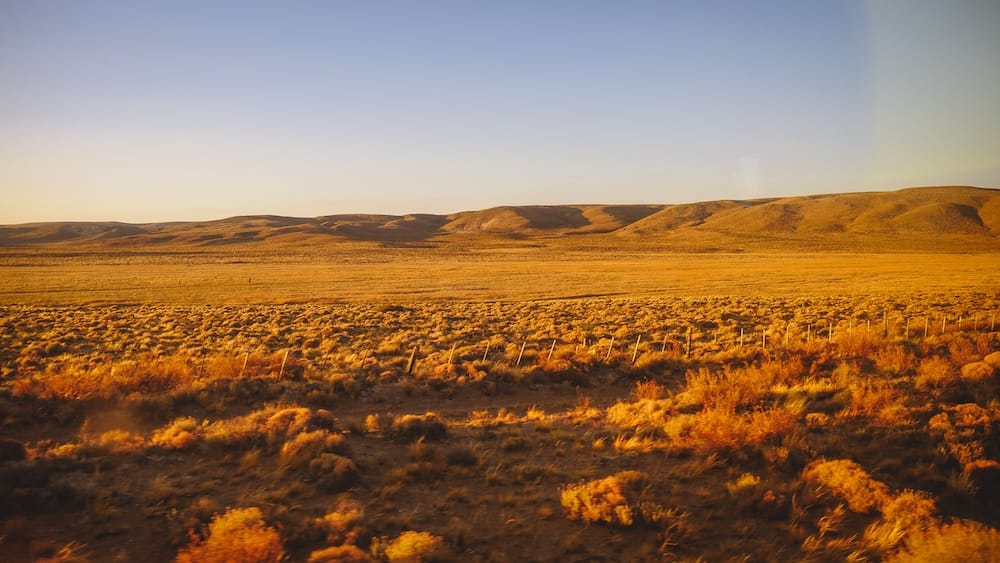
The Final Reality Check
Traveling through Patagonia is an exercise in profound humility. The environment does not care about your itinerary, your expensive camera gear, or your assumptions about cold weather.
You have to respect the extremes. You have to laugh when your cheap umbrella snaps in half, roll your eyes when your flannel shirt becomes a sweat-lodge, and humbly accept the necessity of smearing thick white paste all over your face before stepping onto a glacier.
We’ve learned these lessons the hard way so you don’t have to. Be sure to check out our video on this exact topic over on the Samuel and Audrey YouTube channel to see the “Redhead in the Wild” footage in all its peeling glory.
Stock up on face sticks in the big cities, respect the siesta hours, master your mechanical venting, and whatever you do, protect the inside of your nostrils. The glaciers are beautiful, but they are absolutely trying to burn you.
FAQ: The Sneaky Patagonia Sun — Why You’ll Get Burned on a Cold Day
Is the sun really that strong in Patagonia even when it’s freezing?
100%. The atmosphere physically thins out at the poles, and the seasonal ozone hole sits right overhead. The 5°C wind tricks your brain into feeling chilled, completely masking the fact that you are walking through a high-UV microwave.
Do I really need to bring sunscreen from home?
Highly recommended. Unless you enjoy paying a massive premium. High-quality SPF in towns like El Calafate or Puerto Natales is treated like a luxury import. Plus, if you arrive in the afternoon, you’ll hit the siesta shutdown and find all the pharmacies locked right when you need supplies the most.
Can I just use normal spray sunscreen on the trails?
Nope. An 80km/h wind will blow that mist straight onto a passing guanaco before it ever hits your arm. Aerosol sprays are also strictly banned on many glacier boat tours because the overspray makes the decks dangerously slippery. Bring a solid, wax-based SPF face stick instead.
What exactly is the “Semáforo UV”?
A literal traffic light for radiation. Cities like Punta Arenas have installed these physical light posts in public squares to broadcast real-time UV levels. When the light turns purple or red, the locals know the ozone depletion is peaking and they stay indoors. Don’t ignore them just because it’s cloudy.
Why did the underside of my chin get sunburned on the ice trek?
The Albedo Effect. Clean glacial ice acts like a giant mirror, reflecting up to 80% of UV radiation straight back up at you. Your wide-brimmed hat does nothing to stop the light bouncing off the ground. You need a UPF neck gaiter pulled up over your nose.
Does normal aloe vera work for a Patagonian sunburn?
Absolutely not. You don’t just have a sunburn; you have a windburn. The wind micro-lacerates your skin. If you put cheap, alcohol-based aloe gel on those tiny cuts, it will feel like lighting a campfire on your face. Go to the pharmacy and ask for heavy lipid creams like Dermaglós or Platsul-A.
Should I pack an umbrella for mobile shade?
Don’t even try. There is a special kind of arrogance in bringing a flimsy umbrella to a Patagonian windfight. I popped one open in Esquel and the wind destroyed it in roughly four seconds. Rely on a breathable UPF sun hoodie and a wind shell instead.
Do I need sunglasses if the forecast says cloudy?
Non-negotiable. UV rays punch right through the thin, high-altitude overcast layers down here. The glare coming off the steppe or the ice is blinding. I forgot my sunglasses for one afternoon in Esquel and felt like a blind bat. Bring polarized Category 3 or 4 lenses, and put a retainer strap on them so the wind doesn’t steal them.
Project 23 Argentina: This guide is also available in Spanish. [Lea la versión en castellano: El Sol Engañoso de la Patagonia: Por Qué te Vas a Quemar en un Día Frío]