
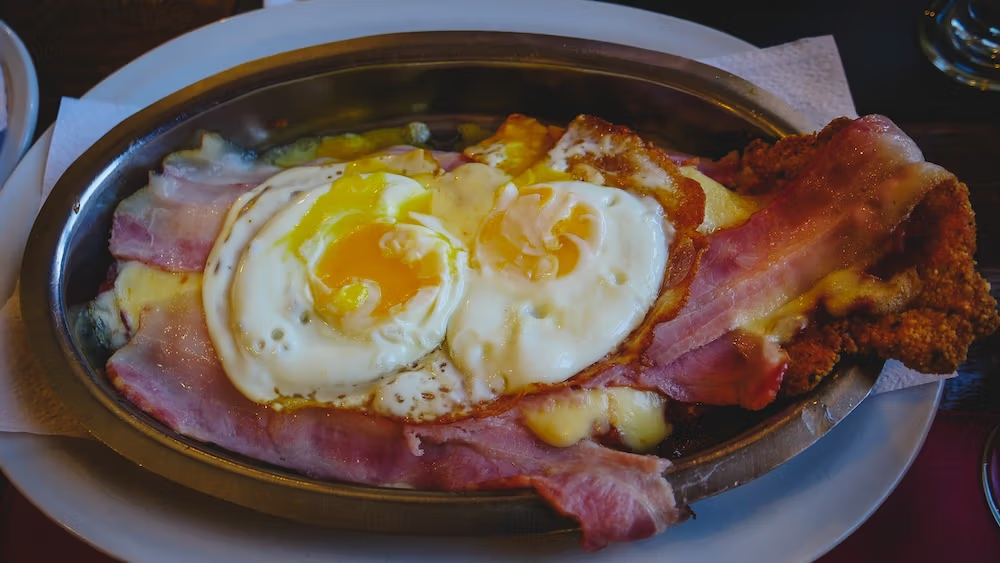
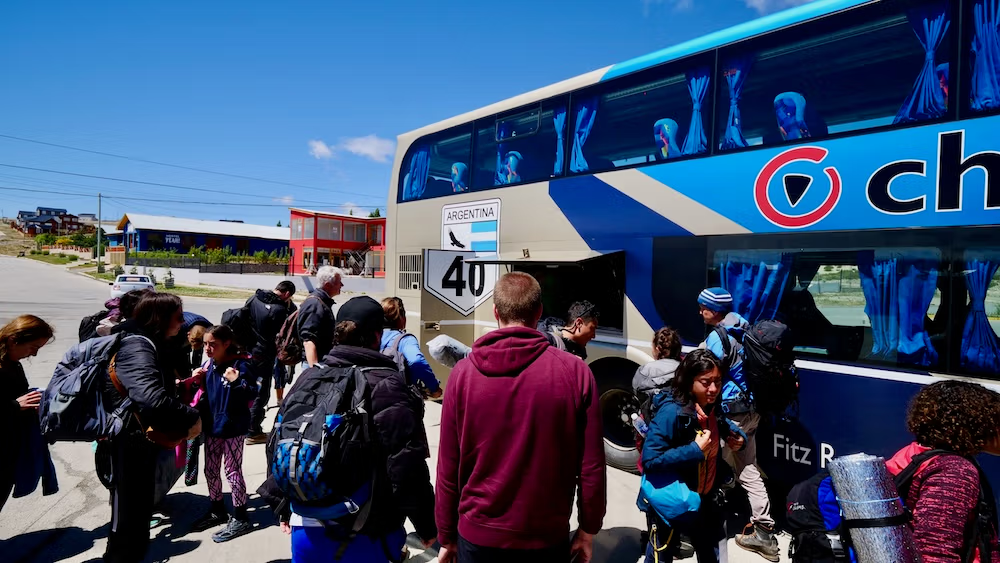
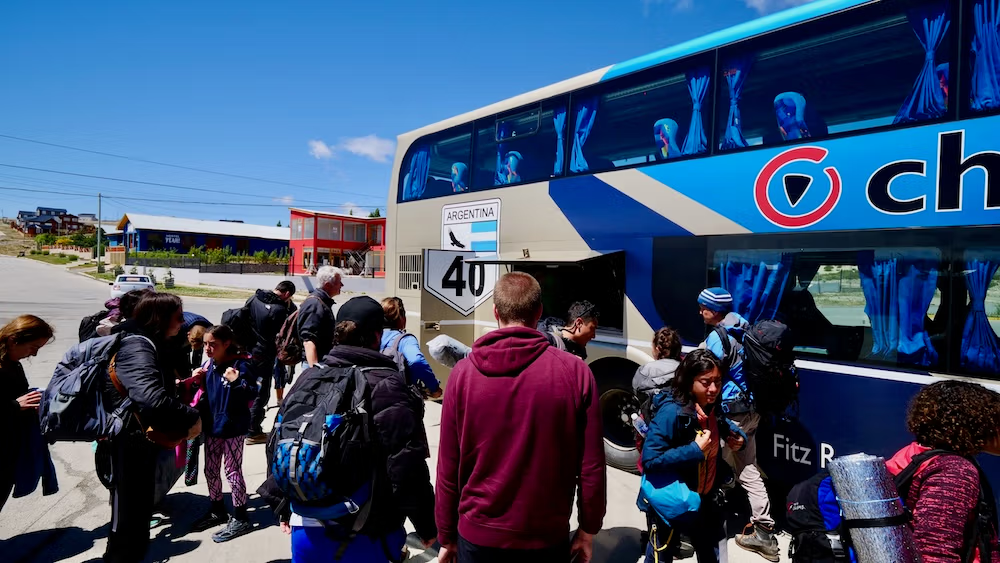
Sitting inside a packed bus terminal restaurant after an eighteen-hour highway run, staring at a massive, grease-shining milanesa napolitana while your brain tries to compute which province you just entered, is the true initiation into Patagonian travel. My partner Audrey was calmly mapping our route across the steppe while I slid down into a state of pure zombie-mode exhaustion, listening to the clatter of heavy ceramic plates and the hiss of a espresso machine. We paid roughly 1,134 pesos per person for our long-haul tickets back then, though current pricing for these long-distance overland semi-cama and cama routes scales anywhere from around $60–90 USD depending on how early you secure your positioning. If you treat this vast expanse of southern wilderness as a single, uniform destination with predictable weather, the environment will happily break your itinerary and your spirit. To help you avoid our mistakes, this guide breaks down the regional ground mechanics month-by-month, showing what each window is actually best for when you step past the glossy travel brochures.
The Seasonal Climate and Crowd Mechanics Matrix
The table below breaks down the practical trade-offs between wind velocities, daylight availability, and booking pressures across the core travel windows.
| Travel Window | Average Temperature Range | Daylight Hours | Wind Interruption Risk | Booking Pressure Tier | Primary Focus |
| Early Spring | 10°C to 14°C | 13–14 Hours | Moderate | Low Shoulder | Coastal Wildlife & Empty Trails |
| Late Spring | 13°C to 16°C | 14–15 Hours | High | Medium | Spring Births & Active Steppe |
| High Summer | 16°C to 19°C | 16–17 Hours | Extreme | Severe Peak | Complete High-Altitude Access |
| Early Autumn | 12°C to 15°C | 12–13 Hours | Moderate | Medium | Forest Foliage & Calm Waters |
| Late Autumn | 9°C to 12°C | 10–12 Hours | Low | Rapid Drop | Moody Photography & Solitude |
| Deep Winter | -2°C to 5°C | 8–9 Hours | Low | Specialized | Alpine Tracking & Snow Landscapes |
The Patagonia Priority Filter: Choose the Month Based on the Trip You Actually Want
The biggest mistake is asking, “What is the best month to visit Patagonia?”
That sounds like a reasonable question until Patagonia starts behaving like Patagonia.
A better question is: “Best month for what?”
Best for penguins is not best for autumn foliage. Best for long hiking days is not best for quiet photography. Best for families is not always best for serious trekkers. Best for cheaper lodging may also mean fewer buses, closed restaurants, and the deeply humbling experience of eating gas-station alfajores for lunch while staring at a locked museum door.
So before you start booking flights, pick your main priority. Not three priorities. Not a fantasy version of the trip where you get perfect wildlife, empty trails, cheap rooms, warm weather, long daylight, and fully open transit all at once.
Pick one main priority, then choose the month that gives you the best odds.
What Each Patagonia Month Is Actually Best For
| Your Main Priority | Best Month or Window | Why It Works | What You Give Up |
|---|---|---|---|
| Penguin colonies and coastal wildlife | October | Marine wildlife is active before the deepest summer crowds arrive | Some mountain routes still feel early-season and unsettled |
| Spring flowers and newborn guanacos | November | The steppe wakes up, Notro blooms appear, and lodging pressure is still lower | Wind can be brutal and some services are still ramping up |
| Maximum daylight for big hiking days | December | Long evenings give you a safer margin on demanding trails | Holiday crowds and rising prices arrive fast |
| The most open infrastructure | January | Buses, trails, refugios, camps, restaurants, and tours are running at full strength | Crowds, booked-out rooms, and trailhead pressure |
| Cultural festivals and summer food events | February | Cholila and other regional gatherings bring the social side of Patagonia alive | You still need to book ahead and expect heat, wind, and crowds |
| Autumn photography and quieter trails | March | Lenga forests shift colour, winds ease, and crowds thin noticeably | Shorter days and colder mornings |
| Moody solitude and serious landscapes | April | The region feels raw, quiet, and atmospheric | Services start disappearing and late-month travel gets trickier |
| Puma tracking and snow landscapes | May to September | Winter pushes wildlife lower and creates stark photographic conditions | This is specialized travel, not casual sightseeing |
This is why two travelers can visit Patagonia in different months and both come home convinced they chose correctly.
The wildlife traveler who loves October is not wrong. The first-time hiker who chooses January is not wrong. The photographer who swears by March is not wrong. They are simply optimizing for different versions of Patagonia.
The trouble starts when you want October wildlife, January services, February festivals, March light, April solitude, and winter pumas in one tidy ten-day trip.
Patagonia does not offer that package.
Choose the month that matches your real reason for going, and the rest of the planning gets much easier.
Core Regional Field Operations and Cost Structures
Before navigating the specific calendar slots, you need a clear breakdown of the real-world operational costs for major park assets and regional transit connectors.
| Venue or Activity | Current Estimated Cost (USD) | Standard Wait Times | Core Payment Reality | Primary Field Friction |
| CONAF Park Entrance (Chile) | Around $40–55 USD | 30–45 Minutes | Digital Pre-Purchase Only | Rigid ticket tiers lock you to specific trails |
| Lake Pehoé Catamaran | Around $35–55 USD | 45–60 Minutes | Cash Only (USD or CLP) on board | High winds completely halt operations |
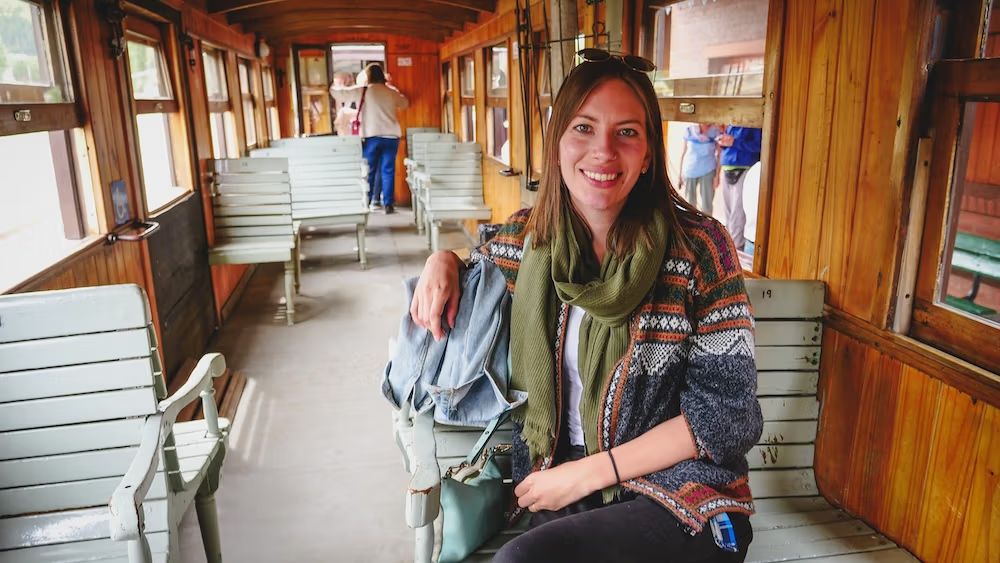
| La Trochita Steam Train | Around $40–60 USD | 30 Minutes | In-Person Bank Transfer Required | Alternating vintage engines limit weekly slots |
| Regional High-Season Dining | Around $25–35 USD | 40–90 Minutes | Cash Disbursal Discounts Common | Separate fees charged for pasta bases and sauces |
| National Park Entry (Argentina) | Around $30–50 USD | 15–20 Minutes | Hybrid Card / Cash Allowed | Digital terminal drops cause long gate lines |
The Spring Awakening and Coastal Wildlife Window
October
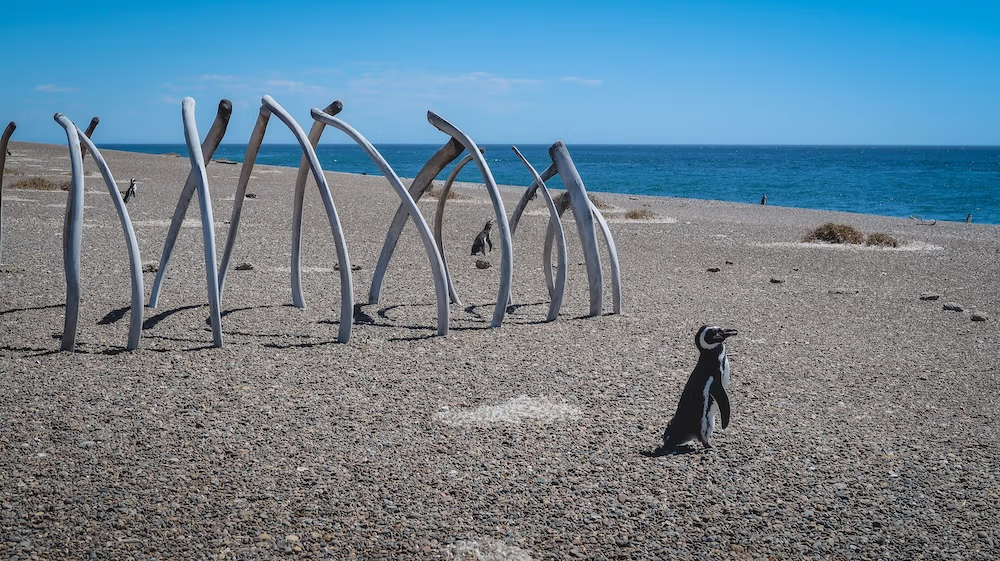
Stepping off the long-haul bus into the coastal wind of northern Patagonia reveals a landscape that is just beginning to shake off the winter freeze. October is the absolute premier window for observing marine wildlife before the overwhelming summer crowds arrive to clog the view. Down at Estancia San Lorenzo, Magellanic penguins arrive by the thousands to dig out their shallow dirt nests beneath the low-lying shrubs. We paid 600 pesos back during our initial coastal loops, but present-day international entry fees range anywhere from around $25–40 USD depending on seasonal updates.
The walking trails here are defined by white stones, and visitors must give the penguins a strict two-meter right of way as they march down to the surf. If you cross over to the Chilean side of the border this early, you will encounter the brand-new, route-differentiated park structure on pasesparques.cl. Buying a standard “Base Torres” day ticket pass, which runs around $40–55 USD, locks your itinerary into that single valley. If you attempt to alter your plans on the ground and connect into the wider W Trek network, park rangers at the internal Campamento Chileno checkpoint will promptly turn you back and void your registration.
November
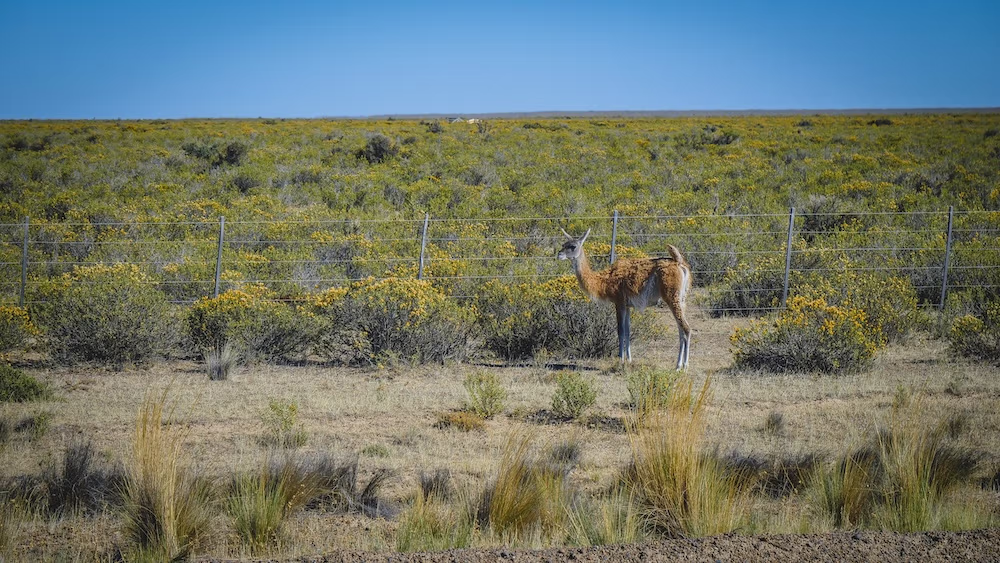
By November, the bright red blossoms of the native Notro bushes explode across the river valleys, signaling the true arrival of spring. This is the optimal value window for independent trekkers who want to balance active wildlife encounters with lower lodging rates before the peak summer pricing matrix takes effect. Out on the dry, gravelly steppe, herds of agile guanacos actively guide their newborn calves, or chulengos, across the terrain, routinely leaping over ranch fences with incredible precision.
However, this transition brings a dramatic atmospheric trade-off that standard travel guides tend to minimize. As warm northern air masses collide with the massive frozen expanse of the Southern Patagonian Ice Field, barometric pressures plunge, triggering ferocious wind gusts that routinely break cheap street gear. Leave your standard umbrellas at home; the coastal and mountain winds will bend them into useless metal scraps within minutes. Independent hikers need high-end windproof shell jackets and telescoping trekking poles to maintain balance on the exposed ridges.
                  ┌────────────────────────────────────────┐
                  │   VERTICE PATAGONIA (Western Refugios) │
                  └───────────────────┬────────────────────┘
                                      │
                         Releases Inventory Weeks Apart
                                      │
                                      ▼
                  ┌────────────────────────────────────────┐
                  │  TORRESHIKE PLATFORM (Eastern Refugios)│
                  └────────────────────────────────────────┘
The Refugio Sequential Booking Trap
Independent trekkers attempting to assemble an unbroken multi-day chain along the W Trek frequently make the mistake of waiting for a single, unified reservation launch. The two private concessionaires handling the trail network—Vértice Patagonia and Las Torres Patagonia—release their booking calendars weeks apart without any structural coordination. To prevent your itinerary from falling apart, you must secure your western anchor points through Vértice the second they go live, then systematically build your path backward or forward using the TorresHike platform when their inventory waves finally drop.
The High Summer Push and Small-Town Blackouts
December
With daylight metrics climbing to an incredible seventeen hours per day, December allows you to hit the mountain trails at dawn and still catch the rich orange alpenglow on the granite faces as late as half-past nine at night. This massive daylight window provides an excellent safety margin for grueling high-altitude tracks, but it introduces severe structural pressure on the regional transit hubs. The holiday season brings a massive influx of local South American travelers, completely overwhelming the terminal systems in El Calafate and Puerto Natales.
If you are navigating the backcountry around El Chaltén, the national park requires an in-person safety briefing and registration logbook sign-in at the small Avenida Güemes ranger office before you attempt advanced tracks like the Loma del Pliegue Tumbado. Arriving at the office at half-past eight on a clear summer morning will pin you to the back of a hundred-person line, delaying your start by hours. The professional workaround is to complete your safety logging between four and six o’clock on the previous afternoon, leaving you free to clear the town limits at first light.
January
January brings the most statistically stable weather window for clear views of Mount Fitz Roy, but it also exposes the reality of small-town infrastructure blackouts. Walking out of a rural bus terminal on a hot Sunday afternoon can feel like entering a complete desert ghost town where every commercial steel shutter is firmly pulled down. Independent travelers who rely entirely on digital map pins will quickly find that local life completely overrides online business listings early in the week.
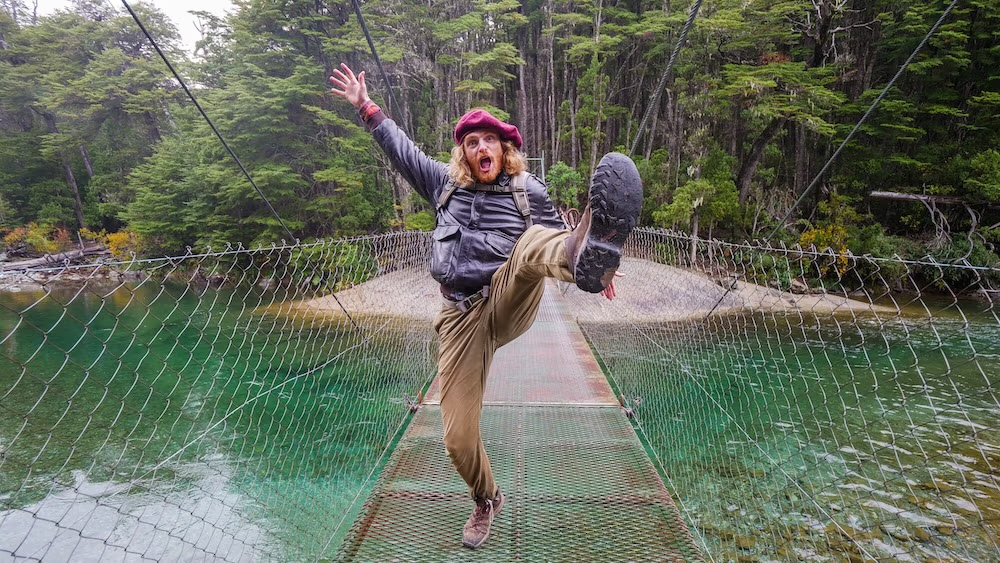
We once spent a completely failed Monday afternoon in the remote village of Dolavon after discovering every single cultural site, flour mill, and local restaurant was locked up for a multi-day operational break. We ended up sitting at a dusty roadside gas station, drinking bitter grapefruit-flavored Paso de los Toros soda and eating triple-layered chocolate alfajores just to get some sugar into our blood. The walkability from the local transit stops to the central squares across these lower valley towns averages a flat fifteen to twenty minutes along unshaded asphalt. Always cross-check operating hours with an official municipal information center upon arrival rather than trusting an app, and keep backup rations in your pack if you travel on a Monday or Tuesday.
February
February represents the absolute peak of regional cultural integration, highlighted by the massive open-air gatherings of the Fiesta Nacional del Asado in the valley of Cholila. Our own arrival in the area began with a classic travel mishap: we drove an hour out to the festival grounds only to discover our online scheduling notes were off by twenty-four hours, leaving us standing next to cold, unlit pits. We modified our plans on the fly and pivoted ten kilometers into the outskirts to explore the abandoned log cabins of Butch Cassidy’s old ranch, wandering past wild horses into the decaying timber structures where the outlaw once slept.
Returning to the festival the next morning revealed the scale of traditional Patagonian open-pit cooking: volunteer grill masters working through choking wood smoke to prepare over ten thousand kilos of beef and hundreds of lambs pinned to massive iron crosses. The flavor profile of true wood-fired cordero patagónico is deeply defined by the high salinity of the steppe grasses the animals feed on, producing a naturally tender, savory meat that easily pulls away from the bone. A full festival plate shared between two people will run you anywhere from around $12–18 USD, and you can top off the meal with fresh wood-fired empanadas or a local dessert of seasonal raspberries smothered in heavy whipped cream.
The Autumn Foliage and “Dodo Bird” Traps
March
As the legendary mountain winds drop significantly, March introduces a dramatic seasonal shift as the native Lenga forests turn brilliant shades of copper and deep crimson. The air temperature drops rapidly as the sun goes down, often swinging fifteen to twenty degrees between a sunny afternoon and an alpine morning, which will test the limits of your wardrobe. This is a phenomenal month for detailed landscape photography, but the shifting light can easily distract you from basic backcountry navigation.
During an afternoon loop through the ancient cinnamon-barked trees of the Bosque de Arrayanes near Villa La Angostura, we found ourselves acting like absolute dodo birds on the trail. We were so preoccupied with tracking the soft golden hour light hitting the orange tree trunks that we missed a small rope barrier, took a wrong turn at a junction, and walked a grueling, redundant twelve-kilometer circle right back to our original starting point on the boardwalk. Private single-way boat transfers along the peninsula currently cost anywhere from around $15–25 USD per person, while the separate national park entry ticket adds around $8–12 USD to your daily operations tally.
                  ┌────────────────────────────────────────┐
                  │    MISS THE ROPE BARRIER TRANSITION    │
                  └───────────────────┬────────────────────┘
                                      │
                         Triggers Twelve-Kilometer Loop
                                      │
                                      ▼
                  ┌────────────────────────────────────────┐
                  │   RETURN DIRECTLY TO THE START POINT   │
                  └────────────────────────────────────────┘
April
April offers a deeply atmospheric, moody solitude across the southern Andes, but it requires navigating a rapidly shrinking infrastructure window. The landscape becomes dead quiet as the final autumn leaves drop, but major trail segments and backcountry camp infrastructures completely dismantle their operations around the twenty-fifth of the month. Attempting a multi-day independent trek late in April can leave you physically stranded without emergency shelters or functional toilet facilities.
If you are planning an alternative route during the late autumn shift, the lesser-known desert paths of Piedra Parada offer a fascinating change of scenery roughly one hundred and thirty kilometers east of Esquel. The environment transitions from damp forests into a stark, red volcanic canyon wall environment where giant, two-hundred-meter stone monoliths tower over the Chubut River valley. Organized small-group day tours out of Esquel into the canyon run anywhere from around $50–70 USD per person, which generally includes a guided walk to the historic pre-Tehuelche cave paintings and a simple trailside lunch of baked ham and cheese empanadas.
The Deep Winter Frontier and Sub-Zero Tracking
May to September
The deep winter months turn the entire southern half of the continent into a frozen, sub-zero alpine frontier where standard tourism infrastructure goes completely dark. Deep winter temperatures across the lower trekking routes routinely plunge between -10 to -17, causing severe mountain pass ice build-ups that legally require a certified CONAF guide to navigate. While standard hiking routes are entirely locked down, this frozen window represents the absolute pinnacle for specialized, high-end puma tracking expeditions along the eastern fringes of Torres del Paine.
Because the massive herds of wild guanacos descend from the high, snow-choked mountain ridges to forage for grasses on the lower, wind-swept steppe, the regional pumas follow their primary food source down into the valleys. The stark white snow contrast provides field trackers with near-perfect visibility for spotting camouflaged apex predators moving across the open plains. These highly specialized tracking programs are operating on strict environmental safety permits and utilize private, radio-connected 4×4 vehicles; a dedicated multi-day winter tracking itinerary will scale anywhere from around $2,000–3,500+ USD depending on your outfitter selection.
The Lake Pehoé Catamaran High-Wind Trap
Do not assume that regional transit schedules are a guaranteed mechanical reality on the ground. The critical Lake Pehoé catamaran connecting Pudeto to the Paine Grande campsite does not accept electronic credit cards, dynamic digital wallets, or pre-paid tour vouchers on board; missing the cash fee means you are denied boarding on the dock. Furthermore, when mountain wind velocities cross the 100 km/h threshold, maritime authorities instantly halt boat operations, trapping hikers at the Paine Grande refugio and forcing immediate, emergency campsite extensions that will disrupt your entire connecting airline chain.
The Month You Should Probably Avoid
Every month in Patagonia has a fan club.
Every month also has someone who should probably stay away from it.
That sounds harsh, but it is better to know this before you are standing in a windy parking lot wearing the wrong jacket, holding an expensive ticket for a boat that is not moving.
Some months reward flexibility. Some reward booking discipline. Some reward strong knees and a headlamp. Some reward people who can shrug when lunch becomes a chocolate alfajor from a gas station.
The wrong month is not the month with the worst weather. It is the month whose problems irritate you the most.
Match the Month to Your Personal Breaking Point
| Avoid This Month | If You Cannot Stand | Why It May Frustrate You |
| October | Mud, uncertainty, and partial services | Spring is waking up, but it has not fully committed to being useful yet |
| November | Wind and fast-changing weather | The landscape is alive, but the air can still slap your plans around |
| December | Holiday crowd pressure | Long daylight is wonderful, but everyone else has noticed too |
| January | Fully booked rooms and crowded trailheads | The classic Patagonia machine is running, but it is running with a lot of people inside it |
| February | Festival timing and summer prices | Cultural events are fantastic, but bad planning can leave you a day early or priced out |
| March | Cold mornings and shorter hiking windows | It is beautiful, but you need to move with more discipline |
| April | Closed services and reduced transport | The mood is incredible, but the safety net starts disappearing |
| May to September | Independent improvisation | Winter Patagonia is not a casual wing-it destination |
This is where you have to be honest with yourself.
If missing one bus connection will ruin your mood for two days, do not build a late-April itinerary full of reduced schedules. If crowds make you miserable, do not pretend January will feel like a private wilderness retreat. If you hate booking months ahead, do not plan a peak-season W Trek and then act surprised when the refugios are gone.
I say this as someone who has repeatedly chosen the hard way first and the smart way second.
The month is not just a weather choice. It is a stress choice.
Pick the stress you can live with.
The Two-Region Rule: Do Not Plan One Patagonia Month for the Whole Map
Patagonia is too big to behave like one place.
That is one of those sentences that sounds obvious until you start planning. Then suddenly you are trying to make Peninsula Valdés, El Chaltén, Bariloche, Torres del Paine, Chubut, and Tierra del Fuego all fit into the same month as if they are different rooms in one large hotel.
They are not.
A month that is brilliant for coastal wildlife can still be awkward for high mountain trekking. A month that is perfect for Bariloche foliage can be too late for certain backcountry services in Torres del Paine. A month that gives you quiet towns in Chubut may also give you quiet towns because half the doors are closed.
So instead of asking whether a month is good for Patagonia, ask whether it is good for the region you are actually visiting.
Patagonia Regions by Seasonal Strength
| Region | Best Seasonal Window | What It Is Best For | Main Caution |
| Peninsula Valdés and the Atlantic coast | October to November | Penguins, marine wildlife, quieter coastal travel | Wind and long overland distances |
| El Chaltén and Los Glaciares | December to March | Hiking, Fitz Roy views, long daylight, classic trail access | Crowds in peak summer and colder shadows in autumn |
| Torres del Paine | December to March | W Trek access, refugios, catamaran links, mountain scenery | Booking pressure in summer and service cutbacks later |
| Bariloche and the Lake District | March to April | Autumn colours, lakes, food, photography, softer travel days | Cold mornings and shorter daylight |
| Chubut Welsh towns and steppe villages | Wednesday to Sunday year-round, best in warmer months | Tea houses, local history, festivals, cultural stops | Monday and Tuesday closures can flatten the whole day |
| Tierra del Fuego | Summer for access, shoulder season for mood | End-of-the-world landscapes, coastal weather, dramatic skies | Cold, wind, and reduced comfort margins |
This is why a month-by-month guide needs regional logic.
October may be a smart coastal wildlife month, but that does not automatically make it ideal for every mountain pass. March may be a dream for forest colour, but it does not mean every camp, boat, and bus has the same frequency it had in January.
The practical answer is to pick one main region and let that region decide the month.
A Peninsula Valdés trip should not be planned with the same calendar brain as a Torres del Paine trek. A Bariloche photography trip should not follow the same logic as a February festival run to Cholila.
The map may say Patagonia.
The calendar says, “Which Patagonia?”
The Barometric Plunge Engine
┌──────────────────────────────┐       ┌──────────────────────────────┐
│  PACIFIC AIRMASS (Warm/Wet)   │ ───► │  PATAGONIAN ICE FIELD (Cold)  │
└──────────────────────────────┘       └──────────────┬───────────────┘
                                                      │
                                           Plunges Barometric Pressure
                                                      │
                                                      ▼
┌──────────────────────────────┐       ┌──────────────────────────────┐
│   MOUNTAIN CHANNELS (Funnel)  │ ───► │ EXTREME HIGHLAND GUSTS (Wind)│
└──────────────────────────────┘       └──────────────────────────────┘
Essential Pre-Trip Ground Mechanics and Financial Realities
Independent travelers navigating the small mountain towns must adapt to several unique regional payment systems that can easily disrupt a standard travel budget. One of the most surprising quirks inside traditional Argentine pasta houses is the mandatory structural division of your lunch bill. When you order a classic dish like plump, handmade ricotta ravioli or a rich plate of beetroot gnocchi, the menu price reflects only the dry noodle basket itself. The accompanying sauce—whether it is a potent, creamy roquefort cheese blend or a rich mushroom and bacon gravy—is billed as an independent, secondary line item that frequently equals the cost of the pasta, effectively doubling your expected dining expense.
                  ┌────────────────────────────────────────┐
                  │    THE DRY PASTA BASE TICKET PRICE     │
                  └───────────────────┬────────────────────┘
                                      │
                         Billed Separately From Toppings
                                      │
                                      ▼
                  ┌────────────────────────────────────────┐
                  │   THE MANDATORY SECONDARY SAUCE FEE    │
                  └────────────────────────────────────────┘
Maximizing your physical currency parity is a critical skill when checking out at small, independent lakeside venues. When ordering local grilled trout or a quick mid-afternoon empanada snack at beachside outposts like Quila Quina, always ask the server for the physical notes rate. Settling your final restaurant bill with crisp, physical currency notes rather than swiping an international plastic card will frequently net you an immediate, flat twenty percent cash discount on the spot.
Conversely, do not expect to save money on daily staples inside the regional chain supermarkets if you rely on specific imported items. Finding plain, sugar-free instant coffee for your morning trail flask is incredibly difficult because local processing plants heavily coat their standard coffee grounds in cheap sugar torrefacto. If you want a clean, bitter black coffee before a long mountain run, you will be forced to pay a high, inflated premium range of around $8–12 USD for a basic jar of imported Nescafe.
Finally, reserving slots on legendary transport lines like the historical La Trochita steam train requires navigating a dated financial workflow. The vintage narrow-gauge line does not utilize a standard online digital checkout portal or accept international web vouchers for individual bookings. Independent travelers must obtain the official operator account details, walk into a physical brick-and-mortar branch of Banco Patagonia, and wait in a manual teller line to complete a direct wire transfer to lock in their seat assignment. Current verified tickets for the two-hour vintage steam loop run anywhere from around $35–50 USD per person, and the investment is entirely worth it to watch the old firewood-stoked stove heaters warm the wooden carriages as you roll out into the vast wilderness.
Frequently Asked Questions
Can I travel between Argentina and Chile on foot?
Yes, but it requires preparation. You can legally hike across the border through the Valdivian forest from Lake Puelo in Argentina directly into Chile. However, this is not a casual afternoon stroll; you must carry your own self-sustained camping equipment, food, and gear. Most importantly, you must clear formal passport control checkpoints along the way, so your documentation must be physically immaculate.
Do I really need to buy park tickets in advance for Torres del Paine?
Absolutely, it is mandatory. Chile’s CONAF has entirely digitized its entry operations on pasesparques.cl. You cannot show up at the Laguna Amarga gate with cash or a credit card expecting a physical transaction. If you arrive without a downloaded QR code on your phone matching your specific trail itinerary, you will be denied entry on the spot, breaking your entire trip chain.
Is it safe to drink the tap water or stream water in Patagonia?
Generally yes, but with exceptions. The water inside major towns like El Chaltén, Puerto Natales, and Bariloche is perfectly safe. Out on the main backcountry trails, glacial streams are incredibly pure, and most hikers drink directly from them without filtering. However, you should never collect water downstream from active horse trails or heavily trafficked campsites; always pack a lightweight water filter or purification tabs just in case.
What happens if the Lake Pehoé catamaran is canceled due to weather?
You wait it out. When mountain wind velocities cross the critical 100 km/h threshold, maritime authorities instantly halt boat operations for basic safety. This will trap you at the Paine Grande refugio, forcing emergency campsite extensions and causing a domino effect that can break your connecting airline chain. Always build a 24-to-48-hour buffer window into your itinerary to handle these inevitable weather disruptions.
Can I visit the regional Welsh towns on a Monday or Tuesday?
Skip early-week visits if you want the full experience. While you can physically walk around towns like Gaiman or Dolavon any day, Mondays and Tuesdays are notorious infrastructure blackouts. Most cultural sites, historic flour mills, and traditional restaurants are locked up tightly for an operational break. For the best experience—and to avoid eating a sad lunch at a local gas station—plan your cultural excursions between Wednesday and Sunday.
Do Patagonia restaurants accept credit cards for payment?
Yes, but physical currency is king. Most established eateries in hubs like El Calafate or Villa La Angostura process international plastic cards automatically via the tourist MEP rate. However, smaller lakeside venues or remote mountain outposts frequently suffer from satellite connection drops. Settling your bill in physical currency notes can often net you an immediate, flat 20% cash discount on the spot.
Why is eating pasta in Argentina more expensive than I expected?
Because of the “sauce tax.” Inside traditional Argentine pasta houses, menus utilize a separate billing structure. The listed price handles only the dry noodle base. The actual sauce—whether it is a simple tomato marinara or a potent roquefort cream blend—is billed as an entirely independent line item that can easily double the expected cost of your meal.
Can I easily find sugar-free instant coffee in local supermarkets?
No, it is surprisingly difficult. Regional processing plants heavily favor torrefacto coffee, which means the beans are roasted with a cheap sugar coating. Finding standard, pure instant coffee for your morning trail flask requires searching for imported brands like Nescafe, which carry a heavy financial premium. If you are particular about your morning brew, pack your own instant coffee from home.
Project 23 Argentina: This guide is also available in Spanish. [Lea la versión en castellano: Mejor época para viajar a la Patagonia mes a mes: Qué hacer en cada temporada]