
When Audrey and I planned our visit to Noboribetsu, we were particular about one thing: the hotel. We weren’t travelling to one of Hokkaido’s best-known hot-spring towns to sleep in a conventional room, grab breakfast somewhere and call it a day. We wanted the baths, the Japanese-style accommodation, the meals and the chance to spend a couple of nights properly settling into onsen life. Finding the right property was worth doing our homework for.
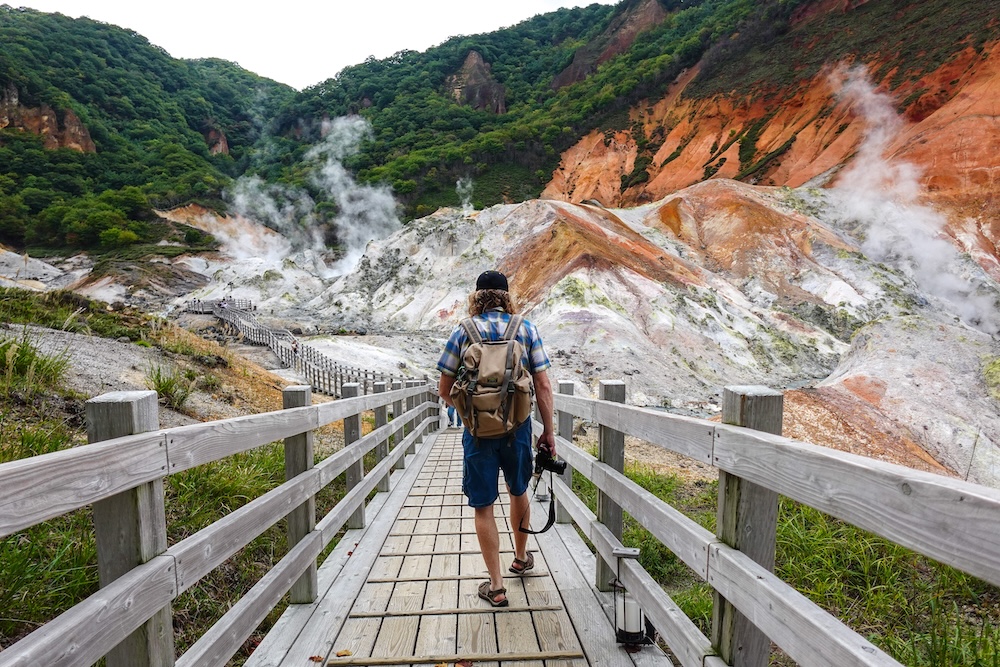
The sightseeing? We took a much looser approach. We arrived by JR train from Hakodate, caught a local bus uphill to Noboribetsu Onsen, then explored Hell Valley, Oyunuma, the natural footbath and the town’s collection of fearsome demon statues under our own steam. Some of the walking gave us a decent workout, but finding our way around wasn’t difficult. In fact, being able to wander without watching the clock was a big part of the pleasure.
That distinction still shapes how I’d plan Noboribetsu. Certain reservations protect an experience you can’t easily recreate after arrival; others simply pay somebody to organize an outing you could comfortably do yourself. Here’s where I’d put the effort, where I’d keep my options open and when I’d consider paying for a guide.
What actually needs booking in Noboribetsu?
There are three different questions hiding inside “Should I book ahead?” Does a service require a reservation? Would reserving improve your experience? Or can you just show up, provided the place is open and you can reach it? Mixing those together is how a relatively simple visit starts to look like a logistical nightmare.
| Experience | Booking decision | What matters |
|---|---|---|
| Onsen hotel or ryokan | Book your preferred stay ahead | Location, room type, baths and meals |
| Hotel dinner and breakfast | Choose the right room package | Meal inclusions and arrival cutoff |
| JR limited express | Arrange a reserved seat | Train, pass conditions and connections |
| JR station–onsen local bus | Usually decide on arrival | Timetable and accepted payment |
| Direct Sapporo express bus or hotel shuttle | Check advance-reservation rules | Service-specific eligibility and deadlines |
| Hell Valley, Oyunuma and natural footbath | Explore independently | Trail access, weather and walking effort |
| Day-use onsen | Check the chosen facility | Admission hours and bathing conditions |
| Enmado and town sights | Generally explore independently | Performance times and event exceptions |
| Guided group or private tour | Book only if its format suits you | Actual time in Noboribetsu, guiding and flexibility |
For our two-night stay, the accommodation and rail arrangements deserved preparation. Most of what we did once we reached town did not require an advance sightseeing booking. If you’re already choosing dates, you can compare Noboribetsu hotels and ryokan, paying particular attention to which properties are actually in the onsen district rather than near the railway station.
Book the onsen stay you want, not just the cheapest room
We chose Park Hotel Miyabitei for the whole experience
We researched accommodation in advance and booked Meito no Yado Park Hotel Miyabitei, in the heart of Noboribetsu Onsen. The central location was deliberate: we wanted to walk to the geothermal sights and find lunch around town without needing a taxi or rental car every few hours.
There’s a geographic trap here. JR Noboribetsu Station and Noboribetsu Onsen are not the same place. The hot-spring district sits roughly eight kilometres inland from the railway station. A hotel near the tracks might suit a different itinerary, but it isn’t a substitute for staying among the baths, restaurants and walking trails if that’s the experience you’re paying for.
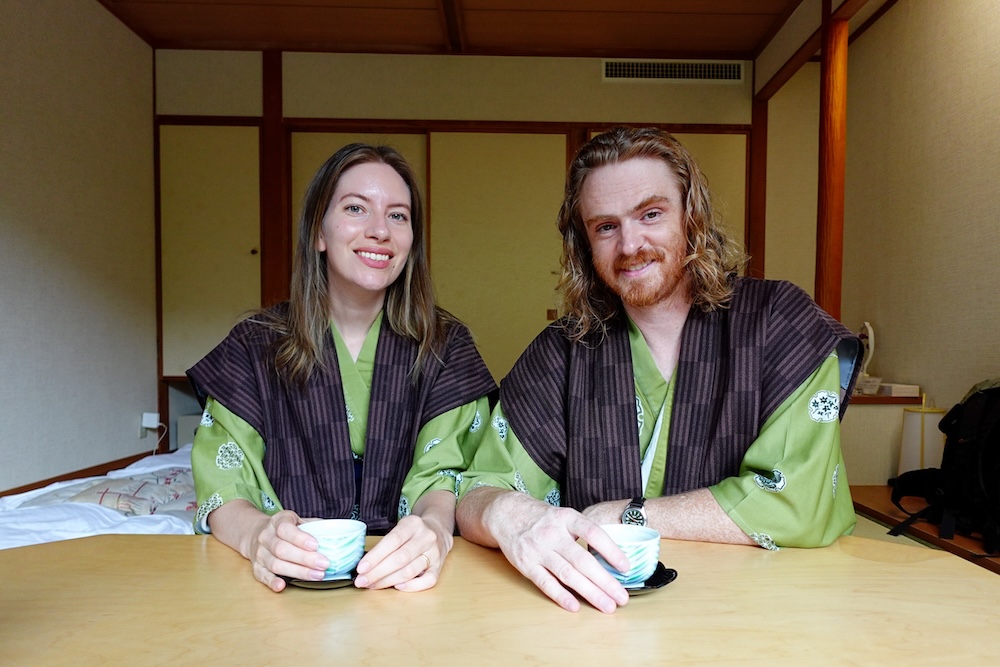
Miyabitei gave us a Japanese-style room with tatami flooring and futons, along with green yukata and the little garments worn over them. Audrey noticed almost everyone strolling around the lobby in their hotel robes, so we joined in. I was perfectly happy changing into mine and heading for the baths; I can’t say getting back into my regular travel clothes held much appeal.
For anyone wanting a similar stay, I’d start by checking rooms and meal packages at Park Hotel Miyabitei. It’s the property we personally stayed at and enjoyed, although the available room types and inclusions may differ from the package we booked.
It’s worth being realistic about the type of property, though. Miyabitei was a substantial onsen resort, with large communal baths, buffet dining and plenty of other guests. Our earlier ryokan stay in Takayama had been much more intimate. I enjoyed both, but if you’re picturing a quiet, small-property experience with traditional private dining, read the actual room and meal descriptions before paying.
Another option to investigate is Ryotei Hanayura and its available room options. The property offers a different accommodation format, including private open-air bathing in certain rooms and more traditional dining arrangements. We didn’t stay there, so I can’t compare its hospitality with Miyabitei firsthand. It does illustrate why two accommodations in the same hot-spring town can offer very different experiences.
Dinner and breakfast were worth arranging beforehand
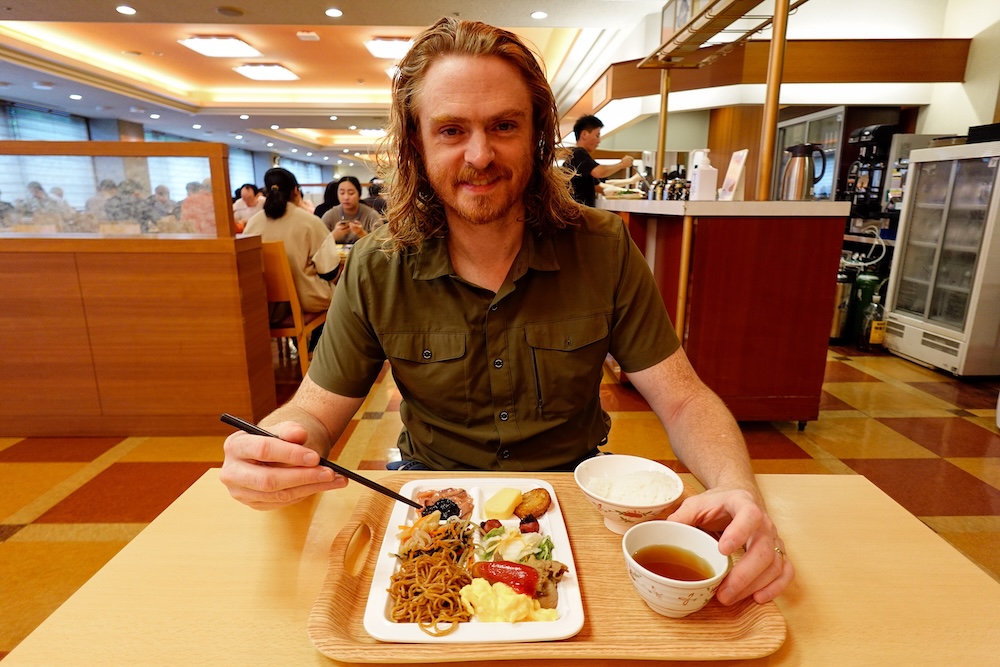
Our Miyabitei package included both meals, and that made the stay wonderfully uncomplicated. We could head out to walk all morning, find somewhere for ramen at lunchtime and return knowing dinner was already sorted. I didn’t need to spend the afternoon comparing menus or wondering how far we’d have to walk after dark.
The buffet was hardly a quiet ceremonial meal. There were large crowds when the dining room opened, enough seafood and other dishes to keep me going back for more, and a noticeable improvement when we waited a while before approaching the busiest counters. I managed three rounds of savoury food before dessert on one evening. Apparently geothermal sightseeing works up an appetite.
But not every room rate includes dinner and breakfast. Miyabitei has offered breakfast-only as well as breakfast-and-dinner arrangements, and an enticing headline price doesn’t tell you which one you’re buying. Meal-inclusive bookings can also have an evening arrival cutoff, so confirm the precise conditions of your reservation. I’d hate to pay for a buffet and lose it because I’d chosen a train that got me there too late.
If I were booking again, I’d compare the complete stay: the room, the baths available to guests, the meals and the location. Those things changed our experience far more than a marginal difference in the advertised room rate. When comparing booking options, I’d also check whether the displayed price includes the applicable taxes and hot-spring charges rather than focusing entirely on the nightly headline figure.
Sort out the train, then understand the last-mile bus
Our JR arrangements were already sorted when we travelled north from Hakodate, using a JR Hokkaido pass. We didn’t have to solve the railway journey on the platform with luggage in hand, although we still had one transfer to make when we arrived.
The JR seat is a real reservation decision
JR Hokkaido limited express services such as the Hokuto and Suzuran operate with all seats reserved. You’ll need the appropriate ticket and seat arrangements, including when travelling on an eligible pass. Reservations generally open around one month ahead; that doesn’t mean you must buy a ticket weeks in advance, but it does mean you shouldn’t assume there’s an unreserved carriage waiting for you.
For scale, the ordinary reserved-seat limited express fare from Sapporo to Noboribetsu was ¥4,890 one way when checked in October 2026. Our actual arrival was from Hakodate, so that Sapporo fare isn’t what we paid. Check JR Hokkaido’s reservation procedures for the service and ticket type you’re using.
We chose the local bus over a taxi
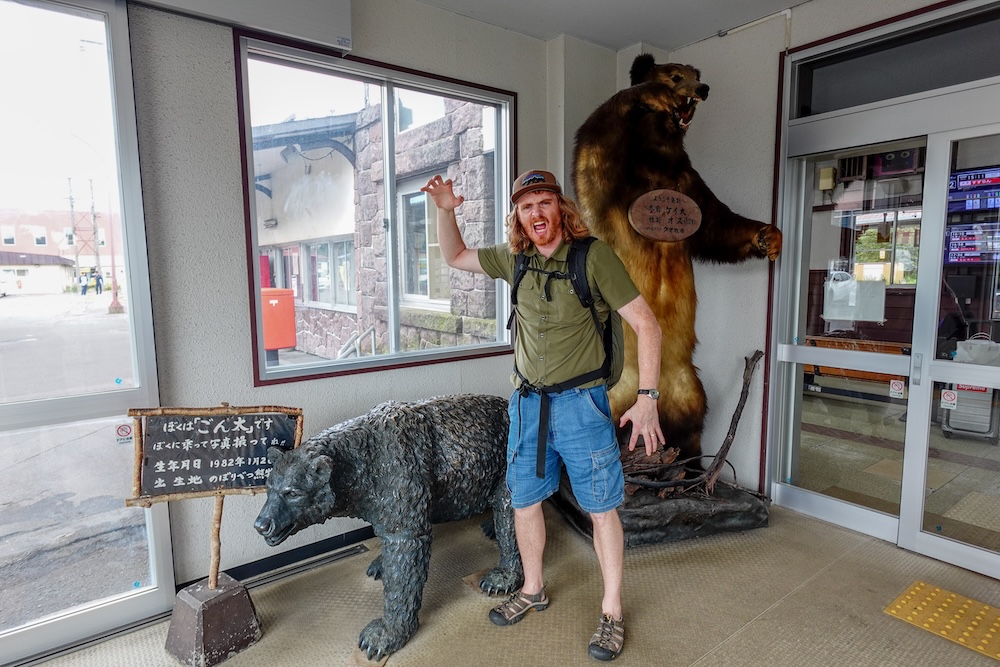
At Noboribetsu Station, we found bus information posted outside and decided to wait. The next departure was about half an hour away. Taxis were another possibility, but seemed pricey to us at the time, and we weren’t in a desperate rush. We took the bus into the onsen district and found the whole process quite manageable.
The current Donan Bus fare is ¥450 per adult one way for the station-to-onsen journey, with the ride taking up to approximately 27 minutes depending on the service and stop. One small but potentially annoying detail: Suica and Kitaca aren’t accepted on this route. Visa contactless works on specified services, not every bus, so have an appropriate alternative and consult the Donan Bus timetable and payment details.
A taxi is estimated at around ¥3,000, though that’s a planning figure rather than a guaranteed fare. I’d still lean towards the bus for an unhurried couple like us; a group sharing the fare, somebody managing cumbersome luggage or anyone racing a hotel dinner deadline might reasonably make another choice.
Direct buses and hotel transfers are a different story
Don’t carry our spontaneous local-bus approach over to every service bearing the Noboribetsu name. The direct Sapporo–Noboribetsu Onsen Express Onsen-go requires advance online reservations, with the operator specifying a deadline at least two hours before the service’s initial departure. Its published afternoon Sapporo departure was 13:40 in October 2026, with fares around ¥2,800–¥3,800 one way depending on the arrangement.
Some hotels also offer their own guest transfers under separate conditions. Miyabitei advertises a paid Sapporo shuttle, but I’d confirm eligibility, operating dates and the reservation deadline directly rather than treat it as a guaranteed daily service. Your hotel’s dinner arrangement is another reason to plan backwards from arrival time instead of choosing transport first and hoping everything lines up.
Hell Valley and Oyunuma are where I’d stay independent
Jigokudani doesn’t need a tour ticket
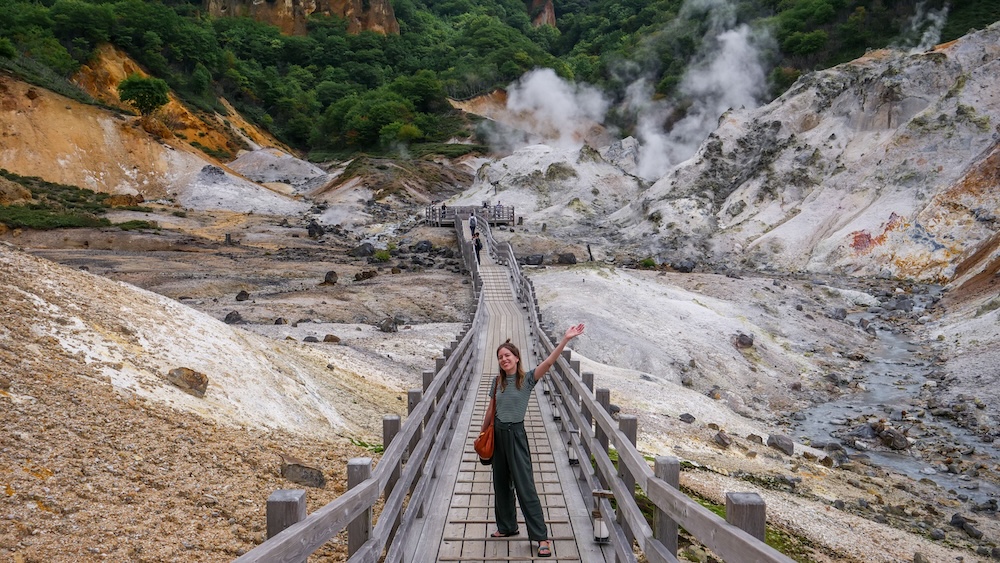
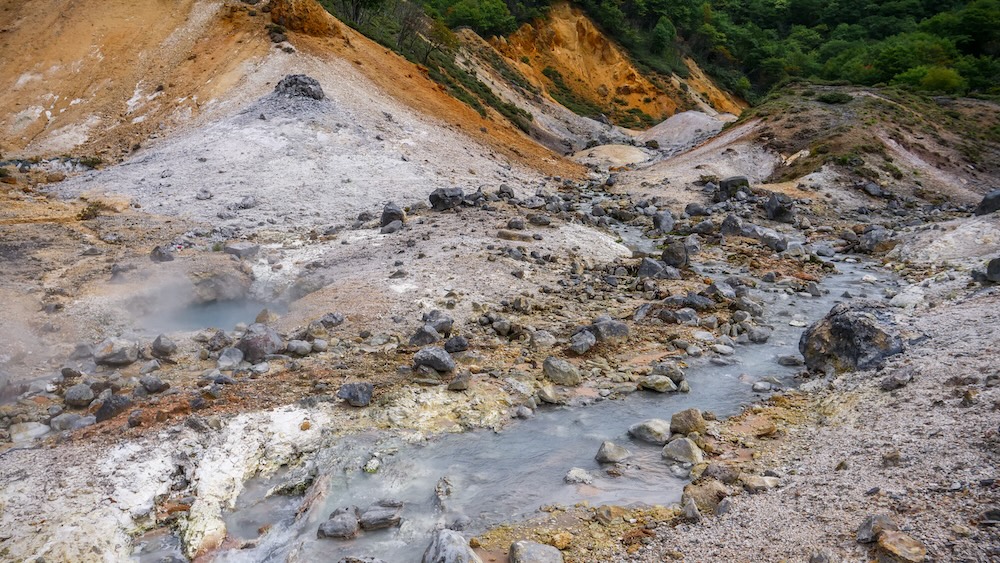
Once we were in Noboribetsu Onsen, we walked to Jigokudani Hell Valley ourselves. The orange, mineral-stained ground, bubbling pools and clouds of steam were unlike much of what we’d encountered elsewhere in Japan. Even on a day that wasn’t particularly hot, you could feel heat coming off the geothermal vents. I loved stopping whenever a new stretch of volcanic hillside caught my eye, rather than being waved back towards a bus.
The principal Hell Valley viewing area is free, with no ordinary sightseeing reservation required. There’s an established network of paths and boardwalks, so visitors comfortable with the terrain don’t need a guide just to see the main attraction. A guide could add interpretation or remove the hassle of arranging transport, of course, but that is something to choose for its actual value, not because the landscape is otherwise inaccessible.
The observation deck also has a documented ramp from the Park Service Center with a maximum slope of 8%. That’s useful for someone limiting their walk; it isn’t a promise that the surrounding forest trails are equally accessible.
The natural footbath rewards having time to yourself
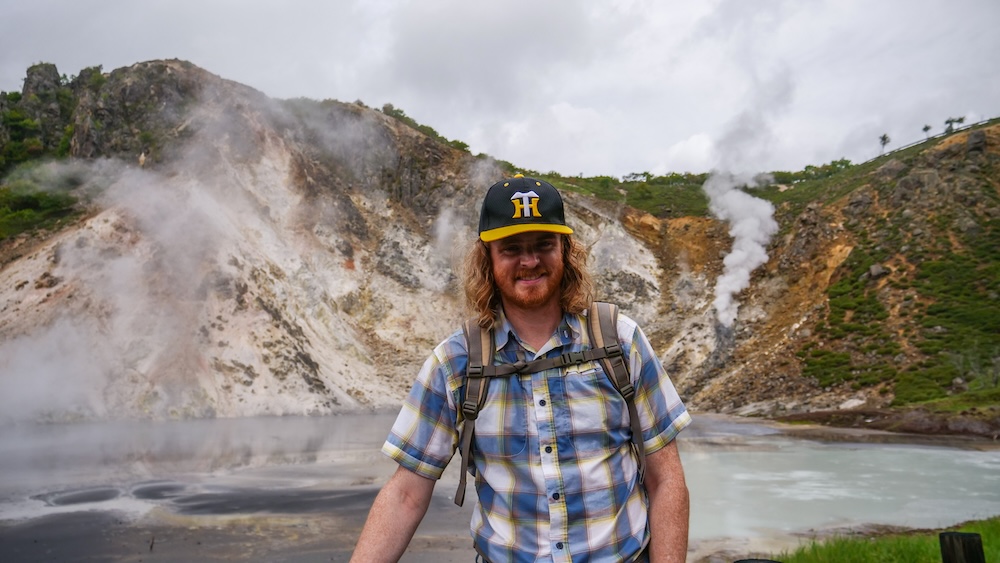
We continued exploring around Oyunuma and the Oyunuma River Natural Footbath, which ended up being a highlight of the trip for me. Sitting beside a steaming river with my feet in milky blue-grey water and fine black volcanic sand under my toes was just about the last place I wanted to be hurried along. We stayed approximately half an hour, soaking it all in before walking onwards.
Both Oyunuma and the natural footbath are ordinarily free to visit, although reaching them takes more effort than standing at the Hell Valley viewpoint. The official walking map identifies a 568-metre Jigokudani pathway, estimated at ten minutes, and a separate 388-metre Oyunuma scenic pathway, estimated at fifteen minutes. Those are individual segments, not a promise that the entire route from town to the footbath takes twenty-five minutes.
We found the trails easy to follow and the uphill walking comfortably challenging. That’s my assessment as somebody who enjoyed the exercise, not an accessibility rating for everyone. Yuzawa Shrine, for example, involved a steep stone staircase, and we even came across a road without a sidewalk where cars were moving quickly.
Access can change, too. Footbath paths have had temporary maintenance closures and winter restrictions, so check current footbath and trail information before committing to a long walk. No advance booking is needed for an open public trail, but sensible footwear, time and awareness of conditions still matter.
There are also guided walking experiences for visitors who want more interpretation rather than transportation. I’d consider that a different purchase from a Sapporo coach excursion: you’re paying for somebody’s knowledge of the landscape, rather than simply for a vehicle to get you there. If that interests you, you can compare guided activities around Noboribetsu, checking the walking demands and the exact route before choosing one. For us, the freedom to spend as long as we liked at the natural footbath was worth keeping.
Baths, demons and performances: paid isn’t the same as reserved
Our hotel baths were part of the accommodation experience, and we used them repeatedly. Audrey particularly appreciated the variety in the women’s bathing area, including an outdoor pool. By choosing quieter times, she even had the section entirely to herself once. I enjoyed the baths too, although one session left me so sleepy that bed sounded like an excellent next activity.
You don’t have to book a hotel room to try a full onsen. Participating bathhouses allow day-use admission, subject to their own hours and conditions. In October 2026, Yumoto Sagiriyu listed adult entry at ¥550, opening 09:00–21:00 with final reception at 20:30. Dai-ichi Takimotokan listed an adult day-use option at ¥2,500, with ticket reception 09:00–18:00 and departure by 21:00. We didn’t bathe at either, so these are practical alternatives, not facilities I’m reviewing. Check the current day-use onsen listings before setting out; bathing windows, available areas and special services can change.
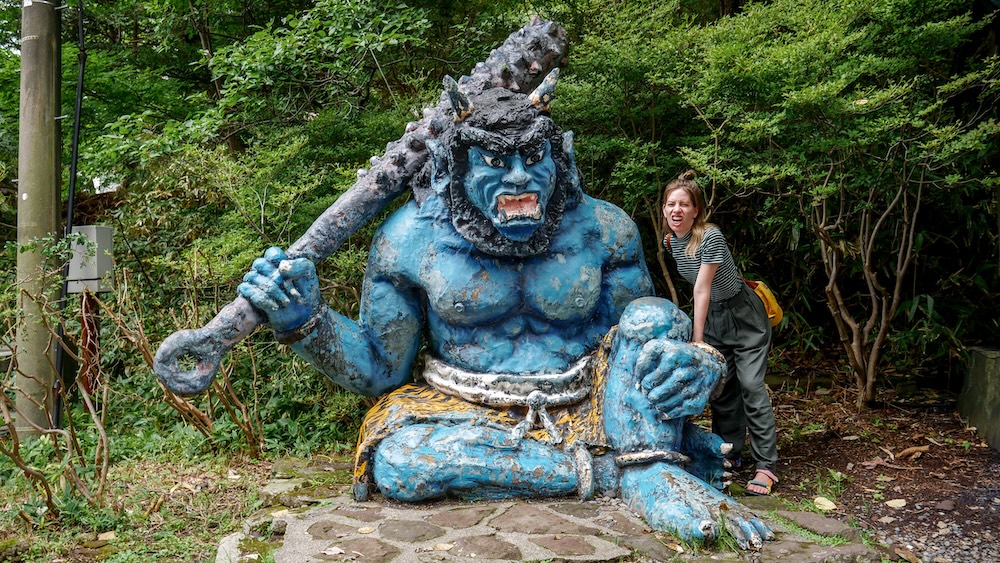
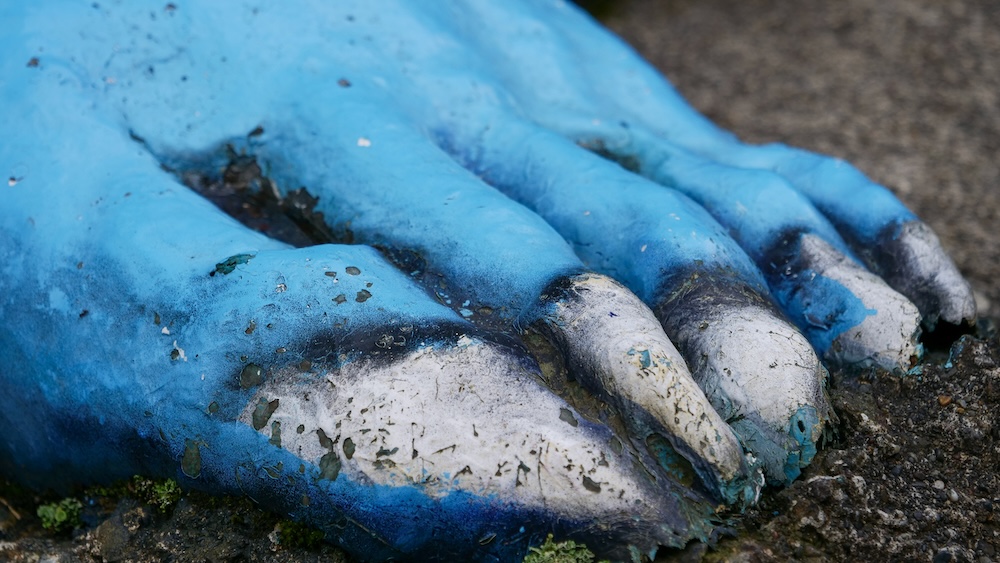
The small town sights were even simpler for us. We wandered among oni statues armed with enormous spiked clubs, visited Yuzawa Shrine and watched the mechanical King Enma attraction at Enmado. These are places you can generally enjoy without booking a guided excursion, although Enmado is one where timing counts: its published free performances are at 10:00, 11:00, 13:00, 15:00, 17:00, 20:00 and 21:00, subject to weather-related changes.
Then there’s Sengen Park, where the geyser can bubble and release steam at roughly three-hour intervals rather than on a clockwork schedule. We saw it in different states on separate visits. If you happen upon it at an active moment, fantastic; I’d be reluctant to build an elaborate timetable around an approximate natural eruption. Ticketed seasonal events, including certain Demon Fireworks performances, are a separate case and need their own date-specific checks.
When would I actually pay for a guided Noboribetsu tour?
We didn’t take an organized tour of Noboribetsu, and I never felt we’d missed out on one while walking the sights ourselves. Still, I can understand paying for help if you’re visiting from Sapporo with limited time, feeling intimidated by Japanese train and bus connections, or trying to arrange a visit around someone else’s particular needs. The important thing is to buy the right kind of help.
Look at the minutes in Hell Valley, not just the tour duration
Many Sapporo day tours combine Noboribetsu with Lake Toya and other southern Hokkaido stops. That makes sense if your aim is a sampler of the region, but a ten-hour excursion doesn’t give you ten hours in the onsen town. One currently advertised group itinerary allocates only 35 minutes at Jigokudani. You’ll get a look at Hell Valley, but you’re not getting our longer wander around Oyunuma and the natural footbath.
You can check the Sapporo, Noboribetsu and Lake Toya group-tour itinerary to see how its published stops are divided. It combines transportation and guided regional sightseeing, which could be useful if you want to see several landscapes without coordinating the journey yourself. Just understand that the advertised stop durations are subject to change and don’t amount to an extended stay in Noboribetsu.
That’s a distinction I’d take seriously. If your priority is seeing several different places in one day, a group excursion could suit you. If you’ve come specifically for the longer geothermal walking circuit and the natural footbath, I’d be much more cautious about buying a tour that allows only a quick stop at Hell Valley.
A private tour can give you a different balance
A privately operated Sapporo excursion currently proposes approximately 90 minutes at Jigokudani, plus a possible 30-minute footbath walk if access conditions permit. That’s a substantially different allocation, although it still combines other regional stops and doesn’t guarantee unlimited customization. A private vehicle will also cost differently from one or two seats on a group excursion. I would compare the time and flexibility you actually receive before deciding that the larger price tag is worthwhile.
Travellers interested in that arrangement can review the private Noboribetsu and Lake Toya day-tour itinerary. The proposed extra time at Hell Valley is meaningful, but I’d confirm whether the walking route and stop durations can be adapted to your priorities before reserving.
There are booking details worth checking beyond the headline itinerary. That private listing is inconsistent about whether it provides a Japanese-speaking driver or English-speaking guiding, and its admission inclusions aren’t entirely clear either. I’d ask the operator directly before paying, particularly if language support is the reason you’re booking. A pretty photo of Hell Valley can’t answer that question.
A guided vehicle doesn’t erase the hills
I’d also be careful about recommending a tour as an automatic solution for limited mobility. Avoiding transfers and having pickup arranged may make the day considerably easier, but some itineraries still involve paths, gradients and steps once you get out of the vehicle. Even a tour marketed as wheelchair-accessible needs specific confirmation about its transport, individual stops and what can be adapted.
For certain travellers, a taxi to the onsen district, a centrally located hotel or a shorter visit to Hell Valley’s principal observation area might address the problem better. Others will value an organized regional itinerary. It’s a personal fit decision, and I wouldn’t attach my own firsthand endorsement to a tour I haven’t taken.
What I’d arrange before going back
If Audrey and I returned, I’d start in much the same place: find an onsen property we’d genuinely look forward to spending time in, check the exact room and meal plan, then sort out our railway seats and any reservation-required transfer. I’d leave space in the schedule for Hell Valley, Oyunuma and the natural footbath, while checking trail access rather than booking a guide by default.
Our accommodation made the whole visit easier. Breakfast and dinner were taken care of, the baths were waiting when we got back and the central location meant we could head out on foot without repeatedly organizing transport. That’s the kind of advance planning I’m happy to do. Once we were walking through the steam or sitting beside the river with our feet in hot water, I was equally happy not to have anybody telling me it was time to leave.
Book what gives you the Noboribetsu experience you want. Leave the independently accessible sights flexible, and pay for a tour when its actual itinerary or assistance solves a problem you have.
Frequently Asked Questions
What should I book in advance for Noboribetsu?
I’d prioritize your onsen hotel or ryokan, including the room type and meal plan you actually want. JR limited express trains require reserved-seat arrangements, while certain direct buses and hotel shuttles have their own advance-booking rules. Most of the central geothermal sightseeing can remain flexible.
Do you need to book tickets or a guided tour for Hell Valley?
No. Jigokudani Hell Valley’s main public viewing area is free and doesn’t require an ordinary admission reservation. Audrey and I explored the boardwalks independently and found them straightforward to navigate. A guide is optional if you want interpretation or help organizing transportation.
Can you visit Oyunuma and the natural footbath without a guide?
Yes, provided the walking routes are open and you’re comfortable with the terrain. We visited both independently, including an approximately half-hour stop at the natural footbath. Expect more walking and uphill sections than at Hell Valley’s main viewpoint, and check for seasonal or maintenance restrictions before setting off.
Do you need to reserve the bus from JR Noboribetsu Station to Noboribetsu Onsen?
The regular local bus is a scheduled service that we decided to take after reaching the railway station. We waited about half an hour for our departure. Check the current Donan Bus timetable and accepted payment methods. The separate direct Sapporo Express Onsen-go service requires advance reservations.
Can you use an onsen in Noboribetsu without staying overnight?
Several facilities offer paid day-use bathing, including Yumoto Sagiriyu and Dai-ichi Takimotokan. Their admission prices, reception hours and facilities differ, so check the arrangements before visiting. We personally used the baths at Park Hotel Miyabitei as overnight guests rather than testing those day-use alternatives.
Is a guided Noboribetsu tour worth booking from Sapporo?
It depends on what you want from the day. A guided excursion can simplify transportation and combine Noboribetsu with other Hokkaido attractions, but some ten-hour tours allocate only around 35 minutes to Hell Valley. I’d check the actual time at each stop before booking, especially if the geothermal walks are your main priority.
This guide is also available in Spanish. [Leé la versión en castellano: Qué reservar en Noboribetsu y qué recorrer por tu cuenta: ryokan, excursiones y Valle del Infierno]
This article contains affiliate links. If you book through one of these links, I may earn a commission at no extra cost to you.