
Noboribetsu is a town that has fully committed to the bit. Hell Valley steams above the hot springs, demon statues guard the streets, and a giant mechanical King Enma glares at tourists from his shrine on the main drag. So it’s no surprise that half the menus carry a demonic name. Within a few minutes’ walk you’ll find Enma ramen, hell ramen and Enma yakisoba, and plenty of travel guides use those names as if they all meant the same dish. They don’t, and that matters if you’re trying to track down the bowl people keep raving about.
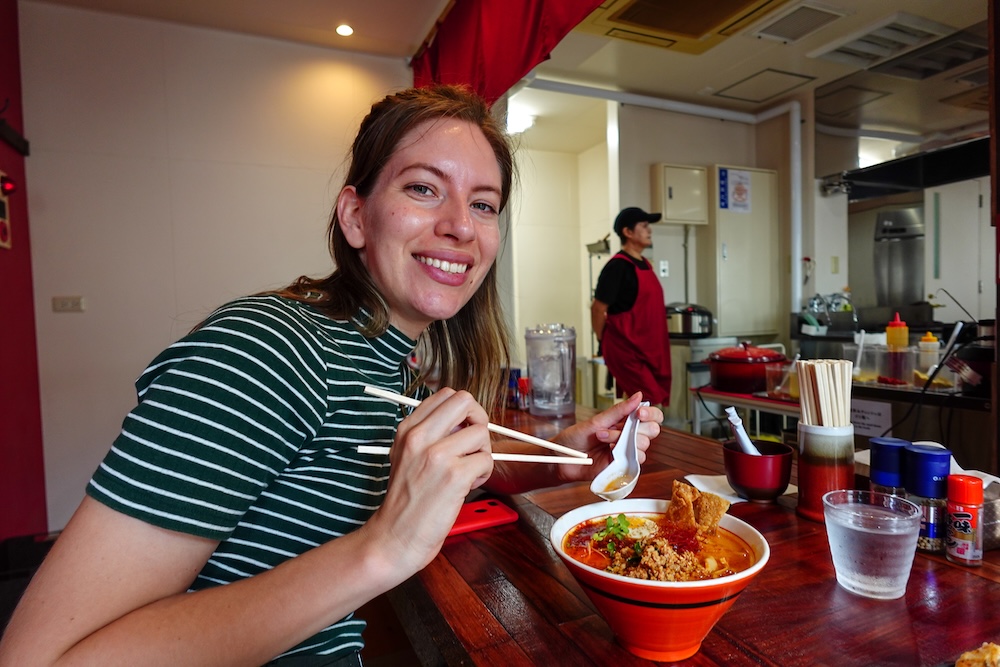
Audrey and I ate Enma ramen twice in two days at a tiny counter shop called Enmaken. On the first visit I ordered the most expensive bowl on the menu and lost to my wife’s cheaper one. On the second visit I’d learned my lesson. This is the bowl, the story, and everything you need to get a seat at that counter.
What Is Enma Ramen?
Enma ramen is a spicy ramen with a strong dandan-noodle streak. The broth is orange and sesame-rich, managing to be nutty and fiery at the same time. It’s named for Enma, king and judge of the underworld, whose 5.2-metre mechanical figure sits in the Enmado shrine down the street and switches to a furious red face several times a day. We’d just watched him do exactly that before walking a block for lunch, which felt like the correct order of operations.
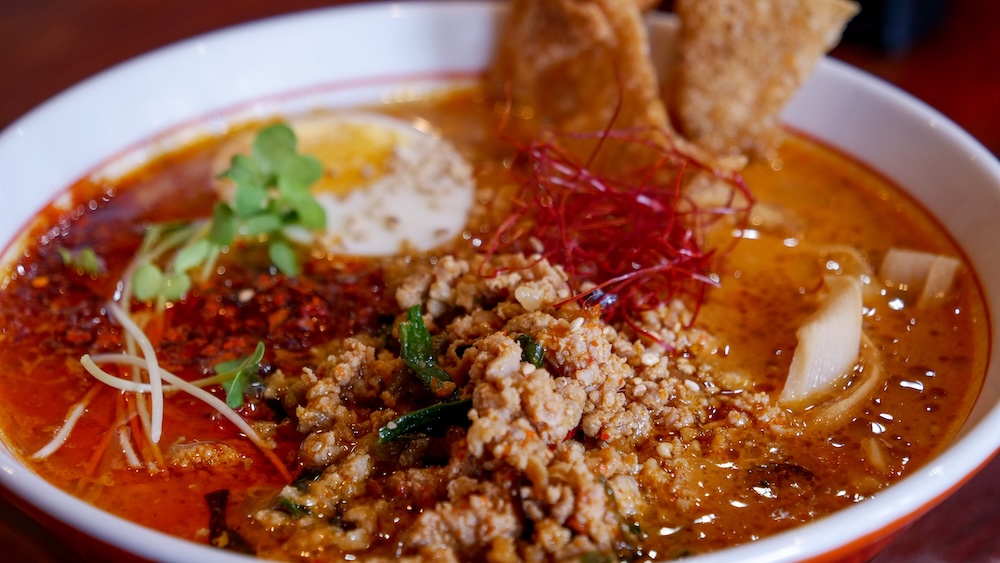
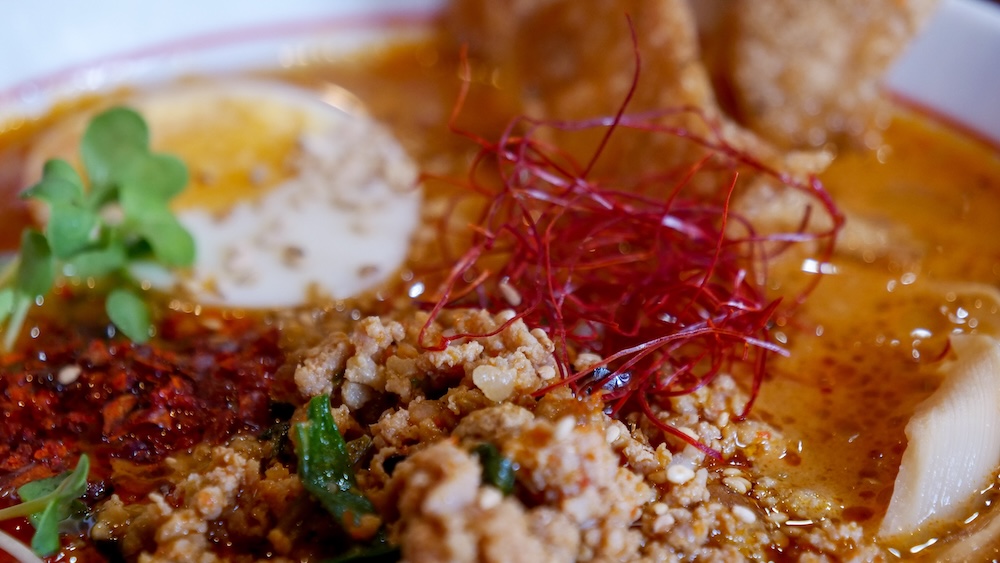
Audrey’s bowl looked like someone had tried to fit the whole town’s colour palette into one bowl. A slick of chili flakes in oil pooled along one edge. A mound of seasoned minced pork flecked with green chili sat in the middle under a nest of fine red chili threads. There was a half egg with a jammy yolk, a tangle of kaiware sprouts, a few strips of menma, and some crisp fried sheets standing up out of the broth like little sails. Audrey took one look and called it the most colourful bowl of ramen she’d ever seen. After her first slurps she described it as super spicy and nutty, and compared it to a laksa, which makes sense once you see that orange broth.
When we went in 2023, the menu also offered a near-soupless Enma dandan version for anyone who wanted the flavours with less broth. The lineup has evolved since then, so take my description as the bowl we ate rather than a recipe card. Check what’s on the menu, and ask about the heat when you order.
The ¥1,000 Bowl That Beat My ¥1,300 Chashu
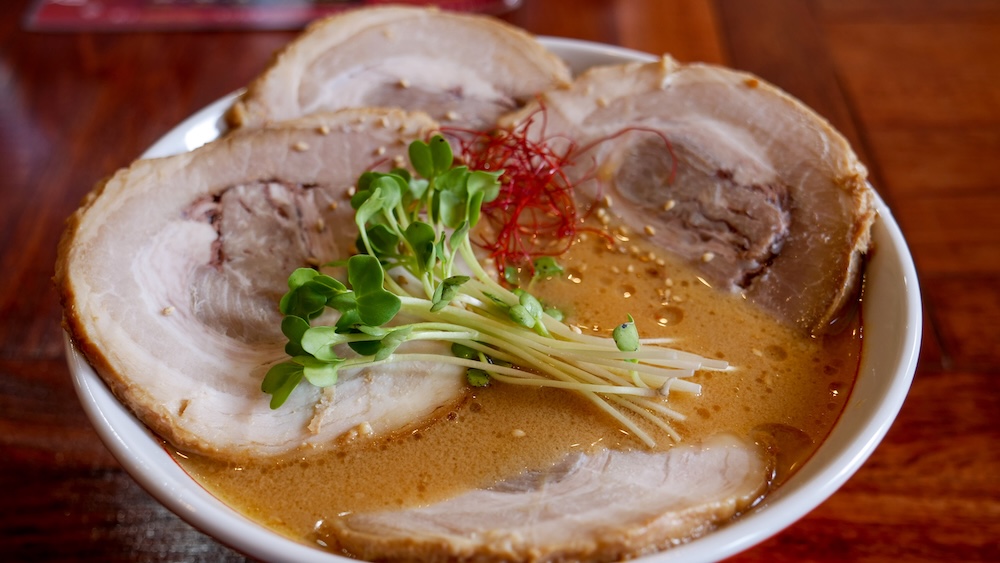
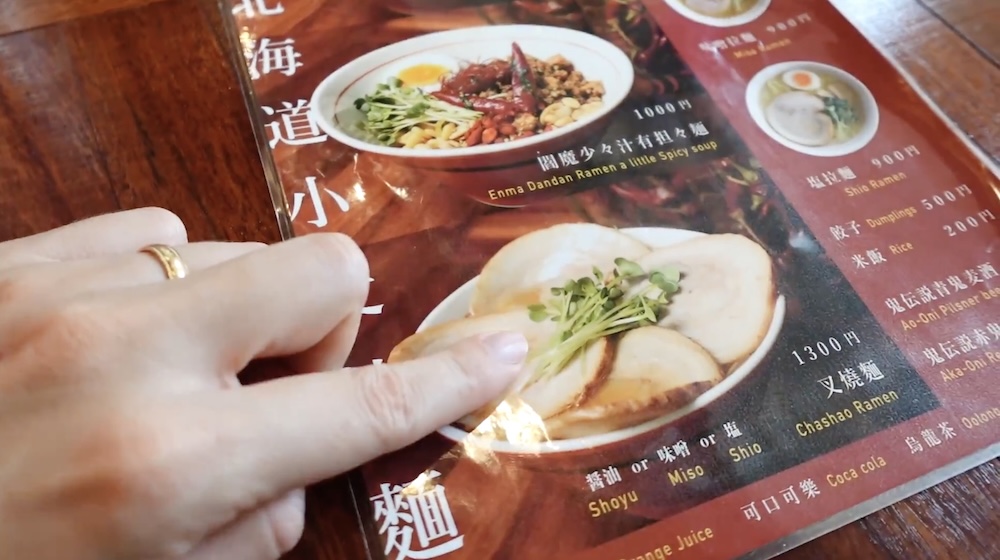
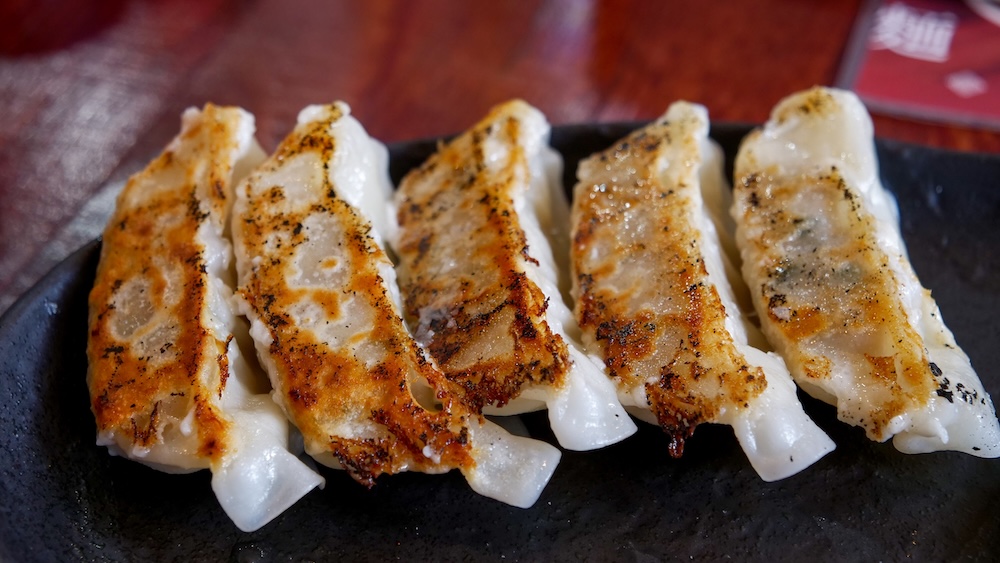
Normally Audrey is the one with food envy over my order. I tend to order better than she does, and I don’t mind reminding her. So I scanned the menu and went straight for the top: the Chashao ramen (the menu’s spelling of chashu) in miso broth, at ¥1,300 the most expensive thing on offer. It came with four enormous rolled slices of pork that just melted in my mouth, in a rich miso broth that clearly hadn’t been shy with the paste. We added a plate of gyoza on the side, dressed with soy and vinegar. By any normal standard, I’d won lunch.
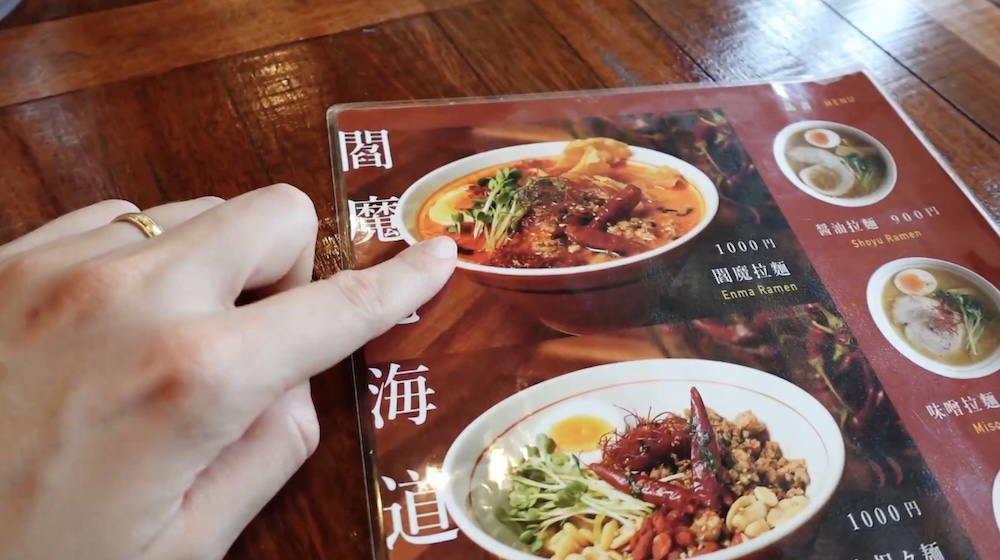
Then I tried Audrey’s Enma ramen, and I immediately declared it the best ramen I’d ever had. Ever, ever. Her ¥1,000 bowl had blown my ¥1,300 bowl out of the ballpark, and for once the food envy ran in my direction.
We had a train to Sapporo the next day, and before we’d even finished we were working out how to squeeze in one more visit. We made it back on the day we left. This time I ordered the Enma ramen for myself, and Audrey had the Chashao. Eating a whole bowl rather than stealing spoonfuls, I found the heat intense, and I loved it. I’d order it again in a heartbeat.
What keeps it lodged in my memory is how far it sits from everything else. Most ramen I’ve eaten has a fairly modest flavour, comforting and well made but polite. This one was extreme, and it turns out the extreme version is exactly what I love. Audrey later wrote that it was the best ramen we ate during six weeks in Japan, and I’m not about to argue with her.
Enma Ramen vs “Hell Ramen” vs Enma Yakisoba
“Hell ramen” in Noboribetsu is more of a label than a single recipe. Several places in town sell a bowl under that name, and Enmaken bills itself as a hell’s ramen shop. So the bowl we loved is a hell ramen in every sense that counts. It just isn’t the one most guides are talking about.
When other guides say “hell ramen,” they usually mean the jigoku ramen at Aji no Daio, which works on a completely different principle. You start from a clear soup at a standard heat called “0-chōme,” and every spoonful of the house chili you add takes you up a level, at roughly ¥50 a level, on a bowl that starts from about ¥1,000. It’s heat as a personal challenge, measured out spoon by spoon. Hours there are short, so check before you go. We didn’t eat there.
Enma yakisoba is something else again: Noboribetsu’s official local dish, launched in 2015. It’s built on flat noodles made from Hokkaido wheat, a sesame-accented spicy sauce and local ingredients, and it’s stir-fried rather than served in broth. Onsen Ichiba, right beside Enmado, serves it. We didn’t try that one either, which is starting to look like an excellent excuse to go back.
| Enma ramen at Enmaken | Jigoku ramen at Aji no Daio | Enma yakisoba | |
|---|---|---|---|
| Dish type | Soup ramen | Soup ramen | Stir-fried noodles |
| Base | Sesame-rich, dandan-style (as we ate it) | Clear soup | Sesame-accented spicy sauce |
| How the heat works | Built into the bowl | Added by the spoonful, level by level | Built into the sauce |
| Where to find it | Enmaken | Aji no Daio | Onsen Ichiba and others |
| Did we try it? | Yes, twice | No | No |
Where to Eat Enma Ramen: Enmaken, a Block From Enmado
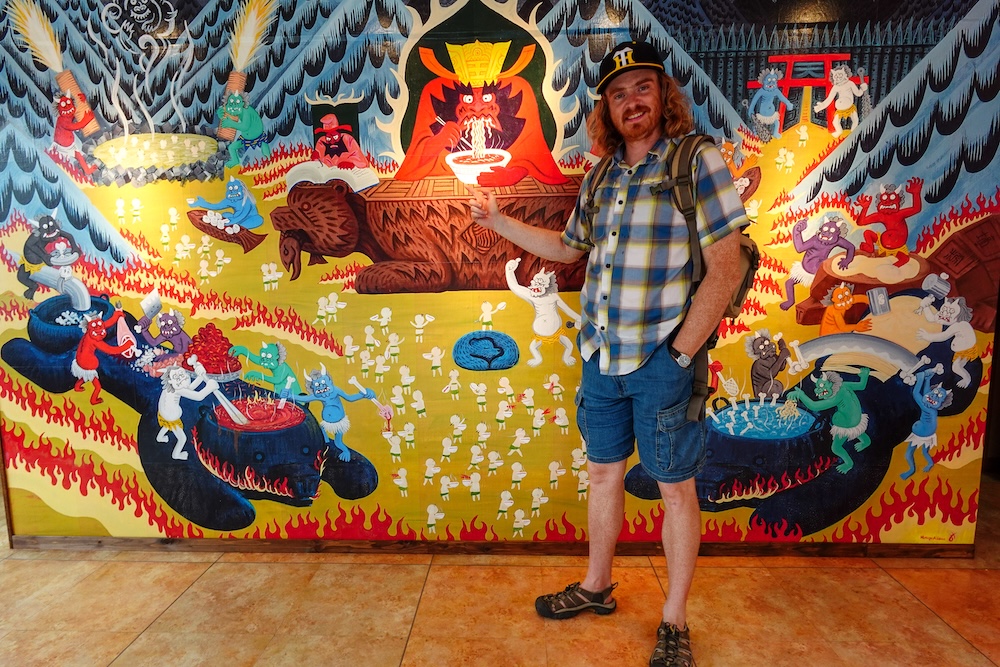
Enmaken (閻魔軒) is at Noboribetsu Onsen-machi 76-14, about a block south of Enmado and roughly a five-minute walk from the Dōnan Bus terminal. Pasting the Japanese name into a map app is the easiest way to find it. Audrey remembers a teal-painted building with red flags out front and the menu posted beside the door. As I remember it, there’s also a big mural just outside showing King Enma slurping noodles while his oni boil ramen in hellfire cauldrons, which is about as clear a sign as a ramen shop can put up.
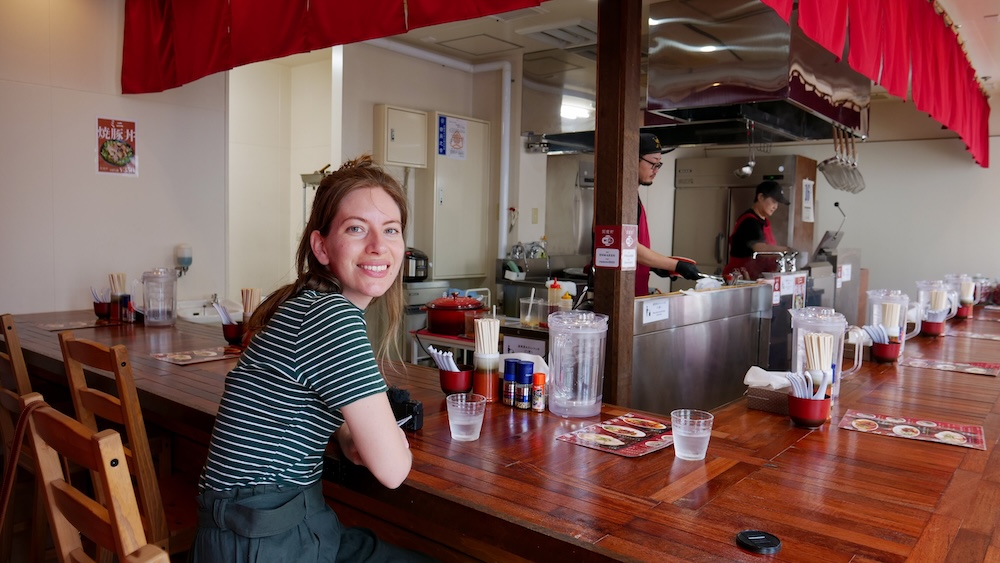
Inside, there are just 12 seats, all of them at a wooden counter wrapped around an open kitchen. Red noren hang overhead, and the cooks work right in front of you. There’s self-serve water and ichimi chili on the counter, and when we visited the laminated menus were in Japanese, English and traditional Chinese. As far as I recall we ordered from the staff, and we barely waited. The shop had only opened that April, and the room was nearly empty when we sat down. With 12 seats and no reservations, though, a lunch rush can fill it fast, so arriving early is the safest play.
Enmaken is a lunch spot: it opens at 11 a.m., closes mid-afternoon, and takes irregular days off. That 11 a.m. opening is how we ended up there in the first place. It was the only place we could find open, and most of the other lunch options in town don’t start until 11:30 or later. Before you walk over, check Enmaken’s Instagram for the day’s status.
We paid ¥1,000 for the Enma ramen and ¥1,300 for the Chashao in 2023. Prices have moved since then, so budget roughly ¥1,000 to ¥2,000 per person. Cards, IC cards like Suica and QR payments are accepted, though it’s worth confirming at the counter. Children are welcome. There’s no parking, so if you’re driving you’ll need to leave the car at the Jigokudani car park.
Making the Lunch Window Work
Those lunch-only hours are the one real catch, and they shape the whole day around this bowl. We had it easy because we were sleeping in town at Park Hotel Miyabitei, which kept Enmaken, Hell Valley and everything else within walking distance. Miyabitei is a big onsen resort rather than an intimate little ryokan, but for a ramen mission the location couldn’t have been more convenient, and coming back for a second bowl on our last day took nothing more than a short stroll. If that sounds like your kind of base, you can check rooms at Park Hotel Miyabitei. If you’d rather pick your own, compare onsen hotels in Noboribetsu, and favour one in the onsen town itself rather than near JR Noboribetsu Station, which is a bus ride away.
Day-tripping from Sapporo is where the plan can come unstuck. Many of the big-bus tours give Hell Valley something like 35 to 40 minutes, sometimes first thing in the morning and sometimes late in the afternoon, which can leave you outside Enmaken’s hours entirely. If a bowl is non-negotiable, look for a trip that keeps you in the onsen town for longer. One current small-group option from Sapporo spends its day on Hell Valley, the Oyunuma footbath and the baths at Dai-ichi Takimotokan rather than treating Noboribetsu as a photo stop. You can see the small-group Hell Valley and onsen trip from Sapporo, but check the schedule for midday free time before you count on lunch. If you’d rather browse other day trips that include Noboribetsu, pay attention to how long each one actually spends in town.
Should You Order the Enma Ramen?
If you like real heat, order it without a second thought. If what you want is to raise the stakes one spoonful at a time until you’re crying into your bowl, Aji no Daio is set up for that. Enmaken’s version is a different kind of hell. The fire arrives tangled up with sesame, minced pork, chili oil and crunch, and that depth is exactly why we went back for more.
If heat isn’t your thing, the Chashao is excellent, and the menu has plain shoyu, miso and shio bowls too. Order one of those and steal a spoonful of Enma ramen from someone braver at the table. That’s how I found this bowl in the first place. Get there at 11, take a stool at the counter, and order the bowl Audrey ordered first.
Frequently Asked Questions
What is Enma ramen?
Enma ramen is a spicy ramen with a strong dandan-noodle streak, built on an orange, sesame-rich broth that tastes nutty and fiery at the same time. The bowl we ate at Enmaken came with chili oil, seasoned minced pork, red chili threads, a jammy half egg, kaiware sprouts, menma and crisp fried sheets. It’s named for Enma, king and judge of the underworld.
Is Enma ramen the same as hell ramen?
Not exactly. In Noboribetsu, “hell ramen” is more of a label than a single recipe, and Enmaken bills itself as a hell’s ramen shop. The version most guides mean is the jigoku ramen at Aji no Daio, where you start from a clear soup and add house chili spoon by spoon to raise the heat level. Enma yakisoba is different again: stir-fried noodles rather than soup.
Where can I eat Enma ramen in Noboribetsu?
We ate it at Enmaken (閻魔軒), at Noboribetsu Onsen-machi 76-14, about a block south of Enmado and roughly a five-minute walk from the Dōnan Bus terminal. Pasting the Japanese name into a map app is the easiest way to find it.
When is Enmaken open?
It’s a lunch spot that opens at 11 a.m., closes mid-afternoon and takes irregular days off. With just 12 counter seats and no reservations, arriving early is the safest play, and it’s worth checking the shop’s Instagram for the day’s status before walking over.
How much does a bowl of Enma ramen cost?
We paid ¥1,000 for the Enma ramen and ¥1,300 for the Chashao in 2023. Prices have moved since then, so budget roughly ¥1,000 to ¥2,000 per person. Cards, IC cards like Suica and QR payments are accepted, though it’s worth confirming at the counter.
What should I order at Enmaken if I don’t like spicy food?
The Chashao ramen is excellent, and the menu also has plain shoyu, miso and shio bowls. Order one of those and steal a spoonful of Enma ramen from someone braver at the table, which is exactly how I discovered it.
Can I eat Enma ramen on a day trip from Sapporo?
You can, but timing is the catch. Many big-bus tours give Hell Valley something like 35 to 40 minutes, sometimes early in the morning and sometimes late in the afternoon, which can leave you outside Enmaken’s lunch hours. Look for an itinerary that keeps you in the onsen town longer, or sleep in town so the shop is a short walk away.
This guide is also available in Spanish. [Leé la versión en castellano: Enma ramen en Noboribetsu: el bol picante de “ramen del infierno” que nos encantó (qué es y dónde comerlo)]
This article contains affiliate links. If you book through one of these links, I may earn a commission at no extra cost to you.