
While I love taking pictures of landscapes, which are often the only unspoiled part of a country— cities and villages make me feel more active and engaged while on the road. Nature offers us soothing peace and physical challenges, but cities test your social skills in an entirely new way— with people.
Taking photographs of people reveals a lot not only about foreign cultures and people, but it can also teach us a lot about how to approach a stranger, how to have a conversation, and how to overcome prejudices we may carry with us on the road.
This is a collection of photos of people who caught my eye, whose stories and life conditions were touching, and whom I’d like to introduce you… through photos.
The following photo essay is from Gianni and Ivana, two travel bloggers I had the pleasure of connecting with in Chiang Mai, Thailand…

15 Portraits from around the world
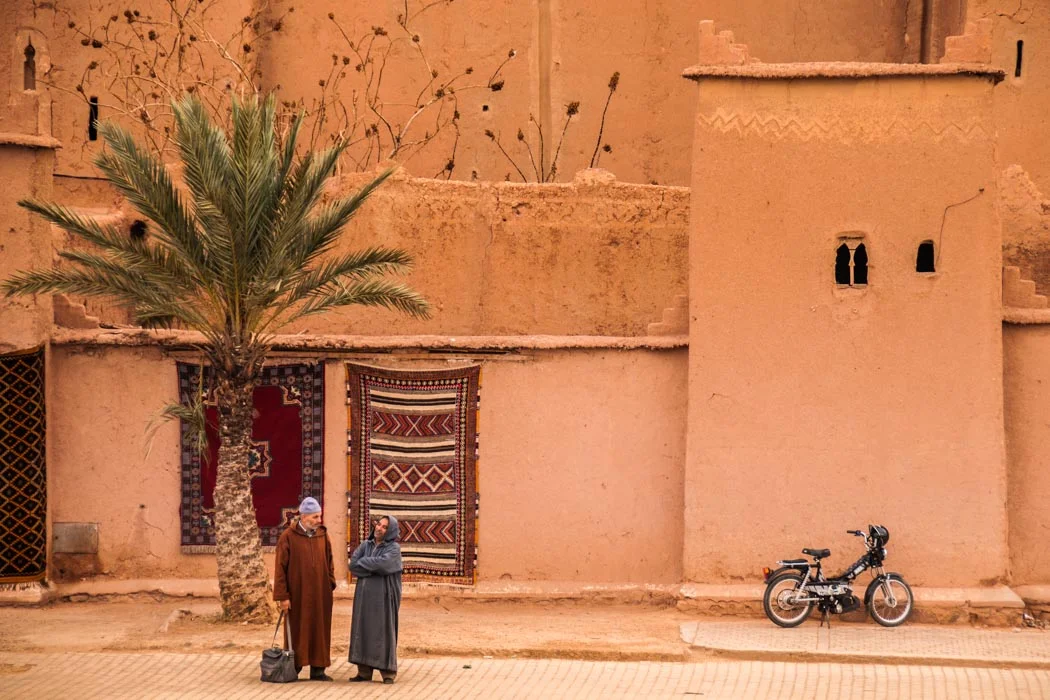
Ouarzazate, Morocco
This couple chatting in Ouarzazate, Morocco, is a beautiful symbol of two quintessential images of the Sahara desert that stretches behind the city. The desert has a stillness that listens to your voice and a wisdom that comes to you through words in the wind.
One of the defining features of Ouarzazate is its collection of ancient kasbahs—fortified mud-brick villages that were once the strongholds of Berber leaders. The towering walls and intricate designs capturing the imagination of all who visit.
- Kasbah Taourirt: At the heart of Ouarzazate lies Kasbah Taourirt, one of the most well-preserved and historically significant kasbahs in Morocco. Once the residence of the powerful Glaoui family, this kasbah offers a fascinating glimpse into the past. As you wander through its maze-like corridors, you’ll discover beautifully decorated rooms, ancient courtyards, and stunning views of the surrounding landscapes.
- Ait Benhaddou: Just a short drive from Ouarzazate is Ait Benhaddou, a UNESCO World Heritage site and perhaps the most famous kasbah in Morocco. This ancient village, with its cluster of earthen buildings perched on a hill, has been the backdrop for countless films and TV shows, including “Gladiator” and “Game of Thrones.” Walking through the narrow streets of Ait Benhaddou feels like stepping back in time.
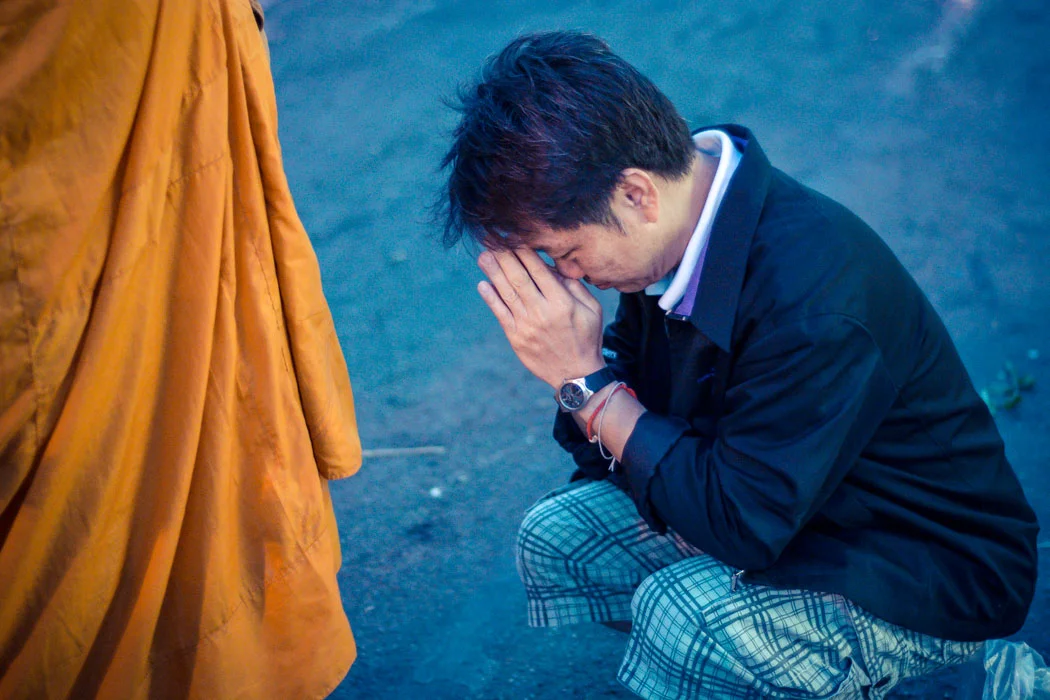
Chiang Mai, Thailand
A local deeply concentrated in his early morning prayer to a Buddhist monk during the alms giving ritual, on the streets of Chiang Mai, Thailand.
The Buddhist morning prayer, or “morning chant,” is a daily ritual that takes place in temples across Chiang Mai. For the monks, it is a time of meditation, reflection, and devotion, setting the tone for the rest of the day. Visitors who rise early enough to observe this ritual are treated to a quiet, introspective experience that contrasts with the lively energy that later fills the streets.
- The Sound of Chanting: As you enter the temple grounds, the rhythmic chanting of the monks fills the air. The sound is calming, almost hypnotic, as the monks recite ancient Pali texts that have been passed down through generations. The chants, often accompanied by the ringing of a bell or the steady beat of a drum.
- A Meditative Ambiance: The temple’s interior, with its golden Buddha statues and flickering candles, provides a tranquil backdrop to the prayer. The scent of incense lingers in the air, adding to the overall sense of calm. As you sit quietly and observe, you can’t help but feel a deep sense of respect for the dedication and discipline of the monks.
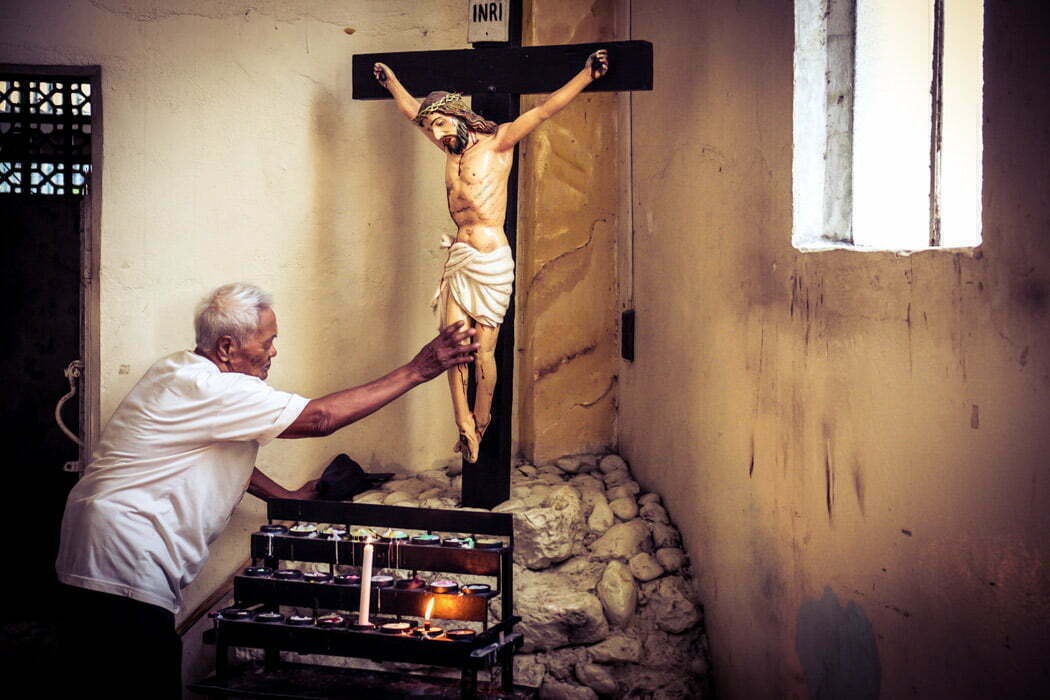
Pandan, Philippines
Devotion, hope for salvation, and a strong faith are remarkable in the Philippines. This is a local believer during a Sunday mass we attended in Pandan, a tiny village in the Philippines.
In Pandan, faith is woven into the daily rhythms of life. The village’s strong Catholic heritage is evident in its many religious practices, which are observed with reverence and a deep sense of commitment. You’ll notice that faith isn’t confined to the walls of a church—it spills out into the streets, homes, and hearts of the people.
- Daily Rituals and Prayers: Each morning in Pandan begins with the sound of church bells, calling the faithful to prayer. Visitors are often struck by the sight of locals—young and old—offering prayers and lighting candles, their faces reflecting a profound sense of peace and purpose.
- Processions and Festivals: Pandan’s religious devotion is perhaps most vividly displayed during its processions and festivals, which are celebrated with great fervor. Holy Week, in particular, is a time of intense spiritual reflection and community involvement. The village comes alive with processions reenacting the Passion of Christ.
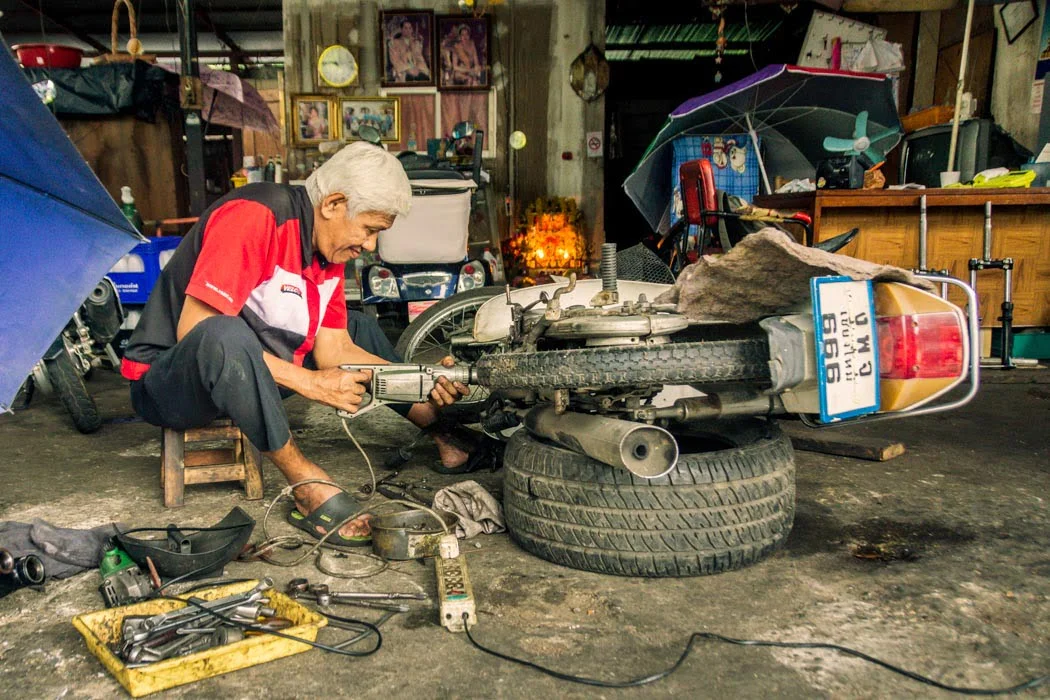
Chiang Mai, Thailand
An intently focused mechanic in his workshop kingdom in Chiang Mai, Thailand, where everything’s in order.
While Chiang Mai is famous for its temples, night markets, and elephant sanctuaries, there’s a wealth of lesser-known experiences that offer a deeper connection to the city’s culture and people. If you’re looking to explore the non-touristy side of Chiang Mai, here are a few activities that will take you off the beaten path.
- Exploring Local Workshops: Like the mechanic’s workshop, there are many small, family-run businesses scattered throughout Chiang Mai that offer a peek into traditional crafts and trades. From blacksmiths forging intricate metalwork to weavers creating beautiful textiles, these workshops are a testament to the city’s rich artisan heritage. Visiting these places not only supports local artisans but also provides a hands-on experience of Chiang Mai’s cultural roots.
- Cooking with Locals: While cooking classes are popular among tourists, seeking out a more intimate experience with a local family can be incredibly rewarding. Many locals offer private cooking lessons in their homes, where you can learn to prepare traditional Thai dishes using fresh, locally sourced ingredients. It’s a chance to enjoy a meal with a family, learn about their way of life, and share stories over a home-cooked meal.
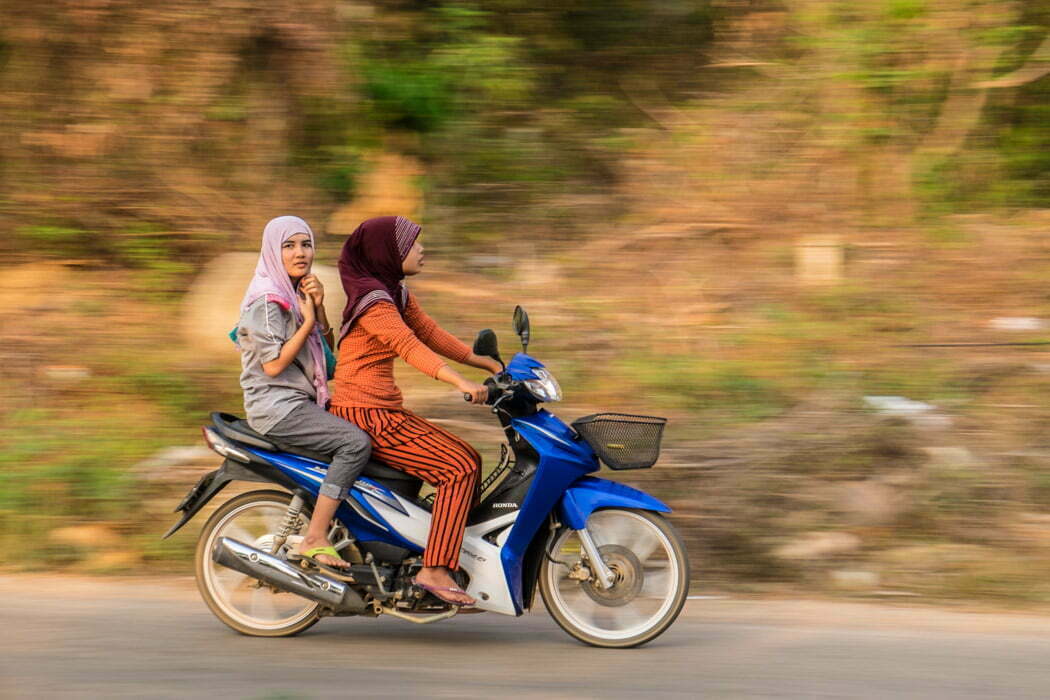
Koh Lanta, Thailand
When the eye of a camera meets human eyes. Two young girls riding a scooter in the almost deserted southern tip of Koh Lanta, Thailand.
There’s something undeniably liberating about hopping on a scooter and setting off into the unknown, especially in a place as serene as southern Koh Lanta. Unlike the busier northern parts of the island, the southern tip is largely untouched. You’ll discover winding roads that meander through lush forests, past hidden beaches, and along dramatic cliff edges.
- A Journey of Solitude: As you ride through the southern tip, you’ll notice the striking absence of crowds. The roads are almost deserted, save for the occasional local or fellow traveler. This solitude is what makes the experience so special—it feels like you have the whole island to yourself.
- Scenic Beauty at Every Turn: The landscape of southern Koh Lanta is nothing short of breathtaking. The road takes you through dense jungles where the only sounds are the rustling of leaves and the distant calls of wildlife. As you ride closer to the coast, the trees give way to sweeping ocean views, with the Andaman Sea stretching out before you in shades of blue and turquoise.
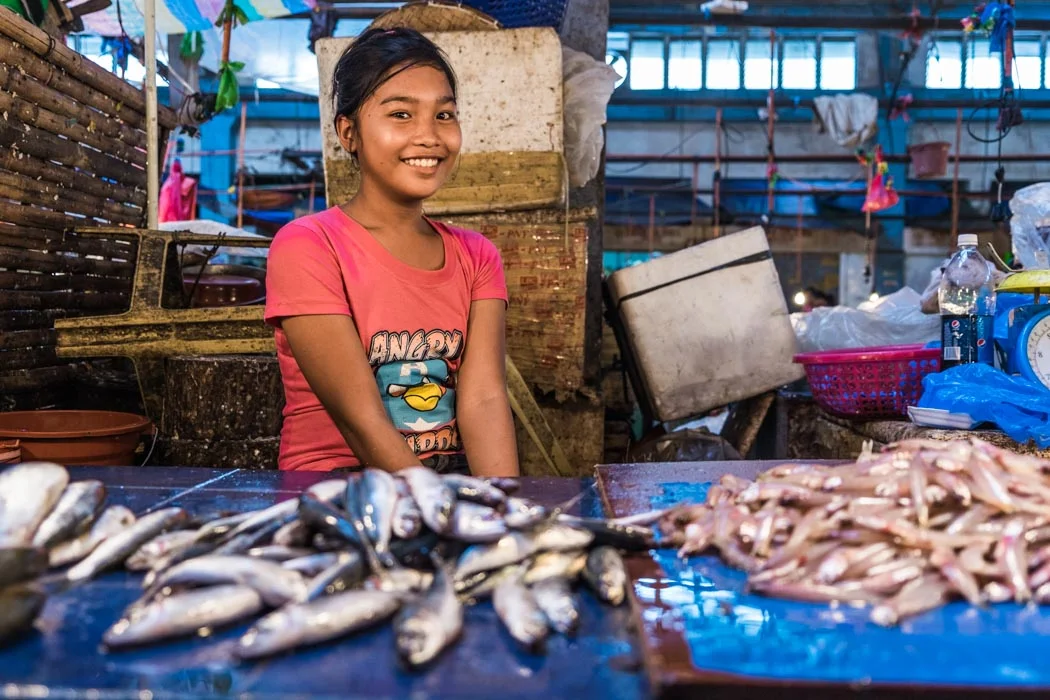
Roxas, Philippines
The more remote places in the world you visit, the more beautiful girls you meet. Kaylen, a 14-year-old girl in Roxas, Philippines looking shyly at her father trying to seek his approval to pose for me. I’m glad he agreed.
The fresh markets in Roxas are the heart of the community. Here, the rhythm of daily life is palpable, with vendors calling out their wares, customers haggling over prices, and the constant flow of people moving through the stalls. It’s a scene of organized chaos. Everyone seems to know each other, and the sense of community is strong.
- Warm and Welcoming Atmosphere: One of the first things visitors notice when they step into a Roxas market is the warm and welcoming atmosphere. The vendors, many of whom have been selling their goods for generations, greet everyone with a smile. There’s a sense of familiarity and friendliness that makes even newcomers feel at home. It’s not uncommon for vendors to offer a taste of their goods.
- A Hub of Local Interaction: The market is also a place where the locals come to catch up with friends and neighbors. It’s a social hub, where news is exchanged, and community bonds are strengthened. For visitors, this offers a chance to observe and even participate in the daily interactions that make up the fabric of life in Roxas. The market is a window into the local way of life.
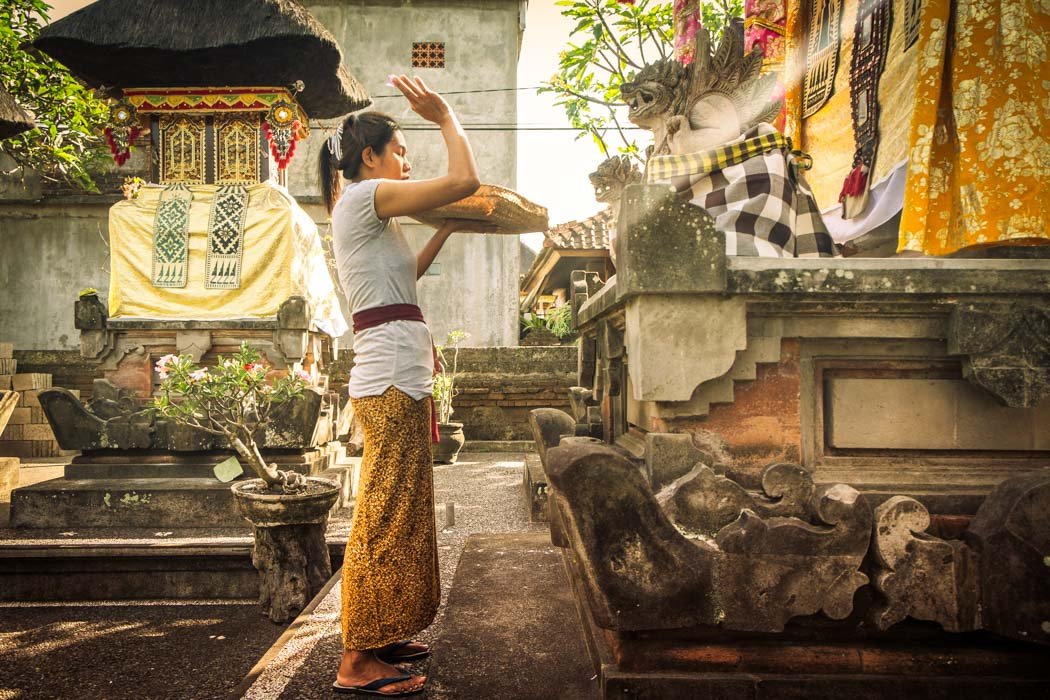
Ubud, Indonesia
Morning mist mingles with the smoke of incense in the early morning in Ubud, Indonesia. Here, brightly coloured petals of flowers decorate Hindu altars all through the day.
In Ubud, the morning begins with the delicate and purposeful act of placing offerings, known as canang sari, at Hindu altars. These small, intricately crafted baskets made of palm leaves are filled with flowers, rice, incense, and other items. They are prepared by Balinese women, who rise early to create these offerings. Each one a symbolic gift to the gods, thanking them for balance and peace in the world.
- The Ritual of Canang Sari: Watching the locals as they place these offerings at the altars is a serene experience. The offerings are placed with great care and intention—on family shrines, at the base of statues, in front of homes and businesses. The air is filled with the sweet scent of incense as the women, dressed in traditional kebaya, gently sprinkle holy water over the offerings and say a silent prayer.
- A Moment of Peace: The early morning stillness enhances the spiritual atmosphere, creating a moment of peace that is both intimate and shared. As the first rays of sunlight filter through the trees, casting a golden glow on the offerings, there’s a sense of harmony that envelops the town. For visitors, this is a time to slow down, observe, and reflect.
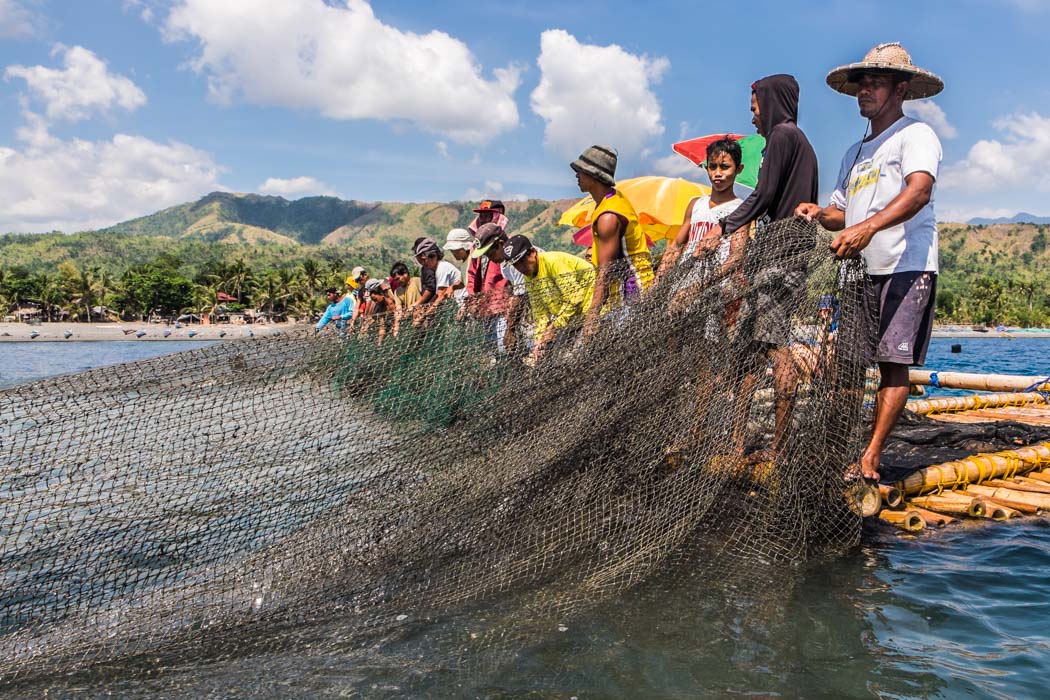
Tibiao, Philippines
Three generations of fishermen during lambaklad fishing in Tibiao, Philippines, where they use an enormous, stationary fish trap that is the biggest in the country!
Lambaklad fishing is a time-honored practice in Tibiao, where the sea is both a livelihood and a way of life. The technique involves the use of an enormous, stationary fish trap that extends deep into the ocean, capturing a wide variety of fish that pass through the area. This method, which has been perfected over generations by local fishermen.
- Generations of Expertise: What makes lambaklad fishing truly special is the generational knowledge that underpins it. Fathers pass down the skills to their sons, who in turn teach their own children. Each generation contributes its own innovations while preserving the core principles of the practice.
- The Magnitude of the Fish Trap: The lambaklad trap is an impressive structure, one that can only be truly appreciated when seen up close. Anchored firmly to the ocean floor, it extends across a large expanse of water, with a series of nets and barriers designed to guide fish into its wide, funnel-like mouth. The sheer scale of the trap is awe-inspiring. It’s incredible to observe the fishermen as they work together to haul in the catch, using techniques honed over decades.
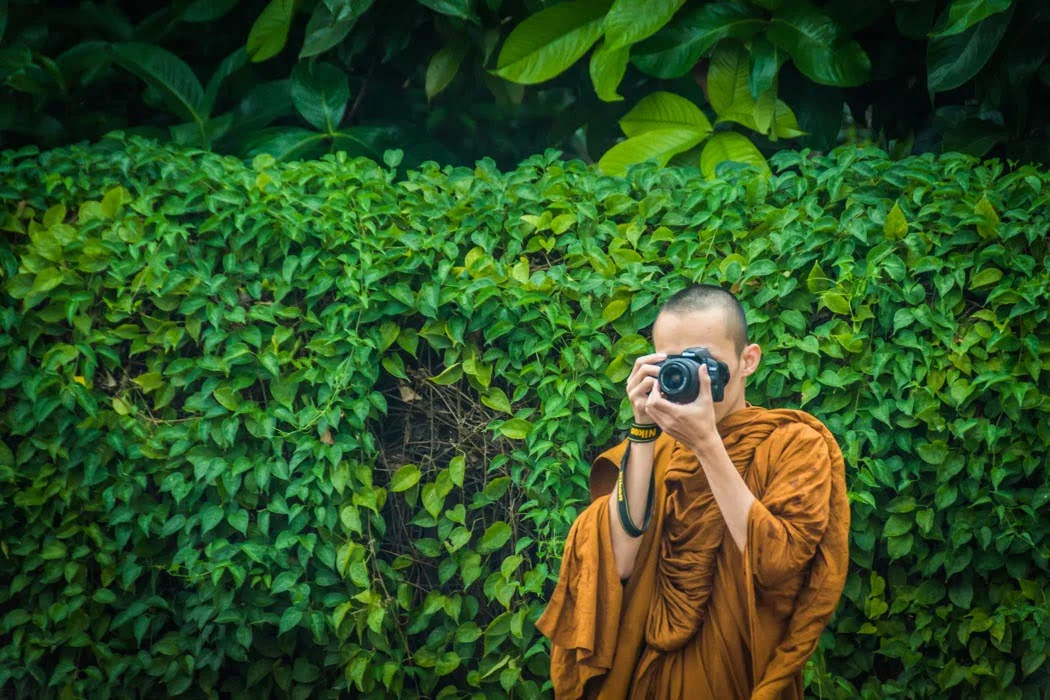
Chiang Mai, Thailand
Say Cheese! This is quite a common sight in Chiang Mai, Thailand, nowadays. Buddhist monks carry and buy electronic devices following the same trends as all of us.
If you’re looking to capture the essence of this northern Thai city in a way that goes beyond the usual tourist snapshots, you’ll want to venture off the beaten path. The true beauty of Chiang Mai lies in its hidden corners.
- A Temple in the Forest: The overgrown paths, moss-covered statues, and quiet, shaded surroundings make Wat Umong a dream for photographers seeking a serene, mystical setting. The temple’s unique architecture, with its maze-like tunnels and hidden alcoves, offers endless opportunities for capturing the play of light and shadow. This is a place where you can take your time to compose your shots.
- A Palette of Colors: The market’s vibrant displays of fruits, vegetables, and flowers create a feast for the eyes and camera. The bright reds of chili peppers, the deep greens of leafy vegetables, and the golden hues of marigolds arranged in garlands are just some of the colors that will fill your lens. The market is also an excellent place to photograph traditional Thai textiles and handmade crafts, often sold by the artisans themselves.
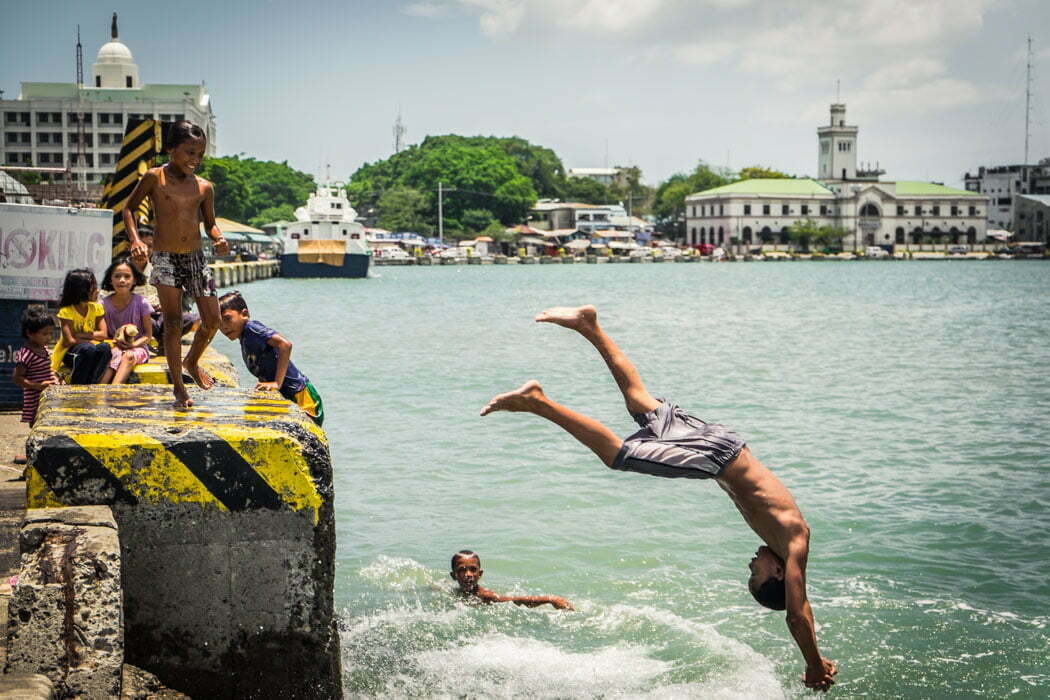
Iloilo, Philippines
Filipino kids don’t need too much to have fun. These are jolly children at the port in Iloilo, Philippines on a hot sunny day.
One of the most fascinating aspects of Iloilo is its deep connection to the past. The city is home to some of the most well-preserved heritage sites in the Philippines, making it a haven for history buffs and architecture enthusiasts alike.
- Molo Church (St. Anne Parish): Often called the “Feminist Church” due to its statues of female saints, Molo Church is a stunning example of Gothic architecture. With its towering spires and intricate details, this 19th-century church is a sight to behold. It’s not just a place of worship, but a living piece of Iloilo’s colonial past that stands proudly in the bustling city.
- Jaro Cathedral: Another iconic religious structure, Jaro Cathedral is famous for its blend of baroque and neo-Romanesque architecture. The cathedral houses the miraculous image of Nuestra Señora de la Candelaria, and its belfry, which stands separate from the church, offers a unique photo opportunity.
- Old Colonial Mansions: Iloilo’s rich history as a Spanish colonial trading hub is reflected in its beautiful ancestral homes, particularly in the districts of Jaro and Molo. These grand mansions, once belonging to Iloilo’s elite, transport visitors to a bygone era of opulence and elegance.
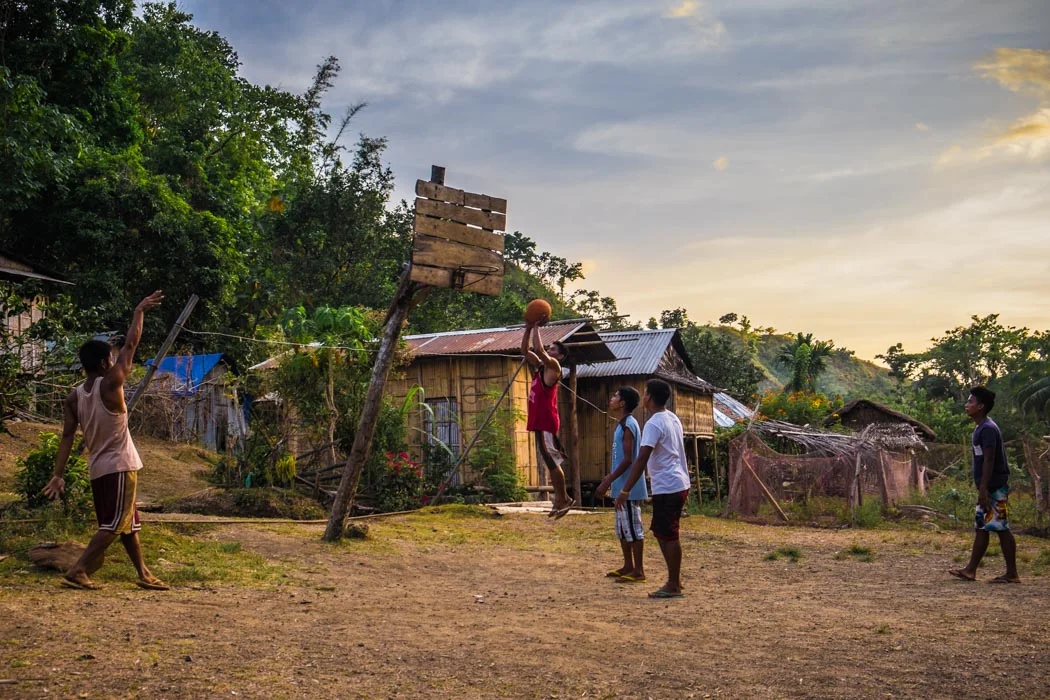
Tibiao, Philippines
Basketball in the Philippines: anywhere and anytime. You can find a basketball court in every single town and village here, where usually a lot of improvisation is involved in constructing the court.
Tibiao is blessed with an abundance of natural attractions that make it a paradise for outdoor enthusiasts. From towering waterfalls to serene rivers, the town’s landscapes offer a diverse range of experiences for those who love nature.
- Tibiao River and Kawa Hot Bath: One of the most iconic experiences in Tibiao is soaking in a kawa hot bath by the Tibiao River. These large, cauldron-like vats, traditionally used for cooking muscovado sugar, are repurposed as rustic bathtubs. Heated by wood fires and filled with warm water infused with herbs and flowers, the kawa baths offer a uniquely relaxing experience amidst the lush greenery of the riverbanks.
- Bugtong Bato Waterfalls: A trek through the dense forests of Tibiao will lead you to Bugtong Bato Waterfalls, a multi-tiered cascade that is both awe-inspiring and refreshing. The hike itself is an adventure, taking you through lush vegetation, bamboo bridges, and small streams. Upon reaching the falls, you’re rewarded with the sight of crystal-clear water plunging into natural pools—perfect for a refreshing dip after the hike.
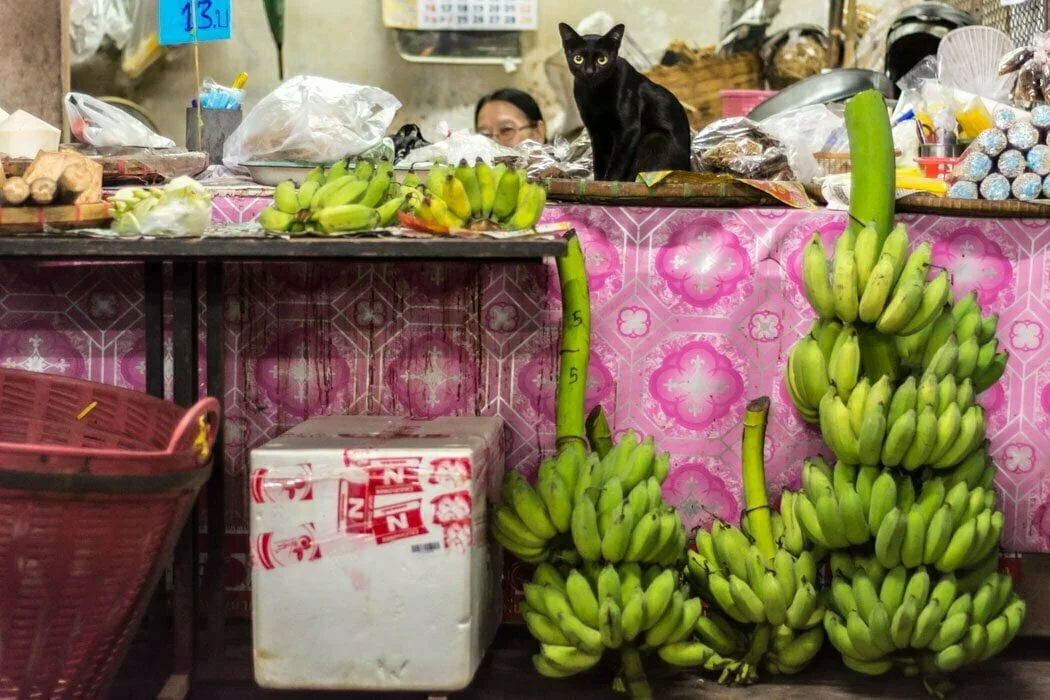
Chiang Mai, Thailand
A four-leg guardian and a banana vendor make a great-synchronized couple at the market in Chiang Mai, Thailand: while one rests, the other takes care of the customers.
One of the first things you might notice as you wander through Chiang Mai’s old city or its quiet backstreets is the number of cats that seem to have claimed the city as their own. These cats are not just stray animals. They are beloved by the community and often have a regular spot at local shops, cafes, and temples.
- Temple Guardians: In Chiang Mai, cats are often seen lounging around the city’s numerous temples. They seem to be perfectly at home among the sacred grounds, often found basking in the sun or napping in quiet corners. Many locals believe these cats bring good fortune, and the monks and temple-goers often take care of them, ensuring they’re well-fed and content.
- Cafe Companions: Chiang Mai’s vibrant cafe culture is another place where cats thrive. The city is home to several cat cafes where you can sip on a cup of coffee while surrounded by playful and affectionate felines. These cafes, like Catmosphere and Cat Brothers Cafe, offer a peaceful retreat from the bustling city streets. The cats here are well-cared for, with plenty of toys, climbing trees, and cozy spots to nap. For cat lovers, it’s a dream come true.
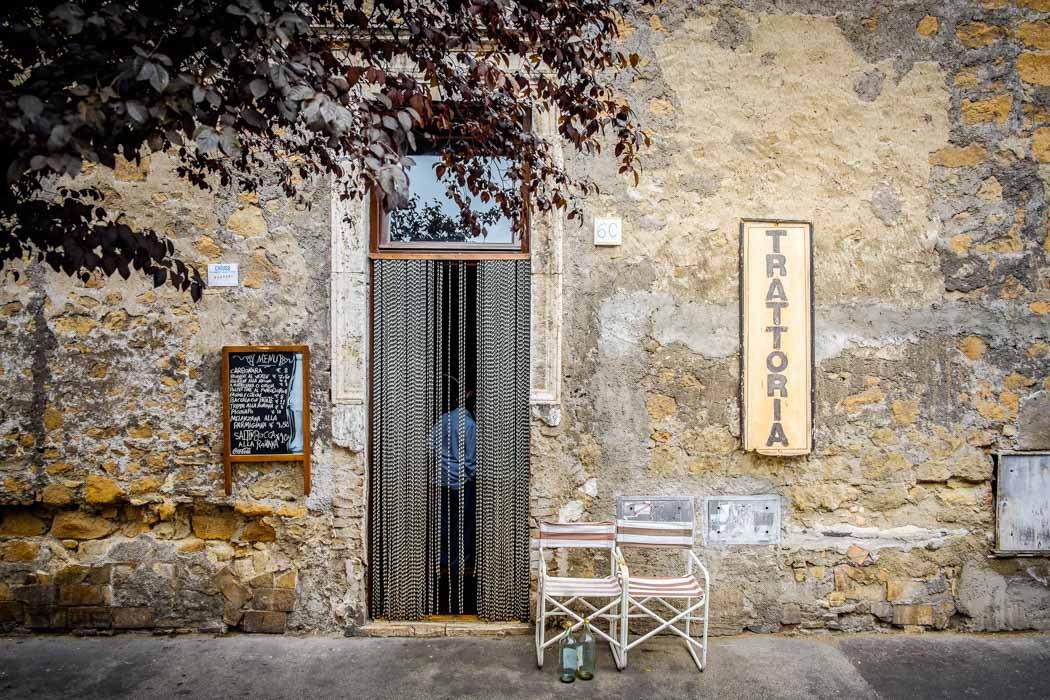
Rome, Italy
If you never enter, you’ll never know. A unique trattoria (local restaurant) in the center of Rome, Italy with a few, yet original traditional dishes on the menu.
The true essence of Roman dining can be found in the local trattorias—small, family-run establishments where tradition meets comfort, and every dish tells a story. These hidden gems, often tucked away in quiet corners or lively neighborhoods, provide visitors with a taste of traditional Roman cuisine with a sense of genuine hospitality.
- A Taste of Tradition: Trattorias are the heart and soul of Roman cuisine. Unlike their more formal counterparts, these eateries focus on simple, traditional dishes made with fresh, local ingredients. The menus are often handwritten, reflecting the daily offerings based on what’s in season. Here, you’ll find classic Roman dishes like Cacio e Pepe (pasta with Pecorino cheese and black pepper), Amatriciana (pasta with tomato, guanciale, and Pecorino), and Saltimbocca alla Romana (veal topped with prosciutto and sage).
- An Intimate Atmosphere: What sets trattorias apart from more touristy restaurants is their intimate, welcoming atmosphere. Many of these establishments have been run by the same families for generations, and the pride they take in their food and service is palpable. The decor is often unpretentious, with checkered tablecloths, wooden chairs, and shelves lined with bottles of wine. The focus is on creating a warm, inviting space.
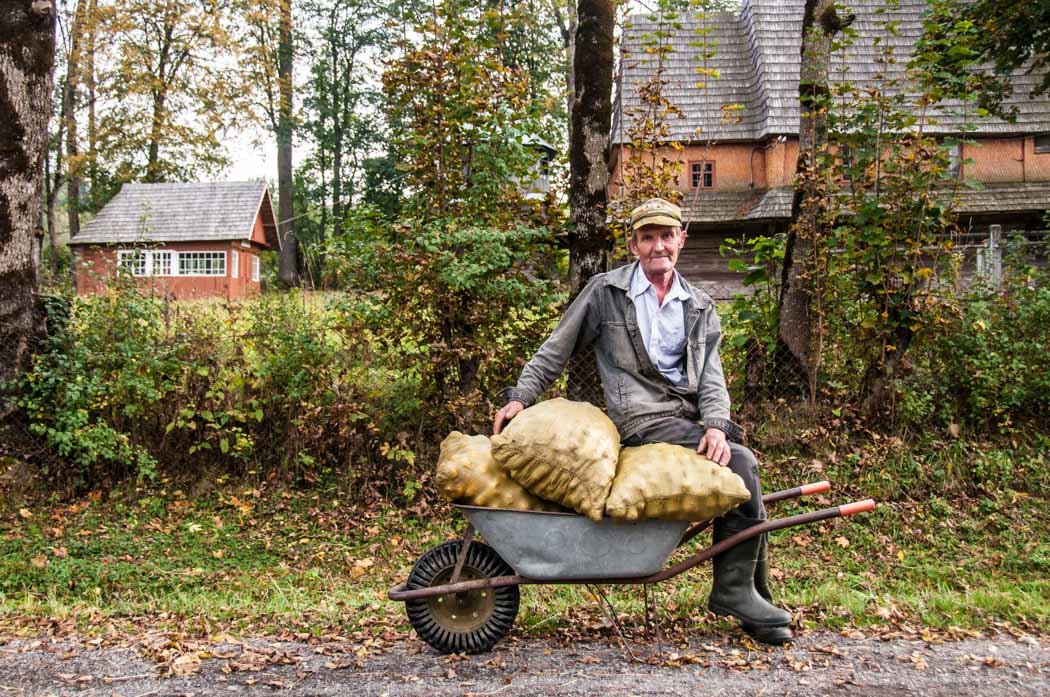
Carpathian mountains, Ukraine
Mykhaylo, a local in Kolochava, Ukraine was on the way home from the field where he collected apples to store for a harsh winter in the mountains. He was over 80 years old, yet blessed with a witty smile and full of jokes.
The Carpathian Mountains are a place where ancient traditions and vibrant local cultures thrive. Exploring the region provides a unique opportunity to delve into the rich heritage of the Hutsuls, Boykos, and other ethnic groups who have lived in harmony with these mountains for centuries.
- Traditional Villages: Scattered throughout the Carpathians are small, picturesque villages where time seems to have stood still. Visiting these villages is like stepping back into a simpler era, where life is closely connected to the land. The wooden houses, often adorned with intricate carvings, and the locals dressed in traditional attire, add to the charm of these settlements. Yaremche and Verkhovyna are two such villages where you can experience Hutsul culture firsthand.
- Local Cuisine: The Carpathians are known for their hearty and flavorful cuisine, influenced by the natural abundance of the region. Don’t miss the chance to try dishes like banosh (a creamy cornmeal porridge topped with cheese and bacon), deruny (potato pancakes), and fresh trout caught from mountain streams. Many villages also produce their own honey and herbal teas, made from wildflowers and plants gathered from the surrounding meadows.
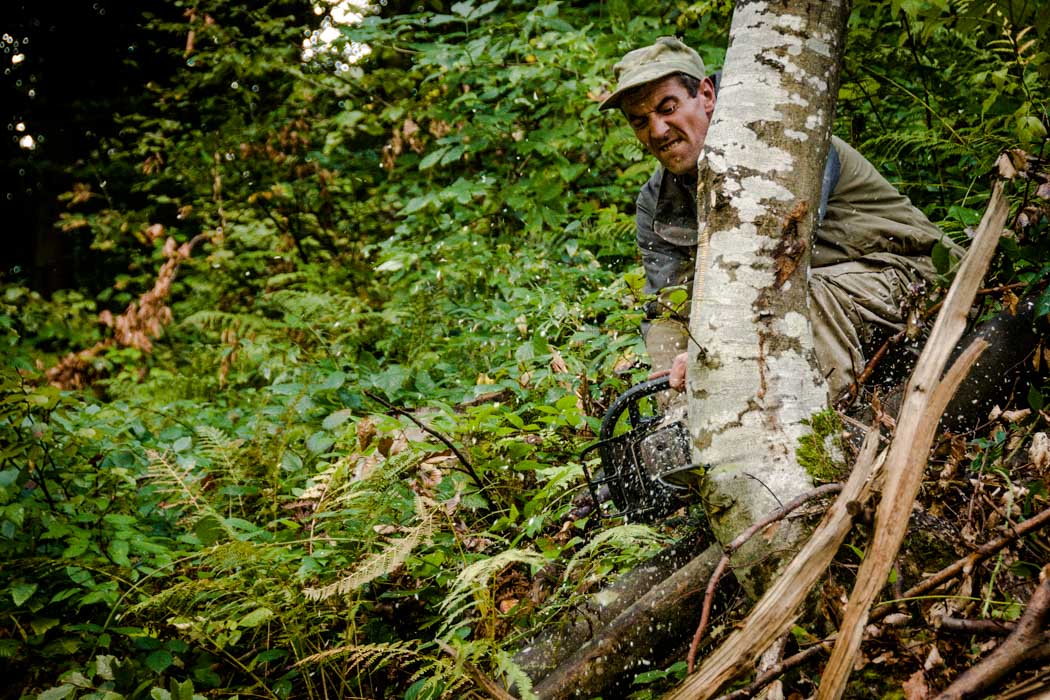
Nyzhniy Bystryy, Ukraine
Serhiy, a lumberjack of the Carpathian Mountains in action. His work is one that is precise and demands thoughtfulness, decisiveness and… physical strength. His job extends far beyond counting the trees he cuts.
Nyzhniy Bystryy offers a unique blend of natural beauty, cultural richness, and outdoor adventure that is hard to find elsewhere. Here’s why it’s a must-visit destination for travelers:
- Unspoiled Nature: The village’s location in the Carpathians provides access to some of the most unspoiled natural landscapes in Ukraine. The beauty of the region, from its forests and rivers to its mountains and meadows, offers a peaceful retreat from the demands of modern life.
- Cultural Immersion: Nyzhniy Bystryy is deeply connected to the Hutsul culture, and visitors have the opportunity to immerse themselves in local traditions, crafts, and music. The village’s cultural richness adds depth to the experience, making it more than just a nature getaway.
- Adventure and Exploration: Whether you’re hiking, biking, horseback riding, or skiing, Nyzhniy Bystryy offers plenty of opportunities for outdoor adventure. The diverse terrain and activities cater to all levels, making it a destination that can be tailored to your interests and abilities.
Turning Travel Portraits Into Your Trip’s Main Story
Scrolling through portraits is one thing. Walking down a street somewhere new and feeling that tiny electric moment of connection with a stranger is something else entirely.
If you’re drawn to this kind of travel, you can actually design a whole trip around people and portraits. Instead of hopping from “must-see sights”, you build your days around:
- Morning markets
- Backstreet workshops
- Temples, churches, and mosques at prayer time
- Fishing ports and bus stations at sunrise and sunset
You still see the famous landmarks, but your real memories are faces, conversations, and quick shared smiles. The photos become a side-effect of how you travel, not the main goal.
Planning A Portrait-Focused Trip
Choosing The Right Kind Of Places
Some destinations just make portrait work easier. You’re looking for places where people still use the street as an extension of their living room.
A simple way to think about it:
| Destination Type | Portrait Vibe | Pros | Cons / Challenges |
|---|---|---|---|
| Old city / medina | Tight alleys, markets, strong characters | Endless detail, dramatic light, busy street life | Can feel overwhelming at first |
| Temple / church towns | Rituals, worshippers, quiet intensity | Powerful emotions, strong sense of place | Need to be extra careful with respect |
| Port & fishing towns | Work in action, families, kids, daily grind | Honest, gritty portraits, golden light at sunrise | Early starts, salty air, fast-changing scenes |
| Mountain villages | Slower pace, older generations, traditions | Time to talk, repeat encounters, deep stories | Fewer people, more attention on you |
| Big city centers | Mix of everything, more anonymity | Nobody cares about one more person with a camera | Harder to build relationships |
If you’re nervous about approaching people, smaller cities and villages are often easier than big capitals. After a couple of days the same faces keep appearing, and that familiarity relaxes everyone.
Where To Base Yourself
For portrait-heavy days, location matters even more than usual. You want to roll out of bed and be “in” something interesting within a few minutes.
Look for accommodation that’s:
- Within walking distance of a main market
- Near a temple, church, or mosque that’s active at dawn and dusk
- Close to a river, port, or main square where people naturally gather
In a place like Chiang Mai, that might mean sleeping inside or just outside the old city walls. In Ouarzazate, staying near the kasbah keeps you within a short walk of alleyways full of life. In Ubud, anything within easy walking distance of a main temple or rice field path will do.
If it’s your first time planning a trip like this, pick two or three bases instead of trying to rush through a dozen. Portrait work rewards slowness.
A Simple Daily Game Plan For Portraits
Morning: Markets, Workers And Rituals
Early morning is your best friend:
- Light: Soft, directional, forgiving on skin.
- People: Less suspicious than at night, still in “starting the day” mode.
- Heat: In a lot of places, it’s the only time you’re not melting.
Good morning targets:
- Wet markets in the Philippines, Morocco, Thailand
- Monk alms rounds in places like Chiang Mai
- Fishermen returning to port in coastal towns
- Village lanes in mountain areas before everyone disappears into fields
If you’re shy, this is when you can start with “environmental portraits” – people small in the frame, more context than face. As your confidence grows, you can step closer.
Midday: Break, Review, Connect
Midday light is harsh, and most of us are tired by then. Use this time to:
- Eat slowly in a local spot and watch people without your camera
- Review what you shot in the morning and see what’s working
- Chat with a café owner, vendor, or your guesthouse host about their lives
Some of your strongest portrait opportunities actually come from conversations at the table, not on the street.
Late Afternoon To Blue Hour: Families, Play And Soft Light
As the day cools down, people pour back into public space:
- Kids playing basketball in a dusty field in Tibiao
- Families strolling along a promenade in Iloilo
- Elderly neighbours chatting on a bench in Ubud
- Monks laughing together with phones in hand in Chiang Mai
This is the time for relaxed, warm portraits and longer interactions. When the sky turns blue and the streetlights flick on, you get that cinematic mix of coolness and warm lamps. Don’t pack the camera away too early.
Where To Find Great Portraits (Inspired By These 15 Places)
You can steal ideas from these locations even if you’re not travelling to the exact same spots.
Markets, Ports And Everyday Work
- Chiang Mai markets: Look for fruit sellers, banana vendors, coffee stands, and the cats that adopt each stall. Markets are ideal places to practise quick, respectful asking – people are busy, the stakes feel low, and you can always buy something as a thank you.
- Roxas and Iloilo markets: Fish sellers, vegetable stands, and snack vendors are usually chatty. If someone is shy, start by asking about what they’re selling rather than pointing at your camera.
- Tibiao fishermen: Ports and fishing villages give you multi-generational scenes – grandfather, father, son working together. Step back a little and use a wider lens to include the landscape; it tells the full story.
Temples, Churches And Rituals
- Chiang Mai alms rounds: Stand back from the line of monks and focus on the people offering alms – the expressions, the hands, the quiet concentration. Move slowly, no flash, no rushing.
- Pandan church services: In small villages, always ask permission from the priest or a church elder first. One quick conversation in front of the church can turn a “maybe” into warm encouragement.
- Ubud offerings: You don’t have to shoot faces all the time. The act of placing offerings, hands in motion, incense smoke in the air, can be just as powerful.
Quiet Corners, Backstreets And Workshops
- Chiang Mai back-lane mechanics and artisans: Watch how long it takes before someone notices you. Don’t start shooting immediately – linger, buy a drink, smile. When you finally raise the camera, it’ll feel less abrupt.
- Rome’s side-street trattorias: Instead of only photographing plates of pasta, turn your attention to the person at the door, the chef in the kitchen window, the older guest in a corner table watching the world go by.
- Carpathian villages: Here, people move slower but pay more attention to newcomers. Portraits often come after a shared coffee, a glass of something homemade, or a simple chat about the weather and harvesting.
Approaching People Without Being Weird
Getting Over The First Ask
It’s funny – we travel across continents, but the hardest step is often the two steps closer to a stranger.
A couple of simple habits help:
- Start with a smile and eye contact. Let them see you, and your intention, before the camera appears.
- Use your hands. Point at your camera, then to them, then tilt your head in a question. Even without shared language, most people get the message.
- Have a short phrase ready. Learn “Can I take your photo?” in the local language if you can, or use a friendly English tone with a smile.
If they hesitate, back off. A shrug, a smile and a “no problem” keeps things light and respectful.
Paying, Tipping And Gifts
There’s no single rule here, but a few guidelines:
- Markets and work scenes: Buying something after a photo is often better than handing over cash just for the picture. Everyone wins.
- Street performers: If someone’s clearly performing for tips, treat it like a show. Shoot, enjoy, and tip.
- Kids: Be extremely careful. Avoid giving money directly to children. If you absolutely want to give something, talk to a parent, a teacher, or buy something useful (fruit, notebooks) rather than sweets or cash.
Another option: if you’re staying in a place for a while, have a few of your favourite portraits printed at a local shop and bring them back. Handing someone a physical photo of themselves a few days later is pure magic.
Religion, Poverty And Vulnerability
Some of the most striking images happen in vulnerable contexts – someone praying, someone clearly struggling, someone elderly and alone.
Before you shoot, ask yourself:
- Would I be comfortable if this were my grandmother, my child, my neighbour?
- Am I taking something, or sharing something?
- Does the photo give them dignity, or just make their hardship look “interesting”?
If the answer doesn’t sit right, put the camera down. There will always be another moment.
Simple Gear And Settings That Make Travel Portraits Easier
You don’t need a studio’s worth of equipment. In fact, the less you carry, the more you’ll shoot.
Camera And Lens Choices
- Phone: The best option if you’re camera-shy yourself and want to stay low-key. Great for close, informal portraits with people you’ve already been chatting to.
- Small mirrorless + 35mm or 50mm lens: The classic travel portrait setup. Light, fast, and good in low light. 35mm if you like including context, 50mm if you prefer tighter head-and-shoulder shots.
- Zoom (24–70mm or similar): Versatile if you’re not sure what you’ll find, but heavier around your neck all day.
The key is that you can react quickly without fumbling with bags and straps.
Go-To Settings For People On The Street
Keep it simple so you can focus on the human in front of you:
- Mode: Aperture priority (A or Av)
- Aperture: f/2.8–f/4 for single-person portraits, f/4–f/5.6 for small groups
- Shutter minimum: If your camera allows, set a minimum shutter speed of 1/250s to freeze small movements
- ISO: Auto, with a max you’re comfortable with (1600–3200 on most modern cameras)
- Focus: Single point, on the eye closest to you
The less time you spend staring at your settings, the more time you spend actually connecting.
Practical Travel Tech Stuff
- Carry two smaller memory cards instead of one big one. If one fails, your whole trip isn’t gone.
- Back up your favourite shots each night to a laptop, tablet or even a small SSD plus cloud when you have decent Wi-Fi.
- Keep a small microfiber cloth in your pocket. Sweat, sea spray and dust have a way of finding your lens at the worst possible moment.
Portrait Walk Ideas Inspired By These Places
You can borrow these rough “routes” and apply them to other cities with similar vibes.
Chiang Mai: Old City Humans Of The North
- Early: Watch or quietly photograph the alms round along a main street, focusing on the people offering food rather than the monks themselves.
- Mid-morning: Dive into a local market – fruit, flowers, street breakfasts. Start with wider, context shots, then build up to asking for close portraits of vendors.
- Afternoon: Slip into a backstreet and look for tiny workshops – mechanics, welders, tailors. Spend more time watching than shooting.
- Evening: Finish in a neighbourhood night market, following your nose and your lens between food stalls and families out for a snack.
Ouarzazate & Ait Benhaddou: Kasbah Stories
- Morning: Explore the alleys when the light slants across the mud walls, catching villagers carrying bread, water, or bundles of wood.
- Midday: Take a break in a teahouse, and – if the mood is right – ask the owner for a portrait as they pour your mint tea from high above the glass.
- Late afternoon: Cross to a viewpoint and photograph silhouettes against the kasbah, then wander back through as kids play football and elders gather to talk.
Always be extra sensitive here – some people in conservative areas really don’t want their photo taken. Read the room.
Coastal Philippines: Markets, Ports And Basketball Courts
- Dawn: Head to the fishing port in a place like Tibiao or Roxas. Work with silhouettes, backlit faces, and hands hauling nets.
- Late morning: Markets for colour and chaos – coconut vendors, butchers, kids snacking on skewers.
- Golden hour: Find a basketball court. There will be one. Ask if you can shoot a bit, then put the camera down and join a game if you’re up for it. Those shared moments turn into the best portraits later.
Essential Travel Portrait Questions Answered: Practical Tips For Photographing People Around The World
What makes a good destination if I’m just starting out with travel portraits?
It depends. For your first portrait-focused trips, choose places with a lot of relaxed street life and walkable neighbourhoods rather than huge, chaotic capitals. Smaller cities, market towns, and villages where people still use the street as a living room are ideal because you’ll see the same faces more than once and you have time to build a bit of trust. Think night markets, morning markets, waterfronts, and temple or church towns rather than purely resort areas where everyone is in “tourist bubble” mode. If a place has good public spaces, you’ll have good portrait opportunities.
How many days should I stay in one place if I want meaningful portraits, not just quick snaps?
Longer than you think. Two or three nights is usually the minimum to move beyond surface-level photos; you’re just starting to understand the rhythm of a place by the time you have to leave. If portraits are your main focus, aim for four to seven nights in a base where you can walk to markets, temples, and backstreets from your guesthouse. The longer you stay, the more you’ll be recognized, greeted, and invited in, and that’s when the deeper, more relaxed portraits start to happen.
Is it okay to photograph strangers on the street without asking first?
Sometimes. Candid street photography is legal and culturally normal in many countries, especially when people are small in the frame and part of a wider scene. As a rule of thumb, if one person’s face becomes the clear subject, it’s better to at least make eye contact, smile, and signal what you’re doing, or ask if you’re close enough. Avoid sneaky, “stolen” close-ups of people in vulnerable situations, and be extra cautious around religious moments, hospitals, schools, and anyone who looks distressed or uncomfortable.
How do I ask for a portrait when we don’t share a language?
A smile and body language go a long way. Catch their eye, smile, point gently at your camera, then at them, and tilt your head in a clear “is it okay?” gesture. If they nod, laugh, or straighten their clothes, you’re in; if they look uncertain or turn away, just respond with a friendly shrug and “no problem” and move on. Learning one simple phrase like “May I take your photo?” in the local language is incredibly disarming, and if you show them the photo afterward, most people light up immediately.
Is it respectful to photograph religious ceremonies and people at prayer?
Not always. Places of worship and moments of prayer are powerful, personal, and they deserve a lot of extra care. If you’re in a church, temple, mosque, or shrine and you’re not sure, ask a staff member, monk, priest, or guard before you even take the camera out. Stick to the edges, never use flash, avoid blocking people’s movement, and prioritize hands, candles, offerings, and atmosphere over tight, intrusive shots of faces at their most vulnerable. If it feels like you’re interrupting someone’s connection with their faith, it’s a good moment to put the camera away.
When is the best season to plan a portrait-focused trip in places like Southeast Asia or the Mediterranean?
Generally, shoulder seasons are your friend. In much of Southeast Asia, the cooler, drier months from roughly November to February are more comfortable for dawn markets and long walks, while the heavy monsoon months can still be wonderful if you don’t mind dramatic skies and afternoon downpours. Around the Mediterranean, spring and autumn often bring softer light, fewer crowds, and more relaxed locals than the height of summer. Whatever region you choose, think about when people actually use outdoor spaces the most and plan around that rather than just beach weather.
What time of day gives the best light for travel portraits in hot countries?
Golden hours are your magic windows. Early morning and late afternoon into blue hour give you softer, more flattering light and cooler temperatures, which makes everyone more patient in front of the camera. Morning is great for markets, workers, and rituals; late afternoon is perfect for kids playing, families out for a stroll, and friends hanging out in squares and at the waterfront. Midday is usually the worst for portraits because the light is harsh and people are tired, so treat it as your time for food, rest, and reviewing your shots.
Should I pay people for their portrait when I travel?
Sometimes, but carefully. Paying a street performer, costumed character, or someone clearly posing for tourists is totally normal and expected. In markets or small businesses, it often feels better to buy something after taking a portrait instead of handing over cash for the photo itself. Be very cautious about creating a pattern where kids expect money for pictures; that can encourage skipping school and other problems. When in doubt, ask a local guide or host what’s considered respectful in that particular community.
Is it safe or ethical to photograph children while I’m travelling?
You need to be extra thoughtful. Children are naturally curious and photogenic, but they’re also vulnerable, and they can’t properly consent the way adults can. Always look for a parent, guardian, teacher, or older sibling and get their clear approval first, and avoid posting anything that could identify exactly where a child lives or studies. Skip photos that play up poverty, illness, or distress, and never give money or random sweets directly to kids after a photo; if you want to give something, talk to an adult and keep it practical and low-key.
Can I get great travel portraits with just a phone, or do I need a “proper” camera?
Absolutely. Modern phones are already capable of beautiful portraits, especially at close range in good light, and they feel much less intimidating than a big camera and lens. A dedicated camera gives you more control in low light and moving scenes, but the real magic comes from your connection with people, not the gear hanging around your neck. If you’re more relaxed with a phone in your hand, you’ll probably get better expressions and more genuine moments with it than with a camera you’re scared to use.
What lens and camera settings work best for candid portraits on the street?
Keep it simple and predictable. A small 35mm or 50mm lens on a mirrorless or DSLR keeps your kit light and helps you work at a natural distance without shouting across the street or creeping too close. Aperture priority with a setting around f/2.8–f/4 for individuals and f/4–f/5.6 for small groups, a minimum shutter speed around 1/250s, and auto ISO up to a limit you’re comfortable with will cover most real-world situations. Focus on the closest eye, breathe, and remember that connection matters more than technical perfection.
How do I keep my camera gear safe in busy markets and cities?
Awareness beats paranoia. Use a discreet bag that doesn’t scream “expensive camera inside,” keep zippers closed, and avoid constantly flashing gear in crowded places just for the sake of it. A cross-body strap, a small body with one lens, and keeping your bag on your lap or between your feet at cafes goes a long way. As you move through markets or bus stations, pay more attention to your surroundings than to your screen, and if a situation feels sketchy, step back, tuck the camera away, and move on.
What’s the best way to back up my travel photos while I’m on the road?
Redundancy is everything. Aim to have each important image stored in at least two places: your camera card and a second device, like a laptop, tablet, or portable SSD. If you can, add a third backup in the cloud whenever you hit good Wi-Fi, using a service that can sync in the background while you sleep. Using a couple of mid-sized memory cards instead of one huge one also spreads the risk so a single card failure doesn’t wipe out your entire trip.
How can I give something back to the people I photograph?
Prints are magic. One of the simplest, kindest gestures is to have a few favourite portraits printed locally and hand them back a day or two later to the people in the frames. You can also support local businesses by buying their food, crafts, or services if you’ve photographed them, and by speaking positively about them to other travellers in person. In places where you’re invited deeper into a community, consider contributing to a local project or school through a trusted contact rather than handing out random cash on the street.
I’m shy – how do I build the confidence to ask people for portraits?
Gently. Start with wider environmental scenes where people are just part of the context, then gradually move closer as your nerves settle. Pick situations where people expect to be approached, like markets or food stalls, and begin with small talk or a purchase before you ever mention a photo. Set yourself tiny daily goals, like asking one person per day, and allow yourself to celebrate each “no” as proof that you can handle rejection and still be okay. Over time, those awkward first steps become second nature.
Is portrait-focused travel suitable for families or trips with kids?
Yes. Travelling with kids can actually make portrait work easier because they naturally attract smiles, curiosity, and conversation, especially in family-oriented cultures. You’ll need to slow your pace, plan more breaks, and be stricter about when and where you shoot so everyone stays safe and comfortable, but those pauses often turn into chances to connect with local families. Just keep your priorities straight: your own kids’ wellbeing comes first, and photographs are a bonus that grow out of the relationships you build together on the road.
What should I wear and pack for a trip where I’ll photograph people a lot?
Think low-key and comfortable. Neutral, non-branded clothing helps you blend into the background and puts less attention on you than loud logos or flashy colours. Good footwear matters more than you think because you’ll be on your feet at dawn markets, backstreet workshops, and ports all day. A small daypack, rain cover, microfiber cloth, and maybe a light scarf to cover shoulders or hair in religious spaces will keep you flexible, respectful, and ready for whatever scene unfolds in front of your lens.
What This Style Of Travel Gives You Back
Travelling with portraits in mind forces you to slow down. You stop treating people as background decoration and start seeing them as the main event.
You learn:
- To read a room, a street, a face
- To handle rejection with a smile
- To listen more than you speak
- To build small bridges of trust in places where you barely share a language
Some of your favourite frames may never win awards. They might be slightly blurry, imperfectly composed, shot in bad light. But you’ll remember the laugh, the shared joke, the nervous nod of permission, the “thank you” at the end.
And that, really, is the whole point: using your camera as an excuse to step out of your comfort zone and into someone else’s world, even if just for a heartbeat.
Gianni Bianchini is the photographer and male half of the travel blog Nomad is Beautiful. More photos can be seen in his portfolio and Instagram.
Beautiful set of posed and unposed photos. It makes me want to grab my camera and go look for someone interesting.
Beautiful pictures! I’ve found a few places that have been added to my bucket list.
I like the Chiang Mai photo, bananas and a black cat!
Really liking these pics. Everyone’s actions seem to say a lot about them.
I’m with Samuel, shots of landscape and nature have their worth, but capturing that fluid moment is priceless – and an art, these images are fantastic, great stuff Gianni and Ivana!
Morocco is a fascinating country with its own flavor. By the way, very friendly
I wonder if they are preparing another photomontage.
Pictures really speak louder than words. That monk with the camera made my day. I strongly believe that Buddhist Monk are among the funniest and most cheerful people in the world.
Fantastic pictures and a great way of capturing your life experiences! I can only image what it will feel like going over posts like these in a couple of years.
WOW those pics are simply beautiful!! Thanks for sharing!!
Wow! These pictures are amazing! I, too, love to take pictures of people, but I still have to learn a lot. Thanks for inspiring!
I love incorporating figures or portraits into a photograph also, they really put life and perspective into the environment, beautiful captures.
beautiful pictures. Sometimes you get a better feeling of the place through the people, not just buildings or mountains.
That shot of the fishermen in Tibiao is just amazing. I love the way you’ve caught the backdrop in the frame too
Few great shots here Gianni – nicely captured 🙂
Love the Moroccan picture – beautiful colours! Just love glimpses of life around the world in these pics
The basketball court in the Philippines is amazing! Some awesome photos!
Nice photos, great job! 😉
Amazing collection. Good job, each picture has a special meaning, and very comprehensive. I am waiting for your next article.
What beautiful photos! I especially love the one of the two women of the motorbike! Would love to take more photos of people, but normally chicken out of asking them/feel too rude snapping away without asking them!
Great pictures around the world. I love no 9 picture, a monk with Nikon. Most of Thai prefer Canon over any other camera because many years His Majesty King use Canon taking great pictures.
I think picture no 2 (mechanic) and no 4 (local praying to a Buddhist monk) is switched. Sorry if I got it wrong
Very good collection, really amazing.
Very nice shots. The monk with the camera is awesome. I wish I could see his picture of you too 😀
Gorgeous pictures! Happy to see many from my home country of the Philippines. I hope you enjoyed your visit? So true about the Filipino love for basketball. We can make hoops out of anything! The funniest one I ever saw was an old toilet seat turned into a makeshift rim. 🙂 Best of luck to you and your travels!
Good job, each picture has a special meaning, and very comprehensive.
No. 11 Tibiao, Philippines – that’s what you call cross-country/trail basketball 🙂 Love photo No. 8 – makes me wonder how the raft takes the pulling tension.
Indeed amazing photos from Asia to Ukraine. Thanks for sharing! The photo with a bike is very cool!
Thanks a lot for liking our photos and commenting. We really appreciate. And thanks to Samuel for giving us the chance to publish these photos here. 🙂
I love seeing pictures like this. They tell a whole story.
Also, I’m jealous of their photography skills! 🙂
So many interesting face… lovely faces…
I love these pictures! So full of emotion and life.
Love the kids playing basketball – great shot!
Reflections of life…great clicks…
I love how people in the Philippines, even tho they don’t have much they make do and are still very happy people.
I love the photo of Kasbah Taourirte in Ouarzazate. It is amazing!
The photo of the city Ouarzazate captures the essence of Morocco. I felt the same feeling I had when I’ve been there.
Love the monk with the camera!