
Audrey and I were waddling back to the Vertical Lodge in the pitch black, utterly defeated by a staggering food coma brought on by a massive blue cheese risotto and a full bottle of Syrah. My legs felt like lead weights after hiking over 20 kilometers earlier that day, and my biggest fear wasn’t being mugged in the trekking capital of Argentina. My biggest fear was rolling my ankle on a rogue Patagonian pothole and having to be airlifted out of town.
We had arrived in El Chaltén not as elite mountaineers, but as enthusiastic foodies wearing leggings because our jeans no longer fit after weeks of eating our way through the country. We were what you might call “faux trekkers”. And while we spent six days worrying about the logistics of surviving the trails, the elements, and our own lack of cardiovascular endurance, the question we get asked most often on our YouTube channel is much more basic: Is El Chaltén actually safe?
When you are planning a trip to the edge of the world, it is natural to worry about walking around at night, leaving your expensive camera gear in a hostel dorm, or navigating trail crime.
Let’s strip away the polished travel brochure fluff. Here is the un-sugarcoated, highly detailed, and thoroughly researched reality of staying safe, securing your gear, and surviving the micro-logistics of El Chaltén in 2026.
The Nocturnal Reality: Navigating Town After Dark
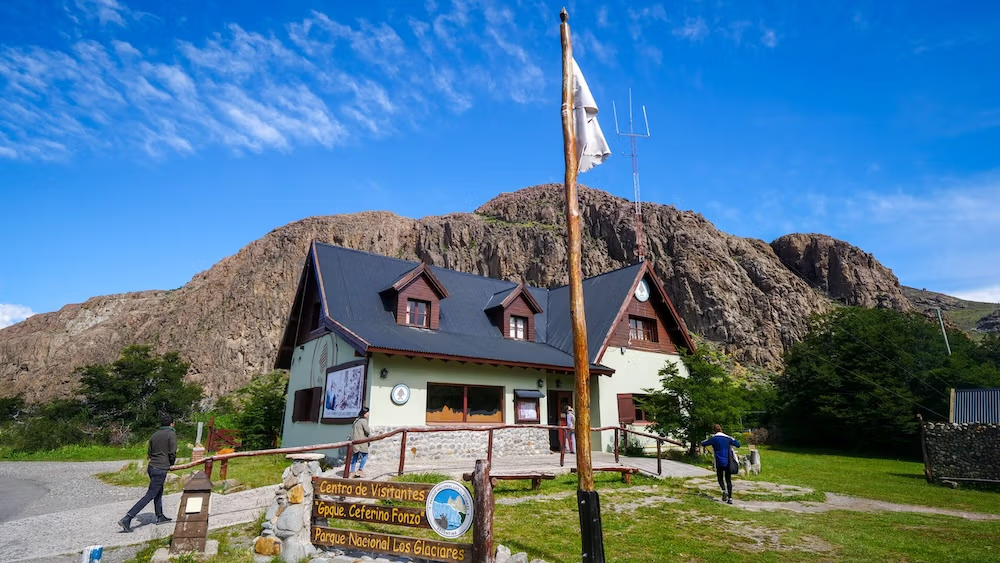
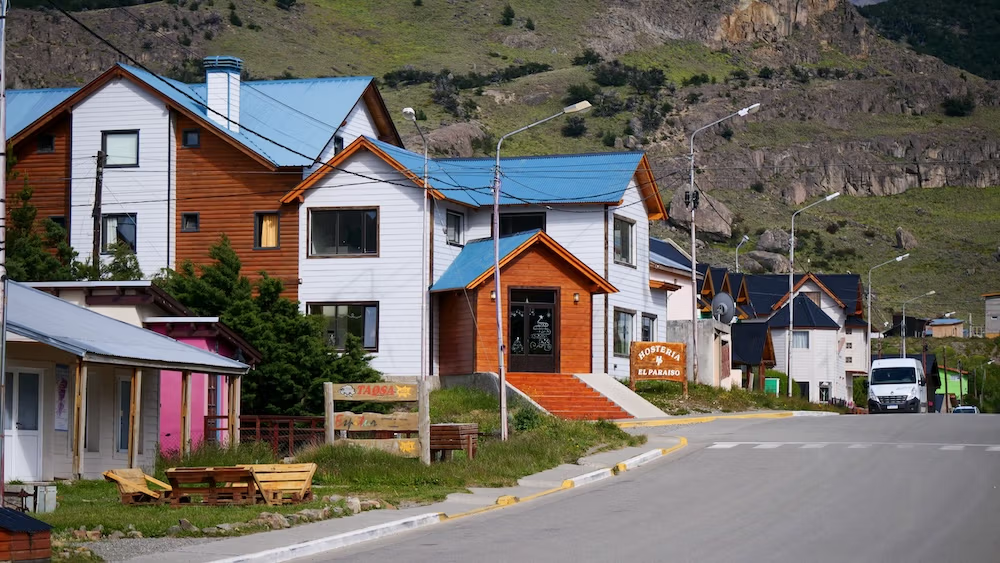
El Chaltén is a purpose-built frontier town that feels like a colorful little oasis dropped into a dramatic valley. Because its entire economy revolves around people waking up at 5:00 AM to walk up mountains, violent human crime is virtually non-existent. You can walk back from a late-night brewery at 11:30 PM with thousands of dollars of camera gear in your backpack and feel completely secure from pickpockets or muggers.
The real danger here is municipal infrastructure.
El Chaltén is not paved with quaint, European cobblestones. The streets are essentially compacted dirt, gravel, and dust. When the famous Patagonian wind kicks up, it blasts that dirt straight into your eyes. At night, street lighting is sporadic at best.
If you pack heavy, hard-shell rolling luggage, the unpaved, dusty streets will destroy your suitcase wheels within 10 minutes of leaving the bus terminal on the south side of town. It took us nearly 45 minutes just to walk from the opposite end of town to the Fitz Roy trailhead.
[Samuel’s Packing Reality Check] Do not rely on your phone’s flashlight to get home after a few craft beers. Bring a proper headlamp even for town navigation. You need both hands free to catch yourself when you inevitably trip over a stray log or an uneven gravel ditch.
The Canine Welcoming Committee
You will encounter packs of local street dogs. During the day, they are incredibly friendly and often “adopt” hikers, happily trotting alongside you for miles. However, the park rangers strictly warn against letting them follow you onto the trails, as the National Park is home to the endangered huemul (a type of Andean deer). At night, these friendly pups occasionally form packs and bark aggressively at shadows. Give them a wide berth, but don’t panic; they are more interested in each other than in your empanadas.
The Gear Dilemma: Hostels, Lockers, and The Honor System
If you are tackling the multi-day trekking circuits, you face a logistical nightmare: what do you do with your heavy laptop, extra clothes, and non-hiking valuables while you spend three days sleeping in a tent?
Most generic guides tell you to “just ask your hostel.” That advice is outdated and often expensive.
The Hostel Locker Roulette
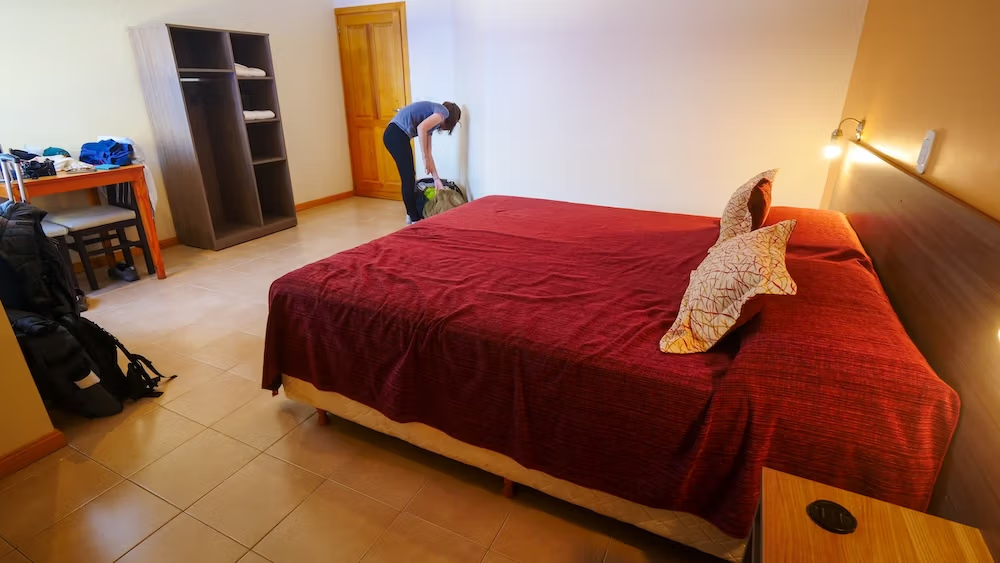
If you are staying in a dorm at places like Patagonia Hostel or Rancho Grande, they offer large, under-bed lockboxes. However, you must bring your own padlock. Buying a heavy-duty combination lock in an El Chaltén gear shop comes with a massive “tourist tax” markup. Bring one from home. Furthermore, the biggest risk of theft in hostels doesn’t come from the locals; it comes from transient backpackers leaving windows open or doors propped.
The Independent Storage Fix (BajoZero)
If your guesthouse refuses to hold your bags after checkout, or if they try to charge an exorbitant daily storage fee, bypass them entirely. BajoZero, a mountain gear store right on the main street (Avenida San Martín), offers independent, large locker rentals specifically designed for multi-day trekkers.
- The Cost: Historically around 500+ ARS per day (though subject to inflation).
- The Catch: You usually have to leave a piece of physical ID as collateral and pay the first day upfront. They operate on standard retail hours (roughly 9:00 AM to 8:00 PM), so plan your trail return accordingly.
The Campsite Honor System
Up on the trails at the free National Park campsites, like Campamento Poincenot or De Agostini, the hiking community etiquette is incredibly strong.
The standard practice is to pitch your heavy tent, leave your sleeping bag and cooking gear inside, and tackle the final steep ascents (like the brutal push to Laguna de los Tres) carrying only a daypack. Trail robberies or tent slashings are virtually unheard of. That being said, never tempt fate. Your passport, emergency cash, and electronics must go in your daypack with you.
2026 Gear & Logistics Matrix
| Storage/Logistics Hub | Current Reality & Pricing | The “Faux Trekker” Survival Tip |
| BajoZero Lockers | ~500+ ARS/day. Requires ID collateral. | Best for independent hikers avoiding hostel post-checkout fees. Don’t lose your claim ticket. |
| Hostel Dorms | Free with stay, but hardware is lacking. | Bring a heavy-duty combination lock from your home country. Local locks are heavily marked up. |
| Campamento Poincenot | Free site access (with Park Entry). High honor system. | Leave the heavy tent; take the passport. Pitch early (by 4:00 PM) to avoid the evening rush. |
| Western Union (Av. San Martín) | Horrendously unpredictable. | The Ultimate Trap: Do not rely on El Chaltén for cash. Bring crisp $100 USD bills from Buenos Aires. |
Trail Safety: Pumas, Park Fees, and Patagonian Winds
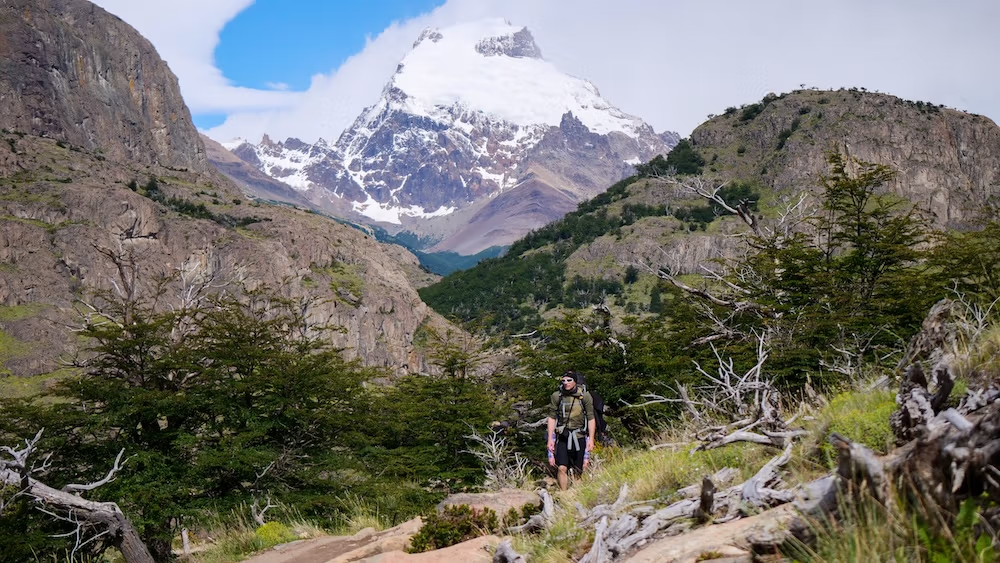
The trails branching out of El Chaltén are some of the most well-marked and heavily trafficked in South America. Every kilometer features a progress marker, which is brilliant for figuring out if you have time for a side trail or if you need to turn back.
But “well-marked” does not mean “tame.”
The Midnight Puma Protocol
While violent crime isn’t a concern, the trails do host nocturnal apex predators: pumas.
If you want to catch the legendary sunrise hitting Mount Fitz Roy, you will likely be hiking from Campamento Poincenot up to Laguna de los Tres between 3:00 AM and 5:00 AM. A solo, silent hiker moving in pitch darkness is at a statistically higher risk of a wildlife encounter.
- The Unwritten Rule: Hike in a noisy group. Even if you are a solo traveler, linger at the trailhead until another group departs and naturally fall into step nearby. Normal conversation is enough to keep the wildlife at bay.
The 2026 Park Fee Rebellion & The Digital Trap
For decades, the north side of Los Glaciares National Park was famous for being a completely free trekking paradise. That is over. As of late 2024/2025, the park implemented a steep fee structure: 45,000 ARS (roughly $30-$40 USD) for a daily pass, or 90,000 ARS for a 3-day Flexipass. Tickets are now checked at the Río Eléctrico and Los Cóndores gates.
Here is where the logistics break down: The park requires a digital QR code ticket, but there is absolutely zero cell service at the trailheads. If you show up expecting to buy a ticket on your phone, you will be turned away.
- The Fix: You must purchase your ticket online while connected to your hotel’s Wi-Fi the night before and take a screenshot of the QR code.
[Samuel’s Connectivity Warning] Do not underestimate the total digital blackout of El Chaltén. The town’s satellite Wi-Fi goes down constantly. We literally could not process the $54 USD per night payment for our room at Vertical Lodge for an entire afternoon because the card machines were dead. If you need to download trail maps on AllTrails, do it before you leave El Calafate.
The Wind-Surfing Threshold
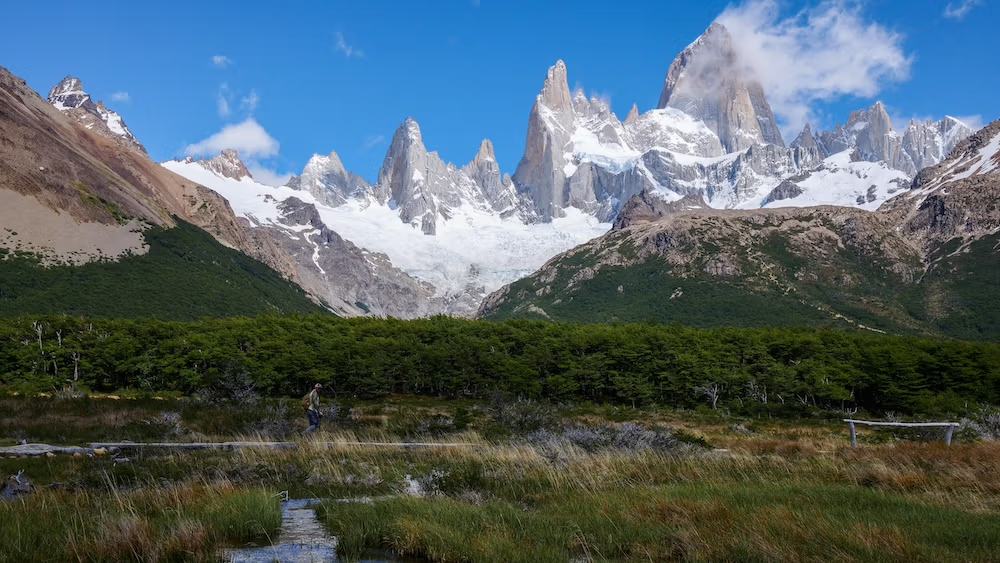
The greatest physical threat on these trails isn’t getting lost; it’s the weather. Patagonian weather is notoriously erratic. On Day 4 of our trip, the winds were so horrific and insane that we couldn’t barely stand on our feet. It was an absolute write-off, forcing us to surrender to a “cafe day”.
The local safety metric is simple: if the wind gusts force you to widen your stance, lean heavily, or use your arms to balance (a phenomenon locals call “wind-surfing”), you are in the danger zone. On exposed ridges, turn around. The mountain will be there tomorrow.
The “Invisible” Dangers: Sun, Streams, and SOS Protocols
We spent so much time worrying about our knees on the Fitz Roy descent and our budget at the grocery store that we completely overlooked the invisible elements of Patagonian survival. I arrived on the trail thinking the famously cold wind would naturally protect my skin. I was horribly wrong.
Because of the depleted ozone layer over Patagonia, the high-altitude sun here is absolutely brutal. I got scorched on what felt like a perfectly chilly afternoon. You need to pack SPF 50+ sunscreen, a proper hiking hat, and heavily polarized sunglasses just to avoid frying like a piece of bacon.
On the flip side, we had a moment of pure, unexpected joy when we ran out of water from our hotel lunchbox. Locals and guides will tell you that the glacial streams in El Chaltén are perfectly safe to drink from. Kneeling down to scoop ice-cold, pristine water straight from a rushing river felt like the ultimate rugged trekker move—though if you have a sensitive stomach, carrying a filtered water bottle is always the smartest play.
To keep you from scrambling when things go wrong, we put together the ultimate cheat sheet for the invisible logistics of trail safety.
The Patagonian Elements & Emergency Matrix
| Threat / Friction Point | The Reality on the Ground | The “Faux Trekker” Fix | Emergency / Actionable Protocol |
| Drinking Water | Glacial streams are widely considered safe for drinking, but keeping the water sources clean from tourist contamination is an ongoing local effort. | Bring a high-quality filter bottle (like a Sawyer or Grayl Geopress) so you can safely refill anywhere without fear of stomach bugs. | Pack oral rehydration salts in your bag just in case the local water doesn’t agree with you. |
| Sun & Ozone Exposure | The ozone hole over this region makes UV rays exceptionally harsh, even on cold or cloudy days. | Wear synthetic, long-sleeve base layers to protect your arms, and slather your face in SPF 50+. | N/A (Prevention is the only cure). |
| Medical Emergencies | A twisted ankle on loose scree or severe stomach issues can derail your trip instantly. | Don’t hike without a basic first-aid kit containing painkillers, blister plasters, and antiseptic. | Dial 107 for an Ambulance or Medical Emergency. |
| General / Police Issues | While crime is exceptionally low, lost passports or severe logistical issues can happen. (Note: The area code for El Chaltén is 2962). | Keep digital copies of your passport on your phone and a physical black-and-white copy hidden safely in your daypack. | Dial 101 for Police, or 100 for Fire emergencies. |
[Samuel’s Emergency Comms Check]
Memorizing that the medical emergency number is 107 does you absolutely no good if you are at Kilometer 9 of the Fitz Roy trek with zero cell service. Always tell your guesthouse exactly which trail you are hiking and what time you expect to be back. If you are doing remote, multi-day routes, renting a satellite messenger is non-negotiable.
The Brutal Reality of Laguna de los Tres
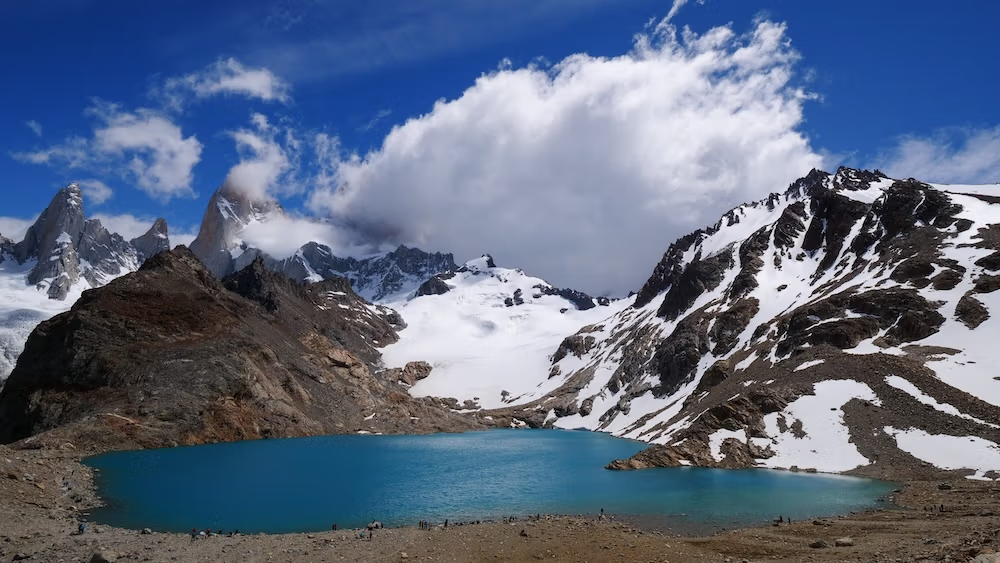
If you are planning to tackle the crown jewel of El Chaltén, the hike to Laguna de los Tres (Mount Fitz Roy), you need to manage your expectations and your physical reality.
We started our morning with a $10 USD lunchbox provided by our hotel. (Pro-tip: Most accommodations offer these, and you order them the night before ). I was so ravenously hungry that I ate my sandwich and most of my snacks at 9:00 AM, barely an hour into the hike. Do not do this. You will need those calories for Kilometer 9.
The Kilometer 9 Bottleneck
The first eight kilometers of the Fitz Roy trek are scenic and fairly flat. You will hit Laguna Capri and see views so majestic they look like CGI.
Then you hit Kilometer 9.
This is where the trail turns into a brutal, 400-meter vertical rock scramble. It is steep, gravely, and utterly exhausting. On the way up, it tests your lungs. On the way down, it destroys your knees. The descent was so agonizingly painful that my feet were throbbing, and I found myself legitimately fantasizing about calling an emergency number to be airlifted out, or paying to be carried down on a sedan chair.
Trekking poles here are not an optional luxury; they are a critical safety requirement for testing loose scree.
The Laguna Torre Alternative: A Gentler Path
If the Fitz Roy hike sounds like too much suffering, the 18-kilometer round-trip trek to Laguna Torre is your best alternative.
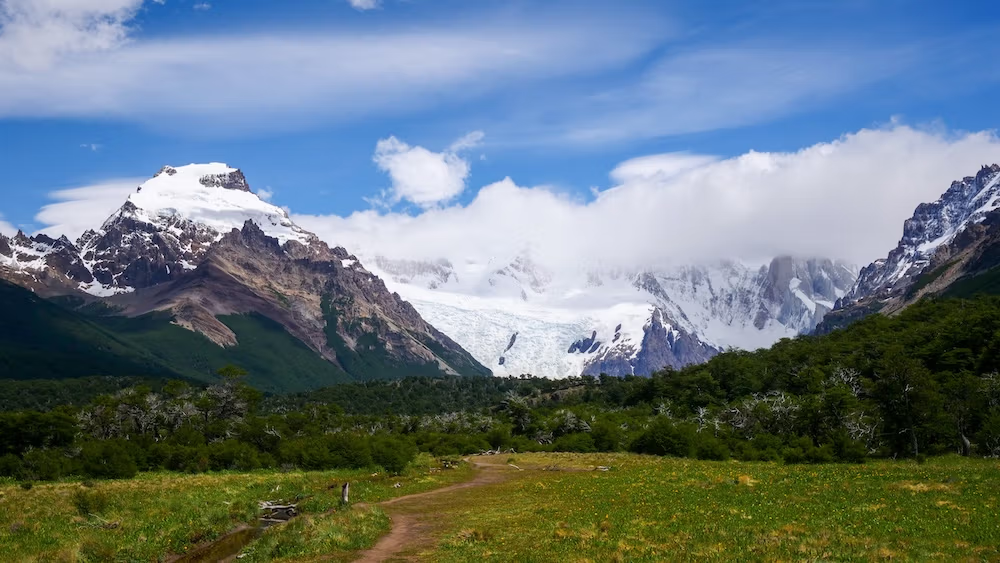
This trail is an absolute breeze in comparison. After an initial climb in the first three kilometers , the trail levels out into a stunning, wide valley walk. We hiked through haunted-looking forests, past the powerful Cascada Margarita waterfall, and enjoyed immense solitude.
However, nature doesn’t guarantee a postcard. When we finally reached Laguna Torre, Cerro Torre was completely hidden by dense clouds, and the lagoon itself looked muted and murky—like a giant bowl of cafe au lait. It lacked the “wow factor” of Fitz Roy , but the journey itself was incredibly comfortable. In fact, we speed-walked the entire return journey in about two hours and twenty minutes, motivated purely by the vision of the burgers waiting for us in town.
Trail Comparison Matrix: Fitz Roy vs. Laguna Torre
| Trail Metric | Laguna de los Tres (Fitz Roy) | Laguna Torre |
| Total Distance | ~22 Kilometers Round Trip | 18 Kilometers Round Trip |
| The Crux (Hardest Part) | Kilometer 9: A brutal 400m vertical rock scramble. | The first 3 kilometers (moderate elevation gain). |
| Visual Payoff | World-class, mind-bending views of the jagged peaks. | Highly weather-dependent. Often shrouded in cloud. |
| Recovery Required | 10 to 12 hours of sleep and a full day “write-off”. | Very mild. Ready for burgers immediately. |
| Post-Hike Meal Match | Gourmet recovery at Senderos (Risotto & Wine). | Caloric loading at La Zorra (Bacon Burgers & Beer). |
The Grocery Trap & Foodie Survival
You cannot out-hike a bad logistical plan, and in El Chaltén, food is a logistical hurdle.
Many online guides will cheerfully tell you to “save money by buying groceries in town.” This is a trap. The local supermarkets operate more like limited general stores. Supply trucks are subject to the same horrific weather as the hikers. When we went grocery shopping, the selection was beyond limited, and a single, sad-looking apple cost the equivalent of $1 USD.
[Samuel’s Supply Chain Fix] Do not expect to find cheap, abundant fresh produce here. If you have dietary requirements, or if you simply want good snacks, buy your trail mix, peanut butter, and specialty items in El Calafate before you get on the 3-hour Chaltén Travel bus. We paid 1,000 pesos ($16 USD) for that scenic bus ride, and we should have filled our bags with supermarket goods before boarding.
When your own packed lunch fails—like when my plastic salad bowl broke inside my backpack on the Laguna Torre trail, forcing me to eat my rice and cabbage mini-lunch off a log to prevent a spill —you will need to rely on the town’s restaurants.
The Post-Trek Triage Dining Guide
After burning thousands of calories, you need safe, reliable places to reload. Here is exactly where we ate when we transitioned from faux trekkers back into full foodies:
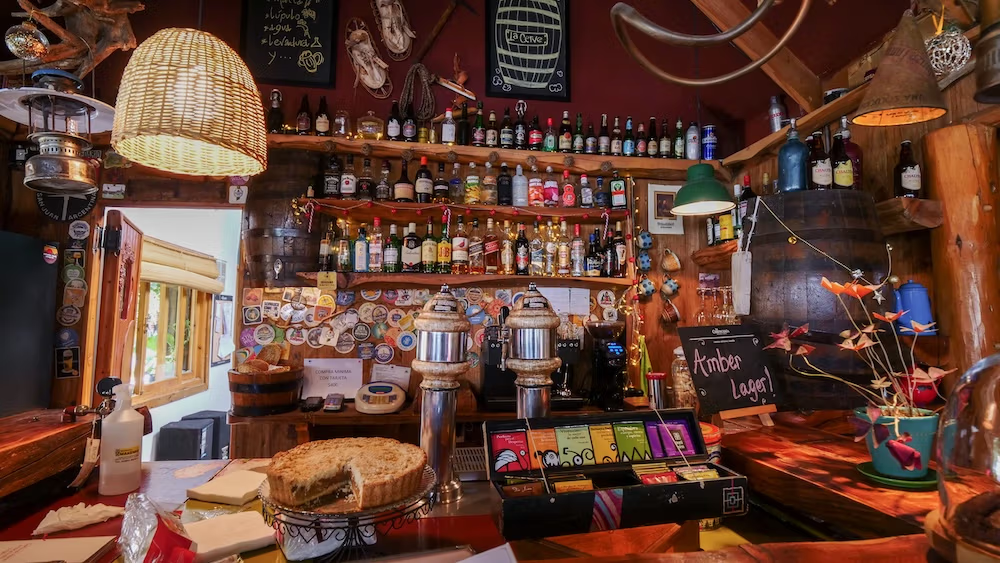
- Senderos (The High-End Recovery): Hidden near the bus terminal inside a high-end guesthouse, this tiny boutique restaurant only has about six or seven tables. It is a hidden gem. I had a decadent blue cheese risotto with walnuts and sun-dried tomatoes, while Audrey had a hearty lentil casserole (lentejas). Pair it with a bottle of Syrah, finish with the Panqueque de Manzana (apple pancake), and waddle home to sleep for 12 hours.
- La Zorra (The Caloric Dump): When you don’t want gourmet, you want grease. La Zorra is the foxy lady of El Chaltén , serving up borderline Shake Shack-level gourmet burgers, loaded cheesy bacon fries, and an extensive craft beer menu. It is loud, busy, and exactly what you need after 18 kilometers.
- La Waflería (The Cozy Lingering): When the wind is too strong to hike, come here for gourmet waffles and lattes. It is the perfect place to play cards and hide from the elements.
- Cúrcuma (The Health Reset): After feeling intensely guilty about our expanding waistlines, we retreated here for quinoa, roasted vegetables, and low-sugar desserts to counteract the bacon fries.
Final Thoughts: The Reality of El Chaltén
So, is El Chaltén safe?
Yes, overwhelmingly so. You are far more likely to lose money to a terrible exchange rate at a dry ATM or lose your breath on a steep incline than you are to encounter any malicious human element. The community of hikers looks out for one another , the trails are stunning , and the rewards are monumental.
Just remember to bring your own padlock, screenshot your park tickets before leaving your hotel’s spotty Wi-Fi, and pack enough blister tape for the descent.
If you want to see exactly how much we struggled on that final kilometer up to Fitz Roy, make sure to check out the full video series on our YouTube channel where we document the pain, the views, and the endless search for the perfect post-hike empanada. Stay safe out there, and remember: there is no shame in ordering the $10 lunchbox.
FAQ: Is El Chaltén Safe? Walking at Night, Trail Crime, and Leaving Gear in Hostels
Is it safe to walk around El Chaltén at night?
Absolutely. Violent crime is virtually nonexistent in this purpose-built trekking hub. Your biggest threat is rolling an ankle on the unpaved, dusty streets after a few too many craft beers at La Zorra. Bring a proper headlamp because the street lighting is terrible, and you’ll need both hands to catch yourself if you trip over a stray rock.
Do I need to carry cash in El Chaltén?
100%. The town is a notorious cash trap. ATMs run dry constantly, and the Western Union on Av. San Martín is incredibly unpredictable. Plus, the town’s satellite Wi-Fi is so spotty that credit card machines frequently go down—we literally couldn’t pay our $54/night hotel bill for an entire afternoon. Bring crisp $100 USD bills from Buenos Aires or El Calafate to exchange locally.
Can I leave my luggage somewhere while doing a multi-day trek?
Yes. But don’t just assume your hostel will do it for free; many charge exorbitant post-checkout fees if they even have space. Your best bet is BajoZero, a mountain gear store on the main street. They rent large lockers specifically for trekkers for around 500+ ARS a day. Just remember you need to leave a physical ID for collateral and they operate on standard retail hours.
Are there pumas on the trails in El Chaltén?
Technically, yes. Pumas are native to Patagonia and are nocturnal hunters. If you are doing the 3:00 AM sunrise hike from Campamento Poincenot up to Laguna de los Tres, do not walk alone in dead silence. Linger at the trailhead and naturally fall into step near a noisy group. Normal human conversation is more than enough to keep them far away.
Is it still free to hike in El Chaltén?
Nope. The golden era of free trekking on the north side of Los Glaciares National Park officially ended in late 2024/2025. You now have to pay 45,000 ARS (about $30-$40 USD depending on the exchange rate) for a daily pass, or 90,000 ARS for a 3-day Flexipass. Buy it online on your hotel’s Wi-Fi and screenshot the QR code, because there is zero signal at the gate.
Can I drink the water from the streams?
Usually. Locals and guides swear the glacial runoff is perfectly safe and pristine. However, with the sheer volume of tourists hitting these trails in 2026, I highly recommend bringing a filtered water bottle (like a Grayl or Sawyer). You really don’t want a stomach bug ruining a 20-kilometer hike when the only bathroom is a tree.
Is there cell service on the hiking trails?
Zero. The moment you step foot on the Fitz Roy or Laguna Torre trails, your phone becomes an expensive digital camera. Download your AllTrails offline maps before you leave your guesthouse, and establish physical rendezvous points with your hiking buddies because WhatsApp will not save you out there.
What should I do if the Patagonian wind gets too strong?
Turn around. The wind here is no joke. If gusts are forcing you to widen your stance, lean heavily, or use your arms to balance—what locals call “wind-surfing”—you are in severe danger of being blown over on exposed ridges or loose scree. The mountain will be there tomorrow. Go eat a burger and wait it out.
Project 23 Argentina: This guide is also available in Spanish. [Lea la versión en castellano: ¿Es seguro El Chaltén? Caminar de noche, robos en los senderos y dejar el equipaje en hostels]