
If you want to know how quickly Patagonia can humble your packing list, ask the cheap travel umbrella currently sitting bent out of shape in a trash bin near the Esquel bus station. Audrey and I were walking a brisk ten blocks to the terminal in a sudden downpour when the infamous regional winds caught the canopy, snapping the metal ribs instantly and leaving us soaking wet. We had packed primarily for a balmy summer in Buenos Aires, foolishly assuming that “summer” in the southern Andes meant endless t-shirt weather. Instead, we found ourselves shivering through early morning temperature drops that felt closer to late autumn, forced into a local outdoor outfitter to buy heavy flannels and fleece layers just to survive our morning walks.
That is the raw reality of South America’s southern frontier: it is an unpredictable weather machine that does not care about your itinerary or what you read in a glossy travel brochure. Choosing between the peak summer months of December through February and the shoulder seasons of spring and autumn isn’t just a matter of checking a temperature grid. It dictates the wind speeds that will lash your face on a high ridge, the likelihood of trailing a hundred other hikers up a steep rock scramble, and whether the local restaurant you spent months reading about will actually be open when you show up hungry.
Summer vs. Shoulder Season: The Quick Verdict
If you are looking for a blanket statement on which season rules the south, you will not find it here. Patagonia does not play by checklist rules. Instead, your choice comes down to a direct trade-off between predictable infrastructure and wilderness isolation.
The matrix below is your quick-reference decision engine. Find your travel style, take your pick, and then read on to see the exact logistics you need to survive it.
Choose Peak Summer If…
- You want maximum daylight: You want 15 to 17.5 hours of light to trek late into the evening without fearing a pitch-black descent.
- You demand structural insurance: You want 100% certainty that every single mountain refuge (refugio), campsite portal, backcountry ranger station, and lake catamaran is fully operational.
- You can plan months ahead: You have no problem locking in your exact trekking route and dates four to six months in advance to secure competitive circuit platforms.
- You tolerate high crowd friction: You do not mind sharing the trail with hundreds of daily hikers or waiting through multiple sailing cycles at transit docks.
Choose Shoulder Season If…
- You want to drop your trip costs: You want to instantly slash your accommodation and regional outfitting tariffs by 30% to 40%.
- You are hunting for wilderness isolation: You want to experience the granite spires of Mount Fitz Roy or the W-Circuit corridors without a continuous line of selfie-sticks in your field of view.
- You require booking flexibility: You prefer to keep an open itinerary, booking your transport and camp platforms just weeks or days out so you can actively route your trip around volatile storm fronts.
- You have high-grade gear: You are an adaptable traveler with a proper windproof shell, a sub-zero sleeping setup, and the patience to handle sudden afternoon siesta closures in quiet rural towns.
The Honest Season Choice: What Kind of Patagonia Trip Are You Actually Taking?
The easiest way to choose the wrong Patagonia season is to choose based on the version of yourself that exists in your imagination.
Imaginary you wakes up at 5:30 AM, drinks black coffee without complaint, hikes into side wind, laughs at sleet, and happily eats a granola bar for dinner if the local restaurant is closed.
Actual you may want a hot shower, a reliable bus, a functioning café, and the emotional security of knowing the catamaran is probably running.
No shame. No blame. That is useful information.
Before you pick summer or shoulder season, be brutally honest about the kind of trip you are actually trying to have.
The Patagonia Season Personality Test
| Your Travel Style | Best Season Fit | Why It Works | What Might Annoy You |
|---|---|---|---|
| First-time Patagonia traveler who wants the classics | Peak summer or early March | More buses, open refugios, longer daylight, easier logistics | Crowds, high prices, and wind that feels personally insulting |
| Photographer chasing cleaner compositions | Autumn shoulder | Fewer people, softer light, calmer wind windows, richer colours | Shorter days and colder mornings |
| Budget traveler with flexible dates | Shoulder season | Lower lodging prices, less competition, more last-minute room to move | Reduced schedules and more closed businesses |
| Family traveler with young kids | Peak summer or early autumn | More services, more daylight, warmer afternoons | Busy trailheads and expensive lodging |
| Serious trekker with strong gear | Autumn shoulder or late spring | More solitude and room to route around weather | Cold nights, route closures, and fewer comforts |
| Traveler who hates planning far ahead | Shoulder season | Easier bookings and more flexibility | You must accept that some things simply will not be open |
| Traveler who needs certainty | Peak summer | The system is running at full strength | You pay for that certainty with crowds and cost |
This is where a lot of Patagonia advice gets too tidy. It treats “best season” like a weather answer.
It is not.
It is a personality answer.
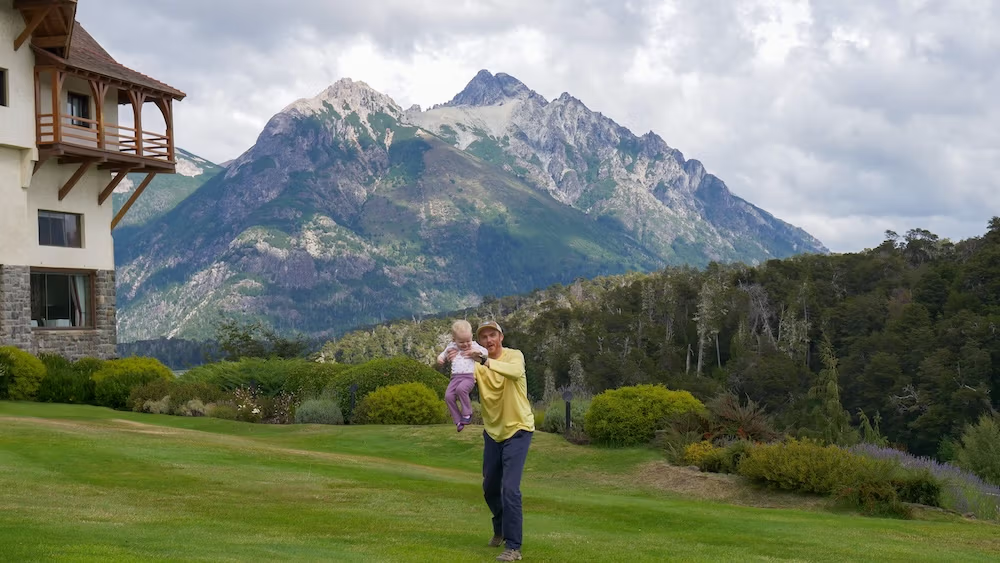
If you hate crowds more than cold, shoulder season will probably feel like freedom. If you hate uncertainty more than high prices, summer is likely the better choice. If you are traveling with a toddler, heavy camera gear, or a parent who does not enjoy surprise sleet, you need more than a pretty chart. You need the season that gives your group the highest chance of staying cheerful.
That may not be the most romantic answer, but it is the one that keeps everyone speaking to each other after day four.
The Atmospheric Pressure Engine of the Southern Westerlies
To understand why Patagonia behaves the way it does, you have to look at the massive geographic forces at play. The peak summer window brings the highest average temperatures, generally ranging between 10°C and 22°C (50°F to 71.6°F) in the valleys. But this warmth is a double-edged sword. As the South American landmass heats up, it intensifies the pressure gradient against the icy waters of the Pacific Ocean. This pressure differential serves as a physical accelerator for the Southern Westerly Wind Belt, sending sustained wind storms with gusts regularly clocking between 80 and 120 kilometers per hour across exposed routes.
[The Patagonian Summer Wind Accelerator]
+--------------------------------------------------------+
| Warming South American Landmass (High Thermal Pressure)|
|                           vs                           |
| Cold Pacific Ocean Currents (Low Thermal Pressure)     |
|                           =                            |
| Sustained 80–120 km/h Gusts Across Exposed Ridges      |
+--------------------------------------------------------+
During the shoulder months of March and April, or October and November, the ambient air cools significantly, dropping temperatures down to a crisp 3°C to 17°C (37.4°F to 62.6°F). Nighttime freezes below 0°C (32°F) become common. However, because the thermal pressure engine slows down, the average wind velocity drops dramatically to a more manageable 30 to 60 kilometers per hour. For photographers carrying tripods or hikers tackling narrow, exposed ridge lines, a calm, cool autumn day often feels physically safer and far more pleasant than a screaming summer gale.
The table below breaks down the structural trade-offs you will face when deciding which seasonal window fits your physical capabilities and tolerance for wilderness friction.
| Seasonal Phase | Daytime Sunlight | Valley Temperature | Wind Velocity Profile | Trekking Infrastructure Status | Booking Flexibility |
| Peak Summer (Dec–Feb) | 15 to 17.5 Hours | 10°C to 22°C | Severe, sustained gusts (80–120 km/h) | Fully open; all trail rangers and camps active | None; requires 4–6 months advance booking |
| Spring Shoulder (Oct–Nov) | 13 to 15 Hours | 3°C to 15°C | Moderate, unpredictable transitions | High snowmelt; high passes frequently blocked | Moderate; spaces open up 1–2 months out |
| Autumn Shoulder (Mar–Apr) | 11 to 13 Hours | 3°C to 17°C | Calmest windows; lower average speeds | Compacted trails; services scale back late April | High; ideal for spontaneous weather-routing |
Trailhead Friction and the Crowded Corridors of Los Glaciares
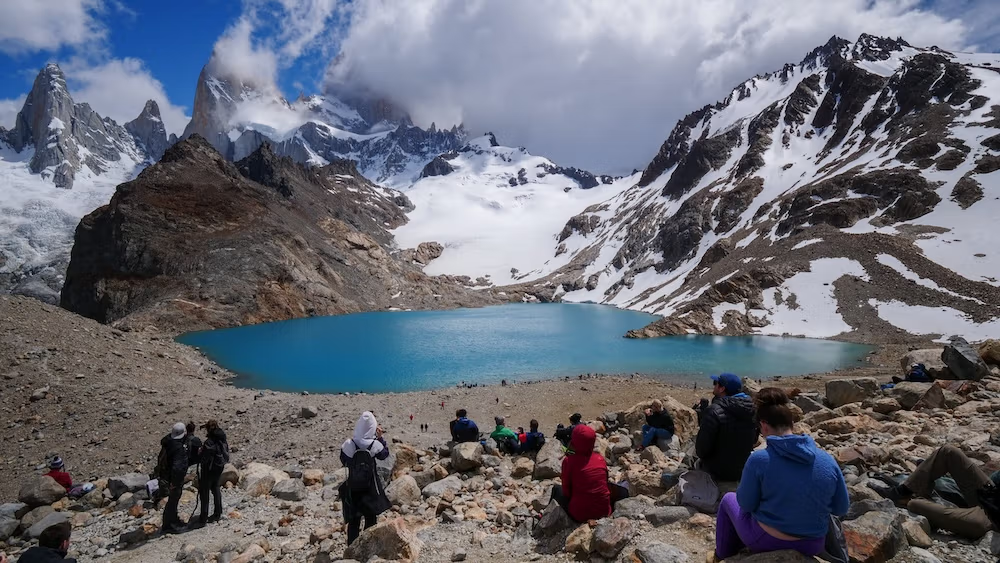
If you choose the summer window for the absolute insurance of maximum daylight hours—which can stretch past 10:30 PM in December—you must prepare for serious physical congestion. In the trekking hub of El Chaltén, the trail leading up to the iconic Laguna de los Tres viewpoint underneath Mount Fitz Roy faces immense pressure. The primary parking lot at the northern terminus of Avenida San Martín is routinely full by 6:45 AM. Travelers arriving even slightly later are forced into chaotic roadside parking along Provincial Route 41, where Santa Cruz provincial authorities actively issue heavy municipal fines.
The trail itself turns into a continuous line of hundreds of hikers navigating root-bound, rocky terrain. The final one-kilometer vertical push gains roughly 400 meters of elevation over pure rock scramble, and during peak summer afternoons, bottlenecks form at the narrowest switchbacks. On the descent, you are constantly stepping aside for ascending tour groups, creating a high-stress trekking environment.
[El Chaltén Trailhead Parking Access Matrix]
+------------------------------------+---------------------------------------+
| Peak Summer (December - February)  | Shoulder Months (March-April / Oct-Nov)|
+------------------------------------+---------------------------------------+
| * Sendero al Fitz Roy Gate:        | * Sendero al Fitz Roy Gate:           |
|   Completely FULL by 6:45 AM       |   Spaces available until 9:30 AM      |
| * Roadside overflow risk:          | * Low friction transition             |
|   Heavy municipal towing & fines   | * Smooth immediate trail access       |
+------------------------------------+---------------------------------------+
Pivoting to the autumn shoulder completely rewrites this experience. Arriving in late March or April, the same trailhead parking lot has open spaces well into the mid-morning. The paths are quiet, allowing you to hear the wind through the lenga trees rather than the chatter of tour groups. The trail surface is highly compacted and dry after months of summer traffic, offering excellent traction.
The primary trade-off is a steep drop in daylight hours, which shed minutes daily as winter approaches. Descending from the Fitz Roy base view after 4:30 PM means walking through deep valley shadows that accelerate nightfall, making a high-quality headlamp an absolute tracking requirement.
National park ticketing has also evolved into a structured digital framework that will catch independent travelers off guard if they rely on outdated guidebooks. In the Argentine sectors, Los Glaciares National Park implements a strict tiered Flexpass pricing structure. The entry fees run around $35–45 USD for a single-day pass, while a multi-day Flexpass costs around $75–90 USD. This pass allows for non-consecutive use over a multi-month window, which is an invaluable asset during the unpredictable shoulder season, as it lets you sit out a massive 48-hour sub-polar storm front in town without burning your paid entry days.
Purchasing these tickets online via the official ventaweb.apn.gob.ar portal ahead of time is highly recommended; cell terminals at remote park gates frequently lose satellite synchronization under heavy tourist volume, gridlocking the physical payment windows.
System Drop Warning: Do not count on remote cellular coverage or digital payment terminals while traveling through southern Argentina and Chile. Bandwidth regularly crashes under heavy summer traffic, leaving restaurants, gear shops, and park entry portals entirely unable to process international credit cards for days on end. Always keep backup physical currency safely stored in a waterproof dry-sack inside your primary pack.
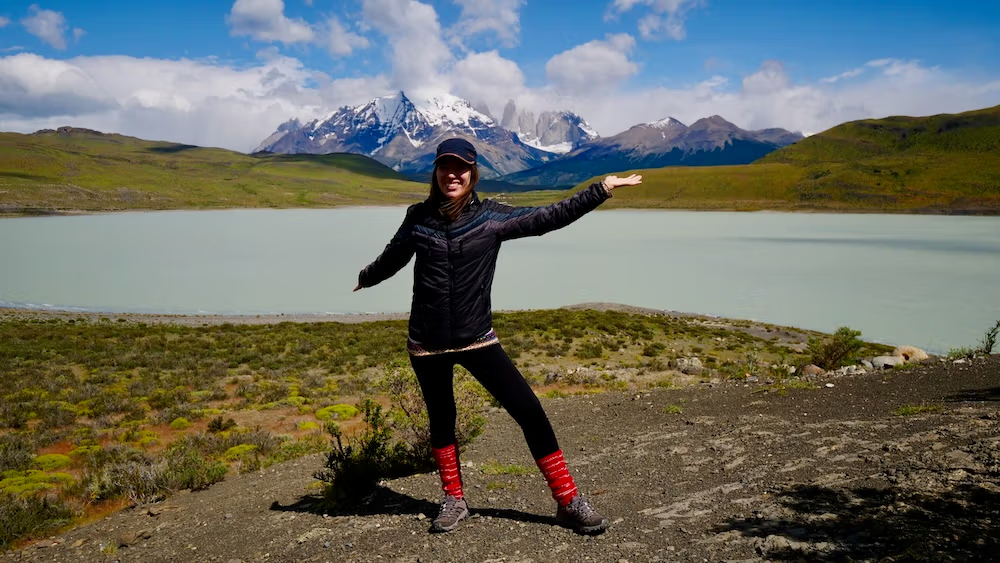
Circuit Disruptions on the Torres del Paine W-Trek
Crossing the border into Chilean Patagonia to tackle the legendary W Trek or the longer O Circuit reveals an entirely different set of seasonal operational hurdles. Peak summer requires booking your refugios and tent platforms four to six months in advance through the private concessions of Las Torres Patagonia and Vértice Patagonia. If you attempt to show up without a confirmed reservation itinerary, park rangers at the Laguna Amarga entry portal will deny you entry to the inner trail systems.
Independent hikers face an intense transit sequence just to reach the trailheads. After taking a public bus from Puerto Natales to the Laguna Amarga gateway—which costs around $15–25 USD—hundreds of trekkers disembark simultaneously, creating a mad rush to board the independent connecting mini-shuttles down to the Central sector trailhead. These private shuttles cost around $5–8 USD one-way and operate strictly on a cash-only basis. If you are slow to get your pack out from the main bus cargo bays, you will find yourself stuck at the back of a multi-hour queue while van drivers manually process cash payments.
The alternative approach during the shoulder season offers unparalleled booking flexibility, often allowing you to reserve platforms just a few weeks out. This lets you monitor active weather maps and route your trip around clear windows. However, the shoulder season brings serious structural risks to multi-day circuits.
Spring treks in October and early November are heavily disrupted by snowmelt. High-altitude mountain passes, such as the demanding John Gardner Pass on the O Circuit, routinely close due to late winter accumulations, instantly breaking a fixed multi-day itinerary.
Autumn treks in late April face an entirely different problem: the sudden scale-back of operational services. While the base entry fee to the park remains fixed at around $40–55 USD via the digital pasesparques.cl platform, private camp operators begin packing down weeks before the official park closure. They routinely turn off hot water systems, shutter communal cooking shelters, and cancel hot meal programs.
If you book an autumn shoulder trek, you must be entirely self-sufficient, carrying a reliable multi-fuel stove and a higher-insulated sleeping mat to handle sub-zero overnight temperatures on the platforms.
[The W-Trek Transit Sequence]
+-------------------------------------------------------+
| Public Bus: Puerto Natales to Laguna Amarga Portal    |
| Cost: ~$15–25 USD | Card or Digital Booking Available |
+-------------------------------------------------------+
                           |
                           v
+-------------------------------------------------------+
| Private Connective Shuttle: Portal to Central Sector  |
| Cost: ~$5–8 USD   | STRICTLY CASH ONLY AT THE VAN    |
+-------------------------------------------------------+
                           |
                           v
+-------------------------------------------------------+
| Pehoé Catamaran Crossing: Pudeto Dock to Paine Grande  |
| Cost: ~$35–45 USD | CASH ONLY ON BOARD THE VESSEL     |
+-------------------------------------------------------+
For those looking to access the western side of the W Circuit near Glacier Grey, the Lago Pehoé Catamaran crossing from the Pudeto dock to Paine Grande is an essential link. It costs around $35–45 USD for a one-way ticket. You cannot pre-book specific vessel spots online, and the crew accepts only physical currency on board. During the summer, lines at the Pudeto dock stretch for hundreds of meters, forcing travelers to wait through multiple sailing cycles.
In the shoulder season, the lines disappear, but high-wind cancellations become common, and the daily timetable cuts back significantly. Missing the afternoon boat can strand you at the Paine Grande camp, completely throwing off your connecting bus transfers back to Puerto Natales.
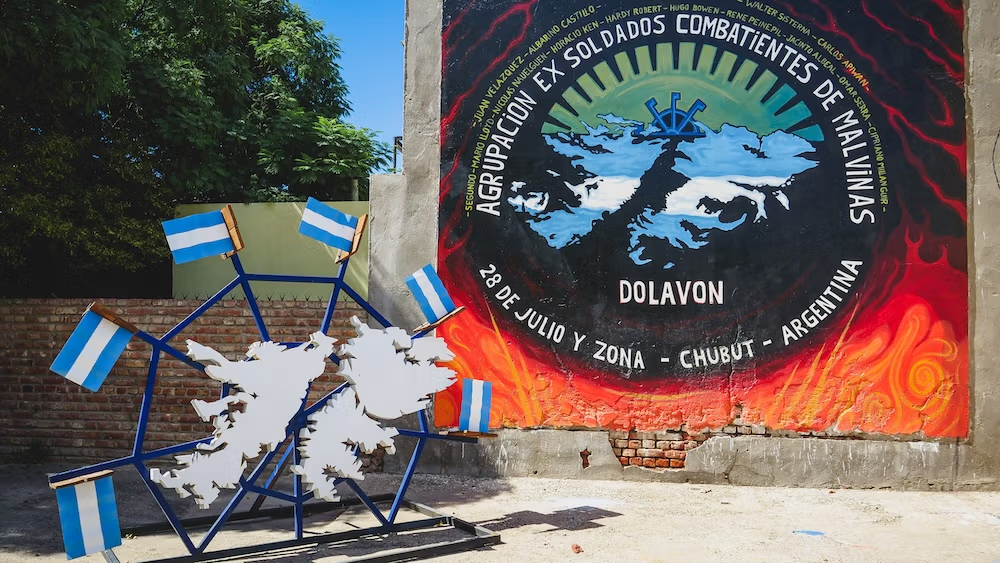
The Sunday Slump and the Ghost Towns of Chubut
One of the most jarring transitions for anyone traveling through the region is leaving the high-energy national parks and dropping into the smaller gateway towns during the shoulder season. Audrey and I took a local bus from the city of Trelew over to Gaiman, a charming community deeply rooted in Welsh immigrant history. We were eager to explore the historic red-brick streets, walk the old 300-meter railway tunnel, and visit the regional museums.
Instead, we ran face-first into what we now call the “Sunday Slump”. Small provincial municipalities in Patagonia take their weekends and afternoon siestas with absolute, non-negotiable rigidity. The streets were completely empty, the museum doors were locked tight, and our lunch plans evaporated as every restaurant on our list sat dark and vacant.
[The Patagonian Rural Calendar Reality]
+-------------------------------------------------------+
| Wednesday through Sunday: Peak Operational Window     |
| All Regional Museums, Tea Houses, & Eateries Active   |
+-------------------------------------------------------+
                           |
                           v
+-------------------------------------------------------+
| Monday and Tuesday: Structural Hibernation Phase       |
| Shuttered Storefronts | Safe Haven: Gas Station Cafes  |
+-------------------------------------------------------+
We ended up walking back and forth across town alongside a pack of incredibly friendly stray dogs, eventually finding refuge at a local highway gas station. It turned out to be the only operational establishment in the entire sector. We sat on plastic chairs, stress-eating pre-packaged alfajores and washing them down with ice-cold bottles of Paso de los Toros grapefruit soda—a bittersweet afternoon that felt miles away from the romanticized travel reports you see online.
If you are planning to visit historic valley outposts like Gaiman, Dolavon, or Cholila, you must structure your calendar with care. Mondays and Tuesdays are traditional hibernation days for rural businesses. Plan your visits between Wednesday and Sunday instead, when the town’s famous tea houses open their doors.
The table below serves as an un-brochured logistical roadmap for navigating the unique operating hours and payment realities across these cultural hubs.
| Venue & Geographic Location | Entry/Activity Cost | Primary Logistical Hurdle | Lived Friction Reality | The Actionable Field Workaround |
| Gaiman Tea Houses (Chubut Valley) | Around $14–18 USD per person | Rigid mid-afternoon operating hours | Shuttered until 2:00 PM or 2:30 PM daily; cash preferred | Entirely skip lunch; arrive starving to finish the massive multi-tier cake spreads. |
| La Trochita Express (Esquel Station) | Around $35–45 USD per ticket | No online card booking or PayPal options | Requires a physical bank transfer at Banco Patagonia to secure seats. | Visit the Esquel station master 48 hours prior or complete the bank counter sequence in town. |
| Piedra Parada Reserve (Gualjaina Portal) | Around $55–70 USD for guided day van | Absolute isolation; zero services past town | A 130 km drive with 30 km of loose, unpaved washboard dirt tracks. | Secure a high-clearance 4×4 or book via a local operator; check whiteboard updates for canyon winds. |
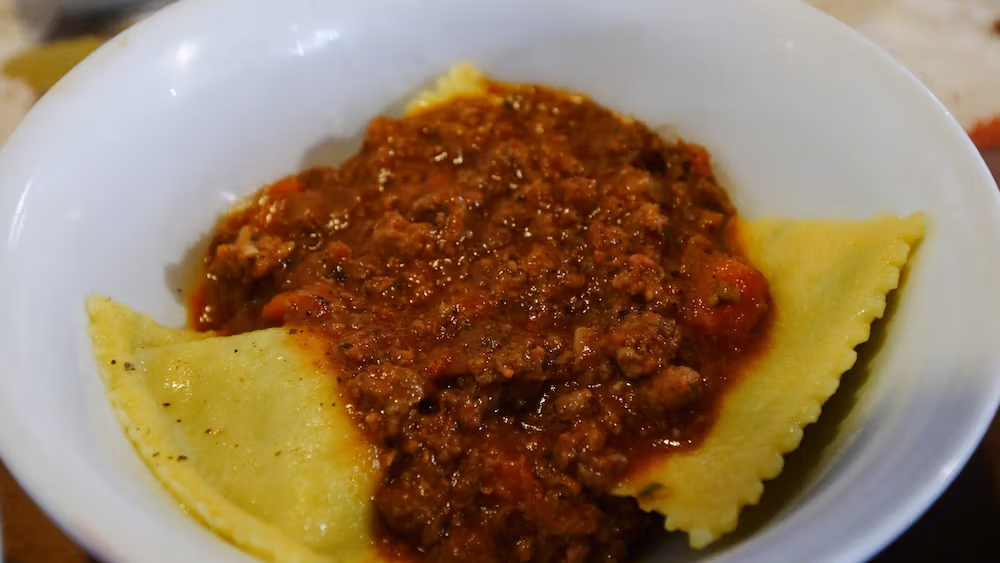
Culinary Math and the Argentine Menu Architecture
When you finally return to town after an exhaustive day on the trails, Patagonia’s culinary scene offers incredible rewards—provided you understand how local menus are priced. In traditional Italian-influenced spots like Don Chiquino in Esquel or Raices in Trelew, Audrey and I encountered a unique pricing quirk that catches many international travelers off guard.
When you order a plate of handmade pasta, like plump ricotta and walnut sorrentinos, the price listed on the menu covers only the plain pasta layers. The custom sauce—whether a rich cream and pan-bacon blend or a wild mushroom reduction—is listed as a separate, additional charge that often matches the cost of the pasta base. This effectively doubles the cost of your main dish.
[The Argentine Pasta Bill Breakdown]
  Base Artisan Sorrentinos Plate Fee: ~$12.00 USD
+ Custom Wild Mushroom Cream Sauce:  ~$11.00 USD
+ Mandatory Table Cover Charge (Cubierto): ~$2.50 USD
-------------------------------------------------
  Actual Total Per Pasta Main:       ~$25.50 USD
You must also account for the traditional cubierto, a minor per-person cover charge tacked onto the final bill that handles the bread basket and basic table settings. A standard pasta meal with a small bottle of house wine and dessert will run around $30–45 USD for two people.
For the ultimate return on your dining dollar, look for historic cantinas or traditional bodegones slightly removed from the main tourist strips. In Puerto Madryn, we found Cantina Náutica, a local institution where a multi-course lunch special cost around $12–15 USD per person. This flat rate included a fresh bread basket, a generous pouring of house Malbec, a seafood medley rice main packed with shrimp and scallops, and a massive slice of traditional flan casero smothered in dulce de leche.
When heading inland to the mountains, switch your focus to regional specialties like slow-braised hunter’s stews featuring tender deer and wild mushrooms, or fresh mountain trout served with a rich black-butter reduction. In mountain outposts like Villa La Angostura, a premium trout or deer main with side dishes at a cozy establishment like El Esquiador will cost around $15–25 USD, offering some of the best culinary value across the southern region.
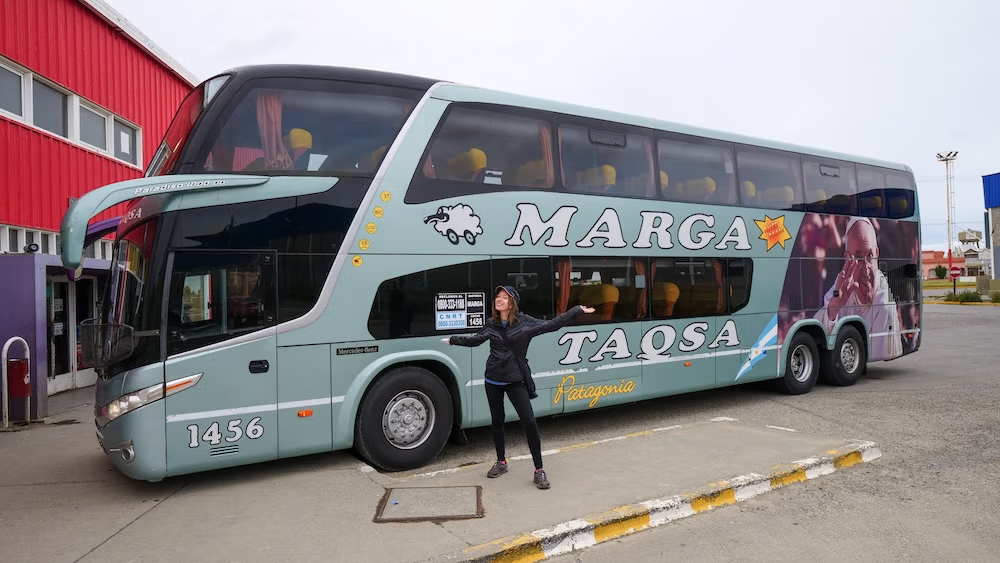
The True Cost of Remote Overland Transit
Navigating between these scattered regional hubs requires a realistic look at long-distance bus logistics. If you are traveling during the peak summer months, long-distance routes—such as the grueling 17-hour journey down the Atlantic coast from Mar del Plata to Puerto Madryn, or the 9-hour mountain crossing from Trelew to Esquel—book out weeks in advance. Tickets for these long-haul corridors average around $60–75 USD per person.
If you are forced to wing it due to a lack of planning, you will likely end up stuck with standard semi-cama tickets. These basic seats feature limited recline and offer little more than a tiny snack box of sugary biscuits and a miniature pizza slice.
Upgrading to a premium cama or ejecutivo tier seat is worth every extra dollar. These spacious, fully reclining business-class seats allow you to sleep comfortably through overnight mountain transitions, effectively doubling as a moving hotel room.
For shorter daylight hops—such as the scenic three-hour run along Route 40 between El Calafate and El Chaltén, or the direct link from Villa La Angostura to San Martín de los Andes—tickets remain highly affordable, ranging between $10 and $45 USD one-way.
[The Long-Haul Overland Comfort Matrix]
+-------------------------------------------------------------+
| Semi-Cama Class | Limited Recline | Basic Box Snack         |
| Cost: Base Rate | Friction Level: High Over Long Journeys   |
+-------------------------------------------------------------+
                              vs
+-------------------------------------------------------------+
| Cama / VIP Class | Full 180° Recline | Hot Meal Service     |
| Cost: +$15-20 USD | Replaces One Night of Hotel Accommodation|
+-------------------------------------------------------------+
When departing from terminal hubs like El Chaltén or Esquel, you must arrive at least 30 minutes before boarding to handle the local municipal terminal usage tax. This minor fee—amounting to around $1–2 USD—must be paid in cash at a separate physical window inside the terminal building to secure the validation stamp on your primary ticket. Without this physical voucher, drivers will pull you out of the boarding line right at the platform gate.
The Month-by-Month Patagonia Reality Check
The phrase “Patagonia season” sounds clean until you try to plan an actual trip.
December is not February. March is not April. October is not November. Even within the same broad season, the travel experience can shift fast enough to make your packing list look like it was written by someone who had never met weather before.
Here is the rough personality of each major travel month.
Patagonia by Month
| Month | What It Feels Like | Best For | Watch Out For |
| October | Spring waking up, but still cranky | Early-season solitude, lower prices, flexible travelers | Snowmelt, muddy trails, closed high passes, thin schedules |
| November | A more realistic spring window | Longer days, fewer crowds, improving trail access | Weather mood swings and not-quite-full services |
| December | Summer starts loudly | Maximum daylight, family trips, active towns | Wind, rising prices, booking pressure |
| January | Full-power Patagonia | Fully open trails, full transit schedules, social energy | Peak crowds, highest prices, packed trailheads |
| February | Still busy, slightly less frantic | Strong infrastructure with marginally softer crowds | Wind remains a menace and popular routes still fill |
| March | The sweet spot for many travelers | Autumn light, lower crowds, still-decent services | Shorter days and colder starts |
| April | Beautiful, quiet, and more serious | Photographers, flexible trekkers, solitude seekers | Reduced services, cold nights, and sudden closures |
If I had to simplify the whole thing, I would say this:
January is the most functional month.
March is the most pleasant month.
April is the most atmospheric month.
October is the month for people who are comfortable being lightly bullied by spring.
That does not mean one month wins. It means each month asks for a different version of you. January asks for patience with people. March asks for a warmer jacket and a little flexibility. April asks whether you are truly okay with cold mornings, quieter towns, and the occasional “sorry, closed for the season” sign.
Choose the month whose problems you would rather deal with.
That is the whole trick.
Concrete Lessons for the Road
Your final decision between a peak summer expedition and a shoulder-season trek comes down to a choice between two distinct types of travel friction. Summer guarantees maximum trail accessibility, fully staffed ranger control portals, and a reliable network of regional buses and ferries. But it demands that you pay a heavy premium: dealing with intense winds, navigating packed trailheads, and paying high accommodation rates while booking months in advance.
Choosing the shoulder season eliminates the crowds, drops lodging prices by 30% to 40%, and tones down the relentless wind speeds. But it requires high personal adaptability, as you risk encountering sudden snow blockages on high passes, reduced public transit options, and rural towns that completely close down for weekend siestas.
If you decide to make the journey, leave the flimsy travel umbrellas behind. Invest in a heavy-duty carbon fiber tripod with a central column hook if you want to capture the mountains, carry small cash bills for remote valley transfers, and always double-check the local operational calendars before leaving town. Patagonia rewards those who prepare for its practical quirks, rather than those who expect a smooth, curated experience. Bring your sense of adventure, a reliable headlamp, and a large appetite. Have a wonderful trip, and enjoy the trails.
FAQ
Is it possible to travel between Argentina and Chile on foot during the shoulder season?
Yes, but with strict caveats. You can physically trek across the international border line through the valdivian forest tracks from the Lago Puelo sector. However, doing this during the shoulder months means you are completely on your own with volatile mountain weather. Passport control points still apply along the wilderness corridors, and you must carry your physical passport along with full self-sufficiency gear. If an early winter storm dumps snow on the tracking line, border rangers will close the transition gates without warning, forcing a massive multi-hundred-kilometer back-route detour by public bus.
Can I book the old Patagonian Express train online using a standard international credit card?
Absolutely not. Securing a seat on La Trochita requires a multi-step logistical tango because the heritage rail system does not feature an online payment portal or support standard digital checkouts. To confirm a booking, independent travelers must coordinate directly with the local station operators and execute a physical cash bank transfer through a local entity like Banco Patagonia. Once the bank teller stamps your physical deposit slip, you have to email a scanned copy of the voucher to the rail agency to receive your final confirmation email. It is messy, highly manual, and best handled in person at the Esquel platform office at least 48 hours before departure.
What happens to the bus schedules when the peak summer season ends?
They drop off a cliff. Overnight on May 1st, regional transit timetables across both Argentine and Chilean sectors cut back by roughly 70%. Public bus operators that ran non-stop hourly departures between key hiking hubs scale down to a single morning or evening route. Certain connective options drop entirely until the following spring. If you are tracking through the region during late autumn, you cannot wing your transit routes; missing a single connection can strand you in a gateway terminal for days.
Do Patagonia restaurants charge extra for pasta sauces?
Yes, standard practice. In traditional, family-run eateries and bodegones across the regional provinces, menus feature a split-billing architecture for Italian dishes. The baseline price covers solely the handmade dough layers, while custom additions like mushroom cream or pan-bacon reductions carry a separate, often matching fee. This structural layout can easily double the expected cost of your main course when the final bill hits the table. Always read the fine print under the pasta column to avoid an unexpected budget shock.
Can I use a standard travel umbrella on the trails to handle the rain?
Do not even try it. A standard lightweight canopy umbrella is functionally useless against the sheer velocity of the southern wind gradients. The thermal pressure engines shifting off the mountain walls will snap metal framing ribs and rip fabric covers to shreds within seconds of exposure. Independent trekkers need to completely abandon umbrellas in favor of premium, high-density waterproof shell jackets equipped with rigorous hood toggles.
Are park entry tickets sold physically at the main trailheads?
No, digital-only. The national park systems on both sides of the border have overhauled their gate operations to eliminate physical cash desks at primary entry portals. Tickets for Torres del Paine must be matched to specific route types on the updated pasesparques.cl framework before arrival, and Los Glaciares inputs require confirmation via the ventaweb.apn.gob.ar system. Cell service routinely drops to zero at the valley checkpoints, meaning you must pre-purchase and download your barcodes as offline PDFs weeks before you pack your bags.
Is it easy to find black, un-sweetened instant coffee in local supermarkets?
Surprisingly difficult. The vast majority of standard instant coffee options sitting on regional supermarket shelves are pre-blended with heavy amounts of sugar. Finding a pure, un-adulterated black roast requires hunting specifically for imported brands like Nescafe, which command a heavy pricing premium at the checkout counter. If you require un-sweetened black coffee to kickstart your tracking mornings, save yourself the friction and carry a premium personal stock directly from home.
Can families use standard rolling strollers on the main sightseeing boardwalks?
Only in limited zones. While the upper accessible viewing decks around major spectacles like the Perito Moreno Glacier feature flat, smooth metal grid networks that easily accommodate wheels, the path transitions quickly degrade into heavy wooden or steel staircases. Standard strollers become completely impractical after the first viewpoint balcony. For any family-oriented tracking loops, a rugged, structurally sound hiking backpack carrier is an absolute necessity to navigate the steep trail declines and root-bound valley steps safely.
Project 23 Argentina: This guide is also available in Spanish. [Lea la versión en castellano: Patagonia en verano vs. temporada baja: ¿Qué época es mejor para tu viaje?]