
Patagonia can look suspiciously easy while you are planning a first trip to South America.
Spend a few days in Buenos Aires, fly south, add Patagonia, continue travelling. On a map, it appears to be one large destination occupying the bottom of Argentina. Bariloche, Puerto Madryn, El Calafate, Ushuaia, El Chaltén and the national parks all sit beneath the same convenient label. Unfortunately, the label is doing fraudulent amounts of work.
Patagonia is not one place with a single gateway and an integrated transport system. It includes Atlantic coastline, open steppe, Andean forests, mountain towns, isolated parks and cities separated by distances that look manageable until you actually travel them.
We learned that repeatedly while moving through Argentine Patagonia. One overnight bus lasted around 18 or 19 hours and left me feeling like a zombie. Another journey took nine hours even though we never left Chubut Province. We packed partly with Buenos Aires summer in mind, then had to buy warmer clothes farther west. In Los Alerces National Park, we watched travellers discover that reaching the park and securing a ride out of it were two different achievements.
None of this makes Patagonia too difficult for a first South America trip. It is entirely manageable once you understand the adjustment: more honesty about distance, more protection around transport, more flexibility for weather and fewer assumptions that every problem can be solved after arrival.
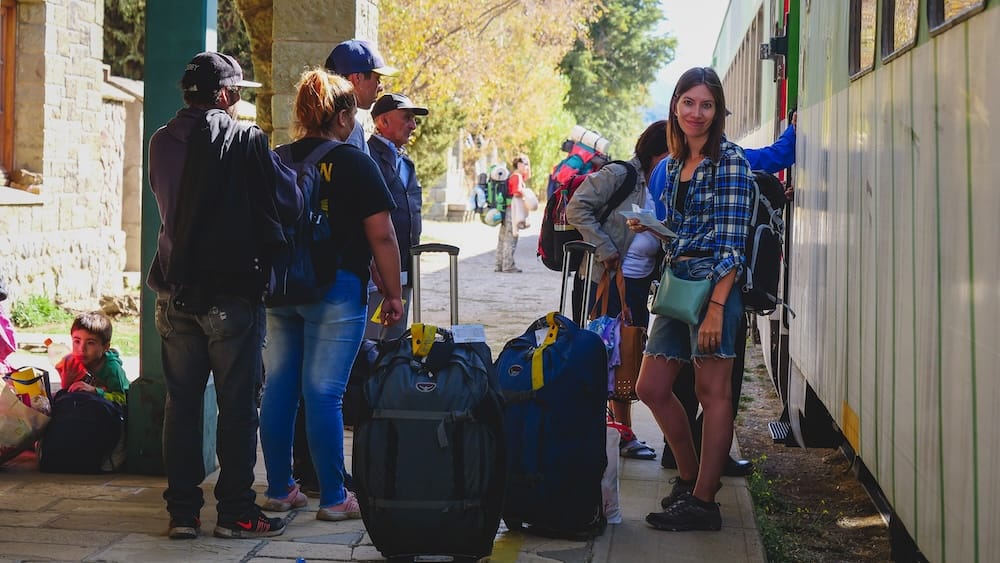
Patagonia Is Not One Extra Stop
The first change is structural. Argentina does not suddenly become another country when you fly south. You are still booking accommodation, ordering food, buying bus tickets and checking weather forecasts. The unfamiliar part is how quickly the easy replacements disappear when one piece goes wrong.
Miss a restaurant in Buenos Aires and you will find another. Arrive late in a major city and there may be several ways to reach your accommodation. Discover that an attraction is closed and you can usually move to something else.
In a smaller Patagonian town or an isolated park, the same mistake can wipe out half a day.
The final bus may already be full. The museum may not open on Mondays. The restaurant shown online may be closed for the afternoon or no longer operating. A gateway city may be easy to reach while the place you actually came to visit remains another hour—or several hours—away.
This is why “we’re adding Patagonia” is not yet a functioning itinerary.
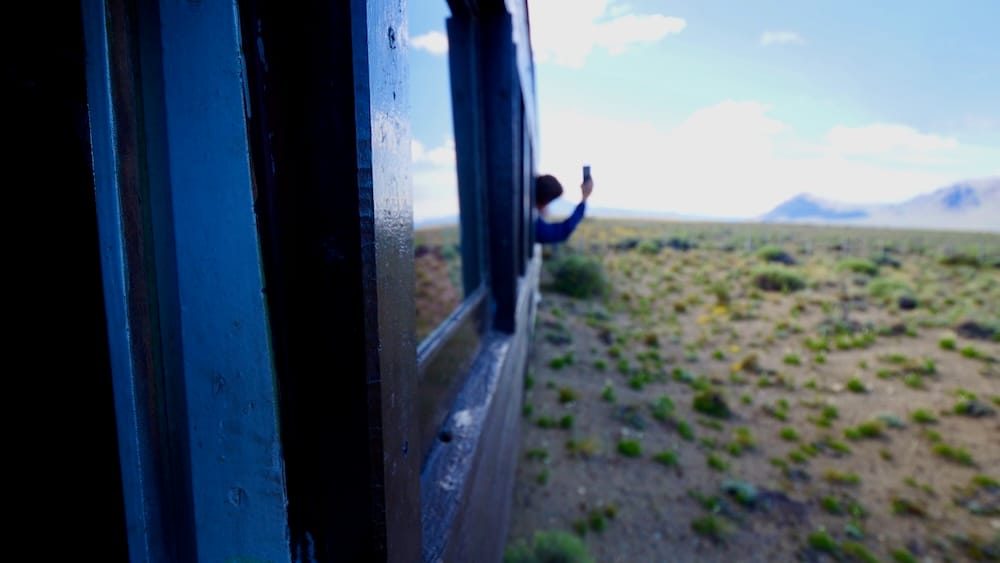
You need to decide which Patagonia you are adding. A first South America trip creates a particular temptation to collect famous names from different parts of the map and trust flights or overnight buses to stitch them together. Down here, the connections can consume more of the trip than expected.
The Atlantic coast, the steppe and the Andes have different weather, distances and transport relationships. Bariloche does not function like Puerto Madryn. Esquel does not function like El Calafate. Reaching Trelew does not mean you have reached Península Valdés, and reaching Esquel does not place you automatically inside Los Alerces National Park.
We felt the scale most clearly while travelling from Trelew to Esquel.
The overnight bus took roughly nine hours. We had moved from the Atlantic side of Chubut toward the Andes, yet we were still inside the same province.
“Chubut is massive” sounds like a dull fact until you spend the night crossing it.
For a first-time South America traveller, the practical lesson is simple: choose the regional system before choosing the individual attractions.
Which city will be your gateway? What surrounds it? How do you reach those places? How often does the transport run? Where does it leave you? How do you return?
In a city break, you can often choose the sights first and solve the movement later. Patagonia rewards the reverse.
Solve the movement. Then decide what the trip can hold.
Choose the Gateway Before the Hotel
Accommodation becomes much easier to choose once you know which regional system you are actually travelling through. A cheap room in the wrong gateway can create more transport expense and inconvenience than it saves.
| Patagonia area or trip focus | Gateway to compare | Accommodation search |
|---|---|---|
| Atlantic coast and Península Valdés | Puerto Madryn | Compare places to stay in Puerto Madryn |
| Chubut Andes and Los Alerces | Esquel | Check accommodation in Esquel |
| Northern Patagonian lakes | San Carlos de Bariloche | Compare current stays in Bariloche |
| Southern glaciers and Perito Moreno | El Calafate | See accommodation options in El Calafate |
| Tierra del Fuego | Ushuaia | Compare places to stay in Ushuaia |
I would use this only as a starting point. The right base depends on the route, but it is usually easier to choose accommodation around the gateway than to book a beautiful hotel first and attempt to bend Patagonia around it.
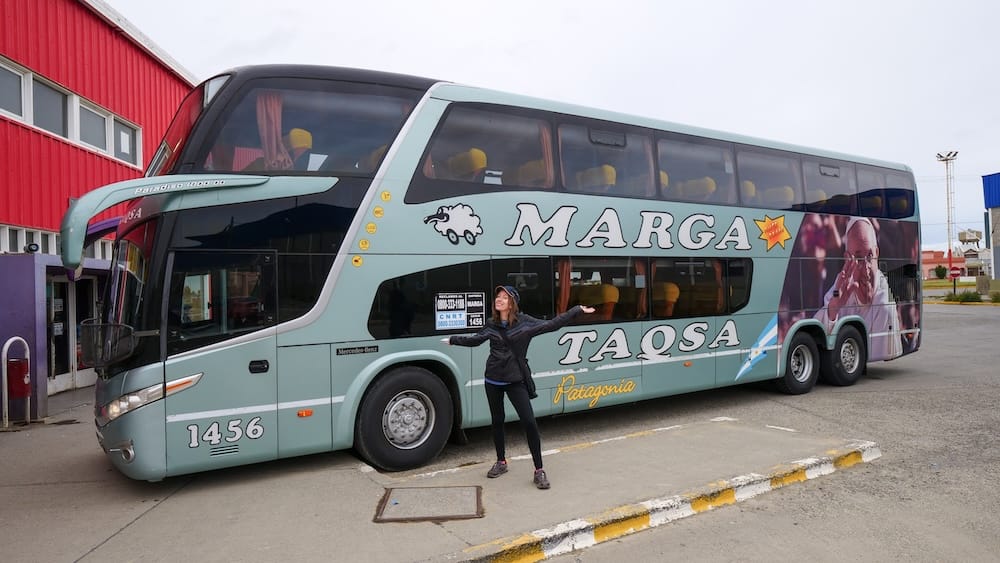
A Travel Day Can Eat the Day After It
One of our longest bus journeys ran from Mar del Plata to Puerto Madryn.
We travelled for around 18 or 19 hours and arrived roughly two hours later than expected. I had managed to sleep, but I still felt disoriented when we arrived. My assessment at the time was that I felt like a zombie.
That was not included on the ticket.
This is one of the traps of overnight transport. On paper, the journey looks beautifully efficient. You travel while sleeping, save the cost of a hotel room and arrive with a full new day waiting for you.
The new day may have other ideas.
Some travellers sleep extremely well on buses. Audrey is one of them. She has slept on buses, boats and trains with a consistency I find almost suspicious. There is apparently nowhere Audrey will not sleep.
I am more likely to remain partly awake, monitor where we are, think about the luggage and emerge looking like I have been folded into an overhead compartment.
Neither reaction is universal. Your own ability to recover matters more than somebody else’s claim that a particular bus is comfortable.
Count the Full Journey
The useful calculation runs door to door and includes whatever condition you are in when you arrive.
A long-distance bus journey begins with getting to the terminal and waiting to depart. It ends after you have collected your luggage, reached the accommodation, dealt with check-in, eaten something and become approximately human again.
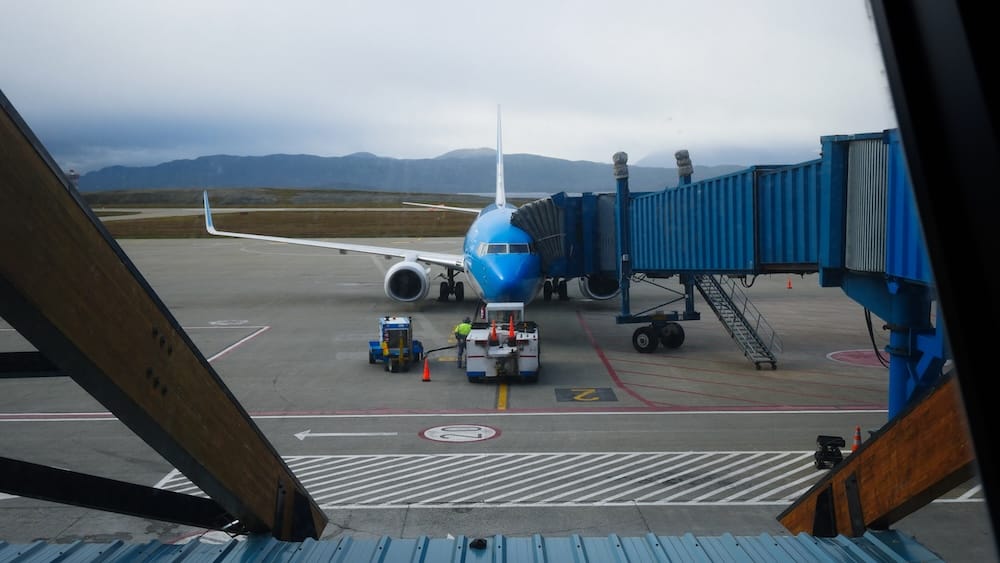
Flying has its own hidden hours. You need to reach the airport, arrive early, check luggage, fly, collect everything and continue from the regional airport to the actual destination.
This matters in Patagonia because an airport often serves a wider area. Landing in the region may still leave you with a separate ground transfer.
A two-hour flight and a fifteen-hour bus only become comparable after you include the airport transfers, terminal waits and final ground connection.
- total door-to-door time;
- number and frequency of departures;
- location of the arrival point;
- luggage and transfer requirements;
- price;
- ability to sleep in transit;
- and what you expect yourself to do after arrival.
There is no universal point at which flying becomes correct and taking the bus becomes ridiculous. Some routes strongly favour flights. Others work surprisingly well by bus, especially when the service is direct and travels overnight.
Once your dates are known, compare current flight options on Booking.com against the complete overland journey rather than the scheduled bus time alone.
The decision changes when you place something irreplaceable immediately after the journey.
A delayed arrival is manageable when the first day is open. It becomes expensive when you have a prepaid excursion, a rental-car office closing at a fixed time or one final regional bus you cannot miss.
Seat Class Matters More After Hour Ten
We booked our Mar del Plata to Puerto Madryn journey late during peak season. The more deeply reclining seats had already sold out, so we travelled semi-cama.
After 18 or 19 hours, I would have paid extra for the better seat.
That does not mean everyone needs to buy the most expensive class for every Argentine bus. On a shorter daytime route, the upgrade may be unnecessary. On an exceptionally long overnight journey, it can affect how much of the following day survives.
It is also worth checking what the operator actually means by semi-cama or cama. The class names do not guarantee identical seats across every company. Recline, legroom, vehicle type and services can differ.
Argentine long-distance buses can be very comfortable. I would still resist the idea that comfort makes an 18-hour journey disappear.
It remains 18 hours of your life.
The Return Journey Is Where Plans Get Stupid
Getting into a Patagonian park or small settlement attracts most of the planning attention.
Getting out can be the more important problem.
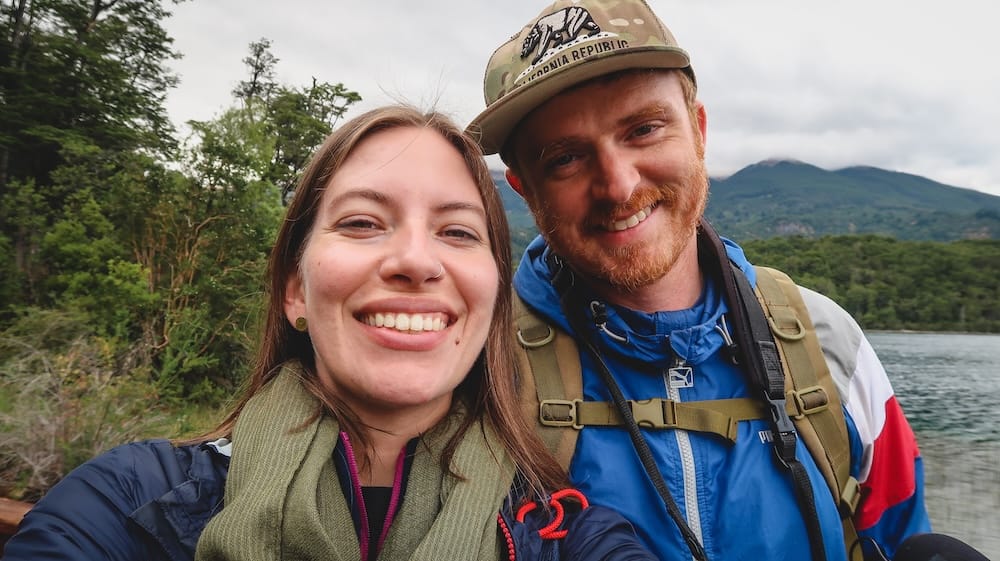
When we visited Los Alerces National Park from Esquel, we went to the bus terminal early and bought our outbound and return tickets together. On the return journey, the bus was full.
A few travellers had bought only the outward journey. They could not simply board and solve the return after the fact. They were left inside the park trying to work out another option.
That image stayed with me because the mistake was completely understandable.
They had successfully reached the destination. The hard part appeared to be over.
It was not.
That was how the system worked on our trip. Services and booking procedures change, so I would not assume that buying a round trip still reserves the return seat in exactly the same way.
My advice is simpler: confirm the return before you leave.
The Gateway Is Only Link One
Esquel is a gateway to Los Alerces, but Los Alerces is not one bus stop.
The park has different entrances and sectors. The useful access point depends on what you intend to do, where you are staying and which service is operating. Public transport can make a visit possible without a car, but it can be seasonal and low-frequency, and it does not serve every corner of the park. Check the current Los Alerces access information before building the day around it.
This pattern repeats across Patagonia.
You may first reach a regional airport or long-distance bus terminal. From there, the trip can depend on a local bus, park shuttle, taxi, private transfer, rental car, ferry or direct arrangement with an operator.
Each extra link creates another question.
Does it operate every day? Does the frequency change outside peak season? Can you reserve it online? Does it leave from the terminal? Does it stop near your accommodation? Is the return automatically included? What happens when the incoming service arrives late?
A destination can be reachable and still punish improvisation.
If your route depends on reaching several park sectors, rural accommodations or trailheads, it may be worth using Booking.com to compare rental cars in Argentina. A car removes some timetable dependencies, although it replaces them with road-condition checks, fuel planning and the responsibility of driving the route yourself.
The Last Departure Controls the Outing
A low-frequency return affects more than the journey home. It determines how far you can walk, how long you can spend at an attraction and whether a delay creates an inconvenience or a genuine problem.
The outbound service tells you when the day begins. The last return tells you what the entire day is allowed to become.
This applies to parks, villages, coastal settlements, boat trips and any activity where another taxi or bus cannot be assumed.
A “short outing” may occupy most of a day because the transport schedule leaves several hours between practical movements. That can still be a wonderful use of time. It just should not be followed by three additional bookings invented from the safety of your laptop.
Local Information Still Matters
Patagonia also reminded us that useful information does not always sit neatly inside one global booking platform.
A municipal tourism office, accommodation host, phone call or WhatsApp message may give you a clearer answer than an old map listing. That was true during several of our trips around Chubut and the northern Patagonian region.
Incomplete online information does not necessarily mean a service does not exist. A visible listing does not guarantee that it still operates exactly as shown.
For a connection that can strand you, use the strongest live source available. Check the operator, park authority or local tourism office. Ask specifically about the return.
Solve the least replaceable connection first. The optional activity can wait.
When a Guided Day Trip Removes Several Weak Links
A guided day trip earns its place when it removes a real weakness from the plan. Pickup, return transport and a coordinated visit can replace several separate bookings, which may be worth paying for when public transport is limited or the attraction sits well beyond the gateway city.
Travellers who prefer that structure can compare tours and day trips from Puerto Madryn, browse guided activities from Bariloche, or see current excursions from El Calafate. Check the actual pickup point, duration, park fees and return arrangements rather than assuming every listing bundles the same elements.
“Summer” Is Not a Packing List
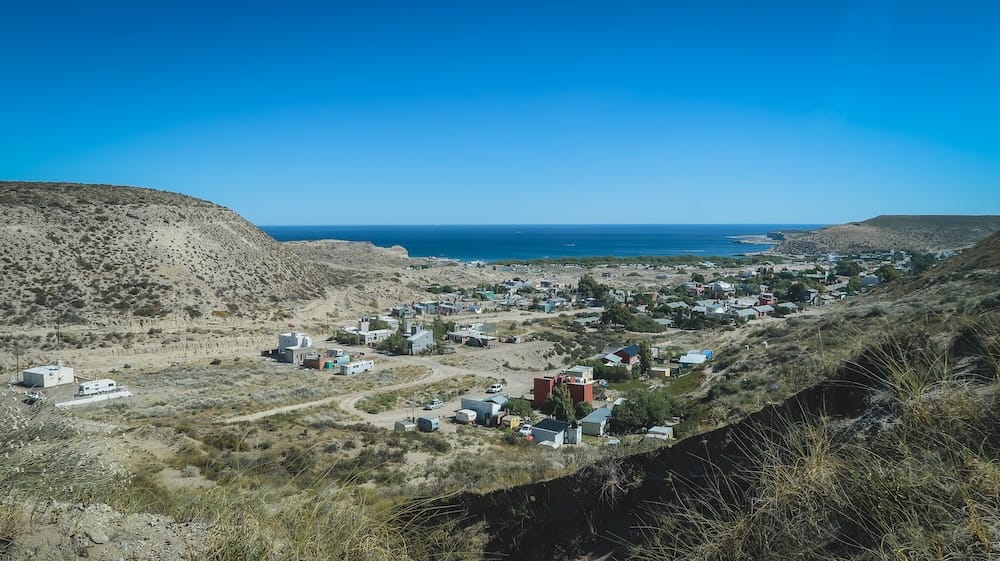
We experienced conditions around Puerto Pirámides that felt almost desert-like.
The sun was strong, the landscape was exposed and sunscreen was not optional decoration. Starting early made the day more comfortable. By later in the day, the heat had become much harder to ignore.
Farther west, our Buenos Aires summer packing began to look wildly optimistic.
We encountered cold mornings, used a gas heater in our accommodation and eventually went shopping for warmer clothing. Fleeces, flannels and wool hats entered the wardrobe because the clothing we had brought was not covering the actual trip.
Then a cheap umbrella met the Patagonian wind.
The wind won.
The umbrella came back bent out of shape, looking like it had lost an argument.
That combination—strong sun, dry heat, cold mornings and wind—is more useful than a single average temperature. Patagonia did not provide one summer wardrobe because we were moving between different environments.
Pack for the Route You Are Taking
Argentine Patagonia includes Atlantic coastline, open steppe and the Andes. Those areas do not behave identically simply because they share a season.
A traveller staying around one coastal base has different needs from somebody crossing between the coast and the mountains. A summer trip does not require dressing for a polar expedition, but it may still require a proper warm layer, waterproof protection and something capable of blocking wind.
The better question is not, “What is Patagonia like in January?”
Ask which Patagonia environments you are crossing in January. That gives you a far more useful packing answer.
Wind Is a Functional Problem
Patagonian wind is often described romantically, as though it exists mainly to make the landscape feel dramatic.
It also destroys cheap umbrellas.
A wind-resistant waterproof layer keeps working when an umbrella becomes difficult to control. It matters while waiting for transport, walking through an exposed area, taking a boat or trying to photograph something without sacrificing your belongings to the horizon.
Wind changes perceived temperature too. A mild number on a weather app can feel much colder once you are standing in an open area with no shelter.
Every day will not be windy, but wind still deserves to be checked as an actual condition rather than treated as regional folklore.
Weather Belongs in the Itinerary
Clothing solves only part of the problem.
A weather-sensitive activity needs somewhere to move if conditions are poor. That might mean leaving one morning uncommitted, avoiding two expensive outdoor bookings back to back or keeping an indoor alternative available.
In winter, road conditions become part of the decision. Before driving, check the current Vialidad Nacional road-status reports rather than assuming yesterday’s access still applies.
A buffer does not guarantee perfect weather. Patagonia has never shown much interest in cooperating with spreadsheets.
The purpose of flexibility is simpler: when one plan moves, it needs somewhere to go.

Small-Town Clocks Can Dismantle an Afternoon
We arrived in Dolavon with ideas for lunch, museums and local attractions.
It was Monday.
Almost everything we wanted was closed or unavailable. Restaurants, cafés and the historic mill were not lining up with our visit, and the afternoon became a lesson in the difference between arriving somewhere and finding it operational.
We eventually ended up at a gas station along the highway drinking Paso de los Toros grapefruit soda and eating packaged alfajores.
This was not the culinary itinerary.
It was, however, open.
We encountered similar rhythms elsewhere. Puerto Pirámides could feel locked down during the afternoon. Trelew on a Sunday had what I described as a ghost-town atmosphere.
I would not take those three experiences and conclude that Patagonia closes every afternoon or that Mondays are always useless. Operating hours vary by town, season and individual business.
The important distinction is between a destination being accessible and the specific service you need being available.
A town can be physically open while the restaurant, museum, ticket office and onward transport are all taking the day off.
Check the Thing You Need, Not the Place Name
Online planning encourages vague confirmation.
You look up the town, see a few businesses marked on a map and assume the afternoon has options.
Before a small-town visit, confirm the actual category of service that matters:
Is there somewhere to eat after arrival? Is the museum open on that weekday? Does the tourism office keep split hours? Can you buy food before the evening? Is the return bus operating outside peak season?
This becomes especially important when the alternatives are far apart.
A closed restaurant in Buenos Aires is a minor inconvenience. A closed restaurant after a long regional bus, with no groceries and no car, can become the central event of the afternoon.
Hunger has an impressive ability to destroy the romance of slow travel.
Sunday and Monday Deserve Attention
Our own experiences were enough to make me inspect Sundays and Mondays deliberately, but not enough to treat either day as a regional rule.
Look at the exact destination and date.
The same applies to seasonal services. A visitor centre, café, shuttle or attraction may have generous summer hours and a very different timetable outside peak season.
This is one reason I would avoid arriving in a small Patagonian town with an overconfident sequence of lunch, museum, tour and onward transport unless each element has been checked.
The day does not need to be rigidly scheduled. It does need a functioning skeleton.
Cash, Cards, Phones and All the Boring Stuff
Nobody dreams about Patagonia because of payment redundancy.
Unfortunately, the boring systems are often the ones capable of breaking the beautiful day.
The lazy advice is to declare that Patagonia is cash-only or that Argentina now accepts cards everywhere. Neither statement is reliable enough.
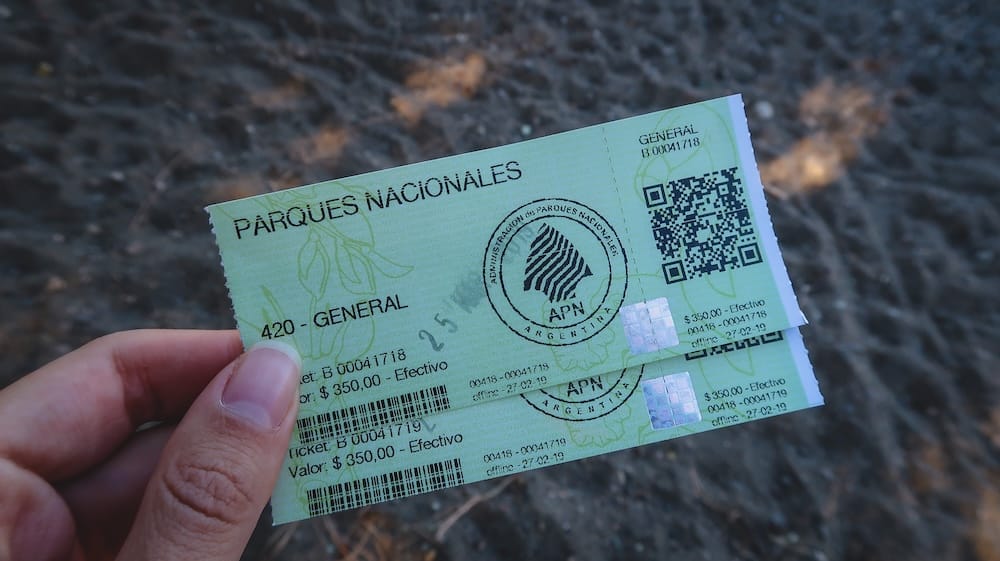
Payment rules vary by service and can even differ between entrances to the same national park. At Los Glaciares, for example, some access points currently accept cash and cards while others require electronic payment. Check the current Los Glaciares tariffs and payment rules for the entrance you plan to use. An ATM in the gateway town does not help much once you are already inside a protected area.
The useful answer is redundancy.
Carry more than one usable payment method. Check how the specific bus, park entrance, accommodation or excursion expects to be paid. Do not wait until you are standing at a remote entrance with one card, no signal and an expression of deep personal betrayal.
Fixed peso amounts age badly. For any park, check its official tariff and payment page shortly before arrival instead of relying on an old article or converted dollar estimate.
Continuous Internet Is Not Guaranteed
We once had a video upload run for around 14 hours without completing from an apartment in Trelew.
At some point, it stopped being an upload and became a hostage situation.
One slow apartment connection does not mean Patagonian internet is universally terrible. Cities and hotels can have perfectly usable service. I simply would not let continuous connectivity control an irreplaceable travel function.
Save the important items before leaving reliable Wi-Fi:
- tickets and booking references;
- accommodation addresses;
- offline maps;
- operator phone numbers;
- screenshots of meeting points;
- translation tools;
- and any QR code or payment confirmation required for entry.
Treat any visitor-centre Wi-Fi as a bonus rather than the backbone of the day. Mobile signal can weaken quickly outside larger settlements.
If the entire day depends on reopening an email at the right moment, save the email.
Familiar Services May Work Differently
At a pasta restaurant in Trelew, the pasta and sauce were priced as separate components.
The noodles had a price. The sauce had another price. The sauce was not emotionally included with the pasta, and it was not financially included either.
It was not a major crisis. It was a reminder to read the whole offer.
The same habit applies beyond food. Check whether luggage is included, whether a transfer is one way, whether park transport includes the return, and whether a quoted excursion price covers the actual service you expect.
Familiar words can hide unfamiliar structures.
Spanish Becomes More Useful at the Edges
You do not need flawless Spanish to travel in Patagonia. Major tourism centres receive international visitors and many services are accustomed to working with travellers.
Basic Spanish becomes more valuable when the trip moves away from large booking systems.
A direct call to a driver, a WhatsApp exchange with a small operator, a bus-ticket question or a conversation at a municipal tourism office may be easier if you can explain the date, destination and return you need.
You only need enough practical language to confirm that Tuesday’s bus exists and that it also comes back.
Accessibility Must Be Checked Link by Link
It is also misleading to label Patagonia either accessible or inaccessible as a whole.
Some major attractions publish specific accessibility information. Around Perito Moreno Glacier, for example, parts of the visitor circuit include accessible paths and adapted facilities. That still does not answer every question about the bus, transfer, entrance, toilet, trail surface and return journey.
Travellers with mobility requirements should verify the complete chain through the current park services information and their transport provider rather than relying on the headline attraction alone.
The same principle applies to anyone with a specific physical limit. A short distance may still involve wind exposure, uneven ground, long waiting times or a vehicle that is difficult to board.
Build Around What Cannot Be Replaced
“Travel slowly” is pleasant advice, but it is too vague to repair an itinerary.
A better question is: what happens if this part fails?
If another bus leaves two hours later, the connection may need little protection. If the service runs once a day, it deserves more.
If an outdoor activity can move to tomorrow, you may not need a full spare day. If it depends on one fixed departure and sits directly after an overnight bus, the itinerary is fragile.
The required margin depends on consequence.
Protect the Arrival After the Hardest Transfer
After our 18–19-hour bus to Puerto Madryn, I would not have wanted to walk directly into the trip’s most important prepaid activity.
A traveller who sleeps wonderfully may feel differently. Audrey might have been ready before I was.
Until you know how your body handles a very long bus, avoid building the route around heroic assumptions.
Leave enough room to arrive late, eat, check in and recover. That time is not wasted if it prevents an expensive commitment from colliding with the version of you that arrives looking and thinking like a potato.
Remove Bases Before Removing Breathing Room
When an itinerary becomes too complicated, travellers often preserve every destination and shorten each stay.
That produces more movement, more check-ins and more opportunities for one delayed connection to infect everything after it.
Removing one distant base may preserve several usable days.
This matters especially when combining different Patagonian systems. A coastal destination, an Andean lake district and southern Santa Cruz can all be excellent choices. They do not become neighbouring attractions because they share the Patagonia name.
A smaller route is not necessarily a lesser trip.
It may be the first version that works.

How Much Does Your Patagonia Plan Need to Change?
The useful answer depends on how many fragile elements overlap.
The table is a planning check rather than a mathematical score. It helps reveal whether you are making a small adjustment or attempting to negotiate with physics.
| Planning variable | Lower-adjustment version | Higher-adjustment version |
|---|---|---|
| Patagonian bases | One base or connected cluster | Several distant regions |
| Longest transfer | Short daytime trip with alternatives | Overnight or nearly full-day journey |
| Service frequency | Multiple departures | One or very few viable departures |
| Final connection | Walkable, simple or included | Separate shuttle, taxi or seasonal operator |
| Outdoor commitments | Movable and lightly booked | Several fixed, weather-sensitive activities |
| Spare time | Protected arrival or backup time | Every day committed |
| Public transport | Main hubs and frequent routes | Parks, villages and operator-specific links |
| Overnight-bus experience | You know you recover well | First overnight bus or poor sleep tolerance |
| Digital dependence | Tickets, maps and contacts saved offline | One phone or live signal controls the day |
| Same-day improvisation | Plenty of substitutes | Seasonal, capacity-limited or closed-day services |
Minor Adjustment
Your trip may need only modest changes when you are staying in one connected area, using a clear gateway and leaving enough time around the main transfer.
You still verify weather, hours and transport, but the route has alternatives.
Moderate Redesign
The plan deserves more protection when it includes several destinations, one or two long transfers, seasonal transport, exposed activities or a return connection that could sell out.
You may not need to remove destinations yet. Book the critical links first and preserve room around them.
Major Simplification
The itinerary should probably shrink when it combines several distant Patagonian regions, multiple low-frequency services, no recovery time and several fixed activities that cannot move.
At that point, one delay is no longer one delay. It becomes a travelling companion.
Complexity rises when dependencies overlap without margin.
That is the main thing I would look for.
What Actually Changes Before You Book
Patagonia does not require you to turn a first South America trip into a military campaign. The trip can remain spontaneous without scheduling every hour, fearing public transport or carrying enough clothing to survive three climate zones simultaneously.
The sequence of decisions is what needs to change.
Choose the connected region before collecting attractions. Count transfers door to door and include your likely recovery. Secure the service that is hardest to replace, especially the return. Pack for the environments along your route rather than the word “summer.” Check the exact business, entrance or bus instead of assuming the destination is generally open. Save critical information offline and carry payment options that do not depend on one card or one signal.
Most importantly, reduce distance before reducing breathing room.
Patagonia was never the problem during our trips. The difficult moments came when our assumptions were smaller than the region: when a province turned out to be enormous, an overnight bus reached into the following day, a summer wardrobe failed in the west or a Monday afternoon offered us little beyond a gas station and packaged alfajores.
Those moments did not ruin the trip. They taught us how Patagonia actually works.
For a first-time South America traveller, that is the real change. You can still be spontaneous. You just need to protect the parts of the journey where spontaneity has no backup.
Frequently Asked Questions
Is Patagonia suitable for a first trip to South America?
Yes. Patagonia is entirely manageable for a first South America trip when you allow more margin for distance, transport, weather and limited alternatives.
Should I fly or take long-distance buses in Patagonia?
Compare the complete door-to-door journey rather than flight time against scheduled bus time. Include airport transfers, terminal waits, luggage, final connections and how well you recover after an overnight bus.
Can I visit Los Alerces National Park without a car?
Public transport can make a visit possible, but services can be seasonal and low-frequency. Confirm the current access point, schedule and return before building the day around it.
What should I pack for Patagonia in summer?
Pack for the environments along your route. A summer trip may still require sun protection, a warm layer, waterproof clothing and something capable of blocking wind.
How much should I simplify a Patagonia itinerary?
A connected regional trip may need only minor adjustments. Several distant bases, low-frequency connections, fixed outdoor activities and no recovery time are signs that the itinerary needs a redesign or fewer stops.
Can I rely on cards and mobile internet in Patagonia?
Do not let one card or a live connection control an irreplaceable part of the trip. Carry payment alternatives and save tickets, addresses, maps, contacts and required confirmations offline.
Project 23 Argentina: This article is also available in Spanish. [Leé la versión en castellano: Patagonia para quienes viajan por Sudamérica por primera vez: qué cambia]
This article contains affiliate links. If you book through one of these links, I may earn a commission at no extra cost to you.