
Noboribetsu landed on our Hokkaido route because it looked like a little hidden gem on the map. Then we started reading. It turned out to be one of the biggest hot-spring resorts on the island: a town of ten-storey hotels, tour coaches and dining halls built for hundreds. It’s not a secret by any means. Audrey and I had simply never heard of it.
That gap between expectation and reality is where most first-time mistakes start. People get off the train in the wrong place. They lie awake worrying about getting naked in front of strangers. They squeeze the whole visit into one afternoon and leave wondering why it felt rushed.
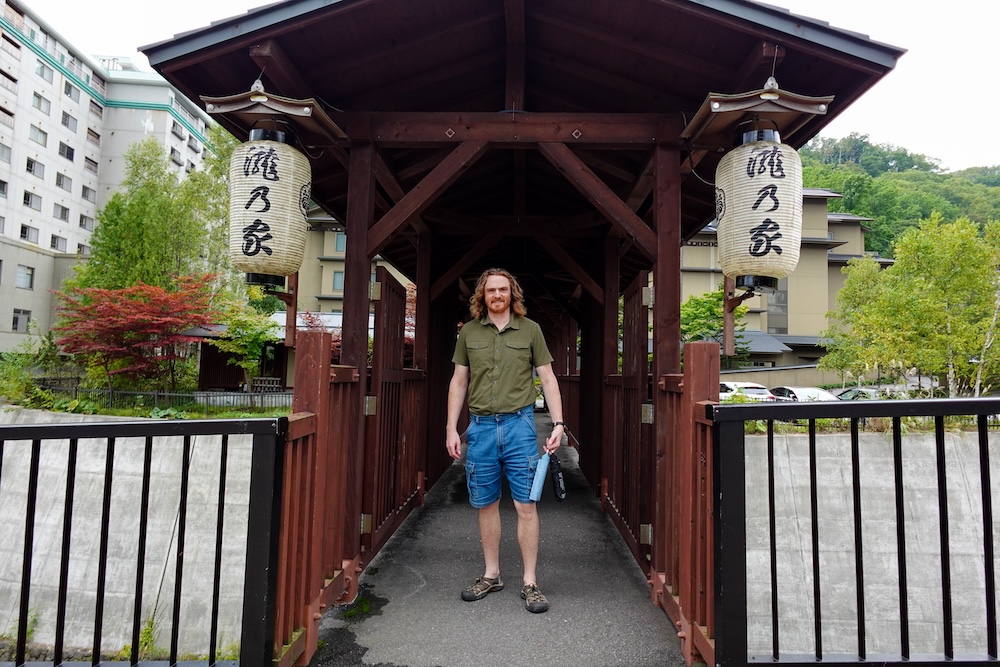
We spent two nights at Park Hotel Miyabitei in late September. We came up from Hakodate by train, waited for the local bus up the hill, and did everything else on foot. Below is what a first visit actually involves: getting from the station to the hot springs, how the bathing works (and how to survive it if you’re nervous), how walkable the town really is, and how many nights to plan.
The Station Is Not the Onsen Town: Getting Your Bearings
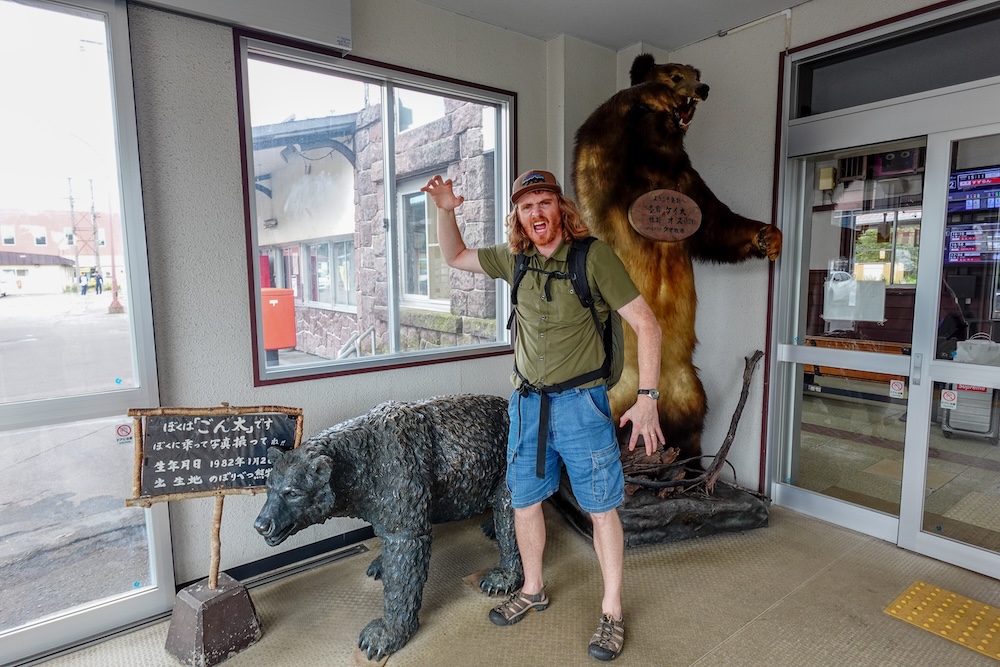
If you remember one thing from this article, make it this: JR Noboribetsu Station and Noboribetsu Onsen are two different places. The station sits down near the coast. The hot-spring town is about 8 km inland, up a wooded valley. The steam, the hotels, the sulfur smell and Jigokudani, better known as Hell Valley, are all up there. Down by the tracks you get a quiet station and a bus stop.
The same distinction matters when you book. Search for “Noboribetsu Onsen,” not just “Noboribetsu,” because a hotel near the station is not an onsen stay. When you browse hotels across Noboribetsu, check that the address reads Noboribetsu Onsen-cho before you pay. That’s the hot-spring town. You’ll also see Karurusu Onsen on maps of the area. It’s a separate, much smaller hot-spring area further inland, not a corner of the main town.
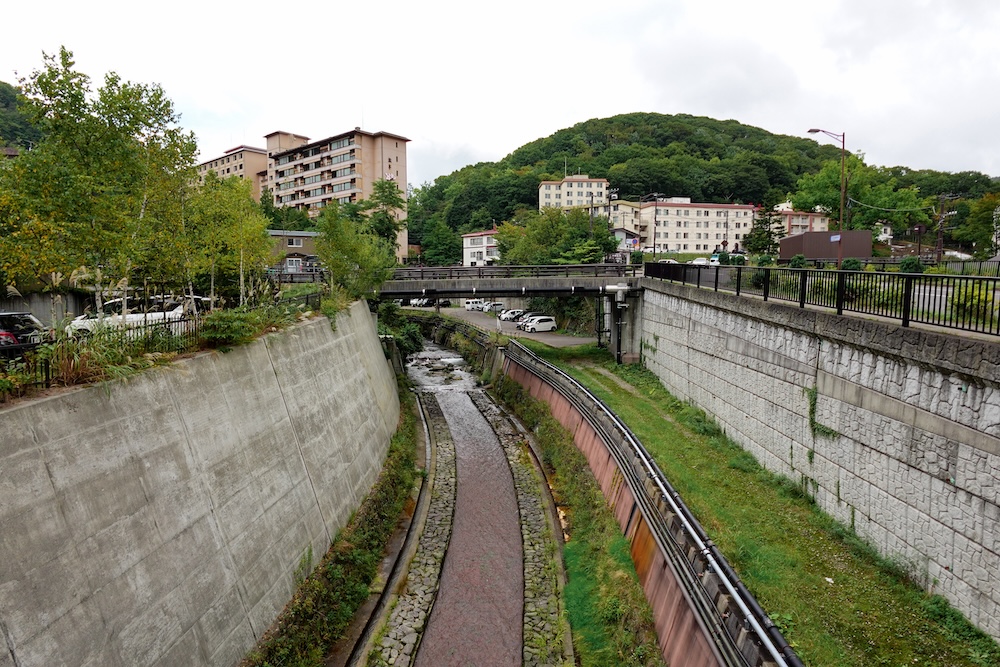
Once you’re up the hill, it’s easy to get a feel for the place. Most of the town is large hotels and ryokan with their own baths, plus one public bathhouse in the centre. It’s a resort, and it doesn’t pretend otherwise. Early in the morning, though, it can be surprisingly peaceful. On our first morning out we walked past hotel after hotel without seeing a soul. Everything we wanted to reach was within walking distance of where the bus had dropped us off, more or less. Use that bus stop as your mental anchor for the rest of the town.
The Bus Up the Hill: Getting from Noboribetsu Station to the Onsen District
We arrived from Hakodate on the JR line, riding on a JR Hokkaido pass, and got off at Noboribetsu Station. A public bus runs between the station and the onsen town, and the timetable is posted right outside the exit, so you know immediately how long you’ll be standing around.
In our case that was about half an hour, because the bus isn’t very frequent. Services generally run once or twice an hour, and the ride itself takes roughly 15 to 20 minutes. We paid ¥350 each back then; the fare is now ¥450, and I’d carry yen for it rather than count on a transport card working. The last buses up from the station leave around 8 p.m. If you’re arriving late, check the current Donan Bus timetable before you go.
One thing on the train side has changed since our trip. Every JR Hokkaido limited express, including the Hokuto and Suzuran trains that stop at Noboribetsu, is now fully reserved, with no unreserved cars left. Book a seat even if you’re on a rail pass.
Bus or taxi
Taxis wait outside the station. When we were there, the ride up was said to cost about ¥2,000; budget roughly ¥3,000 today. We took the bus and saved a decent chunk of money, and the route was easy to follow once we were on it. A taxi earns its fare if you’re a group splitting the cost, hauling heavy bags, or short on time and unwilling to stand around. Otherwise I’d wait for the bus.
What the timetable does to arrival day
The wait matters more than it first appears, because it shapes your first day. By the time you’ve finished the train journey, waited for the bus, ridden up the hill and checked in, the afternoon has largely gone. The direct buses from Sapporo and New Chitose Airport make this even plainer. They drop you in town mid-afternoon and leave again mid-morning, which works well for an overnight stay and leaves very little daylight on a one-night trip. I come back to this when we get to stay length, because it changes the maths.
If you arrive before check-in or want to wander after checking out, the tourist information centre in town will hold bags during the day for a small per-item fee.
Bathing for the First Time: What a Hotel Onsen Stay Looked Like
Full disclosure: getting naked with strangers in hot water is my comfort zone. When I was teaching in Korea, I went to the jjimjilbang (the Korean bathhouse-and-sauna complex) almost every week, so the onsen at Noboribetsu was the part of the stay I looked forward to most, and I loved it.
I know that’s not where most people start. Someone doing this for the first time might feel like a fish out of water, and that’s fair. Most of the fix is knowing what you’re walking into.
The routine, before you undress
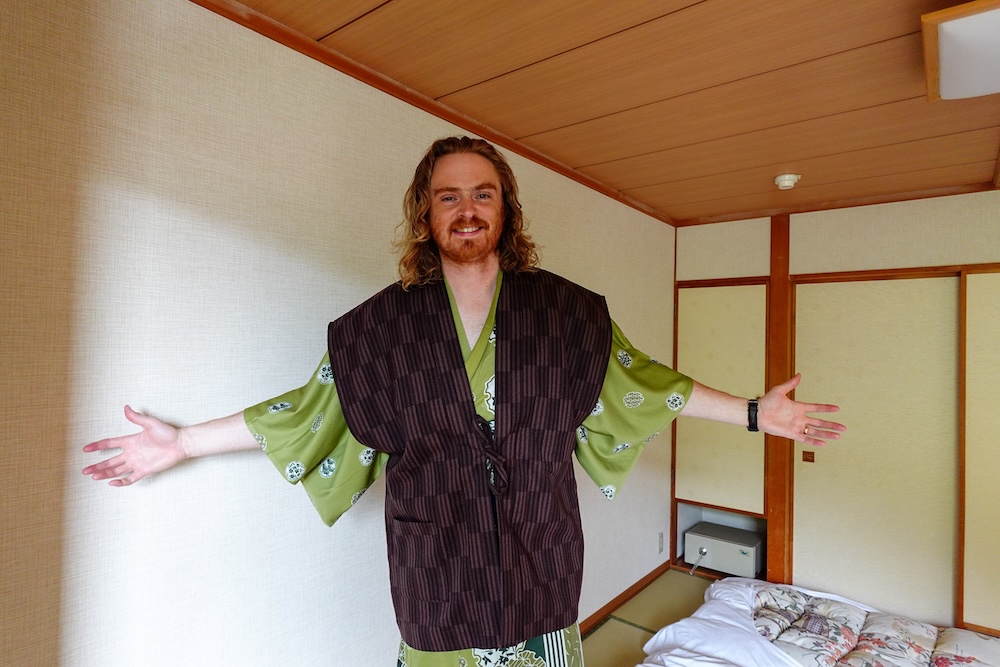
Shared baths are separated by gender, so you’ll be bathing only with people of your own sex. Some hotels swap the men’s and women’s sides overnight, so if the bath looks different the next morning, that’s probably why. At our hotel, everyone in the lobby was padding around in yukata, the light cotton robes the hotel provides. We changed into ours and wore them down to the bath like everyone else.
Once you’re there, the rules are fewer and simpler than the nerves suggest:
- Take your shoes off before the changing area, and undress completely there. No swimsuits.
- Wash thoroughly at the shower stations before getting into any pool, and rinse off all the soap.
- Keep your small towel out of the water. People fold it on their heads or leave it on the edge.
- Keep it quiet, and never take photos in the bathing area.
- Dry off before walking back into the changing room so you don’t flood the floor.
Tattoos are the one thing to sort out before booking rather than at the front desk. Policies vary from property to property, and at least some baths in town turn away anyone with tattoos. Ask the hotel directly.
The hotel baths, and when Audrey had them to herself
Park Hotel Miyabitei is a big resort hotel, and its baths are built to match. In the women’s section, Audrey counted seven or eight pools, including one outdoors that she found beautiful. We both thought the baths beat those at our first ryokan, a much smaller place in Takayama about five years earlier. A ten-storey hotel full of guests needs a big onsen, and that’s one of the real advantages of staying somewhere large. If you want the same setup we had, you can check availability at Park Hotel Miyabitei. Just book it knowing it’s a busy resort hotel, not a hushed little inn.
The main worry for a nervous first-timer is crowds, so Audrey’s experience is the most useful thing I can pass on. She deliberately went at odd hours. One time she had the women’s bath entirely to herself. Another time there was just one other woman there. One visit was during dinner, when everyone else was in the dining hall; the other was at about 4:30 in the morning.
Our guess is that the busiest stretches are just before breakfast and the couple of hours after dinner, when people go down for a soak before bed. That’s only a guess, though. We were usually asleep by eight or nine, so we never saw the evening rush.
The dining hall behaved the opposite way to what we expected. We assumed that showing up the moment it opened would beat the crowds. Instead, that’s exactly when the big tour groups arrived, and it was chaotic at both dinner and breakfast. Waiting about half an hour made a huge difference.
The natural footbath: a bath with your clothes on
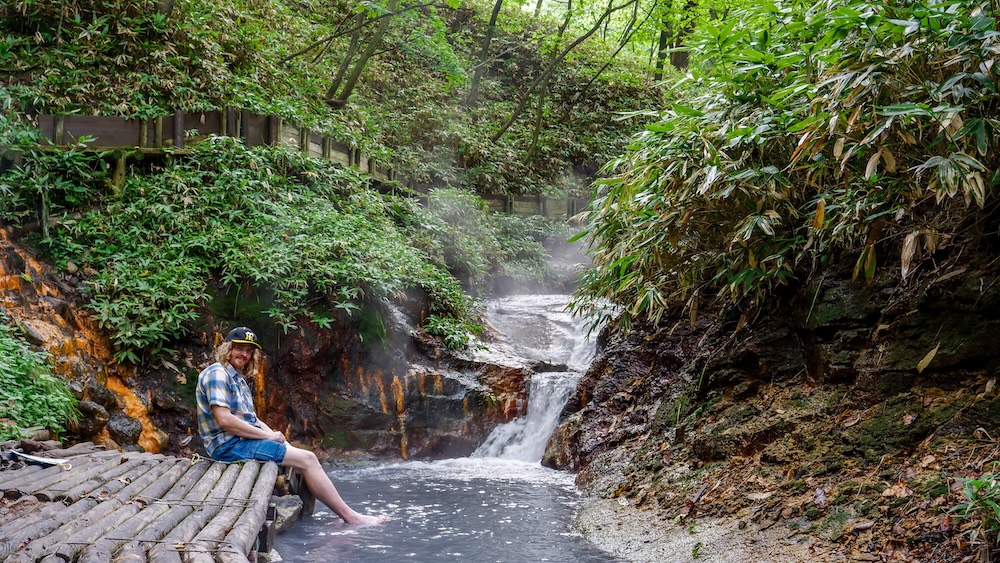
If the nudity is the real obstacle, the Oyunuma River Natural Footbath is the gentlest possible start. It’s outdoors in the forest, it’s free, and your clothes stay on. Only your shoes and socks come off, and your feet go into a river of hot-spring water.
A short trail leads down to the water. Bamboo seating and small platforms run along the river’s edge, and there are padded mats you can borrow to sit on. The water was hot enough to make me flinch at first, then it was just pleasant. Push your toes down and you’ll find fine black volcanic sand at the bottom. We went early in the morning, found almost nobody there, and stayed a good half hour. I could have done that all day. The town is no secret, but at that hour the footbath felt like one.
Bring a small towel from your hotel so you can dry your feet and keep walking. The footbath is officially open from 8:00 to 17:00, and the trail to it can close in winter.
Other ways to bathe
You don’t have to stay at a hotel to use its baths. Several hotels sell day-use tickets, typically for about ¥1,200 to ¥2,500, and the public bathhouse in the centre of town costs around ¥500. Hotels can stop selling day passes at short notice on busy dates, so check on the day. We only used our own hotel’s baths, so I can’t tell you which day option is best.
If you only have one day and working out an unfamiliar bathhouse on your own is the real sticking point, one current option is a guided day tour from Sapporo that ends with a soak at Dai-ichi Takimotokan. An English-speaking guide takes you through Hell Valley and out to the footbath, and the bath entry at the hotel is included. I haven’t done this tour, so read the itinerary and what’s covered before you book.
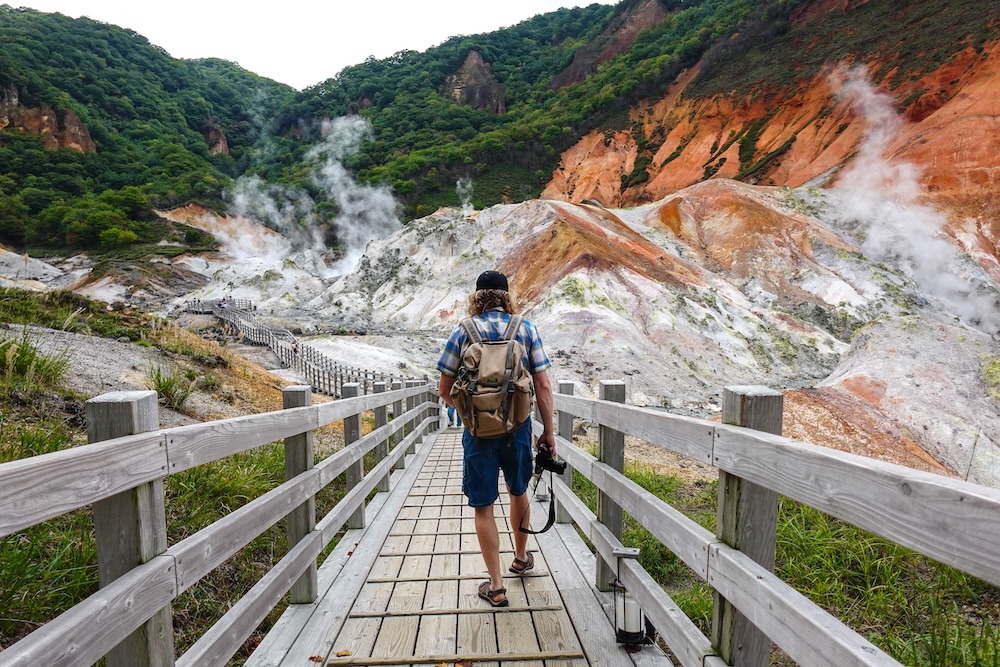
Walking the Onsen District: What Is Close and What Climbs
The town is walkable, and we walked everything. But walkable here doesn’t mean flat, and it doesn’t always mean pavement.
From the bus stop to Hell Valley and the footbath
The entrance to Jigokudani, at the Park Service Center, is under a kilometre from the bus terminal. The walk isn’t far, but my memory is of it being uphill. One road we walked early in the morning had no sidewalk, and some cars came through quickly, so keep your wits about you.
Hell Valley itself is boardwalks and trails, and the hikes themselves were easy, with enough going on to keep you interested. You walk a while, reach the next viewpoint, have your mind blown by the scenery, and carry on. The physical surprise was the heat. The forecast that day was only 22 to 24°C, but between the vents, the bubbling pools and the steam, the valley felt warm and humid. Then there’s the smell. Audrey spent part of that morning trying to work out whether the rotten-egg smell was the sulfur or me, and her verdict was that with me, you never know.
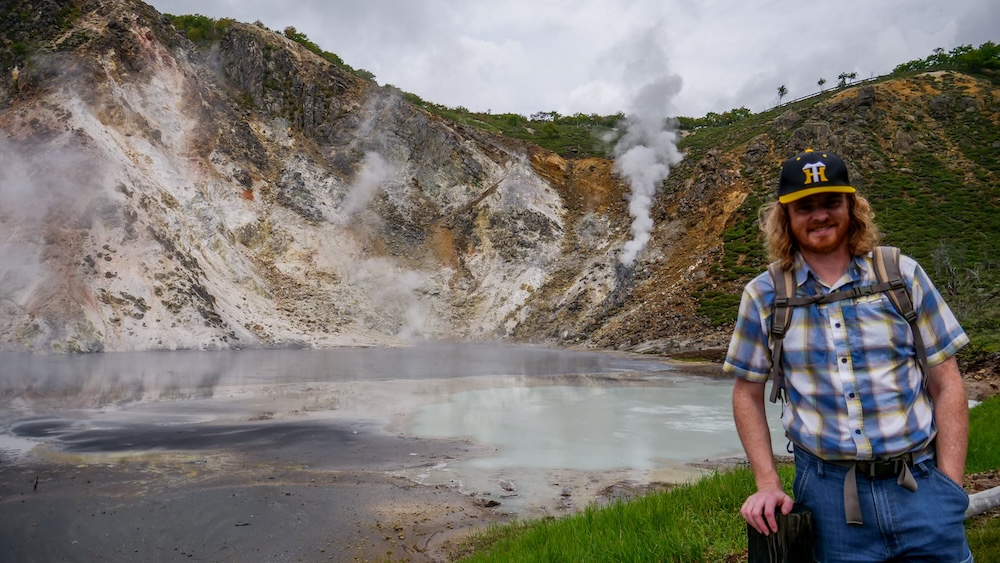
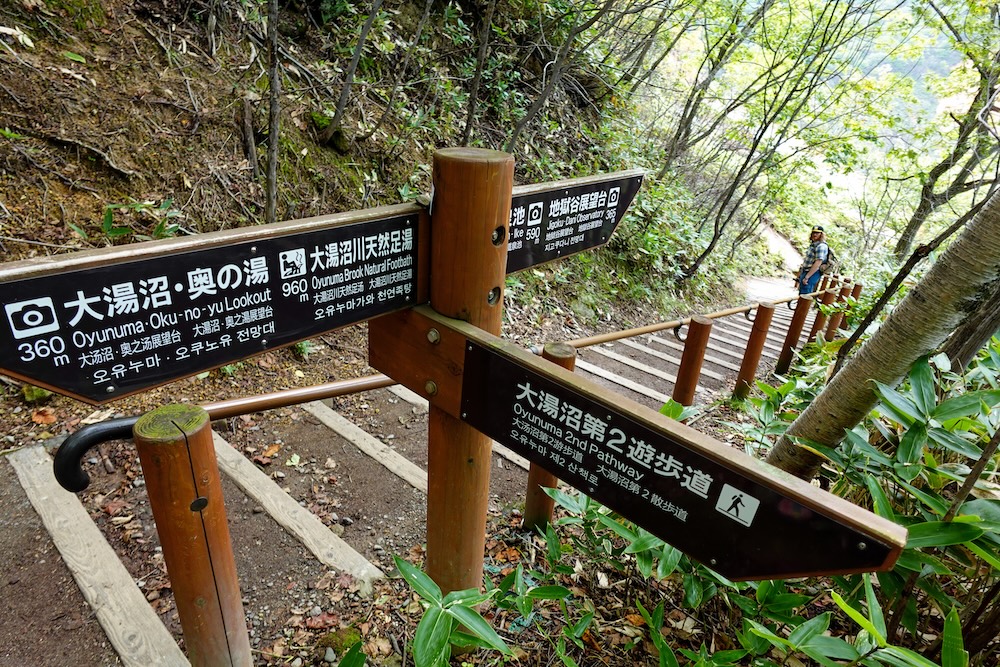
The bigger commitment is the forest walk beyond the valley, out to Oyunuma and down to the footbath. Jigokudani on its own takes about half an hour. Carrying on to the footbath and back into town is a loop of a little under 4 km, and with time in the water it takes about two hours. There are slopes along the way and steep stairs on the descent toward the footbath, so wear real shoes. Yuzawa Shrine, back toward town, sits at the top of its own steep stone staircase. We had the whole place to ourselves once we reached the top.
Treat the forest as forest. We were out on foot early in the morning. Since then, Noboribetsu City has reported brown bear sightings around dusk on the road up to the onsen town, and it advises avoiding early mornings and evenings near sighting areas. Walk the trails in full daylight. Before you head out, check the tourism association’s notices, which also post temporary path closures; the footbath path has been shut for repairs before.
Late September, and what changes in other seasons
We visited in late September, in mild weather, with every trail open. Winter is a different trip. Snow closes the boardwalks beyond the main Jigokudani path, and the trail to the footbath can close completely. If you’re coming in winter, don’t plan around the walking I’ve described here.
One, Two or Three Nights: Matching the Stay to What You Want
A lot of planning advice treats one night as plenty. For anyone who wants both the baths and the forest, I disagree.
Our two nights worked out simply. The first evening was arrival: the bus up the hill, check-in, yukata, a first soak, the buffet and more soaking. The second day was the real one. We were out early with the footbath, Hell Valley and the stroll back through town, and the outdoor parts of that day are probably among my favourite things we did anywhere in Japan. The final morning was slow, with a last bath and tea in our yukata before checkout. That one full day is what the second night buys you, and without it the trip would have been mostly transfers and dinner.
The buffet served the same menu both nights. Stay longer and you’ll either order differently each evening or get some serious déjà vu.
| Stay | What you get | Time for the forest walk and footbath without rushing? | Whose recommendation |
|---|---|---|---|
| Day trip or 1 night | An arrival afternoon and evening, an evening soak, an early-morning soak | Only if you arrive early and keep moving | My suggestion for escaping a nearby city; not what we did |
| 2 nights | Arrival evening, one full day, a relaxed checkout morning | Yes | What we did, and what I’d recommend if you like onsen and nature |
| 3 nights | Two full days | Yes, with time to spare | My suggestion for pampering yourself and exploring further; we didn’t stay this long |
If you just want a break from a nearby city, one night or even a day trip will do. You’ll get the baths and a look at Hell Valley. If you’d rather skip the train-and-bus routine for a single day, there’s a range of guided day trips to Noboribetsu from Sapporo. Many of them pair Hell Valley with Lake Toya, so check how long each one actually spends in Noboribetsu before you choose.
If you like onsen and nature, make it two nights, without question. A third night is for genuine pampering and some extra exploring: the attractions beyond the onsen core, which we never got to, or simply more hours in the water.
The type of hotel deserves the same thought. Ours was clean, the staff were courteous, and the location was fantastic, within walking distance of restaurants and every attraction we wanted. What it lacked was the personal touch. A ten-storey hotel full of guests isn’t going to bring a private dinner to your room the way a five- or ten-room ryokan does. If big baths and an easy walk to everything matter most, see current rates for two nights at Park Hotel Miyabitei. If you’d rather try the smaller, more personal version, compare ryokan and hotels in the onsen town and check whether dinner is served in your room or in a dining hall. My advice is to try both styles at some point, because your preference may not match ours.
How I’d Set Up a First Visit
Start by booking two nights in the onsen town itself, reserve your train seat, and have yen ready for the bus. Treat arrival day as a landing: get up the hill, check in, put on the yukata and go soak. If you’re nervous about the bath, go during dinner or before dawn like Audrey did, or ease in at the footbath the next morning. Then give the full day to the walking, starting in daylight, with real shoes and a hotel towel in your bag. That full day is the main reason to stay longer than one night.
Frequently Asked Questions
Is Noboribetsu Station the same place as Noboribetsu Onsen?
No. JR Noboribetsu Station sits down near the coast, while the hot-spring town is about 8 km inland, up a wooded valley. You’ll need the local bus or a taxi to reach the hotels, the baths and Hell Valley.
How do you get from Noboribetsu Station to the onsen town?
The local bus is the easy option. Services generally run once or twice an hour, the ride takes roughly 15 to 20 minutes and the fare is now ¥450, so carry yen. The last buses up leave around 8 p.m. A taxi costs roughly ¥3,000 and makes sense for groups or heavy bags.
Do you have to be naked in a Noboribetsu onsen?
Yes. Shared baths are separated by gender, and you undress completely in the changing area, wash thoroughly at the shower stations, then soak. If that’s the hurdle, the free Oyunuma River Natural Footbath lets you soak your feet with your clothes on.
When are the hotel baths quietest?
Audrey had the women’s bath to herself during dinner and found it nearly empty at about 4:30 in the morning. Our guess is that the busiest times are just before breakfast and the couple of hours after dinner, though we never saw the evening rush ourselves.
Is Noboribetsu Onsen walkable?
Mostly, yes. The Jigokudani entrance is under a kilometre from the bus terminal, though the walk felt uphill and one road had no sidewalk. The forest loop out to the footbath and back is a little under 4 km and takes about two hours, with steep stairs on the way.
How many nights should you spend in Noboribetsu Onsen?
For onsen and nature, I’d book two nights: an arrival evening, one full day of walking and a relaxed checkout morning. One night or a day trip works if you just want a break from a nearby city, and a third night suits pampering and extra exploring, though we didn’t stay that long.
This guide is also available in Spanish. [Leé la versión en castellano: Noboribetsu Onsen por primera vez: transporte, baños y cuántas noches quedarse]
This article contains affiliate links. If you book through one of these links, I may earn a commission at no extra cost to you.