
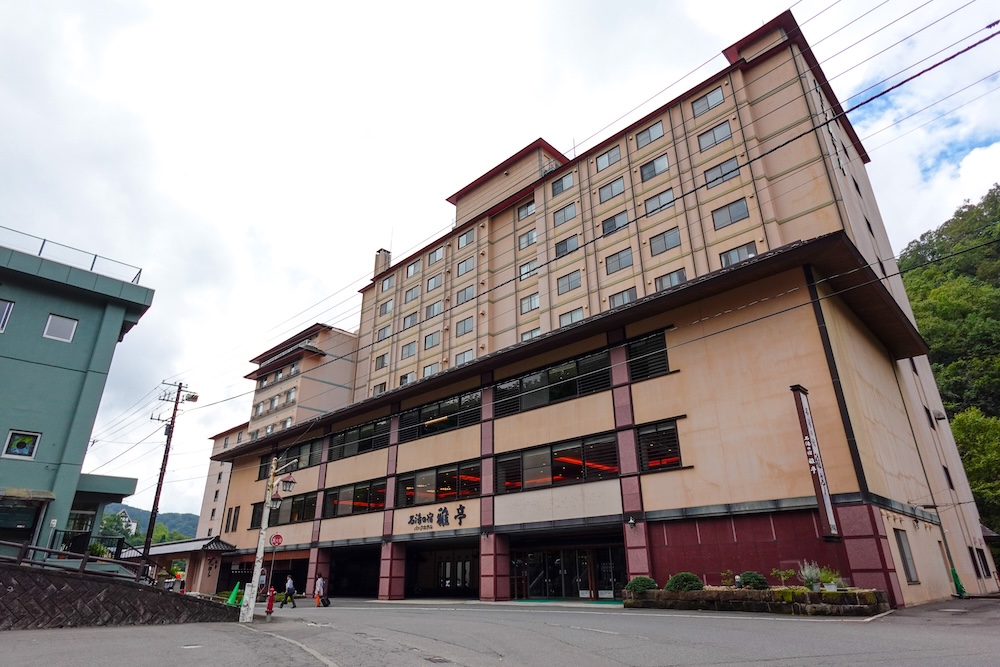
Audrey picked Park Hotel Miyabitei for our stay in Noboribetsu Onsen, and I was more than happy to let her take the lead. She’d found a hotel where we could sleep in a Japanese-style room, soak in proper hot-spring baths, and have both breakfast and dinner taken care of. The price looked reasonable for the whole package. After Tokyo and Hakodate, where our accommodation had felt rather more cramped and businesslike, two nights of hot springs and seafood buffets sounded like a very pleasant change of scenery.
There was one question mark. We’d stayed in traditional ryokans in Japan before, including a much smaller one in Takayama, but Miyabitei was a big resort hotel. Would we miss the quiet, personal treatment of a little inn once we were sharing the dining room with a small army of other guests?
As it turned out, we had a terrific stay. I slept comfortably on a futon, Audrey had some wonderfully peaceful sessions in the women’s onsen, and we both made a serious effort to sample the buffet. We also learned that arriving precisely when dinner starts isn’t necessarily a clever way to avoid a queue. I’d absolutely stay at Miyabitei again, although there are a few things I’d want anyone booking it today to understand first.
Why Audrey Chose Park Hotel Miyabitei
The appeal was the overall value. Audrey wasn’t trying to find the cheapest bed in Noboribetsu; she wanted an onsen hotel where the accommodation, bathing and meals all worked together. Miyabitei ticked those boxes, and its location meant we could explore the hot-spring town without hiring a car.
I wish I could give you the exact price we paid. I can’t remember it, and inventing a nightly rate wouldn’t help anyone anyway. What I remember clearly is how happy we were with what we got. We liked our room, enjoyed the food, loved having a large bathing complex downstairs and found the hotel a comfortable place to return to after walking around Noboribetsu.
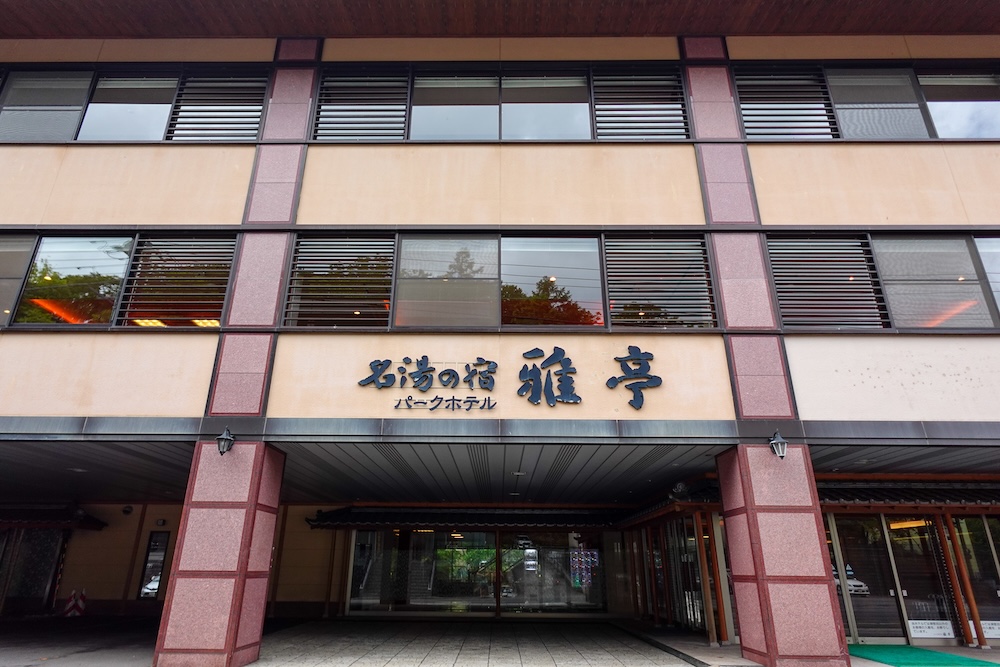
It was also our first stay in this larger ryokan-style resort format. Previously we’d experienced smaller Japanese inns, where the service and meals can feel more individual. At Miyabitei, you’re very much in a multi-storey hotel, with people coming and going and a substantial dining operation. I don’t think that should automatically count against it. Some days a small ryokan is exactly what I want; other days, a place with lots of baths and an enormous buffet sounds even better.
Miyabitei has 156 rooms, so it isn’t pretending to be a tucked-away five-room retreat. If you’re shopping for your first Noboribetsu stay, that scale is probably the most important thing to understand before getting distracted by the room photographs. If the same combination appeals to you, compare current rooms and meal-inclusive rates at Park Hotel Miyabitei; the lowest displayed price won’t necessarily include the two buffets that made our stay such good value.
Our Japanese-Style Room: Tatami, Futons and Yukata
A sitting room during the day, a bedroom at night
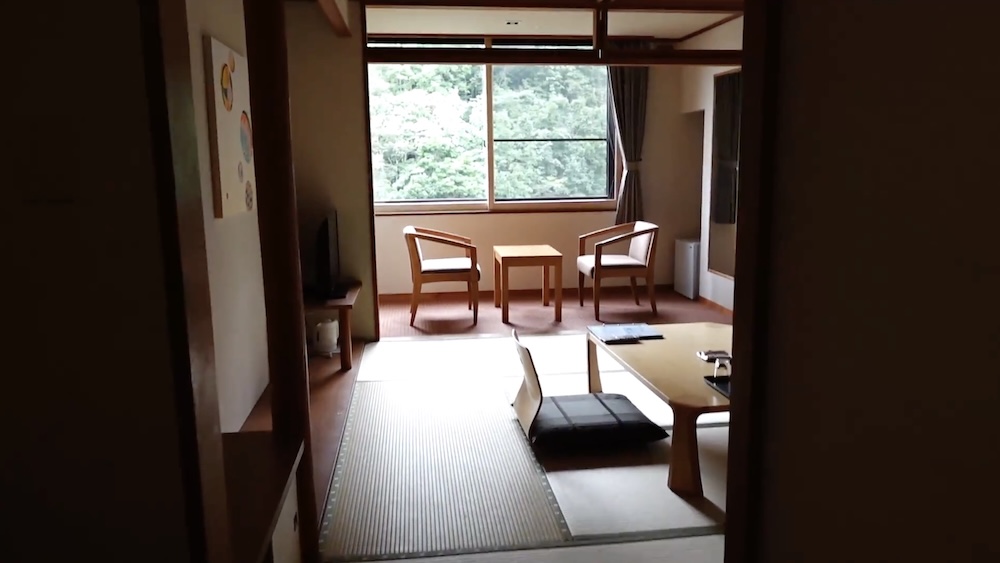
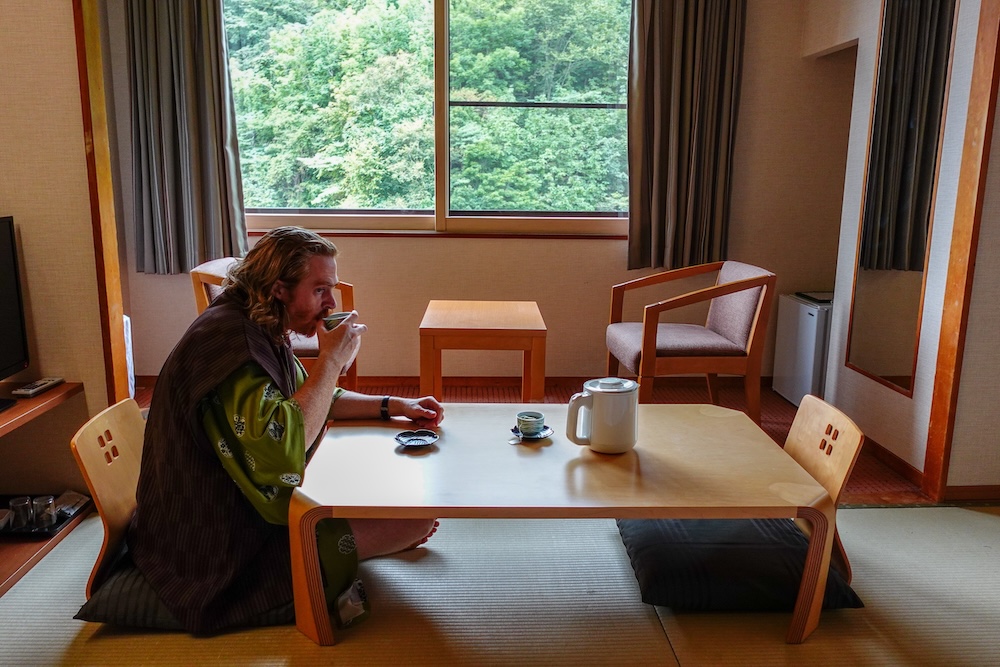
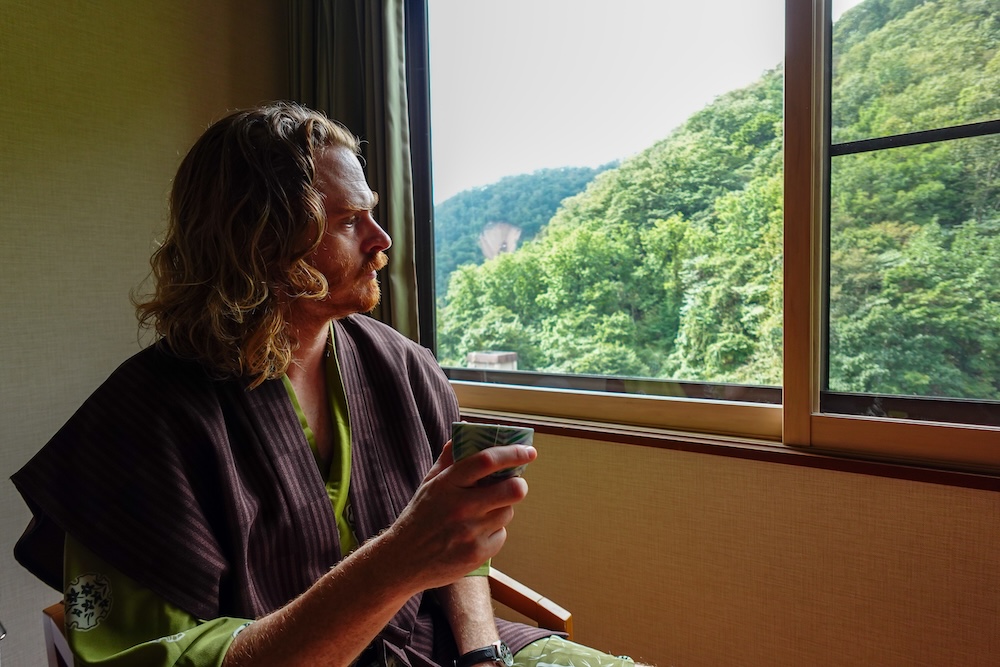
When we checked in, our room had tatami flooring, a low table and a sitting area, with views across other hotels toward the mountains. It looked comfortable, but the sleeping arrangements weren’t immediately obvious. For a moment there was some confusion about whether there was another bedroom tucked away behind a sliding door. There wasn’t. The room was designed to change its purpose in the evening.
The bedding was stored away in a cupboard: futon mattresses, pillows and thick duvets. Later, the staff came in, moved the daytime arrangement aside and made up the beds. I liked that little transformation. You get room to sit and relax during the day without spending the night staring at a table squeezed into the corner beside your bed.
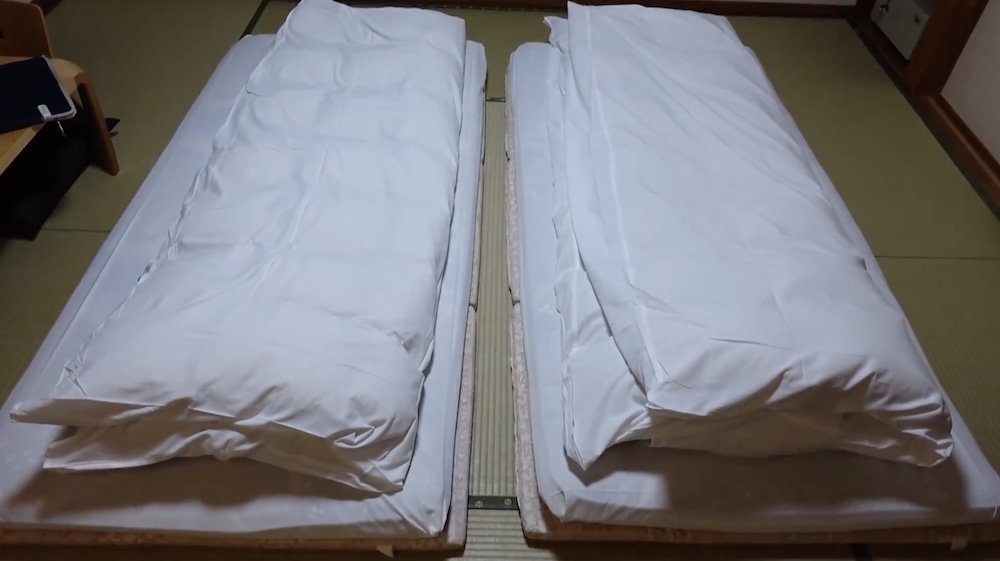
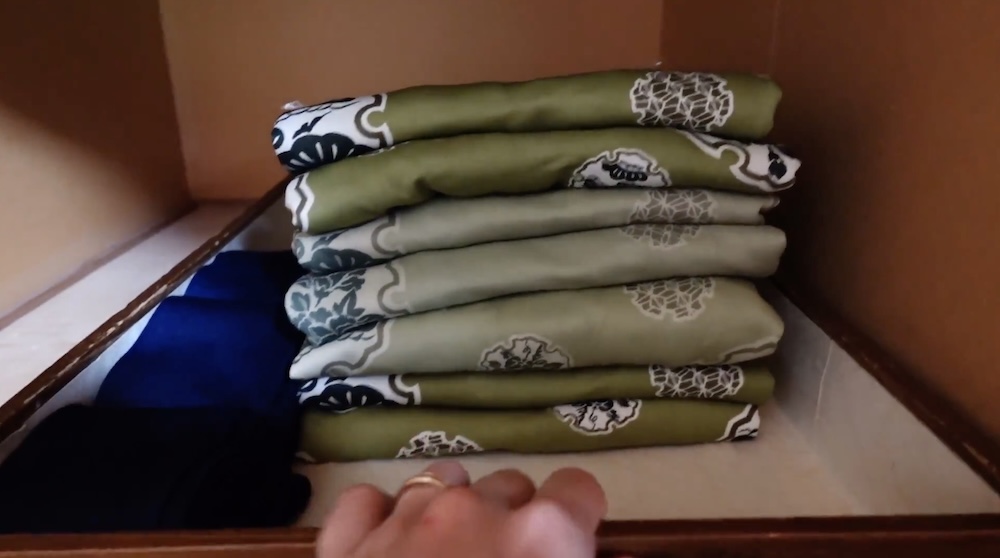
We were also rather taken with the patterned duvet covers. Audrey made a point of showing the decorative details when the beds were laid out. These were hardly grand luxury-suite furnishings, but there was something satisfying about the way everything fitted together. The room had its own practical rhythm.
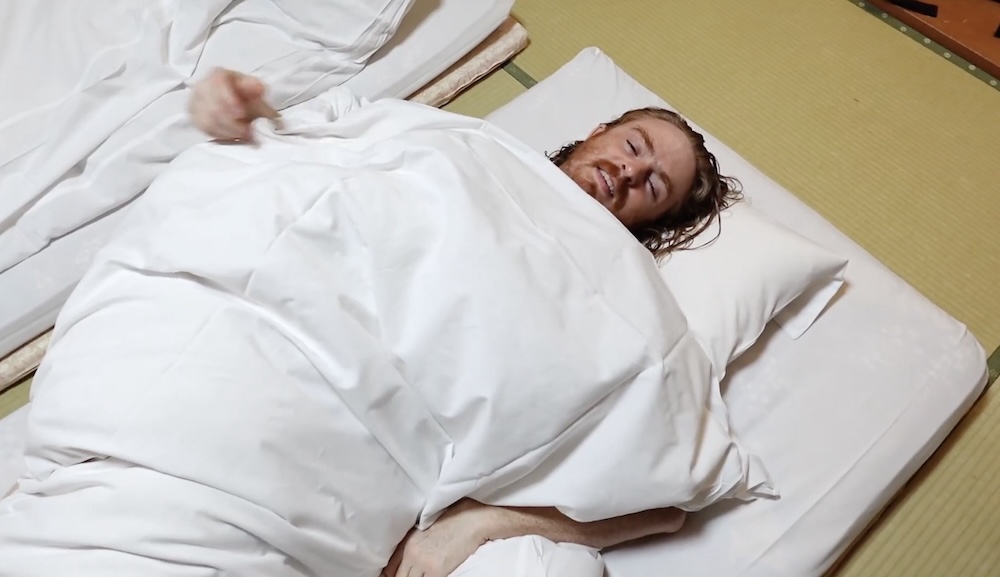
And yes, we slept well. The futons were comfortable, the room stayed pleasantly cool and the bathroom facilities did everything we needed them to do. We’ve both spent a lot of time travelling in Asia and had slept on Japanese-style bedding before, so the arrangement felt familiar. Someone used exclusively to a thick western mattress might find sleeping closer to the floor a bigger adjustment. I wouldn’t want to talk them into a futon simply because the photograph looks traditionally Japanese.
Joining the yukata crowd
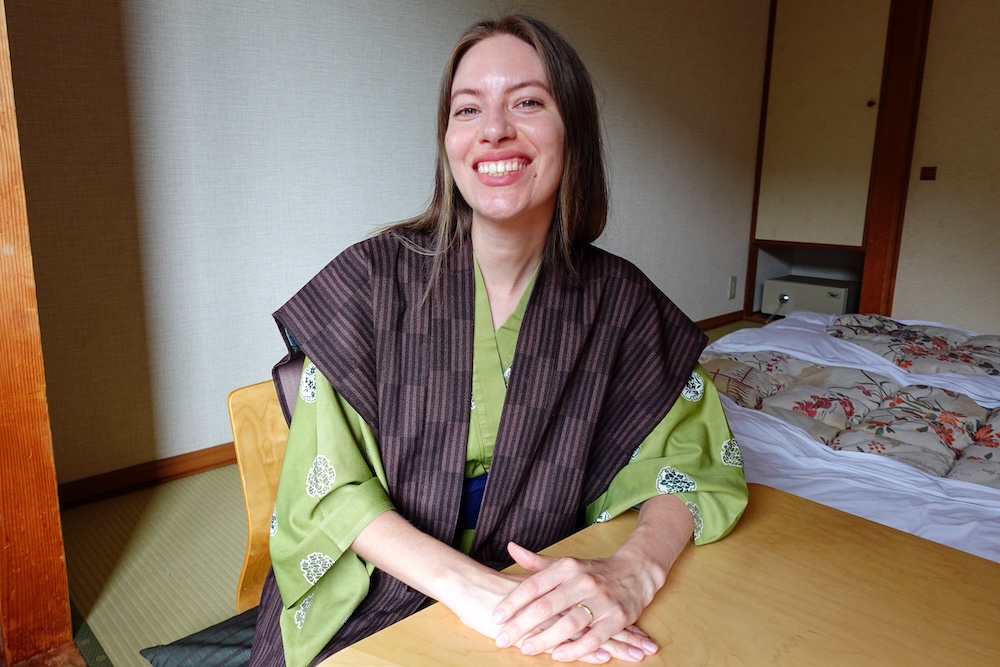
One of the first things we noticed was that plenty of guests were already wandering through the lobby in yukata. Meanwhile, we were still dressed like people who’d just dragged themselves and their luggage across Hokkaido. We were clearly missing out.
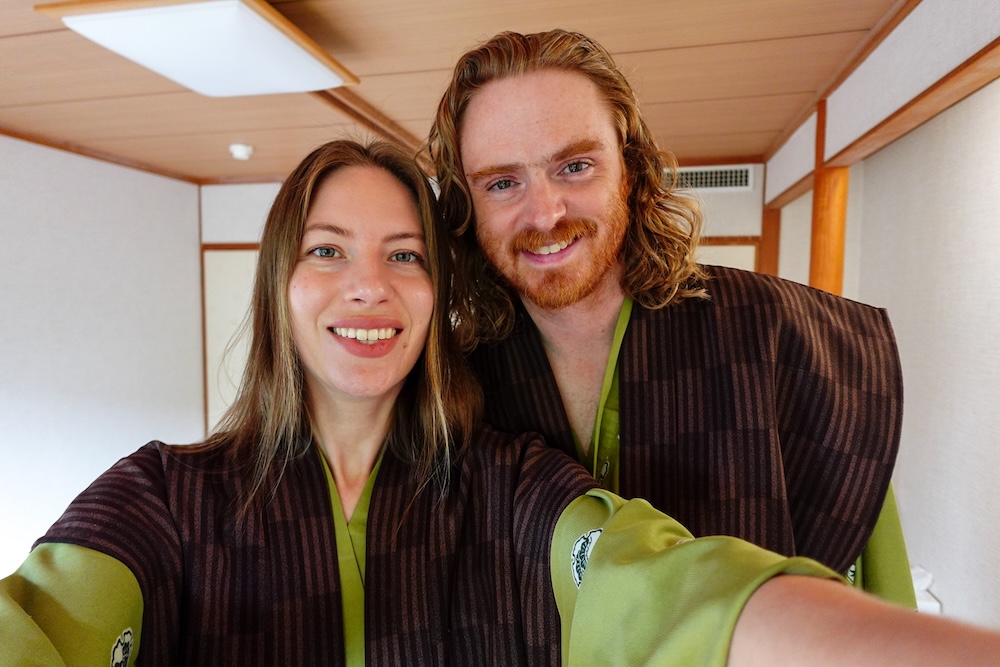
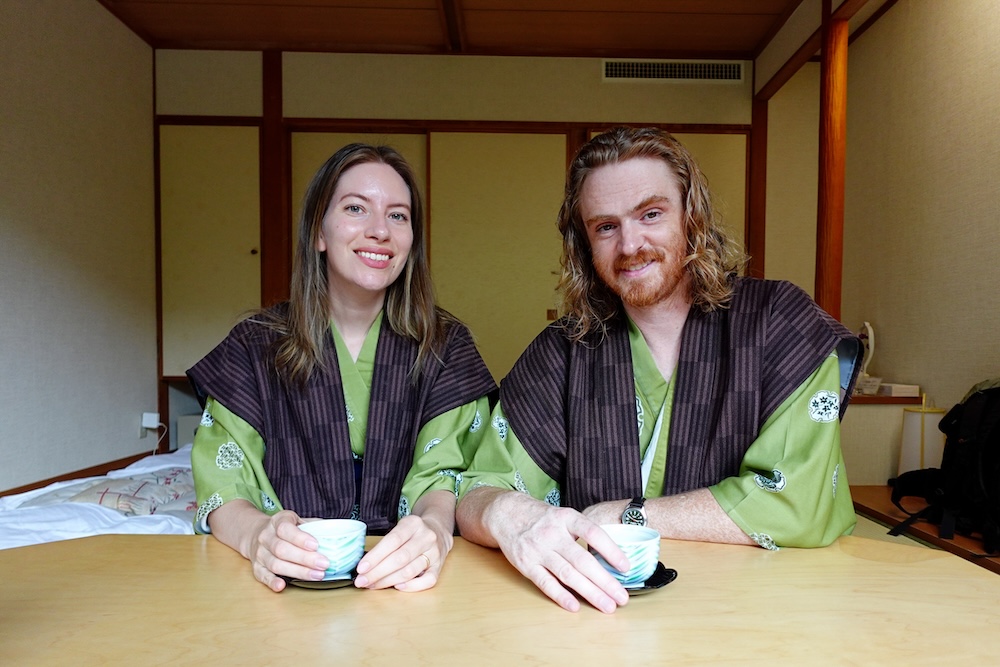
Our room had green yukata, blue sashes and little outer vests, along with towels for the baths. Audrey tried on hers, worked out the sizing and showed off the full outfit. I got into mine too, with a rather enthusiastic bow tied at the waist. Whether I looked particularly elegant is another question, but I was ready for the onsen.
I enjoyed being able to wander between the room, baths and dining area in that clothing. It made the hotel feel different from the places we’d stayed earlier on the trip. We weren’t going anywhere fancy for the evening. We were already where we wanted to be.
Don’t assume every room has futons
The hotel’s current room selection goes beyond the Japanese-style room we occupied. There are eight- and ten-tatami Japanese rooms, western-style rooms with conventional beds, and Japanese-western rooms combining tatami space with twin beds. Some deluxe categories provide more room again.
If you’re booking because you want the same basic experience we had, look specifically for a Japanese-style room with futon bedding. If getting up from the floor sounds unappealing, a mixed Japanese-western room may be a better choice. Check the exact sleeping capacity too, particularly when booking for more than two people. I can’t identify our old room by today’s official category name, and I wouldn’t assume a listing for a different room has the same view, layout or facilities. You can compare Miyabitei’s Japanese-style and Japanese-western rooms before choosing; the actual bedding arrangement matters more here than a pretty room photograph.
The Onsen Was One of the Best Parts of Our Stay
The sheer variety of bathing was a big advantage of staying at Miyabitei. Our smaller ryokan experience had been lovely, but a large resort can dedicate much more space to communal hot springs. Here, going downstairs for another soak felt like an activity in its own right, not something you did once and ticked off the itinerary.
The hotel describes five named spring waters, with indoor and outdoor bathing. That number refers to the spring sources or blends, not the total number of pools. When Audrey described the women’s section after using it, she remembered around seven or eight pools, including an outdoor one she particularly enjoyed. Her experience belonged to the women’s side, so I’m not going to assign the same count or layout to the men’s facilities.
Audrey also managed to find an extraordinary amount of quiet in a very large hotel. On one visit she had the bathing area entirely to herself. Another time there was just one other woman there. She’d gone during dinner on one occasion and at approximately 4:30 in the morning on another. I appreciated the bathing facilities too, although I can’t offer those same observations about how empty the men’s side was at particular hours.
Our schedules were hardly conventional. We were still dealing with jet lag and going to bed at what felt like ridiculously early hours, so we didn’t actually experience every period when the baths might have been busiest. I wouldn’t turn Audrey’s peaceful sessions into a guaranteed crowd-beating timetable. They tell you what was possible during our stay, rather than what happens every night.
At present, the hotel’s published bathing hours run from 2 p.m. until 9:30 the following morning, with a cleaning closure from 3:30 to 4 a.m. That makes an early soak feasible, but check the current arrangements before building your morning around them.
One practical warning deserves more attention than the usual descriptions of mineral-rich water: the hotel identifies approximately 20 stairs between the changing area and the main baths. There are accessible features elsewhere in the building, but that doesn’t establish a step-free way into the bathing area. Anyone who would struggle with those stairs should speak to the hotel before reserving. The same goes for guests who need a definite answer about tattoos or private bathing. We enjoyed the shared baths; I would not book Miyabitei assuming a private, spring-fed bath comes with the room. The hotel’s current bathing information is useful if the stairs or bathing hours could affect your decision.
The Dinner Buffet: Come Hungry, but Don’t Assume You’ll Beat the Crowd
I thoroughly enjoyed the food at Miyabitei. It’s probably a good thing we were doing plenty of walking around Noboribetsu during the day, because dinner was an invitation to keep returning with another plate.
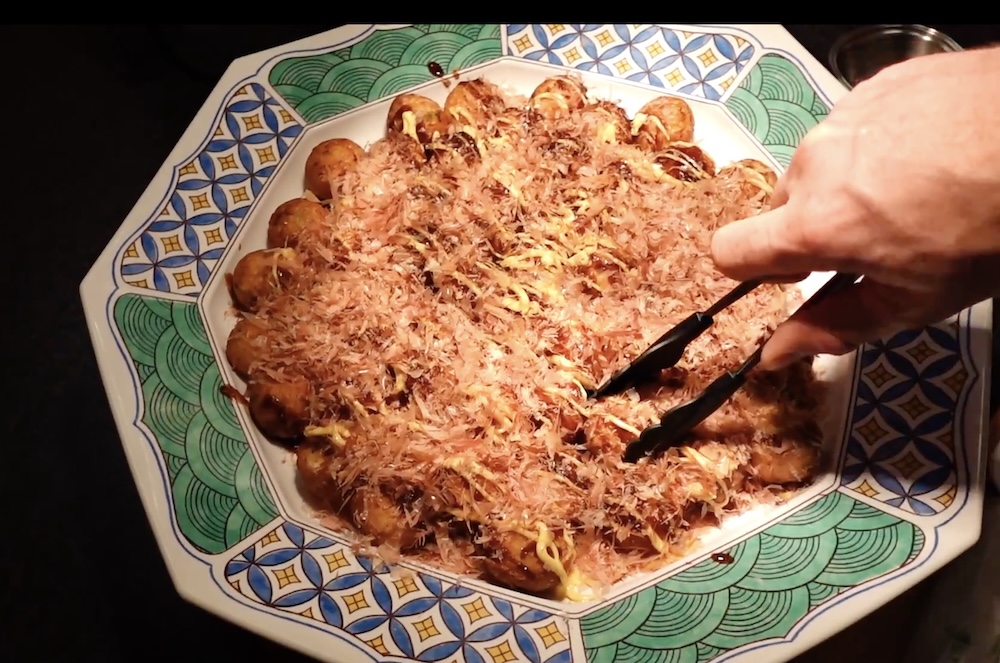
There were scallops, shrimp, sashimi, salmon, tuna, beef, tempura and plenty of other hot and cold dishes. We tried salads and little appetizers, including a pumpkin salad, then worked our way back for more seafood. By the time dessert came around, we were treating another visit to the buffet as an entirely reasonable idea. The cream-filled pastries were particularly good. I can’t remember every single thing we ate, but I certainly remember being happy with the selection.
Our bright idea about arriving first
We turned up right when the dining room opened. In our minds, we’d outsmarted the crowds by getting there before everyone else had a chance to settle in. Unfortunately, everyone else had exactly the same plan.
There was a huge line at the main seafood and meat station. Rather than spend the beginning of dinner standing there admiring other people’s plates, we moved to the salad and hot-food sections, which were quieter, and circled back later. It worked well enough, and we noticed a similar pattern at breakfast. About half an hour after opening, the initial rush had eased during our visit.
That doesn’t make half an hour the magic number for every future guest, and meal times may be organized differently now. It’s simply what happened to us. The general point stands: in a hotel with 156 rooms, the buffet can get busy, and the first people through the doors aren’t necessarily the ones who have the most relaxed dinner.
The hotel’s restaurant, Shiki, currently advertises around 40 Japanese, western and Chinese dishes, with seasonal adjustments. Specific items will change, so don’t book expecting the exact scallops, crab or desserts we encountered. What I liked about the buffet was the ability to try a little of everything, not the promise of one particular dish.
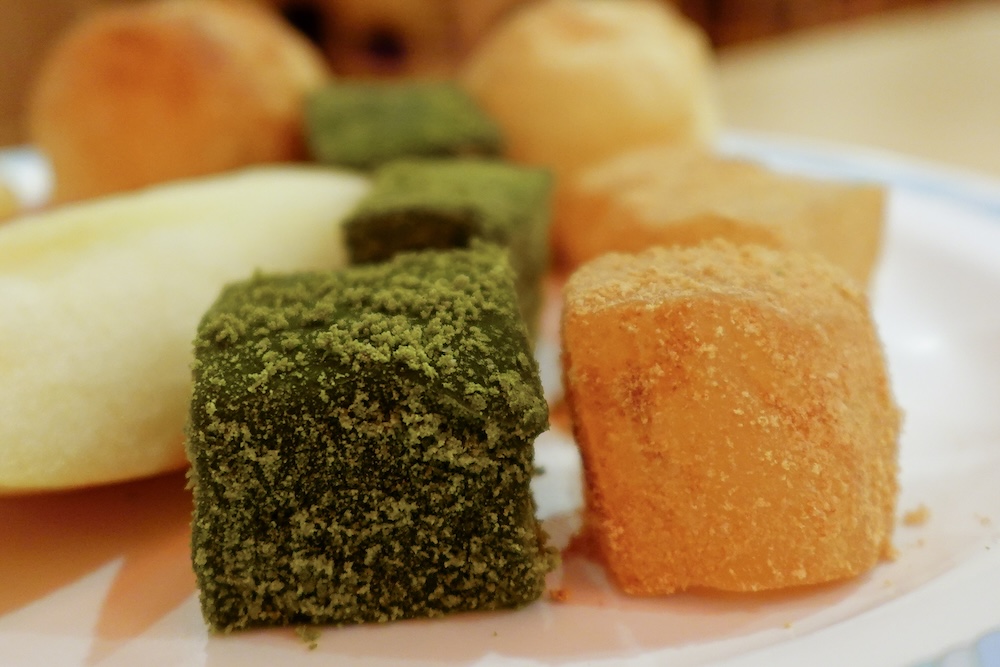
Would we choose the dinner package again?
Yes. Having dinner included was central to why Audrey chose the hotel, and I would happily repeat that choice. The meal was plentiful and tasty enough that the queues became a minor annoyance rather than the defining feature of the evening. If the buffet is a major reason for going, look for Miyabitei rates with dinner and breakfast included rather than assuming a breakfast-inclusive room covers both meals.
It’s also where the difference from a smaller traditional ryokan becomes impossible to miss. At our previous ryokan, we’d enjoyed a more personal style of dining. At Miyabitei, you’re sharing a large dining space, getting up for your own food and sometimes navigating a queue. If a leisurely, privately served kaiseki dinner is the thing you’re most excited about, there are other Noboribetsu properties that make more sense. We were in the mood for a feast, and a feast is what we got.
Breakfast, Second Helpings and the Second Night
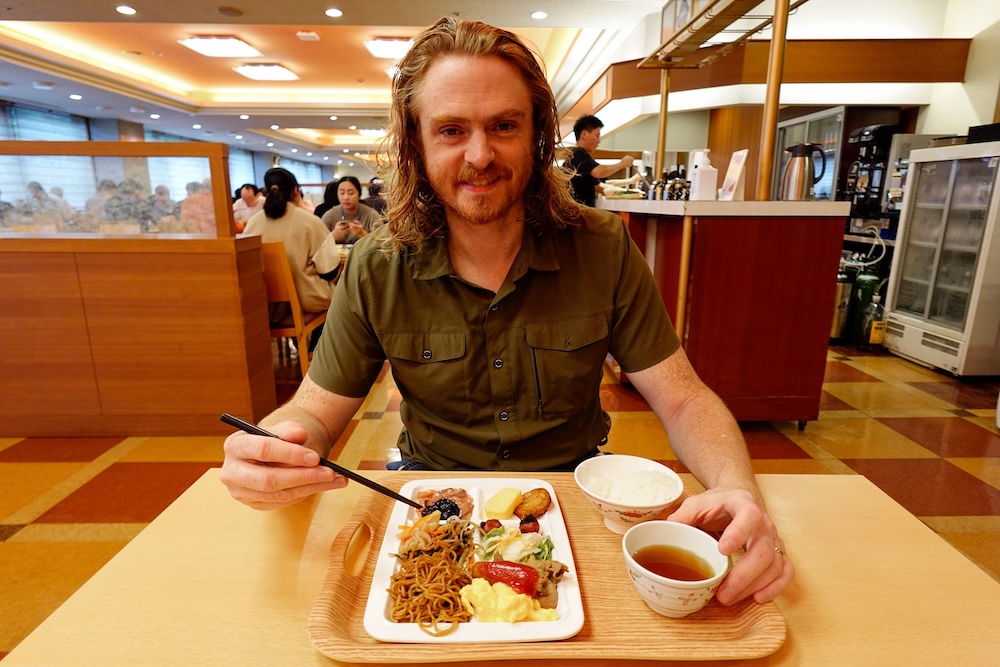
Breakfast was another buffet, which suited us well before heading out to explore. We didn’t need to hunt for somewhere open in the morning or spend time organizing a meal before starting our day. The breakfast service could be just as busy at opening as dinner, though, so the same patience applied.
The more noticeable issue over a couple of nights was repetition. We saw many of the same foods appearing again, which we commented on before checking out. It wasn’t particularly exciting to encounter the same selection repeatedly, even when the dishes were good. But there was enough variety to choose different combinations, and neither of us was sitting around regretting the meal package.
Current plans commonly describe a Japanese-and-western breakfast buffet, with a published window around 7–9 a.m., though your particular package controls the details. The hotel’s dining changes seasonally; that doesn’t mean you should expect an entirely different menu from one evening to the next. For a longer stay, I would go in knowing that the pleasure may come more from choice and quantity than from a completely new dinner every night.
A Big Hotel, a Nice Lobby and an Excellent Location
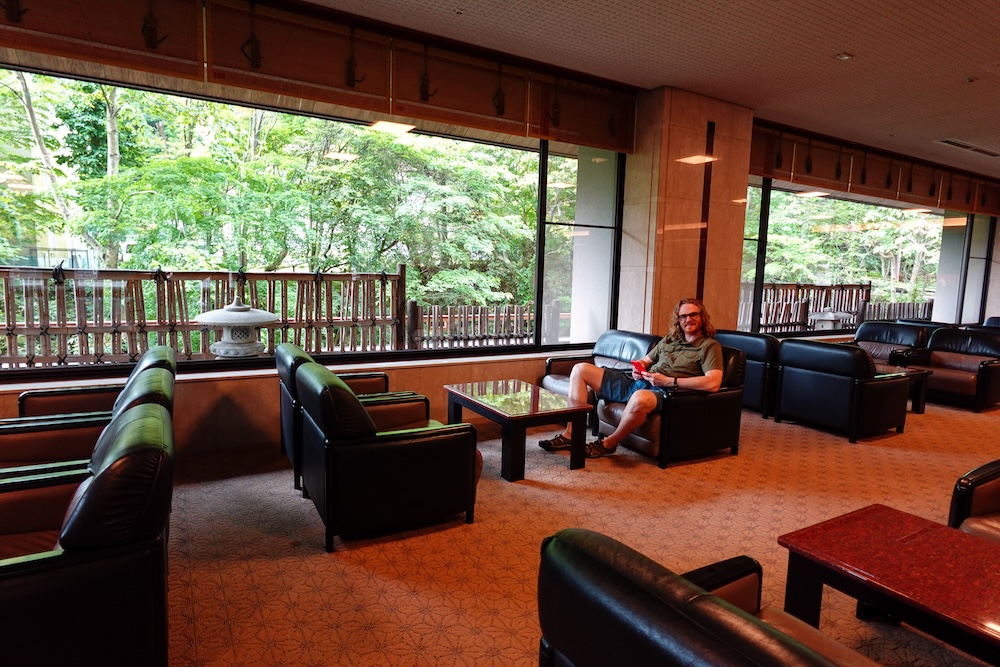
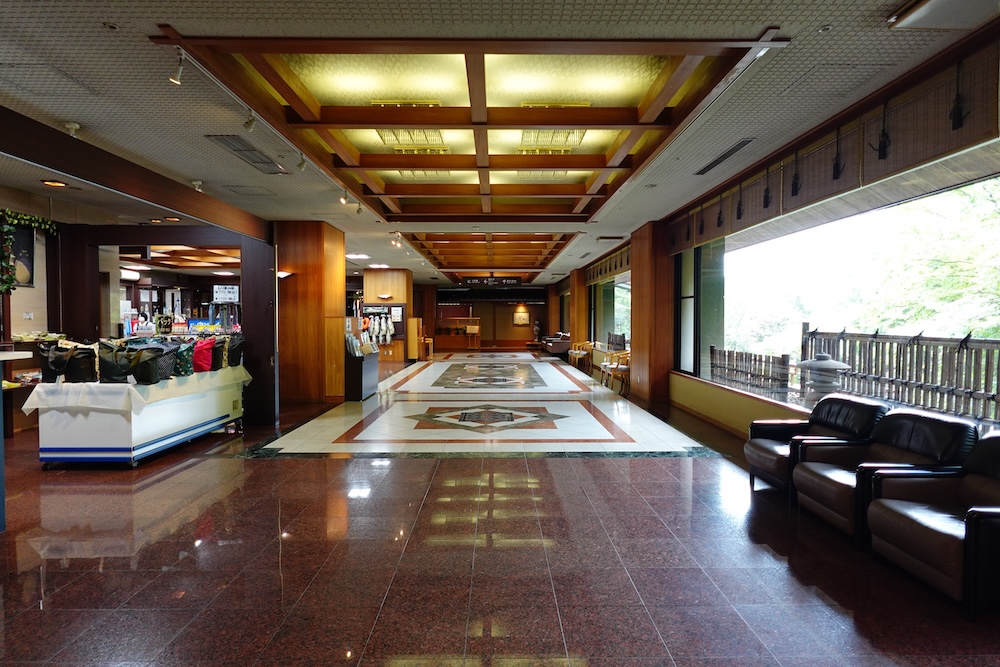
I liked the lobby more than I expected. Maybe that sounds like an odd thing to remember years later, but it contributed to the feeling that we’d upgraded our circumstances after some more functional accommodation in Tokyo and Hakodate. Miyabitei was somewhere we could hang around comfortably, put on our yukata, have a bath, eat and then do it all again. There was no rush to escape the room and find something to do elsewhere.
We found the staff courteous and the property clean. What you shouldn’t expect is the almost family-run feeling of a tiny inn. With guest rooms occupying several floors, the restaurant on its own levels and the baths downstairs, there’s a steady flow of people moving about. We knew that was part of the bargain. The more extensive facilities were worth giving up some of the intimacy for.
The location helped enormously. We could walk around Noboribetsu Onsen, go out for lunch and visit Hell Valley and other attractions without a vehicle. Staying in the hot-spring district meant returning to the hotel was easy, so sightseeing and bathing complemented each other instead of competing for an entire day’s schedule.
There is one geographical trap for first-time visitors: JR Noboribetsu Station is not in the onsen district. We arrived by train from Hakodate and took the local bus up to the town. The current Donan Bus adult fare is ¥450 from the station to Noboribetsu Onsen. Some services stop at the main onsen terminal, from which Miyabitei describes roughly a ten-minute walk; others continue to Park Hotel-mae, much closer to the hotel. If you’re travelling with large suitcases, check which bus you’re boarding. Old descriptions may still quote the ¥350 fare we paid back then, so use the current Donan Bus timetable and stop list when planning your arrival.
Miyabitei also advertises a reservation-based transfer from Sapporo. We didn’t use that service, but it may be relevant if you’re arriving directly from the city. For us, the train-and-bus combination worked perfectly well, and the lack of a rental car never felt like a disadvantage once we’d reached Noboribetsu Onsen.
How I’d Choose a Miyabitei Room and Meal Package Today
My biggest booking tip is to compare complete stays rather than the lowest headline room rate. We were so happy with Miyabitei partly because dinner and breakfast were already part of the deal. Take those meals away, or switch the traditional futon room for a western room without noticing, and you’re buying a different holiday from the one I’ve described.
| Booking option to compare | Main benefit | Check before paying |
|---|---|---|
| Japanese-style room with dinner and breakfast | Closest in format to our tatami, futon and buffet stay | Futon bedding, both meals, dinner arrival deadline |
| Japanese-western room with both meals | Tatami surroundings with conventional twin beds | Exact bed and futon configuration, guest capacity, meal inclusions |
| Breakfast-inclusive room | Freedom to organize dinner separately | Whether dinner is excluded and whether that suits your plans |
| Larger or deluxe category | Potentially more space or a preferred bed arrangement | Actual room dimensions, facilities, cancellation terms and total price |
These are combinations to look for, not a promise that every package will appear for every date. When you check Miyabitei’s live availability for your dates, compare the specific room terms, occupancy and cancellation policy alongside the meal inclusions. A cheaper breakfast-only option isn’t directly comparable to half-board unless you also account for what you’ll spend eating dinner elsewhere.
Pay particular attention to arrival time if dinner is included. Current Booking.com conditions state that guests need to check in by 7 p.m. to receive dinner, and a missed meal may not be refunded. Some individual plans can impose a more restrictive time. That’s a costly detail to discover after you’ve booked an optimistic train connection and decided to squeeze in one more attraction.
There are also taxes to distinguish. Hokkaido’s accommodation tax, introduced in April 2026, runs from ¥100 to ¥500 per person per night depending on the accommodation charge. Noboribetsu has a separate ¥300 bathing tax for eligible overnight guests. Your booking total may account for them differently, so check what’s already included rather than relying on the first figure on a hotel listing.
And if onsen access is the main reason you’re staying, don’t ignore the practicalities: the stairs to the baths, current operating hours and any individual needs regarding tattoos or privacy. I’d much rather sort those out before paying than discover the advertised hot springs weren’t suitable after arriving.
When I’d Look at Another Noboribetsu Ryokan Instead
I’d happily return to Miyabitei, but recommending it doesn’t mean pretending it’s the answer for every traveller. We only stayed at this one Noboribetsu hotel, so the alternatives here are properties I’d investigate for their different facilities, rather than places I can personally review.
Kashoutei Hanaya is a smaller property with 21 rooms and seasonal multi-course dinners offered in guests’ rooms. If the thought of joining a big buffet queue makes you sigh before you’ve even packed, that more intimate meal arrangement is worth comparing. You can see Kashoutei Hanaya’s rooms and meal-inclusive options; check the exact category, though, because its twin-room dinner arrangement differs from rooms offering in-room service.
Bourou NOGUCHI Noboribetsu is a different proposition again, with spring-fed baths in its suites and a more private, upscale style of accommodation. It doesn’t accommodate children under 13, so it’s an option for a particular type of trip rather than a universal upgrade. For a stay built around private bathing, compare Bourou NOGUCHI’s suites and available dates rather than expecting Miyabitei’s shared-bath experience to provide the same thing.
For travellers whose priority is maximum communal bathing variety, Dai-ichi Takimotokan advertises 35 baths across its men’s and women’s areas and five spring-water types. That’s a strong reason to compare Dai-ichi Takimotokan’s rooms and meal plans alongside Miyabitei, provided you look at the complete stay rather than the bathing numbers alone. None of those specifications tells me what it feels like to sleep or eat at those properties; I wouldn’t claim otherwise. If you’re still weighing different hotel styles, you can also compare accommodation across Noboribetsu Onsen without limiting yourself to our shortlist.
Would We Stay at Park Hotel Miyabitei Again?
Absolutely. Audrey made a great choice. The room was comfortable, the futons suited us, the onsen gave us plenty of opportunities to unwind and the buffets made us very happy. The location allowed us to see Noboribetsu without a car, and the whole experience felt like a bit of pampering after our busier city stops.
I wouldn’t sugarcoat the buffet crowds or pretend it offered the personal attention of a little ryokan. We noticed both differences immediately. But I also wouldn’t swap away the large bathing complex and abundance of good food simply to make the experience look more traditional on paper.
For someone who wants a proper Japanese-style onsen resort with generous meals, convenient sightseeing and comfortable accommodation, Miyabitei remains a hotel I’d gladly put on the shortlist. Just make sure you book the room and meal package that deliver the experience you’re picturing. If that sounds like your sort of trip, check Park Hotel Miyabitei’s current availability and total rate for the dates you have in mind. Audrey chose the right package for us, and we left Noboribetsu feeling we’d had an excellent stay.
Frequently Asked Questions
Is Park Hotel Miyabitei worth staying at in Noboribetsu Onsen?
We loved our two-night stay. The comfortable Japanese-style room, extensive shared hot springs, generous buffets and walkable location made it excellent value for us, even though the hotel felt less intimate than a small ryokan.
Does Park Hotel Miyabitei have Japanese-style rooms with futons?
Yes. We slept comfortably on futons prepared on the tatami floor each evening. The hotel also offers western-style and Japanese-western rooms, so check the exact bedding arrangement when booking.
Are breakfast and dinner included at Park Hotel Miyabitei?
That depends on the room package. Audrey chose a stay with both buffets included, but some current bookings include breakfast without dinner. Check the meal inclusions and dinner arrival deadline before paying.
What are the onsen baths like at Park Hotel Miyabitei?
The shared indoor and outdoor hot-spring facilities were a highlight for us. Audrey recalled around seven or eight pools on the women’s side and enjoyed some remarkably quiet bathing sessions, but those crowd levels aren’t guaranteed.
Are the Park Hotel Miyabitei baths accessible without stairs?
The hotel identifies approximately 20 stairs between the changing area and the main baths. Even though other parts of the building have accessible facilities, anyone who needs step-free bathing access should contact the hotel before booking.
Can you reach Park Hotel Miyabitei without a car?
We arrived by train from Hakodate and transferred to a bus at JR Noboribetsu Station. The hotel is in Noboribetsu Onsen, not beside the railway station; some buses stop near Park Hotel-mae, while others end at the main onsen terminal.
This article is also available in Spanish. [Leé la versión en castellano: Reseña del Park Hotel Miyabitei: nuestra estadía en Noboribetsu Onsen, baños termales, buffet y habitación japonesa]
This article contains affiliate links. If you book through one of these links, I may earn a commission at no extra cost to you.