
When I was putting together our Hokkaido itinerary, I spent an unreasonable amount of time scrolling around Google Maps looking for somewhere interesting to stop between Hakodate and Sapporo. We already had the bigger cities figured out, but I wanted something different. Preferably a smaller destination with unusual scenery, good food and enough going on to justify spending a couple of nights.
That’s how Noboribetsu entered the picture. I took one look at the volcanic landscape, noticed all the hot springs, and convinced myself I’d discovered a little-known corner of Japan. A hidden gem! My finest achievement in travel research!
Then we arrived, and I learned that Noboribetsu was already one of Hokkaido’s established hot-spring resort towns. Apparently, the Japanese had discovered it long before I started enthusiastically clicking around a map on my laptop. There were enormous hotels, an entire district dedicated to onsen bathing and plenty of infrastructure for visitors.
Audrey and I spent two nights in Noboribetsu Onsen, and it became one of the highlights of our Hokkaido trip. We explored Hell Valley, wandered through steaming forests, soaked our feet in a naturally heated river and met enough demon statues to make me wonder whether we had booked ourselves into the underworld. We also ate unforgettable spicy ramen and stayed in an onsen hotel where the baths, traditional room and seafood buffets became part of the experience.
That last part is important. I’ve loved bathing culture since my days teaching English in South Korea, when visiting Korean bathing facilities became a weekly habit. Give me a good soak, somewhere comfortable to relax afterward and a decent meal, and I’m a happy man. Noboribetsu added steaming volcanic landscapes and beautiful forest walks to that equation.
But there’s a decision every visitor needs to make. You can come to Noboribetsu for a few hours, see Hell Valley and continue travelling. Or you can stay overnight and enjoy a much fuller hot-spring experience. Both approaches make sense, depending on what you enjoy and how much time you have.
This guide covers the Noboribetsu attractions we actually explored, other options worth considering, where to stay, how to get here without a car, and how much time to allow. The big question is how to fit the geothermal scenery and proper onsen relaxation into the same visit.
Noboribetsu at a Glance: Understanding the Onsen Town
Where is Noboribetsu in Hokkaido?
Noboribetsu is in southwestern Hokkaido, within reach of both Sapporo and Hakodate. The destination is associated with Shikotsu-Toya National Park, a region of volcanic landscapes, lakes, forests and hot springs.
The main visitor draw is Noboribetsu Onsen, a mountain resort district surrounded by geothermal activity. Beneath the forested hills, naturally heated water and gases make their way to the surface, producing steam vents, bubbling pools and mineral-rich hot springs. The best-known feature is Jigokudani, or Hell Valley, but the geothermal landscape extends beyond that one attraction.
The resort has grown around that hot water, with traditional ryokan, large onsen hotels, restaurants, souvenir shops and demon-themed attractions. Compared with Sapporo or Hakodate, the experience is compact and concentrated, which makes it easier to combine sightseeing with genuine downtime.
I think that’s part of its appeal. You don’t have to divide your time among dozens of urban neighbourhoods or travel across a sprawling city to reach every sight. Once you’re in the onsen district, the natural attractions, hotel facilities and town experiences can form a fairly comfortable visit, particularly if you enjoy exploring on foot.
Noboribetsu Station and Noboribetsu Onsen are different places
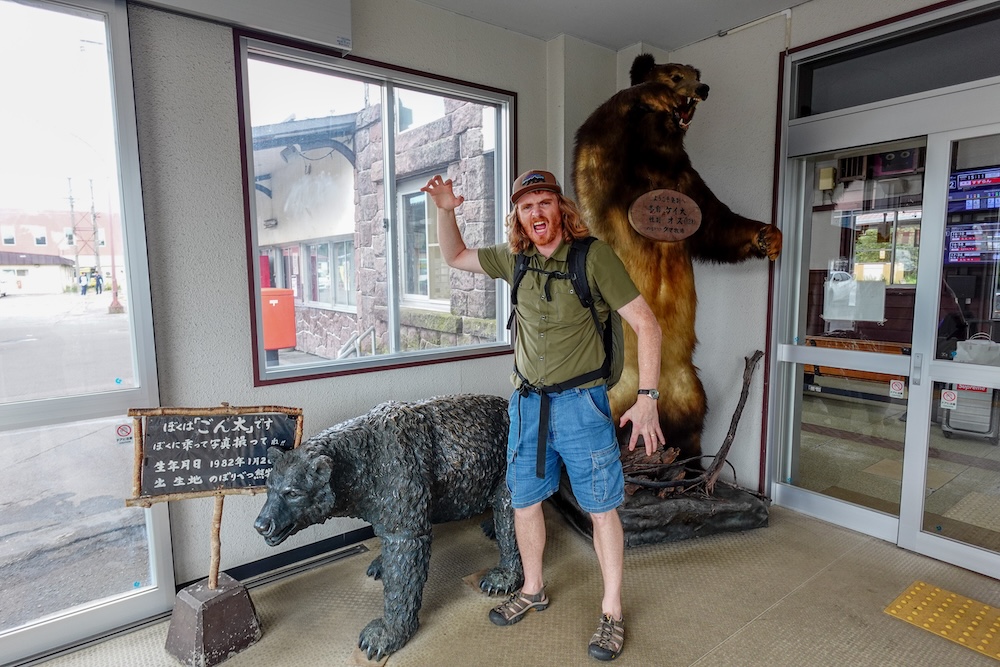
When our train from Hakodate pulled into JR Noboribetsu Station, I was pleased to have arrived. We’d completed another leg of our Hokkaido journey, and I was looking forward to settling into the hot-spring town. Except we weren’t actually in the hot-spring town yet.
JR Noboribetsu Station is approximately eight kilometres from Noboribetsu Onsen, where you’ll find the main resort hotels, Hell Valley and many of the attractions covered in this guide. There’s still a bus or taxi journey ahead of you.
That transfer was probably my biggest practical complaint about visiting Noboribetsu. It wasn’t difficult or disastrous; it simply added another small decision and expense to the day. After travelling by train, we had to figure out the bus, check the timetable, wait for the next departure and continue up to our actual destination.
We managed perfectly well on public transport, and once we reached the onsen district, our hotel, restaurants and many attractions were within walking distance. I would simply rather know about the final transfer before arriving with luggage.
The distinction matters when booking accommodation, too. Some properties and attractions are near the station, while others are in Noboribetsu Onsen or farther inland. Karurusu Onsen, for example, is a separate hot-spring area, not another name for the main resort district.
Don’t assume that every place with Noboribetsu in its address is a short walk from Hell Valley. If you’re planning to stay for the natural attractions and hotel baths, I’d start by comparing accommodation in Noboribetsu Onsen itself, rather than looking at every property scattered across the wider city.
What kind of destination is Noboribetsu?
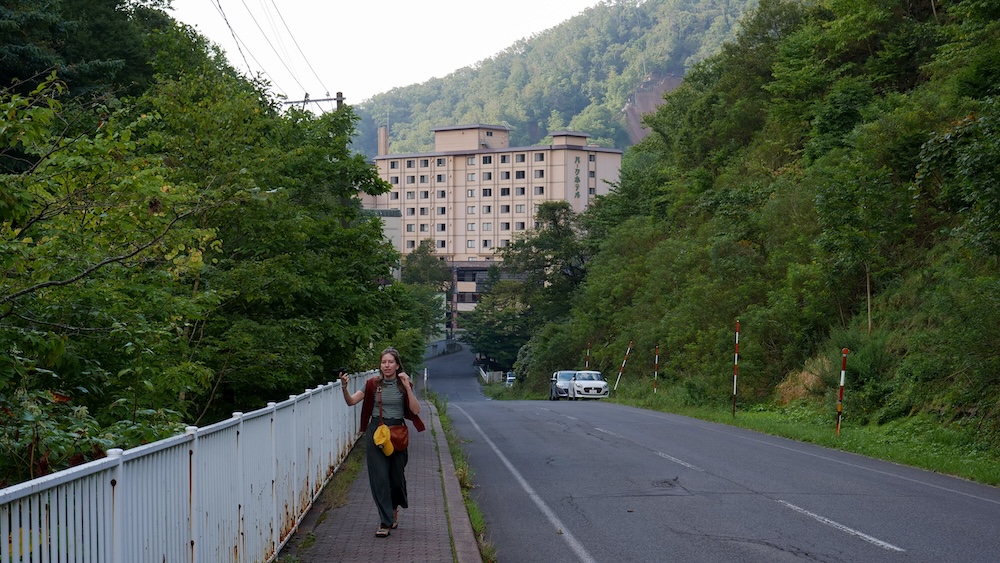
We wandered past substantial hotels and quiet streets with wooded hills rising around us, encountering very few people at that early hour. It was peaceful, although some roads lacked sidewalks and the passing traffic meant we had to pay attention.
What fascinated me was the contrast between the tranquil resort town and the volcanic activity surrounding it. You could be strolling through a forest, enjoying the greenery and fresh air, then suddenly come across steam rising from the ground and water bubbling away as though somebody had put an enormous pot on the stove.
Noboribetsu is also unabashedly touristy in places. There are souvenir shops, substantial hotels, colourful demon statues and attractions designed to entertain visitors. None of that particularly bothered me because the natural landscape was so impressive, and the town’s slightly eccentric personality made wandering around enjoyable.
Best Things to Do in Noboribetsu: Hell Valley and the Geothermal Landscape
If I had to rank our Noboribetsu experiences, the natural attractions would be at the top. Hell Valley, the surrounding geothermal forest and the Oyunuma River Natural Footbath were all outstanding, and I’d put proper onsen bathing alongside them for anyone who shares my enthusiasm for hot springs.
1. Explore Jigokudani (Hell Valley)
Jigokudani translates as Hell Valley, which is a fairly dramatic name until you actually see the place. Then it starts to feel entirely reasonable.
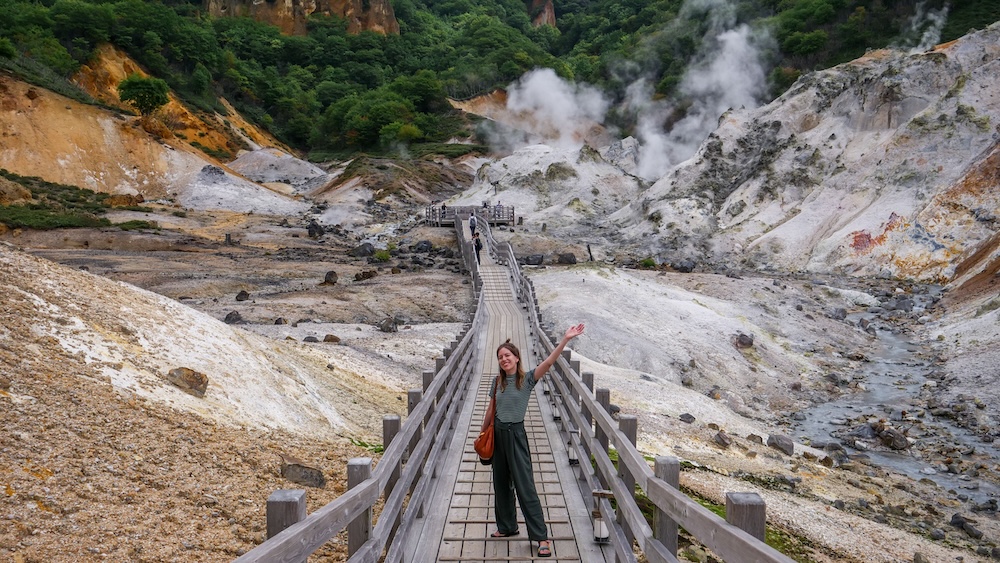
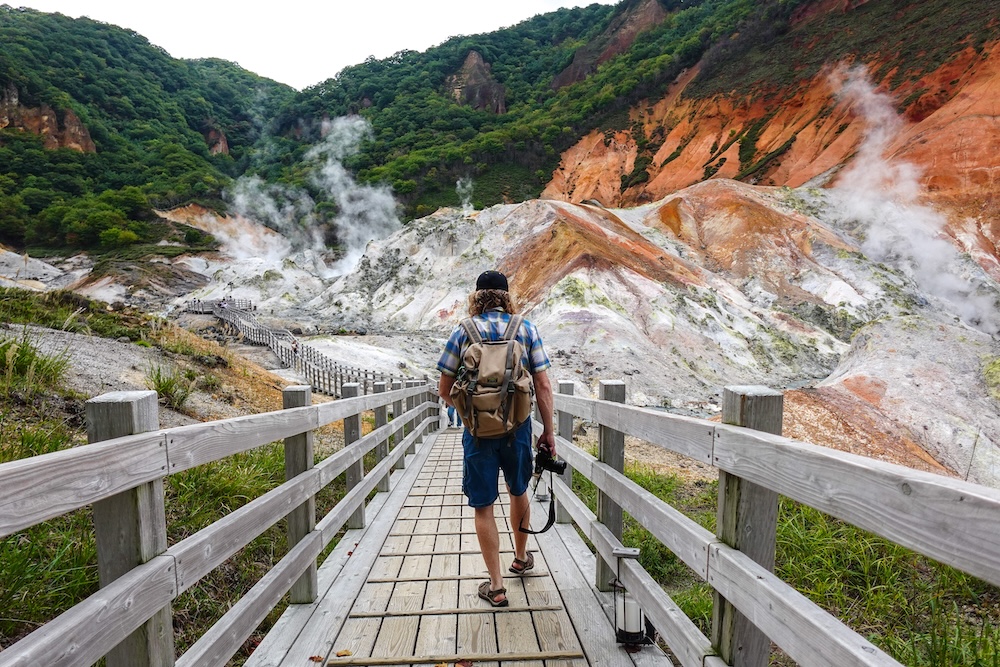
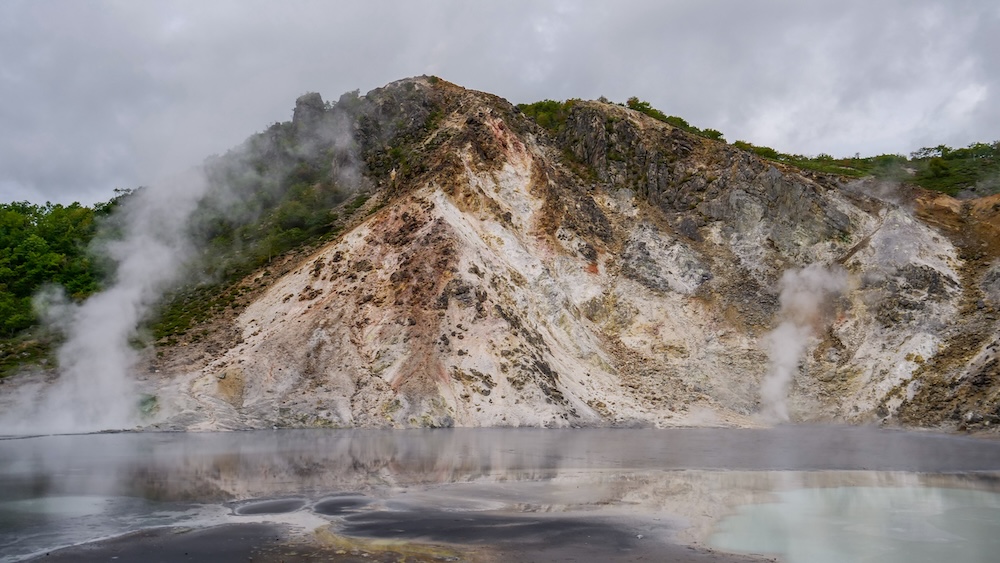
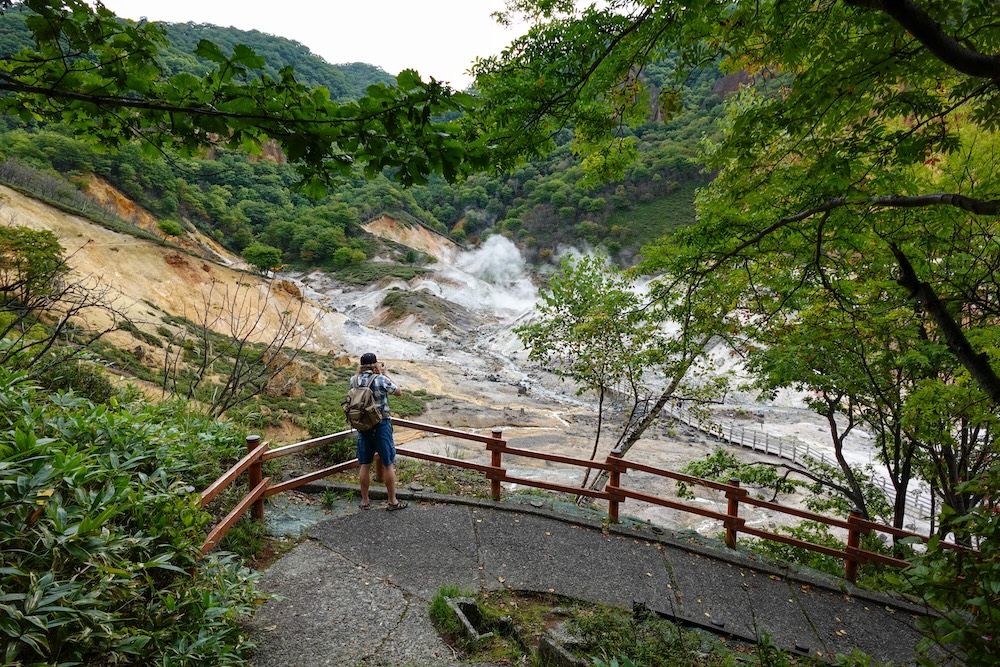
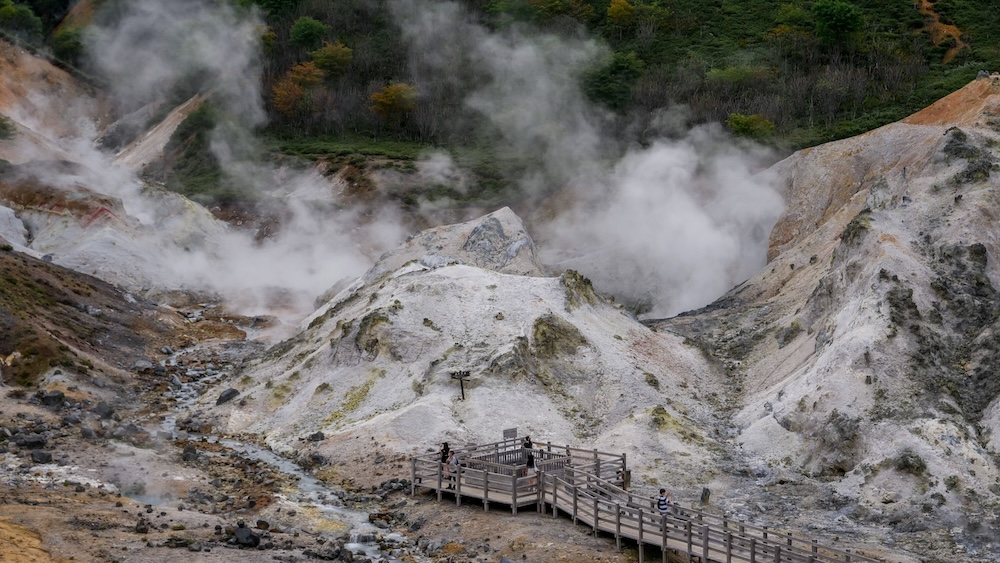
The landscape is a broad volcanic area surrounded by forest, filled with steaming vents, bubbling water, exposed rock and ground coloured in unusual shades of white, orange and grey. Some sections look bleached and barren, while others have vivid mineral staining that makes the earth appear almost as though it’s burning.
We’d seen photographs before arriving, but I wasn’t prepared for how active the place would feel in person. Steam was rising from different openings in the ground. We could hear water bubbling and gurgling. Some pools looked like enormous cauldrons, while other areas were covered in vents that seemed to be releasing heat continuously.
At one point, we stood near a particularly hot geothermal feature and I was surprised by how much heat I could feel. The ordinary air temperature was somewhere around the low to mid-twenties Celsius during our visit, yet the warmth coming from the earth and steam created an entirely different sensation. I actually began feeling a little fatigued standing nearby. This wasn’t the sort of heat you’d expect simply from walking around outdoors on a pleasant day.
And then there’s the sulphur. You’ll notice the smell of rotten eggs in parts of the geothermal area. Audrey, being the supportive wife that she is, suggested that perhaps the aroma wasn’t entirely volcanic in origin. Apparently, I was also a suspect.
Jigokudani has established viewpoints, walking paths and boardwalks, so you can enjoy some impressive scenery without committing to a lengthy forest hike. If you only have a short time in Noboribetsu, this is where I’d concentrate your sightseeing.
However, I wouldn’t stop after taking one photograph from the first viewpoint. We found that walking around revealed different colours, perspectives and geothermal features, and the landscape kept changing as we explored. Some sections gave us broad views of the valley. Elsewhere, we were much closer to steam vents and exposed earth, getting a better sense of the activity beneath the surface. The contrast between the barren geothermal ground and the surrounding forest made the scenery particularly striking.
The official visitor map identifies the Jigokudani Pathway as approximately 568 metres, with a suggested walking time of around ten minutes. That’s useful for understanding one section of the visitor network, but it shouldn’t be mistaken for the total time required to explore Hell Valley or continue toward the other geothermal attractions.
A short visit can concentrate on the principal viewpoints, but I would give the longer geothermal paths more time if walking appeals to you. The scenery was impressive enough to justify Noboribetsu even without bathing, which says something coming from an onsen enthusiast.
If your only available opportunity is a day trip from Sapporo, some organized excursions include Hell Valley alongside other regional scenery. For example, a Hokkaido day tour combining Lake Toya and Noboribetsu Hell Valley offers transport between multiple sights. I’d choose that kind of trip for a regional overview, though, not as a replacement for several hours exploring the geothermal paths independently.
2. Walk through the geothermal forest toward Oyunuma
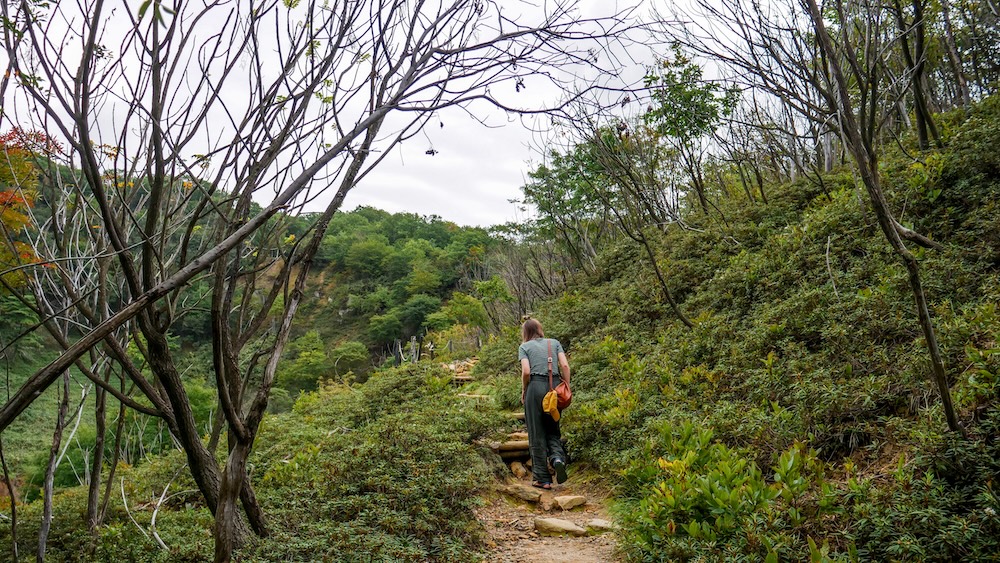
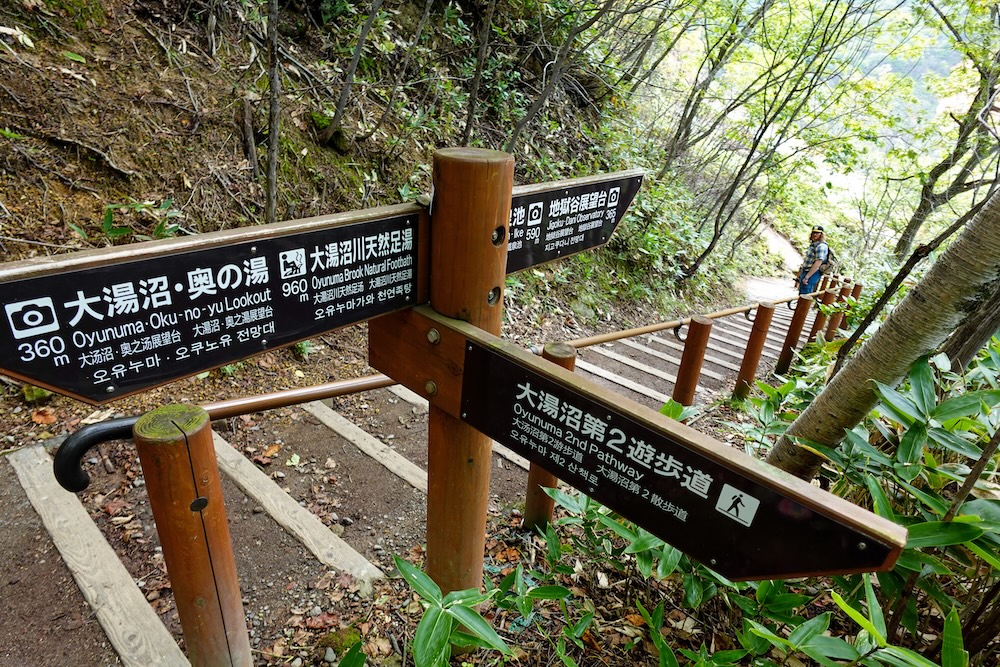
What I loved was how the scenery changed as we moved through the forest. One moment we were surrounded by greenery and trees; the next we’d encounter a pool of bubbling water or steam rising through the landscape. It felt as though the volcanic activity was woven into the forest rather than confined to a single sightseeing viewpoint.
We stopped beside a geothermal pond where the water had an unusual colour and was visibly bubbling. The scene was fascinating on its own, but then we spotted three deer nearby, including one that appeared perfectly content to rest while all this activity continued around it.
Coming from Alberta, I’m no stranger to deer. You can encounter them regularly back home, sometimes in places where you’d rather they weren’t standing. But seeing them around geothermal pools in Japan was something quite different. Audrey and I also remembered an earlier encounter with deer in Nara. This time, what impressed us was seeing the animals in a quieter woodland setting, surrounded by the volcanic environment.
The Oyunuma area and its surrounding paths give you a much better appreciation of Noboribetsu’s landscape than simply treating Hell Valley as a quick attraction before lunch.
The official map divides the area into individual paths, including Oyunuma segments of approximately 298 and 444 metres and an Oyunuma River scenic path of roughly 388 metres. Their suggested walking times do not include all connections, viewpoints, returns or stops, so plan the whole outing rather than adding up a few short trail figures.
We would walk through the woods, encounter another unexpected geothermal feature, stop to enjoy it and keep going. That was the pleasure of the excursion: not ticking off viewpoints but discovering how varied the landscape could be.
For us, the trails were generally manageable, although they involved different surfaces, steps and changes in elevation. I wouldn’t describe every route as universally easy, particularly for someone with mobility limitations or in poor conditions. The boardwalk sections around Hell Valley are not equivalent to every forest path farther away.
Trail access also changes with weather, maintenance and season. If you’re visiting in winter or after adverse conditions, check the official Noboribetsu visitor map and current access notices rather than assuming every connection is open.
3. Soak your feet at the Oyunuma River Natural Footbath
There are attractions you visit, admire and photograph, and then there are places where you genuinely don’t want to leave. The Oyunuma River Natural Footbath falls into the second category for me.
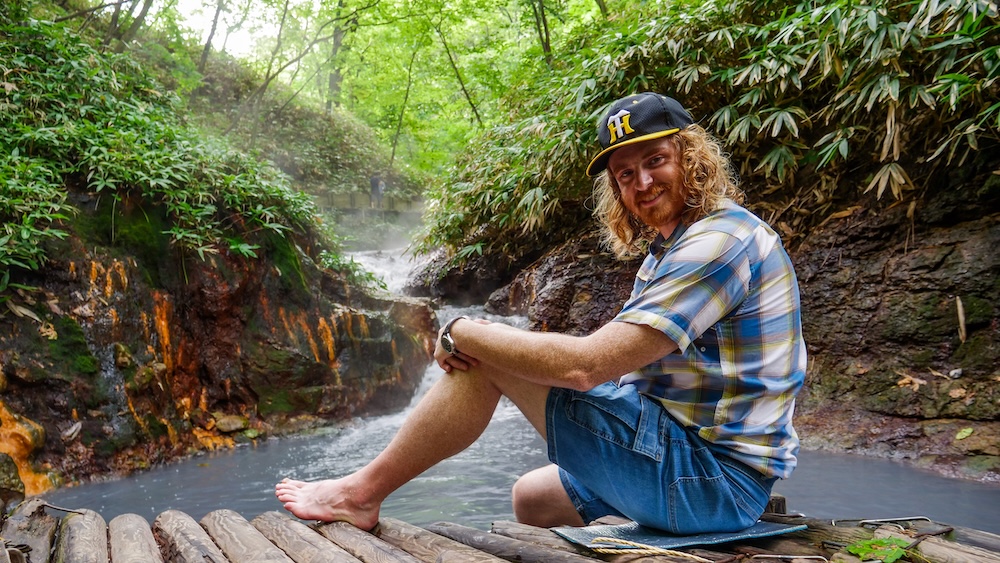
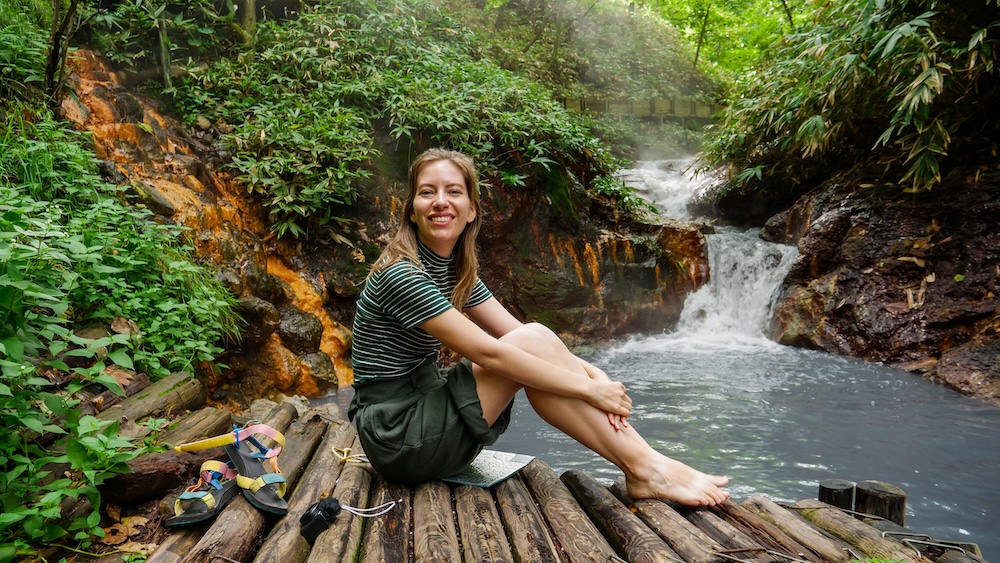
It’s a naturally heated river running through a forested setting, with places where visitors can sit beside the water and soak their feet. The experience sounds simple, and technically it is, but the surroundings make it extraordinary.
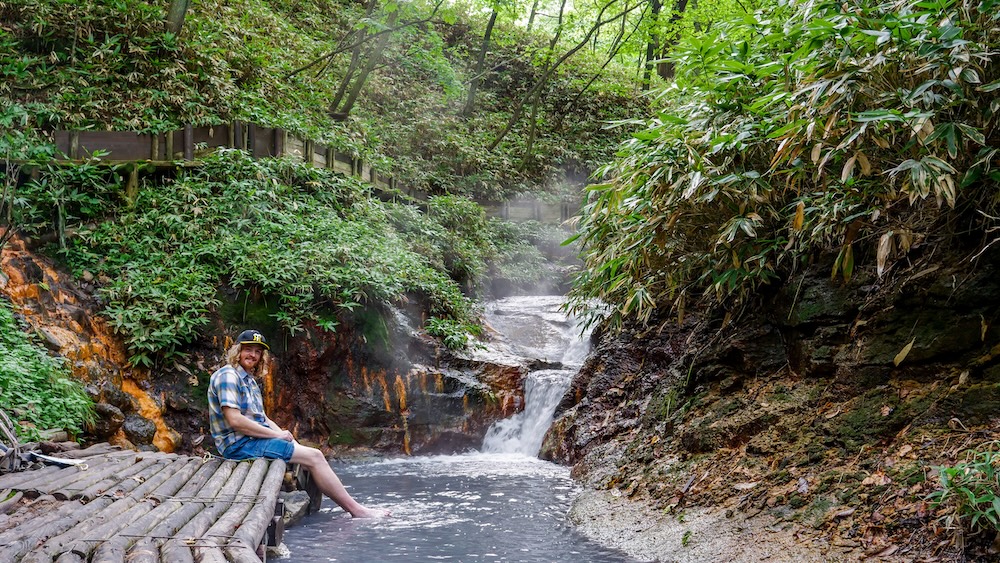
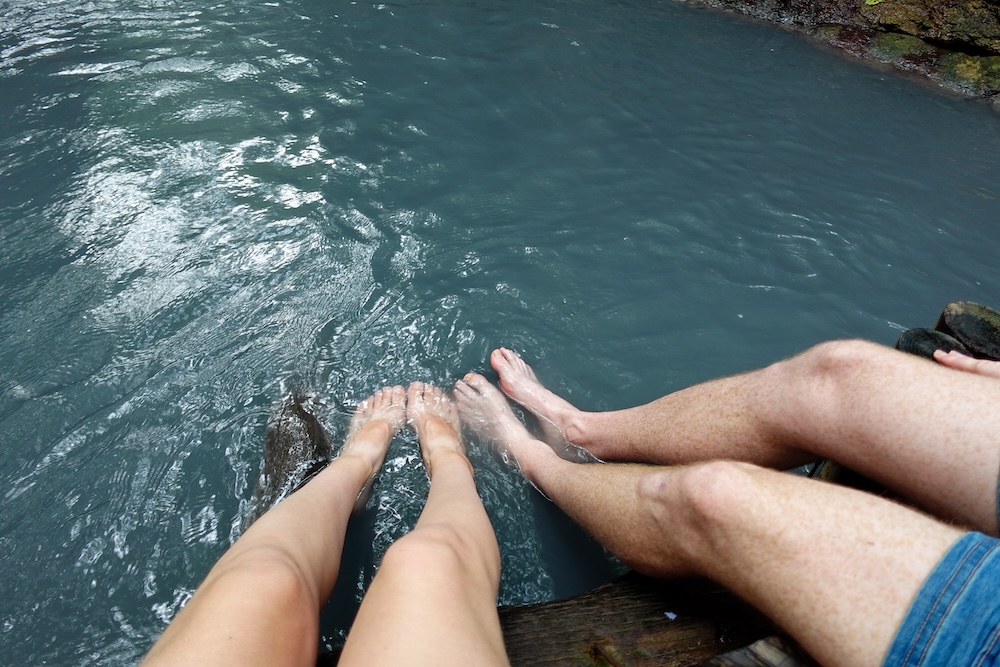
As we approached, steam was rising from the river and drifting into the air. The water had a milky, blue-grey appearance, and when we looked down, we could see dark volcanic sand beneath the surface.
There was seating along the river during our visit, including bamboo seating and padded mats, so we found a place to sit and removed our shoes. The water was hotter than I expected at first. I lowered my feet in, felt that initial shock of heat and needed a moment to adjust. Once I got accustomed to it, though, the temperature felt wonderful. I started pushing my toes into the black volcanic sand, which added another unexpectedly pleasant sensation.
Audrey was enjoying herself, too, and we soon settled into a very comfortable routine of sitting there with our feet in the water.
What made it special was everything happening around us. We had trees overhead, flowing water, natural steam, colourful rocks and the sounds of the forest. Rather than looking at geothermal activity from a designated viewpoint, we were sitting right in the middle of the landscape, enjoying the heat.
I loved sitting outdoors with steam drifting through the trees. Having spent so much time in Korean bathing facilities over the years, I was delighted by this completely different kind of hot-water experience. I remember saying I could literally do it all day, and I meant it.
We arrived early in the morning and found very few other people there. A couple were finishing up when we arrived, and only a handful of visitors appeared while we were soaking. That made the experience especially peaceful, although I wouldn’t assume the same conditions at busier times.
We stayed for approximately half an hour. On a rushed day trip I might have allowed myself only a few minutes, but we had time to settle in, feel the warmth and enjoy the forest without watching the clock.
The footbath is free to visit, although access depends on current trail conditions. Published visitor information generally gives an 8:00 a.m. to 5:00 p.m. window, and winter or temporary trail closures can affect access.
The approach from Oyunuma is roughly fifteen minutes on foot, and there is no parking directly beside the river seating. Bring a small towel and shoes that are easy to remove; they make continuing along the trails much easier.
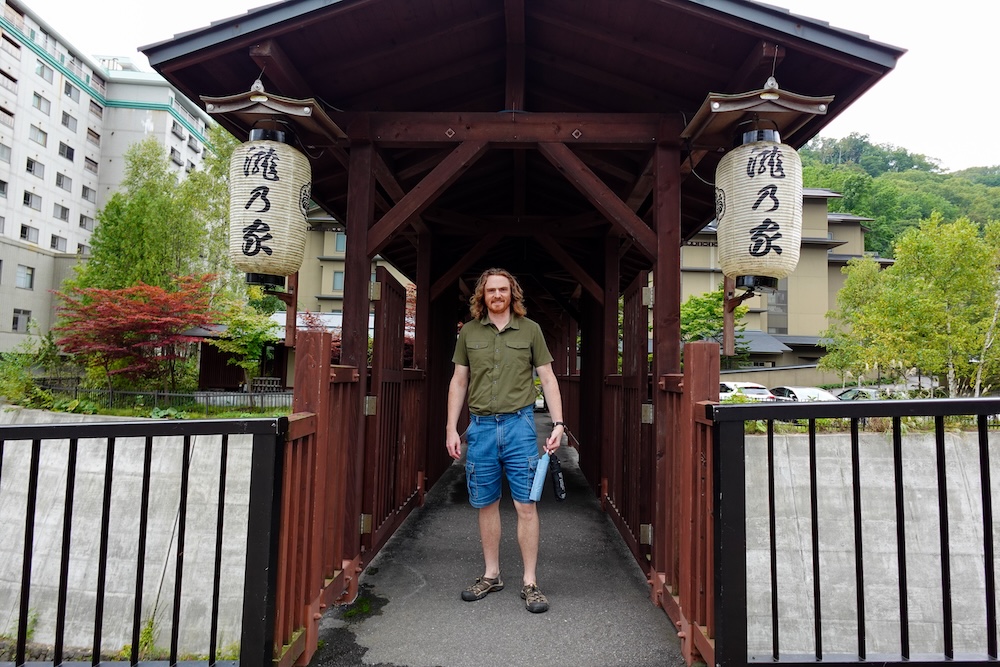
More Things to Do Around Noboribetsu Onsen
Noboribetsu has embraced its volcanic identity with giant demon statues, folklore attractions, shrines and geothermal oddities. These were fun additions rather than the main reason we came, and they gave the resort town more personality between our walks and hotel baths.
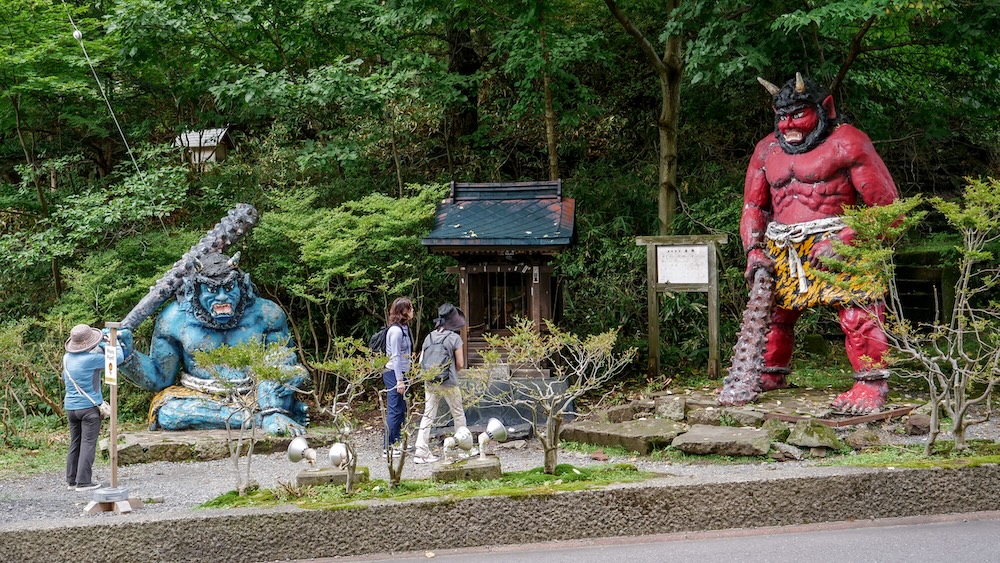
4. Find the oni statues along Gokuraku Street
It doesn’t take long to realize that Noboribetsu has a thing for demons.
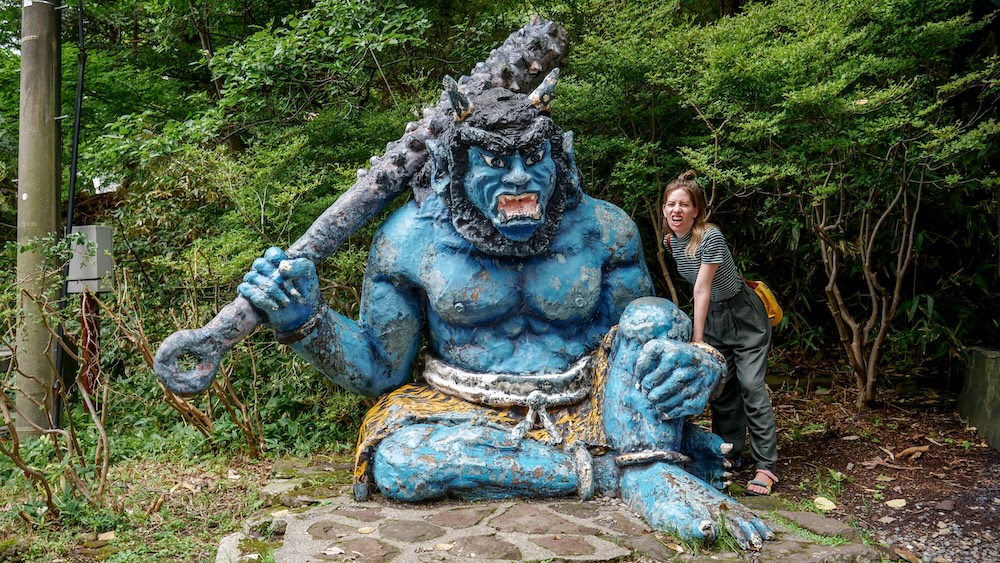
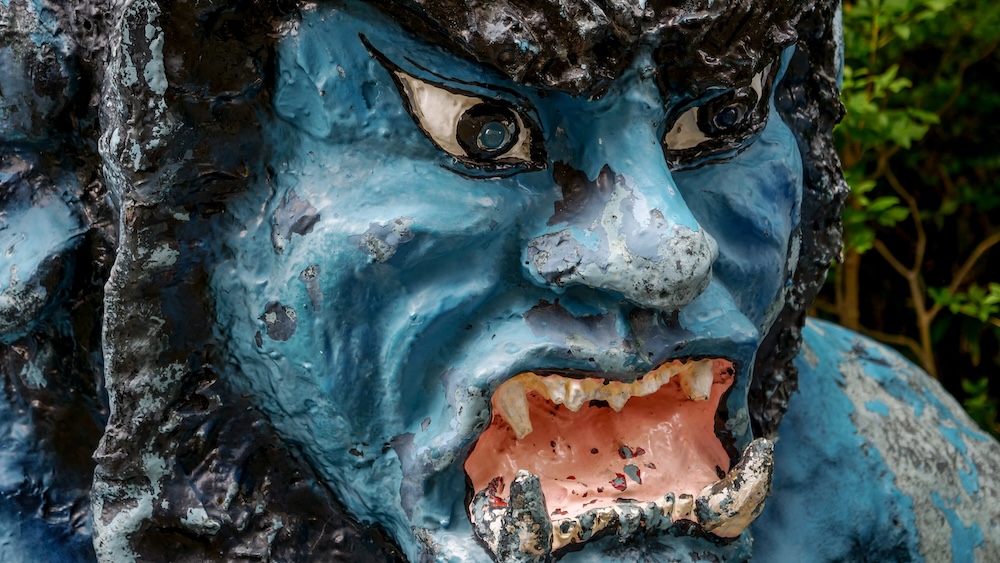
We encountered enormous blue figures carrying spiked clubs, red demons guarding different areas and smaller statues associated with particular wishes or forms of good fortune. Some of them had enormous teeth, horns and expressions that didn’t exactly suggest they’d be offering complimentary tea.
These creatures are known as oni, and their presence is connected with the local folklore surrounding Hell Valley and the hot springs. The town’s demon traditions include guardian figures known as Yukijin, which are associated with protecting the hot-spring area.
Gokuraku Street is the main commercial stretch through the onsen district, with restaurants, shops and various themed attractions. It’s an easy place to wander while you’re looking for lunch or exploring between other stops.
The enormous welcome demons looked considerably less welcoming than the name suggested, particularly with their spiked clubs. I thought of Bam Bam from The Flintstones, although the Noboribetsu version of the equipment was rather more intimidating.
Other figures are associated with wishes for studies, love or business. I gravitated toward business success; we were already married, and I had no interest in returning to school for another round of exams.
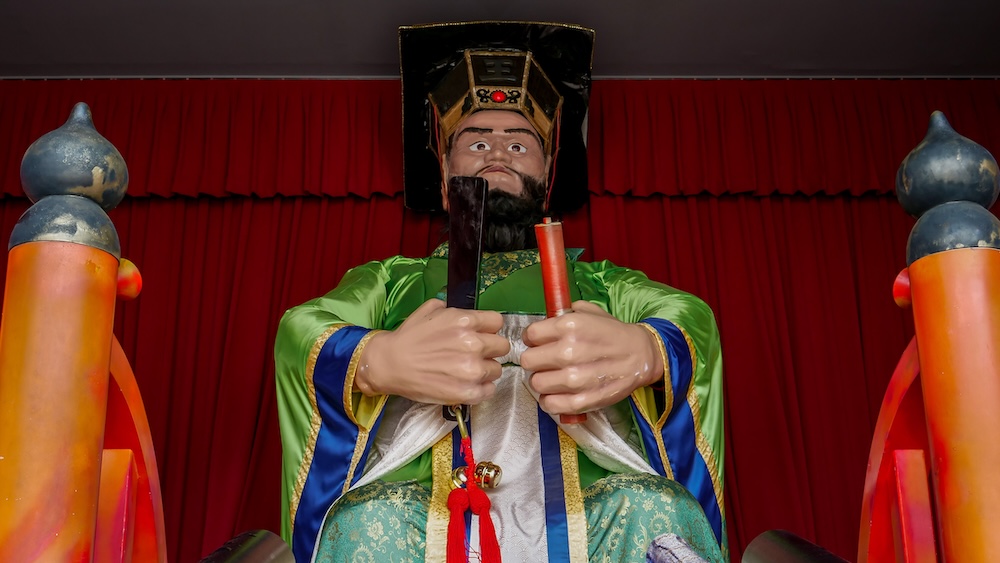
5. Visit Enmado and King Enma
Enmado is one of the stranger attractions in Noboribetsu, which is quite an achievement for a town where the ground bubbles and giant demons stand beside the road.
The attraction features King Enma, associated in Japanese Buddhist tradition with judgment in the afterlife. In Noboribetsu, the figure is represented by an animatronic display that can transform into a much more frightening expression during scheduled performances.
We visited Enmado while exploring Gokuraku Street. It is an amusing curiosity that fits the town’s underworld theme, particularly if the scheduled animatronic performance coincides with your visit.
The attraction is free, but the changing-face performance isn’t continuous. The current advertised times are 10:00 a.m., 11:00 a.m., 1:00 p.m., 3:00 p.m., 5:00 p.m., 8:00 p.m. and 9:00 p.m., with closures or changes possible, including during unsuitable weather. Check the current Enmado schedule if seeing the performance is particularly important to you.
Personally, I wouldn’t sacrifice a substantial part of the geothermal walking experience just to wait for a show. But if the timing works while you’re exploring town, King Enma is a very Noboribetsu attraction and a fun addition to the day.
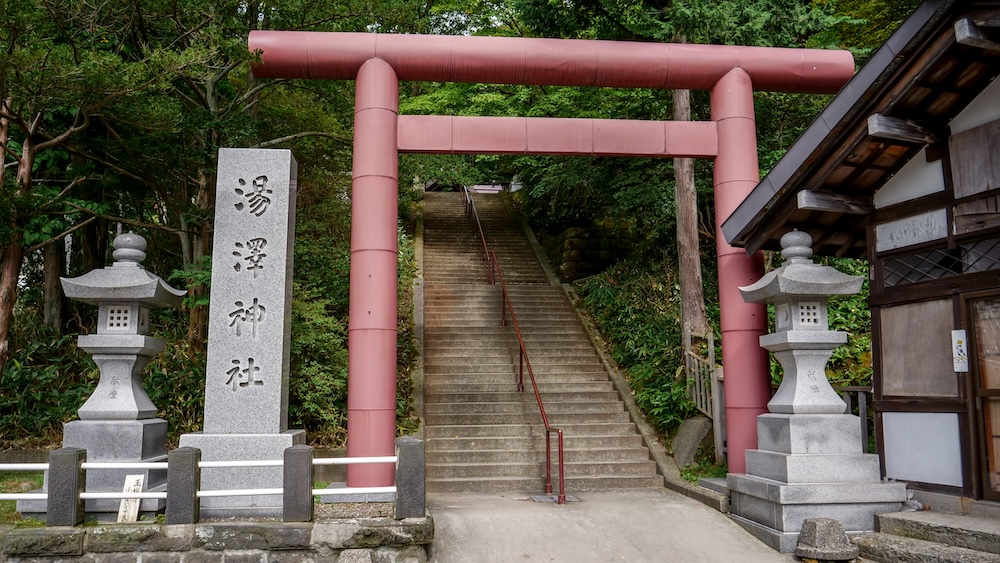
6. Climb to Yuzawa Shrine
We reached it by climbing a steep stone staircase, passing another pair of colourful demon guardians on the way. I remember being amused by their enormous clubs, but once we reached the shrine, the atmosphere was much more peaceful.
We had the shrine to ourselves during our visit. It is modest compared with Japan’s most famous shrines, but I enjoyed the quieter atmosphere above the resort district after the climb.
The steep staircase is worth considering if you have mobility difficulties or are already tired from the geothermal trails. There is no need to force the climb just to complete a list of attractions.
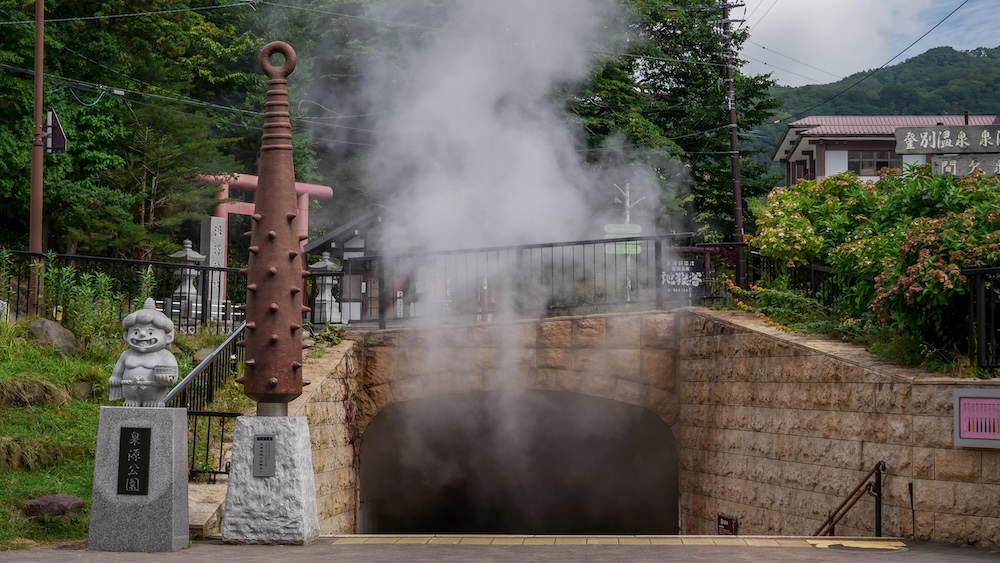
7. See the geothermal activity at Sengen Park
The park surrounds a geyser that can produce bubbling water and clouds of steam, with more of Noboribetsu’s demon imagery incorporated into the setting.
We passed by on more than one occasion and noticed that the activity looked different each time. On one visit, the water was visibly bubbling; on another, steam was much more prominent.
You’ll encounter descriptions giving precise eruption intervals, but I wouldn’t organize your day around a guaranteed performance. Natural geothermal activity varies, and the geyser doesn’t operate according to a schedule designed for tourists.
Because Sengen Park is in the resort district, it’s easy to treat as an additional stop while exploring town. If it’s especially active when you arrive, enjoy it. If the geyser is relatively quiet, you can appreciate the unusual setting and continue walking rather than waiting indefinitely for something dramatic to happen.
Other Attractions in the Wider Noboribetsu Area
The next three attractions are established options in the wider Noboribetsu area, but we did not visit them. I would choose among them according to your interests, available time and transport, rather than treating them as essential additions to Hell Valley.
8. Noboribetsu Bear Park
Noboribetsu Bear Park is reached by ropeway from the onsen district, making it more accessible from the resort town than some of the other paid attractions.
The park features brown bears, exhibits and elevated views of the surrounding area, including the landscape toward Lake Kuttara. The ropeway ride itself is part of the attraction, although weather and maintenance can affect operations.
Adult admission is currently approximately ¥3,200, including the ropeway. The operator suggests roughly an hour for a quicker visit or around ninety minutes for a more leisurely one, but you’ll also need to allow for getting to the ropeway, queues and the ride in each direction.
It’s worth approaching an animal attraction like this thoughtfully. Some travellers are comfortable visiting captive-animal facilities, while others have strong concerns about welfare. I’d encourage anyone interested to look into the park’s practices and decide whether the experience aligns with their own standards.
We chose to focus our time on the geothermal scenery and bathing instead, so I can’t say whether the park would have become a personal highlight.
For visitors interested in the bears, exhibits or elevated views, it may deserve consideration. For someone with limited time who mainly wants Hell Valley and the footbath, I wouldn’t automatically include it simply because it’s a major tourist attraction.
If the park interests you and you are comfortable with the captive-animal experience, compare the Bear Park admission-and-ropeway ticket with the operator’s own arrangements. The Booking.com listing is for admission and the ropeway, but it has booking restrictions and does not include priority entry. Check the official park information for maintenance closures before purchasing.
9. Noboribetsu Date Jidaimura
Noboribetsu Date Jidaimura offers a different experience altogether: an Edo-period theme park with recreated streets, historical-style buildings, performances and themed activities.
Adult admission is currently around ¥3,300. The published operating schedule generally runs from 9:00 a.m. to 5:00 p.m. between March 20 and October 31, with a 4:00 p.m. closing time during the colder months. Admission ends before closing, and individual performances have their own schedules.
Given the price and the activities involved, I’d treat Date Jidaimura as a substantial outing rather than something to squeeze into the last twenty minutes of a sightseeing day.
Check the official Date Jidaimura timetable for current performances and operating dates.
10. Noboribetsu Marine Park Nixe
Marine Park Nixe is an aquarium and themed visitor complex with marine exhibits and scheduled attractions.
Its location is probably the most useful thing to understand when planning your trip: Nixe is approximately five minutes on foot from JR Noboribetsu Station, not up in the main onsen resort district.
If you have time before heading up to Noboribetsu Onsen, or several hours before catching an onward train, the aquarium could fit geographically without requiring a separate journey back from the mountains.
Of course, you still have to account for luggage, admission, the time needed to visit and your train or bus schedule. Being beside the station doesn’t make the attraction something you can properly enjoy during a fifteen-minute connection.
Adult admission is currently approximately ¥3,200. The usual advertised hours are 9:00 a.m. to 5:00 p.m., with the final admission at 4:30 p.m., subject to maintenance and operational changes.
We didn’t visit Nixe, so I wouldn’t put it ahead of personally experienced attractions based on reputation alone. But its station-area location gives it a very different planning role from Bear Park or Date Jidaimura.
Which additional attractions would I prioritize?
I would not try to include every paid attraction simply to complete the destination. Bear Park is an onsen-area ropeway outing, Date Jidaimura is a separate theme park, and Nixe sits beside the railway station. Their different locations and admission costs matter more than their shared Noboribetsu label.
If you love geothermal scenery and hot springs as much as I do, the principal natural attractions already provide plenty of reason to visit. If your travelling companions prefer aquariums, themed performances or other structured activities, these alternatives become more useful.
What to Eat in Noboribetsu Onsen
Noboribetsu isn’t a destination I’d visit expecting the restaurant variety of Sapporo or Tokyo. It’s a compact resort town, and a substantial portion of the dining experience can take place inside the hotels, especially when guests book dinner-inclusive accommodation.
Enma ramen: the bowl I should have ordered
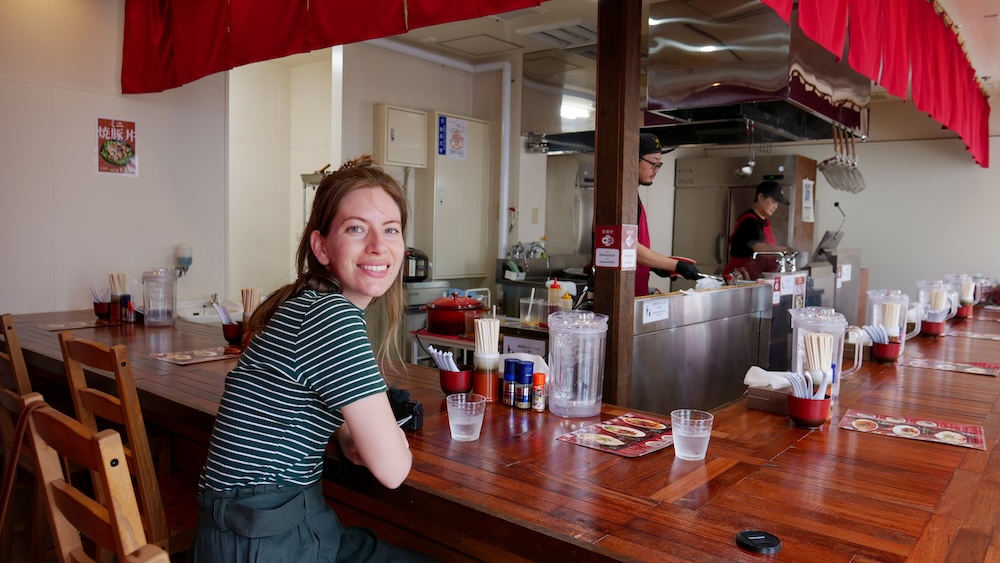
After exploring some of the attractions around town, we stopped for lunch at a small ramen counter near Enmado.
It was the kind of establishment I enjoy: a compact menu, seating around the cooking area and the opportunity to watch the food being prepared. We were hungry, the dishes sounded promising and neither of us required much convincing.
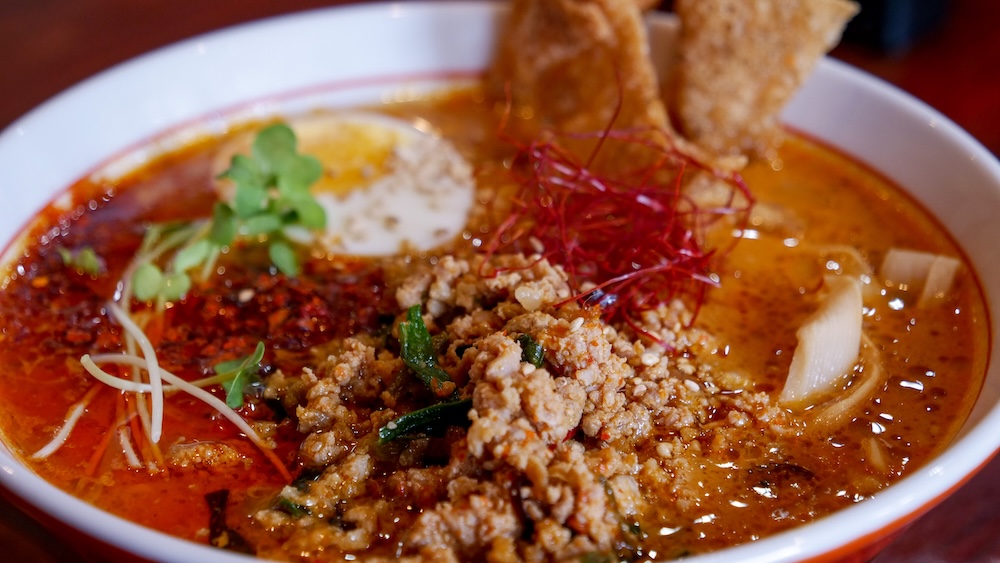
Audrey ordered Enma ramen, a spicy noodle dish named after the ruler of the underworld. The bowl was colourful, with a rich-looking broth and a combination of nutty and spicy flavours. She immediately started raving about it, commenting on both the heat and the flavour.
I chose a different ramen with generous pieces of pork and a rich miso broth.
And I was very happy with my decision. The meat was tender, the noodles were excellent and the broth had plenty of flavour. I remember thinking we’d discovered a particularly good ramen place.
Then I tasted Audrey’s bowl.
Well, that ruined my brief moment of ordering satisfaction.
Her Enma ramen was extraordinary. I loved the combination of spice, richness and nuttiness, and I ended up declaring it the best ramen I’d ever eaten.
I’ve eaten a fair bit of ramen in Japan and elsewhere, so that was quite a statement. The unfortunate part was that the best bowl was sitting in front of Audrey while I had an entirely different meal. She had out-ordered me, and there was no getting around it.
We also shared dumplings, which were excellent, but most of the conversation afterward revolved around the spicy ramen. We even discussed coming back for another bowl before leaving Noboribetsu.
If you enjoy ramen and don’t mind some heat, I’d recommend looking for Enma ramen while you’re in the onsen district. Enmaken, on Gokuraku Street, is associated with the dish, although it’s worth checking current opening hours and availability before making a special trip.
One distinction worth remembering is that Enma ramen and Enma yakisoba are not the same thing. Both fit the town’s demon-themed food culture, but the spicy ramen is the dish I personally tasted and loved.
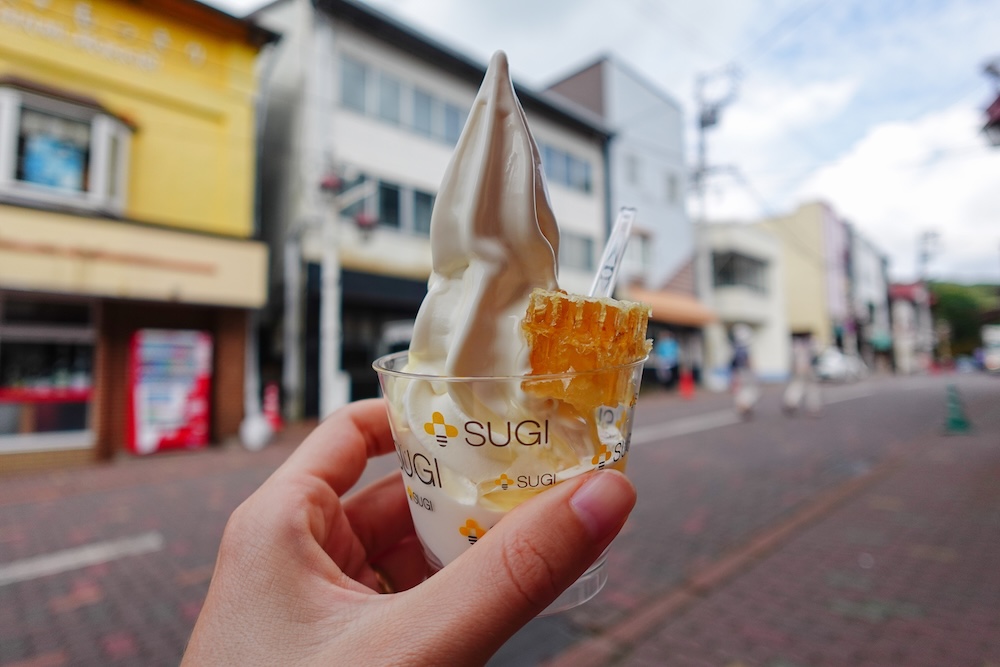
Honeycomb ice cream and other sweet treats
We also stopped for honeycomb ice cream, which was a wonderful choice after all the volcanic walking and spicy food.
The ice cream was especially creamy, with honeycomb, honey and a little wafer adding texture. It was my first time trying honeycomb ice cream, and I loved how the honey worked its way through the dessert.
Hokkaido has a strong dairy-food identity, so encountering good ice cream on the island wasn’t especially surprising. But the honeycomb made this particular dessert memorable, and it was an enjoyable little break while exploring the town.
I wouldn’t build an entire itinerary around one vendor or assume the exact same product will always be available. Menus and businesses change, particularly in resort areas.
But if you’re wandering along Gokuraku Street and see a dessert that catches your attention, it’s worth leaving a little room after lunch. We certainly weren’t approaching our Noboribetsu visit as an exercise in dietary discipline.
Hotel dining versus eating around town
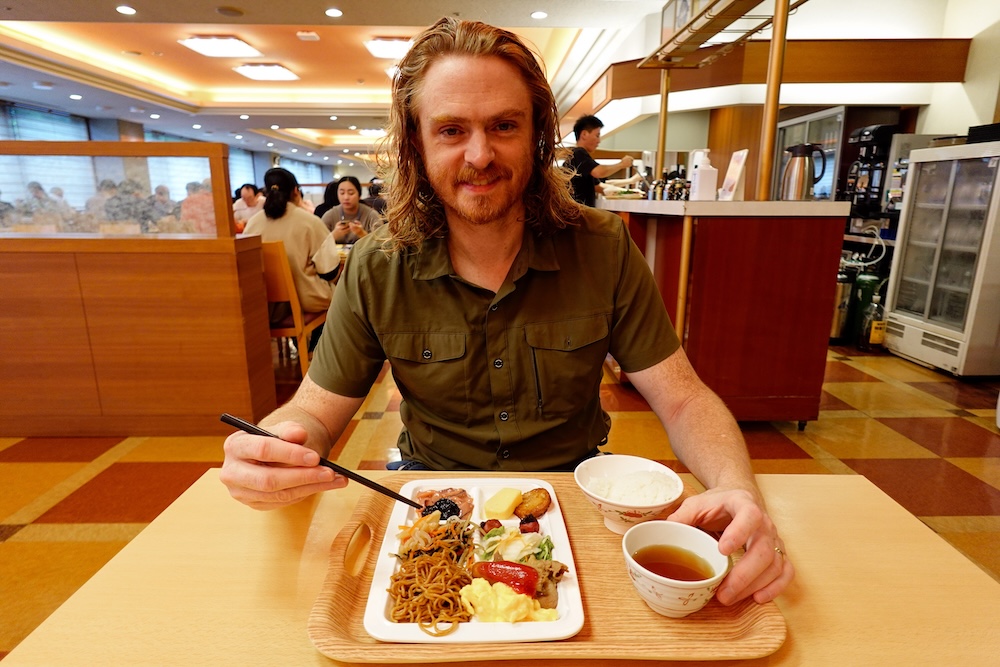
At Park Hotel Miyabitei, dinner and breakfast were buffet meals served in a large dining hall. There was an extensive selection of food, including sashimi, crab, shrimp, meat dishes, vegetables, soups, prepared sides and desserts.
I thoroughly enjoyed the variety, especially the seafood. It was the sort of setup where I could make several trips to the buffet and still find something different worth trying.
Miyabitei’s atmosphere was a world away from the more personal dining experience we had at a smaller ryokan in Takayama. Large groups arrived for the buffet, and some of the busiest queues formed right when it opened—exactly when we had initially hoped to avoid crowds.
Initially, we’d assumed that getting there early would help us avoid crowds. Instead, we encountered plenty of other people with precisely the same idea.
We started at less crowded counters and found that arriving around half an hour after opening sometimes made things more comfortable. That was our experience, not a guarantee of how busy future meals will be.
The menu also repeated over the two nights we were there. Fortunately, the range of dishes was broad enough that it didn’t feel like a major problem, although it was something we noticed.
For anyone choosing accommodation, I’d pay attention to the actual meal arrangement. A hotel with an included buffet provides a very different experience from a property offering a more intimate multi-course dinner, and neither should be assumed simply because a place calls itself a ryokan.
Room-only accommodation gives you more flexibility to eat in town, while dinner-and-breakfast packages make the hotel a larger part of the visit. Both can work, but the onsen district does not offer limitless restaurant choice.
For example, checking Miyabitei’s current room and meal packages helps you compare what is actually included. At a smaller ryokan, the dining format may be different; do not assume a traditional multi-course dinner comes with every booking.
We enjoyed having substantial meals waiting for us after our sightseeing, and it contributed to the relaxed character of the visit. I’d happily repeat that experience, but it’s worth deciding in advance whether you want your evenings centred on hotel dining or exploring the town independently.
Experiencing a Noboribetsu Onsen: Why the Baths Matter
You can enjoy Noboribetsu’s volcanic landscapes without stepping into a communal bath, and I would not call that a wasted trip. But Japanese onsen bathing was a major part of why the destination appealed to me.
Japan has its own distinct bathing traditions, and Noboribetsu offered us an opportunity to enjoy them in a destination where geothermal activity defines the landscape.
What makes bathing in Noboribetsu special?
The town’s hot-spring water comes from its geothermal environment, and different bathing facilities offer water with varying mineral characteristics.
Different springs have different mineral characteristics, and you may see conflicting totals for Noboribetsu’s types of hot-spring water. I would pay more attention to the actual facilities and bathing arrangements at a particular hotel than to one disputed classification.
At Miyabitei, we had access to a large communal bathing complex with different pools, including outdoor bathing. Audrey described roughly seven or eight pools on the women’s side during our stay, although that was her approximate count of the facilities she used rather than an official total for the entire hotel.
I also loved the routine of returning from a walk, changing into more comfortable clothing and going down for a soak. We didn’t have to arrange a special outing or buy an additional ticket every time we wanted to bathe.
Audrey sometimes visited very early or around dinner, and on one occasion had the women’s baths entirely to herself. We cannot promise the same quiet sessions to future guests, but it was an enjoyable contrast with the busy hotel dining hall.
The freedom to soak more than once—without buying a separate ticket or rushing between attractions—was one of my favourite reasons to stay overnight.
Can you enjoy Noboribetsu’s hot springs without staying overnight?
Yes, and this is particularly useful for travellers who want to see the geothermal scenery without paying for accommodation in the resort district.
The Oyunuma River Natural Footbath is the obvious free option, although it provides a very different experience from full-body bathing. You’re soaking your feet in an outdoor river setting rather than using a traditional communal bathhouse.
Yumoto Sagiriyu is a relatively inexpensive public bathing option in the onsen district. Adult admission is currently listed at approximately ¥550, with advertised hours of 9:00 a.m. to 9:00 p.m. and final reception at 8:30 p.m.
Dai-ichi Takimotokan offers access to a larger hotel bathing complex for day visitors. Adult admission is currently approximately ¥2,500, with advertised bathing access until 9:00 p.m. but reception closing at 6:00 p.m.
That distinction between last reception and closing time is important. Showing up at 7:30 p.m. doesn’t help if the facility stopped admitting new day visitors ninety minutes earlier.
We did not try either day-use option ourselves, as Miyabitei provided our bathing facilities. They illustrate the difference between an inexpensive public bath and a larger hotel complex.
A day-use bath makes sense if you mainly want Hell Valley and a single soak. An overnight hotel booking buys a different experience: the room, potentially meals, and more time to enjoy the baths without building your day around admission hours.
If the larger complex appeals to you, compare overnight rooms at Dai-ichi Takimotokan with the separate day-bath admission. Their prices and inclusions serve different purposes.
Check the current day-use bathing information before visiting, as prices, reception hours and access conditions can change.
First-time onsen etiquette and practical considerations
If you’ve never used a Japanese onsen, communal bathing can feel a little intimidating at first.
Most traditional communal bathing areas are separated by gender, and guests bathe without swimsuits. You wash thoroughly at the designated washing stations before entering the pools, and towels and hair should be kept out of the bathwater.
Once you understand the routine, the experience is generally straightforward. It’s intended for soaking and relaxation rather than swimming or treating the bath like a conventional hotel pool.
Tattoo policies vary by property, so don’t assume a hotel accepts or refuses tattoos based solely on general advice about Japanese bathing culture. If this is relevant to you, ask the accommodation directly.
Likewise, a standard communal bath may not allow couples to bathe together. Some properties offer private bathing facilities or rooms with their own baths, but those features may be available only with particular room categories or separate bookings.
Access also deserves attention. A hotel may have accessible entrances and other facilities while still requiring steps to reach the bathing pools.
If communal bathing isn’t something you’re comfortable doing, that’s perfectly reasonable. Noboribetsu’s natural attractions can still make the visit worthwhile, and a private-bathing arrangement may suit some travellers better.
If bathing privacy is important, one accommodation worth investigating is Ryotei Hanayura and its available room categories. Selected accommodations offer private open-air baths, but you’ll need to confirm the exact room rather than assuming every booking includes one.
And if you already enjoy onsen culture—or are curious enough to give it a try—I would make room for the experience rather than treating it as something to squeeze in after all the sightseeing.
Where to Stay in Noboribetsu Onsen: Ryokan or Resort Hotel?
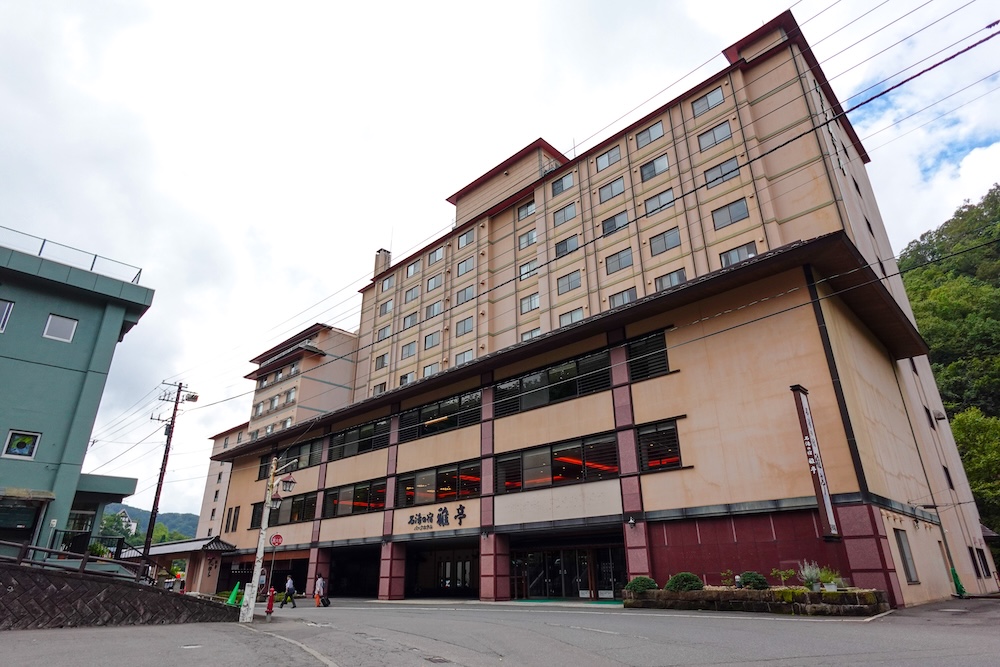
A Noboribetsu hotel can be a major part of the trip rather than somewhere to sleep between excursions. Its baths, meals, room style and location matter, as our two nights at Park Hotel Miyabitei demonstrated.
Our two-night stay at Park Hotel Miyabitei
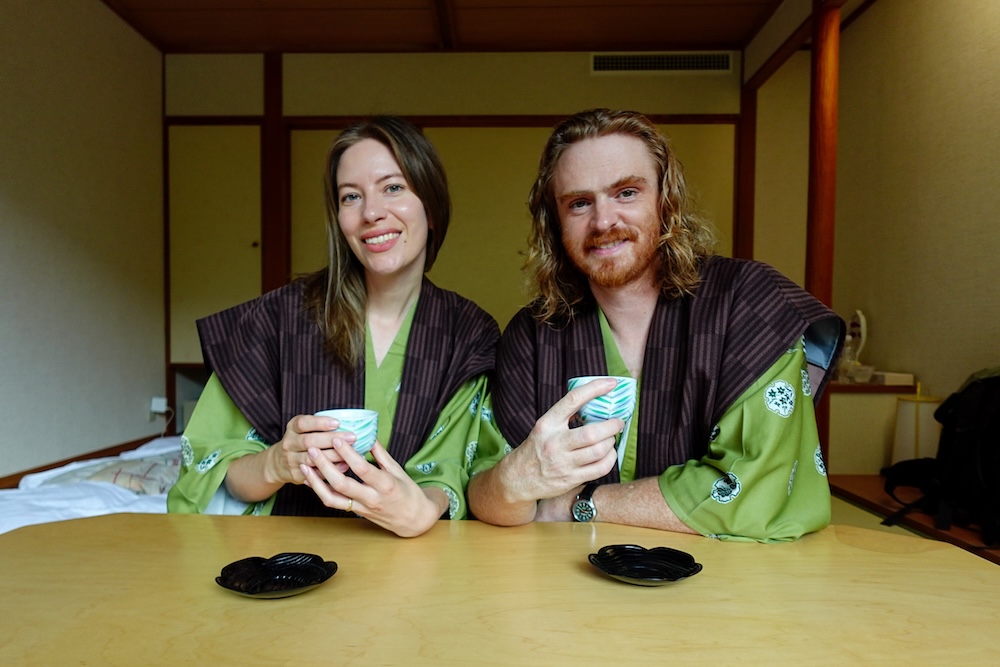
Audrey and I stayed at Meito no Yado Park Hotel Miyabitei, a substantial onsen hotel in the resort district. It had a very different atmosphere from the smaller traditional ryokan we’d experienced in Takayama on an earlier Japan trip, but I thoroughly enjoyed the change.
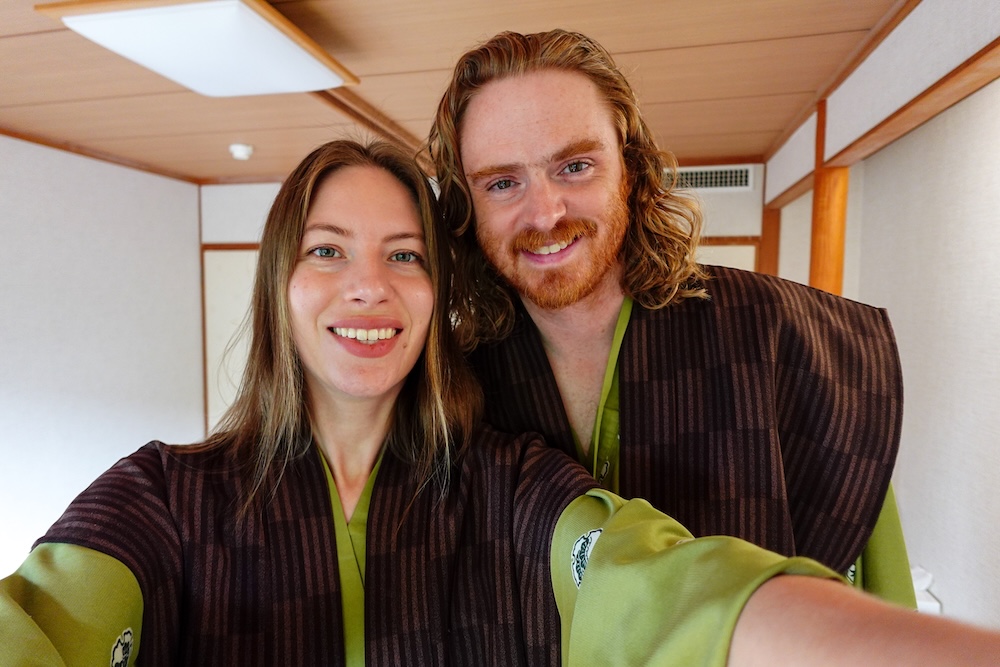
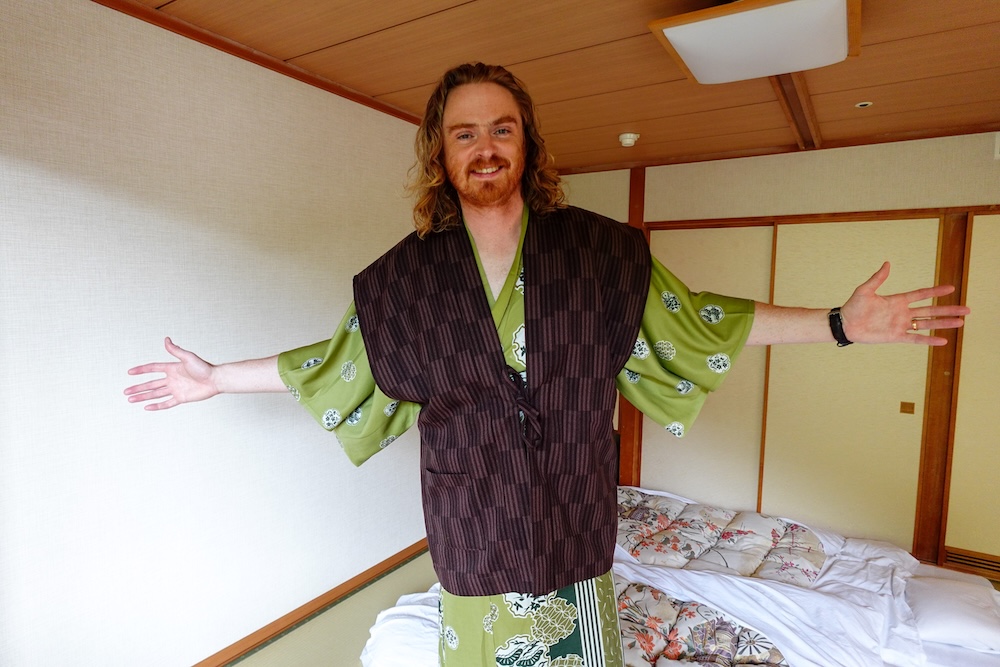
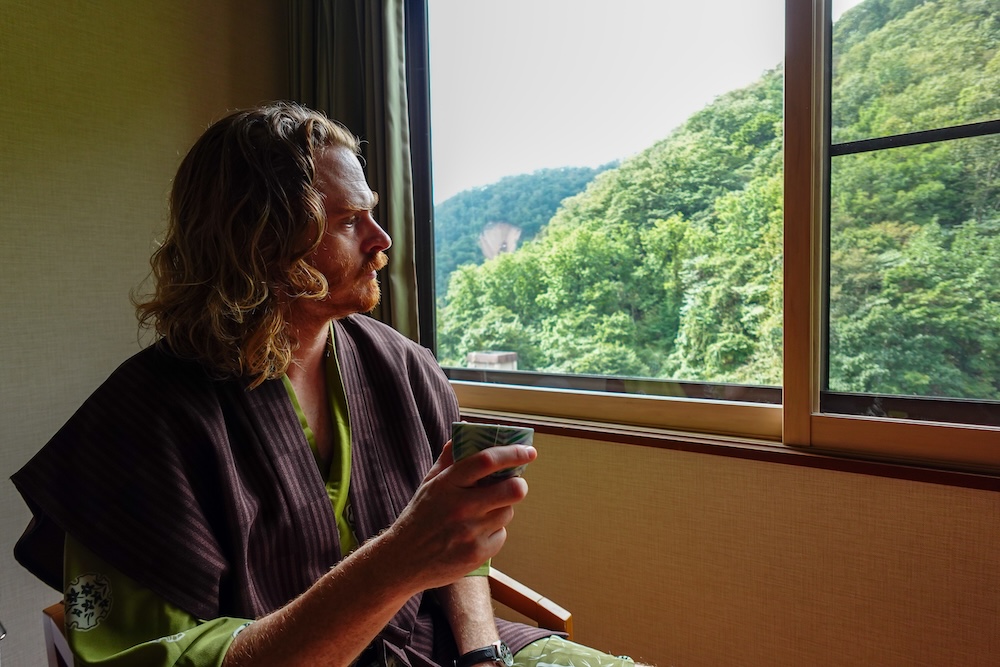
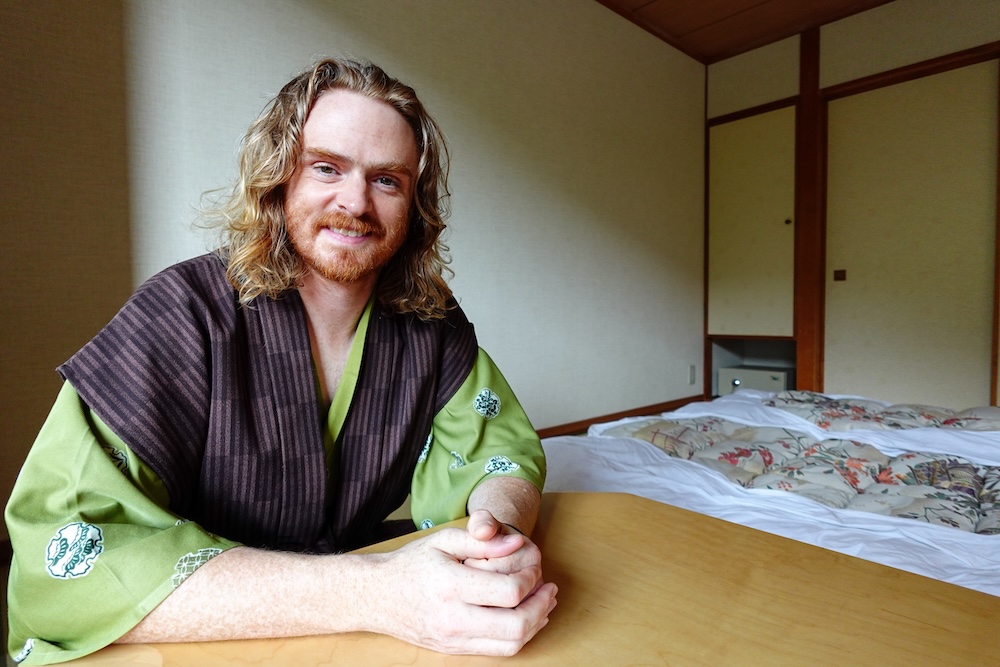
Our room had tatami, sliding doors, mountain views and a seating area. When we arrived, I looked around wondering where the beds were hiding; there was plenty of room for sitting but nothing that looked much like a mattress.
Audrey explained that the room would be rearranged for sleeping and futons laid out on the floor. Later, the bedding appeared exactly as promised. I enjoyed discovering that routine rather than arriving in another ordinary hotel room.
We also had yukata to wear around the property. After sightseeing, we could change, bathe and return to our room for tea before dinner. It was lovely not having to dress up or plan another evening out.
The bathing facilities were a major strength. We used them repeatedly, and the range of indoor and outdoor options made the experience particularly enjoyable.
The hotel currently advertises several hot-spring water varieties and a long bathing window, beginning at 2:00 p.m. and continuing until 9:30 a.m. the following morning, with a brief cleaning interruption from 3:30 to 4:00 a.m.
That kind of access is useful if you enjoy bathing at different times of day. You can have a soak after sightseeing, another before bed and potentially an early morning session, depending on the hotel’s rules and your own schedule.
One practical detail deserves attention: the hotel’s bathing information identifies approximately twenty steps between the changing area and the main bathing section. Even if other parts of the hotel have accessibility features, visitors with mobility requirements should confirm how they’d access the baths.
We were also impressed by the food. Dinner and breakfast were substantial buffets with plenty of seafood and other dishes, and the variety was more than enough for us.
The main trade-off was the large dining room: busy buffet queues and plenty of other guests, rather than the intimate hospitality of our earlier Takayama ryokan. Those differences did not spoil the experience.
The location was convenient for walking to restaurants and attractions, and we found the staff courteous and facilities clean. Both of us finished the stay feeling very positive about the hotel.
Would I book Miyabitei again? Absolutely. It felt like excellent value for our particular stay, even though I would probably try a smaller ryokan on a return trip for the sake of variety. That curiosity is not a criticism of Miyabitei, and it does not guarantee the same value at future prices.
If that sounds like the kind of resort experience you’re after, you can compare Park Hotel Miyabitei’s current rooms, meal inclusions and availability. I’d pay particular attention to whether you’re booking a Japanese-style or Western-style room and exactly which meals come with the rate.
Large onsen resort versus smaller traditional ryokan
Miyabitei offered extensive baths and buffet variety, whereas our earlier smaller ryokan in Takayama felt more personal. I liked both styles for different reasons; neither is automatically superior.
A large resort may appeal if you want extensive communal bathing and buffet dining. A smaller ryokan may suit travellers who prioritize individualized hospitality, quieter surroundings or more traditional meal service. The property label alone does not guarantee the experience: room styles, meal plans and private baths vary by booking.
Some rooms use futons on tatami while others have Western beds. Dinner may be a buffet, a multi-course meal or excluded altogether. Private bathing can also depend on the room category, so compare exact inclusions rather than relying on the word ryokan.
The most useful comparison is not a universal ranking but matching the right property to the experience you want. We personally stayed only at Miyabitei; the other properties below are options to investigate rather than hotels I can review firsthand.
| Accommodation | Why consider it? | What to check before booking |
|---|---|---|
| Park Hotel Miyabitei | Our personally tested larger resort with varied baths and buffet dining | Room style, included meals and steps to the main bathing area |
| Dai-ichi Takimotokan | Extensive onsen complex with different accommodation and dining choices | Exact room and meal plan; day-use bathing is a separate product |
| Hotel Mahoroba | Another substantial resort-style onsen option | Pool access, room category and meal inclusions |
| Takinoya Bekkan Tamanoyu | Smaller traditional ryokan atmosphere and Japanese multi-course dining options | Which dining package and room are included |
| Ryotei Hanayura | Selected rooms with private outdoor hot-spring bathing | Whether the precise room booked actually includes a private bath |
What matters most when choosing a Noboribetsu hotel?
If you are coming for onsen culture, start with the bathing arrangements: indoor and outdoor pools, communal versus private options, operating hours and any rules relevant to you.
Next, examine the meal package. A room with dinner and breakfast included isn’t directly comparable with a room-only rate. If you’re planning to spend the evening at the hotel, substantial meals may be part of the attraction. If you’d rather eat independently, a less inclusive package may give you more flexibility.
Then check the room type and location. A traditional tatami room can be a wonderful part of the experience, but it won’t suit every traveller. Likewise, a hotel within walking distance of the main onsen-town sights may be more convenient than a property requiring additional transport.
Finally, compare the complete price rather than just the headline nightly rate. Hokkaido introduced an accommodation tax in April 2026, with a prefectural charge assessed per person per night according to the taxable accommodation price. The listed brackets are ¥100, ¥200 or ¥500 per guest per night, depending on the rate category, and other applicable charges may appear in the booking details.
Price matters, but the headline room rate rarely tells the whole story. Compare meals, room type, bath access and the final total. Comparing hotels in Noboribetsu Onsen for your actual dates is more useful than relying on what somebody paid for a different season.
How Many Days Do You Need in Noboribetsu?
A quick Hell Valley visit, a full sightseeing day and an overnight onsen stay all solve different travel problems. We chose two nights because bathing, meals and leisure at the hotel mattered just as much to us as the outdoor attractions.
| Time available | What I’d prioritize | Main compromise |
|---|---|---|
| A few hours | Hell Valley viewpoints and a short walk | Little time for the extended geothermal area or bathing |
| One full day | Hell Valley, more geothermal walking, the natural footbath and selected town stops | Limited opportunity to enjoy an overnight resort experience |
| One night | Sightseeing plus hotel bathing, dinner and possibly a morning soak | Arrival and departure can make the hotel experience feel compressed |
| Two nights | Geothermal attractions, town sightseeing, meals and repeated bathing at a comfortable pace | Higher accommodation costs and more time away from other Hokkaido destinations |
A few hours in Noboribetsu
The main viewing areas allow you to see some dramatic geothermal scenery without needing to complete a long forest walk. Depending on your schedule, you might also explore part of the town or stop to see the demon statues.
Three hours physically in the onsen district is very different from three hours that must also include getting there from Sapporo, travelling onward and changing to the local bus. Count door-to-door travel separately.
The local tourism association provides short sightseeing courses, but these are selective visits—not evidence that the entire geothermal network or hotel experience fits into a few hours.
One full day in Noboribetsu
A full day gives you considerably more flexibility. You can explore Hell Valley, continue through parts of the geothermal landscape and spend time at the natural footbath. Depending on your pace, there’s also room for lunch and some of the cultural attractions around Gokuraku Street.
If bathing is important, you could include a day-use onsen, provided the operating hours and reception arrangements fit your schedule.
I’d still resist the temptation to add every major paid attraction. A theme park, aquarium or ropeway excursion changes the day considerably, and each will require time that could otherwise be spent outdoors.
For someone mainly interested in the natural attractions, a full day can be very satisfying. If you want the full hotel experience as well, though, I’d seriously consider sleeping in the onsen district rather than returning to another city that evening.
Is one night enough?
One night is a good option when you want to experience an onsen hotel without committing a large part of your Hokkaido itinerary to the destination.
With one night, you might check in, explore part of the town, bathe before or after dinner and enjoy another soak before checkout. The precise balance depends on arrival time and your hotel schedule.
The main risk is arriving so late or leaving so early that you barely use the facilities you paid for. Make sure the hotel, dinner and bathing schedule work before committing to an expensive package.
Check-in, dinner, bathing hours and the onward journey all matter. I’d pay particular attention to the time you expect to reach your hotel, rather than looking only at the train’s arrival time at JR Noboribetsu Station.
If you’re weighing a single night against a longer visit, checking onsen accommodation for one-night and two-night stays can help you see the real price difference once meals and room arrangements are factored in.
Why two nights were ideal for us
Two nights gave Audrey and me the best of both worlds.
We explored Hell Valley, wandered through the geothermal forest, lingered at the footbath, visited the smaller sights and ate memorable ramen without feeling that every minute was allocated.
We also had time for repeated baths, generous meals, tea and relaxation in our Japanese-style room. The hotel was part of the holiday, not a place we barely saw between outings.
By checkout, I felt we had experienced the things that mattered without rushing. If you are less interested in bathing, a shorter visit may suit you perfectly well, but I would not dismiss a second night if relaxation is a central goal.
Sometimes having room in the schedule is the whole point.
How to Get to Noboribetsu and Reach the Onsen Town
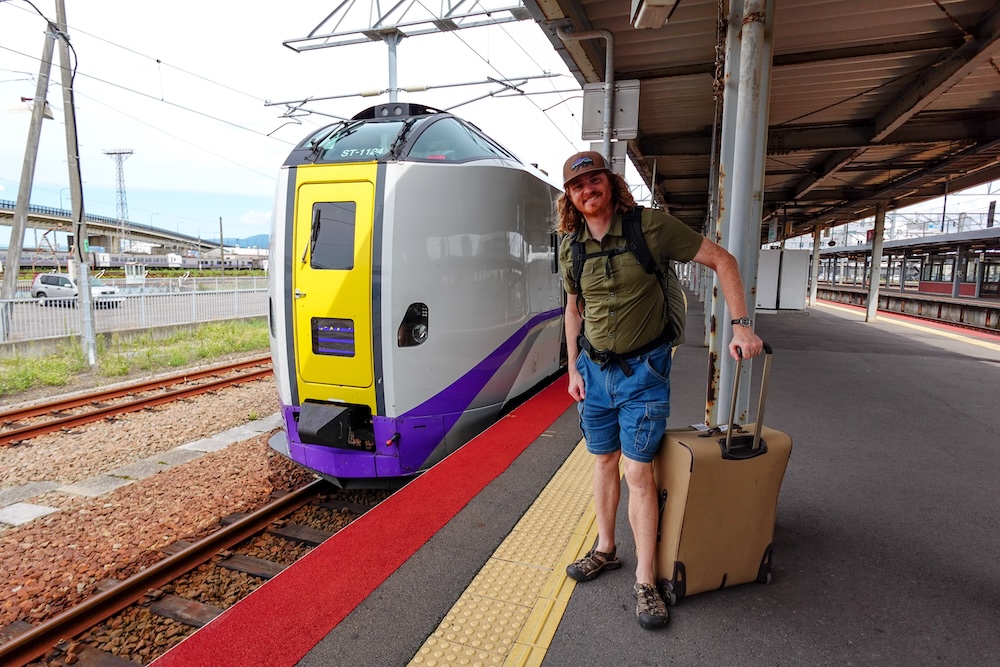
We arrived by train from Hakodate, transferred by local bus and explored the main resort district on foot, so renting a car was not necessary for our trip.
The transport system is manageable, but a little preparation helps, especially if you’re travelling with luggage or trying to fit Noboribetsu into a tightly scheduled Hokkaido itinerary.
Getting to Noboribetsu by train from Hakodate or Sapporo
We came north from Hakodate using a JR Hokkaido rail pass. Stopping in Noboribetsu before continuing to Sapporo made sense for our wider route, without requiring a separate return excursion from one city.
Sapporo is another common starting point. A typical limited-express rail journey between Sapporo and JR Noboribetsu Station takes approximately one hour and fifteen minutes, although the exact timing depends on the service.
Remember that this is only the railway journey. You’ll still need to get from the station to the onsen district, which generally means another bus ride or taxi.
JR Hokkaido’s limited-express services, including Hokuto and Suzuran, operate with reserved seating, so follow the current ticketing and seat-reservation arrangements rather than relying on older advice about unreserved carriages.
If you’re travelling with a rail pass, check how seat reservations work for the pass you’ve purchased. For an itinerary that already includes Hakodate and Sapporo, Noboribetsu can be a convenient stop between the two. That was one of the reasons I liked the route we chose.
Noboribetsu Station to Noboribetsu Onsen: bus or taxi?
The local bus is the more economical way to reach the resort district.
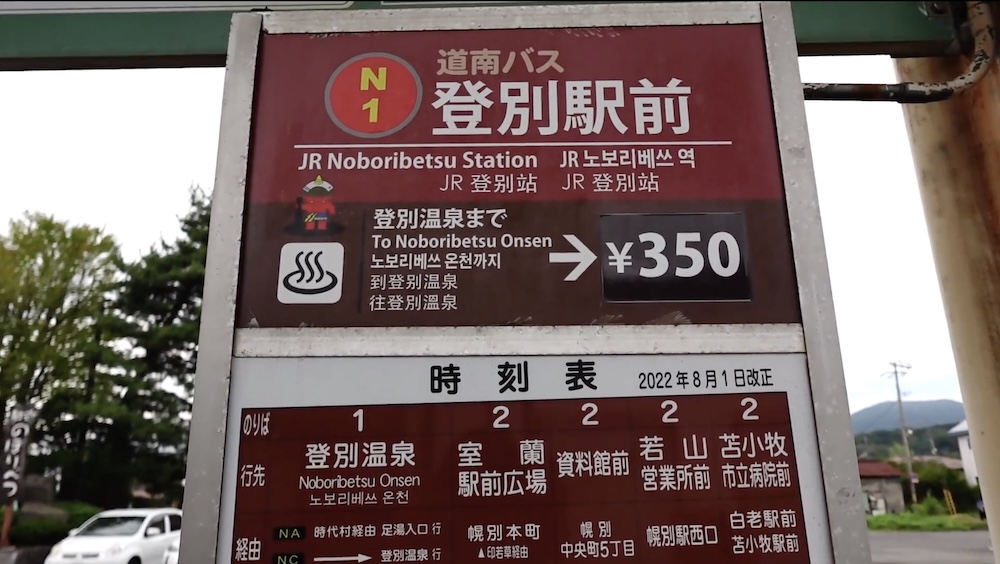
When Audrey and I arrived, we found the timetable outside the railway station and waited around half an hour for the next service. Once the bus arrived, getting up to the onsen town was straightforward.
During our visit, we paid approximately ¥350 per person. That was the historical fare; the current adult fare published by Donan Bus is ¥450 one way between Noboribetsu Station and Noboribetsu Onsen.
The journey to the central resort area takes roughly twenty minutes on typical services. Some buses continue farther to Ashiyu-iriguchi, so the total end-to-end route time may be longer than the ride to your particular stop.
One detail worth knowing is that ordinary Japanese transit IC cards such as Suica and Kitaca aren’t accepted on this route. Donan Bus supports Visa contactless payment on specified services, but not every route variation has the same arrangement. I would carry cash rather than assume that a card you’ve been using on trains elsewhere in Japan will automatically work.
You can check the current Donan Bus timetable and payment information before travelling.
Taxis are an alternative for heavier luggage, larger groups or awkward bus schedules. A current hotel access estimate suggests around ¥2,800 to the onsen district, but metered fares vary. We used the bus, so I cannot personally compare the taxi experience.
For two people travelling light, the bus saved money. A larger group might reasonably prefer to share a taxi; in either case, allow for the final transfer in your arrival plans.
Getting around Noboribetsu Onsen without a car
From Miyabitei, we walked to restaurants, town sights and geothermal trail access without worrying about parking. The same does not apply to every attraction in the wider Noboribetsu municipality.
That doesn’t mean every attraction in the wider Noboribetsu area is walkable. Marine Park Nixe is near the railway station, Date Jidaimura requires a separate journey and other regional destinations may be easier to explore with a vehicle.
Even within Noboribetsu Onsen, walking conditions vary. The streets, sidewalks, steps and geothermal forest paths are different environments, and some sections of road require extra attention because there’s no dedicated sidewalk.
We noticed vehicles moving fairly quickly on one of our walks, so I wouldn’t assume the entire district is pedestrian-friendly in the way a traffic-free town centre might be.
For a visitor whose priorities are Hell Valley, the natural footbath, the central onsen attractions and hotel bathing, I don’t think a rental car is necessary.
A rental car could be useful for a wider Hokkaido road trip with dispersed stops, but I would not book one simply to see Hell Valley, the footbath and the central resort town.
What to do with your luggage
As overnight guests, we could leave our bags at the hotel and head out. Day visitors and anyone arriving before check-in should sort out storage in advance.
The local tourism association currently lists baggage storage in the onsen district, with prices of approximately ¥500–700 per item and an advertised acceptance window from 9:00 a.m. to 4:30 p.m.
Don’t assume you’ll find the service directly at JR Noboribetsu Station, and don’t plan around collecting bags after closing.
Check the current luggage storage arrangements before relying on the service, and ask your own hotel about holding bags before check-in or after checkout.
Visiting Noboribetsu Independently or Taking a Tour
We arrived by bus and explored independently, stopping for photographs, lunch and a long soak at the natural footbath when we felt like it. That flexibility was central to our visit.
What can you explore independently?
You can independently visit the main Hell Valley viewpoints, walk open geothermal trails and reach the free natural footbath. You still need to understand the route and current access conditions, but a general sightseeing tour is not required.
When does a guided tour make sense?
Guided tours become more interesting when they solve a transport problem or offer interpretation that you particularly value.
Some Sapporo-origin tours combine Noboribetsu with Lake Toya and other Hokkaido attractions during a single long day. This can be convenient if you don’t want to arrange several journeys independently.
Check the exact itinerary before booking: a ten-hour regional coach excursion may include only about forty minutes at Hell Valley. That might be fine for a quick regional overview, but it is nothing like the extended geothermal walking and footbath time we enjoyed.
If you would rather travel in a smaller group or discuss an altered route, the Noboribetsu and Lake Toya tour with group and private options advertises several formats. A private booking may offer more scope to discuss priorities, but the amount of time at Noboribetsu still depends on the specific agreed itinerary.
A different approach is a local guided forest walk focused on Hell Valley, Oyunuma and the footbath, rather than a multi-stop coach day. Such tours exist, but we did not take one and I would not recommend a specific paid listing without a verified booking path. For our stay, independent walking suited us best.
What would I book ahead?
Accommodation is the most important reservation if you want a full onsen stay. Its bath access, meal package, location and room type determine much of the experience.
If you have specific requirements—such as a private bath, particular meal arrangement or accessible bathing facilities—confirm those before reserving.
Check day-use bathing reception hours, the exact terms of any tour and your hotel’s meal arrangements, then leave some freedom for the forest walks. We enjoyed Noboribetsu partly because our schedule was not packed from morning to night.
Best Time to Visit Noboribetsu and Practical Things to Know
Noboribetsu’s hot-spring hotels provide a reason to visit throughout the year, but the outdoor attractions can change considerably with the seasons.
How the seasons affect the geothermal attractions
In milder conditions, Hell Valley, the forest trails and footbath can form a substantial walking outing, as they did during our visit.
Winter adds a different appeal to the onsen hotels, but snow, ice and closures may limit the trails. Official descriptions sometimes call the footbath generally year-round while warning that winter paths can close, so check access for your specific dates.
We did not visit in winter, so I cannot offer a firsthand verdict on snowy paths or the ease of completing the outdoor routes then.
The same principle applies in any season when weather or maintenance affects access. The resort hotels may continue operating even when an outdoor route is temporarily unavailable.
Footwear, hot water and walking safety
The main Hell Valley viewpoints are relatively accessible compared with the longer forest routes, but I’d still wear footwear suitable for walking on outdoor paths.
If you’re exploring farther toward Oyunuma, expect a combination of surfaces, steps and changes in elevation. Weather can make those conditions more demanding.
Wear appropriate shoes for Hell Valley and the forest paths, and bring a small towel for the footbath. Its water was hot when we first entered; do not assume other geothermal pools or streams are safe to touch.
The heat near the geothermal features surprised me even on a mild day. Allow breaks, stay on designated trails and be mindful of uneven surfaces, steps and the ordinary hazards of forest walking.
The surrounding forest has normal outdoor considerations, including insects and ticks in vegetated areas, while the resort district has some roads without continuous sidewalks.
Visitors with mobility limitations should distinguish between accessible viewpoints and the complete trail or bathing network. A hotel with an accessible entrance may still have steps leading to its baths.
Hotel meals and bathing schedules can shape the day
Hotel check-in, dinner, bathing hours and cleaning breaks can all affect your day, particularly with a one-night reservation. Our two-night stay let us enjoy these things without constantly watching the clock.
A late arrival followed by an early checkout might leave you paying for elaborate hotel facilities you hardly use. If baths and meals are a major part of your booking, organize the travel day around them.
The same applies to scheduled cultural attractions. Enmado has advertised performance times, while Sengen Park’s geothermal activity is naturally variable. The footbath depends on trail access, and your hotel has its own meal and bathing arrangements.
I’d organize the important fixed commitments first, then leave as much flexibility as possible for the outdoor attractions.
Is Noboribetsu Worth Visiting? Our Verdict
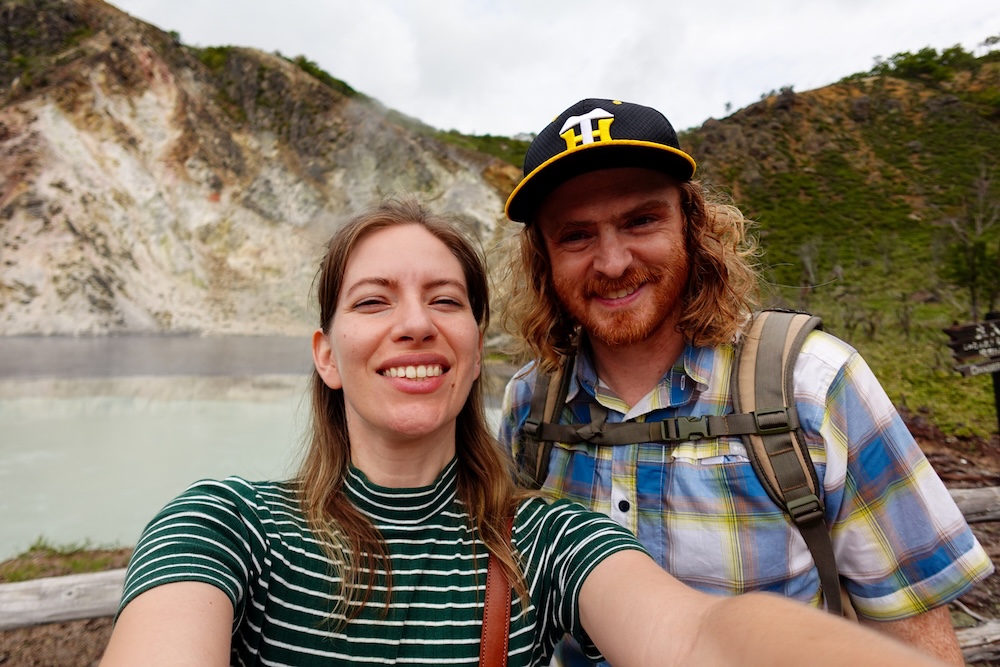
Audrey and I were both extremely glad we’d included Noboribetsu in our Hokkaido itinerary.
The natural attractions were among my favourite daytime experiences in Japan up to that point, and our two-night stay gave us enough time to appreciate them without sacrificing the relaxation we’d come for.
Who will love Noboribetsu?
I would recommend Noboribetsu especially to people who enjoy nature, quieter places, geothermal walking and slowing down. For onsen enthusiasts, the baths may be as important as Hell Valley—or the main reason to come.
After busy Japanese cities, the forested resort felt like a refreshing change. You can spend time in the baths without worrying that you are missing another twenty major attractions.
Who might not enjoy it as much?
Travellers who prefer large shopping districts, extensive restaurant choice, museums and nonstop urban entertainment may be less enthusiastic. Noboribetsu has smaller cultural sights, but nature and bathing are the main event.
If you are not interested in outdoor walking or onsen culture, I would think carefully before paying for several nights. A short Hell Valley stop could be enough without forcing a resort-style trip that does not suit you.
Would I return?
Absolutely. I would happily return to Hell Valley, spend another leisurely half-hour at the natural footbath and enjoy more time in the baths.
I’d also be tempted to return for that Enma ramen and order the correct bowl this time, rather than spending half my lunch wishing I’d chosen Audrey’s meal.
I would also gladly stay at Miyabitei again, though next time I might choose a smaller ryokan for a different experience. That is curiosity, not disappointment.
If you’re planning your first visit, my advice is to match the time you spend here to the experiences that genuinely interest you.
For me, that balance is what made Noboribetsu memorable. We saw the natural attractions we’d come for, ate extremely well, enjoyed the baths and never felt the need to rush on to the next thing.
I do not need a destination to have fifty major attractions when I am perfectly happy spending half an hour with my feet in a steaming river, surrounded by forest, wondering why on earth I would ever want to get up.
Frequently Asked Questions
How do I get from JR Noboribetsu Station to Noboribetsu Onsen?
The railway station is about eight kilometres from the hot-spring district. We took a local bus, which generally reaches the resort area in around twenty minutes, although we had to wait for the next departure. A taxi is another option if you have bulky luggage or the bus timetable doesn’t suit you.
Can I visit Hell Valley and the Oyunuma River Natural Footbath in one day?
Yes, provided the connecting trails are open and you allow enough walking time. I’d prioritize Hell Valley, then continue toward the geothermal forest and natural footbath rather than trying to squeeze in every paid attraction. We enjoyed lingering at the footbath instead of rushing through it.
Is Noboribetsu worth staying overnight?
For me, absolutely. One night can give you time for a hotel bath and dinner, while our two-night stay let us explore the geothermal landscape and repeatedly enjoy the onsen facilities without rushing. If you’re interested only in seeing Hell Valley, a shorter visit may be enough.
Can I use an onsen in Noboribetsu without booking a hotel?
Yes. The Oyunuma River Natural Footbath is free, although it isn’t a full-body bath. Yumoto Sagiriyu and some resort hotels offer separate day-use bathing. Check the current reception hours because a bathhouse’s last admission can be earlier than its closing time.
Do I need a rental car to explore Noboribetsu Onsen?
We visited without a car, arriving by train and bus and walking between the central attractions. That worked for Hell Valley, the footbath, restaurants and our hotel. Attractions farther from the onsen district, such as Marine Park Nixe and Date Jidaimura, require separate transport planning.
Can I visit the Oyunuma River Natural Footbath in winter?
Don’t assume the approach will be open. Noboribetsu’s hotels operate across the seasons, but snow, ice and temporary closures can affect the forest trails leading to the footbath. We didn’t visit in winter, so I’d check current trail conditions before building a trip around it.
What should first-time visitors know about Japanese onsen bathing?
Most traditional communal baths are gender-separated and used without swimsuits. Wash thoroughly before entering, and keep towels and hair out of the bathwater. Tattoo policies and private-bath options vary by property, so confirm the arrangements that matter to you before booking.
This guide is also available in Spanish. [Leé la versión en castellano: Guía de Noboribetsu: qué hacer, onsen, Valle del Infierno y cómo organizar el viaje]
This article contains affiliate links. If you book through one of these links, I may earn a commission at no extra cost to you.