
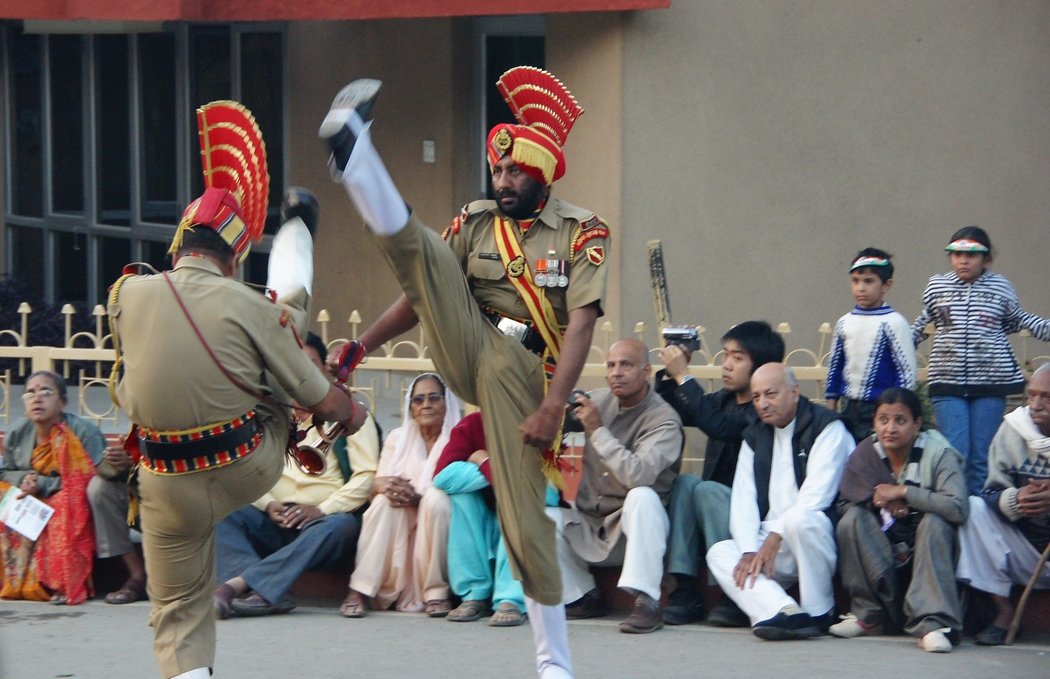
The India-Pakistan border closing ceremony at the Wagah Border is unlike any other event you’ll witness. Every evening, as the sun sets, soldiers from both nations engage in a highly choreographed and synchronized display of military pageantry. The ceremony, filled with brisk marching, high kicks, and the lowering of the national flags, is both intense and captivating. It’s a display of patriotism that draws thousands of spectators daily, who cheer enthusiastically as the soldiers perform.
- Symbolic Unity Amidst Rivalry: Despite the historical tensions between the two nations, the ceremony represents a moment of mutual respect. The soldiers exchange fierce salutes and brief handshakes, symbolizing the delicate balance between rivalry and camaraderie. The lowering of the flags, performed simultaneously on both sides, is a moment of synchronized cooperation that underscores the unique nature of this event.
The Atmosphere: Electric and Unforgettable
The atmosphere at the Wagah Border during the ceremony is electric. The crowd plays an integral role in the experience, with patriotic songs blaring from loudspeakers and chants of “Bharat Mata ki Jai” (Victory to Mother India) on the Indian side, and “Pakistan Zindabad” (Long Live Pakistan) on the other. The energy is palpable, with the audience’s excitement adding to the drama of the occasion.
- A Thrilling Spectacle: The sheer energy of the crowd, coupled with the dramatic movements of the soldiers, makes the ceremony a thrilling spectacle. It’s not just a military drill—it’s a carefully crafted performance that evokes a sense of pride and unity among the spectators.
A Unique Cultural Experience
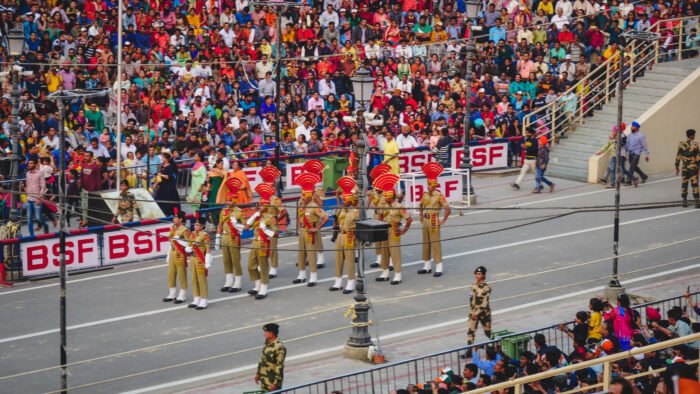
Visiting the Wagah Border for the closing ceremony offers more than just a chance to see the military in action; it provides insight into the national identities of both countries. The ceremony is a powerful reminder of the shared history between India and Pakistan, and the deep emotions that still resonate on both sides of the border.
- Cultural Significance: The ceremony is steeped in cultural significance, reflecting the pride, resilience, and spirit of the people of India and Pakistan. It’s a moment where history, culture, and nationalism converge, creating an unforgettable experience for visitors.
Practical Tips for Visiting
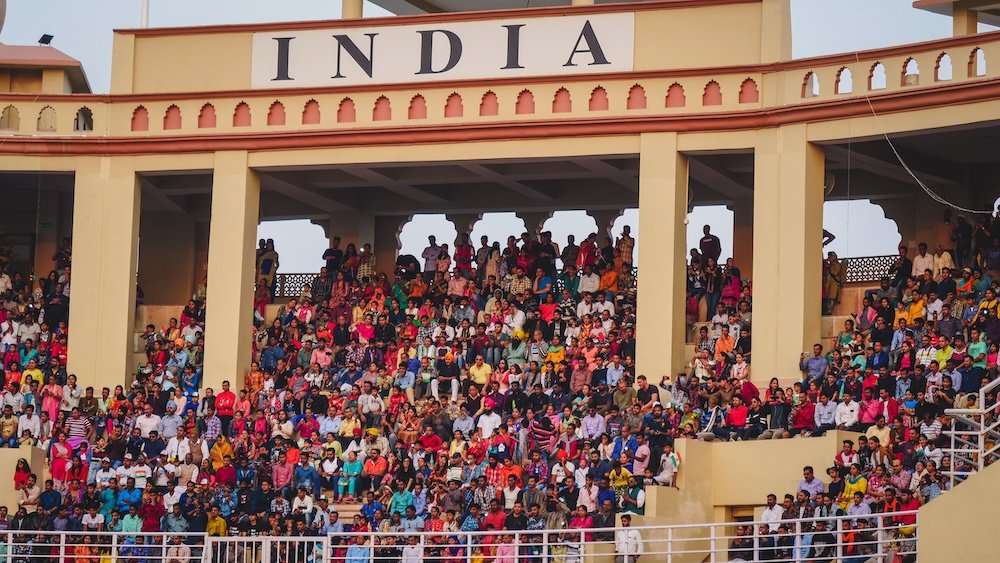
To fully enjoy the Wagah Border ceremony, arrive early to secure a good spot, as it’s a popular event with large crowds. The ceremony starts around sunset, but gates open earlier to accommodate the throngs of visitors. Dress comfortably, and be prepared for a lively, possibly overwhelming atmosphere. Photography is allowed, so bring your camera to capture the vibrant scenes.
- Getting There: The Wagah Border is located about 30 kilometers from Amritsar, and you can reach it by taxi or auto-rickshaw. It’s advisable to arrange transportation in advance, especially for the return trip, as the area can get crowded after the ceremony.
Attari–Wagah Border Ceremony
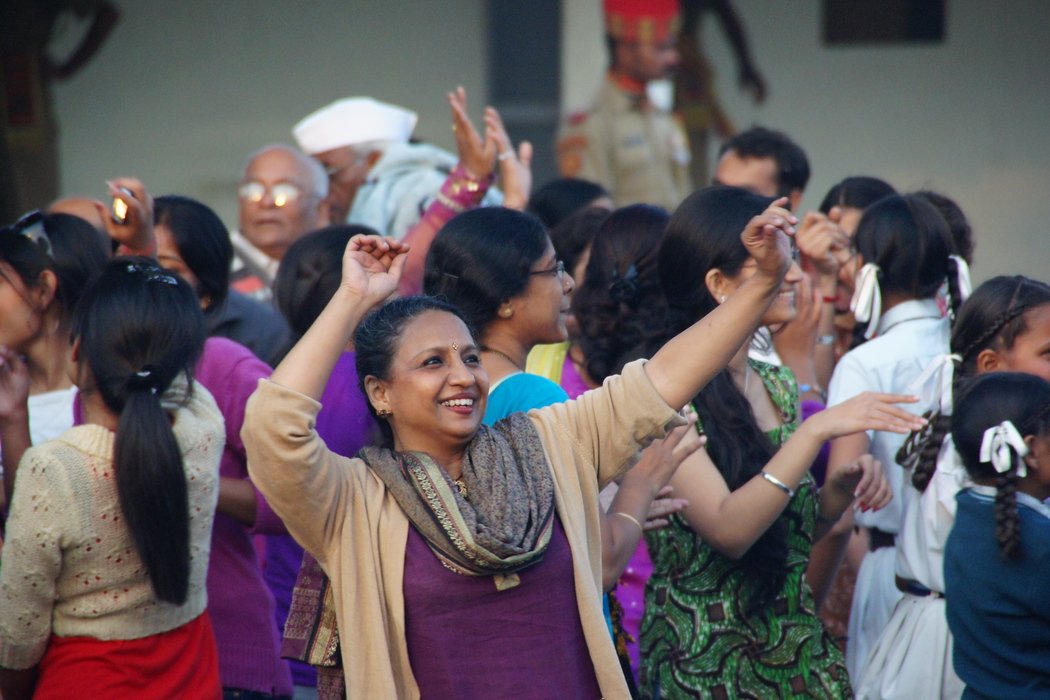
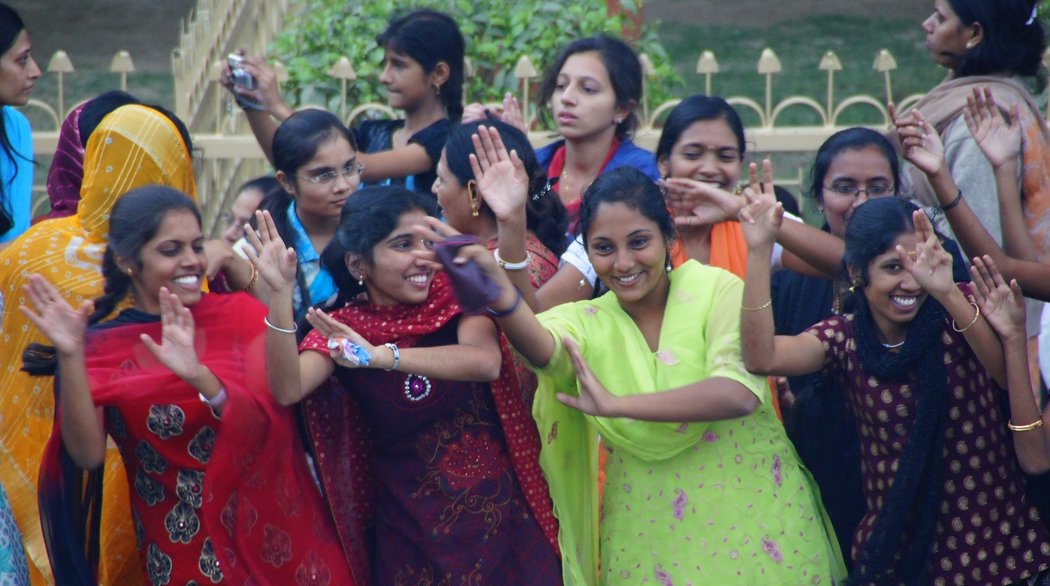
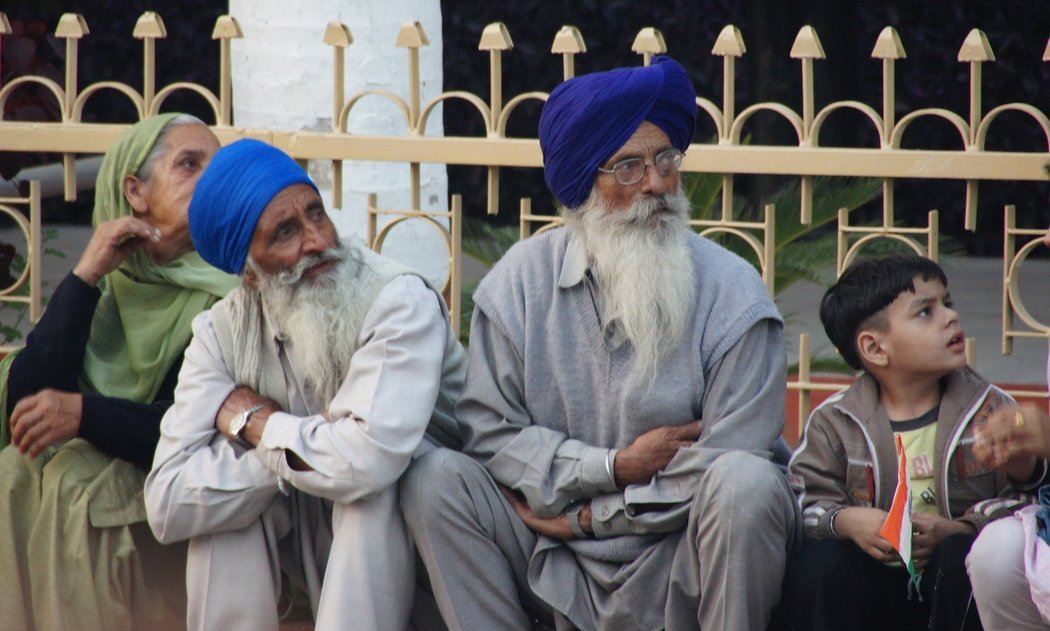
The festivities begin with dancing on the Indian side prior to the official ceremony with women of all ages partaking in the celebrations.
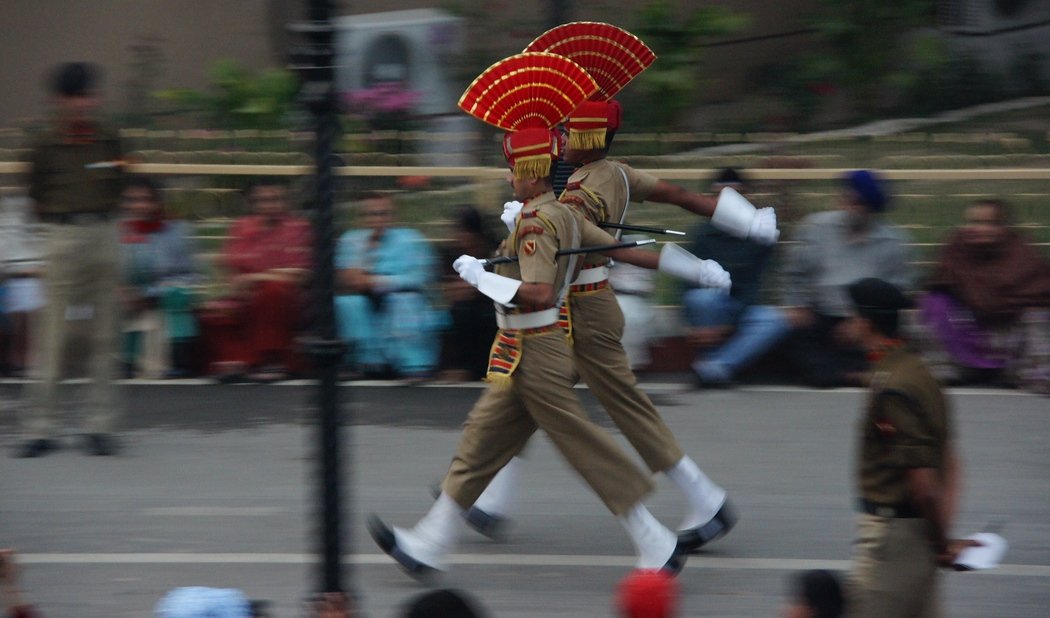
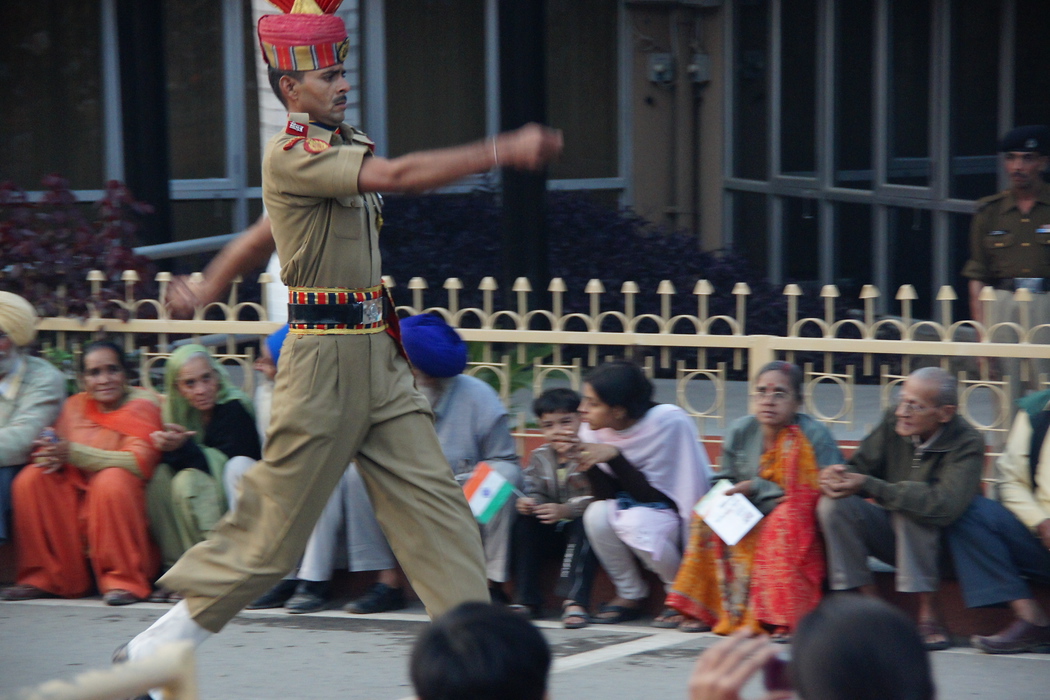
The ceremony commences with a roistering parade by soldiers on both sides of the border with theatrics that would have Monty Python eating his heart out.
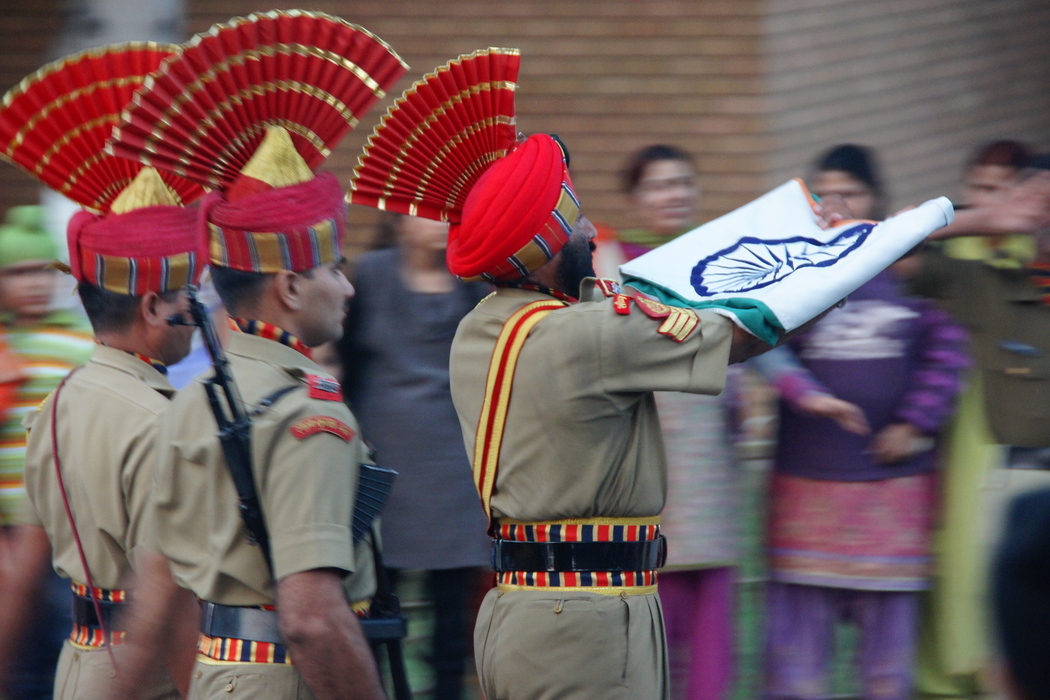
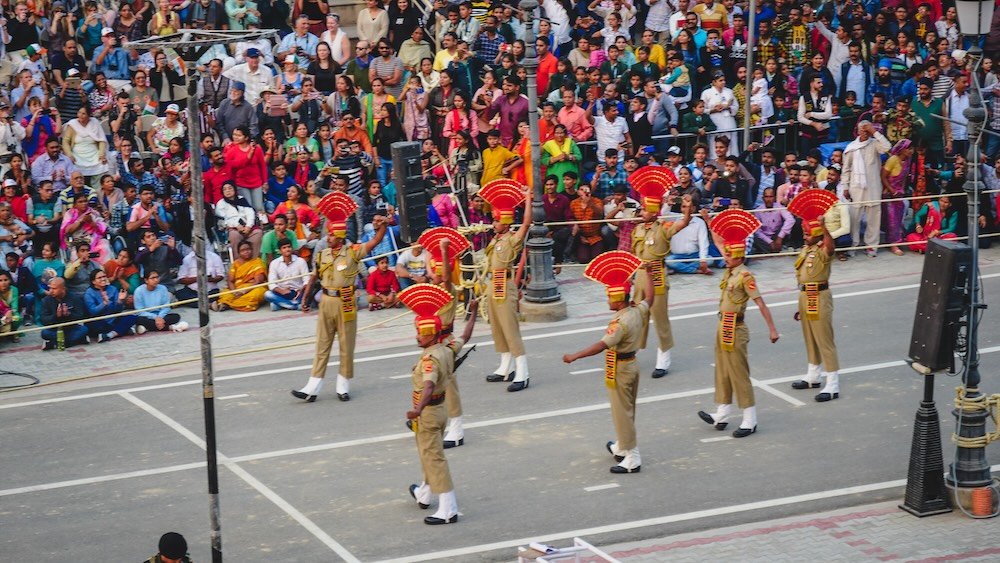
Proud peacocks ruffling feathers could not compete with what is going on at ground level in a display of exaggerated marching, high legs kicks, stares and other highly coordinated manoeuvres.
The finale takes places at sundown when the respective flags of each country is lowered, folded and paraded to a designated storage facility with a brief aphoristic handshake between soldiers on both sides.
It truly is a spectacle unlike any other I’ve witnessed before in my life.
History Of Attari–Wagah Border Ceremony
Origins and Significance
The Attari-Wagah Border Ceremony has roots dating back to 1959, shortly after India and Pakistan gained independence in 1947. This daily military practice of lowering the national flags at the border post was initially a simple, functional routine. Over time, it evolved into a highly choreographed event, symbolizing the complex relationship between the two nations. The ceremony embodies both the rivalry and respect shared by India and Pakistan, making it a unique and powerful expression of national pride.
- Post-Independence Ritual: The ceremony was established as a means of formally ending the day at the border, with both countries lowering their flags simultaneously. Over the years, it has grown into a display of patriotism and military precision, reflecting the enduring connection and tension between the two countries.
Development into a Spectacle
What began as a straightforward military procedure has transformed into a highly anticipated event, drawing thousands of spectators from both sides of the border daily. The ceremony now includes elaborate displays of synchronized marching, saluting, and even high-kicking by soldiers from both nations. The atmosphere is electric, with crowds chanting and cheering, turning the ceremony into a symbol of national identity and pride.
- Cultural Impact: The Attari-Wagah Border Ceremony has become a cultural phenomenon, representing not just a daily military routine but also the spirit of the people on both sides. It is a vivid reminder of the shared history and ongoing complexities between India and Pakistan.
Why It’s a Unique Experience for Visitors
For visitors, attending the Attari-Wagah Border Ceremony is an unparalleled experience. It offers a window into the historical and cultural relationship between India and Pakistan, played out in a highly charged, yet controlled, environment. The ceremony’s mix of pomp, discipline, and fervor makes it a must-see event for anyone interested in the history and dynamics of these two neighboring nations.
- A Living History: Witnessing the ceremony in person is to experience a living history that continues to shape the identities of both countries. It’s an event where past and present collide, offering a rare and insightful glimpse into the ongoing narrative between India and Pakistan.
How To Attend The Attari–Wagah Border Ceremony
Getting There: Navigating Your Way
The Attari-Wagah Border is located about 30 kilometers from Amritsar, making it an easy day trip from the city. You can reach the border by taxi, auto-rickshaw, or even a pre-arranged tour. The drive takes roughly 45 minutes, depending on traffic. It’s advisable to leave early, as the ceremony attracts large crowds, especially on weekends and public holidays.
- Pro Tip: Arrange your return transportation in advance, as finding a ride after the ceremony can be challenging due to the crowds.
Timings and Entry
The ceremony takes place every evening before sunset, with exact timings varying slightly depending on the season. Gates open a couple of hours before the ceremony begins, and it’s recommended to arrive early to secure a good spot. The seating is divided into different sections, including VIP and general areas, with the best views typically available in the VIP section, which may require prior booking.
- Best Time to Arrive: Aim to arrive at least 1.5 to 2 hours before the ceremony starts. This gives you ample time to find a seat and soak in the atmosphere.
What to Expect During the Ceremony
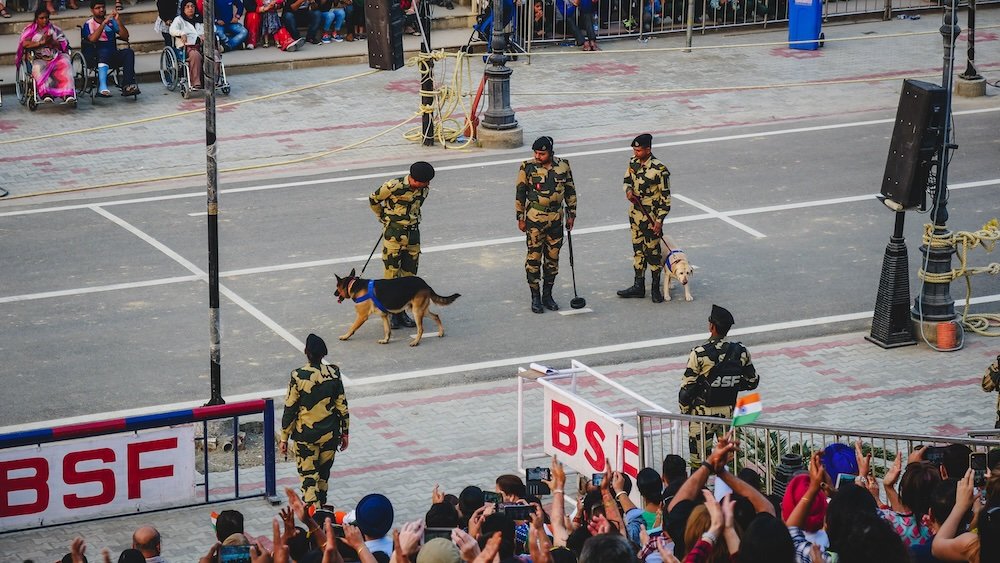
The ceremony is a high-energy event, full of patriotic fervor, with soldiers from both India and Pakistan engaging in synchronized marches, high kicks, and dramatic gestures. The crowd is an integral part of the experience, with loud cheers, chants, and patriotic songs filling the air. The ceremony lasts about 30-45 minutes, culminating in the lowering of the flags, followed by the closing of the gates between the two nations.
- Atmosphere: Be prepared for a lively, almost festival-like atmosphere. The energy of the crowd adds to the intensity and excitement of the event.
Using Amritsar As Your Base
If you’re doing the ceremony from the Indian side, Amritsar is your launchpad. Think of the border as a big, dramatic evening show tacked onto everything else you’re already seeing: the Golden Temple glowing at night, street food in the old city, and the weight of history at Jallianwala Bagh and the Partition Museum.
For most travellers, a good rule of thumb:
- 1 full day in Amritsar + Wagah if you’re rushing
- 2 days if you want to breathe a little
- 3 days if you love slow travel, food, and photography
A simple balance that works well:
- Mornings and late evenings: Golden Temple and old city
- Afternoons: naps, cafe time, or museums
- Late afternoon / evening: border ceremony
It’s an intense sensory hit, so spacing things out makes the whole trip more enjoyable.
Getting From Amritsar To The Border: Real-World Logistics
The border is roughly 30 km from Amritsar, and the road is straightforward: city chaos → highway → fields of Punjab → suddenly, stadium-level crowds and security checks.
You’ve basically got four ways to get there:
| Option | Approx Style | Flexibility | Good For |
|---|---|---|---|
| Auto-rickshaw (return hire) | Budget, adventurous | Medium | Solo travellers, backpackers |
| Shared taxi / shared jeep | Budget–midrange | Low–medium | Those who don’t mind crowds |
| Private taxi (return trip) | Comfortable, direct | High | Couples, small groups, families |
| Organized tour (via hotel/agent) | Low-stress, all-in-one | Fixed schedule | First-time visitors, short on time |
Auto-Rickshaw Or Local Transport
If you like scrappy, local-style travel, hiring an auto-rickshaw for a round trip is the most atmospheric way to go. You sit close to the action: horns blaring, fields flying by, Bollywood tunes on the speaker.
- Negotiate a return fare in advance (including waiting time during the ceremony).
- Make sure the driver understands they must wait for you until the end.
- Ask them to drop you as close as possible to the correct gate and agree on a clear meeting point for pickup.
Private Taxi From Amritsar
A private taxi gives you door-to-door comfort and takes the stress out of getting back in the dark when everyone is trying to leave at once.
What works well:
- Arrange it through your hotel or guesthouse – they’ll know the drill.
- Confirm:
- Round-trip price
- Waiting time included
- Departure time from Amritsar (usually 2–3 hours before ceremony time)
This is especially nice if you’re traveling with:
- Kids
- Older parents
- Lots of camera gear you don’t want to juggle on local transport
Organized Tour
A simple option: book a Wagah Border Ceremony trip with a hotel or local agency.
Typical inclusions:
- Pickup and drop-off in Amritsar
- Transport in a shared vehicle
- Sometimes a guide who walks you through where to go and what’s happening
You lose some flexibility, but you gain the ease of not having to think about anything beyond showing up in the lobby.
When To Go: Season, Weather And Crowd Patterns
You experience the ceremony outdoors in a huge concrete stadium. Weather matters.
Seasons Around Amritsar
| Season | Rough Months | What It Feels Like | Ceremony Experience |
|---|---|---|---|
| Cool/Winter | Nov–Feb | Chilly evenings, sometimes foggy | Take layers; visibility can be hazier |
| Hot/Dry | Mar–May | Hot afternoons, warm evenings | Hydrate, shade is limited |
| Monsoon | Jun–Sep | Humid, occasional rain showers | Bring a light rain jacket, plastic bag |
| Post-Monsoon/Autumn | Oct–early Nov | Pleasant, clearer skies | Very popular, expect big crowds |
For comfort, late Oct–Feb usually feels nicest, but winter evenings can be surprisingly cold. A scarf and light jacket go a long way when you’re sitting still on concrete for over an hour.
Choosing Your Seat And Arrival Strategy
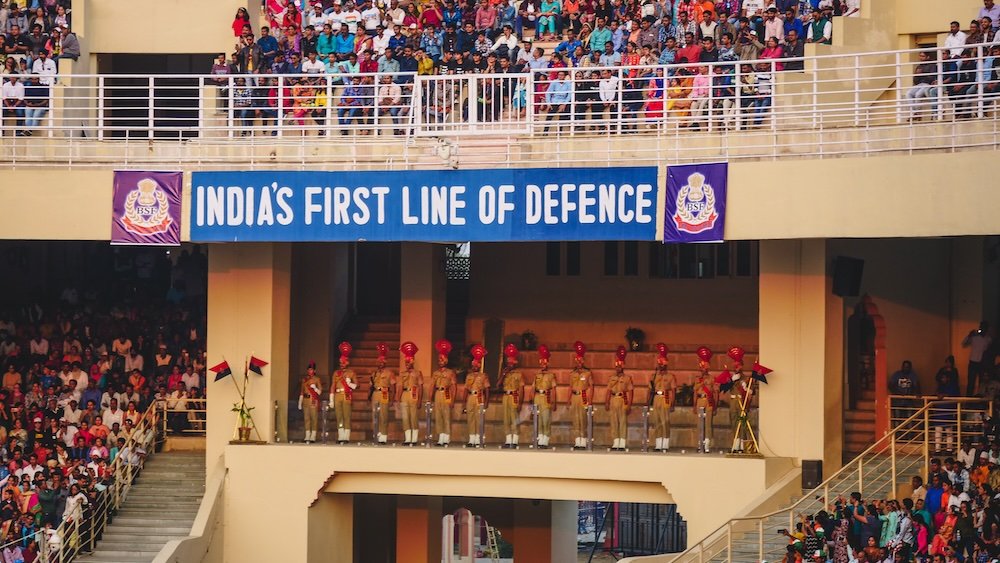
There’s a stadium-style setup on the Indian side with large concrete stands, separate entry lines, and different seating zones.
You can’t control everything, but you can tilt the odds in your favour.
Rough Seating Types (Indian Side)
- General stands – big concrete terraces, first-come first-served.
- Designated foreigner/NRI section – sometimes set aside, sometimes merged; ask security or ushers politely if you qualify.
- VIP/special passes – typically accessed via local contacts, army connections, or advance arrangements through authorities.
If you’re just rocking up as a regular visitor, assume you’re in general seating, then politely ask if there’s a foreigner section once you’re inside.
What Time To Arrive
As a rule:
- Aim to be at the entrance gate 1.5–2 hours before the ceremony.
- Add extra time for weekends, public holidays, and big national days (Independence/Republic Day crowds can be massive).
A simple arrival strategy based on your travel style:
| Traveller Type | Suggested Arrival Before Ceremony | Priority |
|---|---|---|
| Photographer/YouTuber | 2–2.5 hours | Front or side seats with clear sight lines |
| Family with kids | 1.5–2 hours | Easier access to exits and shade |
| Casual visitor | ~1.5 hours | Decent view without obsessing |
| Crowd-averse traveller | 1–1.5 hours | Edges of stands, easier early exit |
If you arrive late, you may still be allowed in, but you’ll likely end up higher up or further to the sides. It’s still a good view; you just won’t be right in the thick of the action.
What Your Visit Actually Feels Like: Step-By-Step
To give you a sense of flow, here’s how a typical visit plays out from the Indian side.
1. The Approach
Your rickshaw/taxi drops you off a fair distance away. From there:
- You walk along a crowded road lined with small stalls selling flags, hats, snacks, and water.
- Security presence is heavy but organized.
2. Security Checks
You go through:
- A basic bag check and body scan
- Separation into different lines (men/women, sometimes foreigner-specific)
Best move here: bring as little as possible – phone, wallet, passport copy, small bottle of water if allowed, maybe a compact camera.
3. Finding Your Stand
You follow the flow into the stadium-like structure. There are:
- Sections closer to the gate with the highest energy
- Higher stands offering a wider view of the entire choreography and crowd
If you’re shooting video or stills, higher-up seating can actually be the better choice.
4. The Build-Up
Before the formal ceremony even starts, the atmosphere is already loud and festive:
- Upbeat Bollywood and patriotic tracks boom from loudspeakers.
- An MC gets the crowd chanting and cheering.
- You’ll often see women and kids invited down to dance with flags in hand.
This is where your inner introvert might quietly die or your inner extrovert might come fully alive.
5. The Ceremony Itself
Once it begins:
- Soldiers appear in full ceremonial dress, with those famous fan-shaped turbans and absolutely outrageous high kicks.
- The movements are sharp, exaggerated, and theatrical – think military drill meets performance art.
- The gates open and close, flags are lowered, there’s a quick handshake moment at the border line.
The whole show usually runs 30–45 minutes, but with build-up and exit, you’re there much longer overall.
6. The Exit
The moment it ends, everyone leaves at once.
- Walk calmly; don’t rush the crush.
- Stick with your group and agree on a visible meeting point with your driver beforehand.
- Expect traffic jams and a slow ride back to Amritsar.
This is a good time to scroll through photos, decompress, and watch the lights of Punjab roll by.
What To Wear And Bring (So You’re Comfortable)
You’ll be sitting outdoors on concrete steps, likely shoulder-to-shoulder with strangers, for a while. Comfort beats looking cool.
Clothing
- Light, breathable clothes in hot weather
- Shoulders and knees reasonably covered out of respect and practicality
- Closed-toe shoes or sandals with a strap – easy to walk in, better for dusty ground
- In winter: a light fleece or jacket, especially once the sun dips
Handy Things To Carry
- A small daypack or crossbody bag (if allowed)
- Sunscreen + sunglasses
- Compact hand fan or small towel in hotter months
- Water, if security allows, or cash to buy some nearby
- A lightweight scarf or buff (doubles as sun cover and warmth if temps drop)
Leave at the hotel:
- Giant camera bags
- Drones
- Big tripods
- Anything that looks like a security headache
Budgeting Your Evening: Realistic Costs
Costs will change over time, but you can think of it as a low-to-medium expense outing from Amritsar.
Approximate per-person feel (assuming you’re starting in the city):
| Traveller Style | Transport (Return) | Snacks/Drinks | Extras (small flags, hats, etc.) | Overall Feel |
|---|---|---|---|---|
| Shoestring | Shared rickshaw/jeep | Simple snacks | Minimal souvenirs | Very budget-friendly |
| Midrange | Private rickshaw/taxi | Snacks + chai | A couple of small souvenirs | Comfortable, still cheap |
| “Treat Yourself” | Private car via hotel | Snacks + cafe stop | Plenty of snacks & souvenirs | Comfortable & easy |
You won’t spend a fortune unless you really go wild with souvenirs. The main cost driver is how you choose to get there and back.
Combining The Ceremony With The Rest Of Amritsar
The border is a strong standalone experience, but it fits beautifully into a wider Amritsar visit.
Classic 1-Day Amritsar + Wagah Plan
If you only have one full day:
- Early morning
- Visit the Golden Temple at dawn.
- Have langar (community meal) or a simple breakfast nearby.
- Late morning–early afternoon
- Partition Museum or Jallianwala Bagh.
- Quick lunch: Amritsari kulcha, chole, or lassi in the old city.
- Mid-afternoon
- Head back to your accommodation for rest, shower, recharge.
- Late afternoon/evening
- Border ceremony at Attari–Wagah.
- Return to Amritsar and, if you still have energy, a night stroll around the illuminated Golden Temple is incredible.
2-Day Slow Travel Plan
With two days, it becomes less of a sprint:
- Day 1 – Golden Temple (morning and night), Jallianwala Bagh, food walks.
- Day 2 – Partition Museum, cafe time, then border ceremony in the late afternoon/evening.
3-Day Deep-Dive Plan
Add:
- Extra food missions (Amritsari fish, kulcha, jalebi, lassi)
- Additional gurdwaras or temples
- Wandering the back lanes with a camera, chatting with locals
The border ceremony becomes one intense highlight among many, rather than your only big event.
Photography And Video Tips
If you love documenting trips, the ceremony is a goldmine: colour, motion, emotion, and contrast everywhere.
Gear Choices
- A phone camera is enough for casual memories.
- A zoom lens (something like a 70–200mm equivalent) helps you compress the action and pick out faces and gestures.
- A wide lens captures the crowd and stadium atmosphere.
Because the ceremony runs towards sunset:
- Light changes fast – start with faster shutter speeds for the marching and high kicks, then slow down as it gets darker.
- Don’t be afraid to bump up ISO to keep motion sharp.
Where To Sit If You’re Shooting
- Higher up and toward the middle of the stands gives you clean, wide views of the formation and flag area.
- Closer seats get you more facial expressions and noise, but you might be obstructed by people standing, waving flags, or holding phones up.
Being Respectful With The Camera
You’re in a highly charged patriotic environment:
- Avoid blocking others’ view with big cameras or constantly standing up.
- Be mindful about filming close-ups of people who clearly look uncomfortable.
- Focus on the energy and choreography rather than attempting to cross any security lines for “edgy” angles.
Travelling With Kids Or Older Family Members
This is a big outing for families in India, and you’ll see people of all ages in the stands.
With Kids
- Prepare them for loud shouting, music, and sudden bursts of noise.
- Bring snacks and water so they don’t melt down halfway through.
- Aim for seats not too far from an aisle so one adult can slip out with them if needed.
With Older Parents / Less Mobile Travellers
- Request seating lower down if anyone struggles with stairs.
- Build extra time into your schedule for walking from the drop-off point to the stands.
- A light shawl or jacket is useful for those who get cold easily once the sun sets.
If mobility is a concern, let your hotel know in advance; locals often know small, practical tricks (like which gate has fewer steps, or the best drop-off point for less walking).
Is The Border Ceremony Right For You?
It’s a powerful experience, but it’s not for everyone.
You’ll likely love it if:
- You enjoy high-energy, loud, theatrical events
- You’re fascinated by modern history and national identity
- You like being in the middle of big, emotional crowds
You might want to skip it (or at least sit higher up and on the edges) if:
- You’re very sensitive to noise, crowds, or patriotic chanting
- You get overwhelmed easily in tightly packed spaces
- You prefer gentle, quiet cultural experiences
If you do go, go in fully: shout a few chants, tap your foot to the music, soak in the choreography, but also hold onto the awareness that you’re watching a living ritual at a very sensitive border. That tension between spectacle and significance is exactly what makes the Attari–Wagah ceremony so unforgettable once you’ve walked back out into the night.
Practical Tips for Visitors
- Seating and Viewing: VIP passes offer the best views but require advance booking through local tourism offices or hotels. General seating is first-come, first-served, so arriving early is crucial.
- Dress Comfortably: Wear comfortable clothing and shoes, as you’ll be sitting for a while, and it can get quite warm during the day.
- Security Checks: Expect thorough security checks at the entrance. Carry minimal belongings, as bags are often not allowed, and photography is only permitted in designated areas.
Essential questions about the Attari–Wagah border ceremony: practical answers and on-the-ground tips
How many days do I need in Amritsar if I want to include the Attari–Wagah border ceremony?
Honestly, two nights in Amritsar is the sweet spot if you want to enjoy the border ceremony without turning your trip into a rush job. With that, you can do a full Golden Temple experience (dawn and at night), visit the Partition Museum and Jallianwala Bagh, eat your way through the old city, and still have a relaxed half-day to get out to the border in the late afternoon. If you’re really squeezed, you can cram Golden Temple plus Wagah into one long day, but it feels more like running a race than travelling. If you love food, photography, or slower travel, three nights gives you time to wander, revisit your favourite spots, and not resent the crowds at the ceremony.
Do I need a ticket, and is there any entry fee for the ceremony?
Good news: for the Indian side there’s usually no entry fee to attend the ceremony, and you don’t need a normal “ticket” in the sense of something you buy online. You just pass security, go to the stands, and grab a seat in the appropriate section. What does sometimes exist are special passes for VIP or reserved seating, which are handled through local authorities, the military, or well-connected hotels rather than a public booking system. For most travellers, it’s a free event where your real “currency” is arriving early enough to claim a good spot.
What time should I arrive at the border, and when does the ceremony usually start?
Early. The ceremony itself is timed around sunset, so the exact start shifts slightly with the seasons, but think roughly late afternoon into early evening. A solid rule is to be at the entrance gate 1.5–2 hours before the scheduled start so you have time for security, walking, and finding seats without stress. On weekends, public holidays, and big national days, I’d pad that even more because the crowds swell and the best sections fill fast. If you’re staying in Amritsar, ask your hotel the day before for the current ceremony time and plan your departure backwards from there.
How do I get from Amritsar to the Attari–Wagah border and back at night?
The classic way is to hire a taxi or auto-rickshaw for a round trip, with waiting time included, and agree on everything before you leave Amritsar. The drive is about 30 kilometres and usually takes 45–60 minutes each way depending on traffic, so make sure your driver understands they’re staying until the ceremony ends and exactly where you’ll meet them afterwards. You’ll also see shared jeeps or mini-buses being organised by hotels and travel agents, which are cheaper but less flexible and often more cramped. Whatever you choose, confirm the total price, pickup time, and meeting point in writing or via message so you’re not negotiating in the dark parking lot with a thousand people all trying to leave at once.
Is the border ceremony currently happening, and has anything changed recently?
Mostly, yes. The Attari–Wagah ceremony has been a near-daily ritual for decades, but it isn’t immune to reality: during periods of heightened tension or security incidents, the parade can be paused for a while or the format can be tweaked. In 2025, for example, there was a short suspension followed by a resumption where the gates stayed shut and the famous cross-border handshakes and shared rituals were temporarily dropped for security reasons. By the time you visit, the broad shape of the ceremony is likely to be back to its usual high-energy routine, but the exact choreography and cross-border gestures may change. The safest move is to ask your hotel or a trusted local travel agent for the latest status the day before you plan to go.
Is it safe to attend the Attari–Wagah border ceremony?
Generally, yes. The ceremony is heavily policed, tightly controlled, and something countless families attend every year; security is taken extremely seriously because of the location. You’ll go through bag checks and body scanners, there are multiple layers of armed personnel, and crowd control is usually well managed, even if the exits feel hectic. That said, you are still in a high-profile place on a sensitive border, so it’s smart to treat it with the same respect you’d give any big public event: follow instructions quickly, don’t push during bottlenecks, keep your belongings close, and avoid getting caught up in any heated arguments in the stands. If you’re ever feeling uncomfortable, move higher up or closer to the exits where it’s calmer.
Is the ceremony suitable for kids and older family members, or is it too intense?
Absolutely. You’ll see plenty of kids, grandparents, and big extended families making a proper outing of it, complete with snacks and flags. What you need to be ready for is the volume and the sitting: it’s loud, there’s lots of shouting and music, and you can be on concrete steps for a couple of hours from arrival to exit. With younger kids, sit near an aisle so one adult can duck out if they get overwhelmed, and bring snacks, water, and maybe ear protection for sensitive ears. For older parents or anyone with mobility issues, aim for lower rows, allow extra time for walking from the drop-off point, and don’t be shy about asking ushers where the easiest access is.
What should I wear and what can I bring through security?
Simple and practical wins. Go for comfortable, modest clothing that covers shoulders and knees, breathable fabrics in the hotter months, and a light jacket or shawl if you’re visiting in winter when evenings get surprisingly chilly. Closed shoes or sandals with a strap are better than flip-flops because you’ll be walking on uneven, sometimes dusty ground and navigating stairs in a crowd. In terms of belongings, think “small and minimal”: phone, some cash, maybe a compact camera, and a small bag if allowed. Large backpacks, big camera bags, tripods, drones, and anything that looks remotely problematic are likely to be denied at security, so leave them back at your hotel rather than arguing at the gate.
How can I get better seats or a VIP view of the ceremony?
It depends. There is often some form of VIP or reserved seating, but it’s not something you just click and buy on a generic booking site. Those sections tend to be handled through local administration, the military, or sometimes via well-connected hotels and tour operators who can request passes in advance when space is available. As a regular traveller, your realistic “upgrade” strategy is to arrive early, listen to staff directing foreigners or families to certain stands, and politely ask if there’s a designated section you can join. Even without official VIP passes, getting there ahead of the rush is still the single most powerful way to improve your view.
Where is the best place to sit if I want good photos and video?
Counter-intuitively, a bit higher up often works better than right at the front. From the middle or upper levels of the stands you get a clean view of the gate area, the marching formations, and the crowd on both sides, which is exactly what makes the ceremony feel so dramatic on camera. If you sit too close to the front, you’ll get more faces and emotion but also more obstruction from people standing, waving flags, or holding phones in the air. My favourite compromise is a central section a few rows up from the middle: high enough for a wide view, low enough that you still feel plugged into the noise and energy.
Can I watch the ceremony from the Pakistani side instead of the Indian side?
Yes. The ceremony is a two-sided show, and there’s a full set of stands and an equally fired-up crowd on the Pakistani side at Wagah. The catch is that you can’t just walk across for the evening and back again; you need to be legally in Pakistan with the correct visa and travel plans already in place, and then make your way to the border from Lahore much like people go from Amritsar on the Indian side. The vibe is similar—patriotic music, chanting, high-kicking soldiers—but the details, seating arrangements, and security rules can differ slightly, so if you’re planning to see it from that side, check local advice in Lahore for up-to-date logistics.
When is the best time of year to attend the border ceremony in terms of weather and crowds?
Cooler months make everything easier. From roughly late October through February evenings tend to be more comfortable, with lower temperatures and clearer air, though fog can occasionally soften the view in mid-winter. March to May brings serious heat, and sitting on concrete with the sun beating down before the ceremony can feel pretty brutal if you’re not used to Indian summers. Monsoon season is humid and brings the risk of showers, but the atmosphere can be moody and photogenic if you don’t mind a bit of weather. Crowd-wise, weekends, public holidays, and major national days are always busier, regardless of the season, so if you want a slightly calmer experience, aim for a weekday in the cooler months.
Are there any common scams or annoyances around the Wagah border I should watch out for?
Nothing outrageous, but the usual light hustles you find around big attractions. You might encounter drivers quoting inflated round-trip prices, people insisting you must book some special pass only through them, or touts trying to sell you seats or “upgrades” they don’t actually control. Handle it the same way you would near any major sight: agree on your transport price and conditions in advance, ignore dramatic claims that the ceremony is “almost full” unless it’s coming from an official, and don’t hand over your passport or phone to anyone outside proper security checks. If something feels off, walk away; there are plenty of honest drivers and vendors around who are happy to earn a normal fare.
Is the Attari–Wagah border ceremony worth it if I don’t like big, noisy crowds?
Maybe. If you really can’t stand loud environments, chanting, and being shoulder-to-shoulder with strangers, this might not be your favourite evening in India. That said, you can dial down the intensity by sitting higher up and towards the edges of the stands, where you still see the whole show but feel a little less swallowed by the crowd. Another trick is to treat it as a short, focused experience: arrive early, watch the build-up and the main ceremony, then begin making your way out as the last formalities finish to avoid the densest part of the exit crush. Even if you’re not naturally drawn to big patriotic spectacles, it’s a powerful window into the region’s history and emotions, so for many travellers it ends up being one of those “I’m glad I did it once” experiences.
Why This Experience is Unique
Attending the Attari-Wagah Border Ceremony offers a rare glimpse into the complex relationship between India and Pakistan. The ceremony is a blend of military precision and patriotic display, set against the backdrop of historical tension and shared heritage. For visitors, it’s an opportunity to witness firsthand the emotions and symbolism that define the border between these two nations.
- Cultural and Historical Insight: This ceremony is not just about the spectacle—it’s about understanding the shared history and ongoing narrative between two neighboring countries with a deep, intertwined past.
If you’re visiting Amritsar or the surrounding region, the Attari-Wagah Border Ceremony is an event you shouldn’t miss. It’s a unique blend of culture, history, and national pride, offering a powerful experience that resonates long after the flags have been lowered. Whether you’re a history buff or simply curious, this ceremony provides a memorable and insightful look into the India-Pakistan relationship.
- Unforgettable Experience: The ceremony is a must-see for anyone interested in the cultural and historical dynamics of South Asia, offering a powerful and emotional glimpse into the lives of people on both sides of the border.
So entertaining! Thanks for sharing great photos 🙂
saw this only in this blog!
Cool, daily partying…so festive atmosphere.
I’m wondering why the kicks are so high though. Hehehe!!
Would love to see this myself.
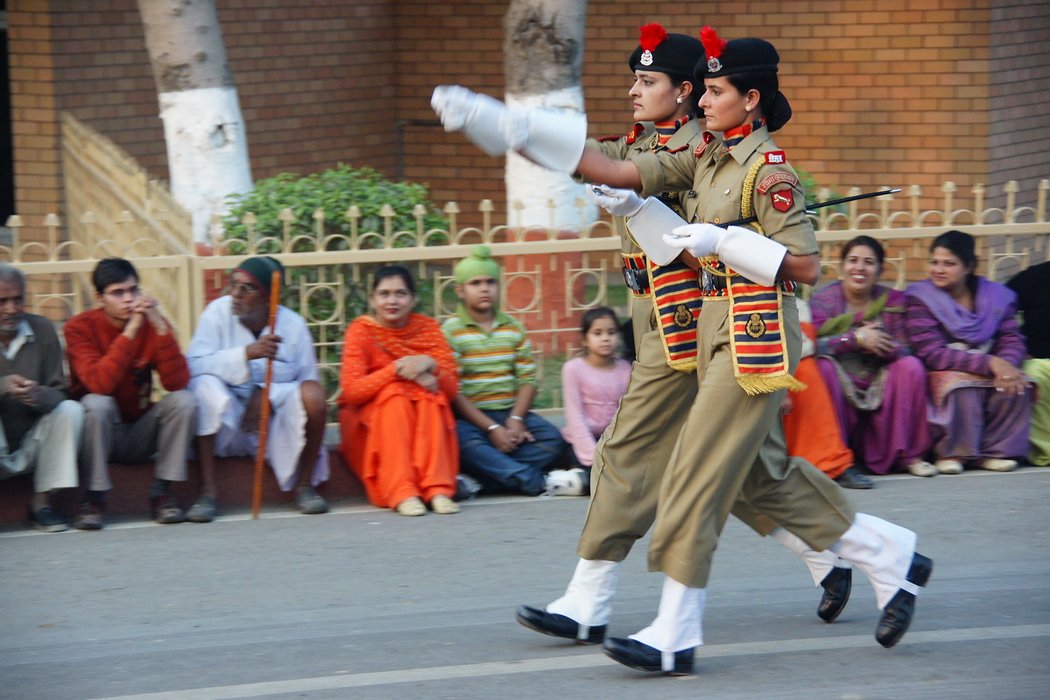
Really entertaining. Loved seeing this full write up on the ceremony, and the vids are a real bonus. I didn’t know women soldiers took part.
Pankaj, I think a lot of people were surprised that women soldiers took part in the ceremony. Apparently that’s only been happening in recent years.
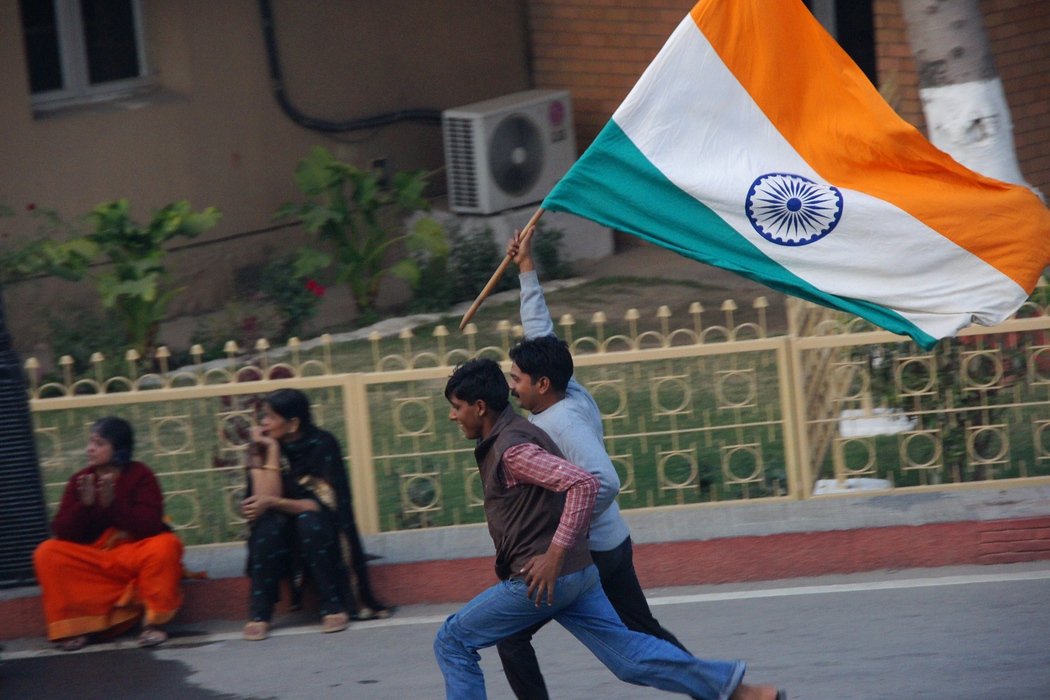
I love that first photo! Such a strong photo to start the piece with
Thanks Caz, it was a tricky photo to get but after several attempts I finally I got it 🙂
How interesting! I am much too lazy to plan or participate in something like this 🙂
It does take a little planning to get there but once you’ve arrived it’s well worth the efforts 🙂
I was really enjoying watching the videos. I can’t imagine how truly fascinating this would be in real life. What a show both sides put on! They do know how to party, at the very least.
Sherry, they really do no how to party! It’s an event that’s really quite unlike any other I’ve ever seen. It felt like a sporting event in sudden death 🙂
Shit, dude that is SO cool! Great photos too…
HA, thanks – I ended up going twice I enjoyed it so much.
i like the Indian ladies here! this is one great ceremony… nice photos 🙂
Thanks, it certainly is quite the ceremony!
Most intimidating military dress in the world? I think so!
I love the head-dressing
I had no idea this existed. Really cool experience!
Thank you! It’s well worth a visit for anybody stationed in Amritsar.
Unbelievably cool! This sounds awesome 🙂
Thanks Margo, it was! It was such a spectacle I had to see it twice 🙂
I have heard and seen so much about this that I can’t wait to see it myself. You just reminded me that I have to go to India- asap.
Thanks Federico, I’m often reminded of how much I want to go back! 🙂 Good luck making that a reality soon.
I have never heard of this, sounds awesome.
It is/was quite awesome! 🙂
Cool pics and videos. You can really see that left over british influence mixed with with Indian/Pakistani beats. Looks like a good party. I love some of the background music you have in your videos. Could you recommend me some artists?
Leif, off the top of my head I’d go check out Punjabi MC – he’s got some cool beats.
Very cool – we should do this on the US-Canadian border. 🙂
LOL, that would be a blast!
I’ve never heard anything about this! I’ll be in India next month, in the northern part, too, but sadly I won’t get nearly this far as we’re just there for six days.
Oh, that’s too bad 🙁 If you ever get a chance to go it’s well worth it in my opinion. I ended up going twice!
Wow. This is intense for a border closing! LOL!
It definitely is! It’s so intense it’s comical 🙂
A border closing ceremony? Sounds like two groups of people who love any excuse to party =)
Andrea, it’s definitely that kind of atmosphere – like a sporting event 🙂
This looks really Rad- never heard of a border crossing ceremony before. Great photos and videos!
Thanks Grace, aside from this one I’m not aware of any others.
I can’t believe they do that every night. Wow.
LOL, neither can I! I did enjoy it though as it was quite the spectacle.
Love the films – its my aim to see this in May next year. Wanting to fulfull a dream to watch it!
?
That’s pretty cool, and those are some high kicks!
I wish I could kick like that! Looks like a finishing move for video game 😛
Wow, really surprising to see the women soldiers! Never even knew about this! Great videos.
Apparently, women have only been part of the parade quite recently!
Haha wicked. Absolute madness that it is done every day but very cool as well. I love pompous ceremonies for no apparent reason.
LOL, yeah I can’t believe they do it everyday as well. It was packed both times I went!
thanks for sharing man… now im so decided to include pakistan for next year… (hopefully) starting in this border…
Flip, it would be cool if you went to Pakistan. I would recommend Bangladesh as well.
A friend of mine saw this a couple of months ago and the photos were similar — looks amazing!
Raymond, it’s quite the spectacle! I ended up going twice…LOL
Really entertaining. Loved seeing this full write up on the ceremony, and the vids are a real bonus. I didn’t know women soldiers took part.
Thanks Jim, apparently they’ve only recently been taking part.
This is probably my favorite post of yours that you have done. I like how you used the two videos to compliment the write up. This is something I really need to see. I love how they do such a dramatic build up and then it ends with a modest handshake. Very telling and very powerful.
Thanks Ted! It’s one of the more vivid memories I have of my time in India & that’s saying a lot!
SO cool! I never heard of this before. Thanks for sharing!
Ah, you’re welcome! It’s quite the experience.