
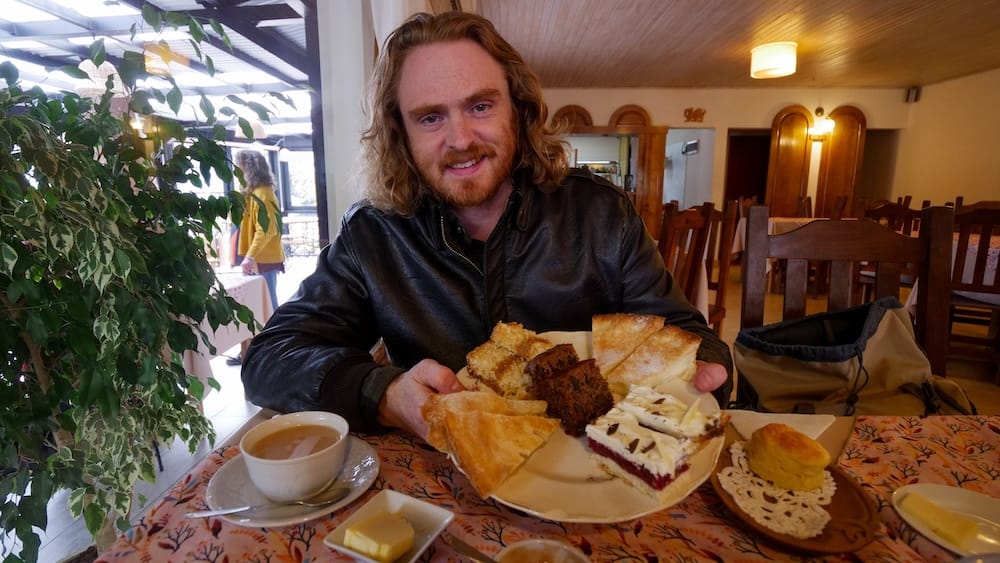
I am staring down a literal tower of carbohydrates. Spread across the floral tablecloth at Ty Gwyn in Gaiman is a platter stacked with white bread, whole wheat bread, cheese sandwiches, and an intimidating roster of six different cakes. Front and center sits the legendary torta negra, a dense, dark Welsh fruitcake that looks like it could double as a doorstop. We had walked in here expecting to order a quaint pot of Earl Grey and maybe a single scone. Instead, we have surrendered to a mandatory Patagonian feast that we have absolutely no hope of finishing.
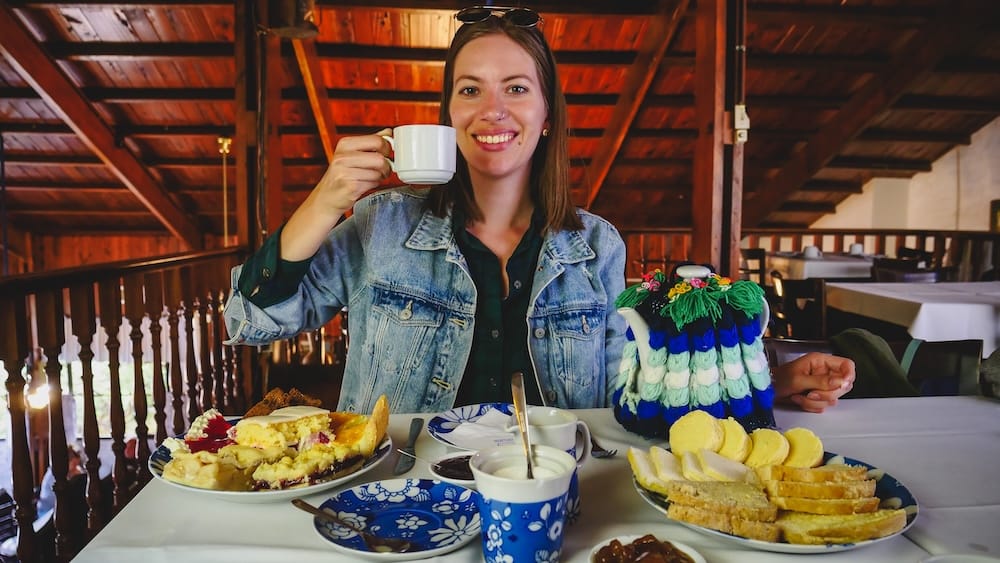
Welcome to the reality of the Welsh Patagonian tea experience.
If you’ve been watching our YouTube channel or digging through our destination guides, you know Audrey and I aren’t ones to shy away from a massive meal. But choosing between Argentina’s two famous Welsh enclave towns—Gaiman, nestled in the dusty lower Chubut Valley near the Atlantic, and Trevelin, tucked into the lush, alpine foothills of the Andes—is about much more than just who bakes the better scone. It’s a choice between two vastly different climates, two distinct logistical puzzles, and two entirely different ways to spend your travel budget.
Let’s strip away the polished tourism brochures and dive into the granular, boots-on-the-ground reality of visiting Gaiman and Trevelin.
The Tale of Two Valleys: Dust vs. Alpine Blooms
Before we get into the exact bus fares and the exact thickness of the dulce de leche icing, you need to understand the fundamental geographical divide between these two towns. They share a Welsh heritage, dating back to the 1865 arrival of the Mimosa ship, but that is where the similarities end.
The Foundational Contrast Matrix
| Feature | Gaiman (The Valley Oasis) | Trevelin (The Alpine Escape) |
| The Vibe | Historic, quiet, desert-surrounded, deeply traditional. | Mountainous, floral, emerging “cool” town, outdoorsy. |
| Primary Draw | Authenticity of the 1865 Welsh History & Historic Tea Houses. | Tulip Fields, Cool-Climate Wineries, & Mountain Scenery. |
| Peak Season | Year-round (Best Sep–Apr). | Strictly Oct 7 – Nov 7 (For the Tulip Bloom). |
| Accessibility | 20 mins from Trelew Airport (REL). | 25 mins from Esquel Airport (EQS). |
| Terrain Reality | Flat, highly walkable but incredibly dusty under the brutal sun. | Hilly, compact town center, but major attractions are 15km out of town. |
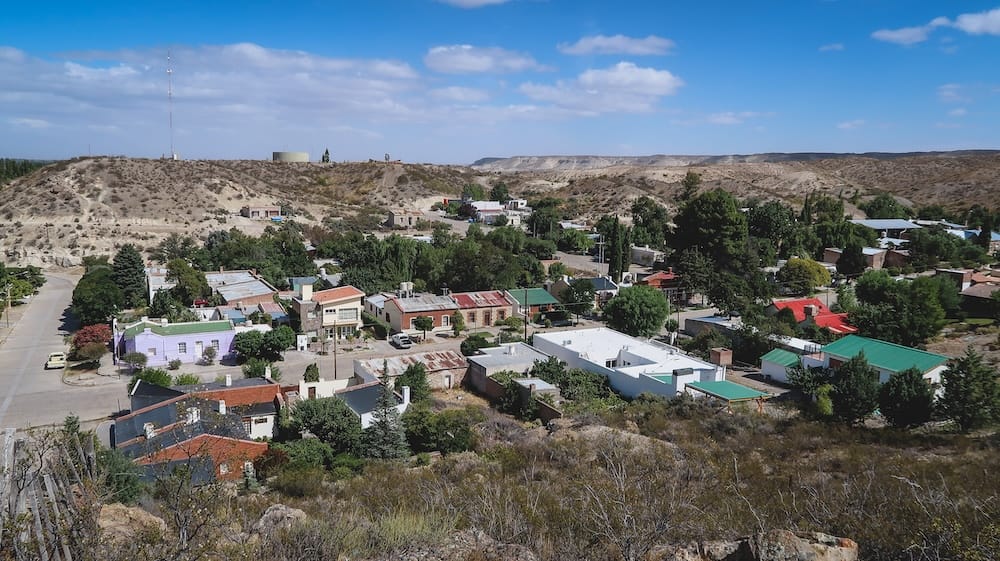
Surviving the Dusty Charm of Gaiman
We thought it was going to be a quick 15-minute hop. We had boarded the 28 de Julio bus in Trelew, anticipating a rapid transit into Gaiman. Instead, we found ourselves on a 45-minute scenic trundle down Route 7, passing rural farmland and cyclists under a blazing Patagonian sun.
This brings us to your first logistical hurdle in the lower valley: The Sube Card sunk cost.
[Samuel’s Transit Reality Check]
When we arrived at the terminal in Trelew, we couldn’t just hand the driver cash. We were forced to buy a non-refundable SUBE transit card for 85 pesos just to pay a 45-peso fare. The clerk slid it under the glass and cheerfully told us, “It’s yours to keep!” Today, the physical card costs more, and the bus fare from Trelew to Gaiman hovers around $2,055 ARS (~$2 USD). If you do not have a loaded SUBE card before you leave Trelew or Puerto Madryn, the driver will not let you on. Finding a charge point in Gaiman, especially during the afternoon, is nearly impossible. Buy the card. Load it heavy. Keep it as a souvenir.
The Great Gaiman Siesta Stranding
If you arrive in Gaiman at 12:30 PM, you will think the apocalypse has happened. Between 12:30 PM and 3:30 PM, the town practically deletes itself. Museums lock their doors. Shops pull their metal grates down. The famous tea houses do not open. We watched tourists who had taken the noon bus from Puerto Madryn wandering the dusty, sun-baked streets looking for shade and a bathroom, finding neither.
The Fix: Arrive in Gaiman no earlier than 3:15 PM. Spend your morning in Trelew at the MEF (Paleontology Museum), grab a quick empanada, and take the 2:45 PM bus. You will arrive right as the town wakes up.
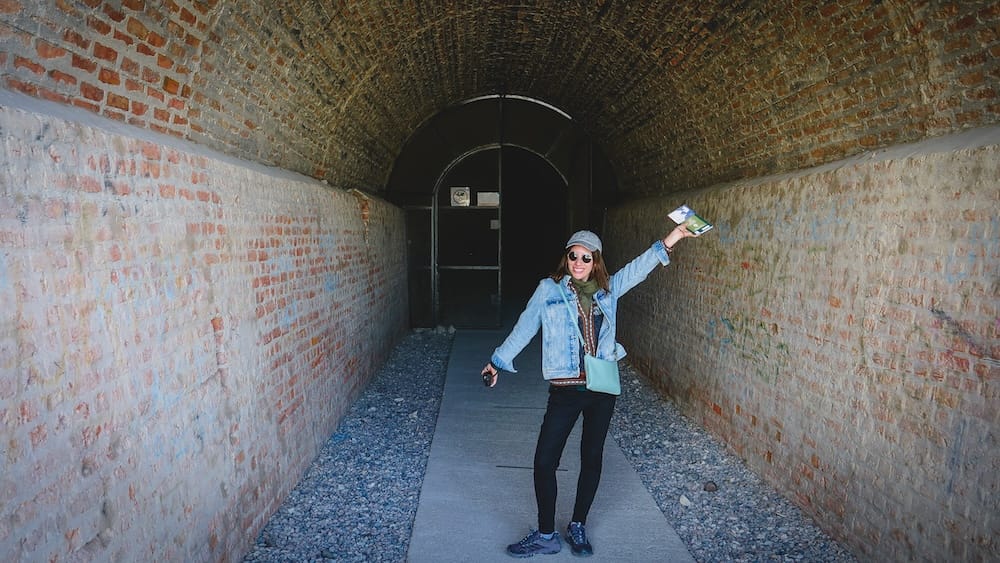
The Deep Dark of the 1914 Tunnel
While waiting for the tea houses to open, we decided to walk off our impending caloric doom. Gaiman isn’t just tea; it’s history. The locals back in the early 20th century refused to let the Central Chubut Railway run through their peaceful town center, forcing engineers to blast a 300-meter tunnel straight through the hillside in 1914.
Today, you can walk through it. But nobody warned us about the “creep factor.” As we stepped into the entrance, clouds of red Patagonian dust blew into our faces. Because the tunnel is curved, the natural light disappears rapidly. You are completely alone, walking in the pitch black, unable to see what is around the bend. It’s a brilliant, slightly spooky micro-adventure that takes 15 minutes and gets you out of the sun.
The Gaiman Tea Reality: A Financial and Caloric Commitment
Let’s return to that massive table of food at Ty Gwyn. Back when we first filmed our video on this topic, our incredible feast cost us about $14 USD per person. We waddled out of there stuffed and happy.
The new reality is vastly different. Gaiman has doubled down on its fame, and the logistics of taking tea here have become rigid.
The Gaiman Tea House Matrix
| Tea House | Rough Price (Est. USD) | The Vibe & Signature Feature | Peak Friction Times |
| Ty Te Caerdydd | $35,000–$42,000 ARS (~$35-$42) | The Royal Experience: Where Princess Diana visited in 1995. Immaculate gardens, posh interior. | 4:00 PM – 6:00 PM (Queue is common). |
| Ty Gwyn | $30,000–$35,000 ARS (~$30-$35) | The Classic Spread: Historically massive portions, slightly more flexible with sharing. | 3:30 PM – 5:30 PM. |
| Plas y Coed | $28,000–$32,000 ARS (~$28-$32) | The Insider Pick: More rustic, authentic Welsh cheese scones, feels less like a museum. | 3:30 PM (Opening) – 5:30 PM. |
You cannot enter a Gaiman tea house today and order “just a cup of tea.” You are commercially forced into the “Service of Tea”—a mandatory set menu that runs north of $35 USD per person.
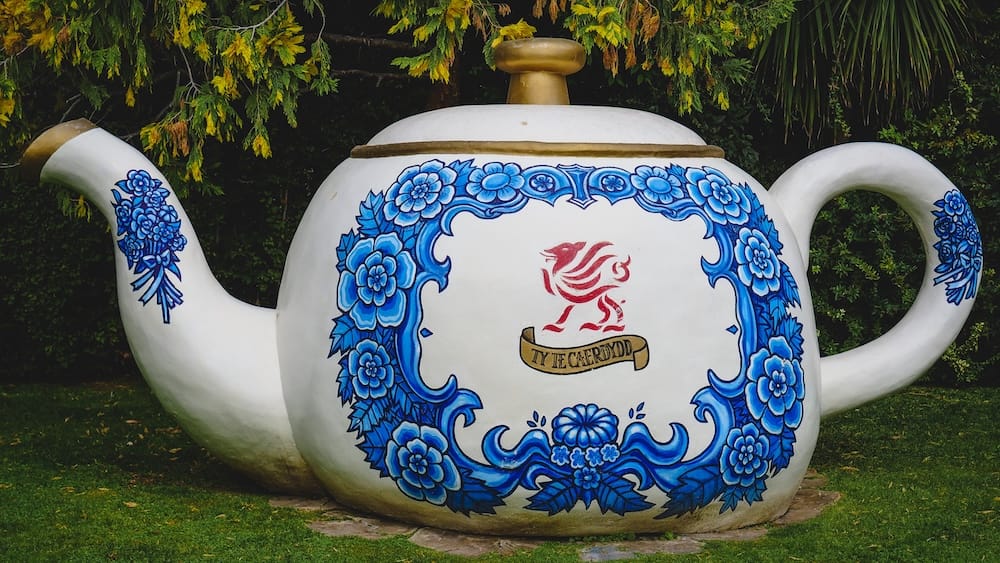
We tried to visit Ty Te Caerdydd, the famous spot where Princess Diana sipped tea in 1995. Getting there was a sweaty, frustrating wild goose chase. We followed six or seven increasingly confusing wooden arrow signs out of the town center, trudging down dusty gravel roads. When we finally arrived at the immaculate, lush green gardens of the estate, we looked down at our dusty travel pants and hiking boots and felt woefully underdressed. To add insult to injury, the second we stepped out of the manicured oasis to walk back to the bus stop, the Patagonian mosquitoes ate us alive.
The Pro-Tip: Go to Ty Gwyn or Plas y Coed in a group of two, but aggressively ask to share one tea service while paying for an extra pot of tea. Some houses resist this, but it is the only way to escape without spending $80 USD on bread and cakes you physically cannot finish.
What we missed but you shouldn’t: If you want to escape the tea monopoly entirely, grab a cheap local cab to Quinta Narlu on the outskirts of town. It’s a fourth-generation agritourism farm where you can buy fresh raspberries by the basket for a fraction of the price of a tea house visit.
Trevelin: The Alpine Floral Escape
If Gaiman is the dusty, historic grandparent, Trevelin is the cool, outdoorsy millennial cousin. Finishing off a lovely visit here, we realized this town is the ultimate antidote to the busier, more crowded tourist hubs like Bariloche. You get the most impressive Andean mountain views without the suffocating crowds—unless you time it wrong.
The Sunday Transit Void
Our arrival in the Esquel/Trevelin region immediately hit a snag. We landed at the Esquel bus terminal on a Sunday, fully expecting to hop on a cheap local bus for the 25-kilometer ride into Trevelin.
[Samuel’s Cash-in-Hand Warning]
Patagonian Sundays are sacred. The Transporte Jacobsen buses, which normally run the “Floral Route” between Esquel and Trevelin every two hours for about $2.50 USD, practically vanish on Sundays. We stood at the terminal looking at empty bays. Ultimately, we paid a taxi driver $12 to $13 USD to take us. It was the best “travel tax” we ever spent, saving us an hour and a half of waiting. Now, a private remise from the Esquel airport directly to Trevelin will cost you a premium (upward of $25,000 ARS). If you fly into Esquel on a weekend, budget for the taxi.
The Humbling Tulip Fail
We walked confidently into the Trevelin tourist office, a camera slung over my shoulder, ready to capture the town’s world-famous tulip fields. We approached the desk. “Excuse me, where can we go see the tulips? Is it difficult to get there?”
The worker stared at us with a deadpan expression that could have frozen the Chubut River. “It’s not springtime.”
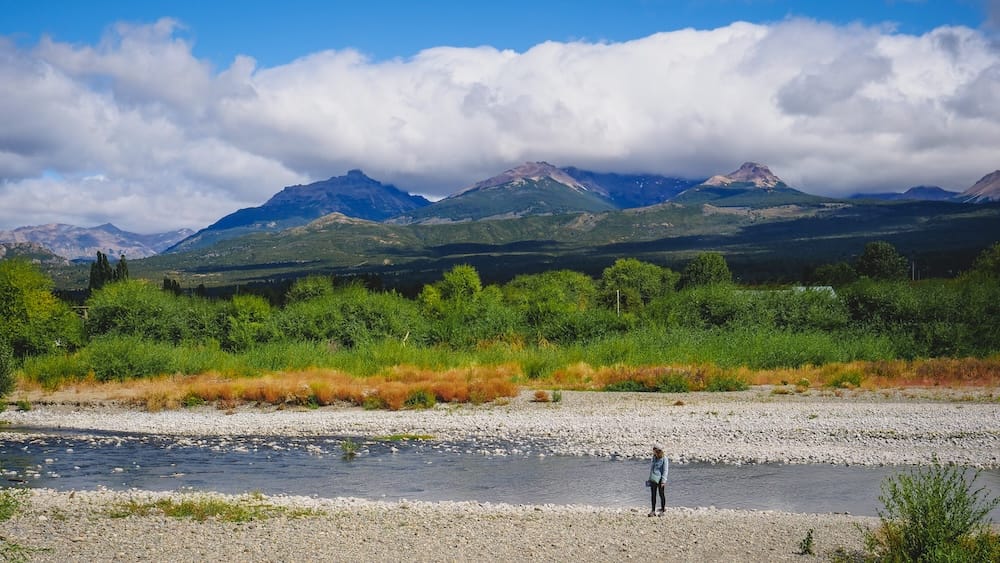
We were there in the dead of summer. The Campo de Tulipanes in Trevelin is not a year-round botanical garden. It is a highly specific, rigidly timed agricultural phenomenon. If you want to see the valley floor explode in rows of red, yellow, and purple against the snow-capped Andes, you must be there strictly between October 7 and November 7.
If you do go during the bloom, the logistics are intense. The fields are 15km outside of town on Route 259. General admission is $32,000 ARS at the gate (buy in advance for $30,000).
The “Moat” Secret: The valley floor becomes a muddy slip-and-slide if it rains, ruining the white sneakers of a thousand unprepared influencers. Pack muck boots. More importantly, to avoid the 1,000+ daily tourists, book the newly instituted Moonlight Tour ($65,000 ARS). It allows photographers into the fields after dark to shoot the tulips under the Milky Way.

The Dragon and The Mill
Trevelin doesn’t have the historic 1914 railway tunnel, but it has the Nant Fach Mill ($12,000 ARS entry), a gorgeous working 19th-century water mill that still grinds flour daily from 3:00 PM to 7:00 PM.
Back in town, you have to look up. Perched on the roof of the tourist office (the same one where we were humiliated about our tulip timing) is a massive red dragon. During the high season, this dragon breathes actual fire at exactly 8:00 PM and 10:00 PM daily. But be warned: this is a manual operation. If the infamous Patagonian wind is howling or it is raining, the dragon stays asleep. Check the Turismo Trevelin Instagram stories 30 minutes before showtime; they post weather cancellations there first.
Redefining the Welsh Diet: The Veteran’s Pivot
By the time we sat down at Casa de Te Nain Maggie (Grandmother Margaret’s Tea House) in Trevelin, we were veterans. We had learned from our caloric defeat in Gaiman. I looked the waiter dead in the eye and proudly executed the “One Set” strategy. We ordered exactly one Welsh tea set to share. It cost us just under $13 USD total, and we walked out feeling satisfied instead of sedated.
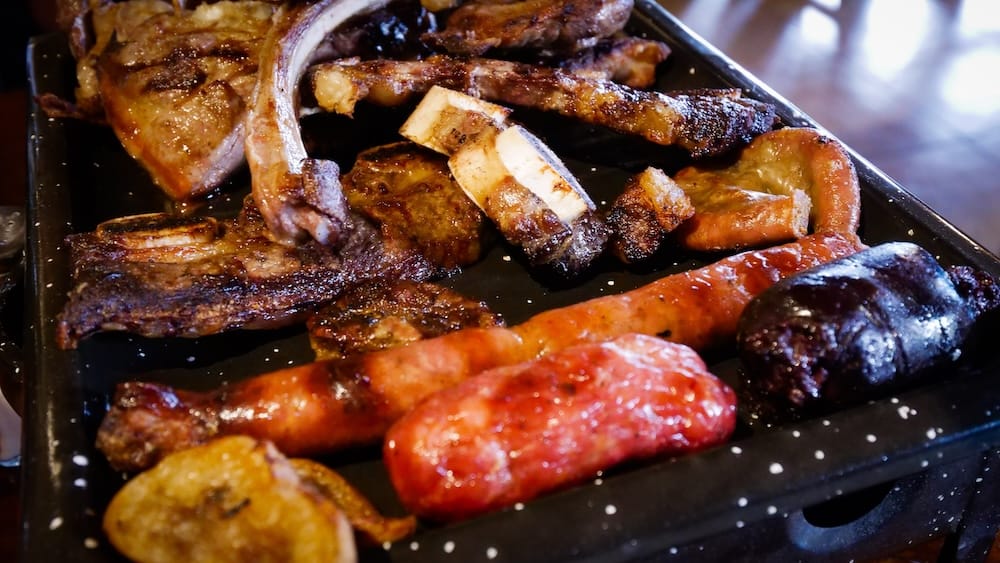
But Trevelin’s food scene extends far beyond tea. That evening, we hit Los Troncos, a local parrilla. For about $20 USD total, we gorged on huge cuts of beef, a massive bread basket, salads, and a full bottle of red wine. I distinctly remember telling the camera, “We’re definitely not getting dessert after this.”
Ten minutes later, we were walking through the artisanal fair in the town’s main square. We immediately bought a massive slice of homemade walnut cake topped with a thick, unapologetic glob of dulce de leche icing. So much for self-control.
What we missed but you shouldn’t: Trevelin is now a recognized Geographical Indication (GI) for cool-climate wines. Vineyards like Contra Corriente and Casa Yagüe are producing incredible Pinot Noirs. However, you cannot just show up. You must make a WhatsApp reservation at least 48 hours in advance for a tasting flight (usually around $15–$25 USD).
The Savory Pivot: Escaping the Sugar Crash
By the time you reach your second or third day in Welsh Patagonia, your body will start to rebel against the sugar. You can only consume so many black cakes, tartlets, and scones layered with homemade jams before you begin to actively hallucinate about salt.
While the historic tea houses are the undisputed marketing hook for both Gaiman and Trevelin, the actual culinary reality of surviving in these towns requires a sharp pivot to the savory. And this is where the financial contrast between the “tourist trail” and the “local reality” becomes glaringly obvious.
In Gaiman, finding a substantial savory meal that doesn’t involve a cheese sandwich on a doily can be an afternoon struggle, especially if you get caught in that notorious 1:00 PM to 3:00 PM siesta void. But Trevelin is a working mountain town with an appetite to match its altitude.
After proudly executing our “One Set” tea strategy at Nain Maggie, we realized we needed real food. We found ourselves at Los Troncos, a local parrilla that completely shattered our concept of Patagonian pricing.
[Samuel’s Value Reality Check]
Let’s talk about the math for a second. In Gaiman, you are commercially forced into a mandatory tea service that will cost you anywhere from $35 to $42 USD for one person. At Los Troncos in Trevelin, our bill came to just under $30 USD total—about $15 per person. For that price, we didn’t just get a meal; we got an absolute feast. We drank an entire bottle of red wine. We had a massive bread basket, a really nice, crisp salad, soda water, and a mountain of expertly grilled beef.
This is the ultimate travel triage. You pay the premium for the history and the porcelain in Gaiman, but you eat like Patagonian kings on a backpacker’s budget in Trevelin.
To help you navigate this caloric pivot, here is a breakdown of exactly what to order when the sugar fatigue sets in.
The Savory Triage Matrix
| The Dish | Where to Find It | Exact Price (Est. USD) | The Reality Check |
| Traditional Cheese Scones | Plas y Coed (Gaiman) | Included in the ~$30 Tea Service | The rustic antidote to the sugar overload. Warm, dense, and served with thick local butter. The perfect palate cleanser before attacking the torta negra. |
| The Full Patagonian Parrilla | Los Troncos (Trevelin) | ~$15 per person (with wine) | Unbeatable value. You get a massive spread of grilled meats, salads, and a full bottle of red wine. This is the meal that actually fuels a hike into the Andes. |
| Welsh Rarebit (Caws Pobi) | Select Trevelin Pubs / Cafes | ~$8 – $12 | A savory, mustard-laced cheese sauce poured over thick toast. It’s heavy, rich, and the perfect pub food if you’ve been freezing out in the winds near the Nant Fach Mill. |
| Local Empanadas | Trelew Bus Terminal (Pre-Gaiman transit) | ~$1.50 per empanada | The ultimate “Siesta Survival” food. Grab three of these before getting on the Route 7 bus to Gaiman, because you won’t find an open kitchen when you arrive at noon. |
The “No Dessert” Lie
Of course, the great irony of the savory pivot is how quickly it falls apart. As we sat at our wooden table at Los Troncos, staring at the empty wine bottle and the remnants of our steak, I distinctly remember looking at the camera and declaring that there was absolutely no way we were eating dessert for the next 48 hours. We were completely maxed out.
Ten minutes later, we were wandering through the artisanal fair taking place in Trevelin’s main square. The locals had set up folding tables packed with homemade goods. We locked eyes with a massive slice of rustic walnut cake. It wasn’t delicate or refined like the pastries in the tea houses; it was topped with a thick, unapologetic, heavy glob of dulce de leche icing.
We bought it immediately.
That is the true rhythm of eating your way through these towns. You endure the high-friction logistics, you pay the “tourist tax” for the historic tea, you find incredible local value at the neighborhood parrilla, and then you entirely abandon your self-control at a folding table in the town square.
The Final Verdict: Effort vs. Reward
Choosing between Gaiman and Trevelin comes down to what kind of friction you are willing to tolerate for your travel rewards.
The Patagonia Welsh Town Verdict
| Metric | Gaiman | Trevelin |
| Logistical Effort | Low: 20 mins from Trelew. Easy bus ride (if you have a SUBE card). | Medium/High: 25 mins from Esquel, but attractions are spread out along Route 259. |
| Financial Friction | High: $35+ USD mandatory set menus at tea houses. | Medium: Cheaper transit, but $32,000+ ARS entry fees for peak season tulips. |
| Visual Reward | Moderate: Historic, dusty, quaint architecture. | Stunning: Alpine peaks, waterfalls (Nant y Fall), and vibrant blooms. |
| The “Must-Do” | Walking the curved, creepy 1914 Railway Tunnel. | Staring at the Milky Way over the Tulip Fields (in October). |
If you are a history purist who wants to sit in the exact room where Welsh settlers (and Princess Diana) drank tea, and you don’t mind the rigid siesta schedules and mandatory massive menus, Gaiman is your dusty, authentic oasis.
But if you want sweeping mountain vistas, world-class cool-climate wine, and you are willing to navigate rural bus schedules and muddy fields, Trevelin is the undisputed crown jewel of Welsh Patagonia. Just make sure you check the calendar before you go looking for tulips.
Are you Team Dusty History (Gaiman) or Team Alpine Blooms (Trevelin)?

FAQ: Gaiman vs Trevelin: Which Welsh Town Should You Visit In Patagonia?
Is it possible to visit both Gaiman and Trevelin in a single day?
No. These towns are nearly 600 kilometers apart on opposite sides of the Chubut province. Gaiman is an easy afternoon trip from the Atlantic coast (Puerto Madryn/Trelew), while Trevelin requires a dedicated stay in the Andean foothills near Esquel. If you try to bridge that gap in a day, you’ll spend eight hours staring at the windshield and zero hours eating cake.
Do I really have to pay for a full tea service if I’m not that hungry?
Usually. In Gaiman, the “Service of Tea” is the standard business model, and most houses will charge you the full $35–$42 USD price of entry regardless of your appetite. Your best workaround is to head to Trevelin, where places like Nain Maggie are traditionally more relaxed about sharing a single set between two people—provided you’re polite and order an extra drink.
Can I see the Trevelin tulips if I visit in December or January?
Never. This is the ultimate “Expectation vs. Reality” trap. The tulips are an agricultural crop, not a year-round garden; once the bloom ends in early November, the bulbs are headed for harvest. If you show up in the summer like we did, you’ll be greeted by a very empty field and a very confused tourist office worker.
Is the water safe to drink in these Welsh towns?
Absolutely. The tap water in both Gaiman and Trevelin is generally high-quality and safe for travelers. In Trevelin specifically, you’re drinking Andean snowmelt, which is about as fresh as it gets. Save your pesos and the plastic waste—just bring a reusable bottle and fill up at your accommodation.
Will I be able to use my credit card at the tea houses?
Unreliable. While there is now more connectivity, “the system is down” remains a common refrain in rural Patagonia. Gaiman’s tea houses are notorious for “cash-only” surprises during peak hours. Always carry enough Argentine Pesos to cover your bill; relying on a spinning credit card machine is a great way to end a lovely afternoon with a stressful trek to a broken ATM.
Are the tea houses open for lunch?
Rarely. Most traditional Welsh tea houses in Gaiman don’t even turn the lights on until 3:00 PM. If you arrive at noon expecting a midday meal, you’ll find a ghost town. Plan to eat a hearty empanada lunch in Trelew or Esquel first, then treat the tea service as your “Linner” (Lunch-Dinner) later in the afternoon.
Do I need to speak Welsh or Spanish to get by?
Spanish helps. You’ll see Welsh on the signs and napkins for the “vibe,” but Spanish is the daily language of business. While most major tea house staff speak enough English to explain the cakes, knowing a few Spanish basics for the bus drivers and taxi remises is essential. Don’t worry about the Welsh—unless you really want to impress the locals with a “Diolch” (Thank you).
Is there a dress code for the “Royal” tea houses?
Not officially. We felt woefully underdressed in our dusty hiking gear at Ty Te Caerdydd, but they didn’t kick us out. That said, these are formal Victorian-style rooms with lace doilies and fine china. You don’t need a suit, but swapping your sweat-wicking trekking shirt for a clean polo or a casual dress will make you feel much less like a wandering hobo in a palace.
Project 23 Argentina: This guide is also available in Spanish. [Lea la versión en castellano: Gaiman vs Trevelin: ¿Qué pueblo galés deberías visitar en la Patagonia?]