
Audrey and I had just polished off a massive plate of waffles drowning in an offensive, glorious amount of dulce de leche and heavy cream in Esquel. I was riding a dangerous, completely unjustified sugar high, entirely ready to tackle the ten-block walk to the bus station. Then we stepped outside. Within three seconds, the infamous Patagonian wind hit us sideways, instantly snapping my cheap travel umbrella and bending it into a permanent piece of modern art. Forget the crisp mountain air or the jagged granite peaks of the brochure Patagonia for a second. Right then, I didn’t need a hike. I needed someone to find a wheelbarrow and physically roll me back to the hotel to sleep off the food coma.
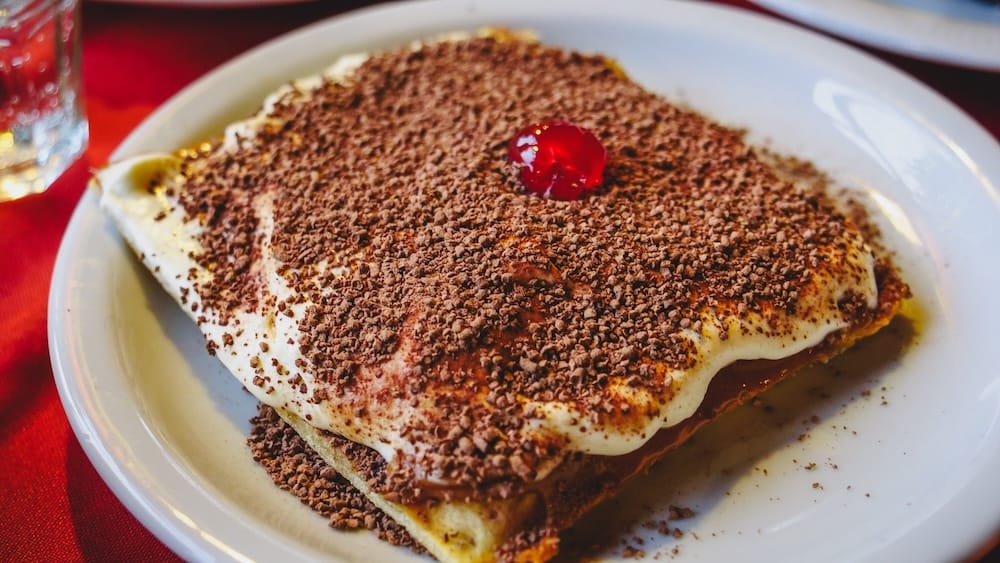
If you watch our YouTube channel, you know Audrey and I are obsessed with the grueling, beautiful reality of moving around Argentina. But there is a massive misconception about traveling this far south. People pack their Gore-Tex, their trekking poles, and their freeze-dried camp meals, completely ignoring the fact that Patagonian culture is built on a foundation of pure, unapologetic sugar.
This isn’t a place where you just “grab a sweet treat.” Eating dessert here is a full-contact sport. It is the fuel that powers the hikers in El Chaltén, the ultimate reward after battling the infamous Patagonian wind, and the cultural glue that holds the daily siesta together. From the fiercely guarded recipes of the Bariloche chocolate cartel to the heavy, calorie-dense Welsh tea houses of the Chubut Valley, this is your hyper-specific, boots-on-the-ground manual to navigating Patagonia’s sweet side.
🍦 Patagonia Dessert Strategy Matrix: What to Eat, Where, and Why
| Location | Must-Try Sweet | Best Spot | When to Eat It | Why It Matters | Pro Tip |
|---|---|---|---|---|---|
| Bariloche | Chocolate + artisanal ice cream | Calle Mitre (Rapa Nui, Mamuschka) | Afternoon or post-dinner | Chocolate capital of Patagonia | Order a cuarto kilo and mix flavors |
| El Bolsón | Forest fruit ice cream (calafate, raspberry) | Jauja | Warm afternoon | Hyper-local berry flavors | Try unusual combos like rosehip |
| Gaiman | Welsh tea spread (torta negra, scones) | Ty Te Caerdydd / Ty Gwyn | Mid-afternoon tea time | Cultural + historical experience | Come hungry—this is a full meal |
| Trevelin | Torta negra + pastries | Local bakeries / tea houses | After exploring Ruta 259 | Welsh heritage meets Andes scenery | Pair with strong tea or coffee |
| El Chaltén | Alfajores + chocolate | Local bakeries / kiosks | Before or after hikes | Trail fuel disguised as dessert | Carry extras in your backpack |
| Ushuaia | Hot chocolate + pastries | Laguna Negra | Cold evenings | Comfort food in extreme climate | Try the Submarino experience |
| El Calafate | Dulce de leche desserts | Cafés and bakeries | Evening dessert | Argentine staple done right | Look for flan casero |
| Puerto Madryn | Ice cream + waffles | Seafront cafés | Windy afternoons | Sweet break by the coast | Beware: wind + waffle = chaos |
The Quarter-Kilo Rule: Navigating the Heladería Triage
In North America, getting ice cream is a casual affair. You ask for a scoop, they hand you a cone, you move on. In Argentina, the heladería is a sacred institution with a rigid set of operational logistics.
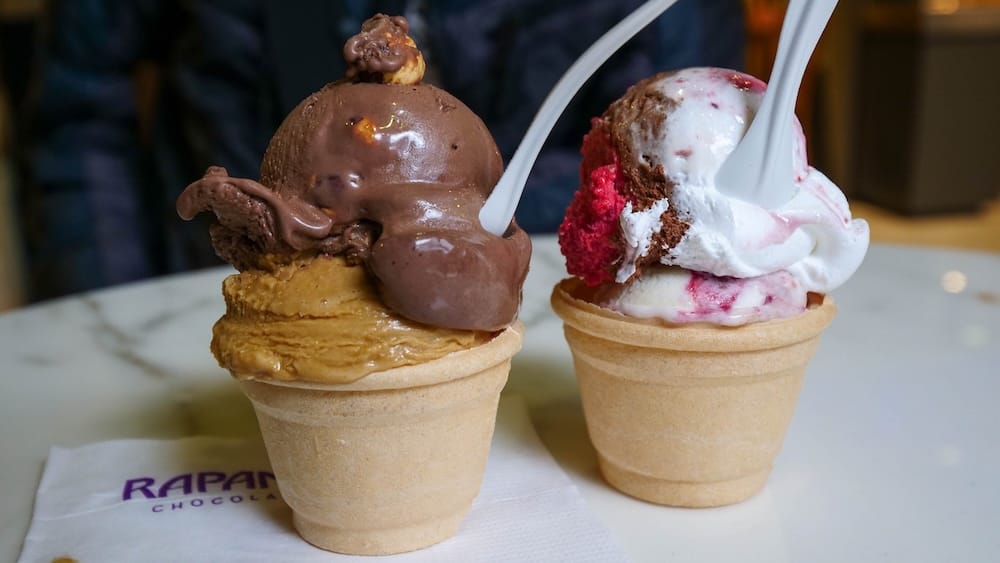
My first mistake in El Bolsón was trying to order a single, modest scoop. The teenager behind the counter looked at me like I had just insulted his ancestors. Here, ice cream (helado) is sold by weight, and it is a fundamental part of the regional delivery ecosystem—ordering a kilo of gelato to your apartment at 11:00 PM is as common as ordering a pizza. For the traveler on foot, the absolute baseline is the cuarto kilo (quarter-kilogram). The price difference between a tiny, restrictive cup and a massive 1/4 kg tub is so mathematically negligible that buying small is basically throwing pesos away.
[The Samuel Sidebar: The Hidden “Cucurucho” Surcharge]
When you order, they will ask if you want a “vasito” (paper cup) or a “cucurucho” (a premium, massive waffle cone). Be warned: Opting for the cucurucho often carries a hidden 15% to 20% surcharge at higher-end shops. The silver lining? Patagonian heladerías usually line the inside tip of the cucurucho with a solid plug of melted dark chocolate they don’t advertise on the menu. It is an investment I highly endorse.
You also do not just point at the glass. You go to the register, declare your weight (1/4 kg allows you to comfortably smash three flavors together), pay the cashier, take your printed receipt, and then you approach the freezer to negotiate your flavors.
And the flavors in Patagonia are entirely different from the rest of the country. You are looking for the holy trinity of southern berries:
- Calafate: A deep, staining purple berry that is tart, earthy, and sweet. Local legend dictates that if you eat the Calafate berry, you are guaranteed to return to Patagonia. It makes a killer, velvety gelato.
- Rosa Mosqueta (Rosehip): Floral, slightly tangy, and usually swirled into a cream base like a thick marmalade.
- Chocolate Amargo con Frambuesa: Dark, bitter chocolate absolutely loaded with whole, tart Patagonian raspberries.
The Patagonian Heladería Matrix
| Venue & Location | Signature Move | The Reality Check | Walkability & Effort |
| Jauja (El Bolsón & Bariloche) | Mousse del Piltri (Chocolate mousse with mountain nuts and caramel). | ~$9,500 ARS per 1/4 kg. The undisputed champion of regional ingredients. | Extremely central in both towns. Expect a 15-minute line at 9 PM. |
| Rapa Nui (Bariloche) | FraNuí (Frozen raspberries double-dipped in white and milk chocolate). | You buy these by the tub ($11,000 ARS). They are highly addictive. | Located right on Mitre St. Total sensory overload inside. |
| Heladería Mamuschka (Bariloche) | Timbal de Dulce de Leche (A towering fortress of caramel). | Ice cream is separated from the main chocolate floor. Highly chaotic ordering. | Dead center. Prepare for elbow-to-elbow crowds. |
The Bariloche Chocolate Cartel: Surviving Mitre Street
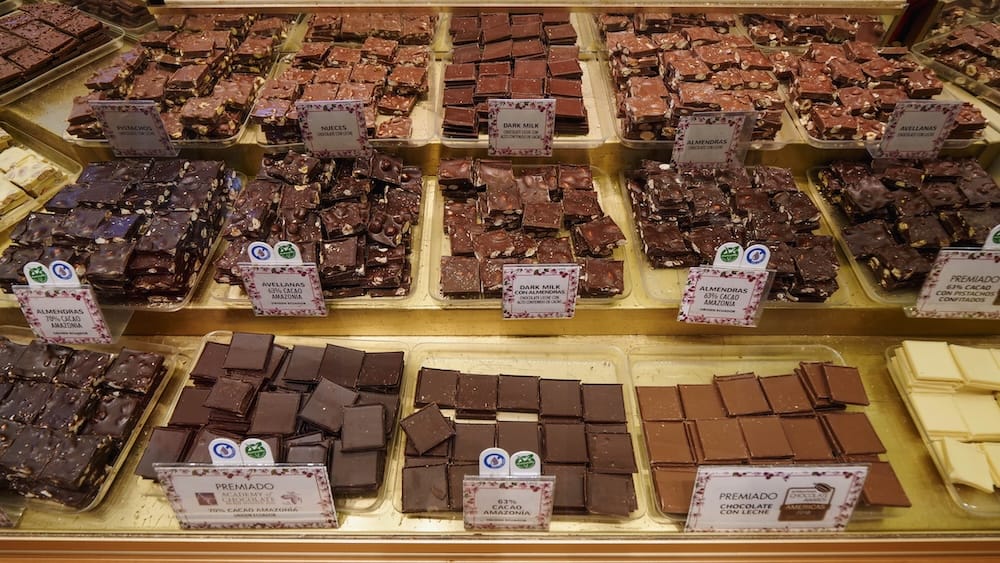
If you’ve seen our Bariloche video, you’ve seen us wandering down Calle Mitre, visually overwhelmed by what can only be described as a Swiss alpine village that was aggressively teleported to the Andes and given a heavy dose of Latin flair. Bariloche is the undisputed chocolate capital of South America, but the main drag is a logistical gauntlet.
Every shop has giant wooden doors, massive window displays of chocolate fountains, and aggressive free-sample campaigns. But not all chocolate is created equal, and knowing exactly where to deploy your pesos is critical.
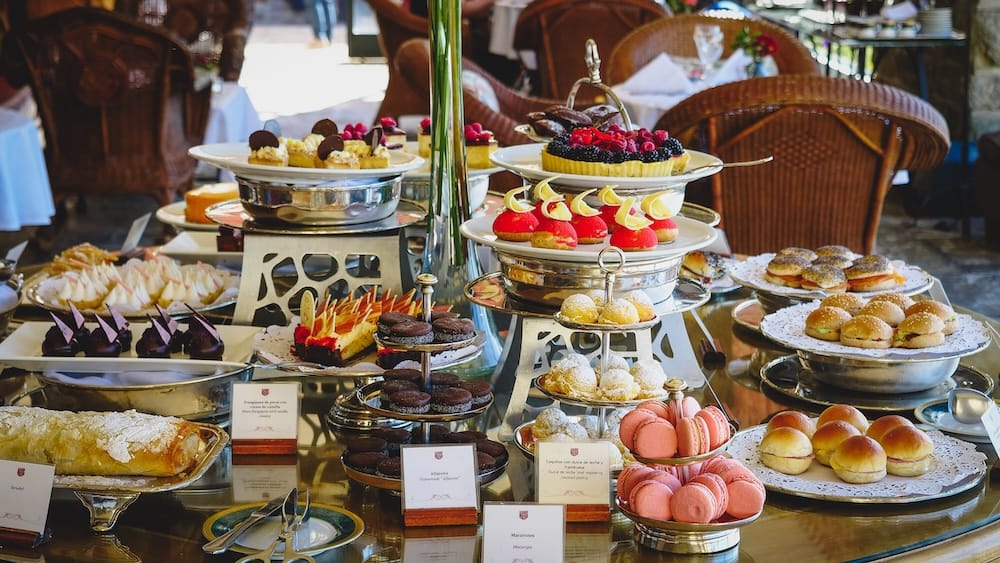
If you are buying souvenirs for your office, you go to Del Turista. They have the most efficient, high-volume assembly line for large groups. A 110g box of Chocolate en Rama (chocolate expertly folded to look like tree branches—a local invention) will run you roughly $10,500 ARS.
If you want the absolute, undisputed highest quality, you fight your way into Mamuschka. Look for the iconic red nesting dolls. They are the only major player in town utilizing a “Bean to Bar” model, meaning they actually roast their own cocoa beans on-site rather than melting down bulk industrial chocolate. A 160g box of their premium cuts sits around $13,500 ARS, but the textural difference is staggering.
[The Foodie Reality Check: “La Yapa”]
When you step off the main tourist drag to smaller, artisanal shops like Benroth (hidden away at Beschtedt 569, where locals actually shop for spicy, experimental high-cacao tablets starting at $12,000+ ARS), there is an unwritten cultural rule. If you buy chocolates by weight and your order crosses the 500g threshold, it is entirely expected for you to politely ask for a “degustación” or a “yapa”—a little extra sample for the road. They will almost always toss an extra truffle or two into your hand before you leave.
The Welsh Tea Death March: Chubut Valley’s Heaviest Tradition
I need to paint a very clear picture of our arrival in Gaiman. We had taken the 45-minute bus ride from Trelew (paying with our stubbornly acquired SUBE transit cards). We stepped off into the Chubut Valley sun. I was wearing a black flannel shirt, completely misjudging the midday heat. We were blindly following a series of hand-painted wooden signs that just said “Sigue la flecha” (Follow the arrow), kicking up Patagonian dust for blocks.
When we finally stumbled into the gardens of Ty Te Caerdydd, I was a sweaty, dusty mess expecting a rustic pioneer cabin. Instead, I found myself severely underdressed in an immaculate, hyper-luxurious garden—the exact spot Princess Diana famously had her afternoon tea in 1995.
The Welsh tea tradition in Patagonia is the most misunderstood logistical element of southern travel. In 1865, Welsh settlers arrived in this barren desert and eventually negotiated peace with the local Tehuelche people. They built irrigation, they built chapels, and they built tea houses. But if you think you can just wander into one of these historic homes at noon for a quick cup of Earl Grey, you are walking into a trap.
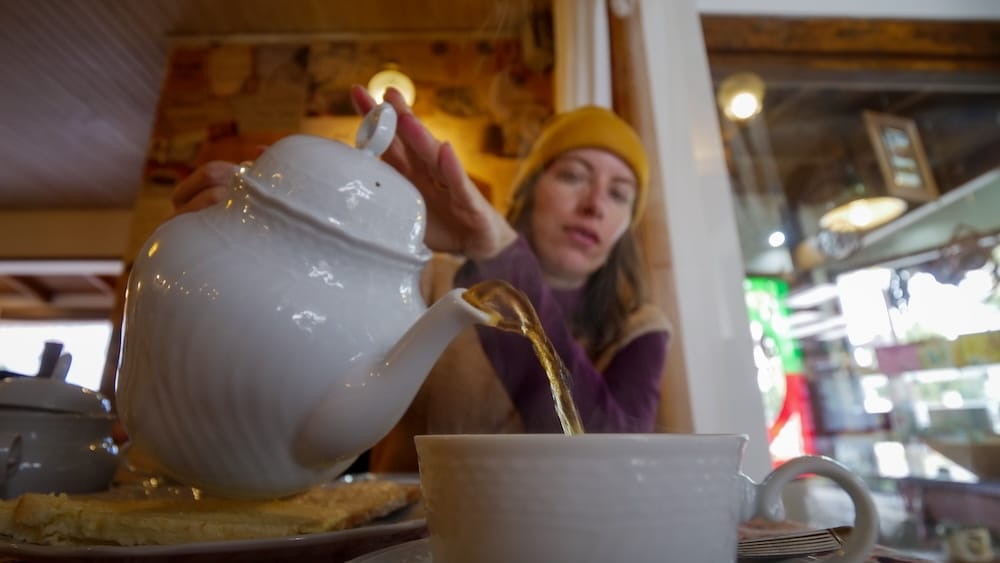
First, almost none of the tea houses open before 2:30 PM. Second, and most importantly for your wallet and your stomach: You cannot order “just tea.” Nearly every established house operates strictly on the “Service of Tea” mandate. You are paying for a massive, multi-tiered set menu. When we sat down at Ty Gwyn (the more traditional, slightly more affordable alternative to Ty Te Caerdydd), they didn’t hand us a menu. They just started bringing plates.
Within four minutes, we were staring down a table containing homemade bread, scones with clotted cream and regional jams, and exactly eight different types of cakes.
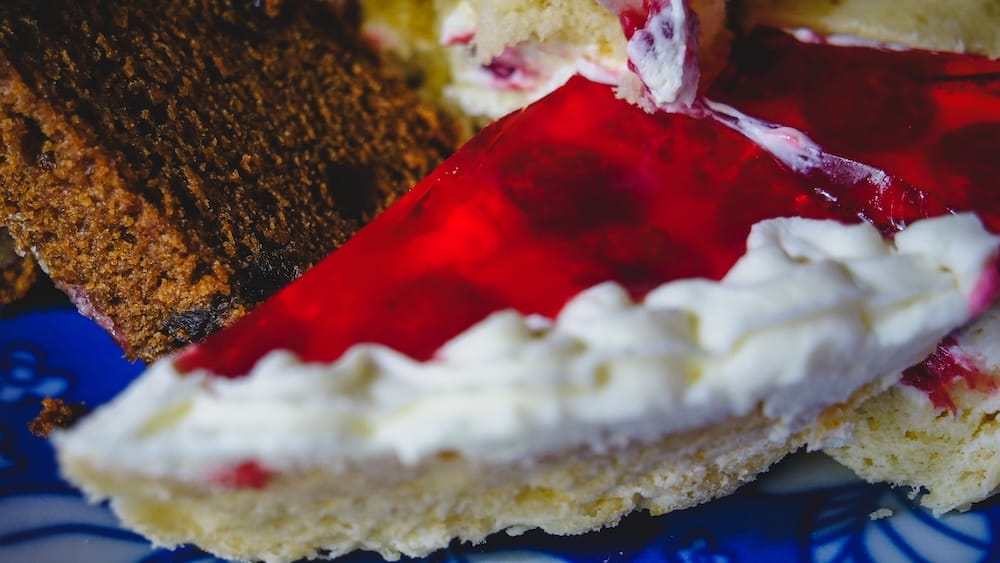
I literally had to stop eating to catch my breath. I looked at Audrey, completely winded, and admitted, “Taking sugar is tiring.” You have to pace yourself. You must strategically navigate the Torta Negra (the famous Welsh black cake, a dense, dark molasses and rum-soaked fruitcake that survives for months) and the Torta de Crema (a towering cream pie).
The Chubut Valley “Service of Tea” Triage
| Venue | The Vibe & Reality | The Financial Damage | The Verdict |
| Ty Te Caerdydd (Gaiman) | The “Diana” Spot. Pristine gardens, highly aristocratic, massive crowds. | $35,000 – $42,000 ARS per person. | The most expensive, but the gardens provide the best photography backdrop. |
| Ty Gwyn (Gaiman) | Old-school, creaky floors, massive portions, incredibly historic. | $30,000 – $35,000 ARS per person. | Best value for sheer volume of food. You will need a doggy bag. |
| Nain Maggie (Trevelin) | Located further west in the mountains. Quieter, heavy focus on the Torta Negra. | $28,000 – $32,000 ARS per person. | The best alternative if you are exploring the Andean side of Chubut rather than the coast. |
The Monday/Tuesday “Sugar Desert” Warning
If you want to know what true Patagonian isolation feels like, try finding an open bakery in the Chubut Valley on a Monday. The towns of Gaiman and Dolavon effectively shut down on Mondays and Tuesdays. The museums are locked. The tea houses are dark.
We learned this the hard way, wandering empty streets where the only living creatures were the omnipresent Argentine street dogs. Our grand culinary afternoon was reduced to sitting on a curb outside a YPF gas station, eating dry, supermarket-grade alfajores and drinking a liter of Paso de los Toros grapefruit soda. Plan your Chubut Valley itinerary strictly for Wednesday through Sunday.
The Ecosystem of Sweets: Waffles, Alfajores, and The Wheelbarrow Fantasy
The sugar dependency doesn’t stop at dedicated dessert shops; it bleeds into the very fabric of daily Patagonian logistics.
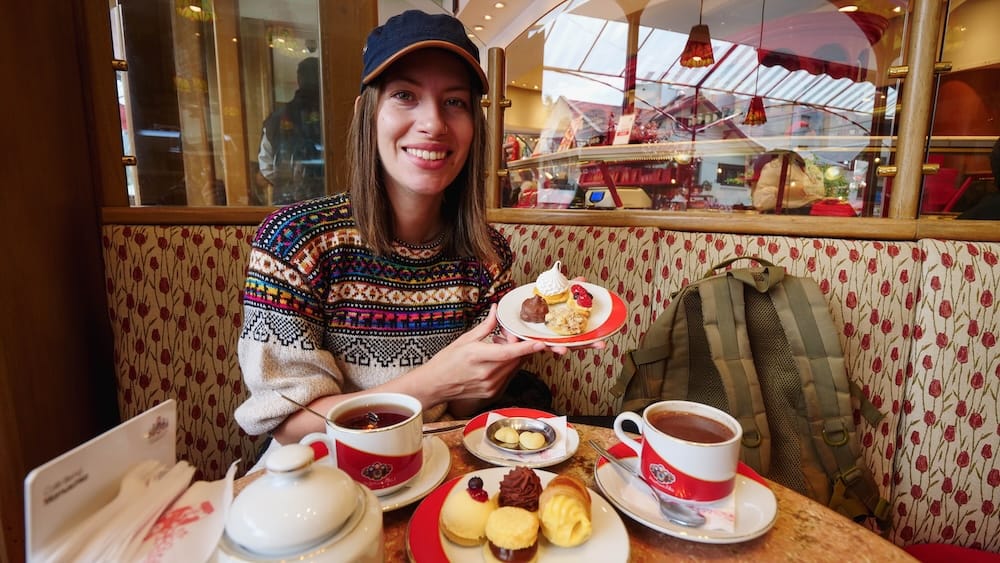
Let’s talk about breakfast. The “Continental Breakfast” you expect does not exist here. The Argentine breakfast is a beautiful, carbohydrate-heavy assault on your pancreas. It consists of medialunas (small, sweet, sticky croissants), toast, butter, and massive dollops of dulce de leche (a thick, caramelized milk spread that is the lifeblood of the nation).
If you rent an Airbnb and try to bypass the cafes by grocery shopping, beware the Pre-Sugared Coffee Trap. You don’t fully understand Argentina’s love affair with sugar until you buy a cheap jar of instant coffee at La Anónima supermarket, pour hot water over it, and realize the manufacturer has already aggressively mixed processed sugar directly into the coffee granules. You have to actively hunt for (and pay a premium for) “Café sin azúcar” just to get a bitter black coffee to balance out your pastries.
When you move further south into the hiking capitals, the sweets shift from leisurely experiences to essential survival gear.
In El Chaltén, the trekking capital, you don’t hike the grueling path to Mount Fitz Roy without stopping at Chalteños. This local bakery produces the “it” item for hikers: the Alfajor de Frutos Rojos.
An alfajor is the quintessential Argentine snack—two cookies bound together by a filling. But the spectrum is vast:
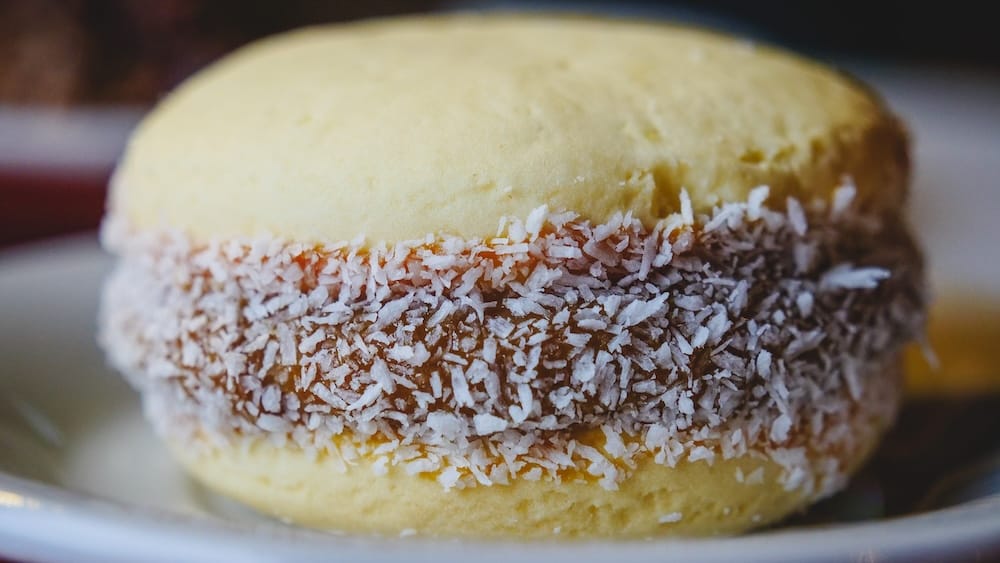
- The Maicena: Made with cornstarch, these are incredibly crumbly, dry, heavily stuffed with dulce de leche, and rolled in shredded coconut. (Do not attempt to eat one without a beverage nearby; it will absorb all the moisture in your mouth).
- The Marplatense: The classic, commercial style (think the famous Havanna brand). Soft cookies dipped entirely in hard, dark chocolate.
- The Santafesino: Three or more layers of pastry covered in a hard, sugary white glaze.
Chalteños takes the concept, injects it with local Patagonian red berries, and creates a calorie-dense brick that fits perfectly in a daypack. It is the ultimate summit reward.
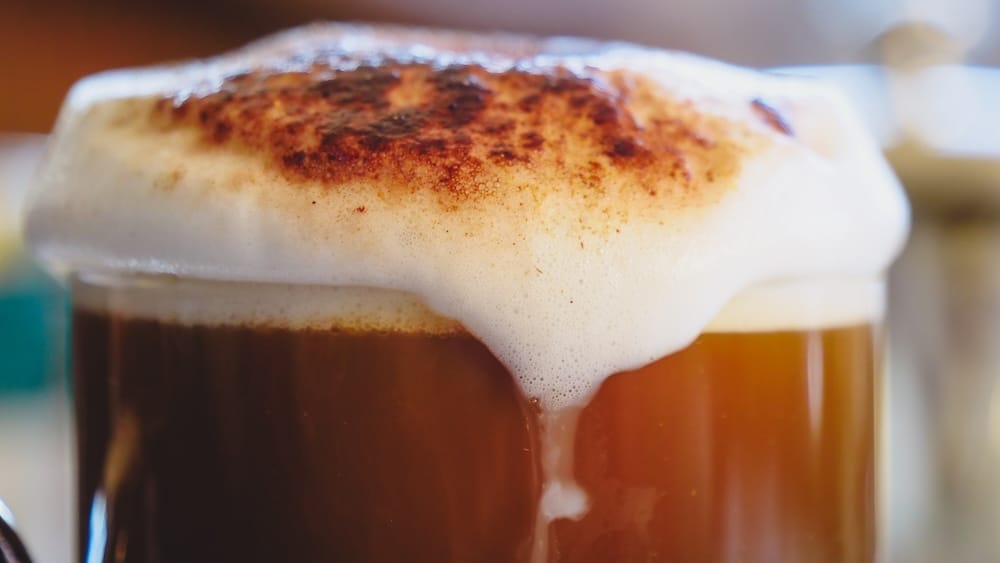
Further down in Ushuaia, at the absolute edge of the world, the bitter cold demands a different logistical approach. At Laguna Negra (located at San Martín 445), you don’t order hot cocoa. You order a Submarino. They bring you a glass mug of steaming, frothy milk and a solid bar of dark Patagonian chocolate shaped like a submarine. You drop the submarine into the milk and frantically stir as it melts into the richest hot chocolate of your life.
The Weather, The Dogs, and The Physical Toll
You have to respect the physical environment when engaging with this food culture. In Esquel, we gorged ourselves on a massive brunch of waffles drowning in dulce de leche and whipped cream. We were riding a dangerous sugar high, ready to tackle the ten-block walk to the bus station. The moment we stepped outside, the infamous Patagonian wind hit us sideways, instantly snapping and bending our cheap travel umbrella permanently out of shape. The region does not care about your sugar high.
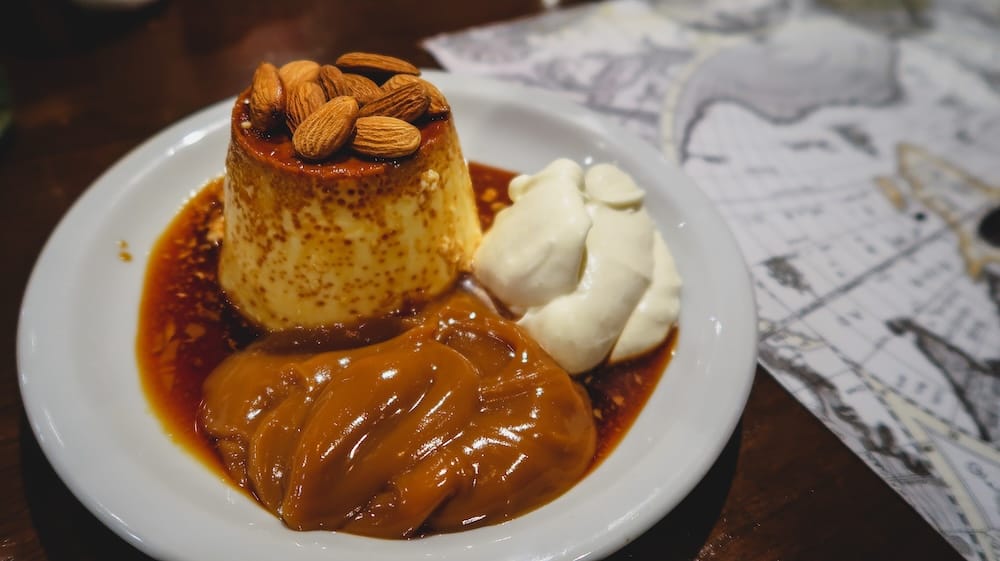
And then there is the food coma. The portions are notoriously huge. In Puerto Madryn, after a heavy seafood lunch, we ordered the flan casero for dessert. What arrived was a towering block of dense custard, completely submerged in a moat of thick syrup and flanked by an ice-cream-scoop-sized ball of dulce de leche. As we slowly demolished it, the exhaustion hit. I looked at Audrey and told her we didn’t need a taxi back to the hotel; we needed someone to wheel us back in a wheelbarrow.
[The Samuel Sidebar: The Dog Tax]
Whether you are eating a waffle in Esquel or a medialuna in Bariloche, if you are sitting on an outdoor patio, you will be accompanied by an Argentine street dog. They are generally large, incredibly polite, and expert negotiators. They will rest their chins on your knee and look at you with heartbreaking eyes. It is culturally acceptable—and frankly, a joy—to pay the “Dog Tax.” I happily tear off pieces of crusty artisanal bread, dip them in meat gravy or spare dulce de leche, and hand them over. But be warned: they will judge you if you don’t share.
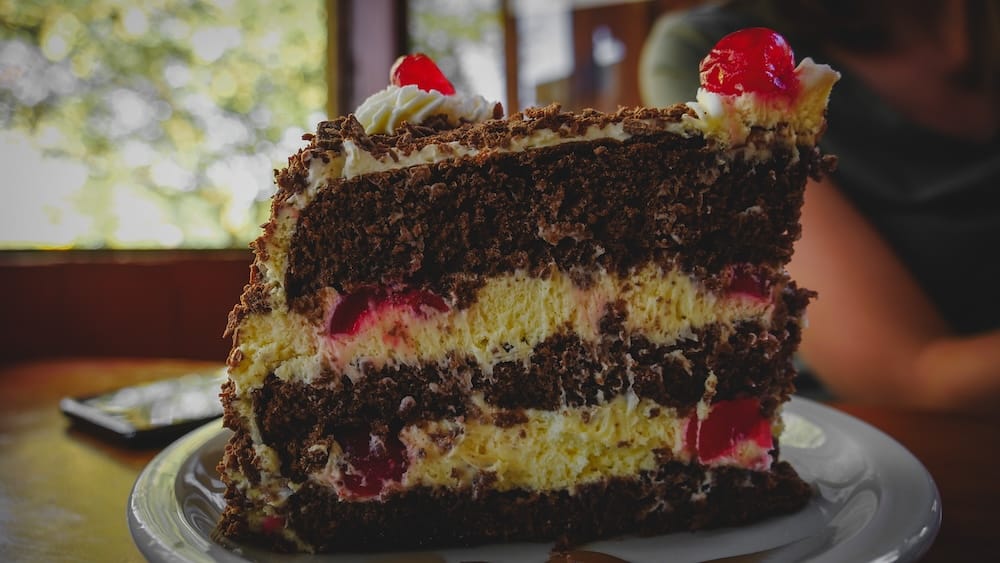
The Patagonian Sugar Index: A Field Guide to Pastry Architecture & Forest Fruits
If you’ve successfully navigated the Bariloche chocolate cartel and survived the quarter-kilo ice cream triage without slipping into a permanent coma, congratulations. You have passed the beginner’s course. But to truly master the Patagonian sweet ecosystem—especially when you step out of the tourist hubs and into a local panadería (bakery)—you need to understand the structural engineering of regional sugar.
This isn’t just about grabbing a donut. Patagonian baking is a high-stakes game of caloric preservation, acidic counter-punches, and highly specific dairy viscosities. If you walk into a La Anónima supermarket in El Calafate or a corner bakery in Trevelin without knowing the lexicon, you are flying blind.
Here is your advanced field guide to the heavy artillery of the Patagonian pastry case.
The Dulce de Leche Spectrum: Do Not Buy the Wrong Jar
There is a terrifying moment for every first-time visitor in an Argentine supermarket. You decide to save a few pesos by making breakfast in your Airbnb, so you head to the dairy aisle to buy dulce de leche. You turn the corner, and you are suddenly staring at a towering wall of 40 different brown jars, plastic tubs, and cardboard cylinders, all entirely in Spanish, and all completely un-navigable to the untrained eye.
Most travelers think all dulce de leche is identical. It is not. Buying the wrong viscosity will completely ruin your makeshift hiking sandwiches or your morning waffles.
[Samuel’s Panadería Warning: The Tongs and the Tray]
When you walk into a genuine local panadería to buy your breakfast pastries, do not wait for someone to serve you. You must immediately locate the stack of plastic trays and the metal tongs near the door. You are responsible for building your own mountain of baked goods. Once your tray is aggressively overflowing, you bring it to the cashier to be weighed and boxed. Hesitate at the door, and the locals will ruthlessly outmaneuver you for the last fresh medialuna.
The Dulce de Leche Viscosity Matrix
| The Classification | Texture & Viscosity | The Airbnb Application | The “Ruin-Your-Day” Mistake |
| Clásico / Familiar | Runny, shiny, and spreadable. Has a high moisture content. | Smearing over morning toast, pancakes, or eating directly off a spoon at 2:00 AM. | Trying to use this to bake an alfajor. It will violently collapse and bleed out the sides, destroying your backpack. |
| Repostero | Thick, matte finish, and heavily dense. Structurally rigid. | Building layered cakes, stuffing homemade pastries, or taking on a hike. It holds its shape. | Trying to spread this on delicate white bread. It will tear the bread to shreds like wet paper. |
| Heladero | Specifically engineered with chemical stabilizers to resist freezing. | You won’t buy this in a jar, but it’s what gives Patagonian ice cream its stretchy, unbroken texture. | N/A — Leave this to the professionals at Jauja. |
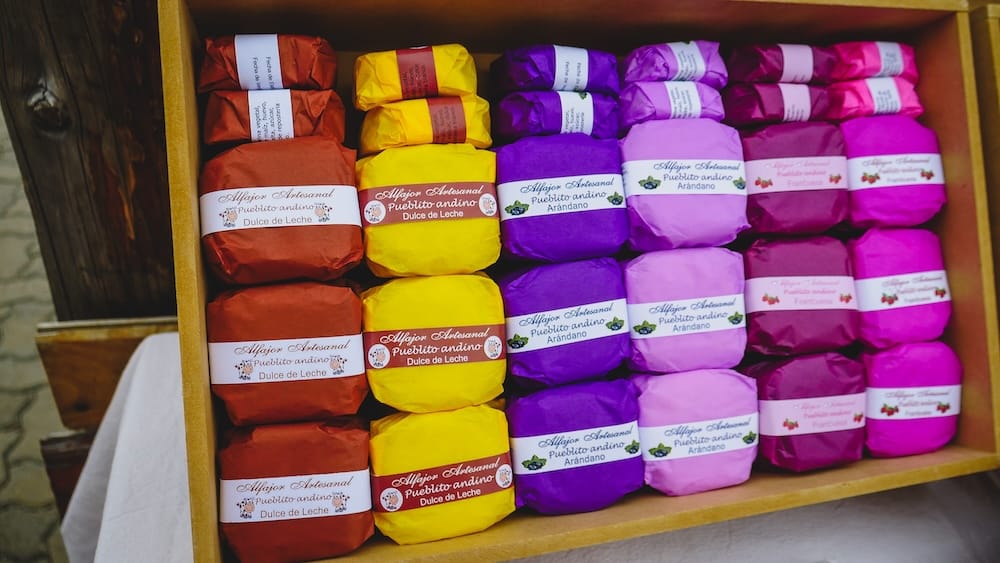
The Forest Fruit Counter-Punch: Surviving Sugar Fatigue
There is a ceiling to how much caramel and milk chocolate a human body can process before it violently rejects the concept of dessert. When the sugar fatigue sets in, the local Patagonian palate pivots to a sharp, highly acidic counter-punch.
While the famous Calafate berry and the floral Rosa Mosqueta dominate the souvenir jams, the true local bakery heroes are the hyper-tart forest fruits (Frutos del Bosque) that thrive in the harsh Andean wind. When ordering a slice of cake (bizcocho) or a regional alfajor in a mountain town like San Martín de los Andes, look for these specific fillers to cut the sweetness:
- Cassis (Blackcurrant): Deep, dark, and aggressively sharp. If you see a slice of dense chocolate cake layered with a dark purple jam, it is almost certainly Cassis. It provides a phenomenal, sour reality check to heavy cocoa.
- Corinto (Redcurrant): Bright red and slightly more bitter than Cassis. Often used as a decorative, acidic glaze over heavy cream pies to keep the dairy from becoming cloying.
- Guinda (Sour Cherry): Do not confuse this with a sweet bing cherry. The Patagonian guinda will make your jaw clench. It is frequently soaked in local liqueurs and hidden inside chocolate truffles for an explosive, tart finish.
The Torta Frita: Patagonia’s Rainy Day Survival Tech
The weather in the deep south is famously hostile. When a low-pressure system rolls over the Andes and the freezing rain starts blowing completely horizontal, hiking is entirely off the table. When this happens, a very specific cultural reflex kicks in across Patagonia: the mass production of the Torta Frita.
A Torta Frita is not a delicate pastry. It is a rugged, utilitarian disc of fried dough. The traditional recipe demands it be fried in animal fat (grasa), though modern bakeries sometimes use oil. It is heavy, it is deeply comforting, and it is usually dusted with a heavy layer of granulated sugar.
You do not eat a Torta Frita on a sunny day. It is an unwritten law that they are exclusively consumed when it is pouring rain, paired alongside a steaming gourd of bitter mate (the national herbal infusion). When the weather traps you in your hostel in El Chaltén, follow the smell of boiling fat. A brown paper bag filled with six hot Tortas Fritas will cost you roughly $2,500 ARS, and it is the greatest morale booster money can buy.
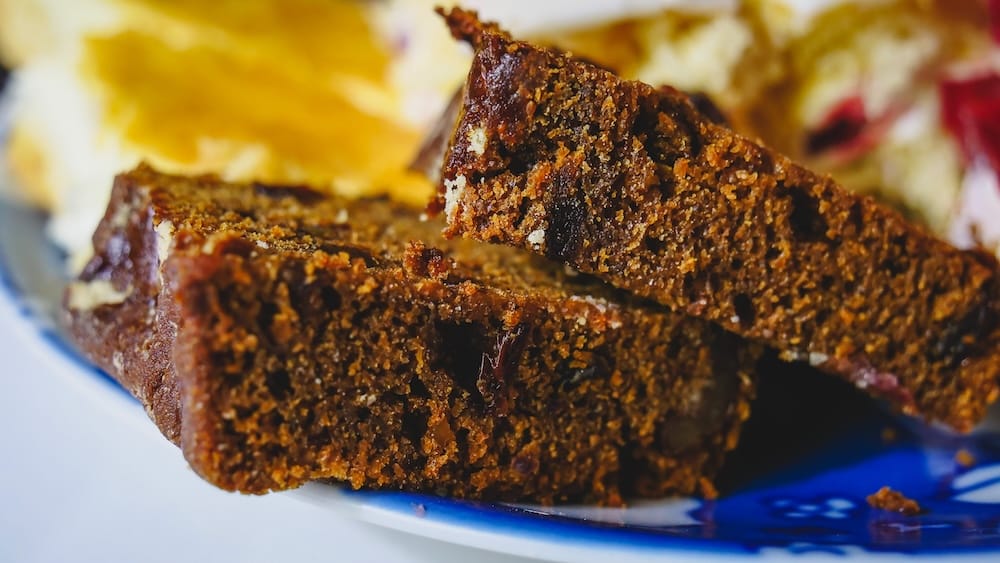
The “Torta Negra” Welsh Survival Brick
We’ve already covered the grueling logistics of the Chubut Valley tea houses, but the crown jewel of that experience—the Torta Negra Galesa (Welsh Black Cake)—deserves its own structural analysis.
If you visit a bakery in Trevelin, you will see these dark, dense cakes wrapped tightly in cellophane. Do not mistake this for a standard chocolate cake. There is zero chocolate in it. The Torta Negra is a piece of 19th-century preservation technology.
When the Welsh settlers arrived in the arid Patagonian desert, they needed a calorie source that would not spoil over long, brutal winters. They engineered a cake using brown sugar, molasses, walnuts, and raisins heavily soaked in rum or local spirits. The alcohol and the sugar act as impenetrable preservatives. A properly baked Torta Negra can literally sit in a cupboard for months without refrigeration. In fact, traditional Welsh-Patagonian families still keep the top tier of their wedding Torta Negra entirely intact to eat on their first anniversary. It is a dense, festive, incredibly heavy brick of history, and it is arguably the best emergency hiking ration you can pack in your bag.
The Trail Bakery Loadout Matrix
| The Item | Flavor Profile & Architecture | Caloric Payload (Trail Viability) | Bakery Price Estimate |
| Alfajor de Frutos del Bosque | A mountain variant. Soft glazed cookies glued together with sharp berry jam instead of standard caramel. | High. The acidity keeps your mouth from drying out on a steep ascent. | ~$1,800 – $2,200 ARS each. |
| Torta Negra (Slice) | Molasses, rum-soaked raisins, and walnuts. Tastes like an aggressive, fortified Christmas cake. | Maximum. A single dense slice will power you through a 15km trek. Indestructible in a daypack. | ~$3,000 ARS per thick slice. |
| Torta Frita | Crispy, greasy, sugary fried dough. Pure comfort. | Moderate. Best eaten immediately while hot. Turns into a weaponized hockey puck if left in the cold. | ~$2,500 ARS for a half-dozen. |
| Pastafrola (Membrillo) | A lattice tart filled with thick Quince paste (membrillo). Dense, fruity, and sticky. | High. The crust protects the filling. An excellent, non-melting alternative to chocolate for hot weather hikes. | ~$3,500 ARS for a personal-sized tart. |
The Bitter Balance: Surviving the Sugar with Astringent Warfare
You cannot physically consume four thousand calories of dulce de leche and regional chocolate every single day without your pancreas staging a violent, immediate revolt. The Argentines are fully aware of this biological limit. However, their cultural solution to sugar fatigue is not moderation. It is chemical warfare.
To survive the sheer volume of Patagonian sweets, you have to adopt the local counter-measures. You have to aggressively strip the sugar from your palate using high-tannin, violently bitter beverages. If you try to wash down a quarter-kilo of Calafate berry ice cream with a sugary soda, you will fail. Here is exactly how the locals balance the scales.
The Daytime Reset: Astringent Warfare in a Gourd
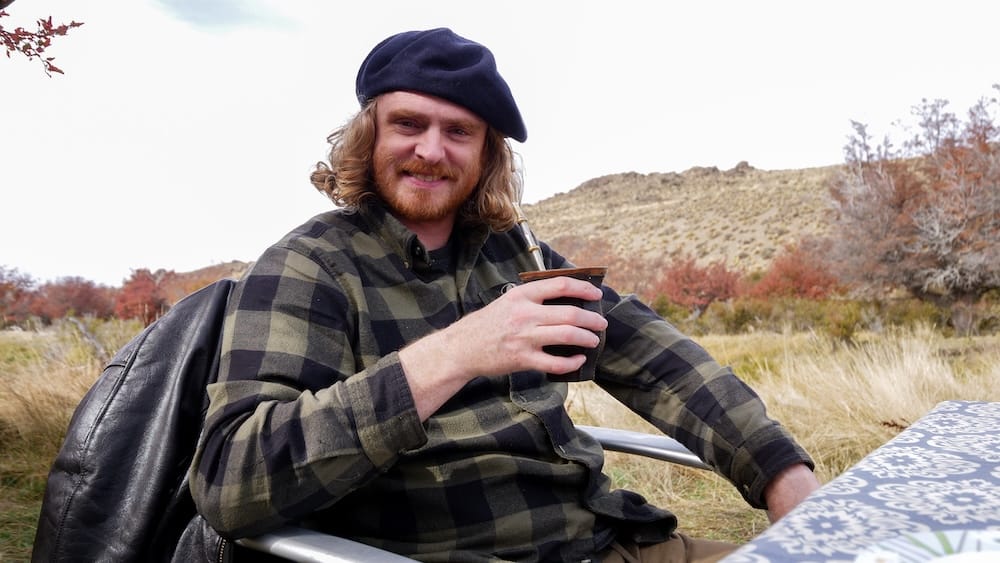
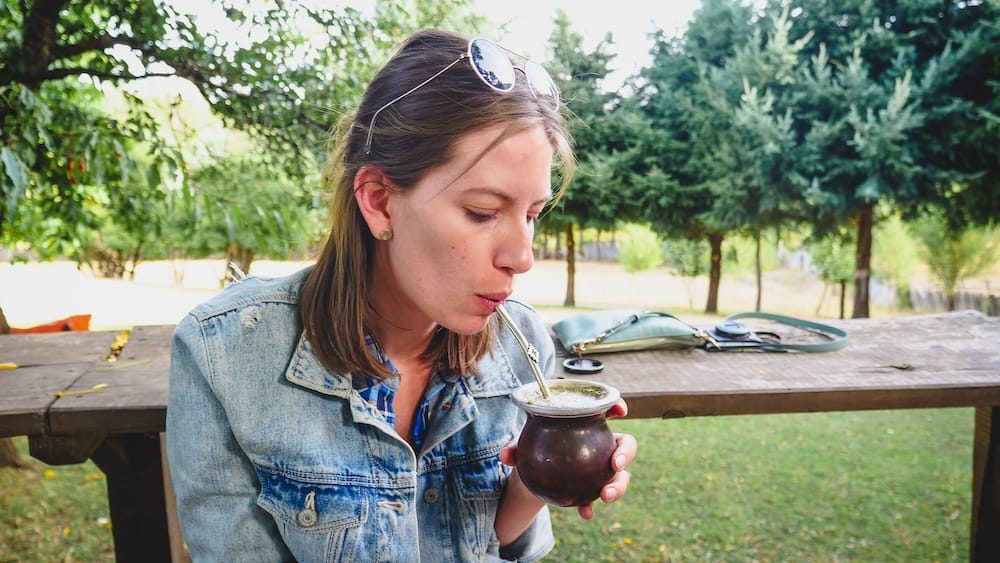
If you spend more than fifteen minutes in Argentina, you will see locals carrying a thermos under one arm and a small, hollowed-out gourd with a metal straw in the other. This is Yerba Mate (pronounced mah-tay). It is the national herbal infusion, heavily caffeinated, and aggressively bitter. To the uninitiated palate, it tastes somewhat like a freshly mowed lawn mixed with steeped tobacco—and I mean that in the best, most essential way possible.
Mate is not just a drink; it is a logistical tool. When a Patagonian storm traps you inside and you buy a greasy, sugar-dusted bag of torta fritas, you do not pair them with hot chocolate. The overwhelming sweetness of the fried dough requires the harsh, astringent bite of the mate to scrub your tongue clean between bites. It resets your palate so you can keep eating.
[Samuel’s Thermos Reality Check: The Gas Station Lifeline]
Traveling with mate requires hot water logistics. Almost every YPF gas station in Patagonia features an “Agua Caliente” dispenser specifically for travelers’ thermoses. Do not try to put coins in it. You have to walk to the cashier, pay roughly $250 ARS for a small plastic token (ficha), and drop that into the machine to unlock the scalding water. It is the cheapest, most vital transaction of your road trip.
The Nightcap: High-Altitude Tannins and Truffles
When the sun drops behind the Andes and the temperature plummets toward freezing, the mate gets packed away. But the sugar consumption doesn’t stop; it just transitions into a darker, heavier weight class.
After a grueling day of hiking or surviving a 14-hour transit day, my absolute favorite ritual is retreating to our cabin or hotel room to execute the Patagonian nightcap. This is where you deploy the high-end, 80% cacao truffles you strategically sourced from Benroth or Mamuschka.
You do not eat these delicate, bitter chocolates dry. You pair them with a heavy, oak-aged Argentine Malbec.
- The Science of the Pairing: The intense tannins of a high-altitude Malbec violently clash with the heavy cocoa butter in artisanal chocolate, cutting through the fat and leaving a complex, spicy finish.
- The Sourcing Logistics: Do not buy your wine at the chocolate shops on Mitre Street; the markup is brutal. Go to a local vinoteca (wine shop) and ask for a Malbec specifically from the Río Negro or Neuquén provinces. They run slightly cooler than Mendoza wines, yielding a sharper, spicier profile that perfectly cuts the density of a rum-soaked Torta Negra or a dark truffle.
- The Investment: A deeply respectable, heavy-hitting Patagonian Malbec will cost you anywhere from $8,000 to $14,000 ARS at a local shop. It is the best money you will spend all day.
The Patagonian Pairing Matrix
| The Sweet Payload | The Beverage Counter-Punch | The Chemical Reaction | Sourcing Logistics |
| Torta Frita (Sugar-dusted) | Yerba Mate (Amargo / No Sugar) | The hot, bitter water instantly melts the animal fat on your tongue and neutralizes the granulated sugar. | Fetch hot water tokens ($250 ARS) at any YPF station on Route 40. |
| 80% Cacao Truffles | Heavy, Oak-Aged Patagonian Malbec | Wine tannins slice through the cocoa butter. The dark chocolate amplifies the dark fruit notes of the wine. | Visit a local Vinoteca; expect to pay ~$10,000 ARS for a solid bottle. |
| Alfajor de Maicena | Black Coffee (Café sin azúcar) | The coffee provides the desperate moisture needed to swallow the crumbly cornstarch, while the bitterness cuts the massive dulce de leche core. | Avoid supermarket instant coffee. Order an Americano or Espresso at a proper cafe. |
| Torta Negra (Welsh Black Cake) | Earl Grey Tea (Served Black) | The bergamot oil in the tea cuts through the heavy molasses and rum without overpowering the walnuts. | Executed flawlessly at Ty Gwyn in Gaiman during the $30,000 ARS tea service. |
The Final Triage: Maximizing Your Sugar Logistics
If you are building your Patagonia itinerary, you need to schedule your sugar intake as rigorously as you schedule your bus tickets.
- Respect the Siesta: Between 1:00 PM and 5:00 PM, towns outside of major hubs like Bariloche will go completely dark. This is when you should be eating a massive lunch or recovering in your room. Do not plan to run errands or buy chocolate at 3:00 PM in El Bolsón.
- Cash is (Still) King for Small Purchases: While Argentina has massively adapted to credit cards and MercadoPago, when you are buying a single alfajor at a kiosk or paying the hidden cucurucho surcharge, handing over crisp 1,000 or 2,000 peso notes is infinitely faster than watching a vendor hold a 4G credit card terminal up to the sky praying for a signal.
- Pack the Leftovers: When you inevitably fail to finish the 8-cake spread at a Welsh tea house, do not leave it on the table. Ask them to pack it up. That leftover Torta Negra will literally save your life the next morning when you are standing on a freezing bus platform at 6:00 AM waiting for transit.
Patagonia will break your hiking boots, it will destroy your umbrellas, and it will subject you to 19-hour bus rides that test your sanity. But it will also hand you a quarter-kilo of mountain-berry ice cream and a rum-soaked cake to make the pain disappear. Pace yourself, embrace the wheelbarrow fantasy, and whatever you do, never order the single scoop.
FAQ: Patagonia’s Super Sweet Side
Can I bring Patagonian chocolate and alfajores back home on the plane?
Absolutely. But you need to pack strategically. Solid chocolates and alfajores are perfectly fine in your carry-on bag. However, massive glass jars or plastic tubs of dulce de leche will get swiftly confiscated by airport security under the liquid/gel rule. Wrap the heavy caramel securely in plastic bags and bury it deep in your checked luggage.
Are there vegan or dairy-free sweets in Patagonia?
It’s tough. Traditional Argentine sweets lean incredibly heavy on cow’s milk, cream, and butter. For baked goods, you are mostly out of luck unless you find a specialty health food store in a larger hub like Bariloche. However, major artisanal ice cream shops like Jauja offer fantastic water-based fruit sorbets—just ask for the Frutos del Bosque (forest fruits) made al agua.
Do Patagonian bakeries open early for hikers?
Rarely. If you’re planning an alpine start for the Fitz Roy trek in El Chaltén, do not expect a local bakery to be open and pulling fresh pastries from the oven at 5:00 AM. Most panaderías open closer to 7:30 or 8:00 AM. You need to buy your alfajores and torta negra the afternoon before so your trail fuel is packed and ready to go.
Do I need to tip at the heladerías or tea houses?
Depends. At an ice cream shop or a bakery where you just order at the counter and take a number, tipping isn’t expected (though dropping a small 500 peso bill in the tip jar is always appreciated). For a full, sit-down table service experience like the Welsh tea houses in Gaiman, a standard 10% tip left in cash is the cultural norm.
Can I pay for my sweets with US Dollars?
Nope. While high-end hotels or massive tour operators might accept USD, the local bakery or the ice cream shop on the corner only wants Argentine Pesos. While many places have adapted to credit cards and MercadoPago, the signal drops constantly in the mountains. Always carry crisp peso notes for your daily sugar runs.
Is the Welsh tea service in Gaiman kid-friendly?
100%. It is a fantastic experience for families, and kids will lose their minds over the sheer volume of cakes and sandwiches. Just be aware that you pay a flat rate per person for the mandatory “Service of Tea.” Always politely ask the staff if they offer a shared or reduced portion for younger children so you don’t end up paying full price for a toddler who only eats half a scone.
Is it safe to eat the wild berries while hiking?
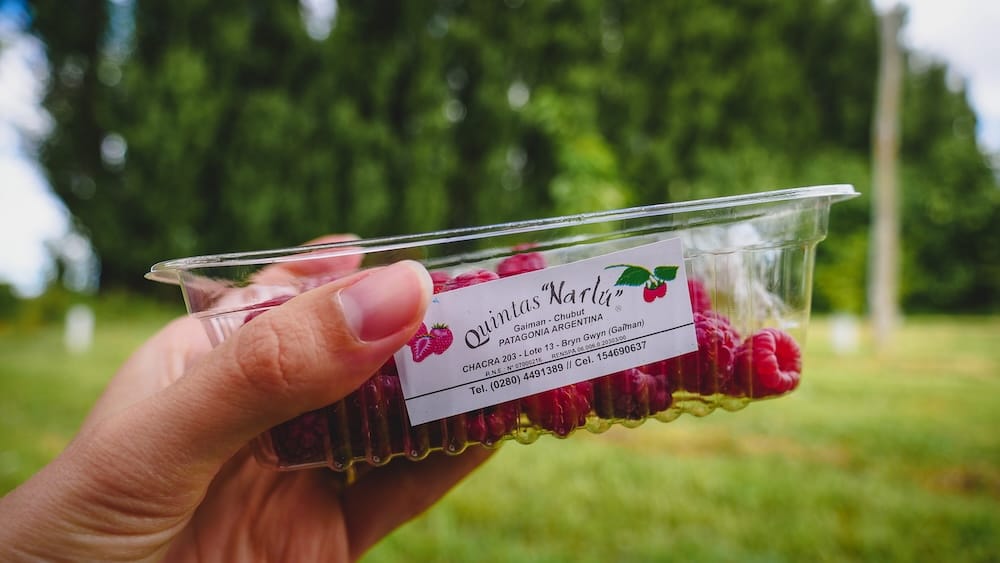
Proceed with caution. While Calafate and Rosa Mosqueta grow wild all over the Andes, do not eat anything directly off a bush unless you are absolutely certain what it is, as there are toxic lookalikes in the region. Stick to buying fresh baskets from places like Narlu Farm or the local municipal markets.
What happens if I eat the Calafate berry?
You’ll be back. The deeply ingrained local legend states that anyone who eats a Calafate berry is magically guaranteed to return to Patagonia in the future. Whether it is actual folklore magic or just a severe sugar addiction to the local ice cream, I can confirm it works. We keep coming back.
Project 23 Argentina: This guide is also available in Spanish. [Lea la versión en castellano: Dulce de Leche, Chocolate y Helado Artesanal — El Lado Dulce de la Patagonia]