
If all roads in Korea lead to Seoul, few roads in Seoul can compete with the bustling hive known as Insadong.
It is usually introduced as the city’s “traditional street,” which is technically true in the same way that calling Seoul “quite large” is technically true. Insadong squeezes art galleries, antiques, calligraphy, crafts, tea houses, street food, monks, tourists, couples, performers and an alarming number of souvenir shops into one compact neighbourhood.
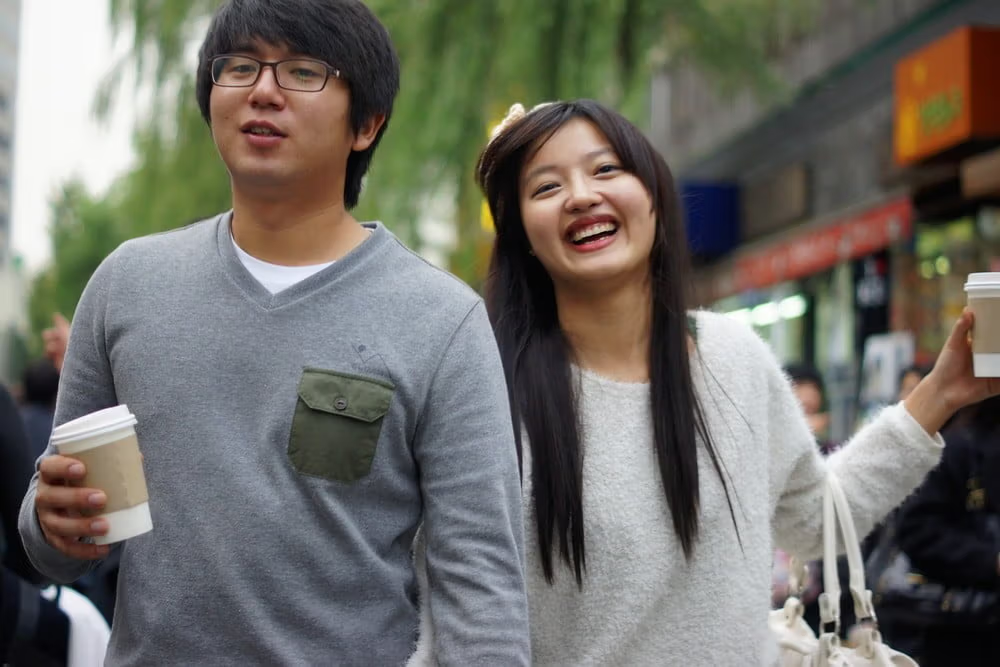
What makes Insadong interesting is the collision. Old and new Seoul keep bumping shoulders. A robed monk passes a group of fashionable tourists. A calligrapher works a few doors down from a modern design shop. Someone carries a traditional fan while somebody else photographs lunch with a tablet roughly the size of a cafeteria tray.
It is cultural, commercial and unapologetically touristy. Sometimes all three within the same ten metres.
As a travel photographer who loves taking candid portraits, I could not think of a better place in Korea to wield my camera. Whenever I came to Insadong, my biggest concerns were whether I had charged both batteries and packed enough memory cards.
Forgetting either one would have been entirely on brand for me.
Insadong also became one of the Seoul neighbourhoods Audrey and I returned to repeatedly during the year we lived in Korea. We came in winter for hot ginger and cinnamon tea, in humid summer weather for iced plum tea and air conditioning, on street-food outings, on photography walks and during our final weekend in the country when we were buying souvenirs before leaving for Malaysia.
That longer relationship matters. I did not experience Insadong as one perfectly planned sightseeing afternoon. I experienced it in fragments—different seasons, different moods and different levels of tolerance for crowds.
These photographs capture Insadong during those years. The phones, compact cameras, tablets, hairstyles and clothes give some of the frames a period quality now. I like that. They are no longer merely travel photographs. They have become a small visual record of everyday Seoul from another era of digital life.
This guide preserves that original portrait essay while adding what travellers need to plan a visit now: how long to stay, which parts deserve your time, where to wander, what to buy, what to eat, how to photograph the neighbourhood and how to connect Insadong with the surrounding historic centre of Seoul.
In other words, the photographs remain the point. The guide exists to help you find your own version of the street rather than burying mine beneath seven thousand words about generic Korean snacks.
Insadong Planning Snapshot
| Best for | Street photography, traditional crafts, galleries, tea houses, souvenirs and unstructured wandering |
|---|---|
| Ideal visit length | Two to four hours; longer for photographers, serious shoppers or champion-level tea-house lingerers |
| Most convenient station | Anguk Station on Seoul Subway Line 3 |
| Other useful stations | Jonggak Station and Jongno 3-ga Station |
| Best general timing | Late morning through late afternoon, when shops and galleries are actually open |
| Best quieter timing | Weekday morning, accepting that some businesses will still be waking up |
| Best lively timing | Weekend afternoon, when the main street is typically restricted to vehicles |
| Natural pairings | Jogyesa Temple, Changdeokgung Palace, Bukchon, Ikseon-dong and Cheonggyecheon Stream |
| Admission | The neighbourhood itself is free; individual museums, workshops and activities may charge |
Travellers who prefer to explore with a guide can compare current options on the Insadong tours and activities page on GetYourGuide. A tour is not essential here, but a good guide can add context to the palaces, temples, crafts and history that are easy to walk past without understanding.
Faces of Insadong: A Seoul Street Photography Essay
The following portraits are the reason this article exists.
Insadong gave me musicians, families, couples, dogs, monks, food, fashion, awkward gestures and fleeting expressions—often within a few minutes of one another. I never needed to manufacture a story. The street kept throwing them at me.
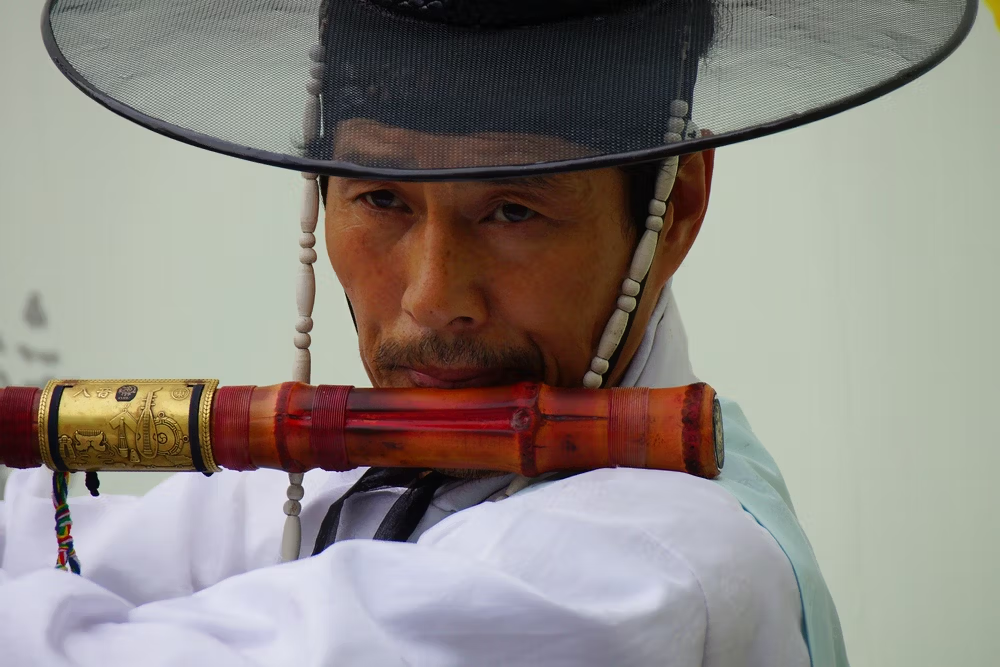
A Korean musician wearing traditional attire plays for passing pedestrians on Insadong’s main street.
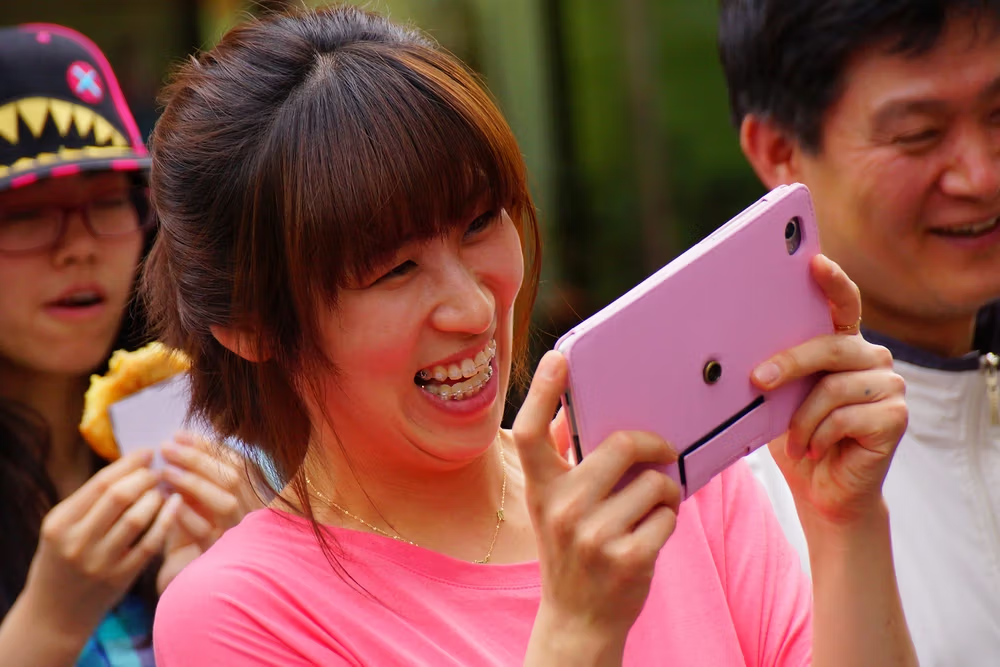
A woman flashes an enormous smile while taking a photograph with her large pink tablet. I still found it strange seeing people use tablets as cameras, although the photographic evidence suggests she was enjoying herself considerably more than I was.
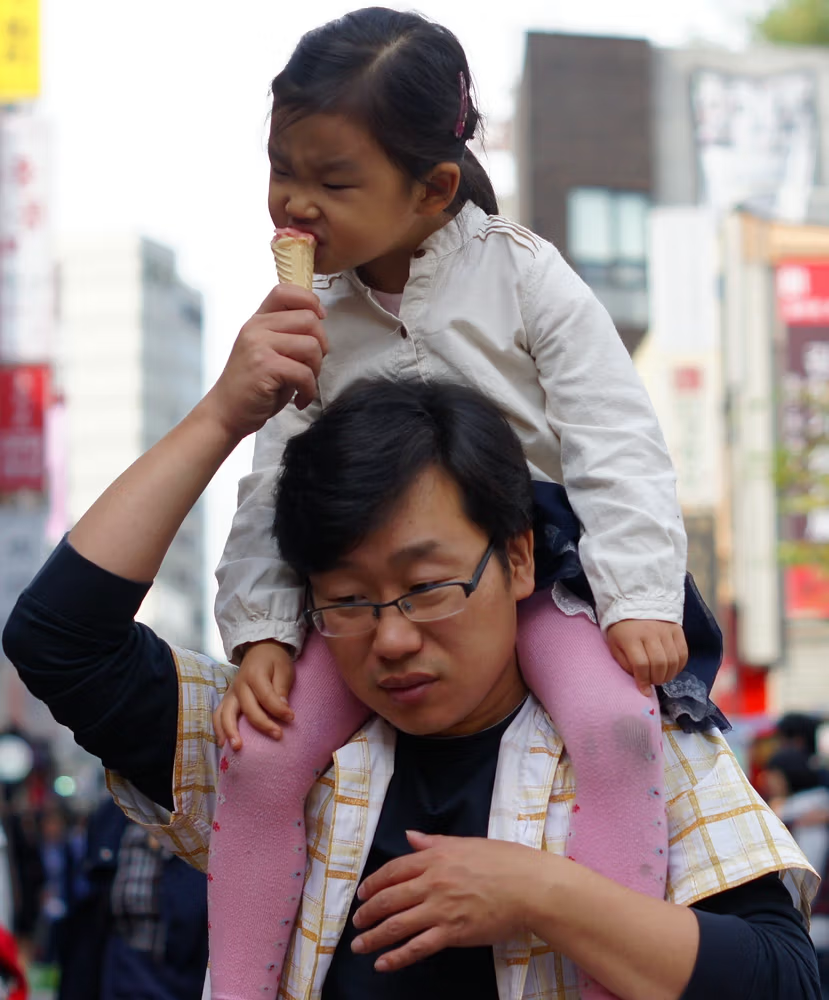
A young girl takes a bite of ice cream while riding piggyback on her father’s shoulders.
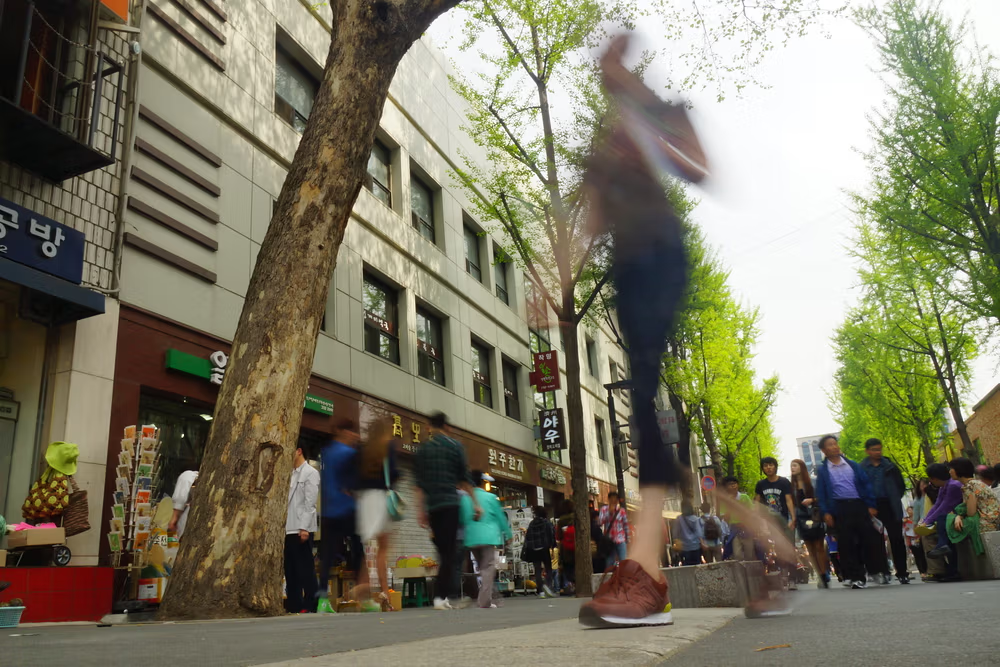
A pedestrian becomes a motion-blurred streak against the street. To recreate this effect, use a slower shutter speed, hold the camera steady and take more frames than you think you need. Luck is a large component of this kind of photograph. So is deleting the nineteen attempts that look like accidental camera movement. You can see another example of my travel photography work in this Petra photo essay.
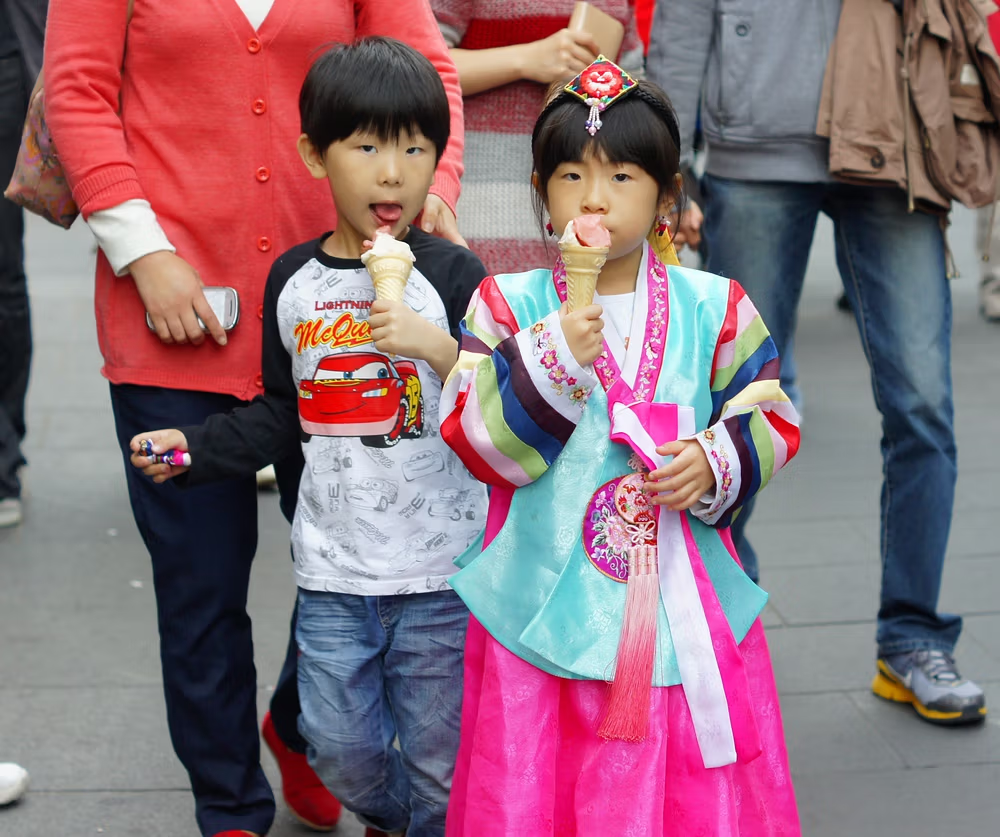
A young boy and girl dressed in traditional clothing pause for ice cream.
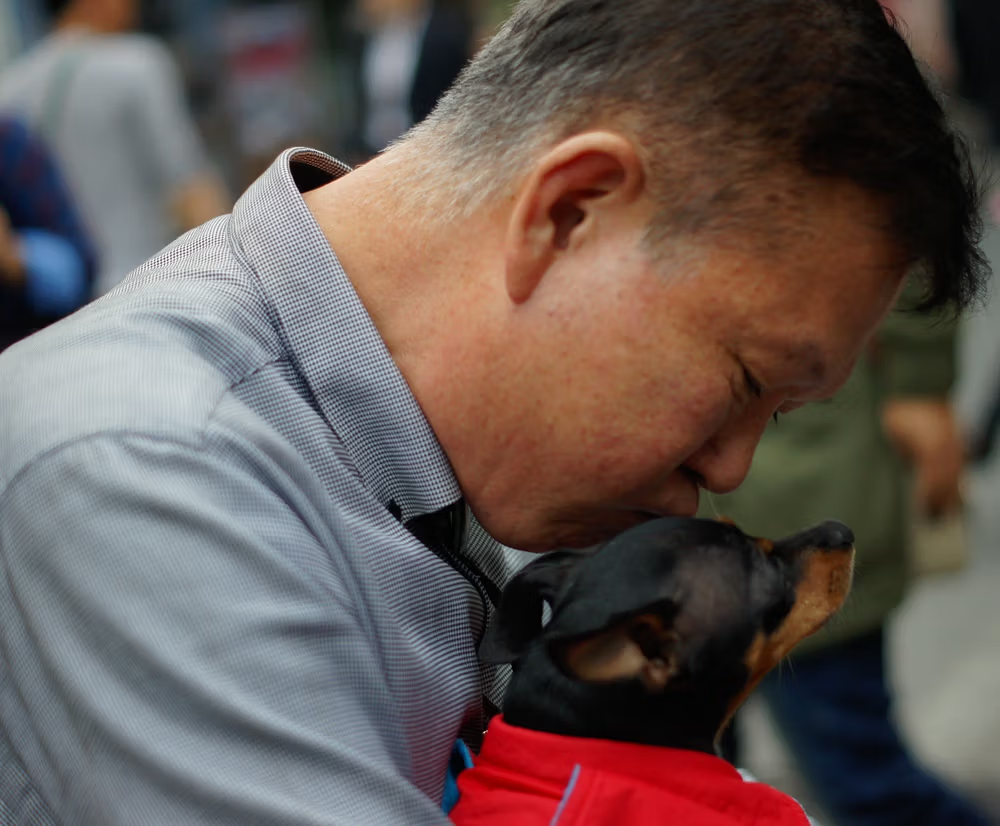
A man shares a tender moment with his dog, who appears better dressed for the weather than many tourists.
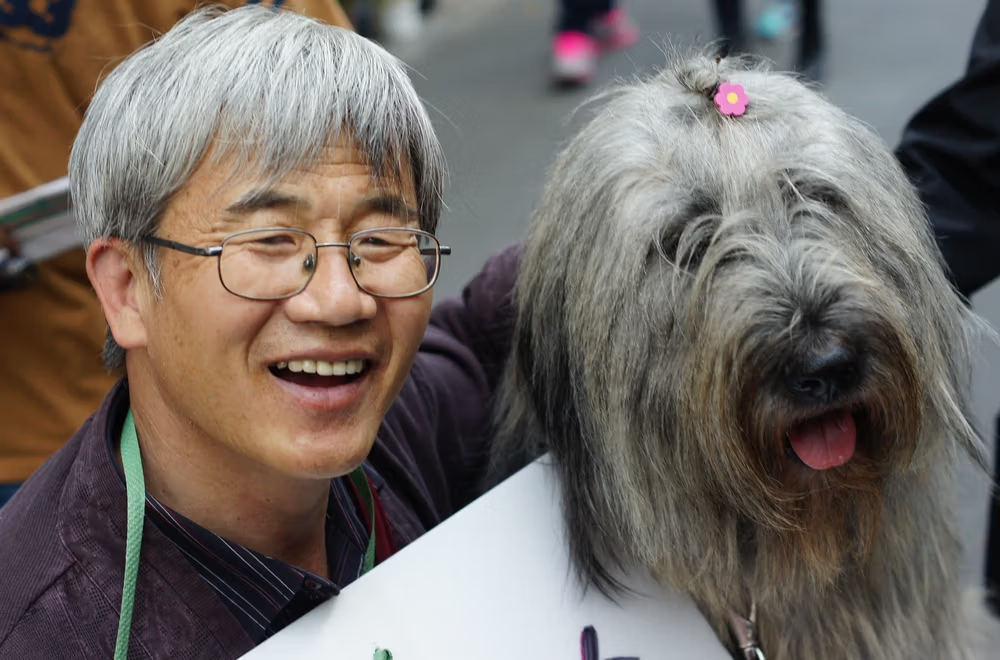
A man wearing glasses and an enormous grin hugs his dog in Insadong. These ordinary street moments were a large part of what I loved about living in South Korea.
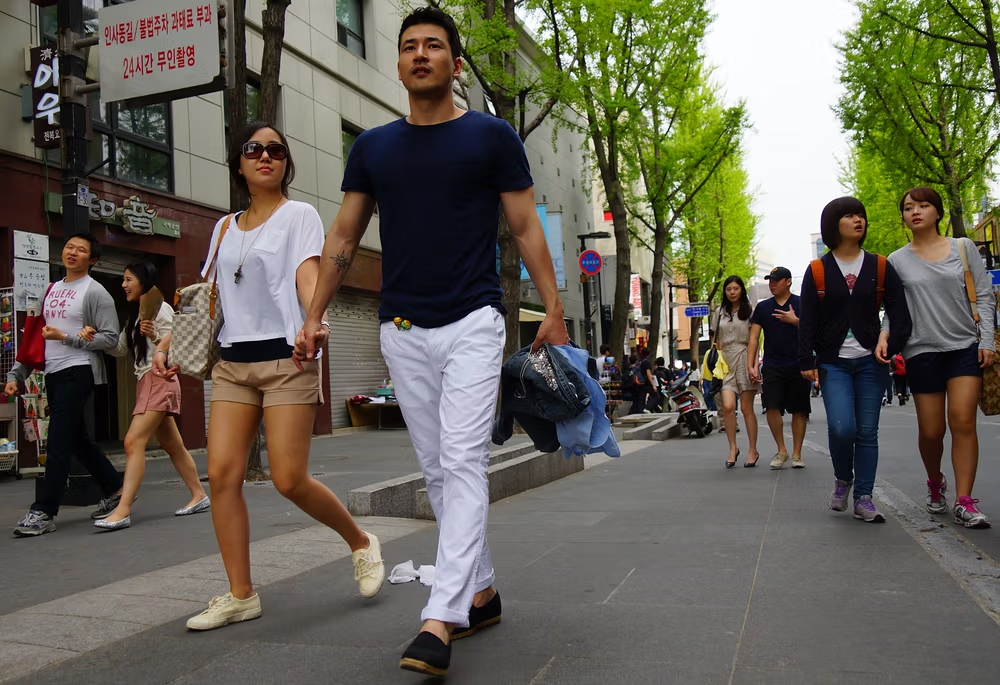
A stylish couple confidently struts down Insadong as though the street were a catwalk. Frankly, they are pulling it off.
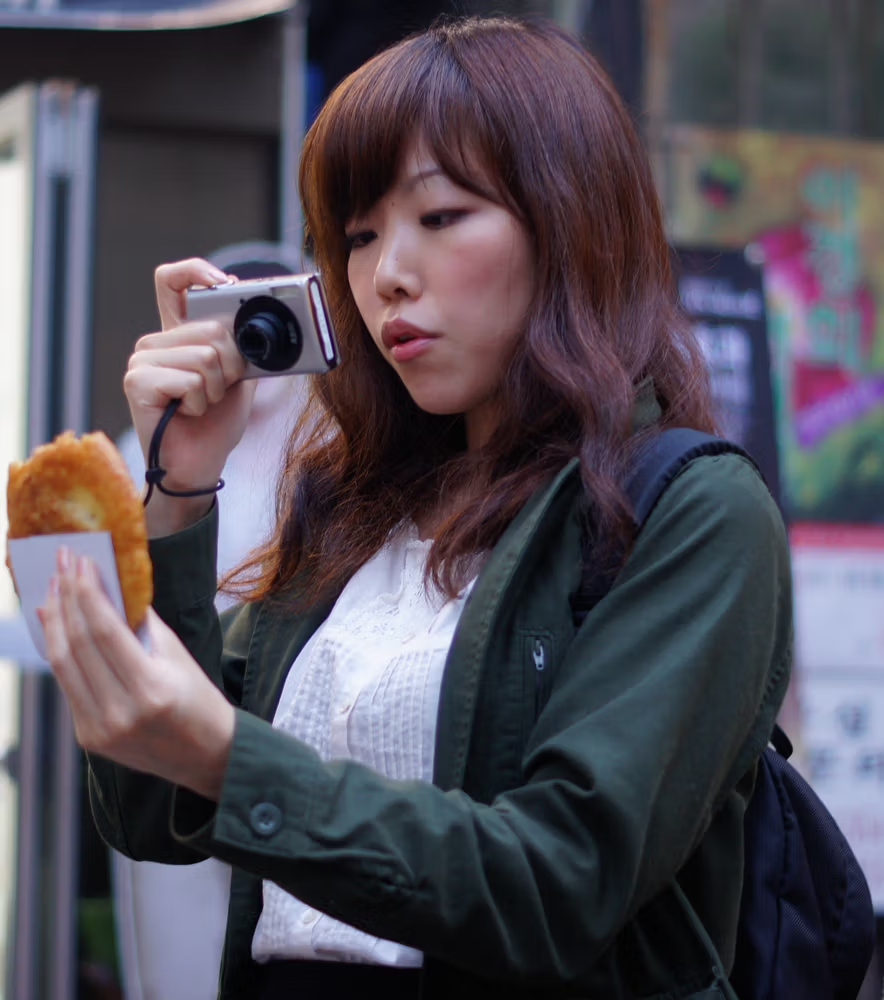
A woman carefully photographs the street food she has just bought using a compact point-and-shoot camera. Apparently, food photography existed before every lunch required its own social media strategy.
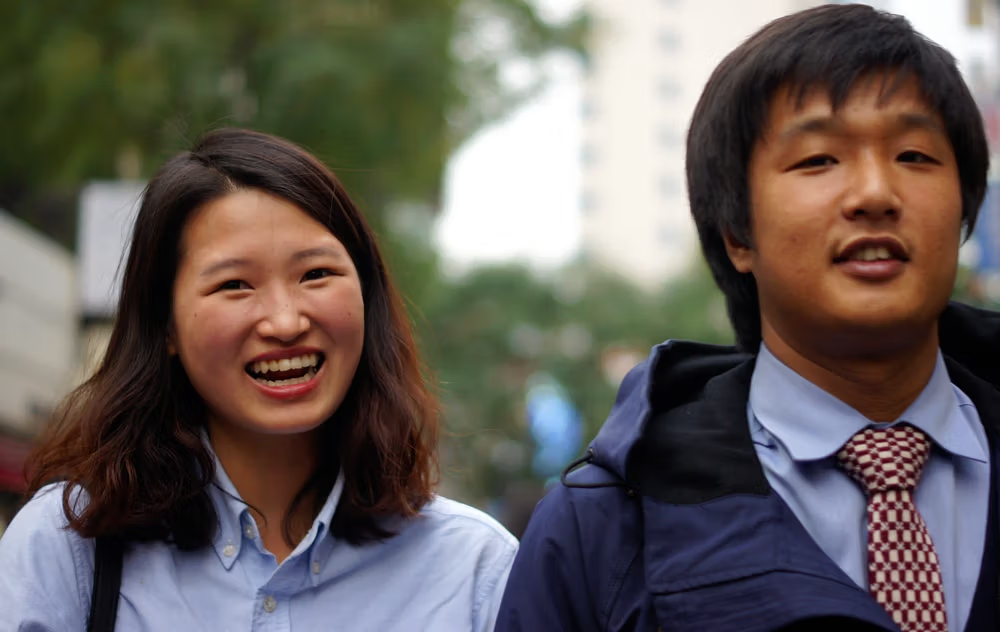
Nothing but smiling faces from this couple in Seoul.

A couple embraces on the street in Insadong.
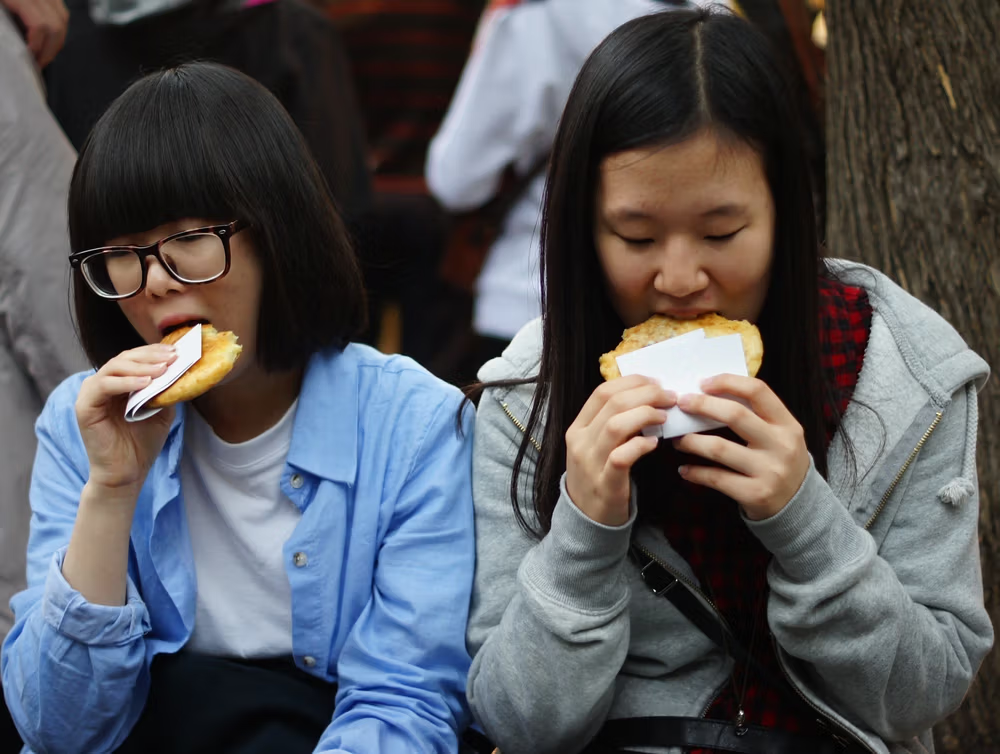
Two young women enjoy hotteok (호떡), a Korean pancake commonly filled with a molten mixture of brown sugar, cinnamon and nuts. Molten is the important word. Bite carefully unless blistering the roof of your mouth is part of the cultural experience you were seeking.
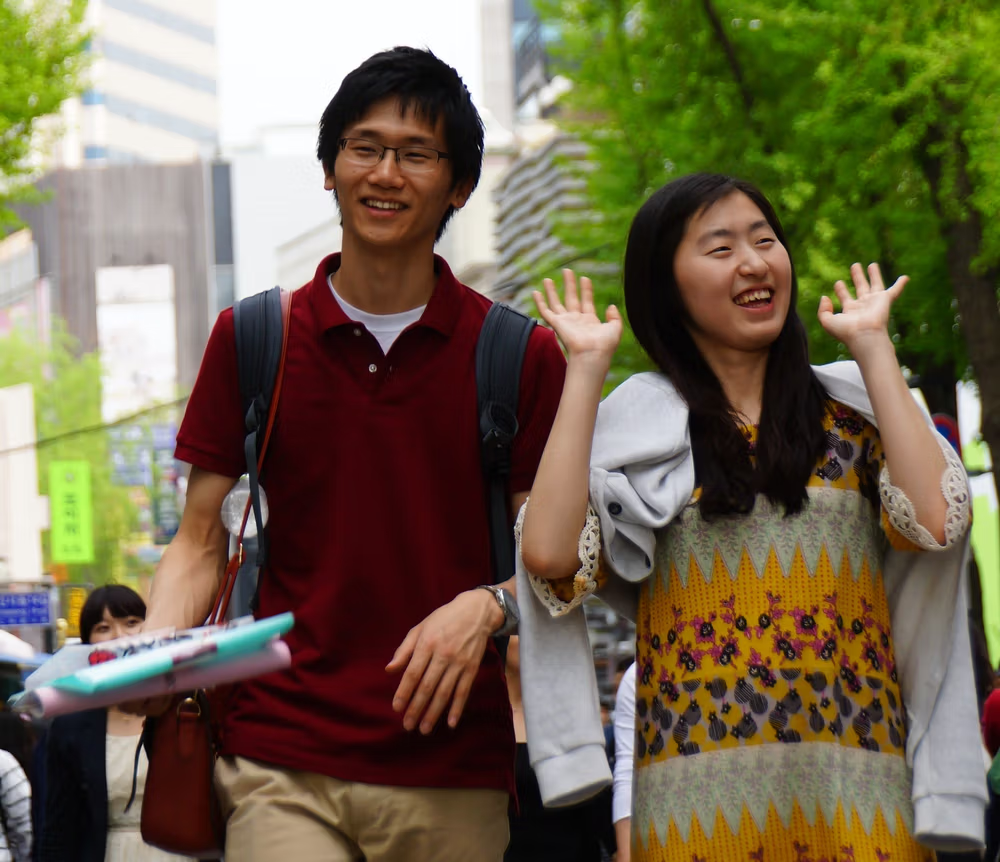
An animated couple shares a candid moment on the streets of Insadong.
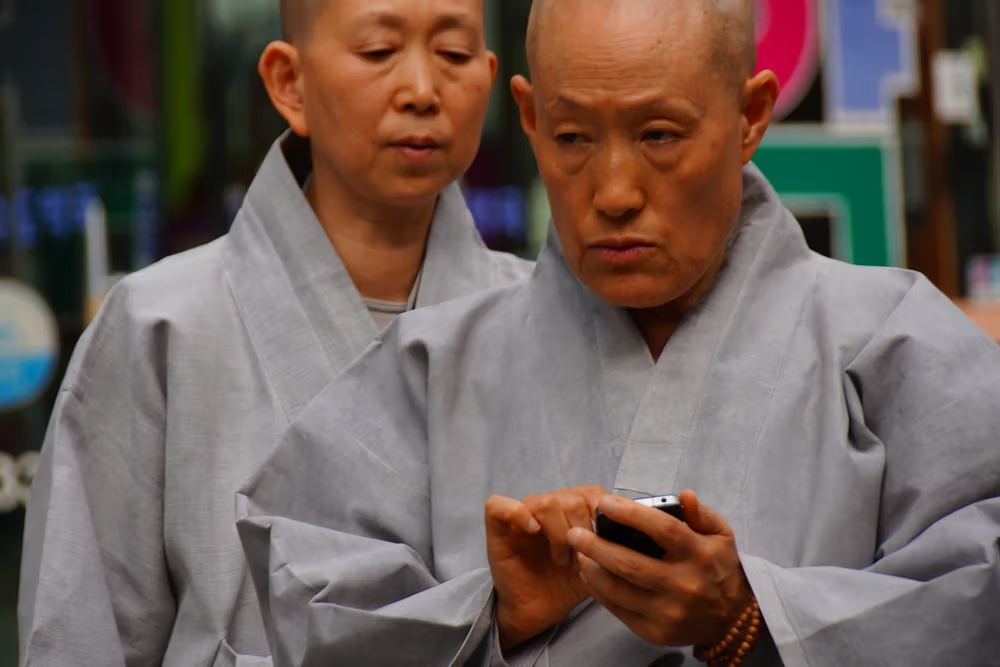
A monk wearing a grey robe checks his mobile phone. Insadong’s proximity to Jogyesa Temple means monks are part of the neighbourhood’s everyday street life rather than a novelty staged for tourists.
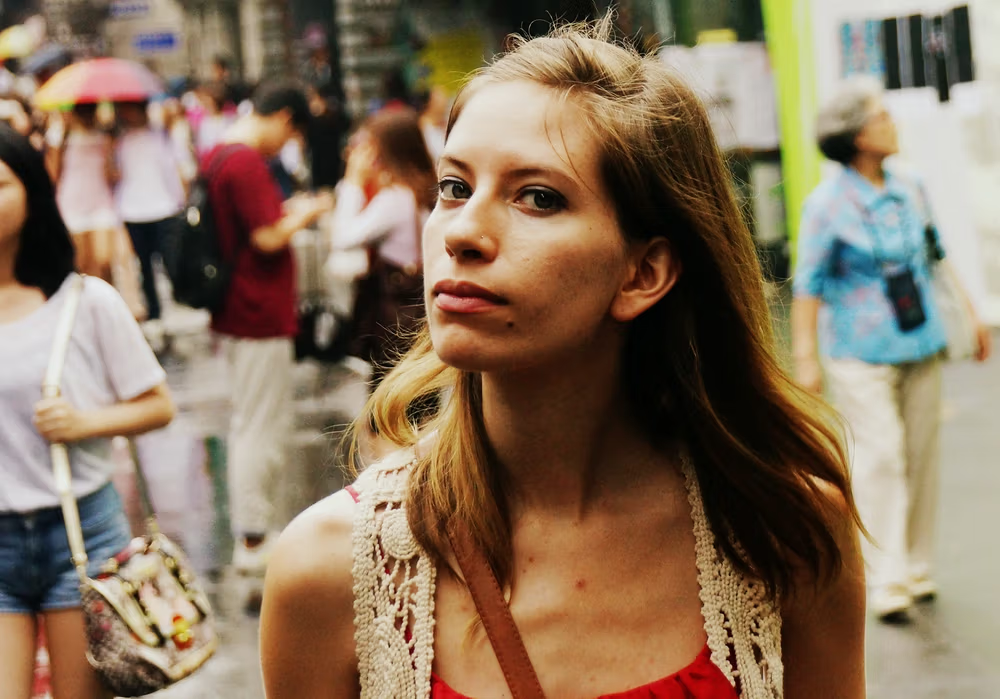
I spotted this wild temptress lurking in Insadong on a fine summer day. It became far more fun exploring Seoul after I met Audrey of That Backpacker. We often headed out on Saturdays to visit a different area of the city together.
Video: Street Life and Portraits in Insadong
This first video captures the side of Insadong I loved most: not a polished cultural presentation, but a living street filled with little interactions that appear and disappear before you can properly prepare for them.
Is Insadong Still Worth Visiting?
Yes.
But not because Insadong is an untouched fragment of ancient Seoul where modern commerce has politely agreed to stay outside.
That version does not exist.
Insadong is commercial, touristy and sometimes packed. Plenty of shops sell inexpensive trinkets, and not every object carrying Korean lettering has emerged from the weathered hands of a master artisan working alone by candlelight. Anyone promising a perfectly preserved historical quarter is selling a fantasy along with the refrigerator magnets.
Fine. I can live with that.
What keeps Insadong worthwhile is the density of experiences. Within a compact area, you can browse contemporary galleries, inspect antique ceramics, drink traditional tea, watch calligraphy, buy handmade paper, eat hotteok and then walk to one of Seoul’s most important Buddhist temples or royal palaces.
It is also one of central Seoul’s easiest neighbourhoods to explore without converting the day into a military operation. The main street gives you an obvious spine. The alleys reward curiosity. When the crowds begin gnawing at your patience, a tea house offers somewhere to sit down and recover from the exhausting business of buying bookmarks.
The trick is accepting Insadong for what it is rather than demanding that it perform historical purity for you.
Understanding Insadong: Main Street Versus Side Alleys
Insadong consists of one principal road with a web of smaller alleys branching away from it. Simple enough.
Yet plenty of visitors march down the middle, buy a snack, inspect six nearly identical souvenir stores and leave wondering what the fuss was about.
Do not do that.
Insadong-gil: The Main Spine
Insadong-gil is where you will find the greatest concentration of visitors, signs, souvenir shops, street snacks and recognizable cultural complexes. It is useful for orientation and superb for people-watching. It also delivers the highest volume of street-photography opportunities.
Walk it once before reaching for your wallet.
- Notice which shops appear genuinely specialized and which sell merchandise repeated every twenty metres.
- Mark interesting alleys, galleries and tea houses as you go.
- Compare quality and prices before buying common souvenirs.
- Expect a slow human shuffle during busy weekend periods.
On weekends, the main street is typically closed to vehicles during designated hours and becomes a livelier pedestrian space. The Korea Tourism Organization currently lists Saturday restrictions from 2:00 p.m. to 10:00 p.m. and Sunday restrictions from 10:00 a.m. to 10:00 p.m.
Treat those as current guidance rather than an eternal promise carved into stone. Street rules change. Seoul does not consult old travel articles before moving forward with its life.
The Side Alleys: Where Insadong Gets Better
The main street shows you what Insadong sells.
The alleys reveal more of how it feels.
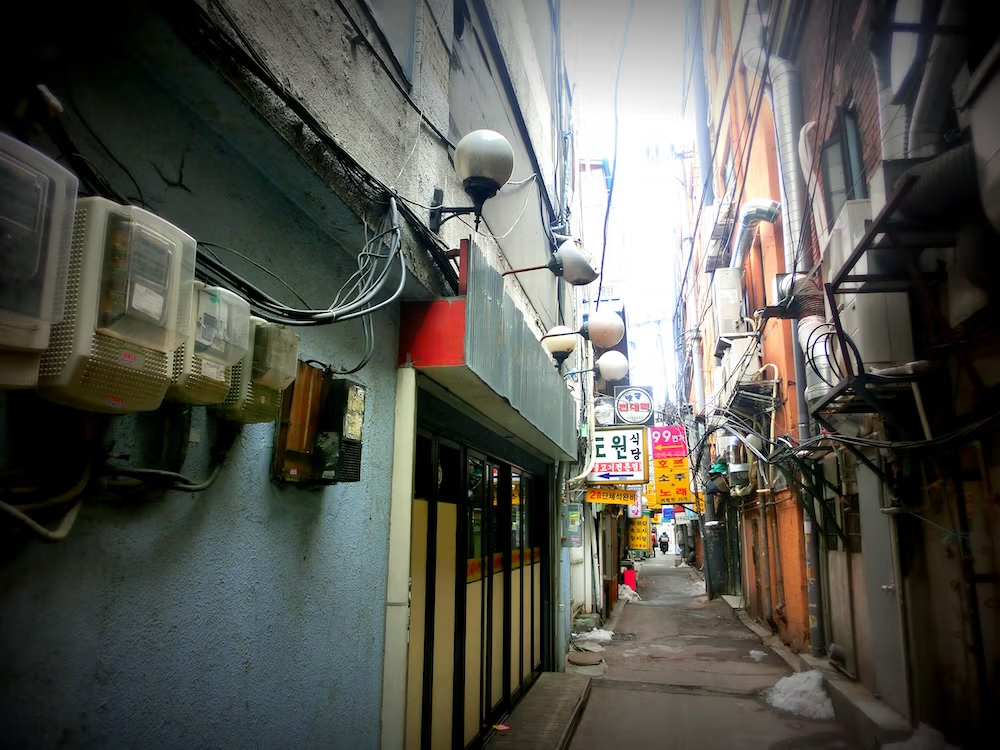
Here you will find smaller galleries, restaurants, hanok-style buildings, quiet courtyards, tea houses and shops specializing in particular crafts. Some lanes are a thirty-second detour. Others twist around enough to make you wonder whether you are still moving toward anything useful.
Good.
That uncertainty is part of the appeal.
This was not advice I arrived at after staring at a Seoul map from another continent. During one winter visit, Audrey and I left the main strip and found a dim little traditional tea house with tapestries, floor cushions and heated ondol flooring. We drank ginger and plum tea, ate rice cakes and puffed rice coated with something sweet, and became so warm that both of us started talking about taking a nap.
That experience confirmed what we kept finding in Insadong: the back alleys held quieter tea houses, traditional restaurants and older homes, often with more character—and sometimes better value—than the most obvious places on the main street.
A simple rhythm works well: spend fifteen or twenty minutes on the main street, then take an alley that looks promising. You do not need to inspect every lane. Insadong is a neighbourhood, not a completionist video game.
The Best Things to Do in Insadong
1. Walk Through Ssamziegil
Ssamziegil is the most recognizable modern landmark on Insadong-gil. Rather than separating its floors with ordinary staircases and corridors, the complex uses a continuous spiral walkway that gradually climbs around a central courtyard.
It feels like somebody picked up an alley, curled it into a building and then filled it with shops.
Small businesses sell crafts, jewellery, accessories, stationery and contemporary design goods. Workshops and rotating exhibitions provide a reason to visit even if you have no urgent need for another object bearing a cute illustrated character.
The official Seoul tourism listing currently gives daily opening hours of 10:30 a.m. to 8:30 p.m. Individual shops and workshops may keep their own schedules, particularly around major Korean holidays.
Ssamziegil can become crowded, but the gradual walkway makes browsing less claustrophobic than entering a conventional shopping mall. It is commercial. Obviously. Nobody built four floors of retail space as an act of spiritual charity. Yet the independent shops and craft focus keep it connected to Insadong’s wider identity.
2. Enter Galleries Without Turning It Into Homework
Insadong has long been associated with Korean art, calligraphy and antiques. Galleries range from established commercial spaces to small rooms you can visit in ten minutes.
Many smaller exhibitions are free, which makes spontaneous browsing easy. Walk in. Look around. Stay if the work grabs you. Leave if it does not.
You are allowed to enjoy art without writing an imaginary doctoral thesis about it.
Unless a particular exhibition genuinely matters to you, avoid constructing an hour-by-hour gallery campaign. Look at what is showing when you arrive. Insadong works better when it retains a little improvisation.
3. Look Beyond Souvenir Shops to the Antique Trade
The antique identity of Insadong is real, even though it now shares the neighbourhood with cafés, design shops and armies of inexpensive keychains.
The Korea Tourism Organization identifies roughly seventy antique-art shops in the area, including specialists in ceramics, paintings, furniture, woodcraft and metalwork.
Browsing is easy.
Buying intelligently is harder.
Serious antiques require knowledge of provenance, age, condition and export rules. A visitor who cannot distinguish Joseon porcelain from something fired last Thursday should enjoy looking and resist the sudden temptation to become an international antiques dealer.
That includes me.
4. Stop for Traditional Korean Tea
A traditional tea house is not merely shelter from crowds, although it performs that job magnificently.
It changes the pace of the visit.
Insadong is noisy, visual and crowded. Sitting over tea forces you to stop processing signs, shops, snacks, pedestrians and potential photographs for a while. You may even feel your shoulders descend from their defensive tourist position somewhere near your ears.
Audrey and I visited several Insadong tea houses during our year in Korea, including two on consecutive winter weekends. One was deeply traditional: low lighting, wall tapestries, cushions on the floor and enough heat coming from an overhead fan and the ondol floor to turn us into drowsy human dumplings.
We ordered ginger tea and maesilcha, or plum tea. The ginger tea was sweet but carried a strong enough ginger kick to make it ideal for winter. The plum tea tasted almost like liquid honey, although it still had enough fruit flavour to avoid becoming hot sugar water. Alongside the tea came chewy rice cakes and airy puffed rice coated with something sweet.
A week later, during our final weekend in Korea, we visited another tea house with a more modern interpretation of the same tradition. Its English name was so long that Audrey and I could not agree on the word order while filming. What I remember more clearly is the cinnamon-bark tea, the chewy rice cake and the strange realization that our year in Korea was almost over.
Our summer tea-house visit produced an entirely different scene. Seoul was hovering around 35°C with heavy humidity. I ordered piping-hot gyepi-cha, or Korean cinnamon tea, because apparently I enjoy testing the limits of common sense. Audrey made the intelligent choice and ordered iced maesilcha.
The cinnamon tea was intense, natural and spicy enough to smell like Christmas had wandered into a Korean summer. Audrey’s green plum tea was cold, sweet and almost juice-like. We ate dried persimmon with walnuts and light puffed-rice sweets while sitting in a whisper-quiet, air-conditioned room with classical music playing softly in the background.
We had arrived early enough to be the only customers for most of the visit. That remains one of my most useful Insadong tea-house lessons: if you want the hushed atmosphere shown in travel photographs, arrive before the room fills. Silence becomes harder to purchase once twelve other tourists have discovered the same “hidden” tea house.
Menus vary, but common choices may include green tea, jujube tea, omija tea, citron tea and roasted-grain infusions. Some drinks are sweetened or prepared more like fruit preserves dissolved in hot water than a delicate pot of loose-leaf tea. Ask rather than assuming.
Traditional tea in Insadong can feel expensive compared with an ordinary café. We noticed that ourselves. But the drink is only part of what you are buying. The old interior, floor seating, quiet, snacks and permission to stop moving are part of the price.
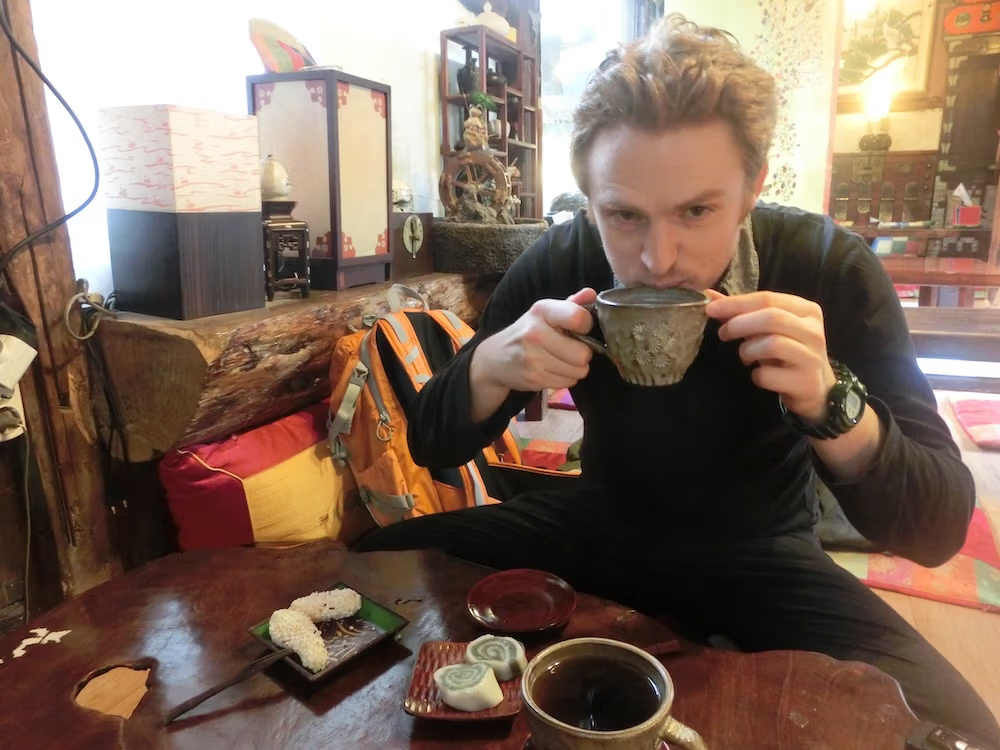
You are paying for more than liquid. You are paying for the setting, the ritual and the right to sit down for a while without pretending you are still making efficient use of your itinerary.
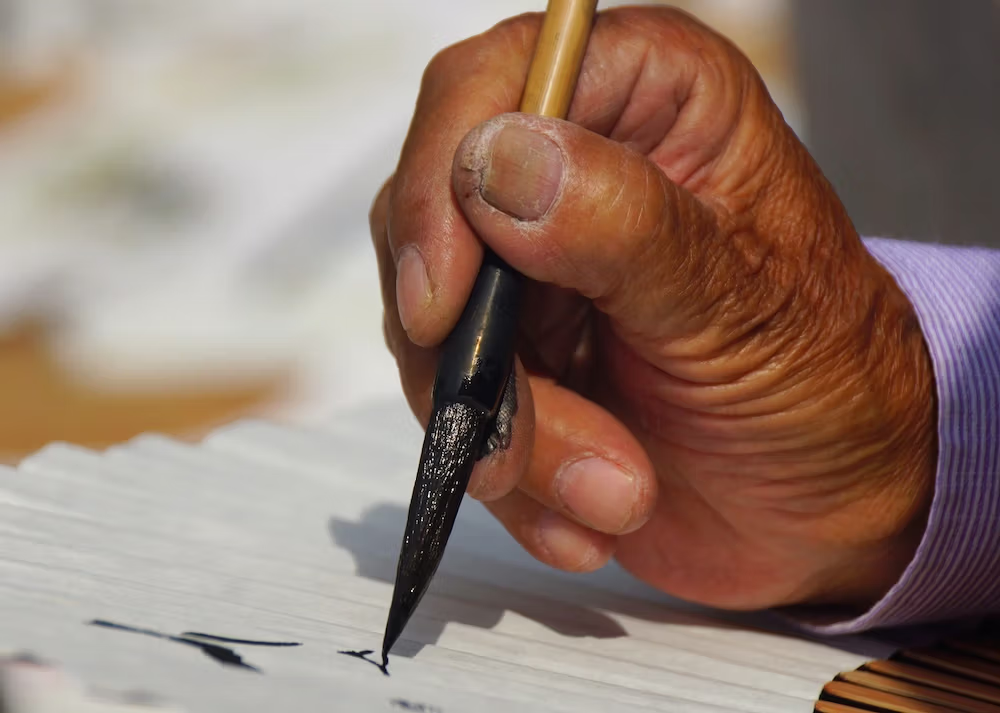
5. Watch Calligraphy and Craft Work
Insadong becomes more rewarding when you watch something being made rather than merely buying the finished object.
Calligraphers may personalize fans, paper or name stamps. Workshops may offer activities involving Korean paper, painting, stamps, jewellery or small decorative crafts.
Availability changes. Inspect the workshop before committing. Look at the examples, ask how much of the object you will actually make and confirm the total price.
“Cultural experience” can mean genuine instruction from a skilled artisan. It can also mean five minutes of assembly followed by forty minutes inside a gift shop. Establish which version you are buying.
6. Visit Jogyesa Temple
Jogyesa sits immediately east of the core Insadong area and provides one of the easiest cultural pairings in central Seoul.
It is the principal temple of the Jogye Order of Korean Buddhism and remains an active religious site. That distinction matters. Jogyesa is not a decorative attraction installed to improve your photographs.
Visitors should dress and behave respectfully, keep voices low around worshippers and avoid treating ceremonies as background material for a portrait session. During major Buddhist events—especially the Lotus Lantern Festival—the entire area can become exceptionally colourful and busy.
Travellers who want historical and religious context rather than simply walking through can consider this guided tour combining Gyeongbokgung, Bukchon and Jogyesa Temple. The route makes geographical sense and covers several places whose importance is not always obvious from signage alone.
7. Eat Something Warm, Sticky or Mildly Dangerous
Insadong is not Seoul’s ultimate street-food district.
That is not an insult. It does not need to be everything.
That said, Audrey and I ate our way through a respectable amount of Insadong street food while living in Korea. Two of my personal Korean favourites were—and remain—tteokbokki and hotteok.
On one outing we began with battered foods on sticks: rice cake, something resembling a lobster roll and a spicy hot-dog-like object that resisted precise identification but disappeared quickly enough. This was not Michelin-level culinary analysis. It was pointing at fried things and seeing what happened.
The sensible approach is to eat what is being prepared fresh and attracting steady traffic rather than hunting down a theoretical checklist of fifteen snacks assembled by somebody who may never have visited the street.
Three broad categories cover most of what travellers actually need:
- Hotteok: a fried pancake with a dangerously hot sweet filling, particularly satisfying in cold weather.
- Tteokbokki and savoury snacks: chewy rice cakes in spicy-sweet sauce, dumplings and other quick foods that work better as spontaneous snacks than as an elaborate culinary expedition.
- Traditional sweets: items such as yakgwa, rice cakes, taffy and confectionery found in shops, cafés and tea houses rather than exclusively at street stalls.
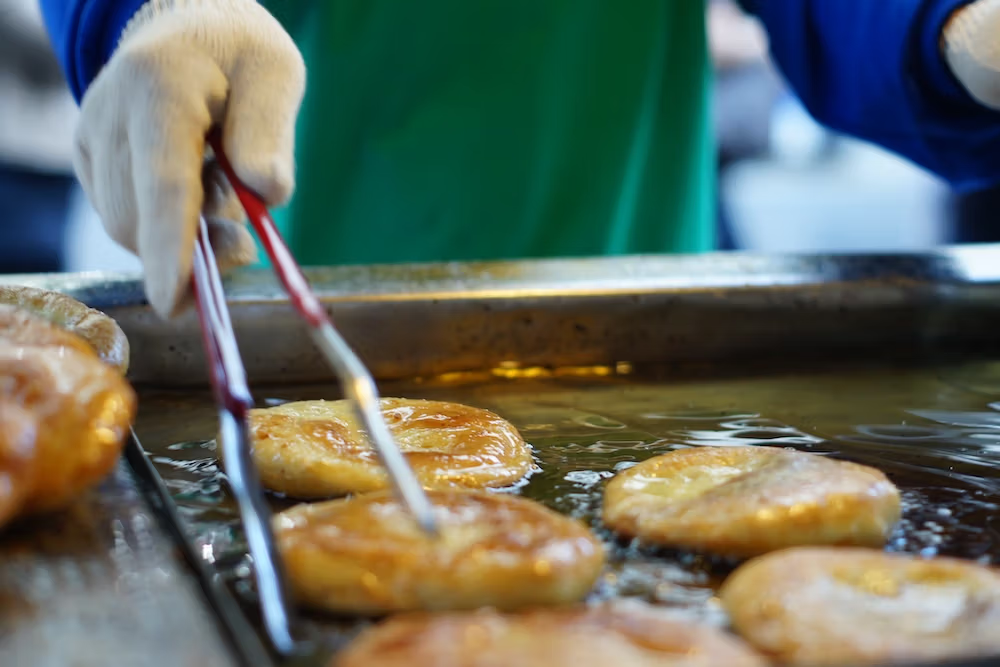
We bought hotteok and retreated into a quieter back alley to eat it. The pancake was warm, crisp and filled with gooey cinnamon-sugar sweetness. Fresh hotteok requires patience. The filling behaves like edible lava, and enthusiasm is not a substitute for allowing it to cool.
We also watched a vendor demonstrate how a hard lump of malt-based candy was stretched repeatedly through corn flour into fine strands. The result was sticky rice taffy: natural, extremely sweet and chewy enough that I ended up talking with a clump of candy lodged in my cheek.
Then came an absurdly large ice cream served through a hollow cane-shaped tube. Audrey and I decided it was big enough to share, which was less a romantic gesture than basic structural engineering.
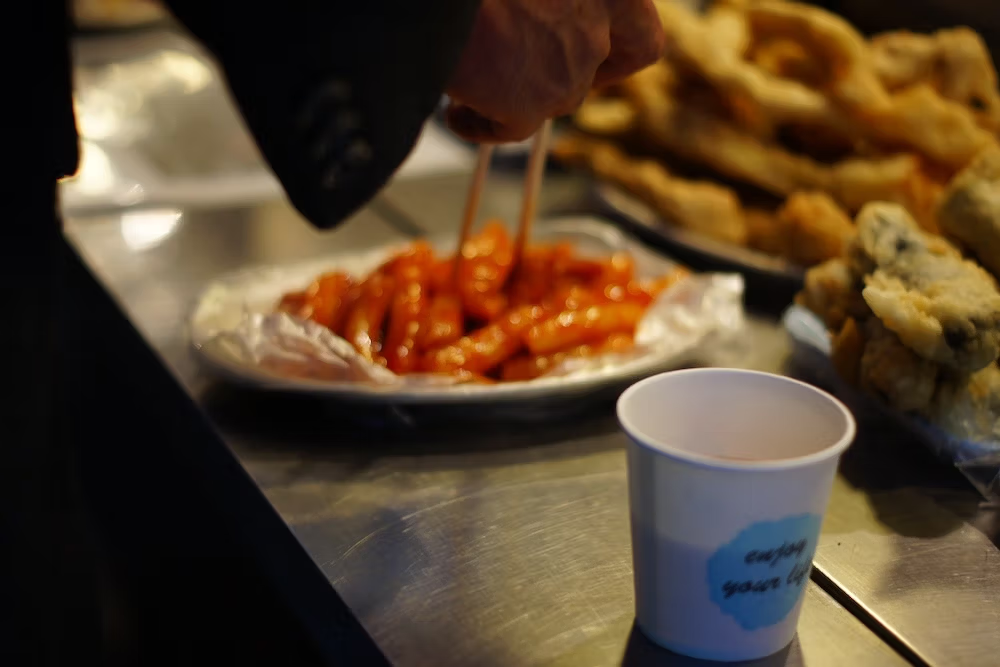
Tteokbokki offers the opposite problem: chewy, spicy, messy and remarkably efficient at decorating a light-coloured shirt.
Video: Exploring Insadong’s Cultural Street
This video follows the street itself—shops, signs, crafts, food and the constant churn of visitors that makes Insadong feel more like a performance than a static attraction.
What Should You Buy in Insadong?
Insadong is one of Seoul’s easiest places to buy Korean gifts.
It is also one of the easiest places to buy something you will later unwrap at home and wonder why you transported it across the Pacific Ocean.
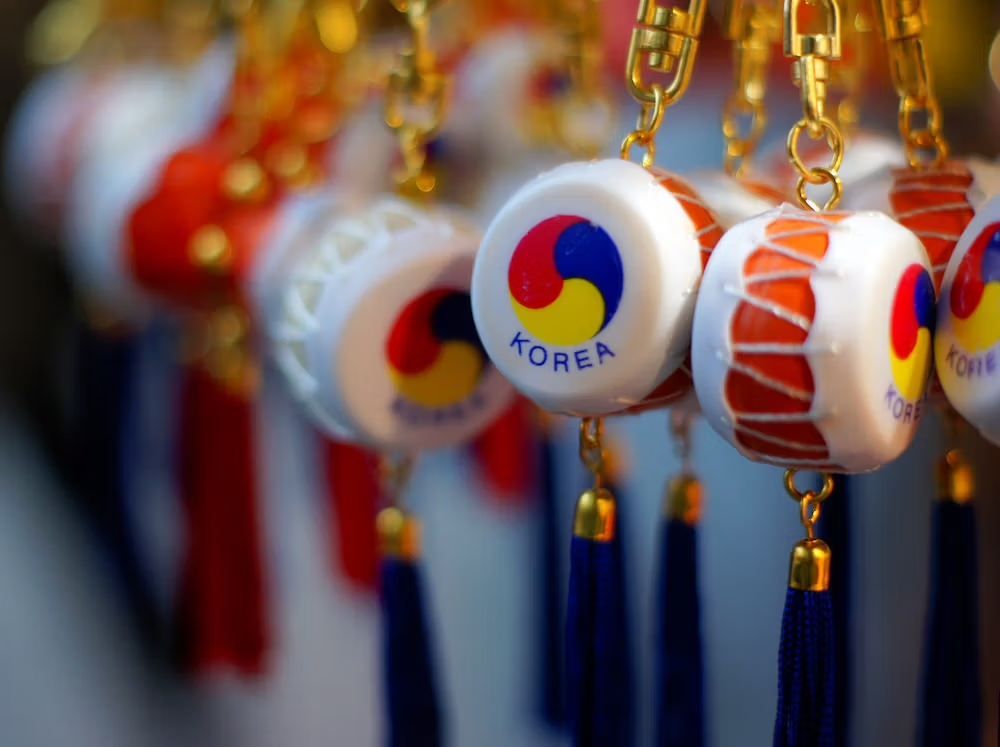
“Traditional” covers an enormous range—from handmade work and legitimate antiques to mass-produced objects decorated with familiar motifs. The best purchase is not necessarily the most expensive or supposedly authentic.
It is the object that is well made, fairly priced, genuinely useful and likely to survive your luggage.
| Souvenir | Why It Works | Packing Difficulty | What to Check |
|---|---|---|---|
| Hanji notebooks, cards and boxes | Lightweight, useful and distinctly Korean | Easy | Paper quality, binding and whether it is handmade |
| Personalized calligraphy fan or print | Personal without taking much space | Easy | Spelling, drying time and protective packaging |
| Name stamp | Small, personal and practical for art or stationery lovers | Very easy | Translation, character choice and carving quality |
| Tea or traditional sweets | Consumable and easy to share | Easy | Ingredients, expiry date and customs restrictions |
| Small ceramic cup or dish | Functional and memorable | Moderate | Chips, cracks and proper wrapping |
| Contemporary Korean design goods | Useful alternative to predictable souvenirs | Usually easy | Whether the design or production is actually Korean |
| Serious ceramics, artwork or antiques | Potentially meaningful collector pieces | Difficult | Provenance, authenticity, insurance, export rules and shipping |
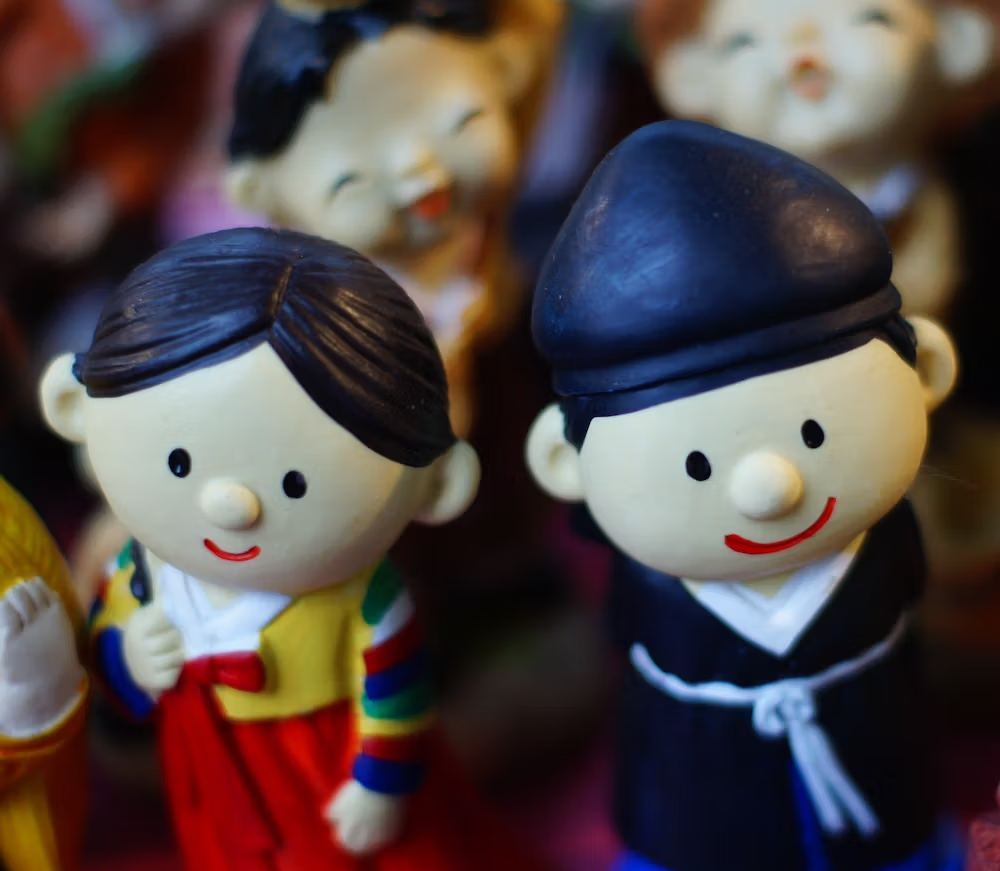
Our most memorable Insadong souvenir outing happened during our final weekend in Korea. After living there for a year, Audrey and I spent the afternoon browsing for things to take home before swapping winter jackets and long underwear for T-shirts and shorts in Malaysia.
We looked at wooden face masks and racks of cute Korean socks. Audrey considered buying a matching couples pair, which is precisely the kind of purchase that seems perfectly reasonable when you are standing in Insadong.
She also claimed a free hug from somebody offering them on the street. I documented the occasion because apparently even affection requires media coverage.
The best souvenir from that afternoon was a couples caricature. We waited while the artist drew us wearing traditional Korean clothing, then received the grand unveiling. It was personal, funny, easy to carry and tied to an actual afternoon rather than merely being an object with “Korea” printed across it.
A Better Souvenir-Buying Strategy
- Walk most of the street before purchasing common items.
- Compare similar products in at least two shops.
- Ask directly whether an item was handmade and where it was produced.
- Photograph the shop and receipt when buying expensive work.
- Do not buy a large fragile object early in a multi-city Korean trip unless shipping is arranged.
- Choose objects you will use—or objects connected to an actual memory—rather than internationally transported dust collectors.
A small cup, notebook, tea package, caricature or personalized fan may not feel as dramatic as a large ceramic vase in the shop.
It will feel considerably more dramatic when the vase breaks inside your suitcase and converts half your clothing into packing material.
Video: Korean Souvenirs and Crafts in Insadong
One of our final Insadong afternoons in Korea revolved around souvenir shopping, street performances, Korean socks and having our couples caricature drawn. It was less a serious procurement mission than a mildly sentimental wander through a neighbourhood we already knew we were going to miss.
Insadong for Street Photographers
Insadong remains one of Seoul’s strongest neighbourhoods for photographing people because the main street concentrates pedestrians, performers, vendors, families, tourists and religious figures into a relatively small area.
It is not necessarily the place for clean, empty architectural compositions. For those, arrive early or disappear into the alleys.
During the middle of a weekend afternoon, removing people from the frame may require advanced editing software or the temporary evacuation of Seoul.
| Time | Photography Strength | Compromise |
|---|---|---|
| Early morning | Quiet streets, storefronts, signs and architecture | Many shops remain closed and street life is limited |
| Late morning | Businesses opening, softer crowds and balanced scenes | Less concentrated activity than afternoon |
| Afternoon | Maximum people-watching, performers and layered street scenes | Crowds can become visually chaotic |
| Late afternoon | Warmer light and continued activity | Buildings may create patchy shadow |
| Evening | Signs, food stalls and atmosphere | Some galleries and traditional shops close earlier than restaurants |
| Rain | Reflections, umbrellas and more dramatic street colour | Protecting equipment while working quickly |
Lens and Technique Suggestions
- A moderate wide-angle lens works for layered street scenes and environmental portraits.
- A short telephoto lens lets you isolate gestures and expressions without standing directly in somebody’s breakfast.
- A slower shutter speed can turn pedestrians into motion while retaining a sharp background.
- A fast shutter speed is safer for performers, children and fleeting interactions.
- A spare battery is more useful than composing a beautiful photograph of your dead camera.
- A small camera bag is preferable to carrying enough equipment to document a lunar landing.
Street photography is partly technical, but mostly it is about anticipation. Watch where people pause, where food vendors hand over orders, where performers draw crowds and where light falls across the street.
Then wait.
Not everything needs to be hunted.
Photographing People Respectfully
Insadong is visually rich, but it is not an open-air casting call.
People are shopping, working, worshipping, eating and spending time with friends. A camera does not suspend that reality.
- Wide street scenes generally feel less intrusive than filling the frame with a stranger’s face.
- For a close portrait, make eye contact or ask permission when practical.
- Be especially careful when photographing children. Ask a parent before making an identifiable close portrait.
- Never obstruct a vendor, performance, entrance or religious practice for a cleaner composition.
- If somebody appears uncomfortable, lower the camera.
No photograph becomes more important merely because you travelled far to take it.
Travellers who want to appear in the photographs rather than spend the day hiding behind the camera can also compare this hanbok photography experience at Gyeongbokgung Palace. It pairs naturally with Insadong, although it is a bookable commercial activity rather than something Audrey or I personally tested.
How to Get to Insadong
From Anguk Station
Anguk Station on Line 3 is the most intuitive approach for most first-time visitors. Exit toward Insadong and Ssamziegil, then walk south into the northern end of Insadong-gil.
This approach works especially well when combining Insadong with Bukchon or Changdeokgung Palace.
From Jonggak Station
Jonggak Station on Line 1 provides a useful approach from the southern side. It makes sense when you are arriving from Seoul’s central business district or pairing Insadong with Cheonggyecheon Stream.
From Jongno 3-ga Station
Jongno 3-ga serves Lines 1, 3 and 5 and is useful when combining Insadong with Ikseon-dong or Jongmyo.
The walk is less immediately obvious than arriving from Anguk, so use a navigation app rather than following whichever crowd appears most confident. Confidence and knowledge are not always travelling together.
A reloadable transport card such as T-money simplifies subway and bus transfers. Seoul’s payment systems continue to evolve, so check the official Seoul transportation guide for current card, pass and payment options.
How Long Should You Spend in Insadong?
You can walk down Insadong-gil in an hour.
You can also technically eat dinner in four minutes.
Neither approach seems especially rewarding.
| Time Available | What Is Realistic | Who It Suits |
|---|---|---|
| 60–90 minutes | Walk the main street, enter Ssamziegil and buy one snack | Travellers fitting Insadong between larger sights |
| Two hours | Main street, two or three alleys, one gallery and a snack | Most first-time visitors with a busy itinerary |
| Three to four hours | Tea house, Ssamziegil, galleries, shopping, food and photography | The best general choice |
| Half-day or longer | Slow photography, workshops, serious shopping and a nearby temple or palace | Photographers, art lovers and deliberate wanderers |
Insadong does not need an entire day by itself for most travellers. A half-day becomes worthwhile when you add a palace, temple, workshop or adjacent neighbourhood.
The sweet spot is three or four hours. Long enough to get lost. Short enough that you do not emerge believing you now require an additional suitcase exclusively for Korean paper products.
Two Realistic Insadong Routes
The Efficient Two-Hour Visit
- Arrive at Anguk Station and enter Insadong from the north.
- Walk through Ssamziegil before the complex becomes crowded.
- Continue down Insadong-gil while noting interesting shops rather than entering all of them.
- Choose one side alley and one gallery.
- Buy a snack or compact souvenir.
- Finish near the southern end and continue toward Jonggak or Cheonggyecheon.
This route gives you the flavour without pretending you have conducted an anthropological study of the neighbourhood.
The Relaxed Half-Day Visit
- Begin at Jogyesa Temple or arrive from Anguk Station.
- Explore the northern side alleys before the busiest afternoon period.
- Walk through Ssamziegil and visit one workshop or gallery.
- Stop for lunch or a traditional tea house rather than trying to eat continuously while walking.
- Return to the main street in the afternoon for people-watching, photography and shopping.
- Continue toward Ikseon-dong, Jongmyo or Cheonggyecheon for the evening.
This is the route I would choose for a first visit. It leaves enough structure to prevent aimless circling but enough slack for the neighbourhood to surprise you.
Video: Eating and Exploring Insadong at Night
Insadong changes after dark. The galleries and specialist shops begin winding down, while restaurants, cafés and food stands take over more of the attention.
What to Combine with Insadong
Insadong plays well with others.
In fact, it usually works better as the flexible half of a day built around one structured attraction.
| Pairing | Best Order | Why It Works | Planning Catch |
|---|---|---|---|
| Changdeokgung Palace | Palace first, Insadong afterward | Excellent historic and cultural half-day | Closed Monday; Secret Garden entry may require a timed ticket |
| Bukchon Hanok Village | Bukchon morning, Insadong lunch and afternoon | Architecture followed by food, tea and shopping | Bukchon is residential; visitors must keep noise down |
| Jogyesa Temple | Temple before or after Insadong | Extremely close and easy to combine | Respect active worship and religious events |
| Ikseon-dong | Insadong afternoon, Ikseon-dong evening | Traditional crafts followed by cafés and nightlife | Both areas become crowded on weekends |
| Cheonggyecheon Stream | Insadong first, stream near sunset | Easy decompression after a busy shopping street | Less appealing during extreme heat, cold or heavy rain |
| Gyeongbokgung Palace | Palace morning, Insadong afternoon | Classic first-time Seoul combination | Longer walk than Jogyesa; check palace closure day |
Changdeokgung and Bukchon
Changdeokgung is the strongest single palace pairing, but the palace should dictate the schedule. Its official visitor information notes that it closes on Mondays and that Secret Garden entry is connected to the time on the ticket.
Plan the palace first.
Insadong is the flexible component. The tea will not be offended if you arrive forty minutes later than expected.
Travellers who want the history explained can compare this guided Gyeongbokgung Palace and Bukchon walking tour. It does not replace wandering Insadong independently, but it can handle the structured historical portion of the day before you surrender to snacks and stationery.
Ikseon-dong
Ikseon-dong makes an easy evening continuation from the southern side of Insadong. Its renovated hanok lanes are filled with cafés, restaurants and bars.
It is photogenic. It is also fashionable, commercial and frequently crowded.
If Insadong represents heritage packaged through crafts, galleries and tea, Ikseon-dong represents heritage repackaged through café design and date-night restaurants. Both are worth seeing. Neither is a secret.
Cheonggyecheon Stream
Cheonggyecheon provides the opposite energy. After several hours of signs, shops and people, walking beside the stream feels like somebody turned down Seoul’s volume knob.
It is an especially pleasant transition near sunset or after an early dinner, assuming the weather is not attempting to boil, freeze or drown you.
When Is the Best Time to Visit Insadong?
Weekday or Weekend?
Weekdays are better for deliberate shopping, gallery browsing and a calmer walk.
Weekends offer more energy, people-watching and pedestrian activity but considerably less personal space.
Street photographers may prefer the weekend. Anyone who becomes irritated when another human enters the same postal code should aim for a weekday morning.
Morning, Afternoon or Evening?
Morning: better for architecture, signs and quieter frames, but weaker for shopping because some businesses open later.
Afternoon: the neighbourhood is fully awake. Shops, galleries, food and crowds are all operating at maximum enthusiasm.
Evening: pleasant for restaurants, cafés and street atmosphere, but less suitable if galleries and specialist shops are the priority.
Late morning through late afternoon is the safest choice for a first visit. Arrive early enough to see the street before peak congestion, then remain long enough to witness it become properly chaotic.
Seasonal Differences
| Season | Advantages | Compromises |
|---|---|---|
| Spring | Comfortable walking weather and easy palace pairings | Busy during blossoms and holidays |
| Summer | Long days and lively evenings | Heat, humidity and sudden heavy rain |
| Autumn | Crisp air, strong photography light and nearby foliage | One of the most popular periods |
| Winter | Hotteok, tea houses and atmospheric cold-weather scenes | Wind and long outdoor walks can become punishing |
Having visited tea houses in both winter and peak summer, I can confirm that Insadong works in opposite conditions for completely different reasons. In winter, ginger tea, heated floors and hotteok make the cold feel purposeful. In summer, tea houses become air-conditioned shelters where the iced plum tea suddenly looks far wiser than whatever hot cinnamon concoction I have ordered.
Rain is not disastrous here.
Insadong has enough galleries, shops, restaurants, tea houses and covered modern complexes to support an improvised indoor route. Wet pavement also creates excellent reflections for photography.
You will be damp.
Your photographs may be better.
Food, Money and Payment
Insadong spans several price levels. Street snacks are relatively inexpensive. Sit-down restaurants vary. Tea houses can feel costly when judged purely by the amount of liquid inside the cup.
Again, you are paying partly for the setting and partly for the opportunity to stop walking. That was our conclusion after several visits, not merely a diplomatic way of describing an expensive beverage.
Credit cards are widely used in Seoul, but a small amount of Korean won remains useful for street vendors, tiny shops and situations where a foreign card suddenly develops principles.
You do not need to carry a brick of cash solely for Insadong.
For expensive art, antiques or ceramics:
- Request a detailed receipt.
- Ask about packing, shipping, insurance and return conditions.
- Confirm whether the quoted price includes delivery or tax.
- Research customs and import restrictions before buying, not while arguing with an airport official.
Vegetarian and Vegan Eating in Insadong
Insadong’s proximity to Buddhist institutions and temple-food restaurants can make it easier than some Seoul neighbourhoods to find vegetable-focused meals.
Easier does not mean automatic.
Korean broths, sauces, kimchi and side dishes may contain anchovy stock, fish sauce, meat stock, egg or other animal products even when the visible ingredients appear vegetarian.
Strict vegetarians and vegans should ask specifically and use a translation app or dietary card. Pointing at a plate of visible vegetables and hoping for the best is not a reliable ingredient-checking system.
Bibimbap can sometimes be adapted by removing meat and egg, but the sauce and accompanying dishes still deserve checking. Temple cuisine is generally the clearest option when dietary certainty matters, although individual restaurant policies vary.
Accessibility and Visiting with Children
Insadong’s main street is relatively level compared with Seoul’s hillier historic neighbourhoods. Modern complexes generally offer easier circulation than old hanok-style buildings, narrow alleys and second-floor tea houses.
Accessibility is not consistent from one business to the next. Steps, narrow doors, uneven thresholds and upstairs seating remain common.
Travellers using wheelchairs or managing limited mobility should identify accessible restaurants and activities in advance rather than assuming that every venue marketed as “traditional” can accommodate them.
Families can explore Insadong easily if they avoid the heaviest weekend crowds. The area offers snacks, crafts and constant visual stimulation, which is useful when young travellers begin questioning why adulthood apparently involves looking at another ceramic bowl.
The main street can become dense enough that small children need to remain close. A compact stroller or carrier may be easier than manoeuvring a large stroller through narrow shops and alleys.
Where to Stay Near Insadong
Insadong and the wider Jongno area make an excellent base for travellers who care more about palaces, temples, historic neighbourhoods and walkable sightseeing than clubs, rooftop parties and discovering what their neighbours sound like at four in the morning.
The location is the main advantage. From this part of Seoul, you can reach Insadong, Jogyesa, Bukchon, Changdeokgung, Jongmyo, Ikseon-dong and parts of central Seoul without repeatedly crossing the city.
Travellers comparing the broader neighbourhood can start with current hotels and accommodation in Insadong on Booking.com.
Stay Near Anguk for Palaces, Bukchon and Jogyesa
Anguk is the most convenient choice for visitors prioritizing traditional Seoul. It puts the northern end of Insadong, Ssamziegil, Bukchon, Jogyesa and Changdeokgung within easy walking distance.
Nine Tree by Parnas Seoul Insadong on Booking.com sits beside Jogyesa Temple and close to the main Insadong area. I am including it for its location and current bookability, not pretending Audrey and I secretly stayed there when we lived in Korea.
Stay Near Jongno 3-ga for Transport and Evening Food
Jongno 3-ga is the better choice if subway connectivity and evening dining matter more than waking beside the palaces. Lines 1, 3 and 5 intersect here, and Ikseon-dong is close enough for an easy evening wander.
Moxy Seoul Insadong on Booking.com is positioned near Jongno 3-ga and suits travellers wanting a more contemporary hotel base near both Insadong and Ikseon-dong.
Consider a Hanok Stay Carefully
A hanok stay can be memorable, particularly if atmosphere matters more than standardized hotel design. It can also involve floor bedding, smaller rooms, thin walls, shared spaces or accessibility limitations.
Read the room details rather than booking based exclusively on a beautiful courtyard photograph.
Travellers interested in that style of accommodation can compare hanok hotels and guesthouses in Seoul on Booking.com.
The general compromise of staying around Insadong is nightlife. Parts of the area quiet down earlier than Hongdae, Itaewon or Gangnam.
I would consider that a feature.
After walking twenty thousand steps, drinking tea, photographing strangers and debating the merits of six nearly identical notebooks, sleep begins looking considerably more glamorous than bottle service.
Should You Book an Insadong Tour?
You do not need a tour merely to walk down Insadong-gil.
The street is compact, the main route is obvious and getting pleasantly distracted is part of the experience.
A tour becomes more useful when Insadong is bundled with places where historical and cultural context actually matters: Jogyesa Temple, Gyeongbokgung, Changdeokgung, Bukchon or Jongmyo.
It may also be worthwhile when:
- You have limited time and want somebody else to organize the route.
- You want explanations of Korean Buddhism, palace history, architecture or traditional crafts.
- You prefer a small group to navigating the city alone.
- You want a photography or hanbok experience with logistics already arranged.
It is less useful when your goal is simply to wander, drink tea and photograph whatever happens. No guide can schedule spontaneity without damaging it slightly.
Common Insadong Mistakes
- Only walking the main street: the side alleys contain much of the atmosphere.
- Arriving too early for shopping: peaceful streets are excellent for photography, but many businesses open later in the morning.
- Treating every souvenir as handmade: ask where and how an item was produced.
- Planning fifteen snacks: eat what looks fresh rather than turning lunch into an administrative exercise.
- Buying fragile ceramics on the first day: consider luggage, onward travel and shipping.
- Ignoring gallery schedules: exhibitions, opening days and hours vary.
- Photographing people aggressively: a busy cultural street is still occupied by actual human beings.
- Expecting an untouched historical district: Insadong is a living commercial neighbourhood built around heritage, not a sealed Joseon-era museum.
- Rushing because the neighbourhood looks small on a map: Insadong’s talent is turning tiny distractions into an entire afternoon.
Insadong Travel Questions Answered
Is Insadong free to visit?
Yes. Walking through Insadong-gil, the alleys and Ssamziegil costs nothing. Individual workshops, museums, exhibitions and organized activities may charge admission or participation fees.
What is the nearest subway station to Insadong?
Anguk Station on Line 3 is the most convenient station for the northern end of Insadong and Ssamziegil. Jonggak Station on Line 1 and Jongno 3-ga on Lines 1, 3 and 5 are useful depending on your route.
How long does Insadong take?
Allow two hours for a basic walk and three to four hours for galleries, shopping, tea and food. Photographers and craft enthusiasts can comfortably spend half a day when Insadong is combined with Jogyesa or a workshop.
You can walk through faster. You will simply have converted a neighbourhood into a corridor.
Is Insadong better on a weekday or weekend?
A weekday is calmer and better for deliberate browsing. A weekend is busier but more energetic, with pedestrian restrictions typically applied to the main street during designated hours.
Choose according to whether you value personal space or street activity. You are unlikely to receive both at maximum strength.
What is the best thing to buy in Insadong?
For most travellers, hanji stationery, a personalized calligraphy item, tea, traditional sweets, a name stamp or a small ceramic piece offers the best combination of meaning and packability.
Our couples caricature proved that the most memorable souvenir does not always need to be especially traditional or expensive. It needs to connect with the trip.
Serious artwork and antiques require more research. Confidence gained during a forty-minute holiday stroll is not a substitute for expertise.
Is Insadong good at night?
Insadong remains pleasant in the early evening, particularly for dinner, cafés and illuminated street scenes. However, galleries, specialist shops and some cultural businesses close earlier than restaurants and bars.
Visit during the day if art, antiques and shopping are priorities. Visit in the early evening if you mainly want food and atmosphere.
Is Insadong too touristy?
It is undeniably touristy.
That does not make it worthless.
Insadong still concentrates galleries, crafts, antique shops, tea houses, street life and convenient access to Seoul’s historic centre. The solution is not to skip it. The solution is to leave the main street occasionally and apply a functioning level of judgment to what you buy.
Can Insadong be visited in the rain?
Yes. Galleries, tea houses, restaurants, craft shops and Ssamziegil provide frequent indoor stops. Bring an umbrella and shoes that cope with wet pavement.
Photographers may find the reflections worth the inconvenience. Cameras, unlike tourists, remain strangely unenthusiastic about getting soaked.
Is Insadong a good neighbourhood to stay in?
Yes, particularly for first-time visitors prioritizing palaces, Bukchon, Jogyesa, Jongmyo and central sightseeing. The neighbourhood is well connected and more relaxed at night than Seoul’s major nightlife districts.
The trade-off is obvious: less late-night energy. Whether that is a disadvantage depends on whether you came to Seoul to visit temples or become the final surviving person inside a karaoke room.
More Nomadic Samuel Stories from Korea and Asia
- Eight reasons to love South Korea
- A look inside my Korean apartment
- Petra, Jordan travel photography essay
- A guide to eating Thai food and understanding Thai cuisine
Final Thoughts on Visiting Insadong
Insadong is one of those Seoul neighbourhoods I kept circling back to.
It was compact enough for an unplanned Saturday walk yet busy enough that I never knew what would step into the frame next.
The attraction was never merely “traditional Korea.” It was the friction between tradition, tourism and everyday life: monks carrying phones, couples sharing snacks, artists painting fans, families buying ice cream and photographers photographing other people photographing their food.
It was also personal.
Audrey and I drank tea there in winter until the heated floor made us want to sleep. We returned in oppressive summer humidity and argued, through our drink choices, over whether hot cinnamon tea or iced plum tea represented the more intelligent response. We ate hotteok in back alleys, watched candy being stretched, browsed Korean socks and had ourselves drawn in traditional clothing.
Then, during our final weekend after a year living in Korea, we came back once more to buy souvenirs and enjoy the city before leaving for Malaysia. Within days, the winter jackets and long underwear would be replaced by T-shirts and shorts. Insadong became part of the goodbye.
Messy. Commercial. Gritty.
That mixture is precisely why Insadong remains worthwhile.
Walk the main street, but do not remain trapped on it. Enter the alleys. Browse a gallery without needing to understand everything. Sit down for tea. Eat something warm. Buy something small enough that you will not curse it while packing.
Most importantly, give yourself enough time to watch.
Insadong reveals far more through its people than it ever will through a checklist of attractions.
GORGEOUS photos. You really captured the beauty of Insadong.
These pictures speak for themselves. You have captured the “soul” of Seoul very beautifully.
Nice work buddy! Having just left Korea myself recently these pictures remind me why I like & miss it so much!
Well helloooooo at the male half of the fit looking couple. Ooh la la, I love a Korean man with tattoos – especially when they carry lollipops in their pockets! As for the other tattoos, I love the one of the couple laughing together – so cute! And the woman with the pink tablet, too. I generally avoid Insadong (too crowded for my liking) but enjoying these pics of it.
It looks like your temptress won’t be eligible for the ‘Smiling Faces’ blog
Suuuuuuuuuuuuuuper cool! Lots of great smiles! I really like the couple in embrace. Do people do that a lot int he open in Korea? They don’t so much here in Japan…
Wow, great photos Samuel! I especially love the one of the girl taking a picture of her food! Really great shot! You definitely have given me a feel for the area and I’ve never been there! 🙂
Great candid shots. Love that little girl in the traditional dress!
Thanks Callie, I like seeing locals dressed up in traditional hanbok but it doesn’t happen all that often.
a pic of a piggyback ice cream girl is so cute! one of the best captures i have seen lately.
Thank you! That was a cute moment 🙂
I always love seeing your “Faces” posts, Samuel! Really enjoyed this one!
Thanks Jeremy! Much appreciated. I should have more coming soon 🙂
You really do a great job of capturing people- I’m so jealous, that is my biggest weakness (among many) in my photography.
Thanks Erik, I think with practice you could get really good at it. I just started doing it one day and haven’t looked back.
I miss Insadong! The guy on the 9th photo reminds me of Koreanovela leading men *giggles*
I have yet to write about my Korea trip =))
It was a lot of fun hanging out with you there Mica! Seems like such a long time ago now! HA