
Banff is spectacular. Planning Banff can be a bit of a circus.
The first time you start looking at a map, everything seems wonderfully straightforward. There’s Banff. There’s Lake Louise. There’s Moraine Lake. Maybe you add the Gondola, Bow Falls, a hike, a few restaurants and perhaps a bigger excursion along the Icefields Parkway. You begin dragging pins around a map and before long you’ve created a magnificent four-day trip that would require teleportation, perfect weather and the bladder control of a camel.
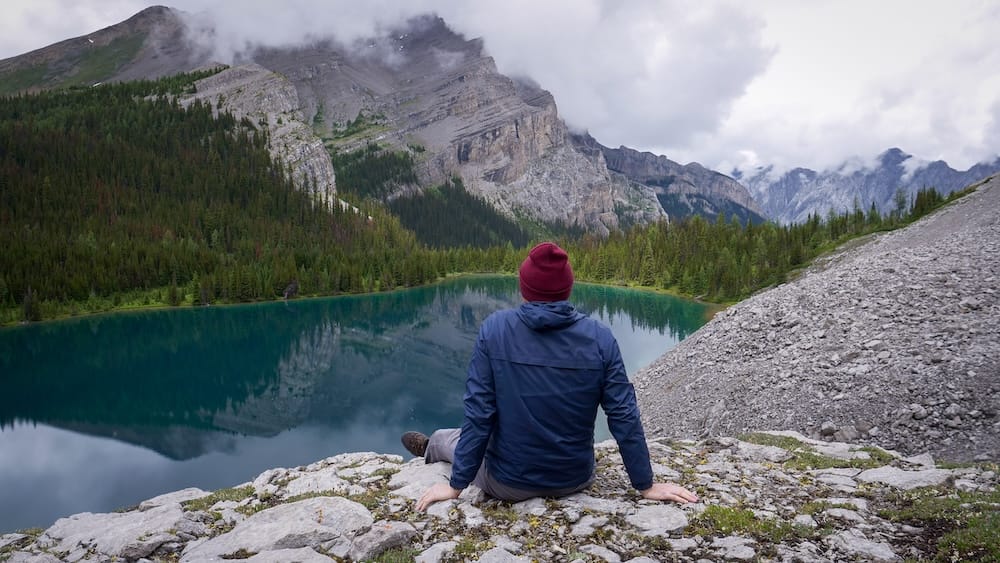
Audrey and I have travelled around Banff and the Canadian Rockies in enough different ways to see how much the logistics change the experience. We’ve done the classic self-drive family road trip, explored Banff town on foot, stayed in a hostel in Canmore, based ourselves much farther away on the outskirts of Calgary, spent several action-packed days doing tours and activities, and most recently returned with Aurelia and her grandfather for a multigenerational trip where we stayed in a two-bedroom suite in Harvie Heights and used a private guide for a very ambitious sightseeing day.
I’ve also spent six days riding a horse into Banff’s backcountry, which taught me that the park is considerably bigger than the neat little collection of turquoise lakes you see in vacation photos.
After one four-day Banff visit, Audrey and I both felt we had barely scratched the surface. That still sums up the place for me.
For a first trip, I would not start by trying to cram in as many attractions as possible. I would start with the boring-but-important stuff that determines whether you can actually reach those attractions: geography, where you sleep, how you move around and which reservations genuinely need to be nailed down.
Get those pieces right and Banff becomes much easier. Get them wrong and you can spend an impressive amount of money inconveniencing yourself in beautiful surroundings.
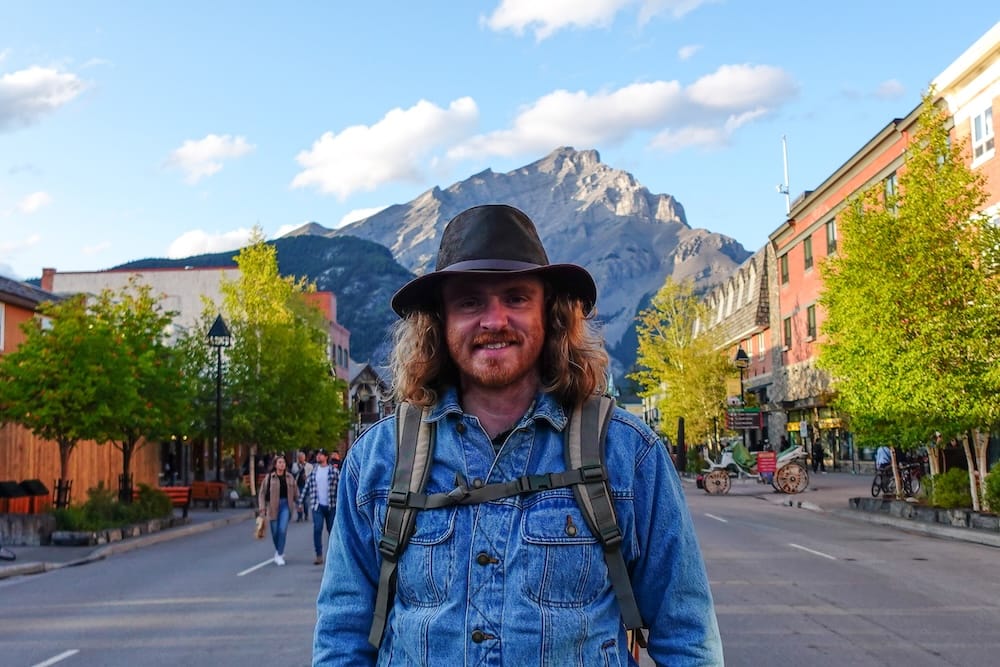
Banff town and Banff National Park are not the same thing
This sounds embarrassingly obvious until you begin planning.
Banff town is tiny. The municipality covers less than four square kilometres, and the centre is genuinely pleasant to explore on foot. We’ve walked from downtown along the Bow River toward Bow Falls, eaten in town, visited museums and spent plenty of time wandering without feeling any urge to keep jumping into a car.
Banff National Park, however, is enormous compared with the townsite. Lake Louise is roughly 45 minutes from Banff in ordinary driving conditions, and that is only the driving portion of the journey. It says nothing about parking, shuttle transfers, queues, bathroom breaks or how long you actually spend there.
Moraine Lake sits in the Lake Louise area but has a completely different access problem. The Columbia Icefield lies much farther north along the Banff–Jasper corridor and turns into a substantial excursion. Lake Minnewanka, Cascade Ponds and the Gondola create still more geographical directions from town.
Then there are places that regularly get bundled into a “Banff trip” even though they are somewhere else entirely.
Canmore is its own town. Harvie Heights is outside Banff National Park near Canmore. Yoho National Park is in British Columbia. On our recent private tour we visited Lake Louise and Moraine Lake in Banff National Park, then continued into Yoho for the Spiral Tunnels, Takakkaw Falls, Emerald Lake and Natural Bridge.
It was a fantastic day. It was also a very long one.
That distinction matters because a first-time Banff itinerary can quietly turn into a Canadian Rockies road trip without the traveller realizing how much ground is involved.
Before booking accommodation, I would put the places that matter most to you on a map. Five minutes doing that can tell you more about the shape of your trip than reading another list of “20 unmissable things to do in Banff.”
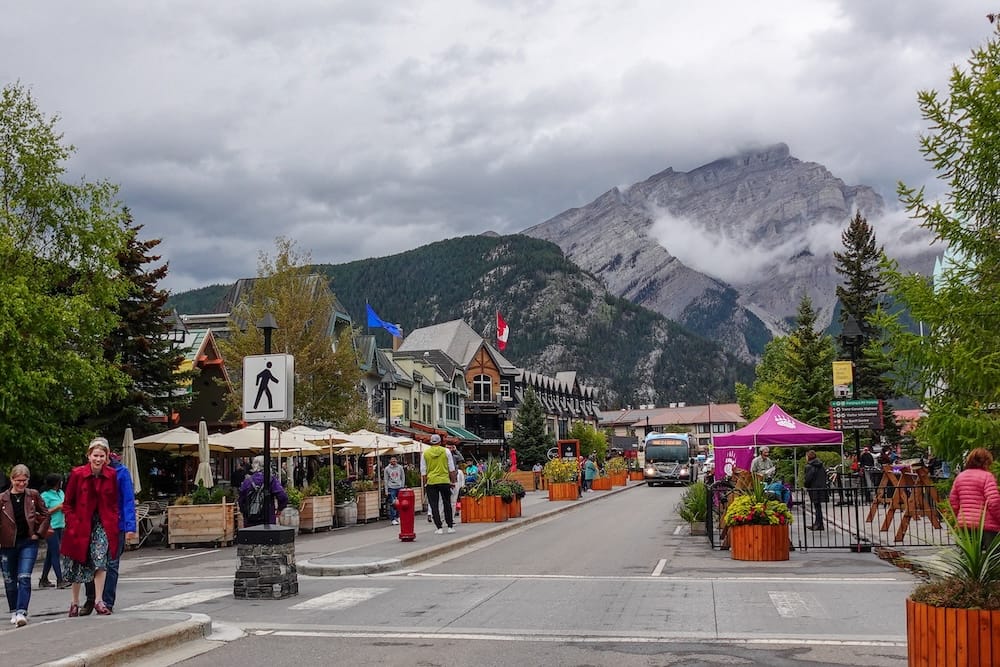
Your accommodation is part of your transport plan
We’ve tried almost the full spectrum of ways to base ourselves around Banff without actually staying overnight in Banff town itself.
We’ve stayed out around Calgary, which obviously makes Banff a much bigger undertaking. We’ve stayed in a hostel in Canmore, close enough to reach the park easily while still sleeping outside it. On our recent multigenerational trip, we had a two-bedroom suite at The Gem Stays in Harvie Heights.
That last arrangement worked extremely well for the trip we were taking. Aurelia was with us, as was her grandfather, so having two bedrooms and more living space was genuinely useful. We were not two backpackers who only needed somewhere to dump a bag and collapse at midnight.
At the same time, Harvie Heights is not Banff. Canmore is not Banff. Calgary is most definitely not Banff, no matter how optimistic you are before the first coffee of the morning.
Where you sleep changes the texture of the trip.
Stay centrally in Banff and the town itself becomes easy. You can walk to restaurants, go down to the Bow River, use local transit and leave a vehicle parked instead of firing it up every time someone wants lunch. If that convenience is the priority, it makes sense to compare current places to stay in Banff before committing to an outside-the-park base.
Stay in Canmore and you gain a different accommodation base outside the park while still having a year-round Roam Transit connection with Banff. We’ve personally stayed in a Canmore hostel, and this is the option I would look at when the trade-off between being inside Banff and having a wider range of accommodation matters more than simply sleeping as close as possible to Banff Avenue. You can compare current Canmore accommodation across hostels, hotels, apartments and longer-stay options rather than assuming one style of stay fits everyone.
Stay around Lake Louise and you put yourself much closer to one of the park’s biggest sightseeing areas, but you lose some of the broader restaurant and town infrastructure that makes Banff such a useful base.
None of those choices is automatically right or wrong. What I would avoid is choosing accommodation purely because one room is cheaper, prettier or larger and then discovering that the location creates an awkward commute every single day.
The room and the transport plan are part of the same decision.
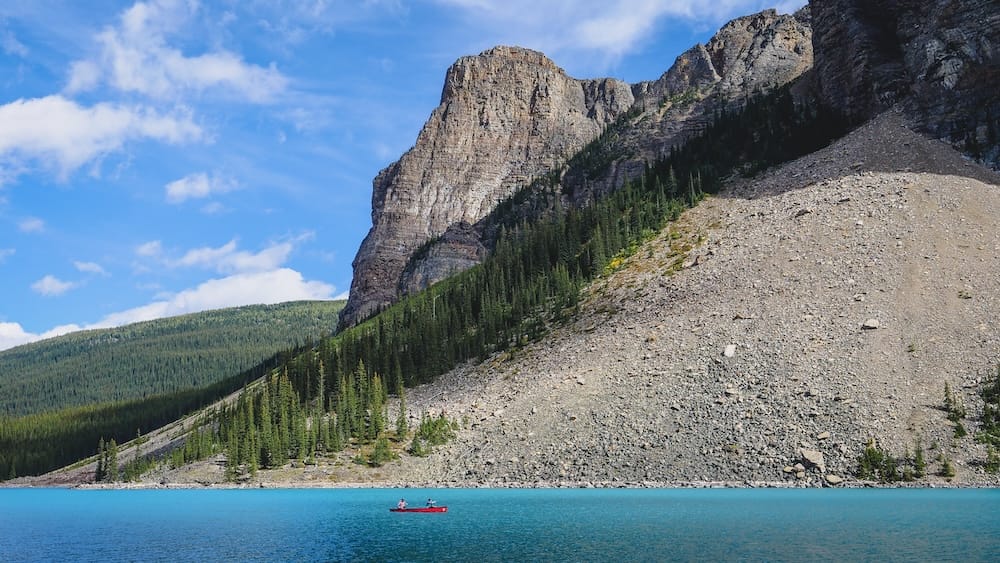
Treat Lake Louise and Moraine Lake as a separate planning project
This is probably the single most important logistical difference between the Banff trips we took years ago and a trip today.
On our older family road trip, we drove ourselves around the Rockies and visited both Moraine Lake and Lake Louise by car. That freedom was a major part of the experience.
Do not use that old experience as your current access plan.
You cannot simply drive your own car to Moraine Lake
Moraine Lake Road is closed to ordinary personal vehicles year-round.
Most visitors now reach the lake through Parks Canada shuttles, qualifying Roam Transit services, licensed commercial operators or another permitted form of transport. Registered guests of Moraine Lake Lodge are among the limited exceptions.
For a first-time visitor, the practical lesson is simple: if seeing Moraine Lake would be one of the major disappointments of your trip if you missed it, arrange the access before building the rest of that day.
For the 2026 season, Parks Canada operates regular Moraine Lake shuttles from June 1 through October 12, weather permitting. The reservation system is slightly more forgiving than the phrase “everything sells out” suggests: 40% of seats were released when reservations opened, while the remaining 60% are released at 8 a.m. Mountain Time two days before departure.
I like that system because it preserves a second chance for travellers who plan later. I would not like it enough to deliberately leave my entire Moraine Lake plan until two days before the visit.
There is also very little room for sloppy return planning once you are at Moraine Lake. Normal cell service and Wi-Fi are not available, visitor services are limited and you really do want to know which ride is taking you home.
This is not the place for, “Eh, we’ll figure something out.”
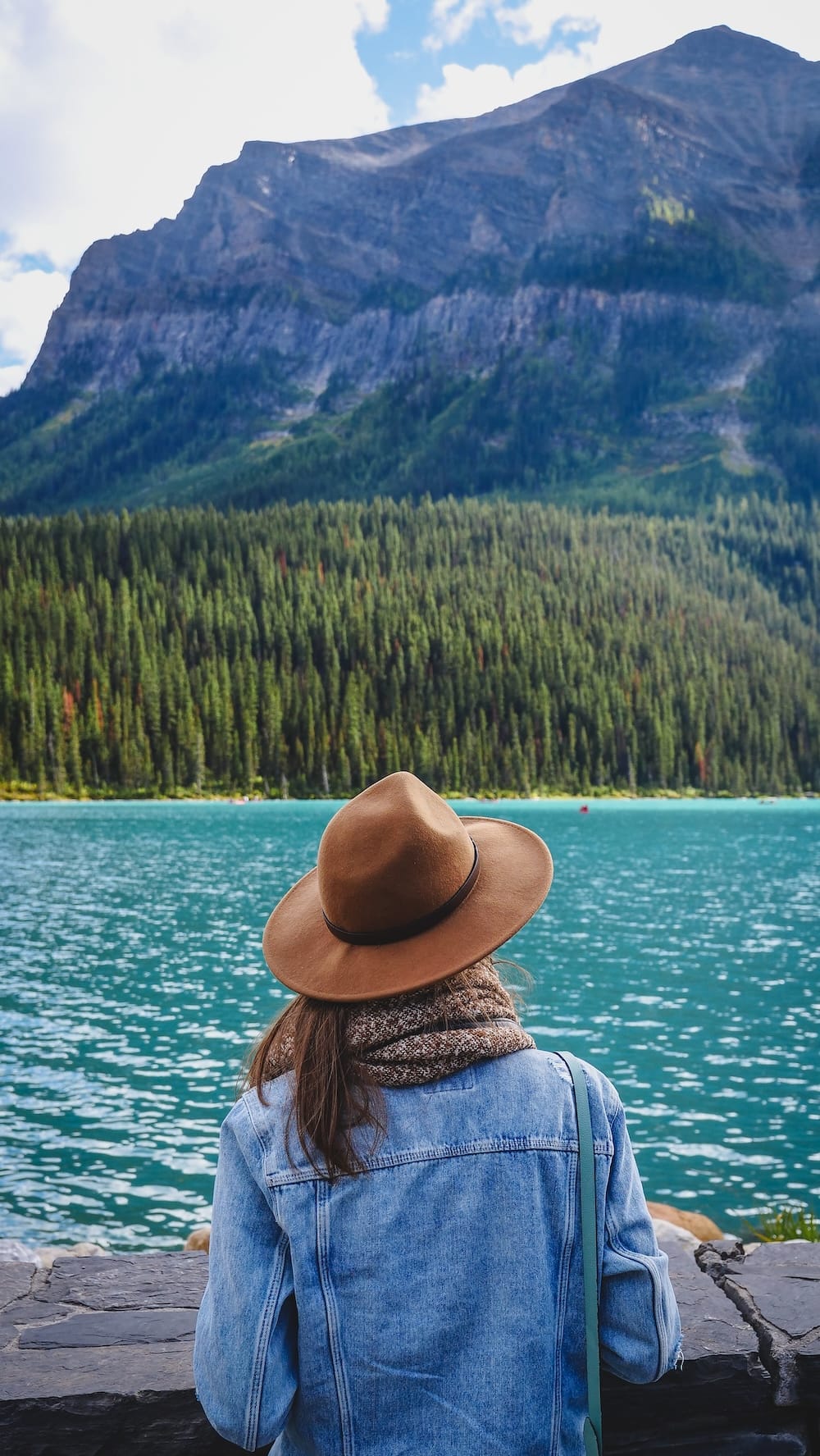
Lake Louise is technically driveable, but that doesn’t make it dependable
Lake Louise works differently.
Personal vehicles can still reach the lakeshore parking area. The problem is that an available road and an available parking spot are two entirely different things.
Parks Canada says roughly 75% of vehicles attempting to reach the lakeshore during the previous summer were turned around once the parking lot was full.
Seventy-five percent.
That is the sort of number that changes my planning behaviour.
If Lake Louise were an optional stop and I happened to be nearby at a quiet time, I might take my chances. If it were one of the main reasons I had travelled to Banff, I would not build the morning around winning a parking lottery.
Parks Canada shuttles are the more predictable option. For 2026, regular service to Lake Louise runs from May 15 through October 12, weather permitting.
There is another detail worth understanding because it is easy to assume that all “Banff shuttles” work the same way.
A normal Parks Canada lake-shuttle reservation starts at the Lake Louise Park & Ride. It does not pick you up in downtown Banff. From the Park & Ride, your booking gets you to your first selected lake, gives you access to the Lake Connector between Lake Louise and Moraine Lake, and brings you back to the Park & Ride.
If you are sleeping in Banff and want a public-transport option from town, Roam can make more sense. In summer 2026, its reservable Super Pass combines Route 8X from Banff to Lake Louise with access to the Parks Canada Lake Connector for Moraine Lake.
Roam also leaves some ordinary 8X capacity for walk-up riders, but summer waits can reach two hours. More importantly, boarding a normal 8X gets you to Lake Louise; it does not magically provide Moraine Lake access.
If you would rather remove the shuttle puzzle from the day entirely, guided transport is the obvious commercial alternative. One current GetYourGuide option runs from Banff, Canmore or Harvie Heights and offers either Moraine Lake alone or a combined Moraine Lake and Lake Louise trip, with shared and private versions available. You can check current Lake Louise and Moraine Lake tour options and compare that convenience with arranging the public transport yourself.
The lakes are close enough to look simple on a map and complicated enough in practice that I would solve their transportation before doing much else.
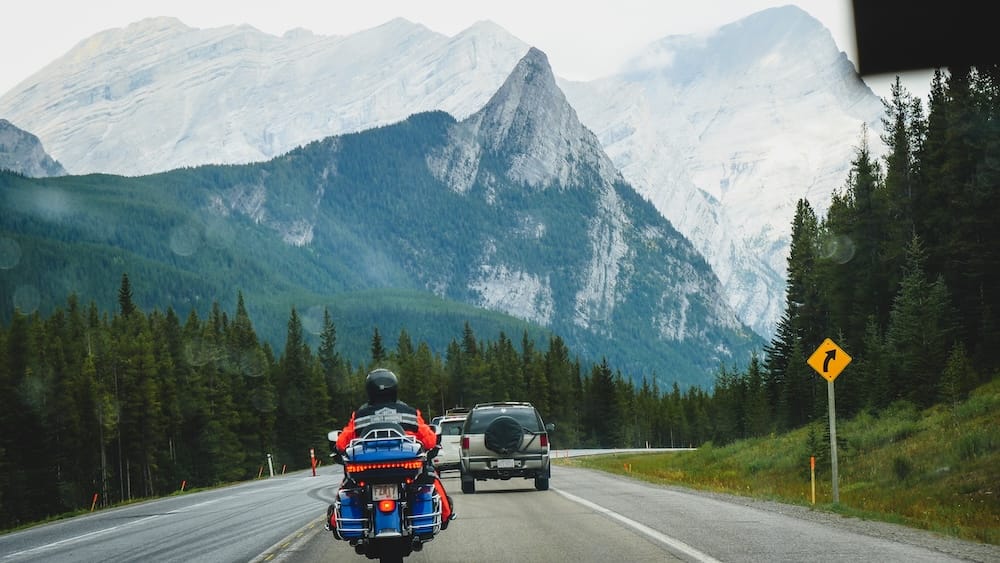
A rental car is useful—until it isn’t
I understand why visitors become obsessed with the question, “Do I need a car in Banff?”
Years ago, my answer would have leaned heavily toward yes. During our family Rockies road trip, having our own vehicle was excellent. We moved through Banff, Canmore, Lake Minnewanka, Lake Louise, Moraine Lake and well beyond the park on our own schedule. With Audrey’s family and our dog Togo travelling together, the flexibility was a major advantage.
I still love that kind of independence.
The difference now is that having a car no longer solves every important access problem.
It does nothing for ordinary Moraine Lake access. It gives you the legal possibility of driving to Lake Louise but no guarantee you will park there. Inside Banff town, the car can quickly become something you spend unnecessary energy moving, parking and retrieving.
Meanwhile, Roam Transit connects Banff with Canmore and Lake Louise and serves a number of major attractions and seasonal park routes.
So I would not ask whether Banff “needs” a rental car. I would look at your actual trip.
If you are staying in central Banff and your main priorities sit along well-served transit routes, you may discover that a car spends a surprising amount of time parked.
If your plans sprawl across the Rockies, extend into areas that are awkward by transit or involve a lot of regional exploration, a car can still be enormously useful. Calgary is the most natural place for many visitors to pick one up before heading west, so travellers building a wider road trip can compare current Calgary rental-car options rather than automatically renting for a town-and-lakes itinerary that may not need one.
There is also a third option that worked particularly well for us recently: letting somebody else drive.
Our private tour with Aurelia and her grandfather lasted about ten hours, from a 9 a.m. pickup until around 7 p.m., and we covered an absurd amount of ground without having to think about parking, navigation or fitting a family into someone else’s group schedule.
That was the real advantage for us. We had grandpa and baby in tow, and we could travel at our own pace.
Private touring is considerably more expensive than taking a public bus, so I would never call it a universal solution. For that particular multigenerational day, though, the flexibility was not some fluffy luxury perk. It was the reason such an ambitious itinerary worked. If that kind of control would solve a similar problem for your group, you can compare current private Banff tour options rather than assuming a fixed group tour is your only guided choice.
Do not book everything—book the things that can ruin the plan if you miss them
Banff requires advance planning, but I would resist the urge to turn the trip into one continuous appointment.
There is a difference between a hard constraint and something that merely benefits from a reservation.
Lock these down when they matter to your trip
Moraine Lake transportation is the clearest example. You cannot fall back on driving your own car if the shuttle plan disappears.
Lake Louise transportation can also belong in this category if reaching the lake is a non-negotiable part of your visit.
Your accommodation is another obvious one during busy periods because where you stay affects the transport plan underneath everything else.
Reserve these when timing matters to you
The Banff Gondola is a useful example of a softer constraint.
You do not technically need a reservation, but popular time slots can sell out. If you have built a day around riding at a particular time, reserve it. If you are flexible, it does not need to control the entire trip. We have personally done the Banff Gondola, and travellers who know they want to include it can check current Banff Gondola ticket availability for their dates.
I would use the same logic for major tours. If a particular experience is one of the reasons you are travelling to Banff, secure it. If it is merely one of six things you would be equally happy doing, give yourself room to adapt.
Protect some unplanned time
This part matters more than it sounds.
Banff town is excellent for those pieces of the trip that do not require much choreography. We’ve wandered along the river, walked to Bow Falls, visited museums, eaten well and simply enjoyed being in town without having to check whether we were about to miss a departure.
I would deliberately keep some of that breathing room.
A mountain trip where every hour has already been promised to somebody is asking the weather to develop a sense of humour.
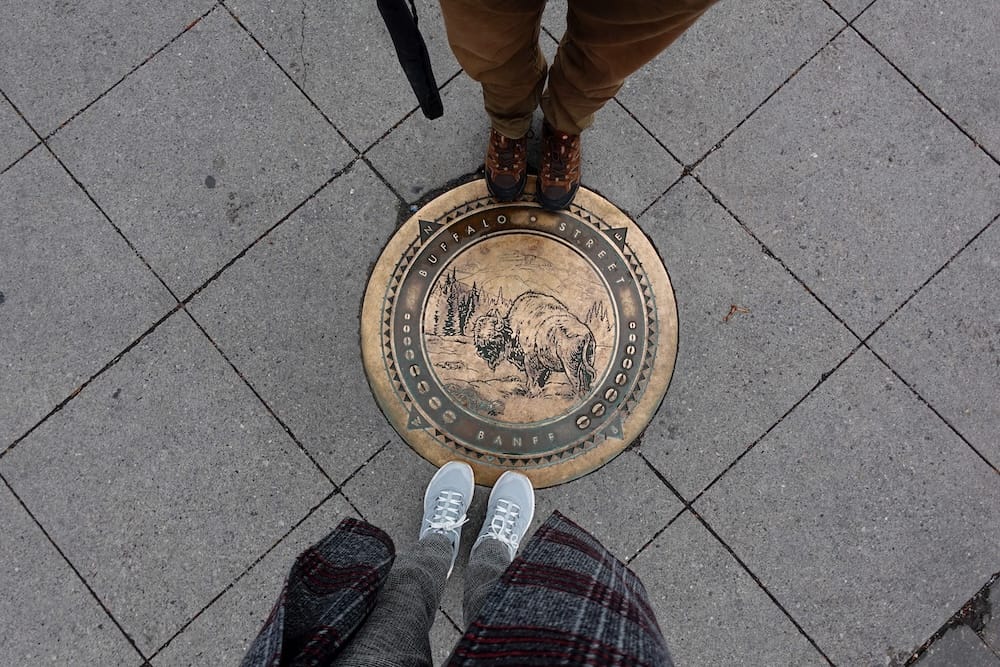
Banff town deserves some of your time
On a first trip, it is tempting to treat Banff town as a bunkhouse with restaurants: sleep there, eat breakfast and immediately escape toward somewhere more famous.
I wouldn’t.
One of the things I enjoy about Banff is how easy it is to alternate between bigger adventures and extremely uncomplicated sightseeing.
We have walked beside the Bow River from town toward Bow Falls and spent time exploring the centre without needing to make a production out of it. After a long excursion, that kind of day feels very different from waking up to another alarm, another highway and another timed check-in.
Even if you have a car, you can largely stop thinking about it once you are downtown. The Train Station area has roughly 500 free long-stay parking spaces and sits about an eight-minute walk from the centre.
That means you can drive into Banff, park and become a pedestrian for a while.
It may sound like a small logistical point, but I think it is part of what makes Banff town such a useful base. Not every good hour in the Rockies needs to be hard-won.
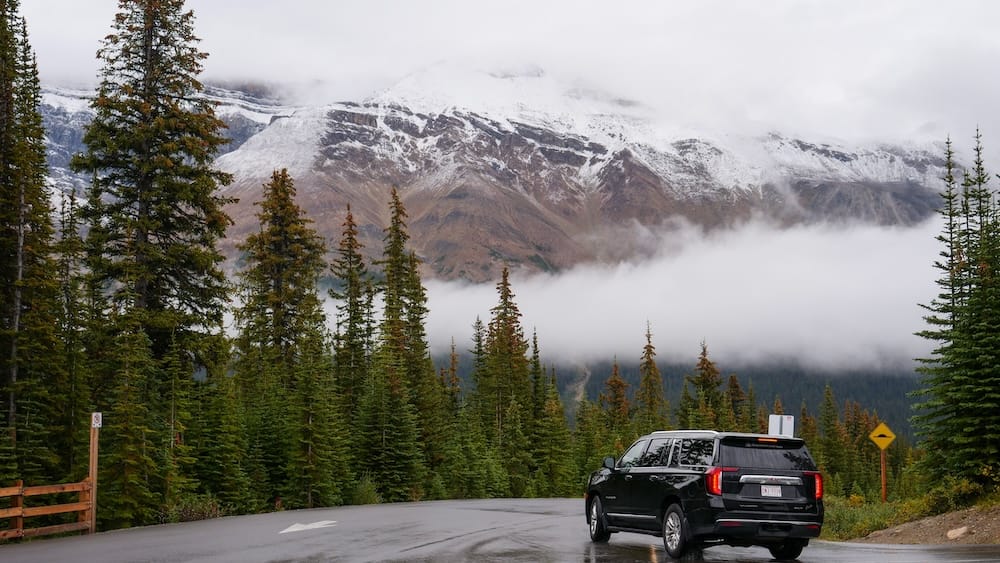
A 45-minute drive can swallow half a day remarkably quickly
This is where ambitious Banff itineraries begin to get silly.
Lake Louise may be roughly 45 minutes from Banff in normal driving conditions, so on paper it looks easy to add to almost anything.
Then real life starts nibbling at the schedule.
You drive. You park or transfer to a shuttle. You wait. You go to the bathroom. You walk to the viewpoint. Someone wants food. Someone forgot something. Someone wants another photograph. Someone else is finished with photographs forever.
On busy days, Parks Canada tells shuttle passengers to allow at least 30 minutes for waiting, with waits potentially stretching to an hour during heavier periods.
That is before you have enjoyed the place.
When we travel with Aurelia now, I notice these hidden chunks of time much more than I used to. Our recent private-tour day was action-packed, but it worked because we could adjust the pace when necessary instead of pretending a toddler and a grandfather should move through the Rockies like contestants on The Amazing Race.
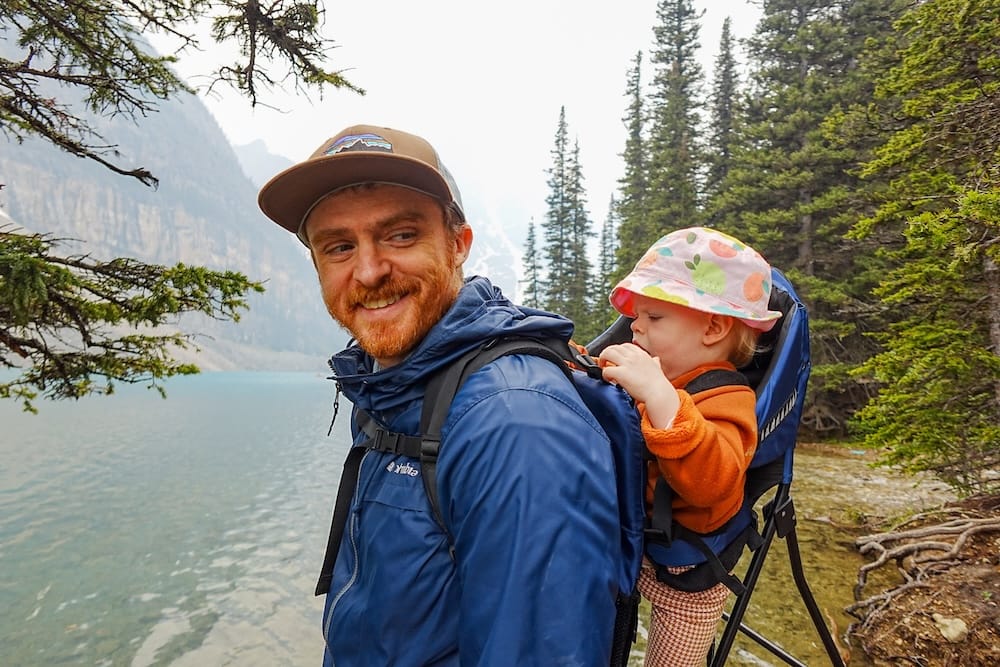
There is a physical side to this too. I carried Aurelia during the Fairview Lookout hike above Lake Louise. A modest outing becomes a rather different proposition when you strap a growing child to yourself and start climbing.
The same itinerary can therefore be relaxed for one traveller, ambitious for another and mildly deranged for somebody carrying a toddler.
Mountain weather is quite capable of shredding your tidy schedule
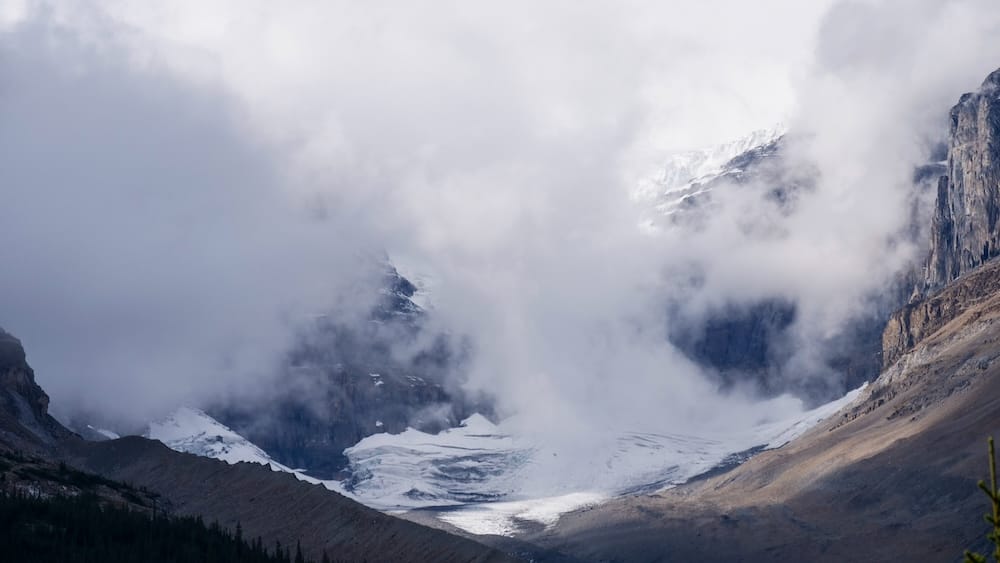
Some of the most memorable weather we have experienced in the Rockies came on our Columbia Icefield trip in early September.
We went from admiring beautiful blue glacial water to looking ahead and joking that it appeared we were about to drive into a snowstorm.
Then we actually got proper winter weather.
Snow came down, ice pellets hit us in the face, clouds rolled across the glacier and by the time we got back into the vehicle we were freezing. Audrey could barely feel her hands.
It was also fantastic.
That experience happened much farther along the Icefields Parkway, so I would not use it to pretend Banff town has identical conditions. What it demonstrated perfectly was how quickly mountain weather can become a completely different beast as you change elevation and location.
Snow is possible at higher elevations in any month, and conditions can change dramatically over a single day.
You do not need to become a weather obsessive, but I would avoid making every important outdoor plan dependent on one tiny window of perfection.
Leave something movable.
Banff town, an easier walk or a less structured block of time can save an itinerary when the mountains decide the schedule has become too confident.
The people travelling with you should determine the pace
For years, most of our travel planning revolved around what Audrey and I could handle as a couple.
That gave us a lot of freedom to be ridiculous.
Add Aurelia and a grandparent and you start measuring a day differently.
Our recent private tour drove that home. The point was not simply that somebody else had the steering wheel. We could stop when we needed to stop, adjust meals, deal with Aurelia and avoid having every small family delay become everybody else’s problem.
That flexibility also matters with public transport.
Parks Canada’s lake shuttles can accommodate strollers, and accessible shuttle services exist for travellers with mobility needs. Roam buses are wheelchair accessible. Those are useful facts, but “accessible transport exists” does not mean every part of a sightseeing day is effortless.
You still have transfers. Waiting. Boarding. Walking. Weather. Fixed departure times. Bathrooms. Food. And possibly a small child who has decided that your sightseeing priorities are of no interest whatsoever.
For mobility needs, travelling with young children or travelling with older relatives, I would think about the whole chain of the day rather than simply asking whether the attraction itself is accessible.
Sometimes the hardest part of an outing is not the attraction.
It is everything wrapped around it.
How I would plan a first Banff trip now
After seeing Banff from several angles, I would plan a first visit in this order.
- Check the season and current conditions. Access systems, shuttle dates, road conditions and mountain weather can materially change what is possible.
- Put your non-negotiable places on a map. Know whether your trip is actually centred on Banff town, Lake Louise, Moraine Lake or a much wider portion of the Rockies.
- Choose the accommodation base around that geography. A hostel in Canmore, a suite in Harvie Heights, a central Banff hotel and a base around Calgary create completely different trips.
- Choose the transport strategy. Decide where a car helps, where public transit is easier and whether a tour solves a genuine problem.
- Reserve the hard constraints. Moraine Lake access deserves very different treatment from an afternoon river walk.
- Protect some flexibility. Weather changes. People get tired. Toddlers have their own executive branch of government.
Only then would I start filling the remaining space with individual attractions.
I love Banff. Audrey loves Banff. After four packed days on one visit, we were already talking about how much we still had not seen, and after several very different trips I feel even more strongly that there is no single correct way to experience the park.
Our self-drive trip gave us enormous freedom. Canmore has worked as a practical outside-the-park base. Staying farther away around Calgary changed the scale of the journey completely. Our Harvie Heights suite gave a multigenerational family more space. A private guide allowed us to tackle a long, complicated day without worrying about the driving. Banff town has given us the opposite experience: park, walk, eat and slow the whole thing down.
Those approaches all worked for different reasons.
For a first visit, the trick is figuring out which version of Banff you are actually planning before you start booking the shiny bits.
Sort out the geography. Solve the transport. Lock in the few things that truly need locking in.
Then leave enough room for Banff to surprise you.
Frequently Asked Questions
Do you need a car for a first trip to Banff?
Not necessarily. A car is still extremely useful for a wider Canadian Rockies road trip, but it no longer solves every Banff access problem. Moraine Lake is closed to ordinary personal vehicles, Lake Louise parking can be unreliable, and Banff, Canmore and Lake Louise have useful transit connections. I would decide based on where you are staying and what you actually want to see.
Can you drive your own car to Moraine Lake?
No. Moraine Lake Road is closed to ordinary personal vehicles year-round. Most visitors need to arrange a Parks Canada shuttle, qualifying Roam Transit service, licensed commercial transport or another permitted option before building the rest of the day around the lake.
Can you still drive to Lake Louise?
Yes, personal vehicles can still reach the Lake Louise lakeshore parking area, but that does not make parking dependable. The article notes that roughly 75% of vehicles attempting to reach the lakeshore during the previous summer were turned around once the lot was full, so I would not rely on driving if Lake Louise is essential to the trip.
Where should a first-time visitor stay around Banff?
It depends on how you want the trip to work. Central Banff makes walking, restaurants and transit convenient, Canmore provides an outside-the-park base with a year-round transit connection to Banff, and staying around Lake Louise puts you closer to that sightseeing area. We have personally stayed in Canmore, Harvie Heights and farther away around Calgary rather than overnight in Banff town itself.
How far is Lake Louise from Banff town?
Lake Louise is roughly a 45-minute drive from Banff in ordinary conditions, but that is only the driving time. Parking, shuttle check-in, waiting, meals, bathrooms and walking can turn a seemingly simple transfer into a much larger part of the day.
What should you book first for a Banff trip?
I would lock in the things whose failure can genuinely change the trip, especially Moraine Lake access and any essential Lake Louise transport. Accommodation and major tours can also deserve advance planning when they determine the rest of the itinerary, while Banff town walks and other low-logistics time are useful to keep flexible.
Is Banff suitable for a multigenerational family trip?
It can be, but the pace matters. On our recent trip with Aurelia and her grandfather, a private tour worked especially well because we could adjust meals, stops and timing around the group. Public transport can accommodate strollers and mobility needs in specific situations, but transfers, waiting, walking and fixed departure times still need to be considered.
This guide is also available in Spanish. [Leé la versión en castellano: Banff para quienes visitan por primera vez: qué saber antes de ir]
This article contains affiliate links. If you book through one of these links, I may earn a commission at no extra cost to you.