
El Chaltén messes with your brain. You arrive, you look at the mountains, you look at the clock, and you think: “Wait… it’s basically 10 p.m. and it’s still bright? Cool. We can start whenever.”
That’s how Patagonia gets you.
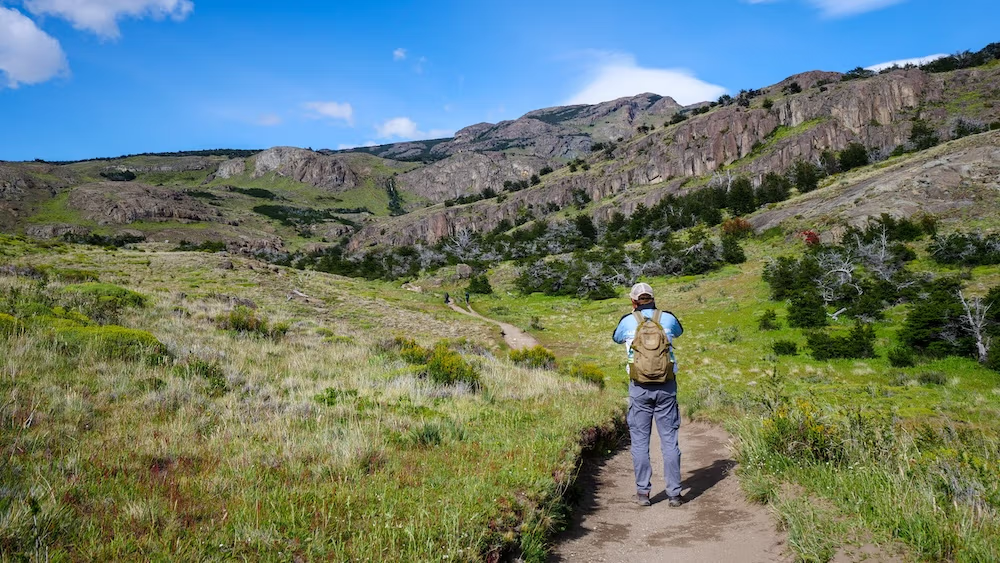
Audrey and I showed up in December with six nights in town with that “trekking capital” optimism—sunrise around 5 a.m., sunset flirting with 10:30 p.m., and the dangerous belief that we could simply live inside the golden hour. The plan sounded flawless: edit a bit of video, eat a bit, hike a bit, repeat. The reality: Patagonia doesn’t care about your plan; it cares about wind, legs, and whether your snack supply is real or purely theoretical.
We learned this the fun way: by doing a “quick” sunset hike on our first evening, and then later convincing ourselves we could casually tack on the boss level of El Chaltén hiking because the sun refused to go to bed. Long daylight is a gift, sure—but it’s also a trapdoor. It tempts you into late starts, extra side quests, and the kind of overconfidence that ends with you eating the last crumbs of a squashed snack behind a rock, pretending the wind isn’t personally beating you up.
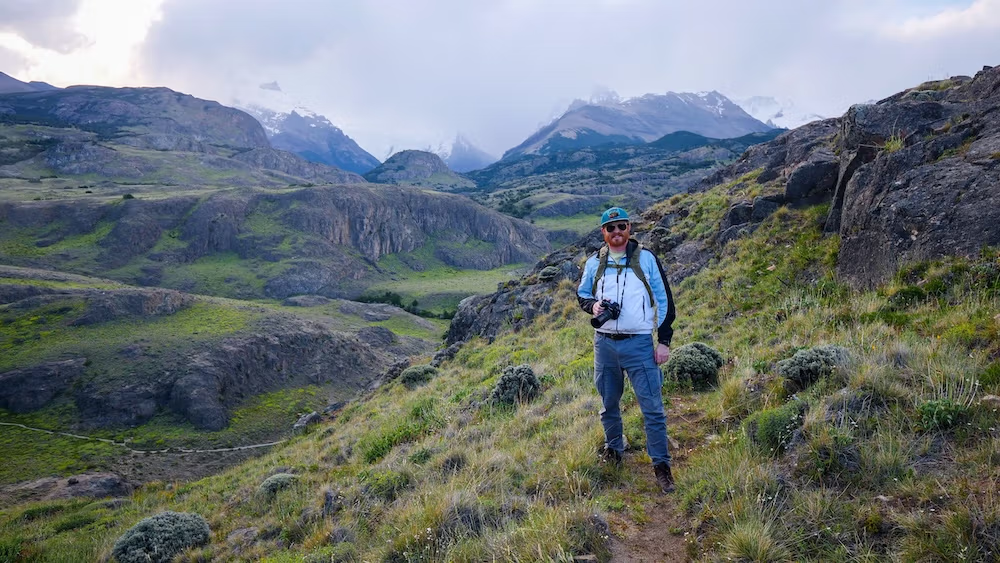
So let’s answer the question properly: how early should you start hikes in El Chaltén, even when the daylight feels endless? We’re going to mix hiking logic with the way it actually plays out when you’re a normal human who likes photos, snacks, and not dying.
Also, a confession: we arrived in full foodie mode. We’d been “eating like little piggies” all over Patagonia. Especially me. Audrey’s jeans were negotiating with reality, and I was achieving new levels of rotunding—bulbous plumptitude, if you will. El Chaltén was our wholesome excuse to get out there and move our skeletons. Starting earlier wasn’t about being heroic…it was about giving ourselves enough margin to hike and still get back to town for the important cultural activity: dinner.
The three clocks you’re hiking against
In El Chaltén, most people think there’s only one clock: daylight. And yes, in December the sun basically does overtime. But there are two other clocks that matter more than a glorious sunset.
The daylight clock (the one everyone talks about)
In peak summer, you’ll often have light from early morning until late evening. That’s why El Chaltén feels so forgiving. You can do groceries at 7 p.m., eat pizza, stare at Fitz Roy, and still think, “We’ve got time for a short one.”
You do have time. The problem is what you do with it.
Case in point: we literally did the math out loud our first night. Sunset was officially around 9:45 p.m., it was 6:47 p.m., and we decided we had “three hours…easy.” That kind of logic is how you end up power-walking uphill —except the only thing leaving is your calm, and it’s not coming back.
The weather clock (the one that changes the rules)
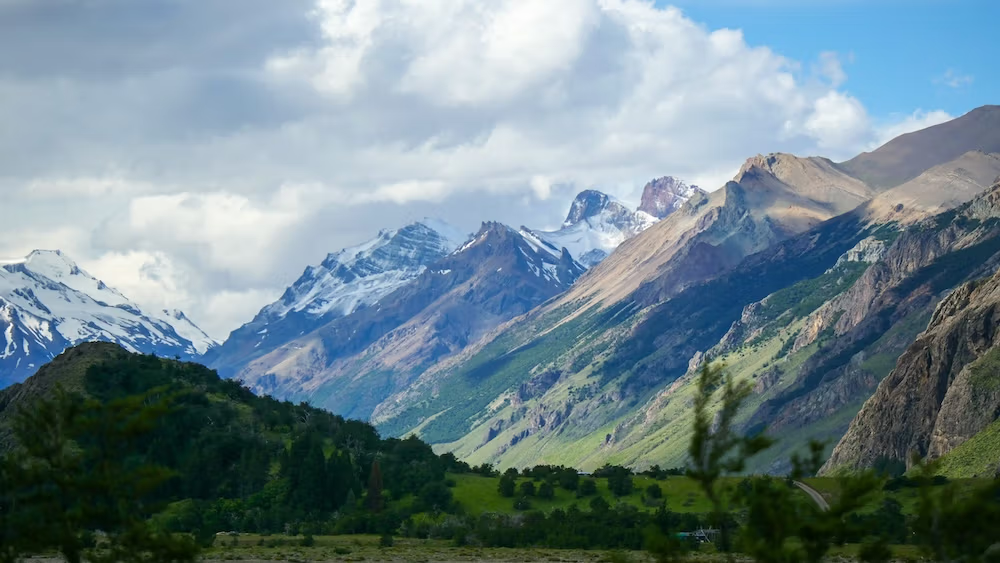
Patagonia weather is famous for mood swings. One minute it’s calm and cinematic; the next minute it’s wind, cloud, sideways drizzle, and you doing a jacket dance that looks like interpretive theater.
And Patagonia doesn’t just change quickly—it changes personally. We had that classic moment where temperatures dropped fast, the wind started swirling, and whatever summer warmth you thought you purchased with your plane ticket simply evaporated. We even joked about missing the sunny comfort of Cafayate…then immediately remembered why we came: the drama is the feature, not the bug. Starting earlier is basically your way of catching the “good mood” version of the day before it shapeshifts.
Even on a blue-sky day, conditions often get harsher later. More wind. More cloud build-up. More “why is it colder now?” energy. Early starts buy you the best odds of getting stable conditions and clear views.
The crowd clock (the one that affects your sanity)
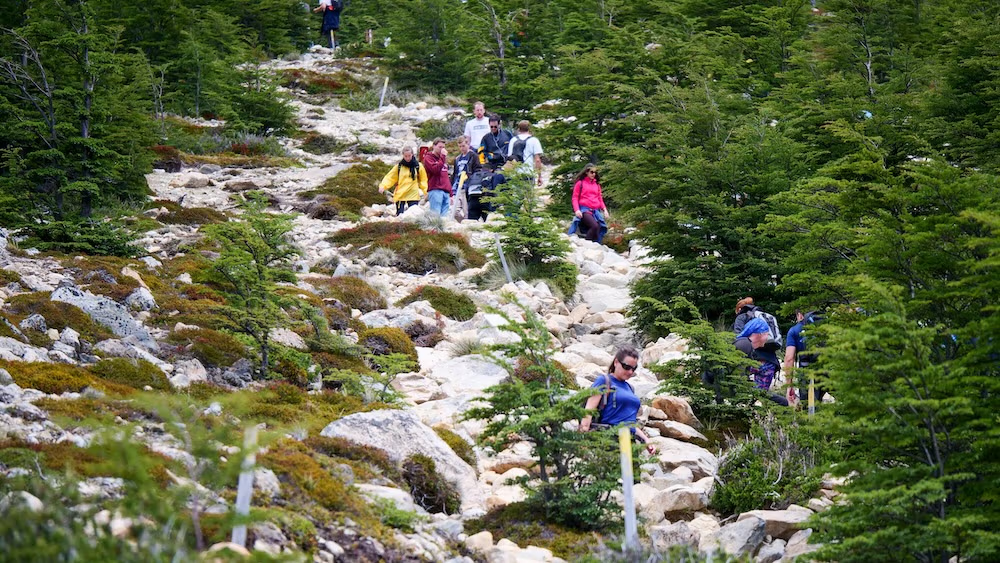
El Chaltén is small. But the iconic trails are anything but a secret. In high season, late morning to early afternoon can feel like a scenic conveyor belt of hikers. If you want quieter trails, fewer bottlenecks, and better photo moments, you’re fighting the crowd clock too.
Translation: long daylight doesn’t mean late starts are wise. It just means late starts are possible.
The start-time philosophy (the simple rule that actually works)
Here’s the rule we use now:
Start early enough that you can finish comfortably even if your day gets “expanded.”
Because hikes don’t stay the length you planned. They expand.
They expand when:
- you stop for photos every five minutes (guilty)
- you take snack breaks that become “we’re basically having a picnic now”
- you accidentally take the “scenic wrong way” for ten minutes
- the wind slows your pace on exposed sections
- the descent takes longer because your legs are filing a complaint
So instead of planning for the perfect scenario, plan for the realistic one.
The “buffer math” that keeps you out of trouble
Take your estimated hiking time and add:
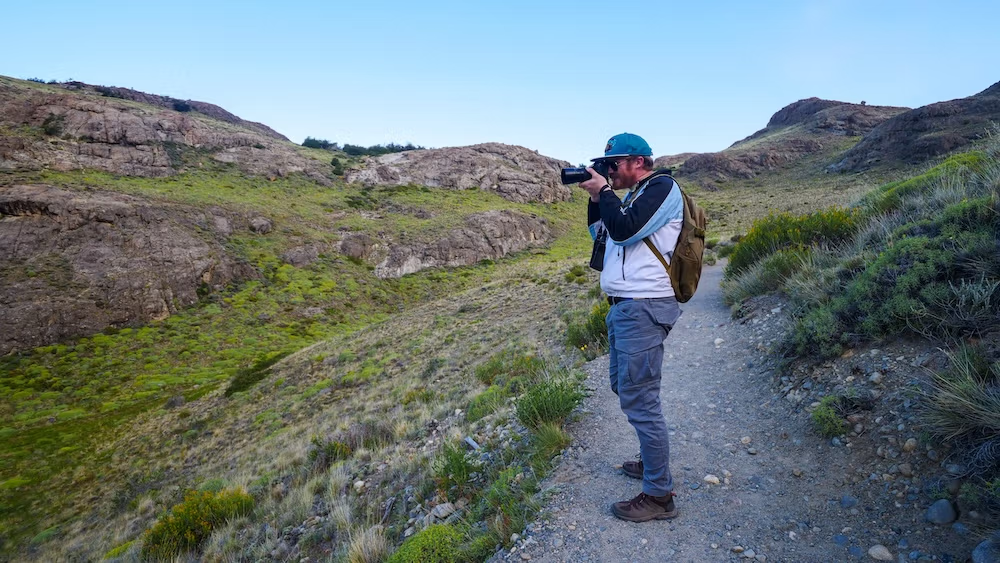
- +20–30% time if you’re photo-happy, chatty, or carrying camera gear
- +60–90 minutes of breaks (more if you love long viewpoints)
- +60–120 minutes buffer because Patagonia is Patagonia
If that feels conservative, congrats: you are now planning like someone who doesn’t want an emergency headlamp moment.
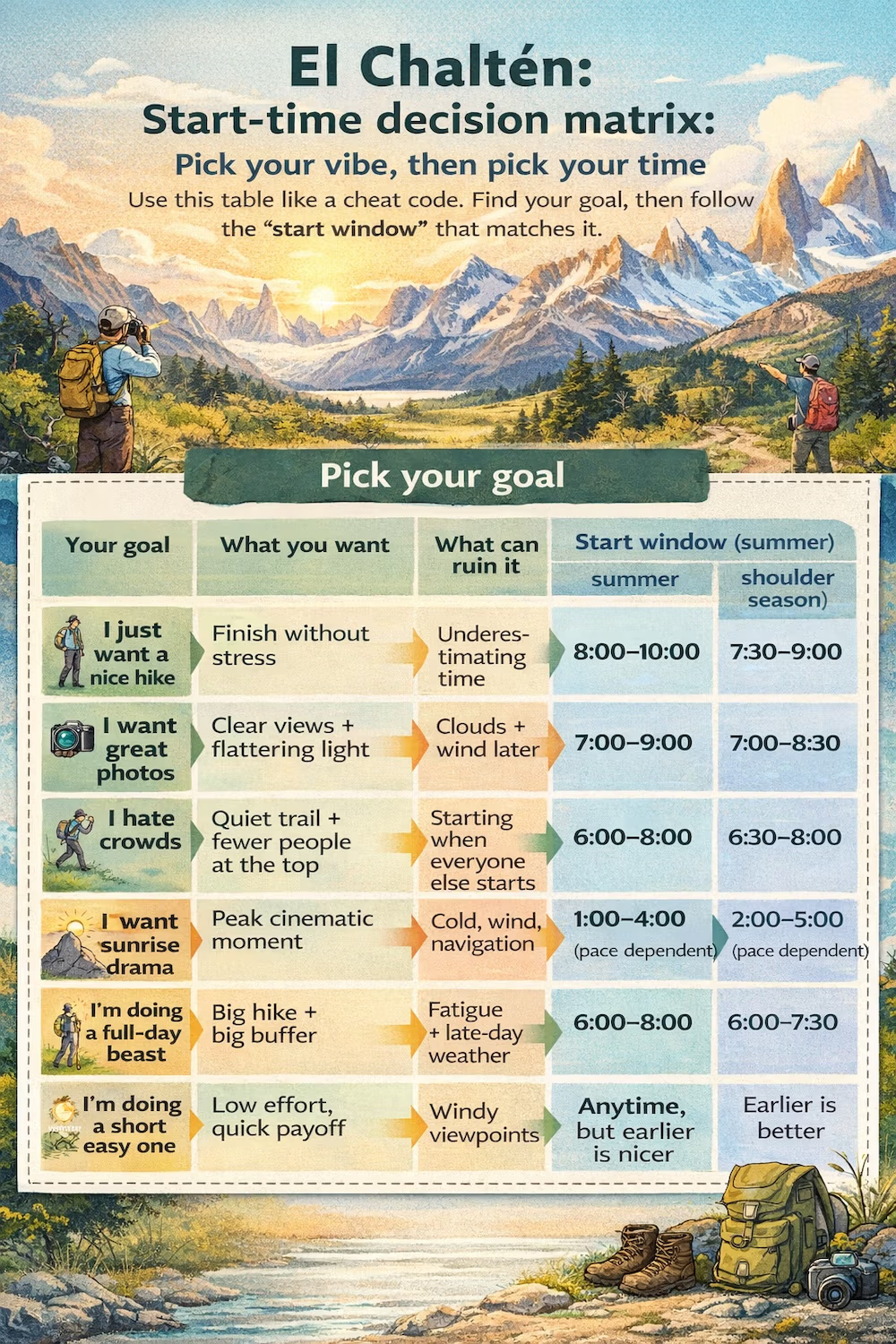
Start-time decision matrix: pick your vibe, then pick your time
Use this table like a cheat code. Find your goal, then follow the “start window” that matches it.
| Your goal | What you want | What can ruin it | Start window (summer) | Start window (shoulder season) |
|---|---|---|---|---|
| “I just want a nice hike” | Finish without stress | Underestimating time | 8:00–10:00 | 7:30–9:00 |
| “I want great photos” | Clear views + flattering light | Clouds + wind later | 7:00–9:00 | 7:00–8:30 |
| “I hate crowds” | Quiet trail + fewer people at the top | Starting when everyone else starts | 6:00–8:00 | 6:30–8:00 |
| “I want sunrise drama” | Peak cinematic moment | Cold, wind, navigation | 1:00–4:00 (pace dependent) | 2:00–5:00 (pace dependent) |
| “I’m doing a full-day beast” | Big hike + big buffer | Fatigue + late-day weather | 6:00–8:00 | 6:00–7:30 |
| “I’m doing a short easy one” | Low effort, quick payoff | Windy viewpoints | Anytime, but earlier is nicer | Earlier is better |
Now let’s turn that into practical advice by season and by hike.
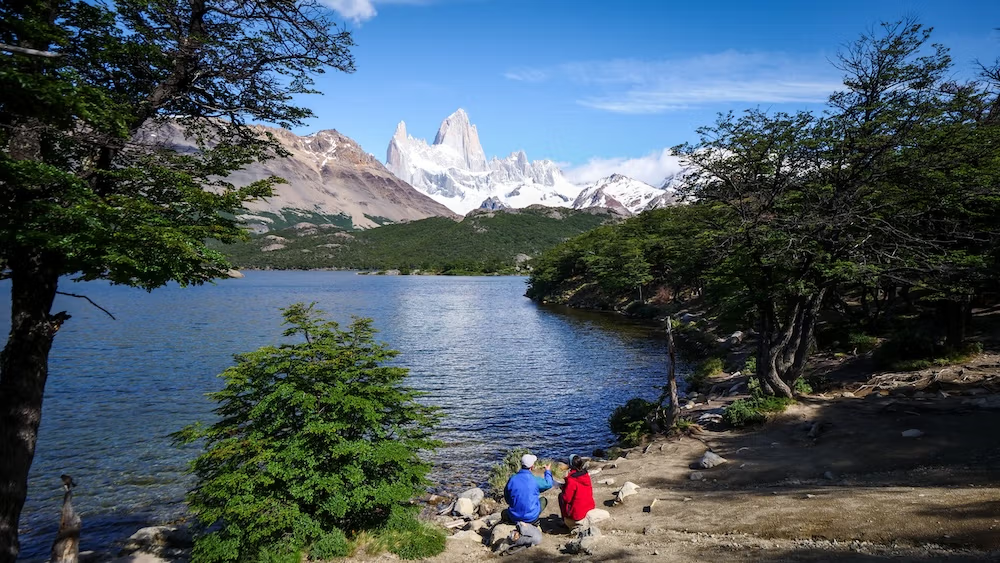
Summer vs shoulder season vs winter: the start-time reality
Peak summer (roughly December–February)
This is when the daylight feels illegal. It’s also when:
- the trails are busiest
- the temptation to start late is strongest
- the “we’ll just add one more thing” mindset flourishes
In summer, your biggest risk usually isn’t darkness. It’s finishing a long hike when your energy is gone and the weather is turning. Start early for comfort, views, and crowd control—not because you’ll run out of light.
Shoulder season (roughly October–November and March–April)
This is where daylight starts shrinking and weather becomes more unpredictable. Late starts get riskier fast because you don’t have the same margin. You can still have spectacular days, but you want a tighter plan:
- earlier starts
- more conservative turnaround times
- more respect for wind and cold
Winter (roughly May–September)
Winter is not “summer but with a cute beanie.” Daylight is short. Conditions can include snow, ice, and tricky footing. Some hikes move from “popular day hike” to “serious objective.” If you’re hiking in winter, your start times and route choices should be guided by current conditions, your experience level, and local advice.
We’ll focus on the classic self-guided season (spring to early autumn), with winter as a caution zone.

Our El Chaltén reality check: the sunset hike that taught us the lesson
On our first evening in town, Audrey and I did what every optimistic traveler does: we ran errands, grabbed food, wandered around, and then looked at the clock and said, “We still have time.”
So we squeezed in a sunset hike to Mirador de los Cóndores.
Was it beautiful? Absolutely. Was it also a mild cardio ambush because we started late and had that buzzer-beater energy? Also yes. The hike itself isn’t long, but we turned it into a small drama by adding the pressure of a ticking clock.
And that was the preview. Because if a short viewpoint hike can feel rushed with a late start, imagine what happens when you do that mindset on a full-day mountain mission.
Hike-by-hike: when to start each classic El Chaltén hike
Below are practical start-time ranges, plus the “why” behind them. These are written for typical hikers—people who want a great day, not a record.
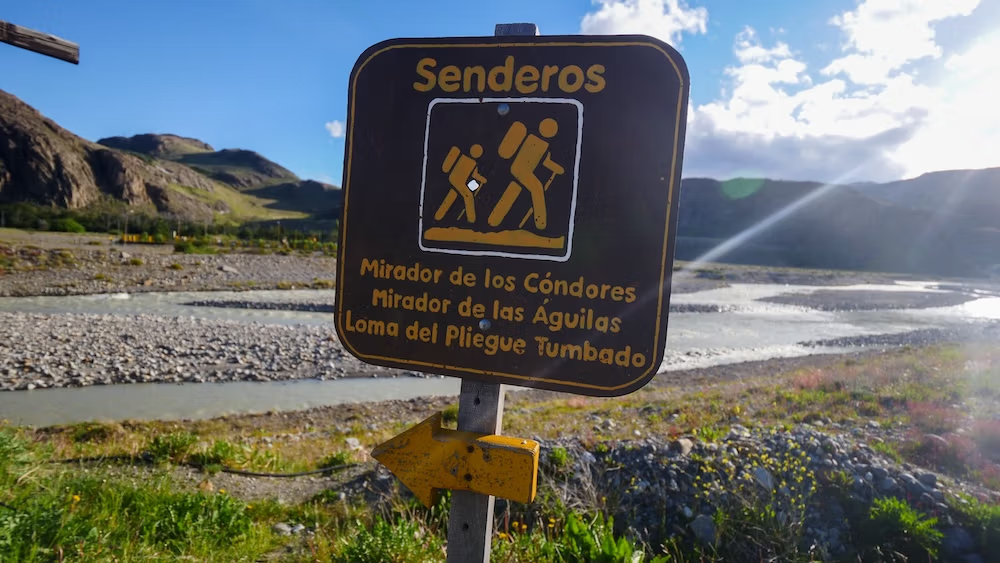
Mirador de los Cóndores (and Mirador de las Águilas)
Best start time: 7:00–10:00 (or 6:00–8:00 if you want solitude)
Late start: totally doable, but expect more people and potentially more wind at the viewpoint.
This is one of the best hikes in town because it’s short, steep-ish, and rewarding. It’s also a perfect “weather window” hike: if the forecast looks chaotic, you can still get a big payoff in a small time commitment.
Our take: it’s the ideal “we want epic views but we’re not committing our entire heart and soul” hike.
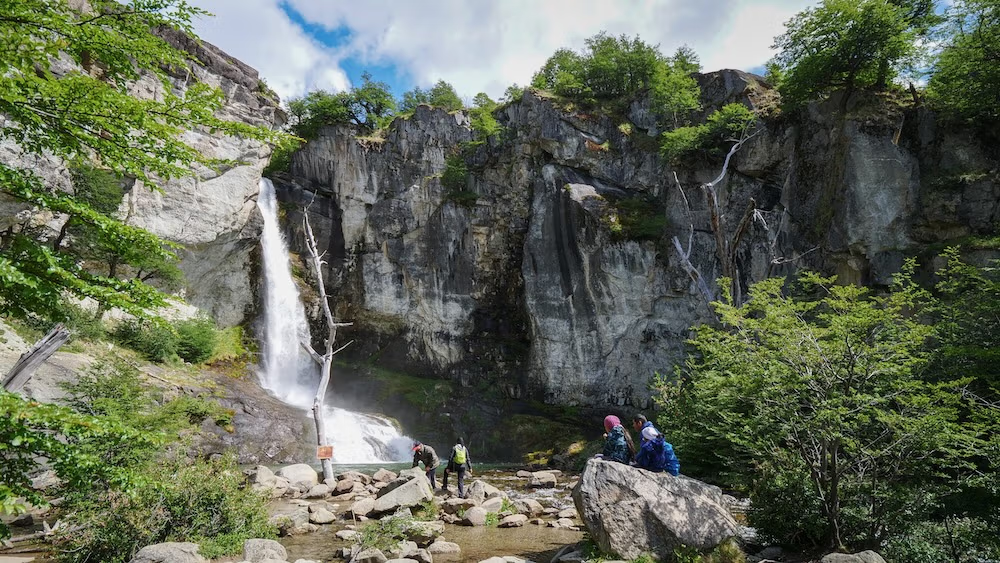
Chorrillo del Salto
Best start time: whenever you feel like it
Late start: very doable
This is the low-effort waterfall win. If your legs are trashed from a big day (hello, Laguna de los Tres), this is your redemption arc. It’s also the hike you do when the weather is moody and you want something scenic without betting your entire afternoon.
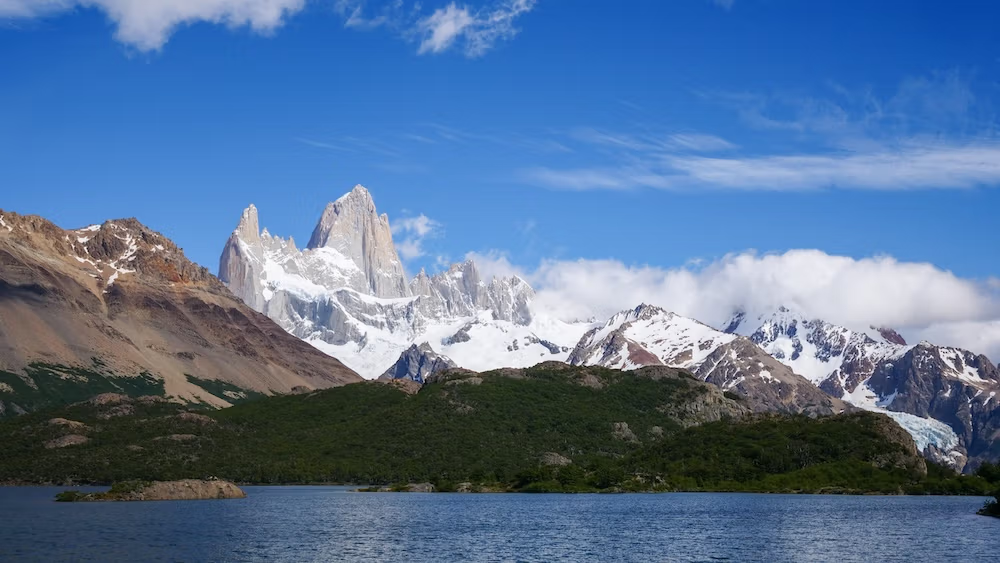
Laguna Capri
Best start time: 7:00–9:00
Late start: doable, but you’ll share the trail and you’ll feel the “should we keep going?” temptation.
Laguna Capri is the perfect middle-ground hike. It’s long enough to feel like you earned it, but not so long that your legs write a resignation letter.
This is also where the start-time question gets interesting, because Laguna Capri is the gateway drug.
This was the day Audrey and I fully understood the hypnosis of good weather. Fitz Roy looked so unreal we genuinely started talking about CGI, then we rolled into the campground (yes, complete with outhouse), did the responsible thing (used the facilities), and celebrated with a highly sophisticated snack: one tiny “muffin bite.” Then we checked the time—just past noon—and basically talked ourselves into continuing because sunset was still absurdly late. That’s the moment El Chaltén whispers: “Go on. You’re fine.”
Our moment of weakness: Audrey and I reached Laguna Capri, took in the views, and realized we still had plenty of daylight. That’s when the mountain started whispering: “You could totally keep going.”
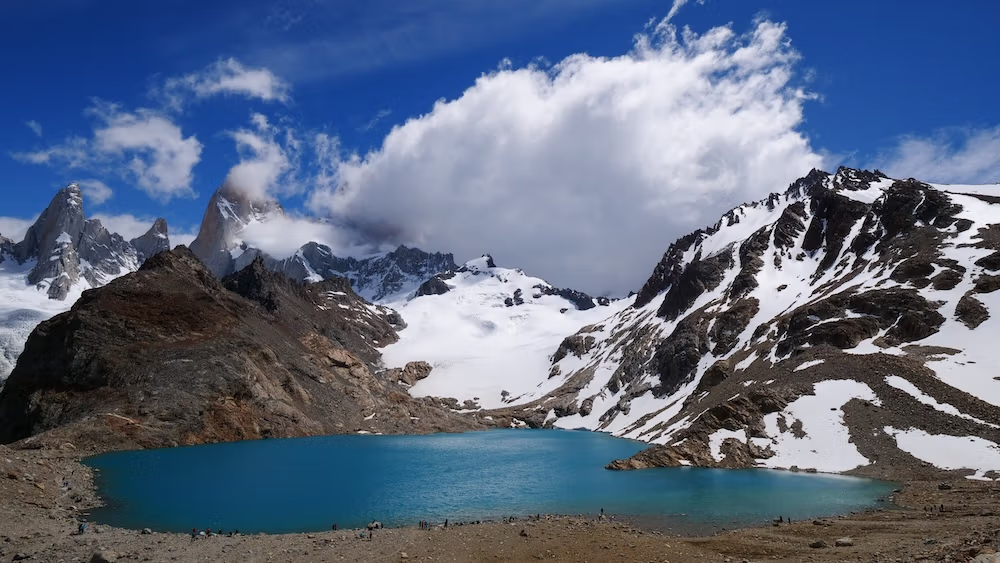
Laguna de los Tres (Fitz Roy)
Best start time for a normal day hike: 6:00–7:30
If you want to avoid crowds: 5:30–6:30
If you want sunrise at the lagoon: you’re in headlamp territory (often leaving between 1:00 and 4:00, depending on pace and season)
This is the crown jewel. It’s also the hike that punishes casual planning.
Why start early even in summer?
- it’s long
- the final climb is steep and slow
- you want your hardest work done while your legs still believe in you
- you want buffer time because your descent will be slower than you think
Our El Chaltén confession: We turned Laguna Capri into Laguna de los Tres because the sun was still high and we were making good time. The logic was flawless. The consequences were… educational.
By the time we hit the final climb, the trail turned into a steep grind that demanded everything. For us, kilometer nine was where the hike finally showed its teeth: the bottleneck zone where everyone is tired, the trail gets rocky and a bit gravelly, and you need to be alert because it’s steep enough to punish sloppy feet. Trekking poles would’ve been a fantastic life choice. What kept Audrey and I moving was the same thing that fuels every suffering hiker: people coming down telling us, “It’s incredible up there.” They were not wrong. At the top it was windy beyond belief. We then devoured the sad remains of our lunch —one granola bar and some candy—then started the long descent. At the top, we got the legendary views—but we also got wind, hunger, and the realization that “long daylight” doesn’t refill your energy bar. That hike left us so cooked we basically needed a recovery day and an early bedtime like we were toddlers.
Laguna Torre
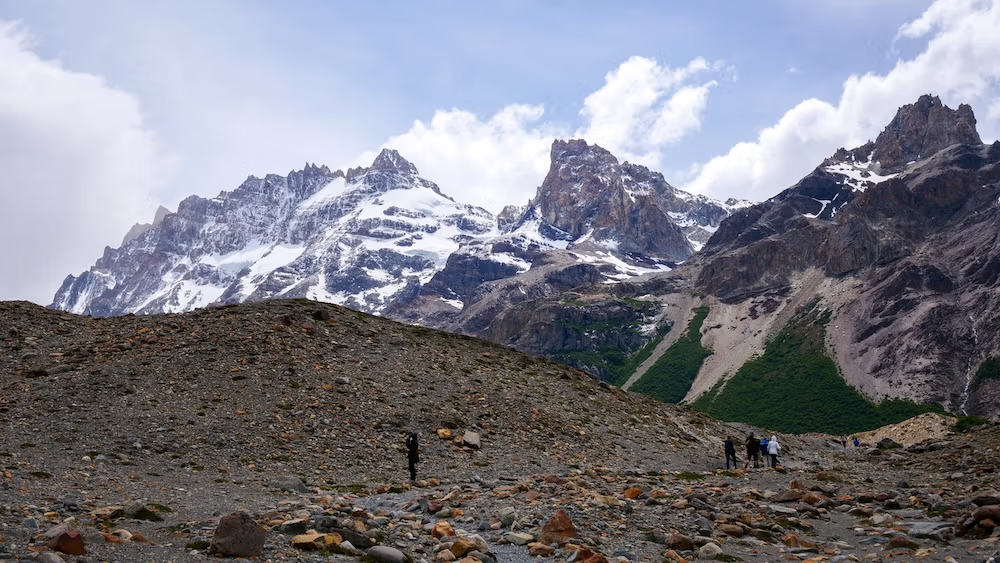
Best start time: 7:00–8:30
Crowd-avoid start: 6:30–7:30
Late start: possible, but the return can feel long if you drag it out
Laguna Torre is a full-day hike, but it’s often more forgiving than Laguna de los Tres because the trail is steadier and the “difficulty spike” isn’t as dramatic.
We loved this hike for one big reason: it delivers huge scenery without the same level of suffering. There are viewpoints, changing landscapes, and a feeling of progress. Even when the lagoon was cloudy, the trail itself was a highlight.
Our foodie motivator: On the way back, we basically hiked powered by the promise of dinner. Patagonia is beautiful; pasta is also beautiful.
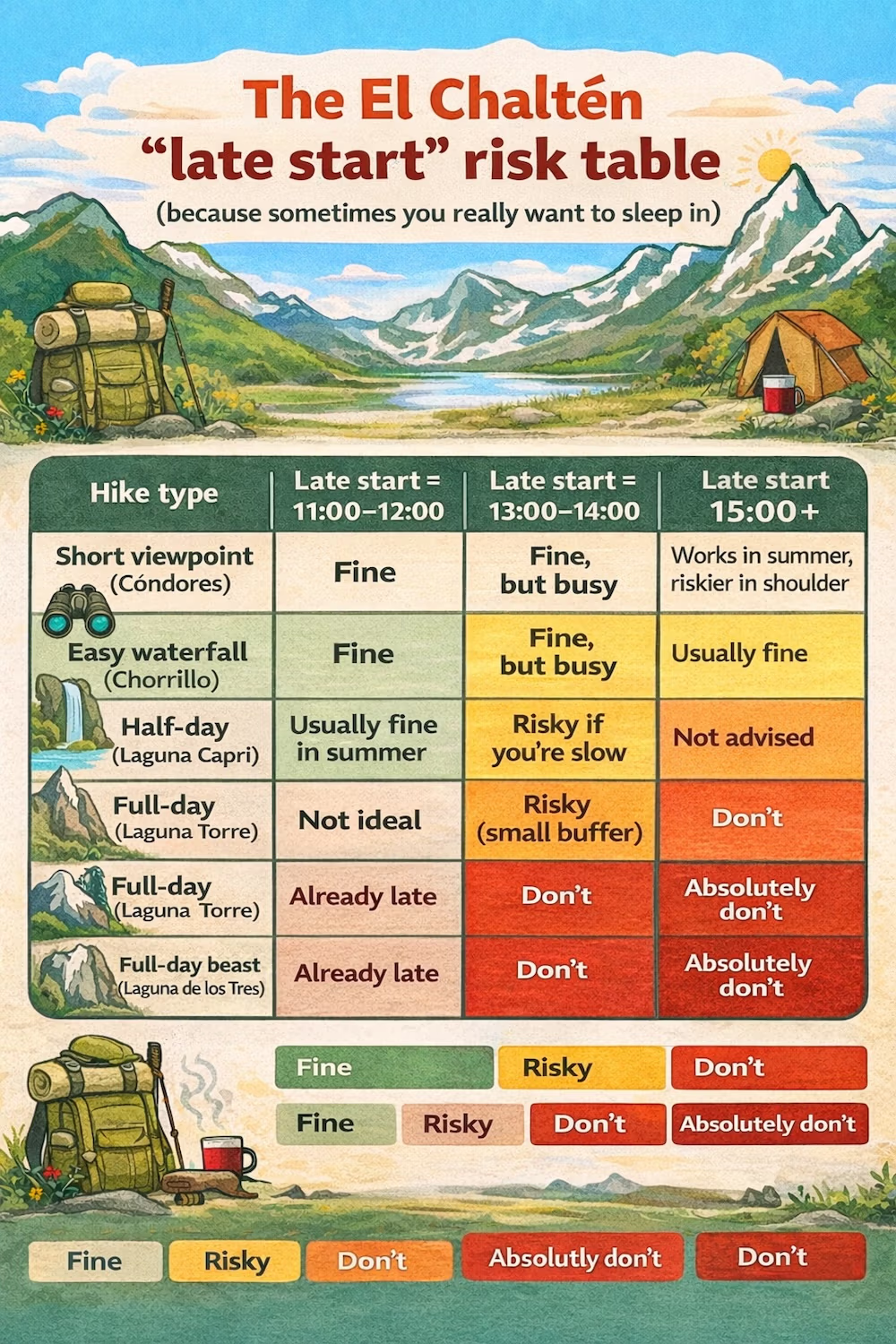
The “late start” risk table (because sometimes you really want to sleep in)
We’re not here to shame anyone for wanting a slow morning. We are food people. We understand breakfast. But some late starts are harmless and some are an invitation to chaos.
Here’s a practical way to judge it.
| Hike type | Late start = 11:00–12:00 | Late start = 13:00–14:00 | Late start = 15:00+ |
|---|---|---|---|
| Short viewpoint (Cóndores) | Fine | Fine, but busy | Works in summer, riskier in shoulder |
| Easy waterfall (Chorrillo) | Fine | Fine | Usually fine |
| Half-day (Laguna Capri) | Usually fine in summer | Risky if you’re slow | Not advised |
| Full-day (Laguna Torre) | Not ideal | Risky (small buffer) | Don’t |
| Full-day beast (Laguna de los Tres) | Already late | Don’t | Absolutely don’t |
If you’re reading this from a hostel bed at 11:45 a.m. thinking, “We’ll be fine,” ask yourself one question:
Do we want a relaxed day… or do we want a stressful day in a beautiful place?

If you slept in: the “redemption menu” for late starts
Sometimes the bed wins. Sometimes the bakery wins. Sometimes you look outside and the mountains are wearing a scarf of cloud and you think, “We’re not doing a 20-kilometre march into the unknown today.”
Late starts can still be excellent—you just need the right target.
| If it’s already… | Choose this | Why it works | Bonus move |
|---|---|---|---|
| 11:00–13:00 | Mirador de los Cóndores + Las Águilas | Big payoff, short commitment | Go slow and treat it like a photo walk |
| 11:00–14:00 | Chorrillo del Salto | Waterfall win without the stress | Pair it with a café crawl after |
| 10:00–12:00 | Laguna Capri (only) | Solid half-day with flexibility | Set a firm turnaround so it stays half-day |
| 14:00+ | Town viewpoint strolls + food mission | El Chaltén is still a vibe without a mega-hike | Scout trailheads for tomorrow so you start smoother |
A late-start day is also the perfect day to do the “tomorrow setup”: grab any trail maps, download your offline map, buy snacks that won’t become crushed sadness, and decide which hike is your big objective—then pounce on the best weather window.
One more practical note: policies in the El Chaltén / Zona Norte area can evolve (fees, portals, registration in certain seasons), so it’s worth checking the latest official info before your trip. That takes five minutes and can save you a very annoying “we’re here but we can’t do the thing” moment.
The two turnaround rules that save you
People love start-time advice, but the real hero is the turnaround rule. Because the mountain doesn’t care that you “almost made it.”
Rule #1: Set a “hard” turnaround time before you start
Pick a time where you will turn around no matter what, even if the views are “just around the corner.” This protects you from daylight optimism and sunk-cost hiking.
A simple way to do it:
- Full-day hikes: set a turnaround time around mid-afternoon (earlier in shoulder season)
- Half-day hikes: set it earlier than you think you need
Rule #2: If the weather gets worse, your turnaround time gets earlier
Patagonia isn’t the place to negotiate with wind and cloud. If the forecast shifts or visibility drops, you don’t “push through.” You adjust. Earlier.
A practical “start time game plan” (our real routine)
Here’s what worked for us once we stopped treating long daylight like a blank check.
Night-before setup (the lazy genius move)
- Pack your day bag (layers, water, snacks)
- Charge everything (phone, camera, power bank)
- Lay out clothes like you’re a child on the first day of school
- Decide your “plan A” hike and your “plan B” hike (weather backup)
- If you’re buying lunchboxes, organize it the night before
Early mornings in El Chaltén are easiest when you do the thinking at night.
Morning routine (the realistic one)
- Wake up
- Eat breakfast (many places serve early because hikers exist)
- Fill water
- Go to the bathroom like it’s a sacred ritual
- Start walking
If your goal is a 7:00 a.m. trail start, you don’t need military discipline. You need a packed bag and a willingness to move your body before it fully understands what’s happening.
Weather strategy: how to use a forecast without becoming a meteorologist
Patagonia weather can be a prank. But you can still play it smart.
The “weather window” approach
Instead of committing to a hike days in advance, commit to a window:
- Big hikes: do them on the best forecast day of your stay
- Medium hikes: use them on “good enough” days
- Short hikes: use them on sketchy days as a backup
Audrey and I stayed multiple nights in El Chaltén, and that flexibility was everything. When you have a few days, you can wait for the good window, then strike.
Wind is the sneaky villain
A day can be sunny and still feel like you’re hiking inside a giant hair dryer. When wind is high, exposed viewpoints become less fun, and long ridge sections become slower. Starting earlier helps because you’re more likely to get calmer conditions before the day fully kicks off.
Crowds strategy: how to hike iconic trails without losing your mind
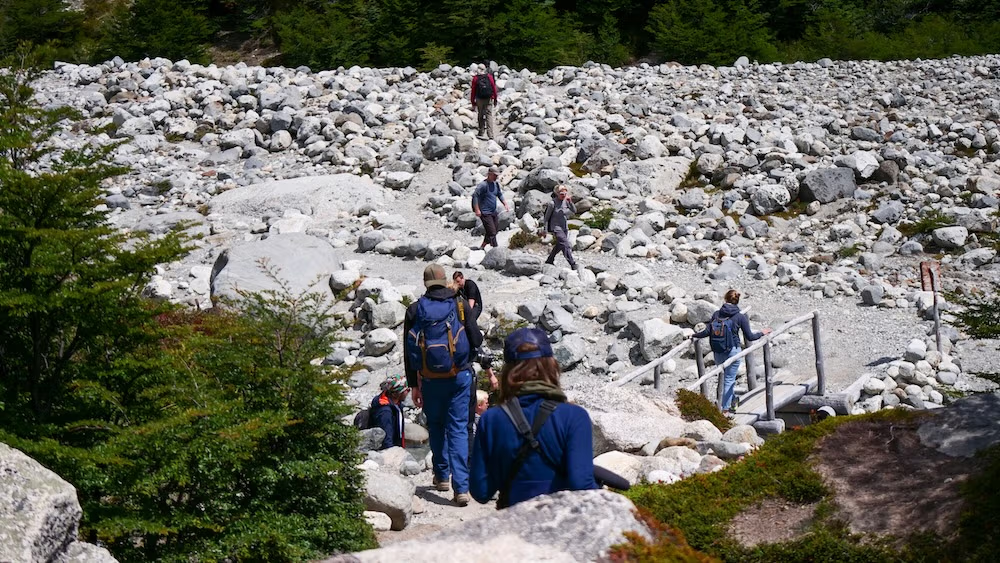
If you’re visiting in peak season, you’re not alone. That’s normal.
Here’s how to hack it:
- Start early (yes, again)
- Take longer breaks where other people don’t
- Don’t linger at the “first big viewpoint” for too long—keep moving
- If you care about photos, go earlier or go later in the day with a short hike
Also: accept that some crowding is part of the deal. El Chaltén is popular because it deserves to be.
How we’d plan your start time in 60 seconds
Use this quick decision matrix. Be honest about your pace and your personality.
| If you are… | And you are hiking… | Start by | Notes |
|---|---|---|---|
| Fast + minimalist | Laguna Torre | 8:00 | Still bring a buffer |
| Average pace | Laguna Torre | 7:30 | Best balance of comfort + crowds |
| Photo-heavy / chill breaks | Laguna Torre | 7:00 | You will stop a lot. Embrace it. |
| Average pace | Laguna de los Tres | 7:00 | Earlier if you want quieter trail |
| Photo-heavy / filming | Laguna de los Tres | 6:00–6:30 | Your hike will expand. |
| Not sure of pace | Laguna de los Tres | 6:00 | Buy yourself margin |

Foodie realism: the part nobody writes about
A lot of hiking advice assumes you are powered by pure mountain spirit. We are powered by snacks and the promise of dinner.
So here’s the honest truth: your start time should match your fueling strategy.
If you start late, you tend to:
- skip breakfast or eat something sad and rushed
- underestimate how hungry you’ll get
- take longer breaks because you’re bonking
- move slower on the return
If you start early, you can:
- eat properly
- pace your snacks
- keep your energy steady
- finish without crawling back to town like a dehydrated raccoon
On our biggest day, the views were legendary, but the hunger was also legendary. That’s not a vibe. That’s a mistake.
Packing checklist: what makes early starts easy (and late finishes safe)
This is the stuff we’d never skip on a full-day hike.
The essentials (non-negotiable)
- Water (enough for a full day)
- Snacks you actually want to eat when you’re tired
- Warm layer (Patagonia doesn’t care that it’s summer)
- Rain / wind shell
- Headlamp (yes, even in summer)
- Phone + offline map (or a paper map)
- Small first aid basics (blister care is the real emergency)
- Sunscreen + sunglasses (sun + wind is a combo attack)
The comfort upgrades
- Trekking poles for big descents (knees will thank you)
- Buff / neck gaiter (wind protection)
- Gloves in shoulder season (or if you get cold easily)
- Thermos with something warm if you’re doing sunrise/early starts
Sample schedules: what a good hiking day actually looks like
Here are two realistic schedules you can copy-paste into your brain.
Full-day hike day (Laguna de los Tres or Laguna Torre)
- 6:30 Breakfast
- 7:15 Start walking
- 10:00 Snack break + photo chaos
- 12:00 Lunch
- 13:00 Push to main payoff / viewpoint
- 14:30 Start return (earlier if weather shifts)
- 17:30–18:30 Back in town (with buffer)
- 20:00 Dinner victory
Medium hike day (Laguna Capri or viewpoints combo)
- 8:00 Breakfast
- 9:00 Trail start
- 11:00 Viewpoint / lagoon hang
- 12:00 Return
- 14:00 Bakery / coffee / “we deserved this” lunch
- 17:00 Optional second short hike if weather is amazing
- 20:00 Dinner
Notice how neither schedule requires you to wake up at 4 a.m. unless you want sunrise. The goal is not suffering. The goal is margin.
The bottom line: how early should you start?
If you remember nothing else, remember this:
- Short hikes: start whenever, but earlier is calmer and prettier.
- Half-day hikes: start in the morning so you can be flexible.
- Full-day hikes: start early enough that the hard part happens while you still feel like a person.
- Sunrise missions: accept the headlamp life and prepare properly.
El Chaltén rewards you when you start early—not because you have to, but because you get the best version of the day: clearer views, less wind (usually), fewer people, and a bigger safety buffer when Patagonia decides to get weird.
And yes, the daylight will still be there when you get back. El Chaltén is generous like that.
FAQ: Hiking start times in El Chaltén (real questions people ask)
What time should we start Laguna de los Tres in summer?
For a normal day hike, aim to start between 6:00 and 7:30. You’ll enjoy cooler temps, fewer crowds, and more buffer for breaks and slow descents.
Is it okay to start Laguna de los Tres at 10 a.m. because it stays light so late?
It’s technically possible, but it’s a bad idea for most hikers. You’re shrinking your buffer, increasing crowding, and pushing the hardest parts later into the day when weather and fatigue can stack up.
What’s a good start time for Laguna Torre?
7:00–8:30 works well for most people. If you want fewer people, start closer to 6:30–7:30.
Can we start Mirador de los Cóndores in the afternoon?
Yes, especially in summer. It’s short. Just remember wind can be stronger later, and the viewpoint can feel more hectic during peak hours.
What’s the best time to start for photos of Fitz Roy?
Morning is usually your friend. Earlier starts increase the odds of clear peaks and calmer conditions, and the light can be more flattering.
How early do we need to start for sunrise at Laguna de los Tres?
Very early. Most people leave in the 1:00–4:00 a.m. range depending on pace and season. Bring a headlamp, layers, and a plan.
Do we need a headlamp in summer?
If you’re doing full-day hikes, starting early, or you’re the kind of person who takes long breaks, yes. It weighs nothing and saves you if your day runs long.
How do we decide between starting early or waiting for better weather?
For big hikes, prioritize the best forecast day of your stay, then start early on that day. For smaller hikes, you can wait for short windows and still get a great experience.
Are late starts safer if we hike fast?
Speed helps, but it doesn’t eliminate weather risk or fatigue. Late starts still reduce your margin, and margin is what keeps the day enjoyable.
How crowded do the trails get, really?
In peak season, the iconic trails can be busy from late morning through afternoon. Early starts spread the crowd out and make everything feel calmer.
What if we’re slow hikers?
Start earlier. Slow hiking is not a problem—starting late is the problem. Give yourself time to enjoy the trail without stress.
What’s the single biggest mistake people make with start times in El Chaltén?
They treat long daylight like a permission slip to start late, then they get hit with time expansion: photos, breaks, slower descents, and weather shifts.
Is it worth doing a “two-hikes-in-one-day” plan because of the long daylight?
Sometimes. The best combo is a medium hike plus a short viewpoint, not two full-day hikes. Leave the double-beast days to people who don’t love dinner.
If we could only follow one rule, what would it be?
Start earlier than you think you need to. The best hikes are the ones you finish comfortably, with time to spare and enough energy left to enjoy town afterward.
Project 23 Argentina: This guide is also available in Spanish. [Lea la versión en castellano: ¿Qué tan temprano deberías arrancar las caminatas en El Chaltén? (Incluso con días largos)]
Further Reading, Sources & Resources for El Chaltén Hiking Start Times
These are some useful links for double-checking fees/access rules, doing your sunrise/sunset start-time math, and confirming trail basics + weather context—without drowning in tabs.
Official park info (fees, access, regulations)
- https://www.argentina.gob.ar/parquesnacionales/losglaciares/tarifas
Zona Norte fees/tariff categories and payment info. - https://www.argentina.gob.ar/parquesnacionales/losglaciares/actividades
Park guidance on activities and any registration/requirements that may apply seasonally.
Sunrise/sunset calculators (start-time planning)
- https://www.timeanddate.com/sun/@6690180
Accurate sunrise/sunset timing for El Chaltén—perfect for calculating “latest safe start.”
Local trail guides (distances, typical times, route expectations)
- https://elchalten.com/v4/en/laguna-de-los-tres-trek-el-chalten.php
Laguna de los Tres (Fitz Roy) route overview and planning basics. - https://elchalten.com/v4/es/laguna-torre-el-chalten.php
Laguna Torre route overview and typical time/distance framing. - https://elchalten.com/v4/en/los-condores-las-aguilas-viewpoints-el-chalten.php
Mirador de los Cóndores / Las Águilas details for short hikes that still benefit from good timing.
Weather context (why mornings often “win”)
- https://elchalten.com/v4/en/the-weather-in-el-chalten.php
Local-style weather overview (wind, rapid shifts) that explains why start time matters. - https://blogpatagonia.australis.com/weather-el-chalten/
Seasonal/weather framing for El Chaltén—helpful for explaining Patagonia volatility in plain language.
Notes on accuracy
- Trail times vary a lot with breaks, wind, and conditions—use “typical times” as a baseline, then add buffer.
- Fees/access rules can change—use the Argentina.gob.ar pages as your final check before hiking.