
I am standing at the edge of the trekking capital of Argentina, wearing a hiking pack loaded with an absurd amount of candy, while Audrey is wearing leggings purely because her jeans no longer fit after a week of eating our way through Argentine Patagonia. We are, by all definitions, foodies trying to masquerade as trekkers. My current physical state could best be described as “rotunding,” sporting a distinct bulbous plumptitude. Yet, it is exactly 9:00 AM, we’ve been walking for roughly twenty minutes, and I am already ravenously tearing into my packed sandwich because I simply lack the discipline to wait for a scenic viewpoint.
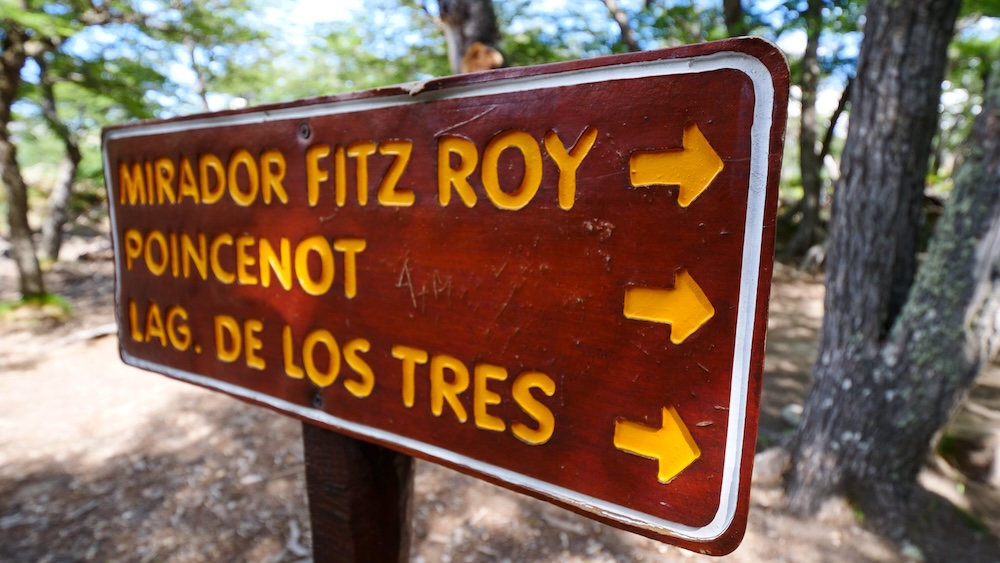
We haven’t even seen the iconic Mount Fitz Roy yet. We haven’t encountered the brutal vertical scrambles. But we have immediately realized one absolute truth about El Chaltén: your digital comforts mean nothing here. Your smartphone is a camera, your GPS is a battery-draining liability, and your progress is measured not by glowing screens, but by carved wooden signs, yellow painted sticks, and how badly your feet throb.
If you are coming to Patagonia with hopes of utilizing cell towers and algorithmic routing, you are in for a profound and painful awakening. This is analog country. Welcome to the reality of navigating El Chaltén the old-fashioned way.
The Wi-Fi Hostage Situation (And Why Your Smartphone is Just a Camera Here)
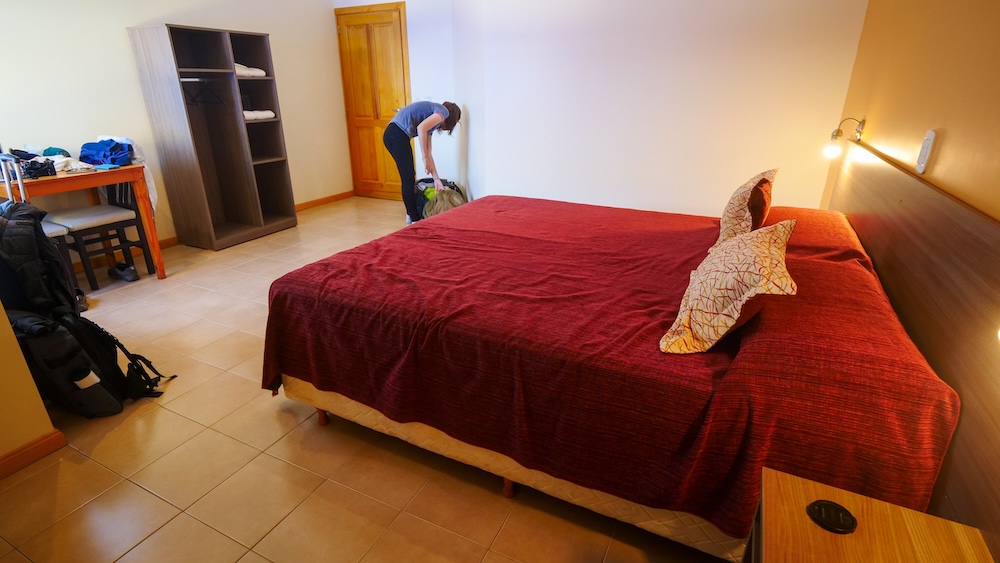
The reality of El Chaltén’s digital isolation hits you long before you ever lace up your hiking boots. When we arrived at the Vertical Lodge—a fantastic spot that far exceeded our expectations with a king-sized bed, bidet, and massive bathtub for $54 USD a night—we immediately encountered the great Patagonian firewall. The Wi-Fi wasn’t just slow; it went down so constantly that the front desk could not even process the payment for our room. We tried multiple times over several hours, essentially held hostage by a dial-up-era connection, before it finally pushed through.
This is your first and most vital lesson for tracking your progress in this town: you must disconnect. The mobile data does not work. The town exists in a digital shadow, which means relying on live-loading Google Maps to find a trailhead or using an active tracking app to monitor your elevation gain is a fool’s errand. You come out here to hike.
Furthermore, the park has undergone massive logistical shifts. For years, El Chaltén marketed itself as the “free trekking capital.” As of recent 2026 updates, this is entirely false. Accessing the Zona Norte of Los Glaciares National Park now requires a mandatory entrance fee of ARS 45,000 for foreigners. Because the contactless payment terminals at the ranger stations are notoriously unreliable due to the exact same terrible internet we experienced at our lodge, you must either buy your tickets online before you arrive in town or carry thick stacks of physical Argentine pesos.
[The Faux-Trekker Truth]
We eventually found semi-reliable free Wi-Fi in the central plaza. If you absolutely must download an offline map, do it sitting on a park bench while eating a $10 USD napolitana pizza loaded with ham and garlic, like we did. But even offline maps will betray you out here.
The Digital Delusions vs. Analog Reality Matrix
To survive out here, you need to recalibrate your expectations of what technology can actually do for you on the trail.
| The Digital Delusion (What Tech Bros Say) | The Patagonian Reality (What Actually Happens) | The Analog Solution (How to Survive) |
| “I’ll just follow the AllTrails green line.” | Park rangers frequently close trail sections for ecological restoration, erecting wooden barricades. Your app will panic and ping that you are “off route.” | The physical yellow trail markers always overrule the digital map. Follow the carved wooden arrows. |
| “I’ll start at Hosteria El Pilar to save time.” | Old offline GPS tracks tell you to walk through this private property. The owner permanently closed access to hikers in 2022. It is a dead end. | Start at the officially marked Río Eléctrico bridge. Look for the massive wooden gateway. |
| “I’ll check the live weather radar before I go.” | There is no signal to check the radar. The weather changes in minutes. You will leave town in bright sun and encounter ferocious winds at the summit. | Look at the sky. Pack a windbreaker. Accept that the mountain dictates the climate. |
| “I’ll use my Apple Watch to track my exact pacing.” | The cold zaps battery life, and GPS hunting drains it faster. Your watch will die before you finish a 20km day. | Use the physical kilometer posts to calculate your speed and estimate your return time. |
The Nightstand Map Blunder and Trailhead Realities
If you are going to navigate by analog means, you actually have to bring the analog tools. On the morning of our biggest trek—the infamous push toward Mount Fitz Roy—we woke up to clear skies, fueled up at the 6:30 AM hotel breakfast designed specifically to get trekkers out the door early, and confidently marched out.
There was just one problem. We made the ultimate newbie mistake: we forgot our physical trail map sitting right on the hotel nightstand.
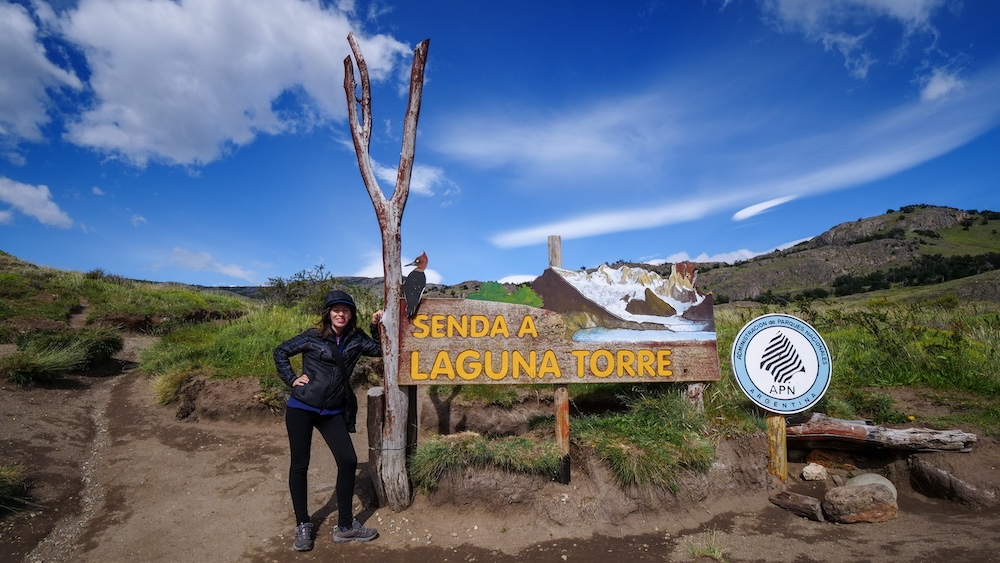
Because we lacked the paper map, and because our phones were essentially useless bricks of glass, we had to rely entirely on the town’s physical infrastructure. Thankfully, El Chaltén is built for this. You simply walk north along the main artery, Avenida San Martin, until the pavement ends and you see the massive, undeniable signage.
Every major trail in this national park begins with a gateway. These aren’t subtle, hidden paths; they are announced by massive carved wooden map boards and archways. They lay out the topography, the estimated times, and the strict rules. One of the most critical rules we learned from the rangers? Do not let the friendly town dogs follow you onto the trails. Los Glaciares is home to the endangered Huemul deer, and a pack of stray dogs following a hiker is a severe ecological threat. Be friendly in town, but be stern at the trailhead.
Once you pass under that wooden archway, you are committed. Your only guides from that point forward are the dirt beneath your boots and the yellow markers leading the way.
The Psychological Lifeline of the Yellow Kilometer Post
Navigating without GPS is not just about avoiding getting lost; it is about managing your own psychology. When you are undertaking a hike that pushes 20-plus kilometers, the mental game is far more exhausting than the physical one. This is where El Chaltén’s brilliant analog marker system becomes your best friend.
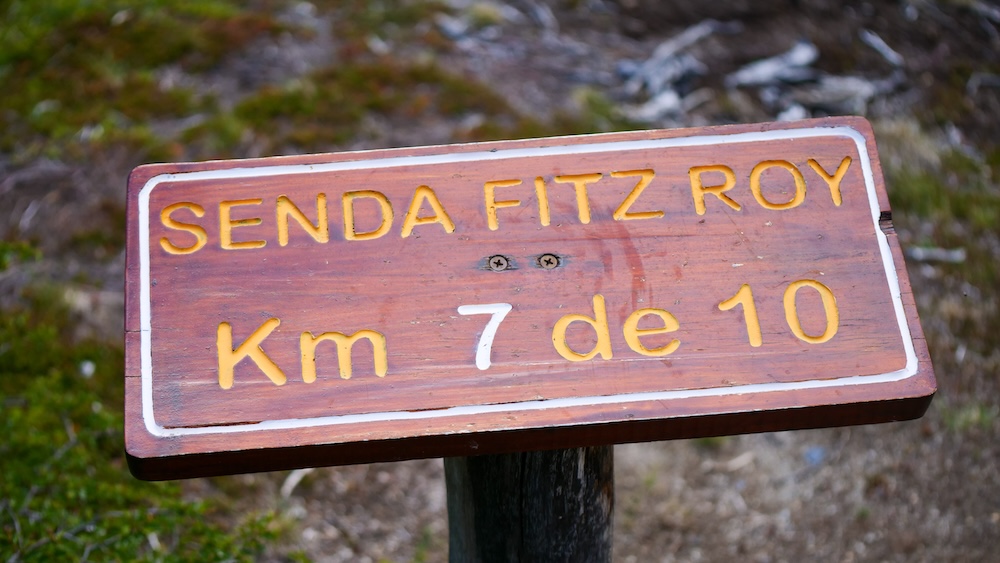
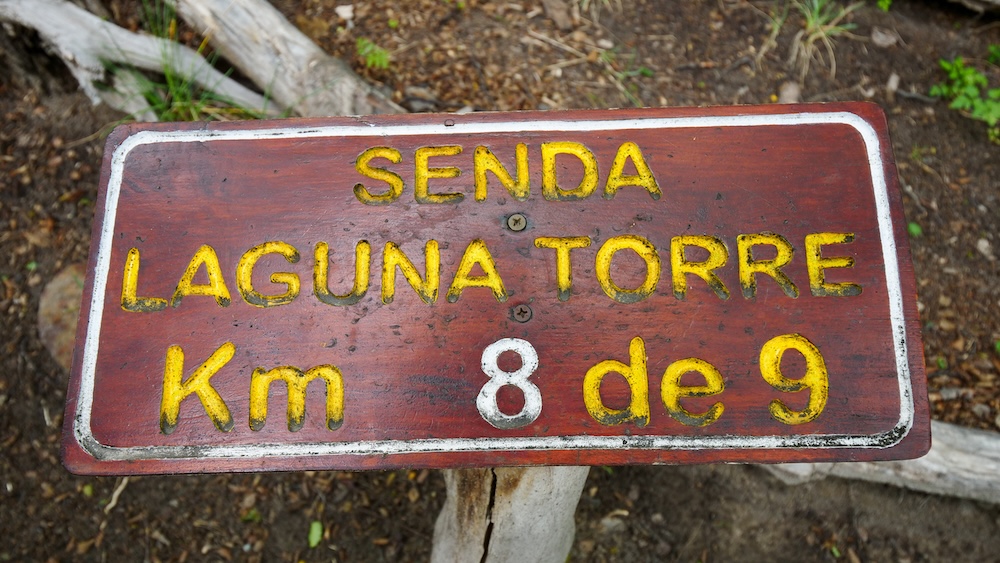
The park utilizes small, numbered wooden posts painted yellow, or featuring yellow metal markers. These appear exactly every single kilometer along the main routes.
For a faux-trekker, these posts are not just geographical indicators; they are permission slips for caloric intake. When we hiked the Laguna Torre trail, our fragile plastic salad bowl broke inside my backpack. By the time we hit the kilometer two marker, it was officially time for a “mini lunch” just to eat the rice, egg, and cheese salad before it spilled everywhere.
These posts tell you exactly how you are performing against the mountain. If the wooden trailhead map stated a hike takes four hours to reach the summit, and you hit kilometer four feeling completely gassed, the analog markers allow you to make a rational, screen-free decision to turn back. Conversely, if you are making great time, the junction signs—large, clear wooden boards with carved text and directional arrows—allow you to confidently add a side trail to your itinerary.
[The Foodie Reality]
We quickly realized that the grocery store in El Chaltén is dire. The selection is incredibly limited, and we suffered the sticker shock of paying a full $1 USD for a single apple. This made the $10 USD packed lunchboxes offered by our hotel an absolute necessity. They were slightly pricey for Argentina, but cracking open that box at a yellow kilometer post to find an apple, a granola bar, a muffin, and a handful of candies was the ultimate analog motivation.
The Sedan Chair Descent: Surviving Laguna de los Tres
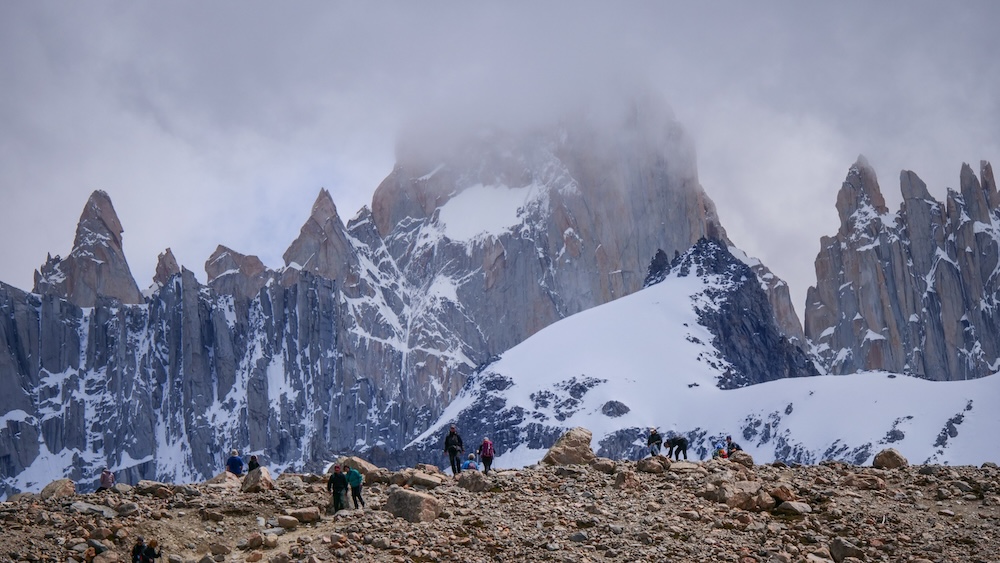
You can follow the yellow posts effortlessly for hours, lulled into a false sense of security. The trek toward Mount Fitz Roy via Laguna Capri is stunning, rolling through forests and offering majestic, CGI-like views of the peaks. Up until kilometer eight, we felt like true mountaineers. We had Mount Fitz Roy calling our name, and we confidently declared that we were going all the way to Laguna de los Tres.
Then, you hit kilometer nine.
This is where the analog warnings become deadly serious. Before the final push, a prominent physical sign warns hikers of what is to come: a brutal, 400-meter vertical rock scramble that will take an hour just to move a single kilometer.
This section is a bottleneck of human suffering. Everyone is tired. You need to be hyper-alert because the trail turns into loose gravel and steep, punishing rock. The wind at the top is ferocious beyond belief, forcing us to hide behind boulders just to devour our last remaining granola bar. The view of the cerulean waters beneath the jagged peaks is the most magnificent thing we have ever seen, completely worth the agony.
But the brochures never tell you about the descent. They never tell you about the reality of walking back down those yellow markers.
By the time we navigated the steep gravel down and faced the long, flat march back to town, we were spent. Our feet were throbbing with a dull, rhythmic ache that consumed our entire consciousness. As we dragged our battered legs past the declining kilometer posts, I genuinely began to fantasize about what it would take to be carried out on a sedan chair. I wondered aloud what would happen if we called the emergency number and begged to be airlifted. We stopped taking breaks to admire the view; we took breaks out of sheer, unadulterated soreness.
This is the raw reality of El Chaltén. The analog markers don’t just tell you how far you have gone; on the way back, they maliciously remind you of exactly how far you still have to suffer.
The Caloric Mathematics of El Chaltén
When you are pushing your body this hard without digital metrics to tell you how many calories you’ve burned, you have to operate on feel. Here is the exact mathematical conversion of our physical suffering to our foodie rewards.
| The Physical Expenditure | The On-Trail Analog Fuel | The Justified Post-Hike Binge |
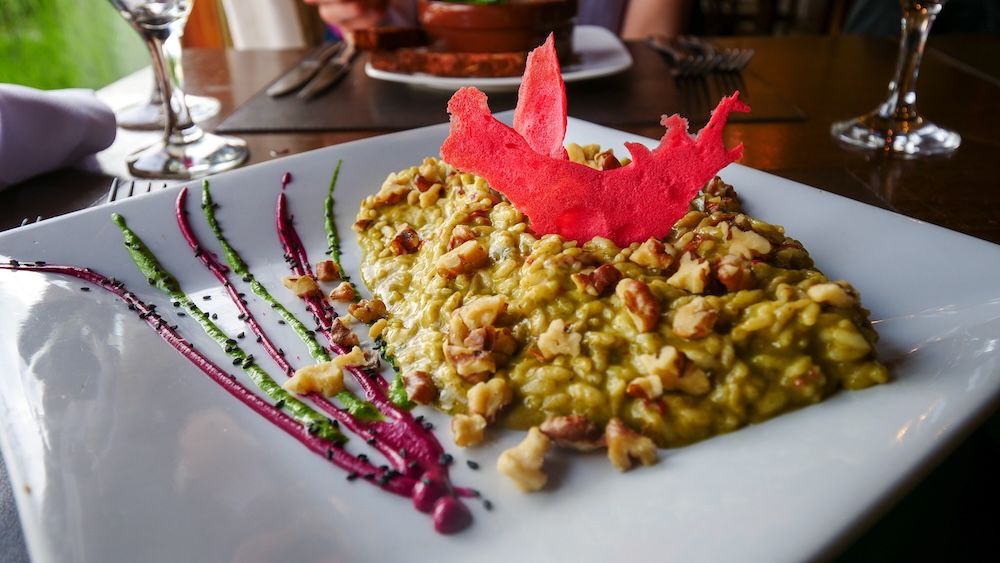
| The 22km Fitz Roy Slog (Legs turning to jelly, feet throbbing, sedan chair fantasies) | $10 Hotel Lunchbox (Rice salad, one mini muffin, hard candies, sheer willpower) | Senderos Boutique Restaurant: Blue cheese and walnut risotto, lentil stew, a full bottle of Syrah, chocolate mousse, and an apple pancake. |
| The 18km Laguna Torre Sprint (Fast, flat valleys, minimal elevation, high spirits) | The Broken Bowl Special (Scarfing down loose rice and veggies at KM 2 to avoid a backpack disaster) | La Zorra Craft Beer: A massive, spicy Mexican-style burger, a bacon burger, loaded cheesy bacon fries, and a pint of Golden Ale. |
| The Mirador de los Cóndores Sunset (A steep 45-minute blast from the center of town) | None (Buzzer-beating the daylight on an empty stomach) | Patagonicus: Eight slices of garlic-heavy Napolitana pizza with ham. |
The Write-Off Day and the Senderos Resurrection
If you are not an elite trail runner, you cannot look at an analog map of El Chaltén and assume you can conquer a new trail every single day. The mountain demands a toll. And you must pay it in time.
The day after our 20-plus kilometer slog to Laguna de los Tres, we experienced a total physical collapse. Day three of our trip was an absolute, undisputed write-off. We were both so stiff that we hardly left the hotel room, sleeping for an astonishing 10 to 12 hours straight. Leaving the bed felt like a monumental task, and our bodies physically rejected the idea of looking at another yellow kilometer post.
You must build these buffer days into your itinerary. The weather in Patagonia is famously unpredictable—temperatures drop quickly, chilly winds swirl, and summer warmth disappears in an instant. You might get a day where the winds are so insane you can barely stand on your feet, turning it into a mandatory cafe day.
But the recovery is glorious. After our Fitz Roy hike, we waddled our broken bodies through town and discovered Senderos, a tiny restaurant hidden inside a high-end guesthouse near the bus terminal. With only six or seven tables, it offered the gourmet resurrection we desperately needed. We devoured blue cheese risotto with walnuts, hearty lentil casseroles, and took a break from Malbec to split a full bottle of Syrah. We finished with decadent chocolate mousse and an apple pancake before waddling back to the lodge and passing out by 8:30 PM.
This is the rhythm of El Chaltén. You suffer on the trail, you sleep for half a day, and you eat like royalty.

The “Burger Sprint” Through Laguna Torre
Once our legs finally recovered, we set our sights on Laguna Torre. The wooden trailhead maps show an 18-kilometer loop that promises views of Cerro Torre with significantly less elevation gain than Fitz Roy.
This trail is a masterpiece of analog pacing. The first three kilometers involve some steady climbing, bringing you past the thundering Cascada Margarita. We moved slower than a turtle, jumping like silly goats over sticks, completely unbothered by a sense of urgency.
But after kilometer 3.5, the topography shifts dramatically. The trail flattens out into a massive, wide river valley. It is an absolute breeze. You can see the glacier hanging on the horizon, acting as a massive, natural compass point pulling you forward.
When we finally reached Laguna Torre at kilometer nine, the reality of Patagonian weather struck again. The iconic mountain peaks were completely shrouded in dense cloud, and the lagoon itself looked murky and cold—more like a cafe au lait than a vibrant alpine lake. It lacked the CGI-level “wow factor” of our previous hike.
We sat down, ate our picnic lunch, and looked longingly at the campers at the nearby De Agostini site who were boiling water for cheap ramen noodles on their tiny stoves. I was suddenly, violently hungry.
And right then, at the exact same moment, Audrey and I looked at each other and had an epiphany: we wanted burgers. Not just any burgers, but the massive, shake-shack level, bottom-feeding gourmet burgers from a local joint called La Zorra.
What happened next defied all logic. We put our cameras away. We stopped acting like hikers and reverted to our truest selves. We hit the flat valley floor and essentially sprinted the nine kilometers back to town. A trek that was supposed to take three hours to descend took us two hours and twenty minutes. We used the yellow kilometer posts not to pace our breathing, but to calculate exactly how many minutes stood between us and a plate of loaded bacon cheese fries. We blasted past the haunted forests and the wide valleys, motivated purely by gluttony.
I actually enjoyed the Laguna Torre hike more than Fitz Roy. Not for the views, which were blocked by clouds, but for the experience. It was comfortable, it was manageable, and it ended with a pint of Golden Ale and artisanal pistachio ice cream.
[Samuel’s Side-Note]
When you reach a viewpoint and the clouds have completely blacked out the mountain, do not despair. The journey is the reward. And if the journey isn’t the reward, the massive stack of cheesy bacon fries waiting for you in town absolutely is.
The Faux-Trekker’s Trail Selection Matrix
If you are trying to figure out which path to take based purely on the physical toll and the analog markers, consult this matrix before you leave your hotel.
| Trail Name & Distance | The Analog Navigation Reality | The “Suffer” Score (1-10) | The Samuel & Audrey Verdict |
| Laguna de los Tres (22-24km RT) | Highly marked. The final KM features a massive warning sign. You cannot miss the bottleneck. | 9.5/10 (Prepare for sedan chair fantasies on the way down). | The ultimate wow factor, but requires a mandatory 12-hour sleep the next day. |
| Laguna Torre (18-19km RT) | Flattens out after KM 3.5. You can visually navigate by aiming at the glacier in the distance. | 5/10 (A walk in the park compared to Fitz Roy). | The best pure hiking experience. Fast, flat, and perfect for working up a massive appetite. |
| Mirador de los Cóndores (2.5km RT) | Starts right at the visitor center. Steep dirt path, impossible to lose. | 3/10 (Short, but it gets the lungs burning quickly). | The perfect 45-minute sunset blast to earn your first pizza in town. |
The Routes We Were Too Sore to Attempt
Because we require substantial recovery time, we could not physically hike every single trail in the park. However, if you possess actual athletic prowess—or if you simply didn’t eat quite as much blue cheese risotto as we did—the analog network extends far beyond the two main lagoons.
For those seeking massive elevation without the extreme crowds of Fitz Roy, the Loma del Pliegue Tumbado is a 21-kilometer round trip that gains over 1,100 meters. The trail starts at the Ceferino Fonzo Visitors Centre, splitting almost immediately: left to the Cóndores lookout, right to Pliegue Tumbado. It is a relentless, constant uphill grind marked by dirt paths and yellow posts, offering panoramic views of both the Torre and Fitz Roy valleys from a completely different angle.
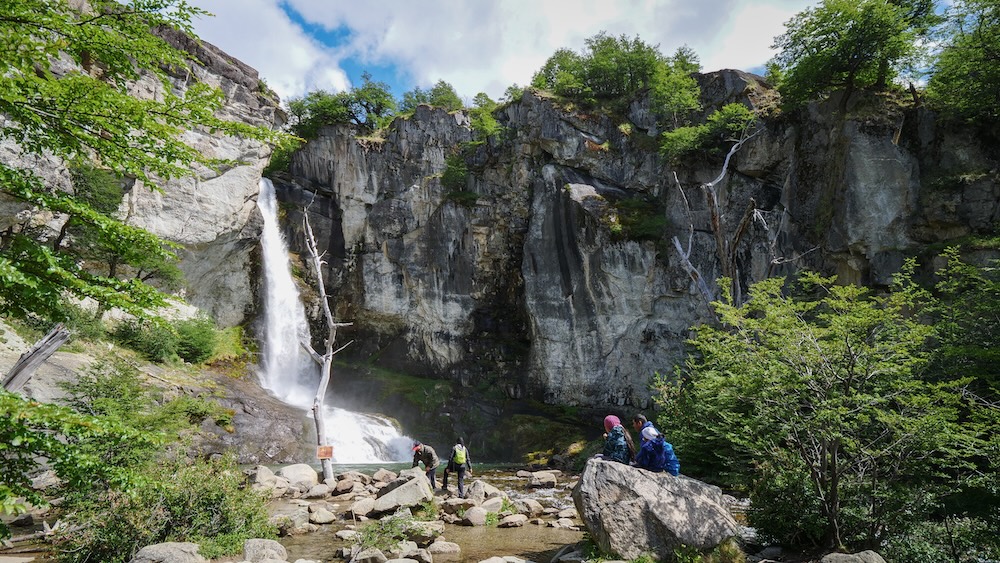
If your legs are entirely shot and you need a truly flat recovery day, Chorrillo del Salto is a gentle 6.5-kilometer walk that essentially follows Route 41. It has a mere 132 meters of elevation gain and takes about two hours round trip, ending at a beautiful 20-meter waterfall. It is the perfect option for a day when the winds are howling up high but you still want to get out of your hotel room.
And for the true experts looking to disappear into the wild, the Huemul Circuit is a grueling 4-day backcountry trek. But be warned: the analog rules change here. You cannot just wander onto this trail. It requires mandatory registration at the visitor center, specialized gear (including a harness for river crossings), and a level of fitness that far exceeds our foodie capabilities.
The Final Reality Check
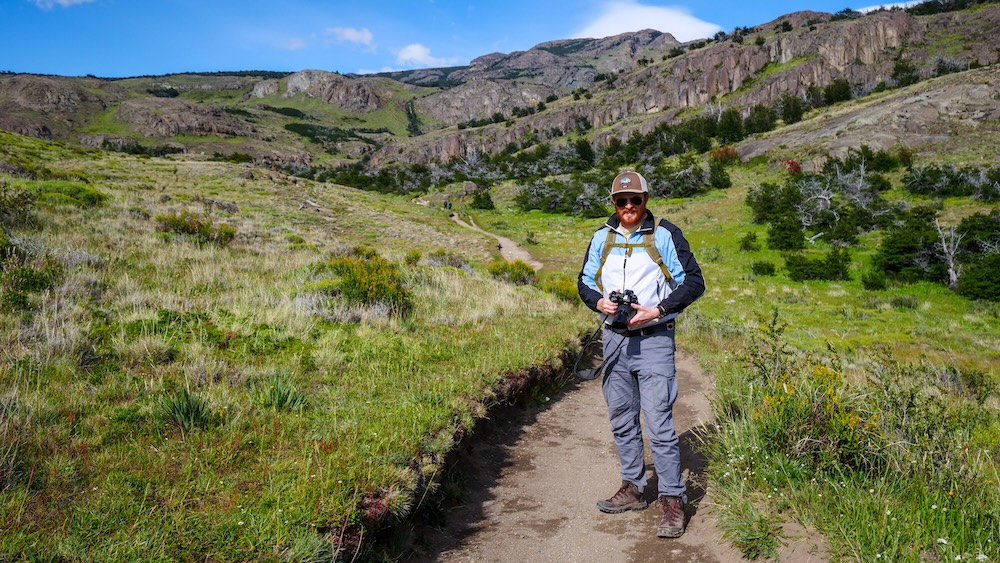
Navigating El Chaltén without a screen is a feature not a bug. In a world where we are constantly tethered to satellite imagery and vibrating notifications, there is something profoundly liberating about trusting a carved piece of wood and a yellow painted stick to guide you through one of the most rugged landscapes on earth.
You will make mistakes. You will forget your map on the nightstand. You will get sticker shock at the grocery store, and you will curse the steep gravel as your knees scream for mercy. You will gain weight from the incredible local food, forcing you into stretchy leggings, and you will arrive at viewpoints only to find the mountains hidden behind an impenetrable wall of gray clouds.
But you will also find a rhythm. You will learn to measure your endurance not by a digital readout, but by how your lungs feel at kilometer four. You will experience the raw, primal joy of racing through a Patagonian valley propelled entirely by the promise of a hot meal.
We arrived in this frontier town as out-of-shape foodies who weren’t the best versions of ourselves. We played the part of faux-trekkers, enduring the pain, the stiffness, and the digital blackouts. But we left with stronger legs, incredible memories, and the absolute certainty that no GPS app in the world can replicate the feeling of reaching that final yellow marker, knowing you earned every single step.
FAQ: Trail Markers in El Chaltén: How to Track Your Progress Without GPS
Is hiking in El Chaltén really free?
Nope. As of 2026, El Chaltén is no longer the “free trekking capital.” Foreigners must pay a mandatory entrance fee of ARS 45,000 to access the Zona Norte of Los Glaciares National Park. Buy your pass online in advance, because the contactless payment terminals at the ranger stations are highly unreliable due to the terrible internet in town.
Do I need an offline GPS map like AllTrails?
Not really. You can download one using the spotty free Wi-Fi in the central plaza, but physical yellow markers and wooden barricades always overrule digital maps. The park frequently reroutes sections for ecological recovery, meaning your app will just aggressively beep at you for being “off route.” Follow the carved wooden arrows instead.
How do I track my hiking progress without a digital screen?
Yellow posts. The park has installed small wooden posts with yellow markers every single kilometer along the main trails. These are brilliant psychological tools that tell you exactly how far you have gone and help you gauge your pacing without draining a smartwatch battery.
Should I buy my groceries in El Chaltén?
Avoid it. The food selection in town is beyond limited, and basic items are shockingly expensive, like a single apple costing $1 USD. Your best bet is to rely on the $10 USD packed lunchboxes that most hotels offer, which conveniently include items like rice salads, granola bars, and muffins.
Is the final kilometer of Laguna de los Tres actually that hard?
100%. The first nine kilometers are a very manageable intermediate hike , but that final kilometer is a brutal, steep, gravel-filled rock scramble. It is a massive bottleneck where everyone is exhausted. You will absolutely feel it in your throbbing feet on the long descent back to town.
Should I let the friendly town dogs follow me on the hike?
Never. The park rangers are very strict about this rule. Los Glaciares is home to the endangered Huemul deer, and domestic dogs are a severe ecological threat to them. Be as friendly as you want in town, but do not let them cross the trailhead boundaries with you.
What if bad weather ruins my view at the summit?
Accept it. Patagonian weather shifts dramatically from one day to the next. We arrived at Laguna Torre to find the peaks entirely covered by dense clouds and the water looking murky. Focus on the journey itself, and let the promise of a massive craft burger and loaded fries in town keep you motivated on the hike back.
Is it normal to need a full rest day between hikes?
Absolutely. We are foodies, not elite athletes. The day after our 20-plus kilometer trek to Fitz Roy was a total physical write-off. We were so stiff we barely left our hotel room and slept for 10 to 12 hours straight. Build buffer days into your itinerary for physical recovery and inevitable bad weather.
Project 23 Argentina: This guide is also available in Spanish. [Lea la versión en castellano: Marcas de senderos en El Chaltén: Cómo seguir tu progreso sin GPS]