
There is a very specific sound a cheap travel umbrella makes when it meets the Patagonian steppe wind. It’s a violent, metallic snap, followed immediately by the realization that your carefully curated “Buenos Aires summer” wardrobe is a complete and utter joke.
I was standing on a street corner in Esquel, clutching the mangled skeleton of what used to be rain protection, while the wind threatened to physically remove my glasses from my face. I had packed for the South American summer. I ended up sprinting into a local outfitter to buy a $16 heavy flannel and a traditional Gaucho hat just to stop my ears from freezing off before breakfast.
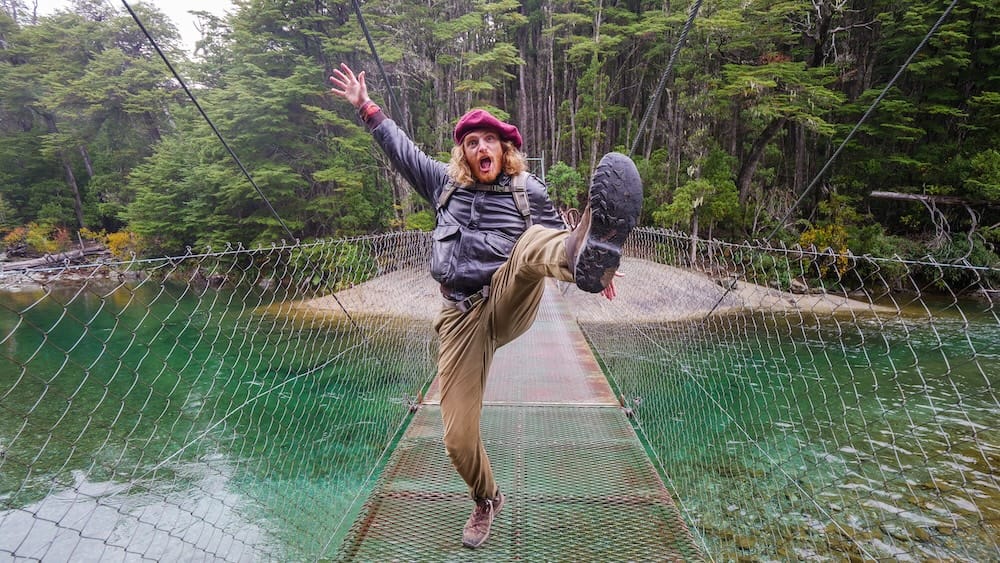
Patagonia is not just a destination; it is a logistical gauntlet disguised as a postcard. If you’ve watched our recent Patagonia vlog series over on the Samuel and Audrey YouTube channel, you know that Audrey and I operate on a very specific travel frequency: we are foodies first, hikers second, and we learn our lessons the hard way. We spent weeks navigating the jagged peaks, the 18-hour transit days, and the mountains of lamb, gathering the microscopic data points that the glossy brochures conveniently leave out.
If you are a first-time visitor planning a trip down to the end of the world, put the heavily filtered Instagram reels away. Here is the un-sugarcoated, meticulously researched reality of the biggest mistakes you can make in Patagonia, and exactly how to fix them.
The 2026 Patagonia Mistake & Micro-Logistics Matrix
Before we break down exactly how these mistakes play out on the ground, here is your quick-fire cheat sheet. If you screenshot one thing from this guide, make it this table.
| The Rookie Mistake | The 2026 Patagonian Reality | The “Nomadic Samuel” Fix | The Cost of Failure |
| “I’ll figure out my Torres del Paine hiking route when I arrive.” | As of May 2026, the CONAF system is strictly route-specific. Day passes do not allow overnight refugio stays, and you cannot change routes on-site. | Pre-book your exact route on PasesParques.cl. Pro-tip: Use the PayPal option to bypass the Transbank credit card glitches that lock foreign cards. | $35 USD + Denied entry to the trail by park rangers. |
| “El Chaltén is the free trekking capital, I don’t need cash.” | El Chaltén now enforces an ARS 45,000 paywall. Furthermore, town ATMs physically run out of cash by Friday afternoon, and high winds frequently kill credit card machines. | Treat El Chaltén as a cash-only ecosystem. Bring crisp, untorn $100 USD bills or sufficient ARS from El Calafate. Buy the 3-day Flexipass online beforehand. | Missing dinner because your card won’t swipe and the ATM is empty. |
| “I’ll save this apple for the 6-hour bus ride into Chile.” | Chilean SAG (Agricultural) agents are notoriously strict. They x-ray all luggage at the Paso Río Don Guillermo border checkpoint. | Eat all fresh produce and meats before exiting the bus into “No Man’s Land.” When in doubt, declare everything on your customs form. | $200+ USD fine and a public scolding. |
| “I’ll just book the cheapest morning bus to Punta Arenas.” | Morning “Semi-Cama” (half-bed) seats on companies like Bus Sur often cost the exact same as the fully reclining “Cama” (VIP bed) seats on the 9:00 PM departure. | Book the 9:00 PM “Cama” bus. Enjoy the complimentary hot meal and whiskey shot, but bring your own roll of toilet paper for the terminals. | 18 hours of back pain for the exact same price. |
| “We can grab a late lunch around 3:00 PM in Dolavon.” | The Patagonian Siesta is a non-negotiable cultural institution. Between 1:00 PM and 5:00 PM, and often entirely on Mondays, small towns completely shut down. | Sync your stomach to local time. Eat lunch right at 12:30 PM, or be prepared to wait until the restaurants reopen at 8:00 PM. | Eating stale gas station alfajores in a ghost town. |
| “I don’t need to keep this little grocery store receipt.” | That thermal paper slip is the PDI Tarjeta de Turismo. It is legally required to waive the 19% VAT on all your Chilean hotel stays. | Put it inside your passport the second the immigration officer hands it to you. Treat it like gold. | A 19% tax penalty on all your accommodation. |
Mistaking “Summer” for Actual Summer
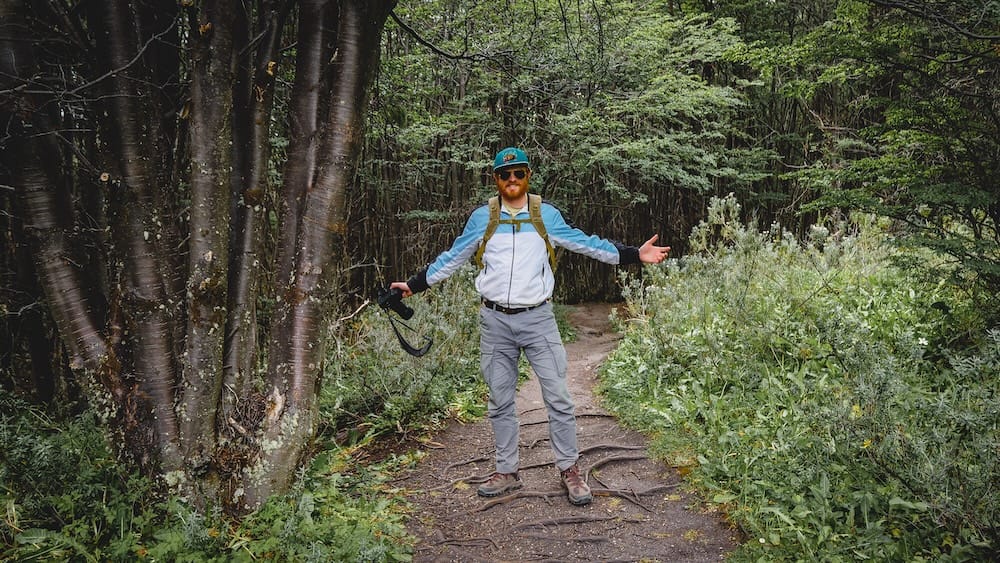
Most first-timers look at the calendar, see January or February, and pack like they are heading to a Mediterranean retreat. The reality of Patagonian weather is that the geography creates a brutal atmospheric blender.
The Andes mountains block the Pacific moisture, dumping it on the Chilean side, while the Argentine steppe acts as a massive, uninterrupted wind tunnel. That “breeze” you feel stepping out of your hostel in El Calafate or Puerto Natales routinely hits 80 to 100 kilometers per hour. It will blow a rolling suitcase straight into a ditch, and it will drop the ambient temperature by fifteen degrees in a matter of minutes.
[Samuel’s Gear Reality Check]
Do not bring an umbrella to Patagonia. It is a social faux pas and a physical impossibility. Invest in a high-quality, hard-shell windbreaker. The wind here doesn’t just make you cold; it actively exhausts you. You will spend half your caloric intake just fighting to stay upright on the exposed trails around Laguna de los Tres.
If you are packing for the 2026 season, layer management is your only defense. You need a moisture-wicking base, an insulating mid-layer (fleece or down), and a hyper-durable windproof shell. Leave the heavy denim at home; once it gets wet on the Base Torres hike, it stays wet for three business days.
The “We Can See It All” Delusion and the VIP Bus Mirage
Patagonia is massive. It is not a park; it is a territory roughly the size of France and Spain combined. The single biggest error travelers make is looking at a map and assuming they can seamlessly bounce from Bariloche down to Ushuaia in ten days.
Because domestic flights (like the Buenos Aires to El Calafate route, which currently runs $150–$350 USD if booked 2-3 months out) skip the middle of the region, budget-conscious travelers turn to the long-haul buses.
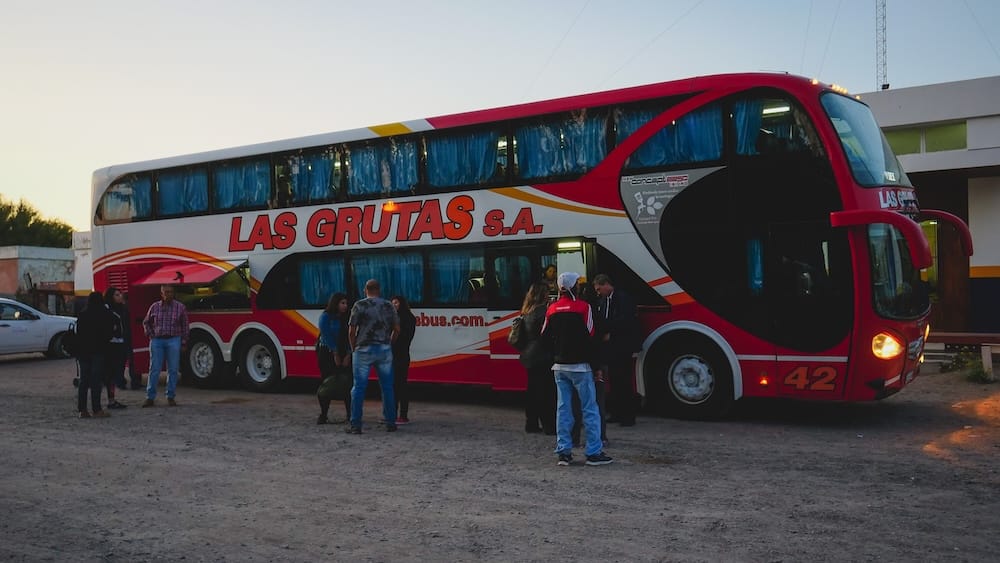
They hand you a neat little glass of whiskey on the VIP overnight buses in Argentina. It’s a lovely touch on the “Cama” (bed) class—a literal knockout blow before you drift off while the bus rumbles down Ruta 40. Audrey, possessing a supernatural ability to sleep on any moving vehicle, loved it. I, however, woke up at a desolate transit terminal at 6:00 AM only to realize a grim reality: there wasn’t a single square of toilet paper on the bus, and the terminal’s bathrooms had been unstocked since the previous Thursday.
When navigating these massive distances, you have to master the micro-logistics of overland transit. On the popular Puerto Natales to Punta Arenas route in Chile, companies like Bus Sur offer different seating tiers. The critical mistake is booking the morning bus and paying roughly $37 to $53 USD for a cramped “Semi-Cama” seat, completely unaware that the 9:00 PM departure often sells the fully reclining “Cama” seats at the exact same price point.
The Patagonian Transit Reality Matrix
Cross-referenced for 2026 current pricing and travel times.
| Transit Route | Transport Type | 2026 Estimated Cost | True Travel Time | The Unwritten Reality |
| Bariloche ↔ El Calafate | Long-Haul Bus | $80 – $120 USD | 18 – 22 Hours | Terminals often lack TP and soap. Pack your own roll and snacks. |
| El Calafate ↔ Pto. Natales | Cross-Border Bus | $30 – $45 USD | 5.5 – 6.5 Hours | 1.5 hours of this is spent standing in line at the remote border checkpoint. |
| Pto. Natales ↔ Torres del Paine | Local Bus | $12 – $18 USD | 2 Hours | Book your return ticket immediately upon arrival. Buses fill up fast. |
| The Alternative: Carretera Austral | Rental Car (Chile) | $80 – $120/day | Days/Weeks | What we missed but you shouldn’t. Paved roads are rare; expect gravel and flat tires. |
The Ghost Town Siesta Trap
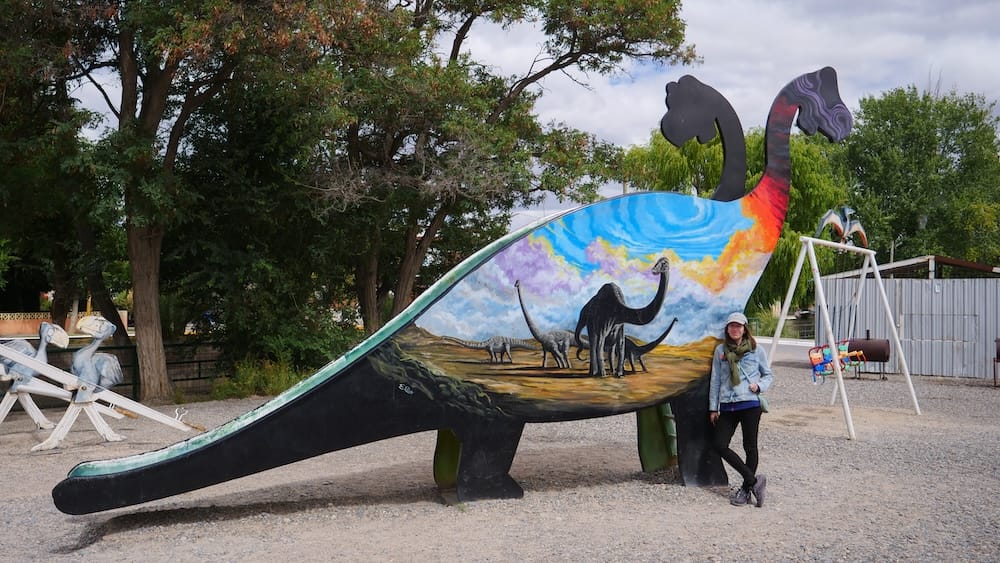
If you want to know what true defeat tastes like, it’s eating a stale alfajor outside a closed gas station in the remote town of Dolavon on a Monday afternoon because you confidently assumed Patagonian towns didn’t actually shut down for siesta.
We had journeyed into the Chubut province, tracing the historic Welsh settlement route. We pictured a seamless afternoon of touring museums and eating scones. Instead, we stumbled into a logistical ghost town. The tourism office was locked. The restaurants were shuttered. The streets were entirely empty.
First-time visitors from North America or Northern Europe are accustomed to a world where convenience is always on the clock. In Patagonia, the siesta is a non-negotiable cultural institution. Between 1:00 PM and 5:00 PM, small towns cease to exist. Furthermore, many regional hubs completely shut down on Sundays and Mondays. If you arrive in a town like Trelew or El Bolsón on a Monday afternoon expecting to stock up on trekking supplies, you will be eating whatever you can find at the local YPF petrol station.
To do the Welsh route properly, you have to sync your stomach with local time. Almost all the famous tea houses in Gaiman don’t open until exactly 2:30 PM. When we finally cracked the code, we sat down at Ty Gwyn. For about $15 USD per person, we were buried under an avalanche of scones, homemade jams, and Torta Negra—a dense, rich black cake made with brown sugar and rum that completely justified the logistical headache.
The End of the “Free Trekking” Era
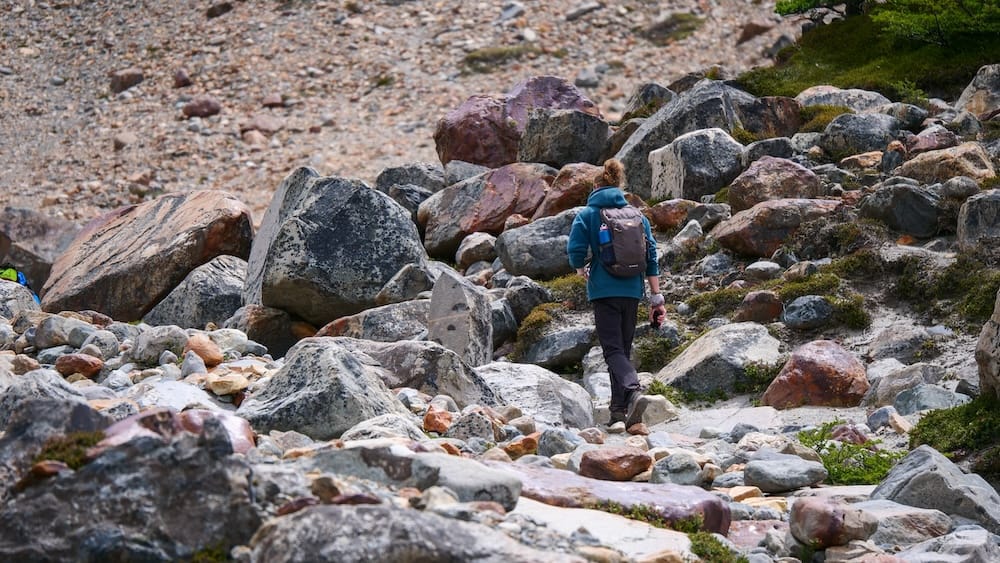
For decades, the Argentine mountain town of El Chaltén was globally celebrated as the “Free Trekking Capital of the World.” You simply walked out of your hostel, picked a trailhead, and marched up toward Mount Fitz Roy.
Those days are over.
As of the 2025/2026 season, Argentina’s Parques Nacionales instituted a strict paywall. You must now pay an ARS 45,000 entrance fee (roughly $31-$35 USD depending on the daily exchange rate) at the Portada El Chaltén. Dozens of tourists still show up at the trailhead every morning with zero cash and no pre-purchased QR code, creating massive bottlenecks. Because cellular signal at the trailheads is notoriously weak, you cannot reliably buy the ticket on your phone while standing in line.
If you are visiting both the Perito Moreno Glacier (in El Calafate) and El Chaltén, the biggest mistake you can make is buying individual daily tickets. You must purchase the newly introduced 3-day Flexipass (ARS 90,000) or the 7-day pass (ARS 157,500) online while you still have strong Wi-Fi in El Calafate. Screenshot the QR code immediately.
Across the border in Chile, the bureaucracy is even steeper. Torres del Paine National Park has completely overhauled its entry system for May 2026. The old “days-based” tickets are dead. The new system is route-specific. When you pay your $35 USD entry fee, you must declare exactly which trail you are hiking (e.g., Base Torres vs. the W-Trek).
[Samuel’s Ticketing Warning]
The official Chilean park website (pasesparques.cl) uses a payment processor called Transbank Webpay Plus. It routinely flags and rejects foreign credit cards. If you try three times, your home bank will lock your card for fraud, leaving you stranded without a permit. Your fix: Pre-authorize your card for Chilean transactions by calling your bank beforehand, or bypass the headache entirely by using the recently added PayPal portal on their site. It takes a slightly higher fee, but it actually works.
2026 National Park Toll & Logistics Matrix
| Park / Sector | 2026 Entry Fee | The Booking Reality | Operating Hours |
| Torres del Paine (Chile) | $35 USD (Standard) | Must declare specific route upon purchase. strictly enforced on trail. | 8:00 AM – 6:30 PM (Base Torres cutoff is 18:00 hrs). |
| Los Glaciares (El Chaltén) | ARS 45,000 | No longer free. Buy the 3-day Flexipass online beforehand to save cash. | Trails open 24/7, but portal is staffed 8:00 AM – 5:00 PM. |
| Perito Moreno Glacier | ARS 45,000 | Peak tour bus crowds arrive between 10:30 AM and 2:30 PM. | 8:00 AM – 6:00 PM. |
The “Two Perito Morenos” Geographical Trap
If you hang around the El Calafate bus terminal long enough, you will inevitably witness a very specific brand of traveler meltdown. I watched a backpacker nearly burst into tears at the ticket counter when the agent informed him that his non-refundable, 12-hour overnight bus ticket was taking him to the completely wrong side of the province.
This is the ultimate Patagonia rookie mistake: confusing the glacier with the town.
Because the region is so vast, place names frequently overlap, and search engines are notoriously unforgiving if you don’t know exactly what you are looking for. First-time visitors know they want to see the famous advancing ice wall, so they blindly book transport or accommodation for “Perito Moreno.”
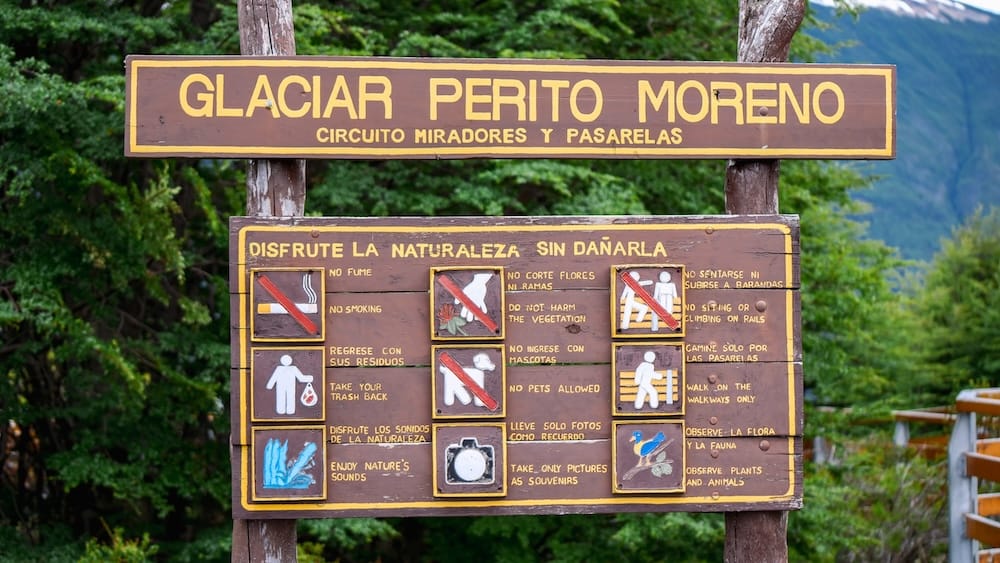
Here is the geographical reality: The Perito Moreno Glacier is located inside Los Glaciares National Park, and its gateway city is El Calafate. The town of Perito Moreno is a small municipality in the northwest of the Santa Cruz province, located roughly 600 kilometers away. If you make this booking error, you will strand yourself a full 10 to 12-hour drive from the glacier you actually came to see.
[Samuel’s Booking Reality Check]
When booking flights, your destination code is FTE (El Calafate). When booking buses, your destination is El Calafate. The only reason you should ever book a ticket to the town of Perito Moreno is if you are planning a highly specific detour to see the ancient cave paintings at Cueva de las Manos.
The Naming Confusion Matrix
- The Glacier: Perito Moreno Glacier (Located near El Calafate, Santa Cruz).
- The Town: Perito Moreno (Located 600km north, near Cueva de las Manos).
- The National Park: Perito Moreno National Park (A deeply remote, rarely visited park located 300km from the town of Perito Moreno, and 500km from the glacier).
The “Wing It” Wilderness Delusion
There is a romanticized idea spread by van-life influencers that Patagonia is an untamed frontier where you can simply show up, strap on a backpack, and pitch a tent wherever the sunset looks best. I met a couple in a Puerto Natales hostel who planned their entire trip around this exact philosophy. They were promptly turned away at the national park gates.
In 2026, you absolutely cannot “wing it” in the major Patagonian parks. The days of wild, unregulated camping are completely dead.
Due to massive overcrowding and devastating forest fires caused by careless tourists over the last decade, Chile’s Torres del Paine is now governed by an iron-clad reservation system. Wild camping is strictly illegal. If you want to hike the famous W-Trek or the O-Circuit, you must have pre-booked reservations for every single night at the official refugios or designated campsites (managed by companies like Vértice and Las Torres).
If you show up at the park entrance without proof of these reservations, the CONAF park rangers will physically bar you from entering the trail network.
These bookings do not operate on a casual timeline. For the peak summer season (December through February), the booking portals typically open in April or May of the previous year. The most popular refugios—specifically Cuernos and Grey—often sell out their entire summer inventory within 48 to 72 hours of the system going live.
2026 Refugio & Campsite Booking Logistics
| Accommodation Type | 2026 Estimated Cost (USD) | Booking Window | The Harsh Reality |
| Fully Equipped Refugio Bed | $120 – $160 / night | 6 to 8 Months in Advance | High-density dorms. Hot water frequently runs out by 7:00 PM. |
| Premium Camping (Tent Provided) | $75 – $90 / night | 4 to 6 Months in Advance | Tents are set up on wooden platforms to survive the 80km/h winds. |
| Basic Campsite (Bring Your Own) | $25 – $35 / night | 3 to 5 Months in Advance | You must carry all your own gear, but you still get access to the cooking shelters. |
Do not let the illusion of the wild trick you into poor planning. Treat your Torres del Paine logistics with the same urgency as securing tickets to a major concert, or you will find yourself spending a lot of money to take day-trips from the parking lot.
The Agricultural Interrogation in “No Man’s Land”
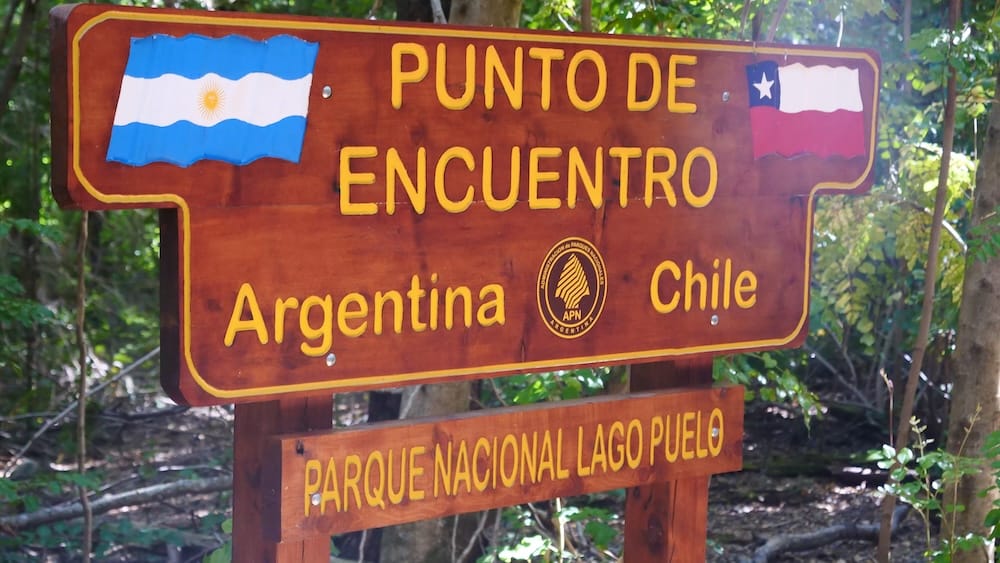
You haven’t known true travel anxiety until you’re sitting on a bus in “No Man’s Land” between Argentina and Chile, desperately trying to remember if you left a half-eaten apple at the bottom of your daypack.
The border crossing between El Calafate (Argentina) and Puerto Natales (Chile) via the Paso Río Don Guillermo takes about five to six hours. At least an hour and a half of that is spent physically disembarking with all your luggage, getting stamped out, driving through a barren stretch of gravel, and disembarking again to face the Chilean border agents.
Chile’s SAG (Agricultural and Livestock Service) agents are legendary. They x-ray every single piece of luggage. If they find an undeclared apple, a bag of raw almonds, or a sandwich containing Argentine salami, they will confiscate it, scold you publicly, and potentially hit you with a fine exceeding $200 USD. Eat your fresh produce before you get off the bus. When in doubt, declare everything.
While you are stressing about fruit, do not lose your PDI slip. When you enter Chile, immigration will hand you a flimsy piece of paper called the Tarjeta de Turismo (Tourist Card). Digital versions are slowly being tested, but in 2026, this physical slip remains the gold standard. Hotels require it to waive the 19% VAT on your room. If you lose it, you will automatically pay 19% more for your accommodation, and you will face massive delays when trying to exit the country. Put it in your passport and treat it like gold.
The Great Pasta Divorce and the ATM Desert
Let’s talk about the physical reality of keeping yourself fed and funded. If you follow our content, you know I love Argentine food. But the budgeting realities of Patagonia are filled with hidden landmines.
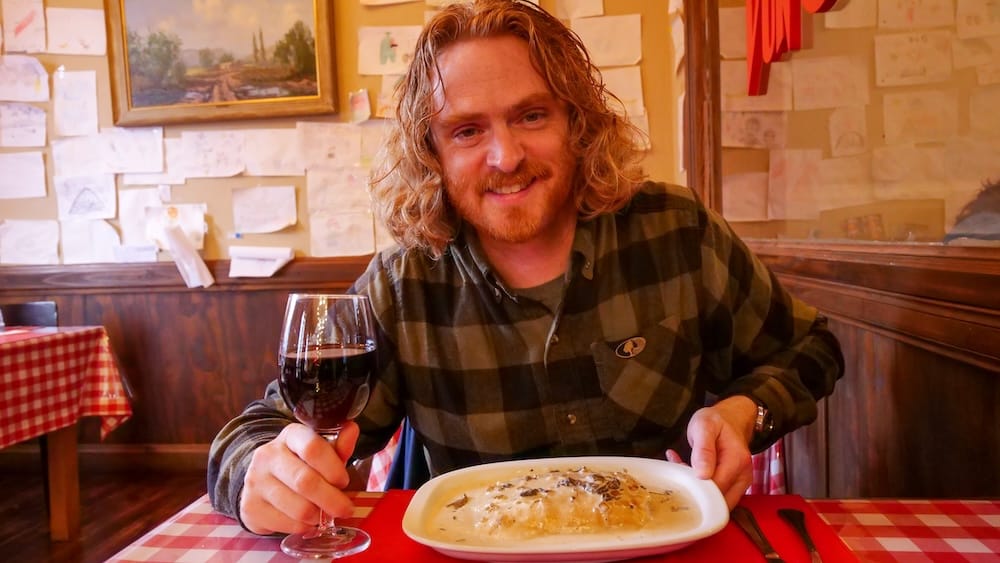
I didn’t plan on taking out a small mortgage for marinara, but here we are. It was the moment I learned that in many Argentine pasta joints, the noodles and the sauce are involved in a bitter, separately-priced divorce. You look at the menu, see artisan ravioli for ARS 12,000, and think you’ve found a deal. When the bill comes, you realize the bolognese sauce was an additional ARS 10,000. It is a highly specific cultural dining quirk that blows up daily budgets.
To pay for that pasta, you need cash, which brings us to the ATM reality of El Chaltén. The town is tiny, set on a dusty, rocky incline where rolling suitcases go to die. It has very few ATMs (like the notorious Banco Santa Cruz machine). During peak season, these machines are completely drained of cash by Friday afternoon. They will flash “Out of Order” until the armored truck arrives on Monday.
Concurrently, the high winds frequently knock out the town’s satellite internet grid. When the internet drops, restaurant credit card terminals go down with it. If you don’t have physical cash, you literally cannot buy dinner.
First-time visitors also obsess over the “Blue Dollar” rate in Argentina, arriving with $5,000 in cash thinking they will double their money. In 2026, the MEP rate (the tourist rate automatically applied to foreign credit cards) and the underground Blue Dollar have heavily converged, sitting within 5-10% of each other. The risk of carrying massive wads of cash now vastly outweighs the minor savings. Bring enough crisp, untorn $100 bills (exchange houses still reject bills with microscopic tears) to survive the El Chaltén cash-outs, but use a zero-foreign-transaction-fee Visa or Mastercard for everything else.
To offset the pasta tax and the ATM fees, you have to hunt for local bargains. Instead of buying wine at the curated, overpriced tourist vinotecas on the main drag, we ducked into a small, dusty Chinese grocery store off the beaten path. Buried on the bottom shelf, we unearthed a 2003 vintage Malbec/Petit Verdot blend. A 16-year-old aged wine for roughly 300 pesos (under $10 USD at the time).
The “Pristine Bill” Fetish and the 2026 Currency Myth
If you’ve been scouring the internet for Argentina travel advice, you’ve likely heard of the legendary “Blue Dollar.” In years past, carrying a suitcase full of cash could effectively halve the price of your trip. However, if you show up in 2026 expecting 2023 prices, you are in for a significant reality check.
The gap between the official rate and the parallel “Blue” rate has converged significantly. With the MEP rate (the rate automatically applied to foreign credit cards) now sitting within 5-10% of the cash rate, the risk of carrying thousands of dollars in physical bills simply isn’t worth the minor savings anymore.
But, if you do choose to bring cash for those El Chaltén “ATM deserts” we talked about, you must understand the Pristine Bill Rule.
In Patagonia, exchange houses operate with a level of scrutiny that would make a diamond appraiser blush. If your $100 USD bill has a microscopic tear, a faint ink mark, or even a heavy fold down the center, it will be flatly rejected or “taxed” with a 10-20% lower exchange rate.
[Samuel’s Cash-in-Hand Warning]
Do not just pull bills from an ATM at home and head to the airport. Go inside your bank, sit down with a teller, and hand-pick the crispest, newest “blue” $100 bills in the vault. Store them in a hard-shell plastic folder. If that bill so much as sneezes, it loses value in the eyes of a Patagonian cueva (exchange house).
The PDI Slip: A $100 Piece of Paper
When you cross the border into Chile—likely via that 6-hour bus ride from El Calafate to Puerto Natales—the immigration officer will hand you a small, unassuming thermal paper slip called the PDI Tarjeta de Turismo.
To the untrained eye, it looks like a grocery store receipt. In reality, it is a 19% discount coupon for your entire trip.
Under Chilean law, foreign tourists are exempt from the 19% Value Added Tax (VAT or IVA) on lodging, provided they pay in US Dollars or with a foreign credit card and present this specific PDI slip. If you lose that piece of paper, or if you accidentally throw it away while cleaning out your pockets, your hotel is legally required to charge you that extra 19%.
The “Check the Receipt” Checklist
- The Entry: Ensure the border agent actually gives you the slip.
- The Storage: Keep it inside your passport, but not tucked into the pages where it might fall out during a bag search.
- The Exit: You must surrender this slip when you leave Chile. If you don’t have it, expect a lengthy, bureaucratic nightmare at the border that could cause you to miss your connecting bus or flight.
Paying for Water in a Glacial Paradise
One of the most physically painful sights in Patagonia is watching a hiker at the base of a glacier pull a $5 plastic bottle of Nestlé water out of their pack.
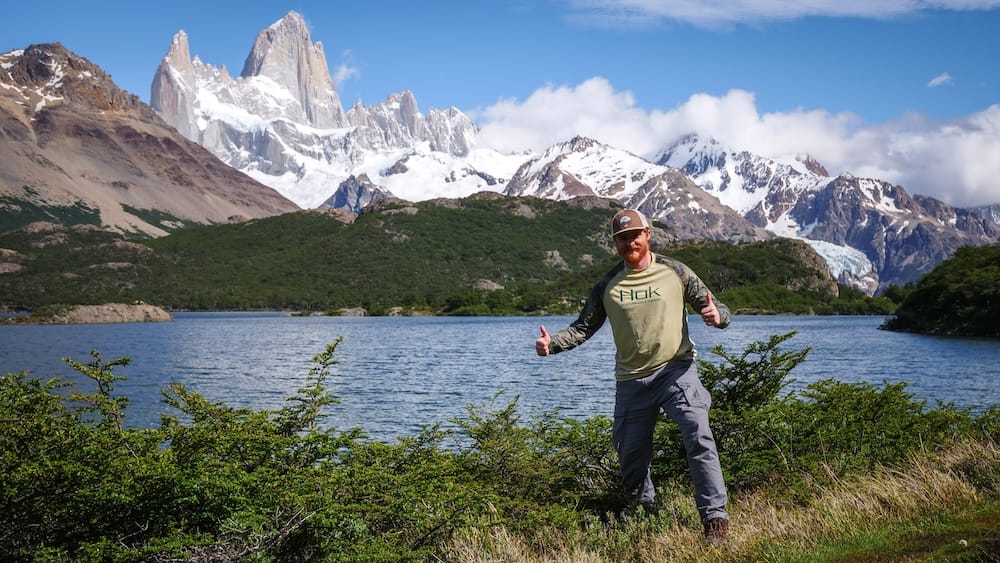
We are talking about a region defined by some of the purest glacial meltwater on the planet. In hubs like El Chaltén and Puerto Natales, the tap water is not just drinkable—it’s delicious. Most travelers make the mistake of contributing to the massive plastic waste problem simply because they are “playing it safe” with their stomachs.
Patagonian Hydration Metrics (2026)
| Location | Water Source | Safety Rating | Cost Savings |
| El Chaltén Town | Tap Water | 100% Safe | ~$25 USD / week |
| National Park Trails | Running Streams | Safe (Look for fast-moving water) | Priceless |
| Puerto Natales | Tap Water | 100% Safe | ~$20 USD / week |
| The “Mistake” | Bottled Water | Unnecessary | The “Tourist Tax” |
Pro-Tip: Bring a durable, reusable wide-mouth bottle. On trails like the W-Trek or the Fitz Roy scramble, you don’t need to carry three liters of water (which weighs a ton). Carry one liter and refill at the designated stream crossings. It’s cold, it’s fresh, and it’s free.
The Base Torres Gamble and the “Rotunding” Reality
Finally, we have to address the physical reality of the hiking. Patagonia is not a walk in the park; it is a full-body assault.
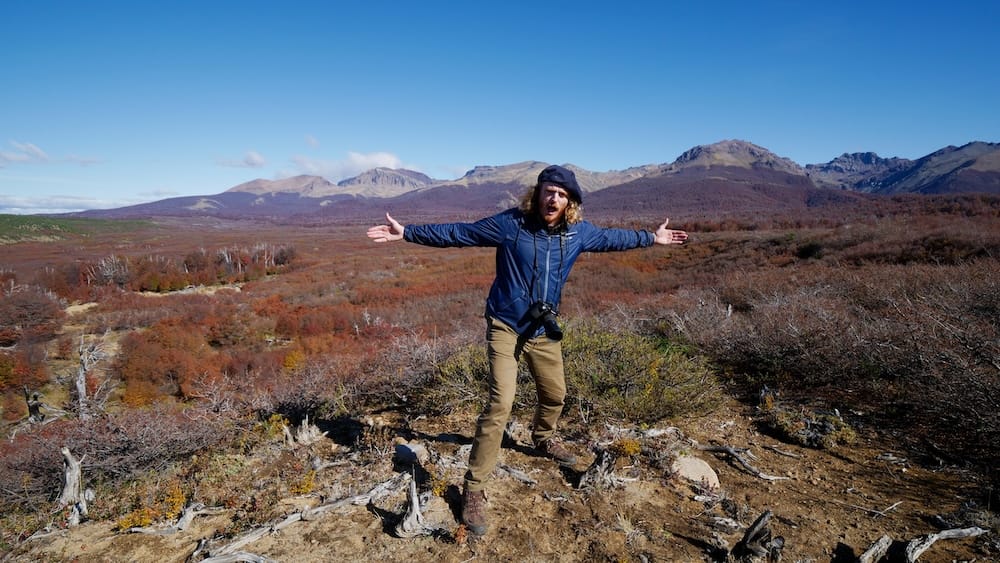
The famous Fitz Roy hike (Laguna de los Tres) lulls you into a false sense of security with eight kilometers of relatively flat terrain, before forcing you into a brutal, 400-meter vertical scramble up loose scree (rocks) that takes an hour to conquer.
We had to do a similar, albeit smaller, hike up the Laguna La Zeta trail in Esquel. We didn’t do it for the love of fitness; we did it out of sheer biological desperation. We had just consumed a massive Patagonian Lamb Lasagna followed by the aforementioned Welsh tea spread. We were undergoing a process I affectionately call “rotunding”—the act of becoming incredibly round due to the absurd portion sizes in Argentina.
But when it comes to the major hikes, specifically the Base Torres trek in Chile, you cannot let your itinerary dictate your safety. Under the new 2026 ticketing rules, your Base Torres ticket is date-specific. If you book it for Day 1 of your trip, and you wake up to 80 km/h winds and zero visibility, your ticket is non-refundable, and you will see absolutely nothing but fog.
The pro-move is to buy your park pass for the Base Torres sector for your second or third day in the region. This gives you a buffer window. If the weather looks catastrophic, you can unofficially visit the CONAF office in Puerto Natales in person, turn on the charm, and politely beg for a date change. They won’t do it online, but face-to-face, if space permits, human empathy often prevails.
The Physical Effort vs. Caloric Reward Index
| The Activity | The Physical Reality | The “Rotunding” Reward (What to eat after) | Post-Hike Triage Priority |
| Laguna de los Tres (Fitz Roy) | 22km round trip. Brutal final 1km vertical scree scramble. | A massive Bife de Lomo and a pint of local craft beer. | High. Ibuprofen and elevating your feet immediately. |
| Base Torres (Chile) | 18km round trip. Relentless uphill, heavy wind exposure. | Pisco Sour and a massive bowl of Cazuela (stew). | Critical. Hot shower required before the 7 PM refugio water runs out. |
| Perito Moreno Glacier | Metal boardwalks. Essentially a scenic stairmaster. | Alfajores and hot chocolate by the cafe window. | Low. Mild stretching while looking at photos. |
Patagonia will humble you. It will snap your umbrella, reject your credit card, and make you hike for your dinner. But if you respect the distances, understand the micro-logistics, and carry your own roll of toilet paper on the overnight bus, it is the most magnificent, raw, and rewarding region on the planet.
For a complete visual breakdown of these trails and the exact meals we used to survive them, make sure to check out the full Patagonia playlist on our YouTube channel. Pack layers, guard your apples, and embrace the wind.
FAQ: The Biggest Patagonia Travel Mistakes First-Time Visitors Make
Is it worth renting a car in Patagonia or should I take buses?
Depends. If you are tackling the unpaved Carretera Austral in Chile, absolutely rent a 4×4. But if you are just bouncing between the main hubs like El Calafate, El Chaltén, and Puerto Natales, stick to the long-haul buses. The distances are brutal—sometimes 18 to 22 hours—and the cross-border drop-off fees for rental cars are completely astronomical. Let the bus driver deal with the Patagonian wind while you recline your seat.
Do I really need trekking poles for Fitz Roy or the W-Trek?
100%. Even if you run marathons, bring the poles. That final kilometer up to Laguna de los Tres (Mount Fitz Roy) is a near-vertical scramble on loose scree. Your knees will violently protest on the way down without them. Plus, when the 80km/h steppe winds hit you across exposed ridges, those poles act as essential anchors to keep you upright.
Can I drink the tap water in Patagonia?
Absolutely. Please stop buying $5 plastic bottles of Nestlé. The tap water in hubs like El Chaltén, El Calafate, and Puerto Natales is literal glacial melt and is completely safe to drink. Bring a durable, wide-mouth reusable bottle. On the major trails, you can usually just dip it straight into the fast-moving streams. Save your money for the Malbec.
What happens if I lose my Chilean PDI tourist slip?
Costly. If you lose that little thermal paper receipt they hand you at the border, you will immediately be hit with a 19% VAT tax on all your hotel stays because you can no longer prove your tourist exemption status. Keep it tucked safely inside your passport like it’s a winning lottery ticket, because trying to replace it on your way out of the country is a bureaucratic nightmare.
Is it possible to visit Patagonia on a strict backpacker budget?
Barely. The days of dirt-cheap South American backpacking don’t really apply to Patagonia in 2026. With El Chaltén’s new ARS 45,000 entry paywall, the mandatory and expensive refugios in Torres del Paine, and the shrinking “Blue Dollar” gap in Argentina, you need to budget much closer to European travel prices. You can save money by cooking in hostels, but the baseline logistics are pricey.
Should I pack heavy hiking boots or are trail runners enough?
Ditch them. Unless you have historically terrible ankles and desperately need the rigid support, modern, waterproof trail runners are vastly superior for Patagonian trekking. Traditional heavy boots feel like cinder blocks after 20 kilometers, and more importantly, once they inevitably get soaked on a rainy Torres del Paine afternoon, they take three business days to dry out.
Are the portion sizes in Argentina really that big?
Absurdly. One standard order of Patagonian lamb lasagna or a bife de lomo (tenderloin) at a local parilla is easily enough to feed two normal human beings. If you try to eat a full meal by yourself, prepare for the “rotunding” process—you’ll need to go hike a mountain the next morning purely to walk off the food coma. Split your meals and save room for alfajores.
Can I rely on my credit card everywhere in Patagonia?
Nope. While the official MEP tourist rate makes credit cards great for hotels and nice dinners in the bigger cities, small towns like El Chaltén are effectively cash-only ecosystems. High winds frequently knock out the town’s satellite internet, taking all the credit card terminals down with it. Always carry crisp, untorn $100 USD bills to exchange when the town’s single ATM inevitably runs dry on a Friday afternoon.
Project 23 Argentina: This guide is also available in Spanish. [Lea la versión en castellano: Los Peores Errores al Viajar a la Patagonia por Primera Vez]
Really enjoyed the tips about Patagonia’s unpredictable weather and long driving distances—they’re easy to overlook. I’m planning a Portugal trip later this year, and this guide reminded me how important good planning really is.
Patagonia is one of those places I really want to visit someday. Reading about common mistakes instead of just attractions was super helpful. Appreciate you sharing your experience!
The weather advice was honestly the most helpful part I would’ve definitely packed wrong for Patagonia. Great tips for first-time visitors.
Great mix of storytelling and practical advice—makes the blog very relatable and informative.