
Rolling into Puerto Madryn at 6:30 AM after a 19-hour overnight bus from Mar del Plata puts you in a very specific “zombie mode”—the kind of soul-deep exhaustion where you just stare blankly at the Patagonian wind whipping across the desolate, scrub-brush steppe. When Audrey and I finally dragged our backpacks off that double-decker bus, completely disoriented and killing time before a 9:00 AM hotel check-in, the sheer scale of the Argentine desert hit us.
It is a harsh, dusty, unforgiving landscape. Which immediately begs the central question of this entire journey: Why on earth did a group of 19th-century Welsh coal miners look at this arid wasteland and decide it was the perfect place to build a utopia?
If you’ve watched our YouTube channel, you know we don’t just parachute into a destination for the highlight reel. We came to coastal Patagonia to dig into Y Wladfa—the Welsh settlement of Argentina. The generic brochures will try to sell you a fairytale of quaint red-brick tea houses and lush valleys. But the real story of how the Welsh conquered the Chubut River Valley is a saga of starvation, indigenous alliances, massive logistical failures, and a desperate fight to keep a language alive.
Here is the unfiltered, ground-level guide to tracing the Welsh route through Patagonia, complete with the exact transit lines you need, the historical context that actually matters, and the very real logistical friction points you will face in 2026.
The Madness of the Mimosa and the 1867 Miracle
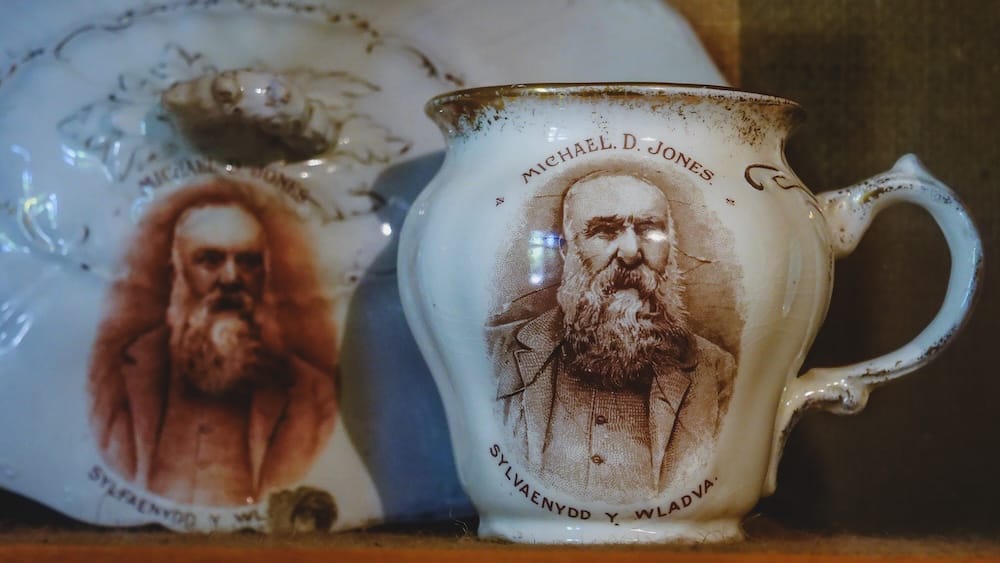
To understand the physical landscape of the towns you are about to visit, you have to understand the foundational lie that brought them here. In the 1860s, a Non-conformist minister named Michael D. Jones watched Welsh immigrants pour into the United States, only to rapidly assimilate and lose their native language to English. He wanted a “Little Wales beyond Wales”—a place so isolated that the Anglican Church and the English language couldn’t touch it.
He struck a deal with the Argentine government for 100 square miles of land in Patagonia. The organizers promised the settlers a lush landscape similar to lowland Wales.
They lied.
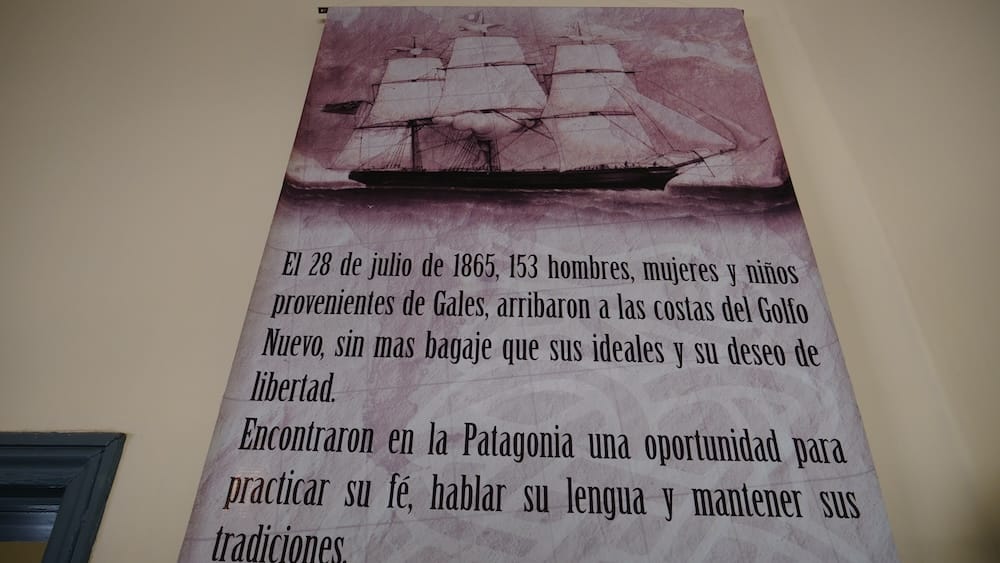
When the converted tea-clipper ship Mimosa landed at what is now Puerto Madryn on July 28, 1865, the 153 passengers stepped off into a freezing, waterless desert. Worse, these weren’t rugged pioneers. They were urbanites from the South Wales Coalfield—tailors, cobblers, and printers. Only four men on the ship knew how to farm. They had to walk 40 miles across the parched plain with a single wheelbarrow for their belongings just to reach the Chubut River.
By 1866, they were starving. The Welsh survival in Patagonia is entirely owed to two things that modern tours rarely emphasize. First, a peaceful, barter-based alliance with the indigenous Tehuelche people, who taught the starving urbanites how to hunt guanaco and navigate the steppe. Second, an act of sheer desperation in 1867, when a settler named Aaron Jenkins dug a ditch from the rising river. That desperate ditch became Argentina’s first agricultural irrigation canal network, transforming the desert into the fertile oasis you see today.
The Anatomy of an Exodus: What Drives a Miner to the Desert?
When you are standing on the parched outskirts of Gaiman, getting sandblasted by the Patagonian wind, you inevitably ask yourself: Just how bad were things back in Great Britain that this desert felt like a step up? The generic history plaques will tell you the Welsh came for “freedom.” The ground-level reality is much darker. The 153 passengers on the Mimosa weren’t just looking for cheap land; they were fleeing a systematic cultural assassination and an industrial meat-grinder.
By the mid-19th century, the South Wales Coalfield was booming, but the Welsh working class was trapped in a cycle of brutal, dangerous labor owned entirely by English landlords. But the true breaking point wasn’t economic—it was cultural. In 1847, the British government published the Reports of the Commissioners of Enquiry into the State of Education in Wales. History remembers this event as Brad y Llyfrau Gleision (The Treachery of the Blue Books).
The reports essentially concluded that the Welsh were ignorant, lazy, and immoral, and blamed it entirely on their Non-conformist religion and the Welsh language. English was violently forced into the schools. Children caught speaking their mother tongue were forced to wear a heavy wooden board around their necks called the “Welsh Not.”
They had to escape. But their first escape plan failed spectacularly.
[Samuel’s Historical Reality Check]
The most fascinating part of Y Wladfa is that Patagonia was actually Plan B. In the early 1800s, tens of thousands of Welsh immigrants fled to the United States, settling in places like Ohio and Pennsylvania. But Michael D. Jones, the architect of the Patagonia settlement, realized the American Dream was a cultural trap. The Welsh in America got rich, but within a single generation, they assimilated, married outside their communities, and started speaking English. Jones realized that if the Welsh language was going to survive, they couldn’t go to a land of opportunity. They needed to go somewhere so isolated, so remote, and so unforgiving that they would be forced to rely entirely on each other.
To fully understand the gamble these families took, you have to look at the exact options a Welsh coal miner faced in 1865:
The 1865 Survival Matrix: The Impossible Choice
| The Option | The Economic Reality | The Cultural Reality | The Catch |
| Stay in Wales | Trapped in the coalfields or tenant farming for English lords. | Systematic suppression. The “Welsh Not” enforced in schools. | Slow cultural extinction and generational poverty. |
| Emigrate to the USA | High wages in the booming Pennsylvania and Ohio industries. | Total assimilation. The language dies within one generation. | You save your family’s finances, but you lose your Welsh identity. |
| Gamble on Patagonia | Zero infrastructure. A barren, waterless desert 8,000 miles away. | Absolute isolation. A “Little Wales beyond Wales” governed in their own tongue. | You might actually starve to death in the first year. |
When you realize that the settlers of Gaiman and Trevelin actively chose the threat of starvation over the loss of their identity, the red-brick chapels and the 1914 railway tunnels take on a completely different weight. They didn’t come to Patagonia to get rich; they came to build a fortress. And when you sit down at Ty Te Caerdydd to order a slice of Bara Brith in 2026, you are eating the literal proof that the fortress held.
The Tri-Lingual Survival Glossary: Welsh, Patagonian, and Pure Logistics
There is a massive cognitive dissonance that hits you when you are standing in a dusty South American desert, using Argentine slang to navigate a bus terminal, just so you can go eat yeast-leavened British fruit loaf.
Y Wladfa is a linguistic collision zone. You do not need to be fluent in Welsh or Spanish to survive here, but if you rely strictly on Google Translate, you are going to get stranded at the Trelew terminal or miss out on the best cake in Gaiman.
To bridge the gap between the 1865 history and the 2026 ground-level reality, we built this tri-lingual triage ledger. Here is the exact vocabulary you need to navigate the infrastructure, avoid the tourist traps, and actually command respect from the local bus dispatchers.
The “Ground-Truth” Vocabulary Matrix
| The Phrase | Origin Language | Literal Translation | The “Nomadic Samuel” Ground-Truth Context |
| Cargar la SUBE | Argentine Spanish | “Load the SUBE” | The four most important words in Trelew. The SUBE is the national transit card. You cannot pay cash on the Route 7 bus to Gaiman. Say this at the terminal kiosko (convenience store) to load funds, or you are walking. |
| Ty Te | Welsh | “Tea House” | You will see this carved into wooden signs all over Gaiman and Trevelin (e.g., Ty Te Caerdydd or Ty Te Nain Maggie). It is your beacon for a 6-cake carbohydrate marathon. |
| Té Galés | Argentine Spanish | “Welsh Tea” | How you actually ask for the experience in the region. If you ask a taxi driver to take you to a “Ty Te,” they might look at you funny. Ask who has the best Té Galés, and they will immediately have a passionate, highly opinionated answer. |
| Bara Brith | Welsh | “Speckled Bread” | The legendary, yeast-leavened fruit loaf served at every authentic tea service. It is distinct from the Torta Galesa (the dense black cake). If a tea house doesn’t serve Bara Brith, politely leave. |
| Micro Cama | Argentine Spanish | “Bed Bus” | Micro means long-distance bus. Cama means full-flat bed. When you are booking that brutal 19-hour transit from Mar del Plata to Puerto Madryn, do not cheap out. Pay the extra $8-$10 USD for Cama over Semi-Cama, or you will arrive in terminal “zombie mode.” |
| Horario de Comercio | Argentine Spanish | “Commercial Hours” (Siesta) | The invisible force that ruined our Monday in Dolavon. From roughly 1:00 PM to 4:30 PM, these towns play dead. If you ignore this phrase, you will be eating gas station empanadas. |
| Eisteddfod | Welsh | “Sitting” (Festival) | The ultimate proof that Michael D. Jones’s dream survived. It is a massive festival of Welsh poetry, choir music, and arts held in Chubut every October. If you are here in the spring, this is the holy grail of cultural immersion. |
| Hay mucho viento | Argentine Spanish | “There is a lot of wind” | The Patagonian veto. When a local looks at the sky and says this, cancel your hike up Cerro de la Cruz. They aren’t talking about a breeze; they are talking about the kind of gale force that will physically blow you off the mountain. |
[Samuel’s Linguistic Reality Check]
Do not try to impress the locals in Gaiman by speaking European Spanish (saying “gracias” with a lisp). You are in deepest Argentina. Drop the “ll” sound and replace it with a “sh” (e.g., Calle becomes “Cah-shay”). Combine that distinct Patagonian accent with a cheerful “Bore Da” (Welsh for Good Morning) when you walk into Ty Gwyn, and the owners will immediately realize you aren’t just another day-tripper off a cruise ship.
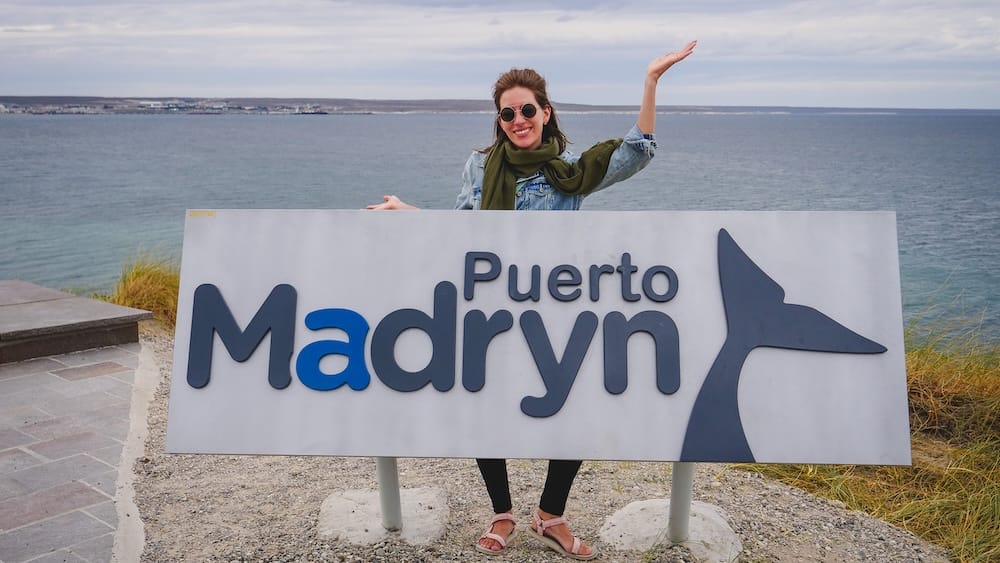
Basecamp Logistics: Puerto Madryn to Trelew
You will not find Welsh cottages at the landing site. Puerto Madryn is a functional coastal city and the primary launchpad for regional wildlife tours (penguins and whales). It is also where you should establish your basecamp if you want reliable infrastructure.
[The Foodie Reality Check]
While hunting for history, you still have to eat. After our zombie-mode arrival and a quick hotel switch to save a few hundred pesos, we dragged ourselves to Cantina el Náutico. We had been told it was an institution, so we arrived right at opening. The value here is absurd. We ordered the lunch special: a massive bread basket, an entree, a giant main dish, dessert, and a full bottle of wine. The total for two people, fully loaded? Exactly $29 USD. It was a seafood coma that instantly cured the 19-hour bus hangover.
From Puerto Madryn, your actual journey into Y Wladfa begins by moving inland to Trelew (named after Lewis Jones, one of the original scouts).
Trelew is the commercial hub of the lower valley. It is gritty, industrial, and highly functional. Do not book a romantic hotel here expecting a quaint village vibe; it is a working city. However, it holds two absolute non-negotiables. First, the Egidio Feruglio Paleontological Museum (MEF), which houses the Patagotitan Mayorum, the largest dinosaur ever discovered. Second, it is the transit artery to the actual Welsh villages.
If you are traveling independently, this is where the micro-logistics kick in.
The Solo Transit Transfer Disconnect
There is no direct public bus from Puerto Madryn to the Welsh heartland of Gaiman. Budget travelers often panic here and drop $40+ USD on a taxi. Don’t do that.
- Take the Mar y Valle or Vía Tac bus from Puerto Madryn to Trelew (approx. 1 hour, ~$9-$11 USD).
- Inside the exact same Trelew terminal, you must purchase and load a physical SUBE card (the Argentine transit card). The card costs roughly 85 ARS.
- Transfer to the local Empresa 28 de Julio bus for the ride into Gaiman.
Crucial Transit Hack: When boarding the 28 de Julio in Trelew, ensure you are getting on the bus taking Route 7, not Route 25. Route 7 is the scenic farm road that winds through the irrigated valley, showing you the exact agricultural miracle Aaron Jenkins created, rather than the barren highway. The ride costs less than $3 USD.
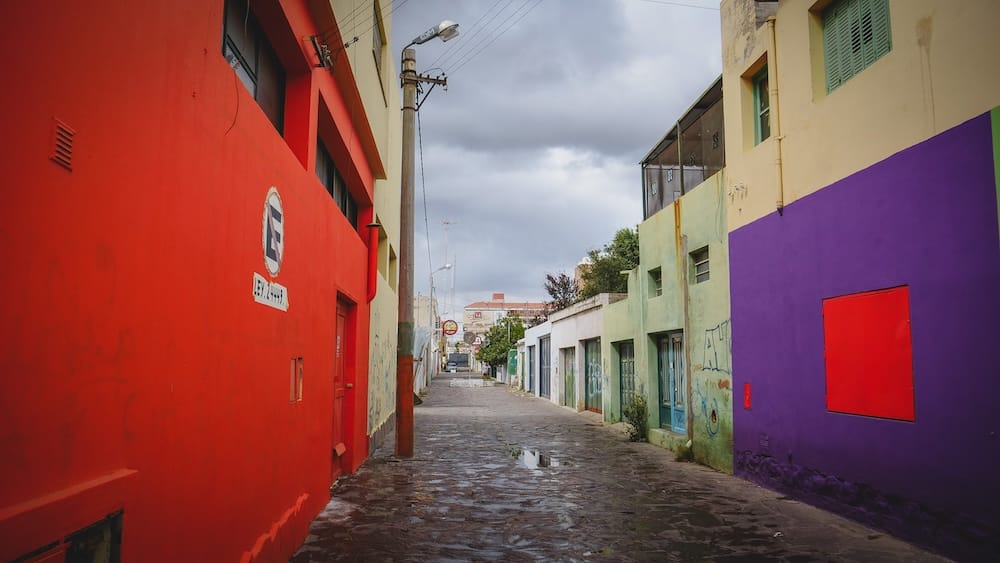
The Sunday Ghost Town Echo
Before we reach Gaiman, a massive logistical warning regarding the region’s pacing. The cultural rhythms here are strictly enforced. We woke up in Trelew on a Sunday morning, excited to grab coffee at the Hotel Touring Club (where Butch Cassidy famously hid out).
We stepped outside into an eerie, post-apocalyptic silence. If you are looking for a ghost town, try Trelew on a Sunday. Everything was padlocked. The cafes were dark. We eventually found sanctuary in a spot called Raices for Italian food, but the lesson was violently clear: Do not plan tight, multi-stop independent itineraries on Sundays or Mondays in this region. The infrastructure simply goes to sleep.
Y Wladfa Ground-Truth Data Matrix
| Location | Historical Significance | 2026 Logistical Reality | Entry / Transit Cost |
| Puerto Madryn | The 1865 Landing Site of the Mimosa. | Modern tourism hub. Best for lodging and seafood. | Basecamp. |
| Trelew | Named after Lewis Jones. The industrial engine. | MEF Dinosaur Museum opens at 10:00 AM. Sunday ghost town. | MEF Entry: ~$10–$15 USD. |
| Gaiman | The cultural heart. Irrigated red-brick village. | Walkable, but massive dust storms possible. Regional Museum is closed Tuesdays. | Trelew-Gaiman Bus: ~$1.50–$3 USD. |
| Trevelin | The 1880s Andean expansion. Lush mountain outpost. | 800km away. Requires a 9-11 hour overnight bus from the coast. | Esquel-Trevelin Taxi: ~$12-$13 USD. |
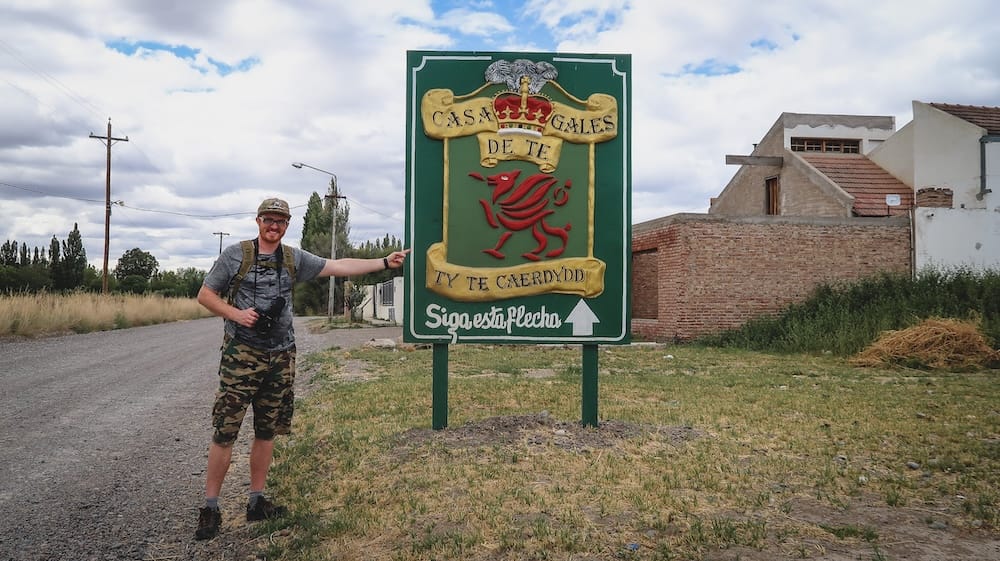
Gaiman: The Dust Blast and the Posh Panic
Gaiman is the beating heart of Welsh Patagonia. It is a tiny, highly walkable grid of red-brick houses, ancient chapels, and the very irrigation canals that kept the colony alive.
We hopped off the Route 7 bus and immediately headed for the Anthropological Museum, and then the old Central Chubut railway line, built in 1914. We wanted to walk the historic train tunnel. We envisioned a pristine, museum-like stroll. Reality had other plans. We walked into the deep, dark tunnel and were immediately blasted by a violent wind whipping massive clouds of Patagonian dirt directly into our faces. We emerged coughing, our clothes caked in a fine layer of brown grit.
Which made our next stop deeply problematic.
You cannot visit Gaiman without partaking in the Té Galés (Welsh Tea). It is the premier cultural export of the town. We navigated the dusty outskirts, passing Quinta Narlu (a lovely local farm), and finally arrived at Ty Te Caerdydd. This is the most famous tea house in Patagonia—the exact spot where Princess Diana had her tea in 1995.
We walked through the gates into impeccably manicured, lush green gardens. It was jarringly luxurious. There is a very specific kind of panic that sets in when you emerge from a dusty 1914 railway tunnel in the desert, walk into a plush British high-tea setting, and realize you are criminally underdressed and look like you’ve been living in a wheelbarrow.
[Samuel’s Tea House Triage Strategy]
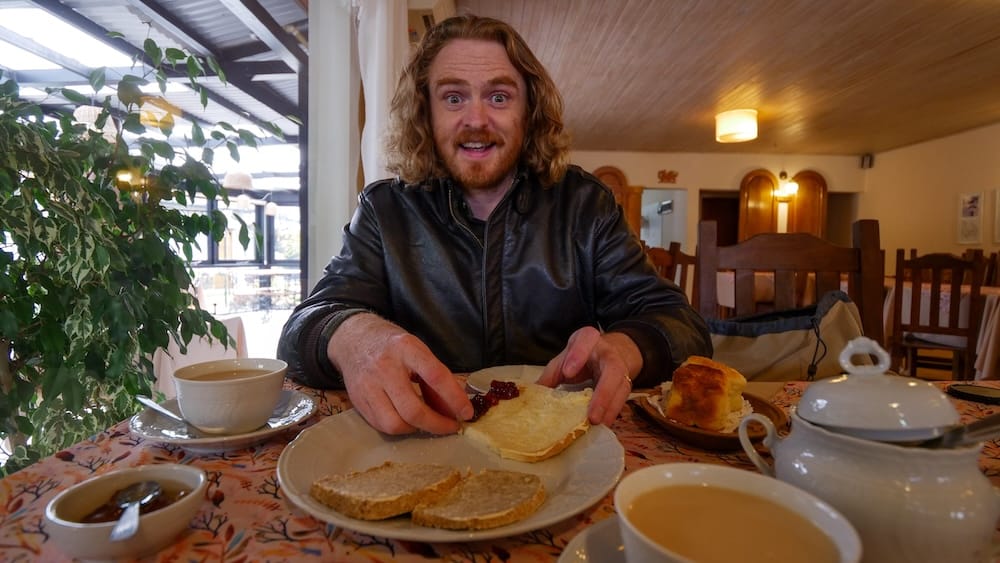
Do not let the fancy doilies fool you; this is an endurance eating event. A traditional tea service currently runs roughly $25–$30 USD per person (we paid $15 back in our earlier trips, but inflation is real). Most tourists treat this like a light cafe snack. It is not. They will bring you a gargantuan carbohydrate marathon: homemade bread, regional butter, scones, cream pie, apple pie, and the legendary Torta Galesa (a dense, black Welsh fruit cake that allegedly lasts for months without spoiling).
The Fix: If you are traveling as a couple, do not order two full tea services unless you are prepared to be rolled out of the valley. Ask to order one full tea service to share, plus an extra pot of tea. It saves you money and prevents tragic amounts of food waste.
The Big Four Gaiman Tea Houses (2026 Realities)
- Ty Te Caerdydd: The Princess Diana spot. Massive gardens, highly polished. Peak hours hit at 4:30 PM when the tour buses arrive from Puerto Madryn.
- Ty Gwyn: One of the oldest. Phenomenal homemade raspberry jam. A slightly more rustic, traditional feel. (We paid $14 USD per person here for a 6-cake spread).
- Plas y Coed: Intimate, beautiful setting.
- Nain Maggie (Trevelin): Note: This is in the Andes, not Gaiman. Do not try to day-trip here from the coast!
Crucial Timing Warning: Everything Welsh is closed in the morning. Do not rent a car and arrive in Gaiman at 10:00 AM. The famous Regional Historical Museum (housed in the old train station, packed with 3,000 pioneer artifacts for a $3 entry fee) doesn’t open until 3:30 PM. The tea houses open around 2:30 PM. Furthermore, the Regional Museum is strictly closed on Tuesdays. If history is your goal, plan your week accordingly.

Dolavon’s Monday Padlocks and the Gas Station Banquet
Further up the valley sits Dolavon, another Welsh outpost famous for its historic water wheels that churn the irrigation canals. It is smaller than Gaiman, quieter, and structurally beautiful.
It is also the site of our greatest logistical humbling.
In our upcoming destination guides, we constantly preach about checking local schedules. We failed to take our own advice. We arrived in Dolavon on a Monday during siesta time. We walked up to the small museum by the old railway station. Padlocked. We used our broken Spanish at a corner store to get directions to a highly recommended local bakery. Closed. We tried a restaurant called Sabores del Valle. Dark and empty.
You don’t truly understand Patagonian small-town logistics until the historic bakeries abandon you, and you find yourself wandering the dusty streets looking for caloric salvation. That is exactly how we ended up eating at the local YPF gas station.
It was the only establishment with a pulse. But this is Argentina, where even the gas stations command respect. We ordered a plate of freshly fried ground beef empanadas and baked ham-and-cheese empanadas. Accompanied by fries and soda water, the entire survival banquet cost us $4.75 USD. It was an absolute triumph of value. We sat by the petrol pumps, admired the water wheels churning the Chubut River in the distance, and laughed at the reality of travel. You come for the pioneer heritage, and you stay for the $4 gas station pastries.
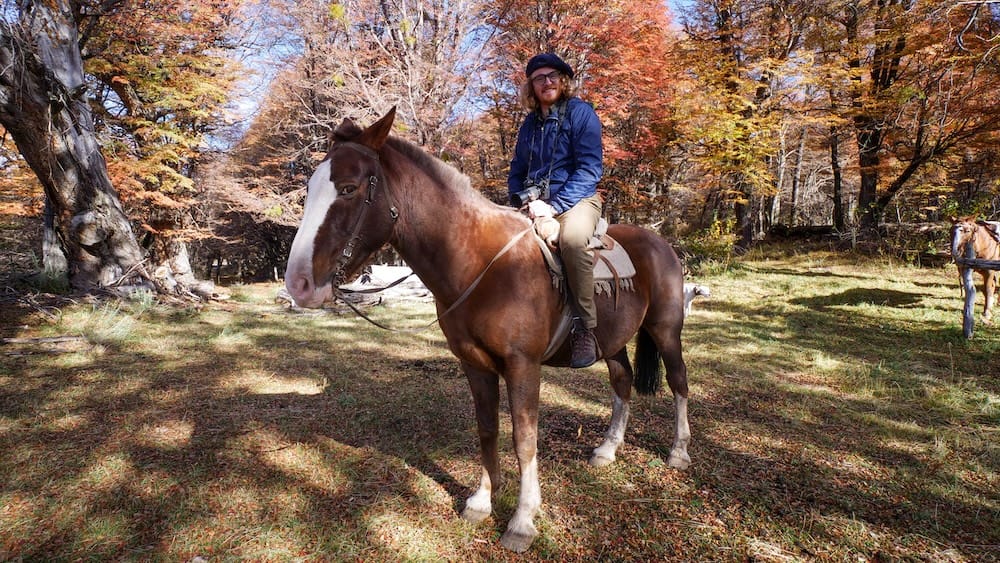
The Andean Outpost: Esquel and Trevelin
There is a massive geographical misconception regarding Y Wladfa. In the 1880s, the valley got crowded, and an expedition pushed west to the Andes mountains, founding Trevelin (Mill Town). Many travelers look at a map and assume they can see Gaiman and Trevelin on the same day.
You cannot. They are separated by over 800 kilometers of unforgiving desert.
To complete the Welsh circuit, you have to cross the province. We boarded a bus in Trelew at 9:00 PM and endured a brutal, 9-hour overnight grind across the steppe. We rolled into Esquel (the modern hub next to Trevelin) at 6:30 AM, instantly reverting to our familiar zombie mode, huddled in the bus station waiting for the sun to rise.
Esquel is a spectacular mountain basecamp, but nature rules here. The brochures will tell you that the hike up to Laguna La Zeta or Cerro de la Cruz right from downtown Esquel is an “easy day hike.” What they won’t tell you is that the Patagonian wind has absolute veto power. We hiked halfway up the mountain before the wind became so violently intense we had to physically turn around and retreat to the city for pizza.
The Sunday Taxi Hack
Esquel acts as your launching pad to Trevelin (about 20 kilometers away). But if you attempt this on a Sunday, you will hit the logistical friction wall again. The local buses between the two towns slow to an absolute crawl on weekends, leaving you stranded at the terminal while your precious daylight burns.
The Fix: Bypass the system. We walked outside, hailed a local taxi, and paid a flat $12–$13 USD fare to shoot straight into Trevelin. That $13 bought back an hour and a half of our lives, allowing us to hit the ground running.
Trevelin provides a jarring visual contrast to the eastern coast. Instead of arid dust, you are surrounded by lush, towering Andean peaks. The Welsh heritage here is distinct. We visited the Nain Maggie (Grandmother Margaret) teahouse for a spectacular afternoon tea, then walked the Costanera (boardwalk) along the Percy River.
But the true victory of Trevelin happened in the main square during a local artisanal fair. While exploring the stalls, we found a local vendor selling slabs of homemade torta de dulce de leche. It was a towering, decadent masterpiece. The price? $2 USD for a slice that fed both of us. It was the ultimate, value-obsessed foodie reward at the literal edge of the Welsh frontier.
The High-Altitude Logistics Matrix
| Attraction / Route | Logistics & Friction Points | Cost / Value Reality |
| Overnight Bus (Trelew to Esquel) | 9 hours. Bring layers; the AC is often freezing. | ~$36 USD. |
| Cerro de la Cruz Hike | Starts at 25 de Mayo street. Wind can be brutal. | Free. Effort: High if windy. |
| Esquel to Trevelin Transit | Sunday bus schedules are terrible. Use the taxi hack. | $12-$13 USD direct taxi. |
| Nain Maggie Teahouse | Opens 3:30 PM. Rustic, family-run feel. | ~$20 USD per person. |
| Trevelin Regional Museum | Andean Mill history. Great value. | $2 USD entry. |
The Y Wladfa Decision Matrix: Pick the Right Welsh Patagonia Experience for Your Trip
Not every traveler comes to Y Wladfa looking for the same thing. Some want the deep historical story. Some want tea houses and cake. Some want old railway tunnels and museums. And some want the full coast-to-Andes arc, which is a much bigger undertaking than most maps make it appear.
| Traveler Type | Best Base | Best Experience | Why It Works | Trade-Off |
|---|---|---|---|---|
| First-time visitor | Puerto Madryn | Day trip to Trelew and Gaiman | Easiest access to the Welsh heartland without overcomplicating logistics | You only see the lower valley version of Y Wladfa |
| History-first traveler | Trelew | MEF + Gaiman museum + tunnel + tea house | Best balance of logistics, museums, and historical infrastructure | Trelew itself is functional, not charming |
| Tea-house pilgrim | Gaiman | Afternoon Té Galés circuit | Gives you the most iconic surviving cultural experience | The polished tea-house setting can hide the harsher historical story |
| Budget independent traveler | Puerto Madryn or Trelew | Route 7 bus to Gaiman | Very doable without a car if you understand SUBE and bus transfers | Timing mistakes can derail the whole day |
| Deep-route completist | Trelew + Esquel/Trevelin | Full coast-to-Andes Welsh circuit | Best way to understand that Y Wladfa is not one town but a dispersed cultural geography | Requires overnight buses and more stamina |
| Scenic mountain traveler | Esquel | Trevelin + Nain Maggie + Costanera | Gives you the lush Andean contrast to the desert valley settlements | Easy to underestimate how far this is from the coast |
| Festival-seeker | Chubut in October | Eisteddfod + whales + tulips | The strongest possible season for cultural immersion | Requires more planning and tighter timing |
What Each Town Actually Means: The Y Wladfa Identity Matrix
One reason people misunderstand Welsh Patagonia is that they treat all the towns as interchangeable. They are not. Each one represents a different phase of the Welsh story.
| Town | What It Represents | Why It Matters |
|---|---|---|
| Puerto Madryn | The landing site | This is where the dream first collided with the desert |
| Trelew | The functional hub | Transit, commerce, and modern access to the Welsh valley |
| Gaiman | The cultural heart | Tea houses, chapels, canals, language, and preserved identity |
| Dolavon | The quieter irrigation outpost | A reminder that Welsh Patagonia was an agricultural system, not just a tea-house brand |
| Esquel | The mountain basecamp | Gateway to understanding the western leg of the story |
| Trevelin | The Andean expansion | Proof that Y Wladfa was not static; it pushed west and adapted again |
The Reality of Y Wladfa
There are pieces of this ecosystem we missed on our specific route—like taking the old Patagonian Express (La Trochita) deep into the mountains, or timing a trip for the massive October tulip bloom in Trevelin. But that is the beauty of Patagonia. It always holds something back.
Tracing the Welsh route across Argentina isn’t a passive vacation. It requires navigating broken Sunday transit schedules, taking a face-full of dust in century-old tunnels, and occasionally surrendering to gas station empanadas when the towns lock down for siesta.
But if you load your SUBE card, figure out the Route 7 bus schedule, and know exactly how to share a 6-cake tea service, you get to witness one of the most bizarre and resilient cultural anomalies on the planet. The Welsh didn’t just survive the Patagonian desert; they carved a home out of it with pickaxes, river water, and an absolute refusal to let their culture fade.
And frankly, the $2 dulce de leche cake at the end of the road makes the 19-hour bus rides entirely worth it.
FAQ: Why The Welsh Came To Patagonia
Is Welsh still spoken in Patagonia today?
Yes, but barely. You are not going to hear it shouted across the street. Out of the hundreds of thousands of people living in the Chubut province, only about 5,000 still speak Welsh fluently. It is mostly kept alive by the older generations and a few bilingual schools. You will see it on street signs and tea house menus, but your day-to-day survival language here is strictly Argentine Spanish.
Do I need to rent a car to visit the Welsh villages?
Nope. While having your own wheels gives you freedom, the public transit system is completely viable if you know how to use it. You can base yourself in Puerto Madryn, take the main bus to Trelew, load up an 85 ARS SUBE card, and ride the local Route 7 bus straight into the heart of Gaiman for under $3 USD. Just remember that the buses slow to an absolute crawl on Sundays.
How much does a traditional Welsh Tea cost in Gaiman?
Around $25 to $30 USD per person. That sounds steep for a cafe stop, but you have to understand this is not a light snack. It is an endurance eating event featuring scones, homemade jams, crustless sandwiches, and roughly six different types of cake, including the legendary Torta Galesa. Do what we did: order one full service to share, ask for an extra pot of tea, and save yourself from a massive sugar coma.
Can I do a day trip to Trevelin from Puerto Madryn?
Absolutely not. Do not look at a map and assume all the Welsh towns are clustered together. Trevelin is the Andean outpost, located over 800 kilometers west of the coastal settlements. To get there, you have to endure a 9-hour overnight bus ride from Trelew to Esquel (which costs about $36 USD). Treat the coastal towns and the mountain towns as two entirely separate legs of your itinerary.
Are the Welsh towns and museums open on weekends?
Hard no. The cultural rhythms in Patagonia are strictly enforced. Trelew turns into a desolate ghost town on Sundays, and the famous Regional Historical Museum in Gaiman is permanently locked on Tuesdays. Furthermore, smaller towns like Dolavon essentially shut down completely on Mondays during siesta time. If you don’t plan your itinerary around these closures, you will end up eating $4.75 gas station empanadas like we did.
When is the absolute best time to visit Y Wladfa?
October. This is the undisputed sweet spot. On the coast, October is peak season for whale watching in Puerto Madryn. In the Chubut Valley, it is when the Eisteddfod (the massive traditional Welsh poetry and music festival) takes place. And out west in the mountains, October is exactly when the massive tulip fields of Trevelin are in full bloom.
Is the food in Welsh Patagonia just tea and cake?
Not even close. The Té Galés is the famous cultural export, but you are still in deepest Argentina. Your dinners will be dominated by Patagonian lamb and incredible coastal seafood. We had a massive, multi-course lunch special in Puerto Madryn at Cantina el Náutico—including an entree, huge main, dessert, and a full bottle of wine—for exactly $29 USD for two people. You come for the cake, but you stay for the meat and wine.
Was the Welsh settlement of Patagonia peaceful?
Surprisingly, yes. Unlike the violent colonial narratives of North America, the Welsh arrival in Patagonia was defined by a peaceful, barter-based alliance with the indigenous Tehuelche people. The 1865 settlers were urban coal miners who had no idea how to survive in a waterless desert. The Tehuelche literally saved them from starving to death by teaching them how to hunt guanaco and navigate the harsh steppe environment.
Project 23 Argentina: This guide is also available in Spanish. [Lea la versión en castellano: Y Wladfa: Por qué los galeses dejaron Gales por la Patagonia (La verdadera historia)]