
Someone asked me this on a comment thread not long ago, half-hoping I’d talk them out of a rental car booking they hadn’t confirmed yet. The honest answer isn’t a clean yes or no, because “seeing Banff” without a car actually splits into three separate problems: getting there, getting around once you’re there, and handling whatever one big thing your trip is built around — a glacier, a lake, a multi-day trek into the backcountry. Solve all three without driving yourself, and you’ve got a genuine car-free visit. Solve only the middle one, and you’ve solved the easy part and left the two that actually decide whether the trip works.
What “Without a Car” Actually Has to Solve
I’ve done Banff two different ways that, put together, answer all three — a single fully guided day where I never touched a steering wheel, and a four-day trip where Audrey and I walked considerably more than either of us set out to. Neither was planned as any kind of car-free test. Looking back at both honestly, though, a car never did any of the work.
Getting to Banff Without Renting a Car
The part that actually trips people up isn’t getting around Banff. It’s getting to it. Calgary is the airport nearly everyone flies into, and Calgary is not Banff — there’s roughly two hours of highway between the two, enough distance that a lot of visitors assume a rental car is the only sensible way to close it.
Several shuttle companies run that exact route every day, year-round, straight to your hotel door rather than dropping you somewhere you then have to sort out on your own. Banff Airporter runs eleven departures a day and has been doing this specific run since 1997, which tells you it isn’t some seasonal side hustle — figure somewhere in the $70-to-$90 range one way, with your bags loaded for you and delivered right to your accommodation. Brewster Express runs on a similar rhythm, a coach roughly every ninety minutes, with round-trip fares that come in a little cheaper than booking each leg separately. A few smaller operators run the same corridor for less, sometimes considerably less during promotional periods. None of it requires a rental agreement, a car you have to return, or a parking spot to find at either end.
One correction worth making, since a few travel sites still get this wrong: a public option called On-It used to run a genuinely cheap bus between Calgary and the Bow Valley, somewhere around ten dollars, and it’s still recommended in places online. It isn’t running this summer. I’d rather say that plainly than have someone show up at a stop waiting for a bus that isn’t coming.
There’s also a wrinkle on the park-entry side that happens to work in your favor this year. Normally you need a park pass to be in Banff National Park at all, car or no car — it’s easy to assume that’s a driving fee, but it’s an entry requirement for the park itself. This year, though, for the second summer running, Parks Canada is waiving admission entirely from June 19 through September 7, no pass or registration required, for Canadians and visitors from anywhere else alike. Outside that window the usual entry fee applies, and parking, camping, and things like the hot springs still cost money either way — but the gate itself, for a few months a year, is free.
A Full Day With Zero Driving, Courtesy of a Guide — and the Accommodation Trap I Fell Into
The most thoroughly car-free day I’ve had in Banff wasn’t one I engineered on purpose. Audrey and I had booked a private guide for a multigenerational day with her dad and our daughter along, and once the tour started, neither of us touched a steering wheel again. Ros, our guide, handled every stop — Lake Louise, Moraine Lake, on into Yoho National Park — while I sat in the back doing absolutely nothing transport-related for the first time in longer than I could remember. If the only question is whether a car-free day can cover the highlights, a private or small-group guided tour answers it completely: someone else drives, someone else parks, someone else worries about the shuttle reservation, and you can compare a similar guided Banff–Yoho day tour to see what’s currently running on your dates. You just show up.
Where that same trip quietly undercut itself was in where we chose to sleep. We stayed at a two-bedroom suite in Harvie Heights, a small settlement just outside Canmore, and at the time it felt perfectly convenient — a few minutes from town, plenty of space for four of us plus a stroller’s worth of gear. What I didn’t clock until much later is that “a few minutes from town” meant Canmore, not Banff. The actual drive from Harvie Heights into Banff townsite runs closer to twenty minutes, and without a car or a private tour picking you up, you’re looking at a taxi to the nearest bus stop and then a regional bus ride — the better part of half an hour altogether just to reach Banff itself. Our guided day worked beautifully. But strip out the private pickup, and our own choice of accommodation would have quietly put a car back into the equation. It’s the one thing I’d do differently: touring without a car is easy to arrange, but where you sleep can undo that decision without you ever noticing it happened. If a walkable base in Banff townsite itself actually matters to your trip, it’s worth building that into the booking from the start — you can compare walkable hotels in downtown Banff rather than discovering the distance problem after you’ve already booked, the way I did.
Four Days, Mostly on Foot
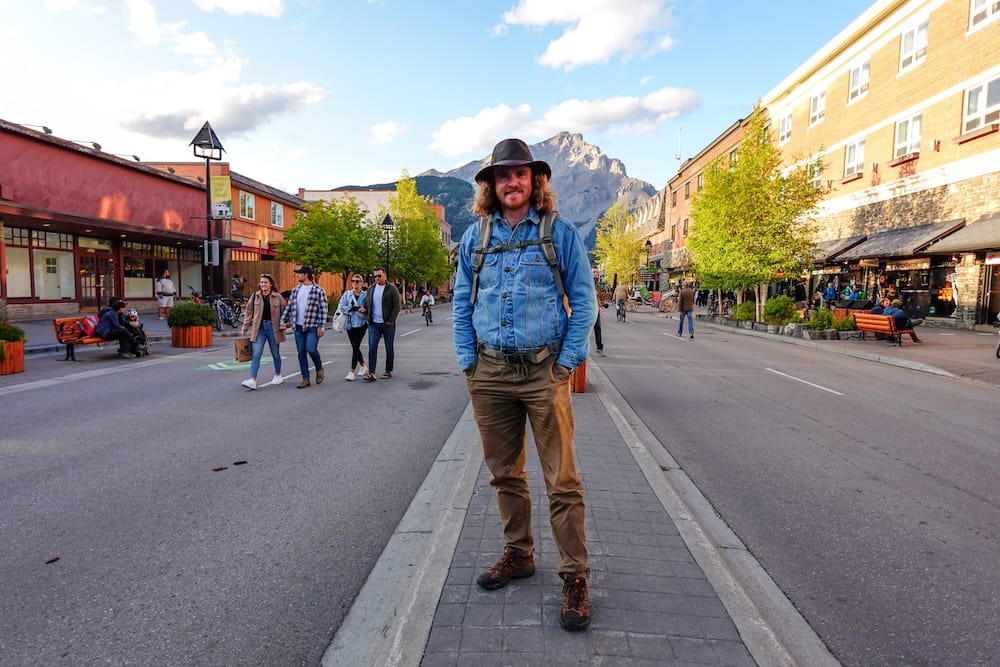
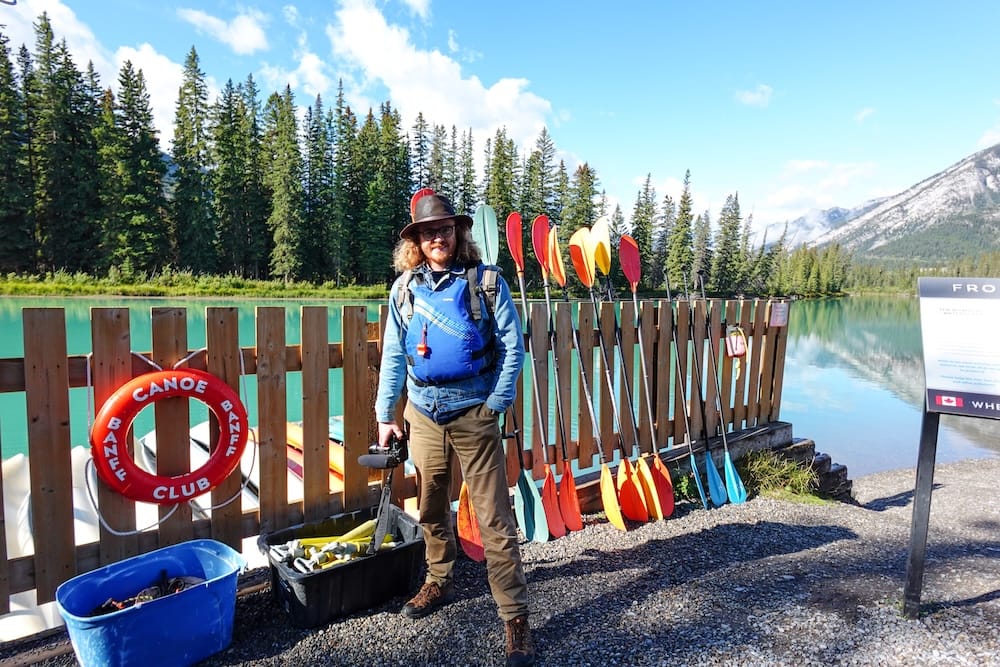
The trip that actually tested this, without either of us intending to, was a four-day stretch Audrey and I spent working through what we thought of at the time as Banff’s essentials — not as any kind of car-free experiment. Looking back at how we actually moved through those days, the pattern is hard to miss. We walked the Art in Nature Trail. We strolled to a café for a coffee break. We walked to the Banff Canoe Club to meet a tour. We crossed the Bow River bridge on foot to reach the Buffalo Nations Luxton Museum, and wandered a boardwalk near the base of the Gondola. Not once across any of it did either of us mention getting into a car, because we never needed to — everything on that list sits close enough together in town that walking was simply the obvious way to move between it.
The bigger pieces of that same trip — a day at the Columbia Icefield, a covered wagon ride and cookout, a canoe trip on water so glacially blue it barely looked real — were all things we’d booked ahead with a tour operator, who handled the getting-there part entirely. That reframes the whole car-free question, and I don’t think it gets said enough: most visitors, car or no car, aren’t driving themselves to something like the Icefield anyway. They’re booking it, the same way we did, and you can see current Columbia Icefield tour departures from Banff to check what a similar day looks like now. The dividing line was never “do you have a car for the big stuff.” It’s “do you have a car for the small, everyday stuff” — and for four straight days, walking answered that question for us without either of us noticing we’d answered it.
What that trip never tested, because there was no reason to, is how far Banff’s own public transit reaches beyond what we happened to walk to. It reaches considerably further. A local bus network connects downtown directly to the Gondola, out to Lake Minnewanka and a scatter of smaller lakes near it, and along a dedicated route to Johnston Canyon — none of which we personally rode, but all of which extend the exact same walk-in-town pattern to places our own trip simply didn’t have time for.
Reaching the Lakes and the Backcountry Without Your Own Car
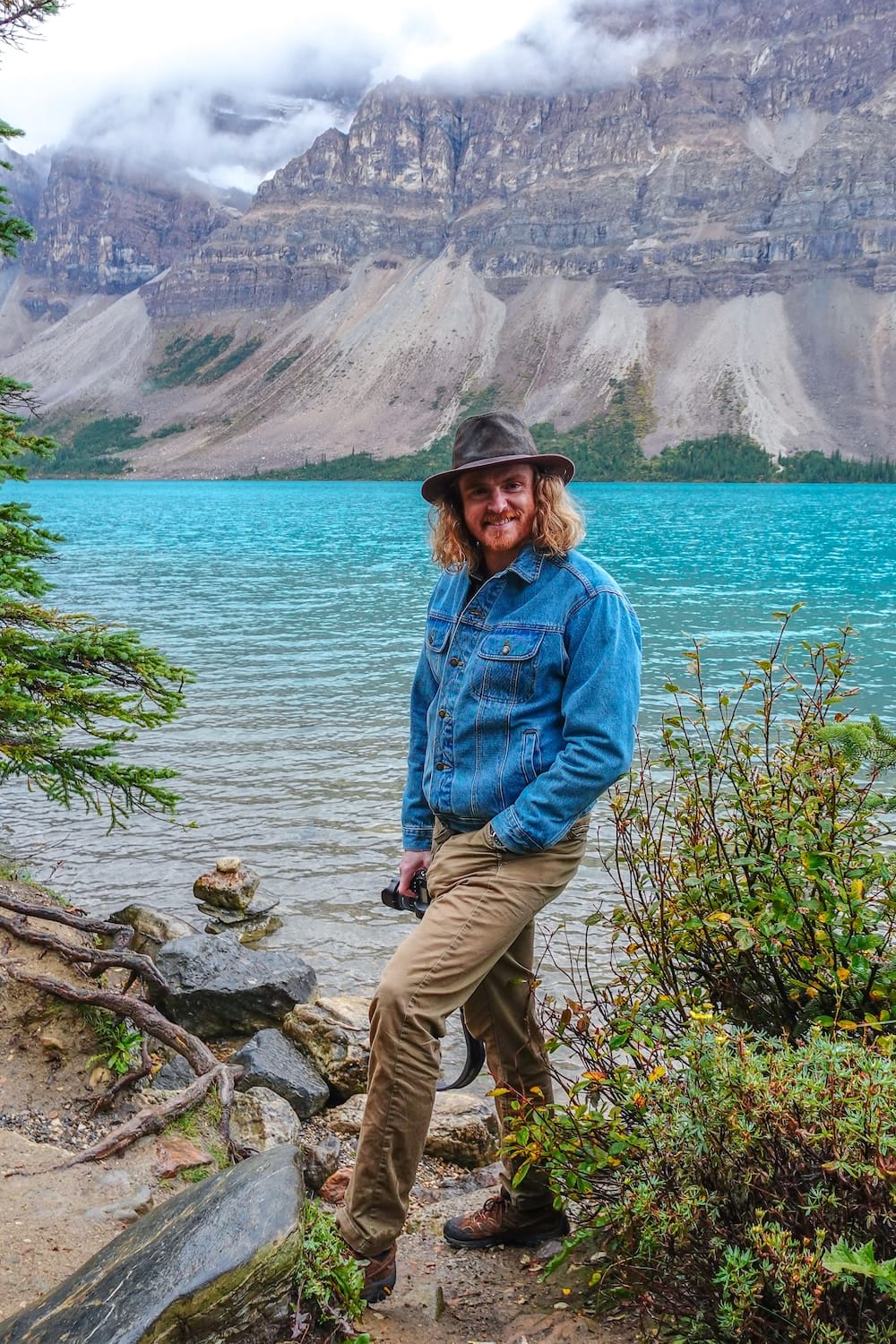
The two hardest cases for a car-free visit are the ones people usually ask about by name: the big lakes, and anything that sounds remotely backcountry. Both turned out to be more solved than I expected going into this.
Banff runs its own regional bus out to Lake Louise, and depending on the season and how many stops it makes along the way, the ride runs somewhere between forty-five minutes and an hour and a half. It’s worth reserving a seat during the busy summer months rather than counting on a walk-up spot. From Lake Louise, getting the rest of the way to Moraine Lake means transferring onto the connector shuttle that runs the final stretch up Moraine Lake Road, since that road has been closed to private vehicles since 2023 anyway — a detail I’ve gone into at much more length in a piece specifically about planning your days around that reservation system, so I won’t re-walk the booking process here. Banff’s own transit company also sells a bundled thirty-dollar pass that combines the ride out and the Moraine Lake connector into a single booking, which is tidier than piecing the two together yourself if you’re doing this car-free from the start.
The backcountry side turned out to be simpler than the lakes, if you’re willing to trade the driving for something more old-fashioned. Warner Stables, where Banff Trail Riders bases its horseback trips, sits close enough to downtown that it’s about a twenty-minute walk, or a five-minute drive with free parking on-site if someone’s dropping you off. I honestly have no memory of how I got there myself that first morning — I rode out on a six-day backcountry trip and a car simply never entered into the week that followed, before or after. Once you’re past the stables and into the mountains, whether you have a rental car back in town stops mattering entirely. There’s nowhere back there a car could take you anyway. If a shorter taste of that same backcountry rhythm appeals to you without the full six days, you can check dates for the 2-day backcountry lodge trip — same stables, same no-car reality, shorter commitment.
Walk, Ride, Book: The Strategy That Actually Works
Put the pieces together and the answer stops being a hedge. Arrival is solved — several shuttle companies run that two-hour Calgary route daily, door to door. Town-based sightseeing is solved twice over, once by our own walking on that four-day trip and again by a public bus network that reaches considerably farther than we personally did, out to the Gondola, Lake Minnewanka, and Johnston Canyon. The lakes are solved through a bus-plus-shuttle combination or a single bundled booking. Even the backcountry, which sounds like the hardest case on paper, came down to a twenty-minute walk to a trailhead rather than anything resembling a road trip.
Downtown Banff also has several bike rental shops, and each spring and fall — April 30 to June 25, then again September 1 to October 6 this year — a stretch of road out toward Johnston Canyon closes to vehicles entirely and belongs to cyclists and walkers instead. I haven’t ridden it myself, but it’s a genuinely useful extra layer if your dates line up with it, and you can browse current Banff bike tour and rental options to see what’s running.
The one real trap is the one I actually fell into: picking somewhere to sleep that quietly assumes you have a car, the way I did without realizing it. Get that one choice right, and the rest of it — the walking, the buses, the tours for anything big — takes care of itself. I’d go car-free in Banff again without a second thought. I’d just pick where I stayed with a lot more care than I did the first time.
Frequently Asked Questions
Can you actually visit Banff without a car?
Yes. Between a fully guided day that involved zero personal driving and a four-day trip spent almost entirely on foot, I’ve come away convinced that arrival, town sightseeing, the big lakes, and even the backcountry are all solvable without renting a car. The one thing that can quietly undo it is where you choose to stay.
How do you get from Calgary to Banff without a car?
Several shuttle companies run the roughly two-hour route from Calgary International Airport straight to your Banff hotel door. Banff Airporter runs eleven departures a day, and Brewster Express runs a coach about every ninety minutes, both year-round. A public option called On-It used to offer a cheaper alternative, but it isn’t operating this summer.
Do you need a park pass to enter Banff National Park?
Normally yes, car or no car, since it’s an entry requirement for the park itself rather than a driving fee. For the second summer running, though, Parks Canada is waiving admission entirely from June 19 through September 7, with no pass or registration required. Outside that window the usual entry fee applies, and things like parking and camping still cost money either way.
Can you reach Lake Louise and Moraine Lake without a car?
Yes. A regional bus connects Banff to Lake Louise, and from there a connector shuttle covers the final stretch up Moraine Lake Road, which has been closed to private vehicles since 2023 regardless of whether you’re driving or not. Banff’s transit company also sells a bundled pass that combines both legs into a single booking.
Is Harvie Heights within walking distance of Banff?
No, and this caught me out. Harvie Heights sits close to Canmore, not Banff, and the actual drive into Banff townsite runs closer to twenty minutes. Without a car, that means a taxi to the nearest bus stop plus a regional bus ride, the better part of half an hour just to reach Banff itself.
Do you need a car to reach the Banff Trail Riders stables?
No. Warner Stables, where Banff Trail Riders bases its horseback trips, is about a twenty-minute walk from downtown Banff, or a five-minute drive with free parking if someone’s dropping you off. Once the trail ride itself starts, a car has nothing left to do with the trip anyway.
Is downtown Banff walkable without a car?
Very much so. Across a four-day trip, Audrey and I walked to museums, a canoe club, and the base of the Gondola without once needing to drive, and Banff’s local bus network reaches considerably further still, out to Lake Minnewanka and Johnston Canyon.
This article is also available in Spanish. [Leé la versión en castellano: Banff sin auto: ¿se puede visitar y conocer los mejores lugares?]
This article contains affiliate links. If you book through one of these links, I may earn a commission at no extra cost to you.