
We didn’t arrive in Noboribetsu Onsen with Yuzawa Shrine circled on our itinerary. Audrey and I had come for the hot springs, volcanic scenery and walks through a landscape that sometimes looked as though it was cooking itself. Then, while wandering around town, we encountered a pair of enormous red and blue demons armed with spiked clubs, and a stone staircase heading uphill toward a shrine. That was enough to get our attention.
We decided to investigate, and I’m glad we did. The guardians were wonderfully quirky, the climb was worthwhile and we found a surprisingly peaceful spot above the onsen streets. The question is whether Yuzawa Shrine deserves a place in your own visit when Noboribetsu already has so much to see. I’d recommend it, particularly if you’re nearby, but with a few qualifications about time, tired legs and what you actually find at the top.
What Is Yuzawa Shrine in Noboribetsu Onsen?
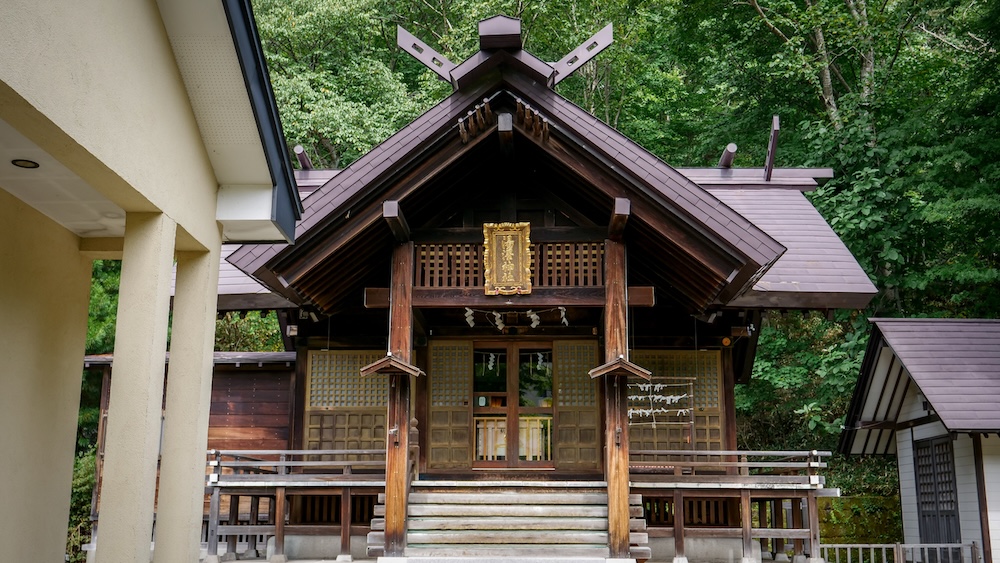
Yuzawa Shrine, or Yuzawa Jinja (湯澤神社), is a small Shinto shrine above the central hot-spring district of Noboribetsu Onsen in Hokkaido. It isn’t far from the main sightseeing area, but the shrine grounds sit up a flight of stone steps, away from the shops and hotels below. That’s part of what makes a visit feel different from simply walking along the town’s main streets.
It also has a connection to Noboribetsu’s earlier history. Kinzo Takimoto, a pioneer of the hot-spring town and founder of Dai-ichi Takimotokan, was involved in moving or re-establishing an earlier shrine here in 1858. The current shrine building dates to 1936. Those details give a little context to a religious site that could otherwise be overlooked amid the much louder attractions surrounding Hell Valley.
We hadn’t set out to study local shrine history, and I wouldn’t pretend that’s why we went. Yuzawa wasn’t on our main radar. We stumbled across it while exploring and thought it looked like an excellent add-on, which is often how the smaller discoveries happen when you have time to wander without racing between scheduled attractions.
The Red and Blue Demon Guardians
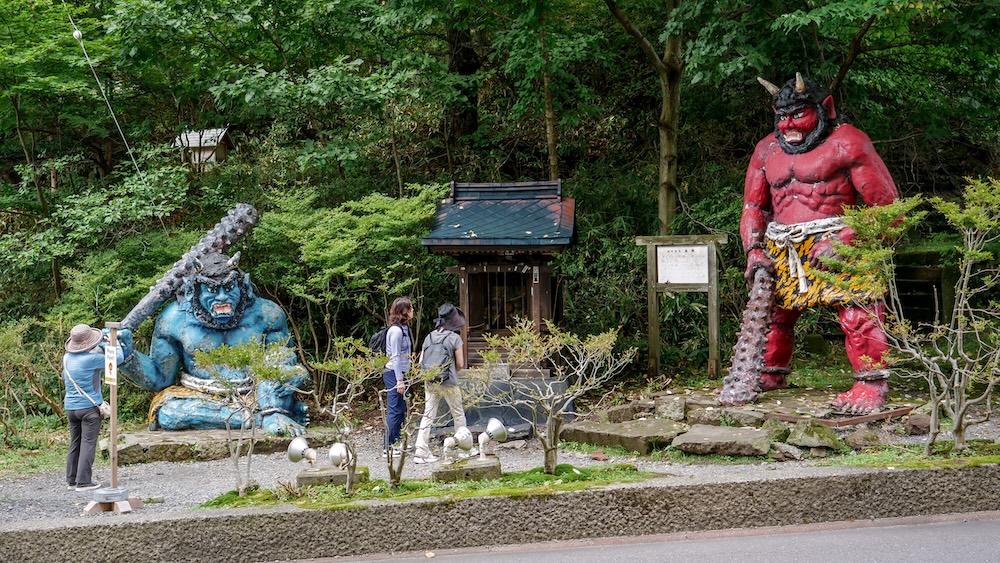
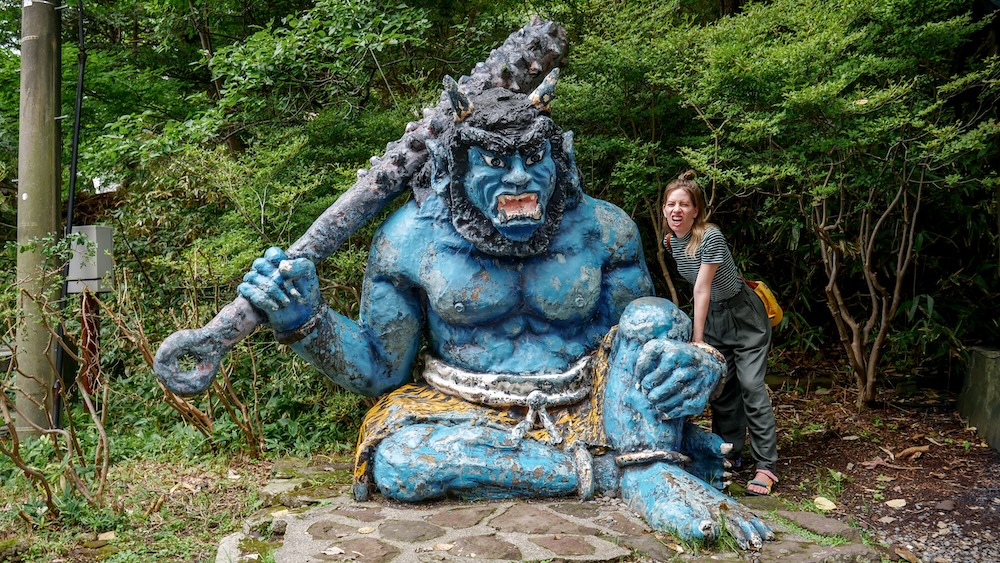
The first things that caught our eye weren’t actually at the top of the steps. Near the lower approach stand two colourful oni: a red demon standing upright and a blue one seated, both gripping rather unfriendly-looking spiked clubs. They’re fantastic landmarks. Noboribetsu already has a healthy obsession with creatures from the underworld, but I still thought these two were awesome.
The red oni stands 3.5 metres tall and the seated blue oni measures 2.2 metres. You aren’t looking at a couple of little decorative figures tucked behind a fence. The clubs, in particular, are something else. Bam Bam from The Flintstones would probably approve, although I suspect even he might think these guys have gone a little overboard with the spikes.
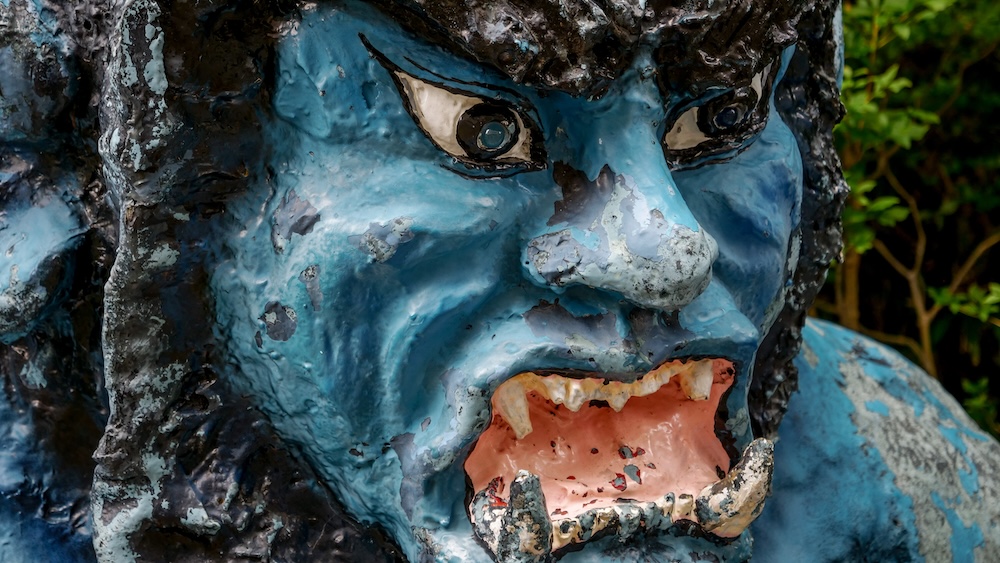
Here’s a distinction worth knowing before you visit: the demons are associated with a separate roadside attraction called the Demon Shrine–Nembutsu Demon Statue, or Oni-bokora. Its smaller enshrined Nembutsu Demon Statue is said to have been handed down since the Edo period; that doesn’t make the two huge, brightly painted figures themselves Edo-period relics. Yuzawa Shrine is the Shinto shrine reached by continuing up the staircase. They make a natural combined stop, but they’re not exactly the same site.
That’s useful if you’re travelling with somebody who can’t face any more stairs. You can still see the giant red and blue oni from the lower approach, take in the wonderfully odd demon theme and leave the uphill portion for another time. We chose to continue, and I’m happy we did.
Climbing the Stone Staircase to Yuzawa Shrine
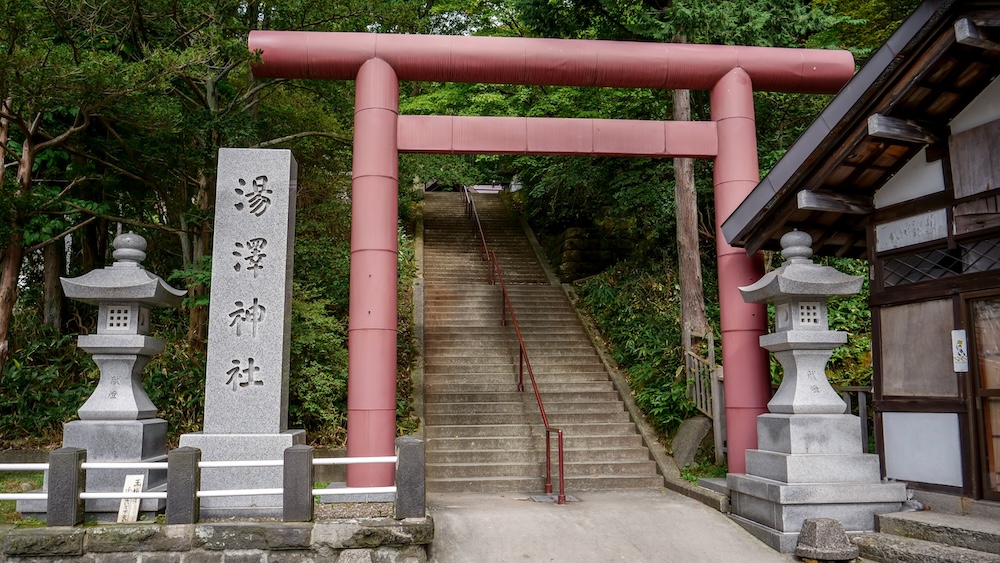
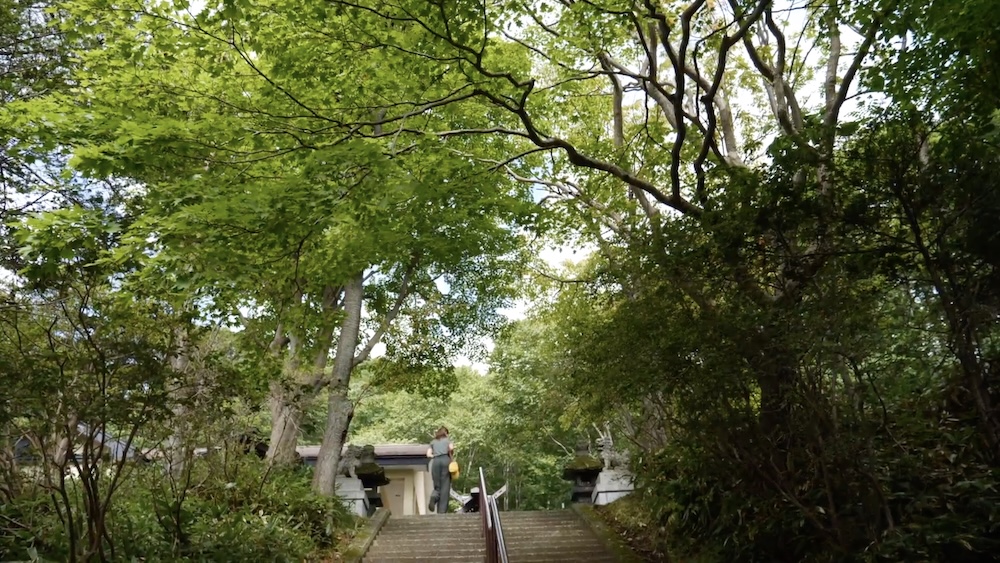
A red torii marks the approach to Yuzawa Shrine, followed by a steep stone staircase. From below, the steps look like a bit of an undertaking, but I didn’t find the climb overly challenging. It was absolutely worth the effort for us, and I wouldn’t want to make it sound like some heroic mountain expedition. You’re climbing to a small shrine, not setting off to conquer Mount Fuji.
Still, there’s an important difference between approaching those stairs fresh and arriving after you’ve spent hours exploring Noboribetsu. Audrey and I walked through Hell Valley and enjoyed the geothermal scenery and the Oyunuma River Natural Footbath during our stay. With all those paths and sightseeing stops, it’s surprisingly easy to spend your legs before you get to a smaller attraction. If that’s the case, you might find yourself dragging them up to Yuzawa Shrine. Hahaha.
I can only judge the effort from my own visit. Someone with knee problems, limited mobility or difficulty using stairs will have a different decision to make, and I wouldn’t assume there’s a step-free route to the upper grounds. Be cautious about the weather as well. We didn’t climb these steps in winter, and snow or ice would change the equation considerably.
A Peaceful Stop Above the Onsen Town
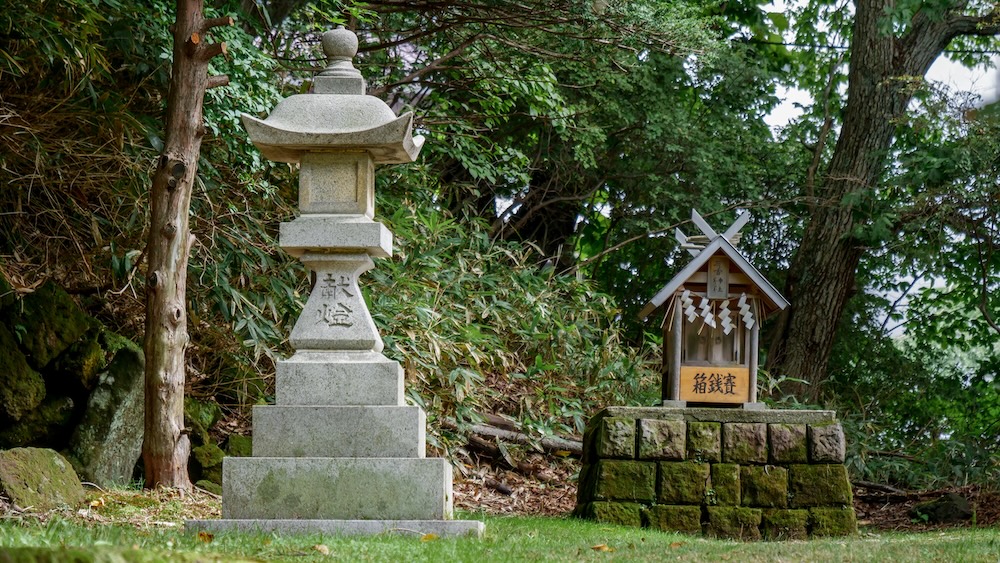
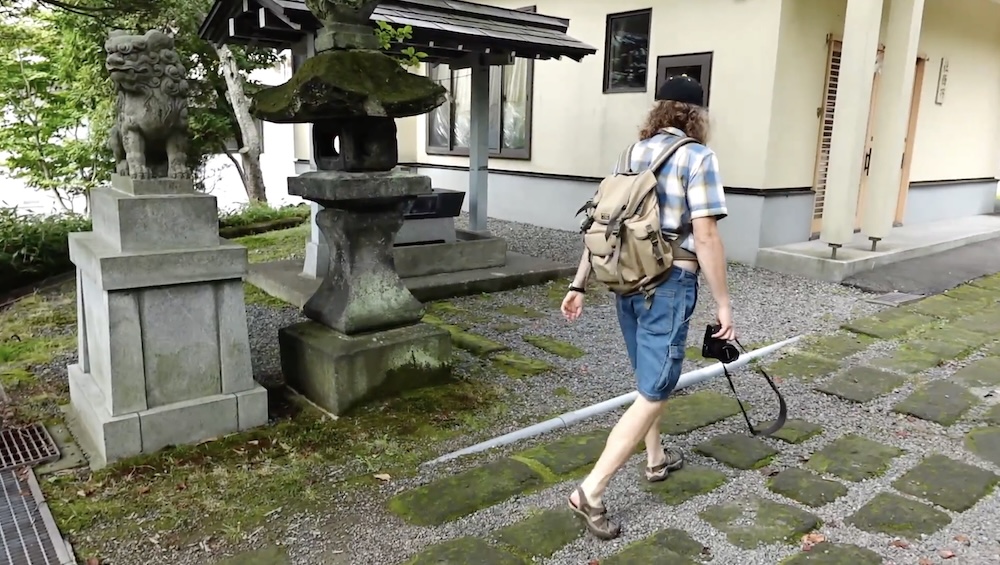
What I remember most about reaching the top is the change of atmosphere. Down below, Noboribetsu is a resort town with hotels, visitors, restaurants and a rather impressive collection of demon-themed attractions. Above the street, the shrine felt tucked away among greenery, and when Audrey and I visited, we had the whole place to ourselves. It was a pleasant reward for making that extra climb.
There wasn’t a performance to wait for or an elaborate sightseeing experience to complete. We could simply look around and enjoy the quiet, which was a nice contrast to the volcanic steam and activity we’d been experiencing elsewhere. Of course, we may have been lucky with our timing; finding the shrine empty once doesn’t mean you’ll be guaranteed the same solitude. What I can say is that we found it peaceful and enjoyed being there.
It’s also worth remembering that the upper grounds belong to a place of worship. I appreciated the setting without needing to turn it into a major cultural excursion, and I’d approach it with the same respect you’d give any shrine in Japan. The demons might have brought us to the staircase, but the quieter atmosphere was another reason to be glad we’d climbed it.
Where Is Yuzawa Shrine and How Do You Visit?
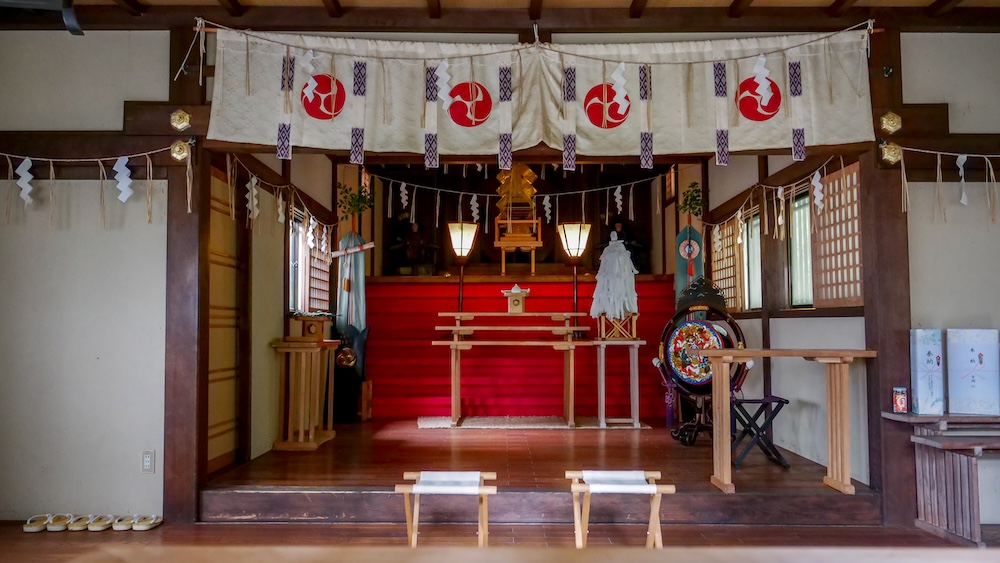
Yuzawa Shrine is at 106 Noboribetsuonsencho, Noboribetsu, Hokkaido, near Dai-ichi Takimotokan and the road toward Jigokudani Hell Valley. Look for the red and blue oni around the lower approach, then the torii and stone staircase leading up to the shrine. This is in Noboribetsu Onsen, the hot-spring district up the mountain, rather than beside JR Noboribetsu Station.
We explored this part of town on foot while staying a couple of nights at Park Hotel Miyabitei. Having an overnight base meant we could spend proper time at Hell Valley, enjoy the onsen and investigate smaller finds like this without squeezing everything into a single day. We enjoyed our stay there, and if you’re planning to do something similar, you can check current rooms and rates at Park Hotel Miyabitei. You don’t need to stay at our hotel to visit the shrine, but being based in the onsen district makes these little walks easier to fit around the main attractions.
The roadside demon display is listed as free, and ordinary outdoor visits to Yuzawa Shrine are generally free too. I wouldn’t assume that a staffed shrine service or access to every building will be available at a particular hour. Nor would I block off a whole hour by default: we didn’t time the visit precisely, and the sensible allowance depends on your pace on the steps and how long you want to linger. Think of it as a short detour that earns its place when you’re already in the area.
Is Yuzawa Shrine Worth Visiting? Our Verdict
Yes, I’d recommend it. Those big oni with their spiked clubs are worth a look on their own, I enjoyed the climb and having a peaceful shrine above town almost entirely to ourselves was a lovely bonus. I’d visit again if I happened to be exploring nearby, but I wouldn’t rearrange the day or sacrifice a major Noboribetsu experience to make it happen.
Hell Valley, the natural footbath, the geothermal walks and the hot springs themselves were the reasons our time in Noboribetsu was so memorable. Yuzawa Shrine added a little more character to the trip without needing to compete with any of them. If you’ve got time and legs left, climb the steps and enjoy it. If you’ve already done all the walking your body is willing to tolerate, say hello to the demons downstairs and carry on. Not every good travel memory has to be the main event.
Frequently Asked Questions
Where is Yuzawa Shrine in Noboribetsu Onsen?
Yuzawa Shrine is at 106 Noboribetsuonsencho, near Dai-ichi Takimotokan and the road toward Jigokudani Hell Valley. Look for the red torii gate and stone staircase in the onsen district, not beside JR Noboribetsu Station.
Are the red and blue oni statues part of Yuzawa Shrine?
The colourful guardians stand at the lower approach and belong to the separate Demon Shrine–Nembutsu Demon Statue attraction, also called Oni-bokora. Yuzawa Shrine itself is the Shinto shrine up the stone steps.
Is Yuzawa Shrine free to visit?
The roadside demon display is listed as free, and ordinary outdoor visits to Yuzawa Shrine are generally free too. Do not assume staffed services or access to every building will be available at a particular time.
Is the staircase to Yuzawa Shrine difficult?
The stone staircase is steep, but I found the climb manageable and worthwhile. It could feel more demanding after exploring Hell Valley, and visitors who have difficulty with steps should take that into account.
How long do you need at Yuzawa Shrine?
I would treat it as a short addition to a walk around Noboribetsu Onsen rather than reserving an entire hour by default. We did not time our visit precisely, so allow for your own pace on the staircase and time to look around.
Is Yuzawa Shrine worth visiting if you only have a few hours in Noboribetsu?
I enjoyed the demon guardians, the climb and the peaceful shrine, but I would prioritize Hell Valley and the main hot-spring experiences first. Visit Yuzawa Shrine if you are nearby and still have time and energy.
This guide is also available in Spanish. [Leé la versión en castellano: Santuario Yuzawa: guía y reseña de sus demonios guardianes y un rincón tranquilo en Noboribetsu Onsen]
This article contains affiliate links. If you book through one of these links, I may earn a commission at no extra cost to you.