
El Chaltén is where we showed up in full foodie mode and immediately got invited to a high-altitude reality check: the trails start in town, the views are outrageous, and a “short hike” has a funny way of stretching into an all-day mission that ends with you eating dinner like you just survived something.
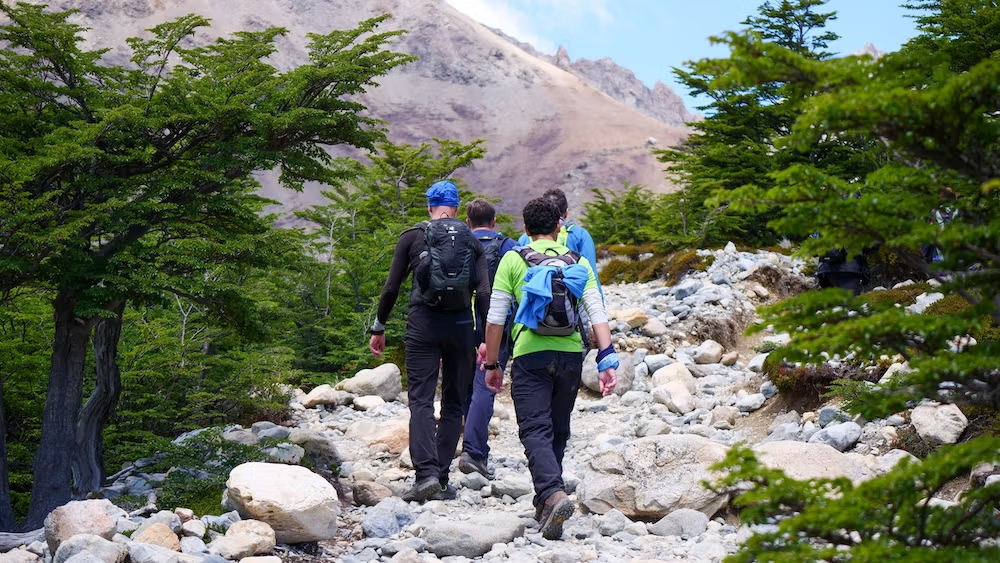
We love this place. We also made a bunch of very normal, very human mistakes on our first visit—some funny (the kind of funny that becomes funnier once your quads stop vibrating), some costly, and a couple that taught us Patagonia doesn’t care about your itinerary, your ego, or your “but my phone says it’s sunny.”
This guide is a friendly, practical, slightly sarcastic safety rail for your first trip. It’s built for real people who want big scenery without big regrets—and it’s written like we’re chatting over a post-hike burger while pretending we’re not in a food coma.
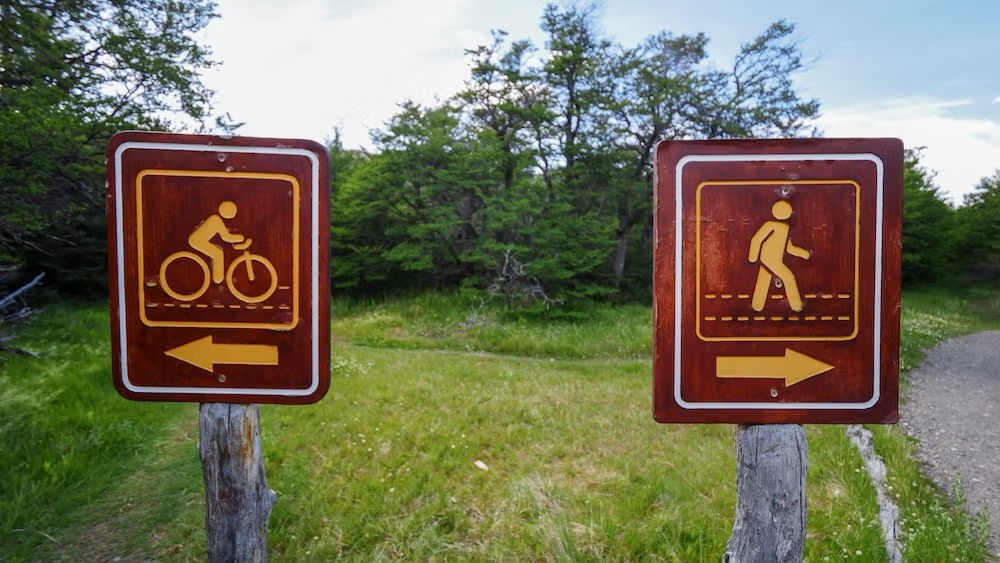
The quick-start “don’t be us” checklist
If you read nothing else, read this:
- Dress for four seasons even if it’s “summer.”
- Start early for the big hikes. Patagonia loves surprise weather.
- Download maps offline and assume your phone will become a decorative brick.
- Bring snacks (and don’t count on the grocery store to save you).
- Pace your week: don’t do your hardest hike on Day 1 unless you enjoy walking like a cardboard robot.
- Use trekking poles for the steep stuff (your knees will send you thank-you notes).
- Respect the trail: wind, exposure, and fatigue are the real bosses.
- Build a bailout plan for every hike (turnaround time + “what if this goes sideways?”).
We’ll unpack all of that—properly—below.
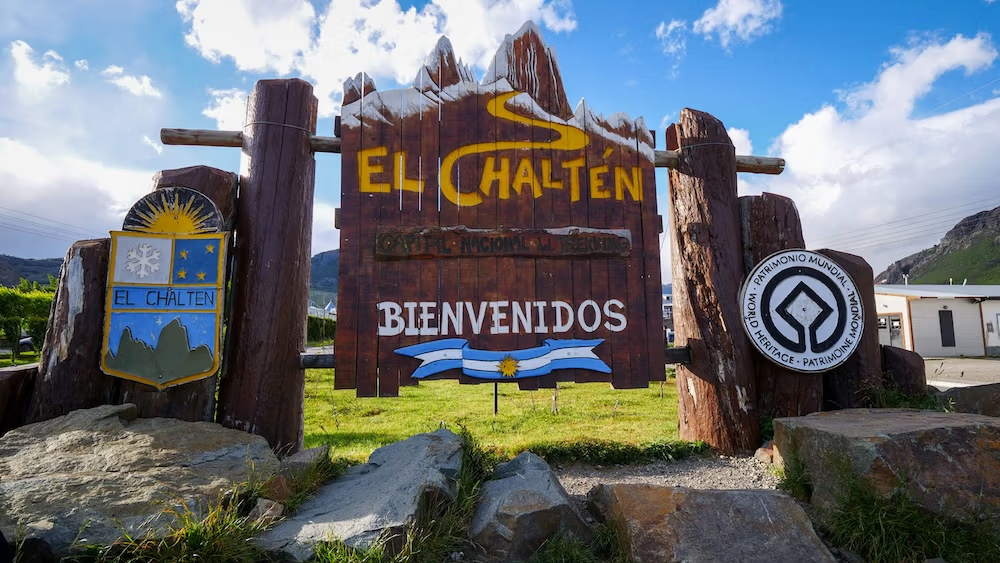
🧾 Quick Booking: Your El Chaltén Travel Essentials 🥾✨
🎒 Your Travel Toolkit (Book These 4 Things)
| ✅ What to book | 💡 Why it’s worth it | 🔗 Quick link |
|---|---|---|
| 🥾 Tours & experiences | Easy way to lock in a glacier day, a Lago del Desierto adventure, or a guided option when weather turns moody | Browse El Chaltén tours on Viator |
| 🏨 Hotels & stays | El Chaltén sells out fast in peak season — booking early = better locations + fewer “only the priciest rooms left” moments | Find El Chaltén hotels on Booking.com |
| 🚗 Car rentals (optional) | Best for freedom days: Ruta 40 viewpoints, flexible timing, photo stops, and a smoother Lago del Desierto run | Compare car rentals in El Calafate (gateway to El Chaltén) on DiscoverCars |
| 🚌 Bus tickets | The classic El Calafate ↔ El Chaltén route is simple — but popular departure times fill up | Book El Calafate → El Chaltén buses on Busbud |
👉 One-click backup (reverse direction): Book El Chaltén → El Calafate buses on Busbud
El Chaltén first-timer reality check
El Chaltén is compact, walkable, and blessed with trails that are incredibly well-marked. It’s also remote, expensive compared to other parts of Argentina, and shaped by mountain weather that changes faster than our plans when we smell pizza.
Here’s the mental model that saves a lot of pain:
- You’re not “going on a hike.” You’re going on a weather window mission.
- You’re not “staying in a town.” You’re staying in a basecamp with limited supplies.
- You’re not “doing a famous trail.” You’re doing a trail that’s famous because it can humble almost anyone.
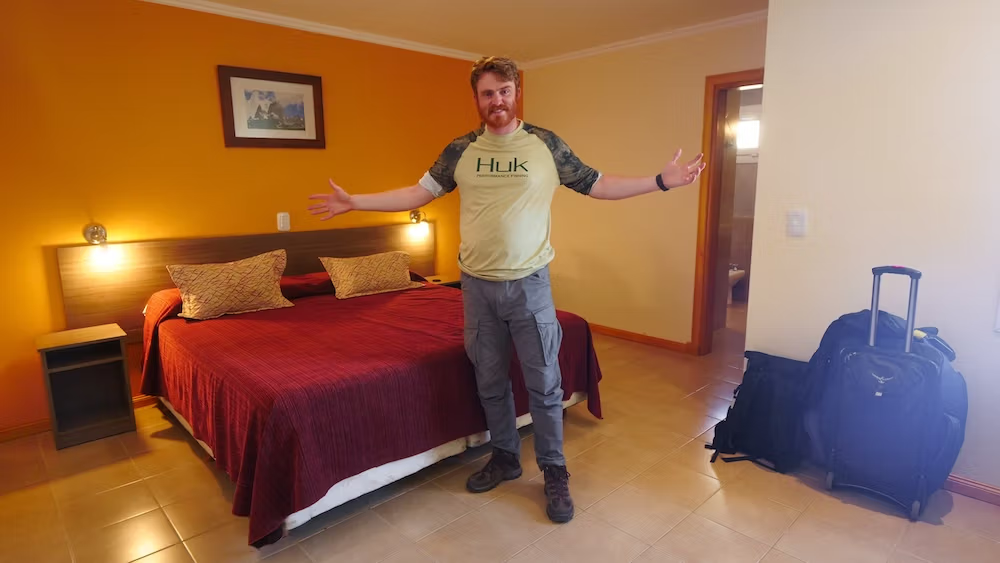
Our first-timer week in one sentence
We rolled in by bus, got the national park orientation and maps, discovered groceries were limited and pricey, realized Wi-Fi and data were…optimistic concepts, and then promptly tried to “win” El Chaltén by doing Fitz Roy. Spoiler: Fitz Roy won (but we loved it).
Mistake risk map: what actually bites people
| Mistake category | How often it happens | How painful it is | Why it sneaks up on you |
|---|---|---|---|
| Weather + clothing | Very common | High | “It’s summer” is a lie Patagonia tells for fun |
| Starting too late | Common | High | Long daylight tricks you into procrastinating |
| Fitness + pacing | Very common | Medium–High | You feel great…until kilometer 9 |
| Food + water planning | Common | Medium | Town is small; options feel “close enough” |
| Connectivity assumptions | Common | Medium | You assume you can “just look it up” |
| Gear (shoes/poles) | Common | Medium | You don’t know you need it until you really need it |
| Logistics (buses/rooms/cash) | Medium | Medium | Peak season fills fast; services can be limited |
| Trail safety + etiquette | Medium | High | One bad call can cascade quickly |
| Choosing the wrong hike for the day | Very common | Medium | You plan for Instagram, not for conditions |
| Not building recovery into your itinerary | Very common | Medium | Your body is not a rechargeable battery |
“Quick heads-up: the El Chaltén trail network sits inside Los Glaciares National Park (North sector) and there is an entrance fee system—check the official tariff page before you arrive because prices and payment rules can change.”
Now let’s get into the 10 big mistakes—and how to avoid every single one.
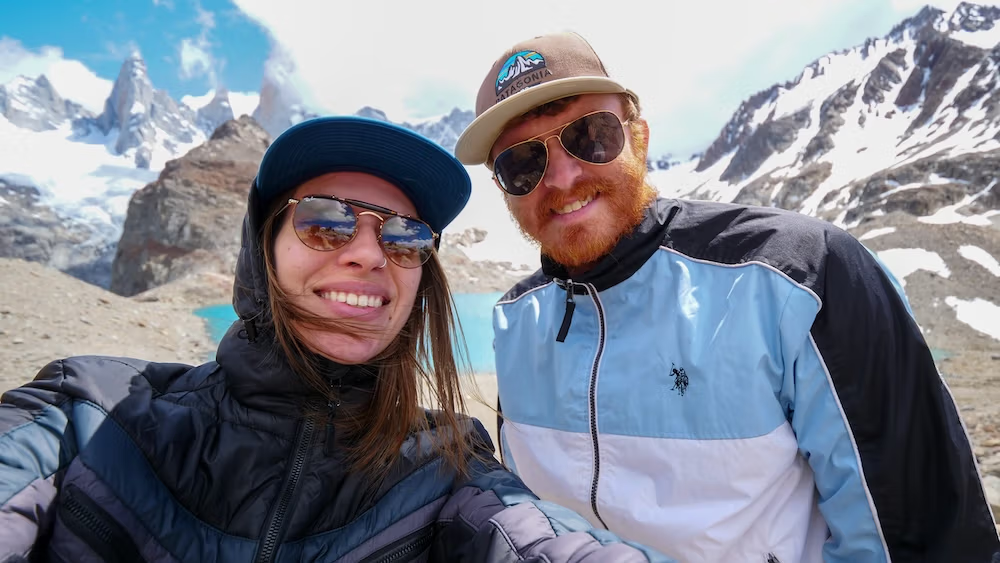
Mistake #1: Underestimating Patagonian weather (and dressing like it’s a beach holiday)
Why it happens: You see “December” and your brain goes: shorts, T-shirt, happiness. Then Patagonia goes: wind, clouds, temperature drop, and a light drizzle just to keep things interesting.
Because El Chaltén weather is less “forecast” and more “choose-your-own-adventure,” and the trail can move through multiple little microclimates in a single hike. It might be sunny and almost warm in town, then you climb a bit, the wind finds you, and suddenly you’re negotiating with your jacket like it’s a coworker who refuses to do its job. The sneaky part is that you can sweat on the uphill, feel invincible, and then get chilled the moment you stop at a viewpoint—especially when the wind turns “mild” into “why do I feel personally attacked?” Layering isn’t a fashion choice here; it’s a mood stabilizer.
What it costs you:
- A miserable hike where you’re cold, damp, and cranky
- Poor visibility (and you’ll feel cheated even though you weren’t)
- The classic error of skipping a hike because you’re not comfortable
- A higher chance of mistakes (cold brains make dumb decisions)
The Patagonia truth: it’s not just “cold” or “warm”
El Chaltén weather is a combo platter:
- Wind (the main character)
- Sun (surprisingly strong when it shows up)
- Cloud (can erase mountains like someone hit “mute” on the scenery)
- Temperature swings (morning and evening can feel like different seasons)
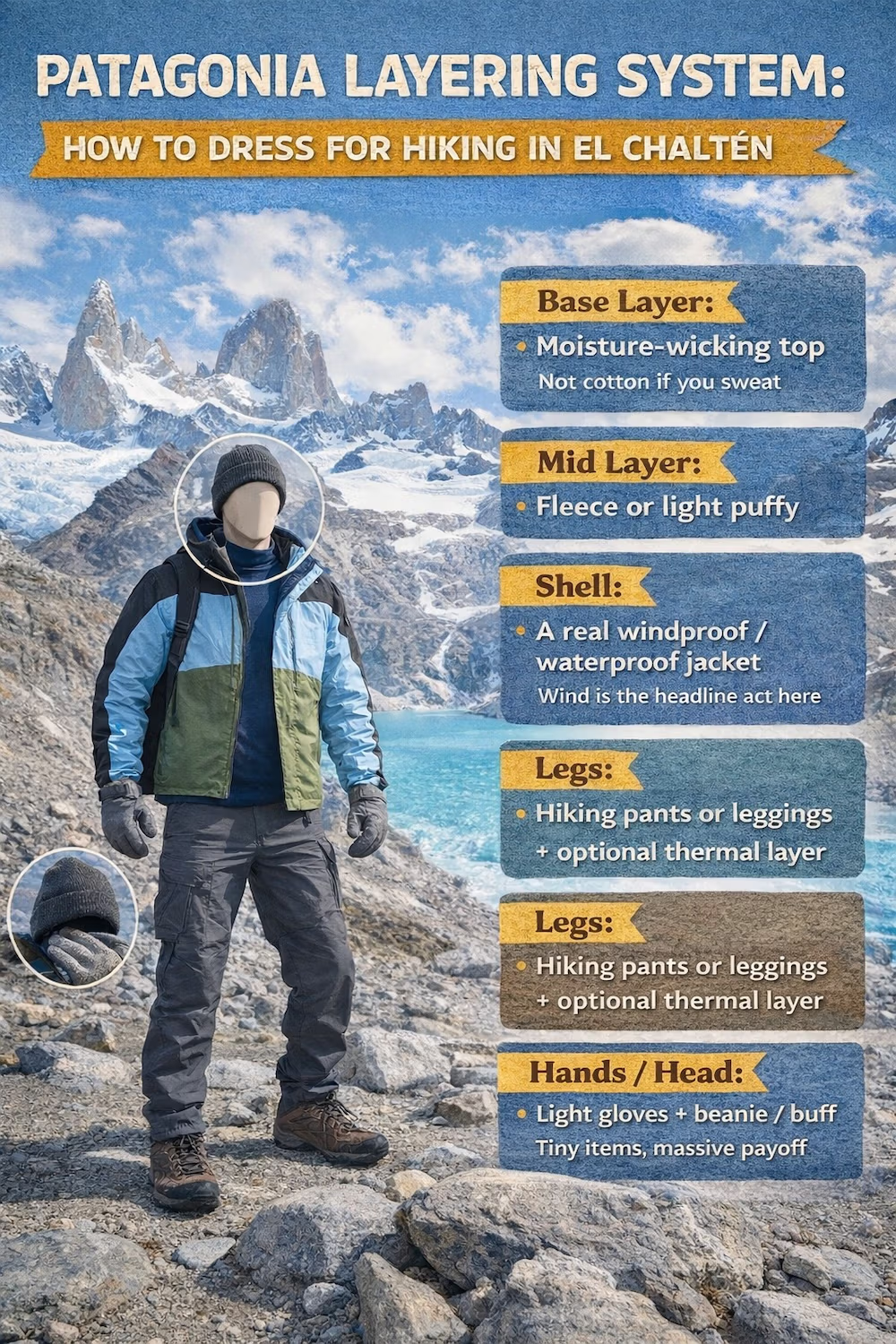
How to avoid it (the “Patagonia layering system”)
Think like you’re building a burrito: layers, baby.
- Base layer: moisture-wicking top (not cotton if you sweat)
- Mid layer: fleece or light puffy
- Shell: a real windproof/waterproof jacket (wind is the headline act here)
- Legs: hiking pants or leggings + optional thermal layer
- Hands/head: light gloves + beanie/buff (tiny items, massive payoff)
Tip: If you’re deciding between “extra snack” and “extra layer,” choose the layer. You can be hungry with dignity. Cold is a personality test.
Clothing decision matrix: what to wear on the trailhead
| Conditions in town | What it often becomes up high | Wear/carry this | Why |
|---|---|---|---|
| Sunny + calm | Sunny + windy | Shell in pack + buff | Wind arrives later like it owns the place |
| Cool + breezy | Cold + windy | Mid-layer + shell | Wind chill turns “fine” into “nope” |
| Overcast | Drizzle + gusts | Waterproof shell + gloves | Wet hands ruin everything |
| Warm midday | Cold descent | Extra layer in pack | You stop sweating and suddenly freeze |
What we learned the hard way
Even in “summer,” the wind can make mild temperatures feel sharp. Treat every hike like a forecast is a suggestion, and every viewpoint like it comes with an optional face-slap of wind.

Mistake #2: Thinking the long daylight means you can start whenever you feel like it
Why it happens: In December, daylight can feel endless. That kind of light makes you think, “We can start at 11. We’ve got time. We can eat more pizza first.”
The long daylight in summer makes El Chaltén feel forgiving—like you can take a slow morning, linger over breakfast, and still casually knock out a massive hike. That’s how Patagonia hypnotizes you. The problem isn’t time on the clock; it’s the way the day changes. Wind often builds, clouds roll in, and your pace slows when the trail gets steep, rocky, or crowded (or when your legs realize you’ve been hiking for six hours). Starting early isn’t “being intense”—it’s giving yourself buffer for the variables you can’t control, and room for the variables you absolutely can…like snack breaks.
What it costs you:
- You get stuck in a weather change late in the day
- Trails are more crowded mid-day
- You’re hiking back tired, late, and hungry (the deadliest combo)
- You lose flexibility (everything becomes “must continue” instead of “choose”)
The real reason to start early: options
Starting early isn’t about suffering. It’s about having choices:
- You can linger at viewpoints.
- You can add a side trail if you feel great.
- You can turn back without it becoming a crisis.
- You can get back to town with enough energy to enjoy dinner instead of collapsing into a bowl of noodles like a defeated goblin.
How to avoid it: the start-time rule
- Big hikes (Laguna de los Tres, Laguna Torre): start early (morning, not “late morning”)
- Short hikes (miradores, waterfalls): you can be flexible, but still watch the wind
- If weather is unstable: earlier is better because you’ll see how the day is trending
A simple “should we start now?” decision table
| If it’s… | And you’re doing… | Start time goal | Why |
|---|---|---|---|
| Clear + calm | Laguna de los Tres | Early morning | Beat crowds, maximize views, reduce risk window |
| Clear + windy | Laguna Torre / exposed viewpoints | Early | Wind usually strengthens later |
| Cloudy/unstable | Any long trail | Early or postpone | You want options, not a forced march |
| Rainy | Anything big | Don’t force it | Wet + wind + exposure = bad math |
| Your legs feel destroyed | Anything long | Later + shorter | Recovery day now prevents a ruined week |
Turnaround times: your secret superpower
Pick a time where you turn around no matter what—because “just a bit farther” is how people end up hiking back in poor conditions.
Tip: Long daylight is not permission to procrastinate. It’s a buffer—a safety net you hopefully never need.
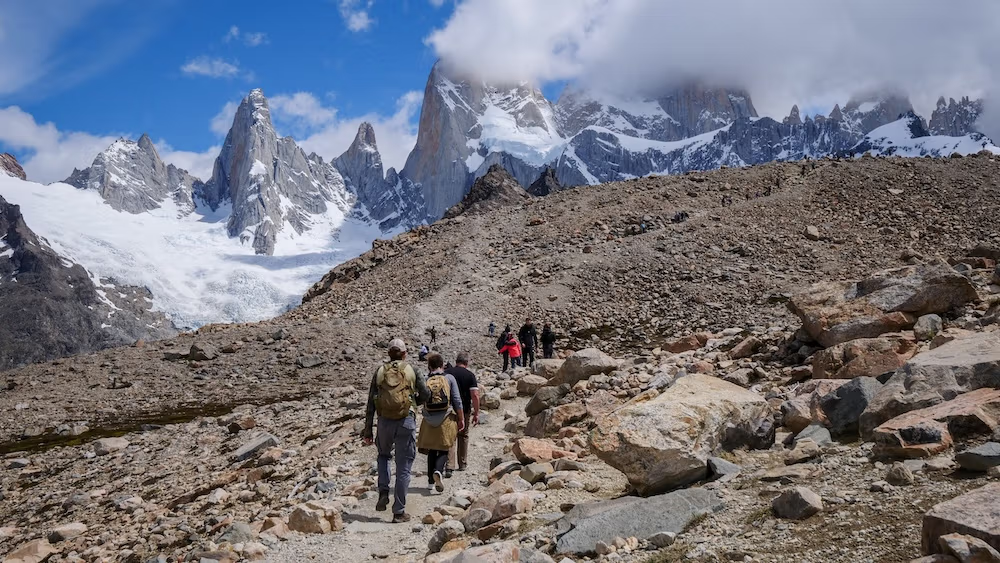
Mistake #3: Trying to “win” El Chaltén by doing your hardest hike on Day 1
Why it happens: You arrive excited. The forecast looks good. Fitz Roy is calling your name. And you want the big, iconic payoff immediately.
When you arrive, adrenaline is doing the planning. You’ve traveled all this way, the peaks are teasing you from town, and you think, “Let’s just do the big one immediately—how bad can it be?” (Famous last words.) We definitely had that energy—full foodie mode, big excitement, and an extremely optimistic relationship with our own fitness. But travel fatigue is real, your legs aren’t acclimated to long days on uneven terrain, and the steepest part of the iconic hikes often comes when you’re already deep into the distance. The smarter move is treating your first days like a warm-up.
What it costs you:
- You lose multiple days to soreness
- Smaller hikes feel harder than they should
- You’re more likely to get injured later in the week
- You start “negotiating” with yourself (and not in a cute way)
The honesty corner: “bulbous plumptitude” is not a training plan
We arrived in full foodie mode and not in peak hiking shape. That doesn’t mean you can’t do big hikes. It means you should:
- build up across your week,
- take a recovery day,
- and stop pretending one epic day won’t have consequences.
How to avoid it: the pacing strategy
Think of your trip like a playlist, not a single song. Build to the bangers.
The smart week rhythm (works for most first-timers)
- Day 1: easy mirador + town orientation (shake out the travel stiffness)
- Day 2: medium hike (or partial big hike)
- Day 3: big hike (best forecast day)
- Day 4: recovery + short walk + food (very important)
- Day 5: second big hike
- Day 6: bonus day / weather wildcard
Recovery day ideas that still feel like “travel”
- Mirador de los Cóndores (short, steep, huge payoff)
- Chorrillo del Salto (easy waterfall day)
- Coffee + bakery tour (we support this cardio-free culture)
- A slow scenic stroll around town with a camera and zero ambition
Tip: If you plan zero recovery, Patagonia will schedule one for you—by turning your legs into wood.
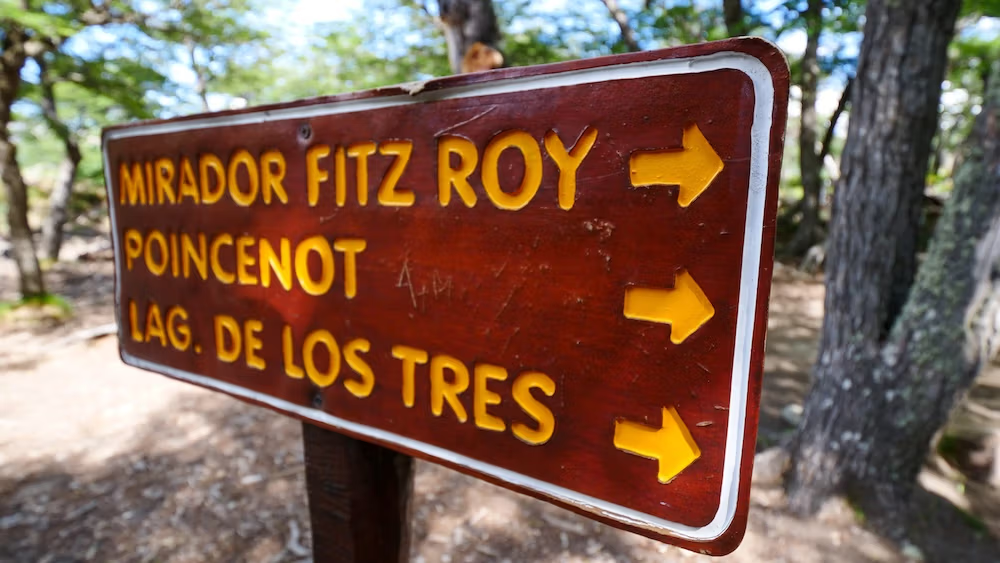
Mistake #4: Assuming you can figure out logistics on the fly (trailheads, forks, and “we’ll just wing it”)
Why it happens: El Chaltén feels simple. Trails are marked. The town is small. You assume you can stroll out and magically arrive at the trailhead.
El Chaltén feels straightforward: small town, clear trails, lots of hikers—so it’s easy to get casual and assume you’ll figure everything out as you go. That’s how you end up doing something wonderfully human, like forgetting the map in your room or walking an unnecessary extra chunk before you’ve even started the “real” hike. The bigger issue is that logistics mistakes add invisible fatigue: you waste time, your brain starts spinning (“are we going the right way?”), and suddenly you’re spending mental energy you’ll want later when the trail gets harder. A tiny bit of prep—screenshots, offline maps, and knowing the first landmark—keeps the day calm.
What it costs you:
- Extra walking before you even start hiking
- Wasted energy (and time) on a long day
- More stress at the exact moment you should be calm and focused
- “Are we even going the right way?” anxiety (which is exhausting)
How to avoid it: a 3-minute trailhead routine
Before you leave your accommodation:
- Screenshot the trailhead location (offline)
- Pack the map (paper or downloaded)
- Know your first landmark (like the main street direction and where the trail begins)
- Know your turnaround time (when you’ll turn back no matter what)
- Confirm the route type: out-and-back, loop, or combo
Forks and loops: don’t accidentally commit to the “boss fight”
Some hikes have loops and forks (like the options around Laguna Capri). Decide in advance whether you’re doing:
- an out-and-back
- a loop
- a partial + viewpoint
Fork decision helper: ask these 3 questions
- Do we have time to do the full loop comfortably?
- Are we carrying enough water/food for the longer option?
- Is the weather trending better or worse?
Tip: Your biggest mistake isn’t choosing the “wrong” option. It’s choosing without a plan and realizing it at kilometer 8 when “turn around” becomes emotionally expensive.
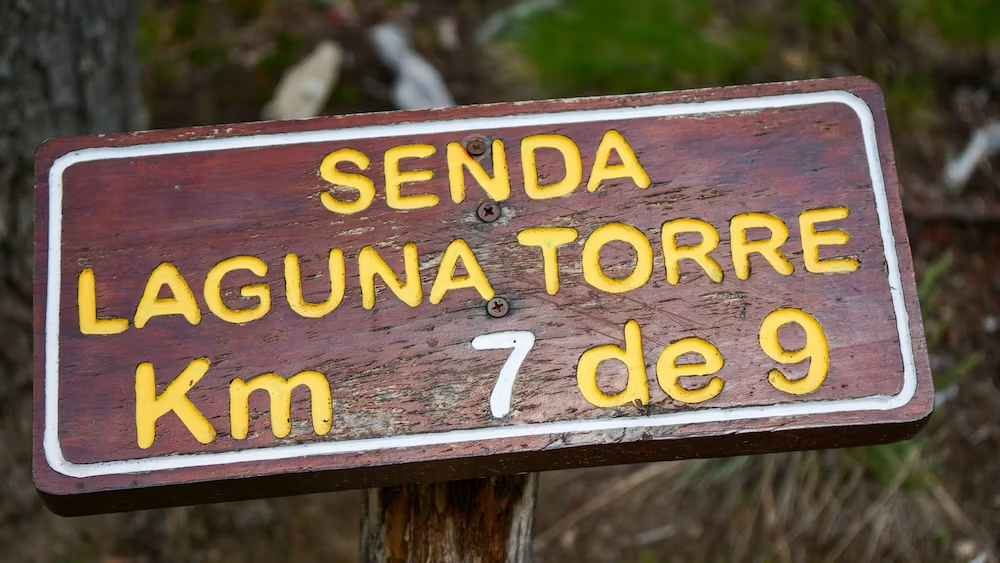
Mistake #5: Not using the kilometer markers as a pacing tool (they’re your secret weapon)
Why it happens: You see those markers and think they’re like trail décor. Like motivational yard signs for hikers. They’re actually a decision-making system.
Those kilometer markers aren’t just little confidence boosters—they’re a pacing system that lets you manage effort like an adult. Without them, people tend to hike on vibes (“this feels fine!”) until the final steep section arrives and reality files a complaint. With them, you can do simple math: how long did the last kilometer take, how do we feel, and what does that mean for the next big push (or the return)? They’re also perfect for decision points—like whether you stop at a viewpoint (Laguna Capri-style) or commit to the full boss-level finish. In Patagonia, good decisions are usually just good pacing wearing a smarter hat.
What it costs you if you ignore them:
- You overcommit early, then pay for it late
- You don’t pace snacks/water properly
- You push past a reasonable turnaround point because “we’re probably close”
- You arrive at the hard section already cooked
The “kilometer math” that keeps you honest
At each marker, note:
- Time now
- Time taken for the last kilometer
- Energy rating (0–10)
If your time per km is getting slower and your energy rating is sliding, you’re not “just warming up.” You’re spending your battery.
Micro decision matrix: continue, detour, or bail
| If you’re… | And it’s… | Do this |
|---|---|---|
| Feeling strong | Clear + stable | Continue or add a viewpoint detour |
| Feeling okay | Wind picking up | Continue only if you’re ahead of schedule |
| Feeling tired | Clouds building | Turn back early (future-you will applaud) |
| Feeling cooked | Any conditions | Bail with pride and eat something heroic |
Snack pacing table (because hunger makes people chaotic)
| Marker habit | What happens | Better habit |
|---|---|---|
| “We’ll eat when we’re starving” | Sudden bonk + grumpiness | Eat small snacks consistently |
| “Drink only at viewpoints” | You under-hydrate | Sip regularly, especially on climbs |
| “Save the good snacks for later” | You never eat them | Eat the good snacks when you need them |
Tip: A proud turnaround is not failure. It’s mountain intelligence.
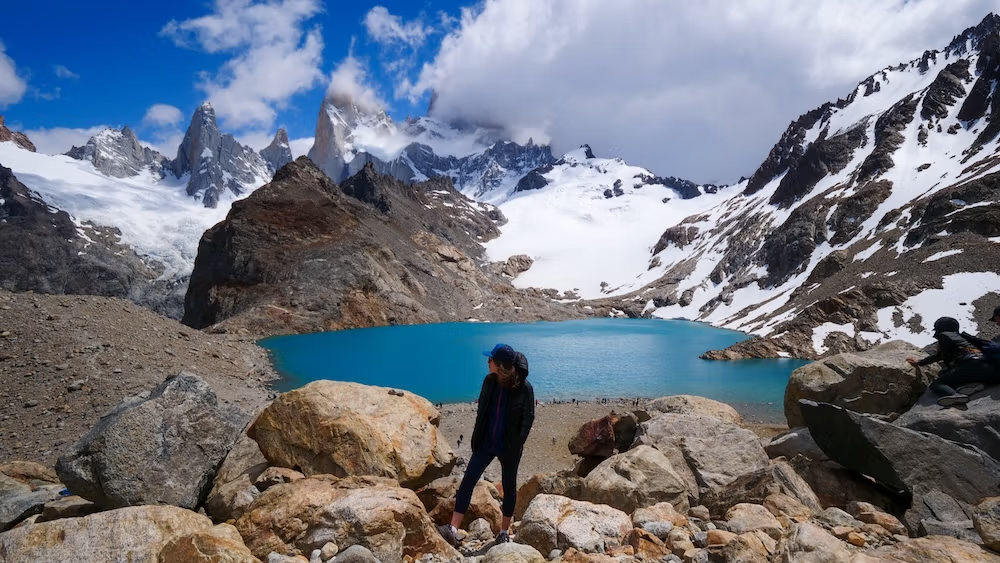
Mistake #6: Skipping the right gear for the steep bits (hello, Laguna de los Tres)
Why it happens: Most of the trail can feel manageable. You’re cruising, taking photos, calling everything “beautiful.” Then you hit the last kilometer to Laguna de los Tres and it becomes steep, rocky, gravelly, and mentally demanding.
A lot of El Chaltén trails lull you into confidence: the first hours can be steady, scenic, and totally manageable—so people think their shoes are “fine” and trekking poles are “for other people.” Then the terrain changes: loose gravel, steep switchbacks, rocky steps, and the kind of descent that turns knees into drama queens. The tricky part is that the hardest bit often happens when you’re already tired, which is exactly when stability matters most. Poles and proper footwear don’t just make it easier—they make it safer, especially on the way down when everyone’s legs are wobbly and their attention span is powered by the last granola bar.
What it costs you:
- Slower progress (and more fatigue)
- Higher slip/trip risk on the descent
- Knees that file a formal complaint
- A bigger chance you’ll rush (because you want it over), which is when people fall
What that last kilometer is really like
It’s not “hard” in a technical sense—no ropes, no climbing. It’s hard because it’s:
- steep
- loose underfoot
- tiring after many kilometers
- crowded, so you’re managing other people’s pace too
How to avoid it: gear that actually matters
- Footwear: proper hiking shoes with grip (not fashion sneakers)
- Trekking poles: especially for steep final climbs and long descents
- Water: enough for the full day (don’t underpack and “ration” like a sad camel)
- Wind protection: shell + buff/gloves
- Headlamp: yes, even in summer (weather delays are real)
- Blister kit: small, lifesaving
Gear impact table: what’s optional vs non-negotiable
| Gear | Optional? | Why you want it | When you’ll regret skipping it |
|---|---|---|---|
| Windproof shell | No | Wind turns “fine” into “miserable” | Anytime you stop moving |
| Hiking shoes | No | Grip + ankle stability | Steep gravel descents |
| Trekking poles | “Optional” until it’s not | Knee saver + stability | The final km up/down Laguna de los Tres |
| Headlamp | Smart | Late returns happen | Cloud + slow pace + long days |
| Gloves/buff | Smart | Heat retention + comfort | Windy ridges and viewpoints |
| Blister kit | Smart | Small fix prevents big pain | Hour 6 when your heel starts screaming |
Tip: Patagonia punishes fragile gear choices with very personal consequences.

Mistake #7: Treating food and water like an afterthought (and trusting the grocery store too much)
Why it happens: You arrive in town and think, “We’ll just stock up.” Then you meet reality: selection can be limited, prices higher, and you may find yourself celebrating apples like they’re rare gemstones.
El Chaltén is tiny, so first-timers assume food planning will be easy: “We’ll just grab groceries, throw together snacks, and go.” Then you meet the real-life version: limited selection, higher prices, and that moment where you find an apple and treat it like a luxury item. Add early starts and long hikes, and suddenly the “we’ll wing it” plan becomes “why are we hungry at kilometer five and emotionally attached to this single granola bar?” This is where lunchboxes (ordered the night before) can feel like a small miracle, and where carrying an extra snack isn’t overeating—it’s preventing the classic hike-ending bonk.
What it costs you:
- Fewer good snack options on the trail
- Spending more than expected
- Ending up under-fueled on a long hike (which feels awful)
- Making bad decisions because you’re tired and hungry
The grocery reality (and why it matters)
On our first evening, we grabbed groceries and immediately noticed how limited the selection felt. That matters because long hikes are basically a nutrition contest disguised as a scenic walk.
How to avoid it: food strategy for El Chaltén
- Bring a small “trail pantry” from your last big town if you can (nuts, bars, jerky, instant oats)
- Buy snacks early (don’t wait until the night before a big hike)
- Carry more than you think you need on long trails
- Plan for a real lunch, not “we’ll see what happens”
- Hydrate on purpose (don’t wait until your mouth feels like cotton)
Lunchboxes: the underrated El Chaltén hack
Many accommodations offer packed lunchboxes if you order the night before. It’s especially helpful if your accommodation doesn’t have a kitchen setup or you’re doing early starts.
Trail snack lineup: what actually works
| Snack type | Why it’s great | When to eat it |
|---|---|---|
| Nuts/trail mix | Calorie dense, easy | Small handful every hour |
| Chocolate | Morale booster | When wind steals your soul |
| Fruit | Fast energy + feels healthy | Mid-hike or at lagoons |
| Sandwich/wrap | Real lunch | Before the hardest section |
| Salty snacks | Prevent “I feel weird” | After long climbs or sweaty days |
Tip: Eat before you’re hungry, drink before you’re thirsty, and always keep one “emergency snack” that you never touch unless things go sideways.
Mistake #8: Assuming you’ll have reliable internet and mobile data (and planning like you’re in a big city)
Why it happens: We’re all used to instant everything. Maps, weather, booking, messages, “where’s the trailhead,” “is this restaurant open,” “can I upload this masterpiece photo of my dramatic wind-swept face.”
Our brains are trained to outsource everything to the internet: maps, weather updates, bookings, restaurant hours, even “where exactly is the trailhead?” El Chaltén politely refuses to participate in that lifestyle. Wi-Fi can be patchy, mobile data can be unreliable, and even basic things like processing a card payment can turn into a slow-motion “please work” moment. The bigger issue is that connectivity failures happen at the worst times—right when you’re trying to plan tomorrow’s hike, confirm logistics, or check conditions. The fix is simple: download what you need before you need it, and treat “offline” as the default mode, not an emergency.
Then you arrive and learn: mobile data can be patchy, Wi-Fi can drop, and even basic payments can become a saga.
What it costs you:
- You can’t check forecasts in real time
- Online bookings are harder
- Work and uploads become frustrating
- Even paying for things can be slower if systems are down
- You lose time (and patience) you’d rather spend outdoors
How to avoid it: the “offline-first” plan
- Download offline maps (and pin trailheads)
- Screenshot forecasts when you have Wi-Fi
- Keep key confirmations saved offline (bus tickets, hotel details)
- Carry some cash as backup
- If you must work, plan specific “Wi-Fi moments” (cafés, plaza, etc.)
Connectivity expectation table
| Task | Assume you can do it instantly? | Better approach |
|---|---|---|
| Check trail map | No | Offline map + saved pins |
| Upload videos/photos | No | Batch uploads when Wi-Fi behaves |
| Pay by card | Maybe | Have cash backup |
| Get mobile signal on trails | Sometimes | Don’t rely on it for safety |
| Confirm last-minute bookings | Risky | Book ahead or do it early in the day |
Tip: Unplugging is great when it’s intentional. It’s less fun when your transaction is stuck on “processing” and you’re doing the nervous smile.
Mistake #9: Choosing the wrong hike for the day (instead of matching hikes to conditions and your body)
Why it happens: You have a bucket list. You have a photo in mind. And you assume the mountains will cooperate. The smarter move is to match the trail to the day’s conditions and your body. That’s how you end up with a week full of good hikes instead of one heroic day and five limp regrets.
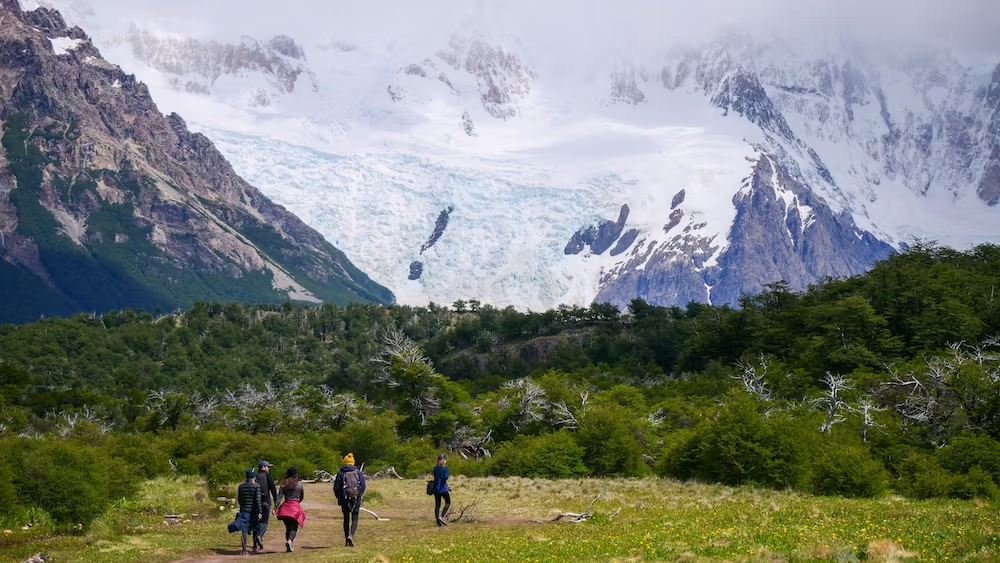
First-timers often choose hikes based on fame rather than fit. Fitz Roy is iconic, so people force it even on the wrong day—bad weather, tired legs, late start—because it feels like the “main objective.” But El Chaltén rewards match-making: pairing the hike with conditions and energy. We found that some days the most enjoyable choice isn’t the most famous endpoint—it’s the trail that gives you consistent scenery, a better rhythm, and fewer moments of “why am I doing this to myself?” If you pick the right hike for the day, you’ll finish feeling satisfied instead of shattered—and you’ll still have a week left to enjoy.
Quick comparison: Fitz Roy (Laguna de los Tres) vs Laguna Torre
| Trail | Typical vibe | What’s hard | What’s amazing | Best for |
|---|---|---|---|---|
| Laguna de los Tres (Fitz Roy) | Iconic, crowded, dramatic | Final kilometer is steep/rocky and tests you | The “holy wow” view at the top | First-timers who want the classic hike and have a good forecast day |
| Laguna Torre | Scenic, varied, often calmer | Most elevation gain early; then it flattens and you can cover distance | Glacier views + river/forest variety | People who want a rewarding full-day hike that feels more “comfortable” |
Add a few “supporting cast” hikes (that prevent burnout)
Not every day needs to be a full epic. These are the hikes that save your week:
- Mirador de los Cóndores: short, steep, immediate payoff
- Laguna Capri: iconic Fitz Roy views with a shorter commitment
- Chorrillo del Salto: waterfall walk when your legs want mercy
- Town viewpoints + scenic strolls: underrated, restorative, snack-friendly
The “choose your hike today” decision matrix
| Your energy | Forecast | Choose this | Why |
|---|---|---|---|
| High | Clear + low wind | Laguna de los Tres | Max payoff day |
| Medium | Clear + breezy | Laguna Torre | Great journey even if peaks hide |
| Low | Anything unstable | Miradores + easy walks | Still get views, protect your week |
| Medium | Cloudy but calm | Laguna Torre | Valley scenery shines even in flat light |
| High | Windy | Lower, sheltered hikes | Wind can ruin exposed viewpoints |
Tip: Patagonia rewards flexibility. The best El Chaltén itineraries are built like jazz: structure, but room to improvise.
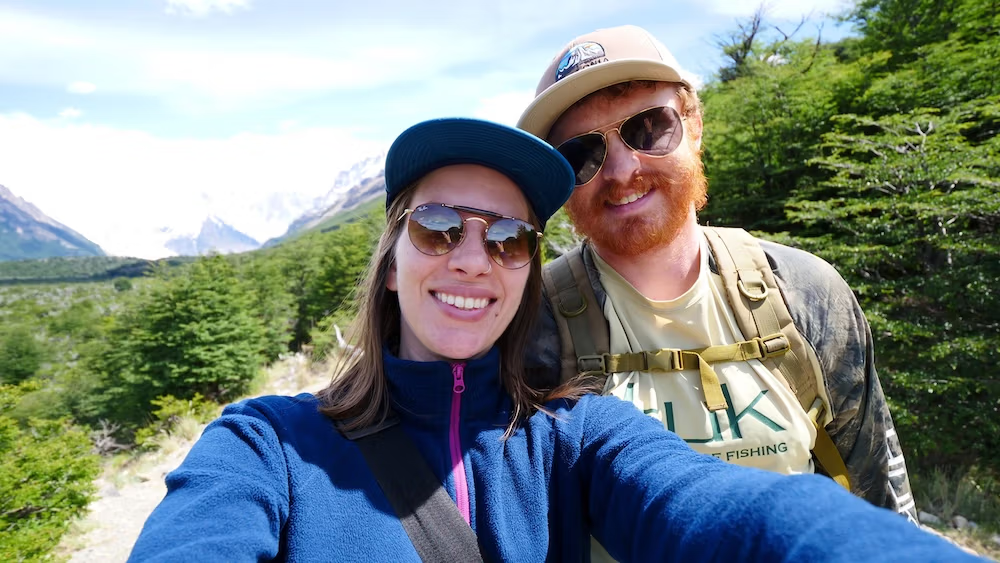
Mistake #10: Ignoring trail etiquette and safety (because “it’s just a hike”)
Why it happens: The trails start in town. There are signs. People of all ages are hiking. It feels casual. But the combo of wind + distance + fatigue + fast-changing weather means you should treat this like real mountain travel.
Because El Chaltén is so accessible—trailheads near town, loads of hikers—it’s easy to treat these like casual strolls rather than real mountain days. But distance + wind + rapidly changing conditions is a combo that can turn small problems into big ones. Safety and etiquette here aren’t just rules; they’re how you protect your trip (and the place). That includes obvious stuff like staying on trail and packing out trash, and less obvious stuff like not letting friendly town dogs follow you into the park—because wildlife matters (and the huemul really doesn’t need your new canine sidekick). The goal is simple: hike with humility so the mountains stay fun, not stressful.
What it costs you:
- Getting stuck in worsening conditions
- Turning a fun day into a stressful one
- Putting yourself (or others) at risk
- Missing out on the best part of El Chaltén: relaxed enjoyment
Trail safety that actually matters in El Chaltén
- Tell someone your plan (even if it’s just your accommodation host)
- Bring layers + headlamp on long hikes
- Turn around if conditions worsen
- Stay on trail (fragile environment, and it’s safer)
- Hydrate and fuel consistently
- Know your limits (the mountain doesn’t care about your pride)
- Be extra alert when tired (fatigue turns ankles into chaos agents)
A small but important etiquette note: dogs on trails
In town, you’ll see friendly dogs. It can be tempting to let one join you. Don’t. Be kind in town, but don’t bring them into the park.
Tip: Be kind to dogs in town. Don’t recruit them as your hiking buddy.
The “humble hiker” rules (that make the trail better for everyone)
- Uphill hikers generally have the harder job—give them room.
- Don’t blast music; let Patagonia do the soundtrack.
- Pack out everything (including tissues—yes, those too).
- If you stop for photos, step aside so others can pass.
- Be the person you’d want to meet when you’re exhausted at kilometer nine.
✨ Ready to lock in your El Chaltén plan?
- 🥾 Browse El Chaltén tours on Viator
- 🏨 Find El Chaltén hotels on Booking.com
- 🚗 Compare El Calafate car rentals on DiscoverCars
- 🚌 Book El Calafate → El Chaltén buses on Busbud
Frequently asked questions about avoiding El Chaltén travel mistakes for first-timers
Do I need to be super fit to enjoy El Chaltén?
Nope. You need realistic expectations and smart pacing. There are short miradores and easier walks that still deliver incredible scenery. If you want Laguna de los Tres, a bit of preparation helps, and building up to it during your week helps even more.
What’s the single biggest mistake people make in El Chaltén?
Assuming the weather will behave. Dress in layers, bring a windproof shell, and plan your hikes around forecast windows.
Is it okay to turn around early on a hike?
Yes. Turning around early is often the smartest decision you can make. If wind picks up, clouds build, or you feel drained, you’ll enjoy the rest of your trip much more if you protect your energy.
Are trekking poles actually worth it?
For steep, rocky sections—especially the final kilometer up to Laguna de los Tres—they’re absolutely worth it. They help on the ascent, but they’re a lifesaver on the descent.
Can I rely on my phone for maps and planning?
Don’t. Download offline maps and screenshot trailhead info. Connectivity can be unreliable, and you don’t want your plan to depend on a signal.
Is food expensive in El Chaltén?
Often, yes—especially compared to other parts of Argentina. Grocery selection can be limited too, so bring some snacks from your previous stop if you can.
Should I buy groceries before coming?
If you have specific snacks, breakfast items, or trail food you love, it’s a smart move to stock up before you arrive. It reduces stress and can save money.
Do I need to start hikes early even in summer?
Yes. Long daylight is nice, but starting early is still the best strategy for weather, crowds, and safety—especially on the longer hikes.
Which is “easier”: Laguna Torre or Laguna de los Tres?
Laguna Torre is usually the more comfortable hiking day overall, with the big effort mostly early and a flatter valley walk later. Laguna de los Tres has a more demanding final section, but the end views are iconic.
Any quick etiquette rules I should know?
Stay on trail, pack out trash, and don’t let town dogs follow you onto trails—wildlife protection matters. Also: be patient and kind on narrow sections and steep climbs. Everyone’s in the same wind tunnel together.
Do I need cash in El Chaltén?
Yes. Cards work often, but connectivity hiccups can make payments slow or unreliable. Having some cash as backup makes life calmer—especially for small purchases.
Are lunchboxes worth it for big hikes?
Usually, yes. If you’re starting early, a pre-packed lunch means you’re not scrambling for food, and you’re less likely to under-pack snacks. It’s the kind of convenience that feels expensive until you’re hungry, windy, and 9 kilometers from town.
What’s one “quirky” tip that actually helps?
When you feel yourself getting impatient—because weather, Wi-Fi, crowds, or your own legs—pick one tiny thing to enjoy on purpose: a river bend, a condor overhead, the absurdity of eating a snack behind a rock to hide from the wind. You’ll remember those moments as much as the big views.
Project 23 Argentina: This guide is also available in Spanish. [Lea la versión en castellano: 10 Errores de Viaje en El Chaltén que Cometen los Primerizos (Y Cómo Evitarlos)]
Further Reading, Sources & Resources
If you want to verify the most important “don’t mess this up” details (fees, rules, safety guidance, camping logistics, and official trail info), these five sources are the best place to start.
Official park entry fees (APN)
https://www.argentina.gob.ar/interior/ambiente/parquesnacionales/losglaciares/tarifas
The official Los Glaciares National Park fee page—use this to confirm current prices and any updates before you arrive.
Official safety + visitor recommendations (APN)
https://www.argentina.gob.ar/parquesnacionales/patagonia-austral/recomendaciones-para-visitar-el-parque-nacional-los-glaciares
Official guidance on safe hiking behavior, preparedness, and responsible visiting (the “Patagonia doesn’t care about your optimism” section, but official).
Camping / accommodation information (APN)
https://www.argentina.gob.ar/parquesnacionales/patagonia-austral/parque-nacional-los-glaciares/alojamiento
Official overview of camping and lodging info for Los Glaciares (useful context for what exists and how it’s managed).
Official trail brochure (Zona Norte) (APN PDF)
https://www.argentina.gob.ar/sites/default/files/2019/06/folleto_senderos_zona_norte_pnlg_espanol.pdf
Printable official trail brochure for the El Chaltén (Zona Norte) area—great for high-level trail planning and understanding the network.
Campground reservations / administration info
https://amigospnlosglaciares.org/campamentos/
Camping logistics and details from the organization managing key campgrounds—useful for the latest reservation and practical camping notes.
Notes on accuracy
- Fees, policies, and campground rules can change season-to-season (and sometimes mid-season). Always check the official APN pages close to your travel dates.
- For camping, confirm the latest reservation requirements and any operational changes directly on the campground administration page above before you plan an overnight trek.