
We thought we were prepared for Patagonian distances. We really did. We boarded the bus in Mar del Plata expecting a standard 16-hour overnight haul down the Atlantic coast. But Patagonia plays by its own rules. Thanks to a rolling two-hour delay and the sheer, mind-numbing vastness of the Argentine steppe, that ride stretched into an 18—no, 19-hour marathon. By the time Audrey and I stumbled out of the terminal in Puerto Madryn, we were completely delirious, desperate for anything that wasn’t a reclining seat or a stale cracker.
Audrey and I had arrived right in the dead zone of the afternoon siesta. The streets were quiet, the sun was high, and our stomachs were entirely empty. Through sheer luck and hunger-fueled determination, we found Chonana, a local joint slinging 50% off pizzas between 4:00 PM and 8:00 PM. We devoured it on the spot.
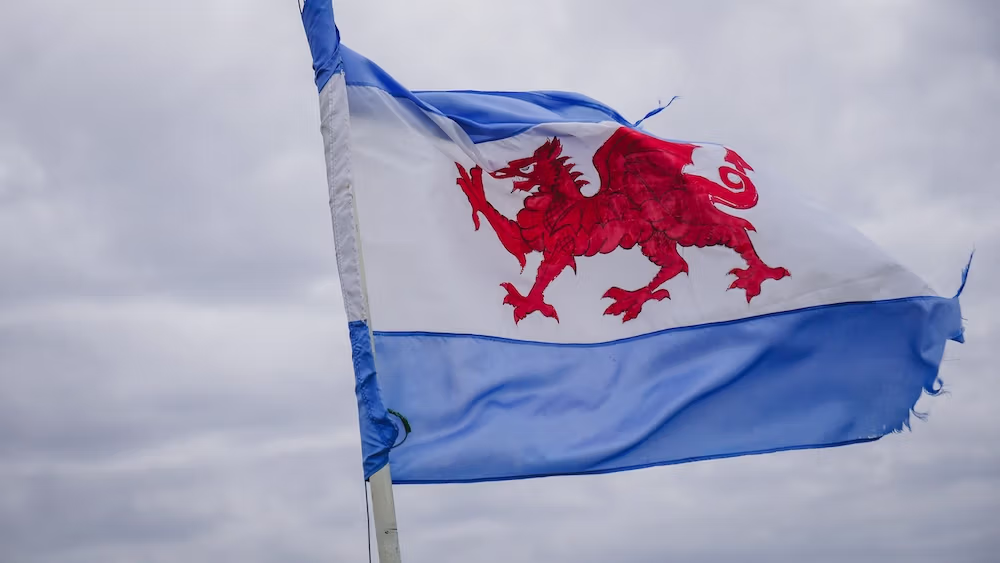
That grueling arrival was our baptism into Welsh Patagonia—a wildly surprising, culturally disjointed, and logistically complex region of Chubut, Argentina. This isn’t the Patagonia of towering glaciers or crowded hiking trails you usually see on Instagram. This is a story of 19th-century Welsh pioneers fleeing cultural erasure, crossing an ocean, and building a thriving Celtic society in the middle of a high-desert wasteland.
If you caught our videos on this topic over on our YouTube channel, you know we dove headfirst into the tea houses, the waterwheels, and the history. But videos only show so much. Today, we are tearing the brochure apart. This is the ultimate, hyper-granular 2026 logistics dossier for exploring the Welsh enclaves of Puerto Madryn, Trelew, Gaiman, Dolavon, and Trevelin. We’re covering the exact bus fares, the hidden tourist traps, the unwritten local rules, and the physical realities of moving through this incredible cultural detour.
The Welsh Patagonia Master Blueprint (Logistics & Reality Check)
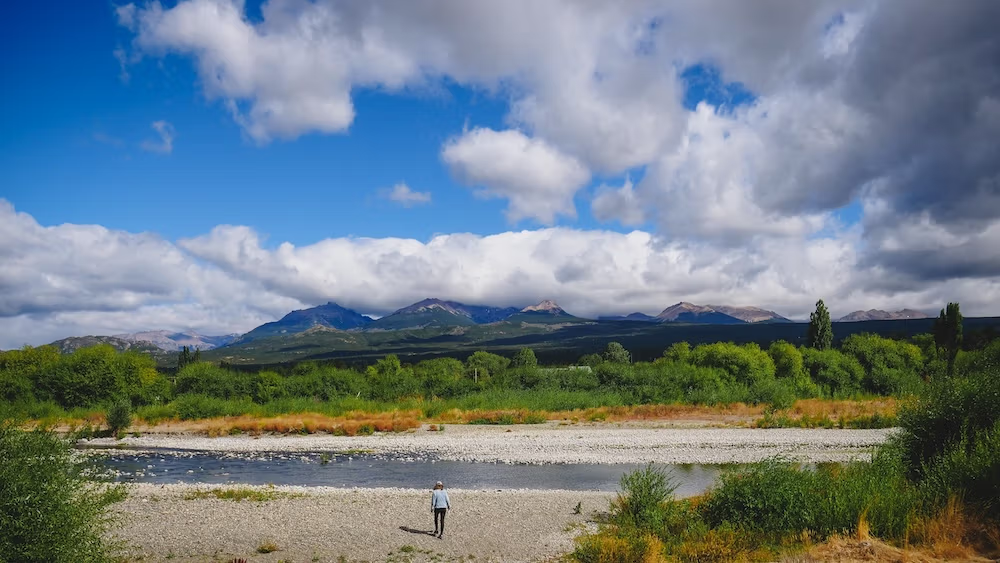
Before you book a single bus ticket, understand this: Welsh Patagonia is split between the arid Atlantic coast and the lush Andean mountains. You cannot see it all in a weekend, and the logistics will test you. Here is the un-sugarcoated breakdown of the five core destinations.
| Destination | The Core Identity | The “Un-Fakeable” Reality Check | Key 2026 Cost Baseline | Transit Friction & Micro-Logistics | Suggested Time |
| Gaiman | The Capital of Welsh Tea | The “Cake Wall”: You cannot order just a tea and scone. You are culturally forced into the massive Servicio de Té. Skip lunch completely before arriving. | $15,000–$25,000 ARS (Full Tea Service at Ty Gwyn or Ty Te Caerdydd) | The Route 7 Slog: The scenic bus from Trelew takes 45 mins, not 15. A pre-loaded SUBE card is strictly mandatory. | 1 Half-Day (Afternoon only; tea houses open at 2:00 PM) |
| Dolavon | Town of Waterwheels & Hidden Pasta | The Monday Trap: Arrive early in the week and the town ceases to exist. We spent hours stranded at a YPF gas station waiting for siesta to end. | ~$12,000–$18,000 ARS (Fresh pasta lunch at Molino Harinero) | The Dusty Trek: The town is spread out. Expect a hot, unshaded 20-minute walk from the bus drop-off to the historic center. | 3 Hours (Strictly visit Thursday–Sunday) |
| Trelew | The Gritty Transit Hub & Dinosaurs | The Sunday Apocalypse: Expecting a bustling hub city on a Sunday? You will find a literal ghost town with pulled metal shutters. | $22,000 ARS (Entry to the world-class MEF Paleontology Museum) | Terminal Vigilance: The bus station connects everything, but the surrounding 3-block radius requires high situational awareness. | 1 Full Day (Perfect for a Monday when valley towns are closed) |
| Puerto Madryn | Coastal Gateway & The 1865 Landing | The Siesta Starvation: Between 1 PM and 5 PM, the city powers down. (We survived on 50% off pizza deals at Chonana during this window). | $8,500 ARS (Entry to Punta Cuevas to learn about the Tehuelche Peace Treaty) | The Steppe Haul: Reaching Madryn from the north (like Mar del Plata) is a grueling 16 to 19-hour overnight bus marathon. | 2–3 Days (Basecamp for the Lower Chubut Valley) |
| Trevelin | Alpine Welsh Utopia (The Andes) | The Great Tulip Whiff: The famous blooms are strictly Oct 7–Nov 7. Outside this window, it’s an empty farm. Book 8 months in advance. | ~$18,000 ARS (Tea at Nain Maggie—the highest quality cakes of our entire trip) | The “Gravel Gap” & Sunday Surcharges: The local sights require navigating the brutal dirt of Route 259. Sunday buses from Esquel barely run; expect a $13 USD taxi pivot. | 2–3 Days (Requires a 9-hour bus ride from the Atlantic coast) |
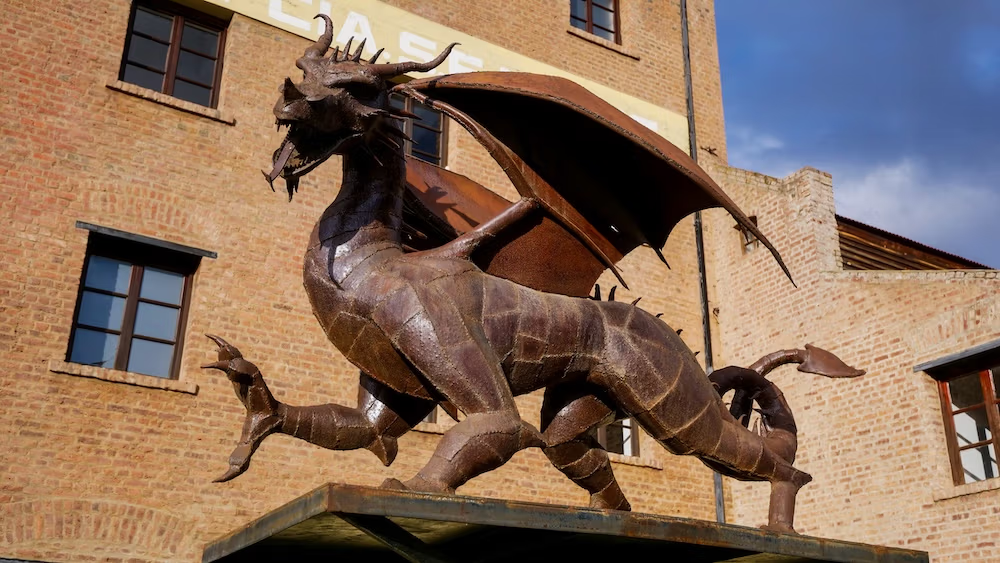
Map of Welsh Patagonia: Understanding the Geography
Before diving into the logistics, it helps to understand how spread out Welsh Patagonia actually is. Many travelers assume these towns sit close together, but the reality is very different.
The Welsh settlements are split into two completely separate regions of Chubut Province:
| Region | Main Towns | Landscape | Distance |
|---|---|---|---|
| Atlantic Coast & Lower Chubut Valley | Puerto Madryn, Trelew, Gaiman, Dolavon | Arid Patagonian steppe | Compact |
| Andean Patagonia | Trevelin, Esquel | Alpine forests and mountains | 9-hour bus ride away |
What surprises most travelers is how dramatic the transition is between the two.
On the coast you have:
- desert winds
- dusty towns
- irrigation canals cutting through dry earth
In the Andes you suddenly find:
- snow-capped peaks
- green valleys
- alpine farms that look straight out of Switzerland.
This geographic divide is one of the reasons Welsh Patagonia feels like two completely different worlds stitched together by history.
Suggested 4–5 Day Welsh Patagonia Itinerary
If you’re trying to see the core Welsh settlements, this is the route that makes the most sense logistically.
| Day | Destination | Highlights |
|---|---|---|
| Day 1 | Puerto Madryn | Punta Cuevas, coastal boardwalk, seafood dinner |
| Day 2 | Trelew + Gaiman | MEF Dinosaur Museum, Welsh tea houses |
| Day 3 | Dolavon | Waterwheels, Molino Harinero pasta |
| Day 4 | Travel to Esquel | Steppe crossing via Route 25 |
| Day 5 | Trevelin | Nant Fach Mill, Nain Maggie tea house |
The biggest mistake travelers make is assuming the Andean settlements are close to the coast.
They aren’t.
That final jump from Trelew to Trevelin is a full 9-hour bus ride across the Patagonian steppe.
Puerto Madryn: The Coastal Gateway and the 1865 Landing
Puerto Madryn is famous worldwide for its Southern Right Whales, but long before the eco-tourism boom, this sweeping bay was the site of a desperate arrival. In 1865, the ship Mimosa landed here carrying 153 Welsh settlers.
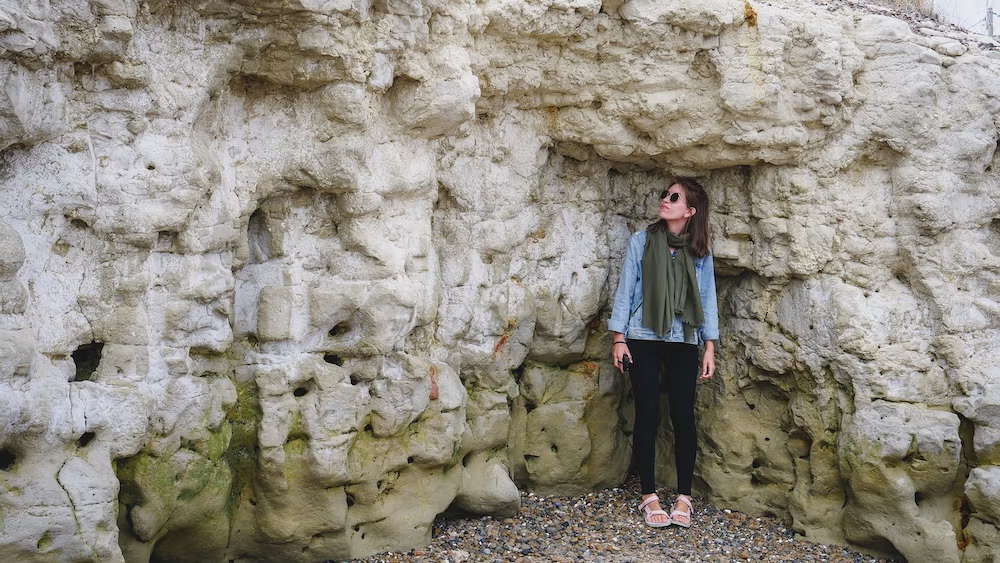
After shaking off our 19-hour bus hangover, we quickly fell in love with Madryn’s chill, unhurried vibe. Walking along the boardwalk, you immediately feel the ocean breeze cutting through the desert heat. But to understand the Welsh connection, you have to walk just past the Eco Center to Punta Cuevas.
Here, you’ll find the shallow caves where those first settlers dug in to survive their first freezing Patagonian winter. For 2026, the updated exhibits here have finally shifted focus to the most crucial, yet often ignored, part of this history: The Tehuelche Peace Treaty. Unlike the violent colonial narratives found elsewhere in the Americas, the Welsh only survived because the indigenous Tehuelche people actively taught them how to hunt guanaco, shared their meat, and established a mutual trade network. It is a profound story of coexistence that recontextualizes the entire region.
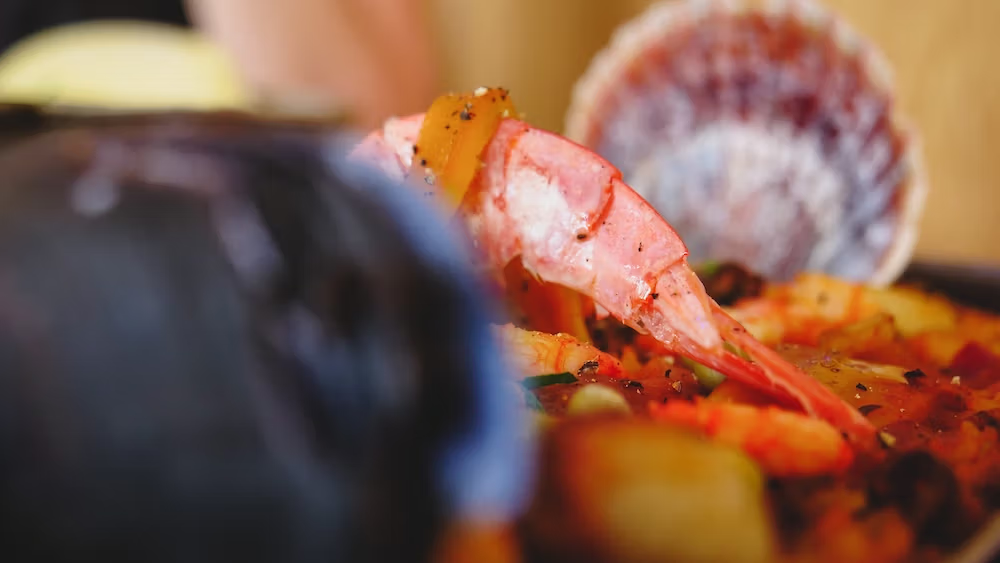
[Samuel’s Siesta Survival Tip] > Puerto Madryn rigorously enforces the afternoon siesta. Between 1:00 PM and 5:00 PM, the city effectively powers down. If you arrive hungry during this window, head straight to Chonana for their late-afternoon pizza deals, or wait until 8:00 PM when institutions like Cantina el Nautico open their doors. Nautico serves the heaviest, highest-quality seafood portions I’ve ever had in Argentina—plan to roll yourself back to your hotel.
Quick-Fire Logistics: Puerto Madryn & Trelew Transit
| Route / Attraction | 2026 Pricing (ARS) | USD Approx. | Operating Reality | The “Friction & Fix” |
| Punta Cuevas Museum | $8,500 ARS | ~$8.50 | 10:00 AM – 5:00 PM | Problem: Heavy winds blast the caves. Fix: Visit before 11:00 AM. |
| Cantina el Nautico | $25,000+ ARS | ~$25.00+ | Opens 8:00 PM strictly. | Problem: Massive wait times after 9 PM. Fix: Be at the door at 7:55 PM. |
| Bus: Madryn to Trelew | $5,940 – $8,920 ARS | ~$6.00 – $9.00 | 28 de Julio / Mar y Valle | Problem: Cash is rarely accepted. Fix: You MUST have a pre-loaded SUBE card. |
Trelew: The Transit Hub and the Sunday Apocalypse
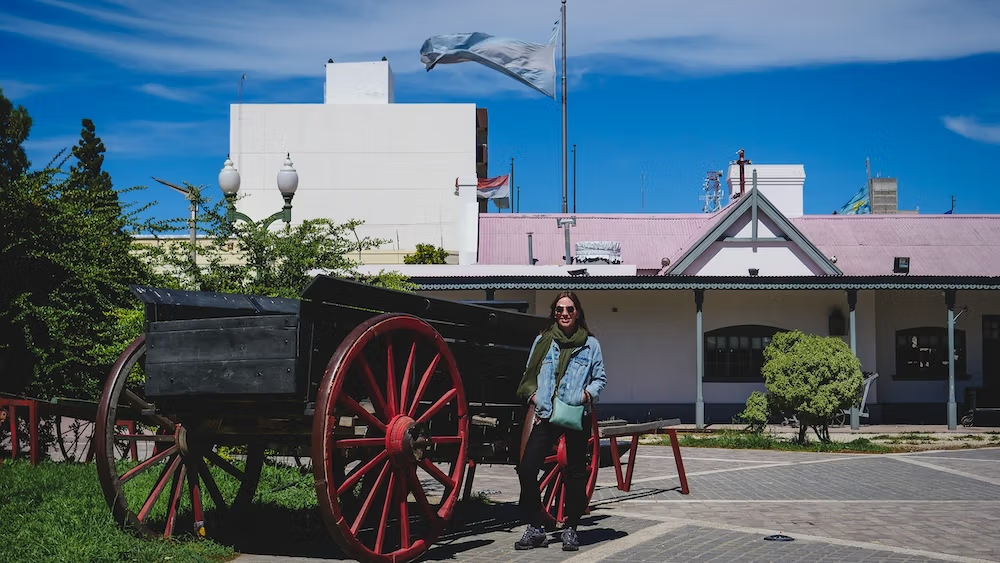
To get into the heart of the Welsh valley, you have to move inland from Puerto Madryn to Trelew. Named after Lewis Jones (“Tre” meaning town, and “Lew” for Lewis), Trelew is the gritty, functional beating heart of the Lower Chubut Valley.
Most travelers use Trelew purely as a jumping-off point, navigating the chaotic Terminal de Ómnibus to catch local buses. The terminal is highly functional, but a word to the wise: keep an eye on your bags. The three-block radius around the station is high-traffic, and opportunistic theft is a reality.
While Trelew is a hub of movement during the week, we experienced what I can only describe as the “Sunday Apocalypse.” We walked out of our accommodation expecting a bustling Patagonian city, only to find ourselves standing in a literal ghost town. Every shop, cafe, and market had its metal shutters pulled down. Tumbleweeds could have rolled down the main avenue. If you are building an itinerary, do not plan to run errands, buy gear, or find specialty coffee in Trelew on a Sunday.

When things are open, Trelew holds two absolute gems. The first is the MEF (Museum of Paleontology). Costing around $22,000 ARS ($22 USD), this is a world-class facility housing the Patagotitan Mayorum—one of the largest dinosaurs ever discovered. The second is the Hotel Touring Club. Stepping inside is like walking into a 19th-century saloon. The walls are covered in vintage posters and sepia photographs, largely because Butch Cassidy and the Sundance Kid hid out here when they fled to Patagonia to escape the Pinkertons.
[Samuel’s Transit Reality Check: The SUBE Scarcity]
Here is a micro-logistical nightmare that ruins days: You cannot pay cash on the local interurban buses (Línea 28 de Julio) that connect Trelew to Gaiman and Dolavon. You absolutely must have a SUBE card. The problem? Finding a kiosk in Chubut that actually has the physical plastic cards in stock is incredibly difficult in 2026. Do yourself a massive favor: buy and load your SUBE card at the Ezeiza Airport or Retiro Station in Buenos Aires before you ever fly south.
Why Welsh Tea Houses Exist in Patagonia
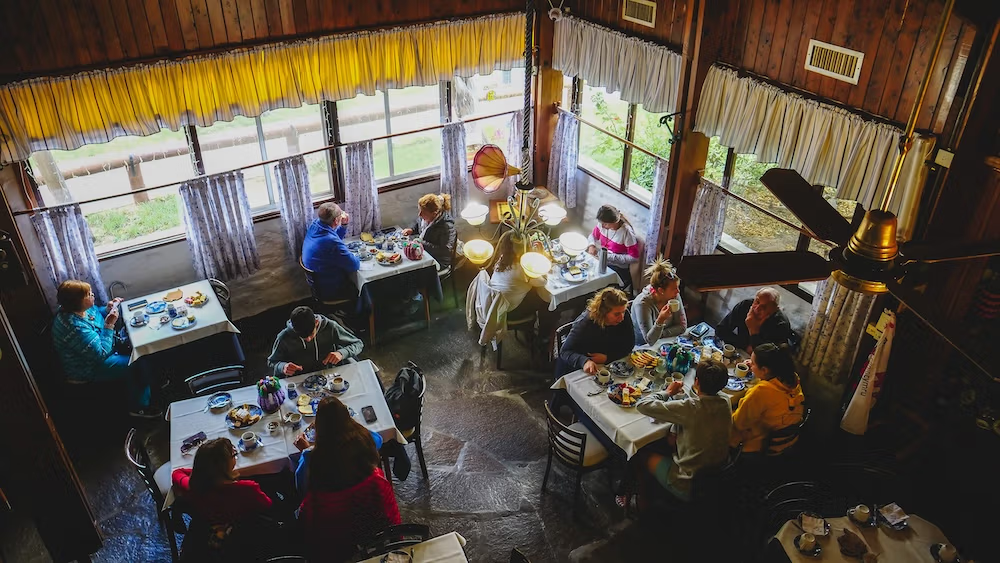
The tea house tradition in Gaiman isn’t just a quirky tourist attraction. It’s actually one of the most enduring cultural traditions brought by the original settlers.
In 19th-century Wales, afternoon tea gatherings were a central part of community life. When the settlers established farms in the Lower Chubut Valley, tea houses became a place where families could gather to:
- share news
- speak Welsh
- celebrate holidays
- host visiting travelers.
Over time the tradition evolved into the famous Patagonian “Servicio de Té.”
Unlike a simple cup of tea, the full service includes a towering spread of:
- scones
- fresh bread and butter
- fruit preserves
- cream cakes
- and the iconic Torta Negra, a dense Welsh fruitcake that can age for months.
Today these tea houses are one of the most visible symbols of the Welsh cultural legacy in Argentina.

Gaiman: The Valley of Tea and Sugar Comas
From Trelew, you hop on the 28 de Julio bus to Gaiman. But take note of the specific route. We thought it was going to be a quick 15-minute zip down the highway. Instead, we caught the bus that takes Route 7—the scenic, winding agricultural road. It took 45 minutes. We weren’t mad about it; the transition from arid Patagonian steppe to lush, irrigated green farmland is jarring and beautiful, but you need to factor that time into your day.
Gaiman is the undisputed capital of the Welsh tea house experience. It is quaint, walkable, and visually frozen in time, with red-brick houses and irrigation canals lining the streets. But let’s talk about the reality of the tea houses, because this is where the brochure hides the truth.
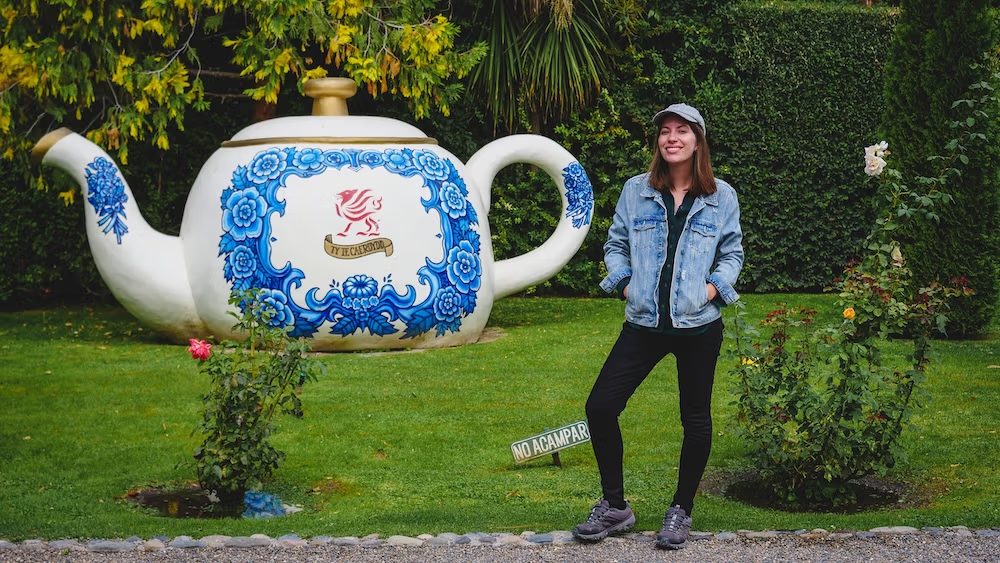
There is a specific kind of panic that sets in when you walk into a lush, manicured garden fit for royalty, look down at your dusty backpacker pants and scuffed boots, and realize you are aggressively underdressed. That was us walking into Ty Te Caerdydd, the legendary tea house where Princess Diana famously dined in 1995. It was stunningly posh.
But whether you go to Ty Te Caerdydd or the equally famous Ty Gwyn (which we tackled later), you are going to hit what I call “The Cake Wall.
You cannot simply walk into a Gaiman tea house, ask for a quaint cup of Earl Grey, and split a scone. It is culturally and economically forbidden. You are paying for the Servicio de Té (Full Tea Service), which in 2026 runs between $15,000 and $25,000 ARS (roughly $15 to $25 USD) per person.
When we sat down at Ty Gwyn, we were completely overwhelmed. The waitress dropped a pot of loose-leaf tea, followed by fresh bread, homemade butter, scones, fruit tarts, cream cakes, and the region’s signature item: the Torta Negra (a dense, rich Welsh black cake steeped in tradition). It is an astounding amount of food.
The Fix: Skip lunch. Seriously, do not eat a single calorie before 2:00 PM. Go as a group, but ask if you can pay a “sharing fee” so you don’t have to order a full service for every single person. And don’t feel bad about asking for a box; taking leftovers home is a fully accepted local tradition.
The Gaiman Tea House Gauntlet
| Tea House | The Vibe & Dress Code | Price (ARS) | Standout Feature | The Reality Check |
| Ty Te Caerdydd | Posh, lush gardens, formal. | ~$25,000 | The Lady Di history. | You will feel underdressed in hiking gear. |
| Ty Gwyn | Cozy, traditional, bustling. | ~$15,000 – $18,000 | Massive bread/scone spread. | Tables are tightly packed; loud atmosphere. |
| Narlu Farm | Rural, agricultural, authentic. | Variable | Fresh jams and raw fruit. | Requires a walk to the outskirts of town. |
Beyond the sugar coma, Gaiman requires you to walk it off. We wandered down to the First Stone House (built in 1874) and walked through the Old Tunnel of the Ferrocarril Central del Chubut—a 300-meter dark stretch built in 1914 because the stubborn locals refused to let the train tracks bisect their quiet town.
Dolavon: The Monday Trap and the Hidden Pasta
Further down the valley sits Dolavon, the “Town of Waterwheels.” It is smaller, dustier, and significantly more remote than Gaiman. From the bus stop, it’s a sweaty 20-minute walk through unshaded streets to the main canal.
Dolavon is highly photogenic, but it is also where we experienced the ultimate logistical failure of our trip.
Travel blogs promise you historic waterwheels spinning in the canals and quaint museums. They do not tell you that if you show up on a Monday, the town effectively ceases to exist. We arrived on a Monday morning. The restaurants we had plotted on Google Maps were shuttered. The museums were closed. Even the streets were empty due to the siesta. With nowhere to go and hours to kill before the next bus back to Trelew, our grand cultural immersion devolved into us hanging out at the local YPF gas station, drinking lukewarm soda, waiting for the town to wake up.
[Samuel’s Monday Trap Warning]
Do not attempt the Lower Chubut Valley on a Monday or Tuesday morning. Use those days for the MEF museum in Trelew or the coastal wildlife in Puerto Madryn. Save Gaiman and Dolavon for Thursday through Sunday.
If you do visit Dolavon on a weekend, you must seek out the Molino Harinero (The Old Mill). Not only is it a working 19th-century flour mill museum (entry is around $12,000 ARS), but the real secret—the “moat” that generic guides miss—is the restaurant tucked inside. They serve homemade pasta crafted entirely from the flour ground on-site using those exact water-powered 19th-century gears. Locals quietly consider it the best meal in the valley, far superior to the heavy tea cakes of Gaiman.
Why Dolavon Was Built Around Water
Dolavon exists because of one thing:
water.
When the Welsh settlers first arrived in Chubut, the region looked completely inhospitable. Rainfall was minimal and the soil was dry. Traditional European farming methods simply failed.
The breakthrough came when the settlers began constructing irrigation canals from the Chubut River, transforming the desert into fertile farmland.
Dolavon became one of the key agricultural centers of this irrigation system.
The town’s famous waterwheels weren’t decorative. They powered:
- grain mills
- irrigation pumps
- flour production.
These engineering projects are one of the reasons the Welsh colonies survived when so many other colonial settlements in Patagonia failed.
Crossing the Steppe: The Andean Leap to Trevelin
If Gaiman is the historical heart of Welsh Patagonia, Trevelin is its alpine soul. But getting there requires a massive geographical pivot.
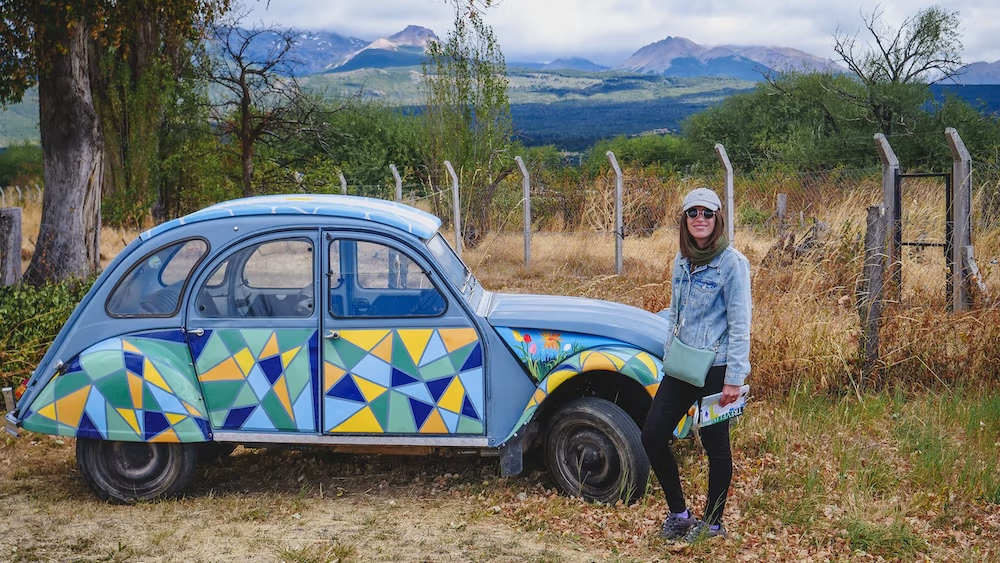
You cannot day-trip from the Atlantic coast to the Andes. It requires committing to a 9-hour bus ride across Route 25, bisecting the vast, wind-scoured “nothingness” of the Patagonian steppe. We took this route, eventually arriving in Esquel, the larger hub city just north of Trevelin.
Here, Patagonian logistics struck again. We planned to catch a cheap local bus from Esquel to Trevelin (a 20-kilometer hop). But it was Sunday. The buses simply weren’t running. Refusing to lose a day, we bit the bullet and hired a private taxi, which set us back about $12 to $13 USD. It was a small price to pay to keep the itinerary moving, but it reinforced a hard truth: in Patagonia, Sunday schedules will always cost you time or money.
Trevelin: Alpine Wales and the Great Tulip Whiff
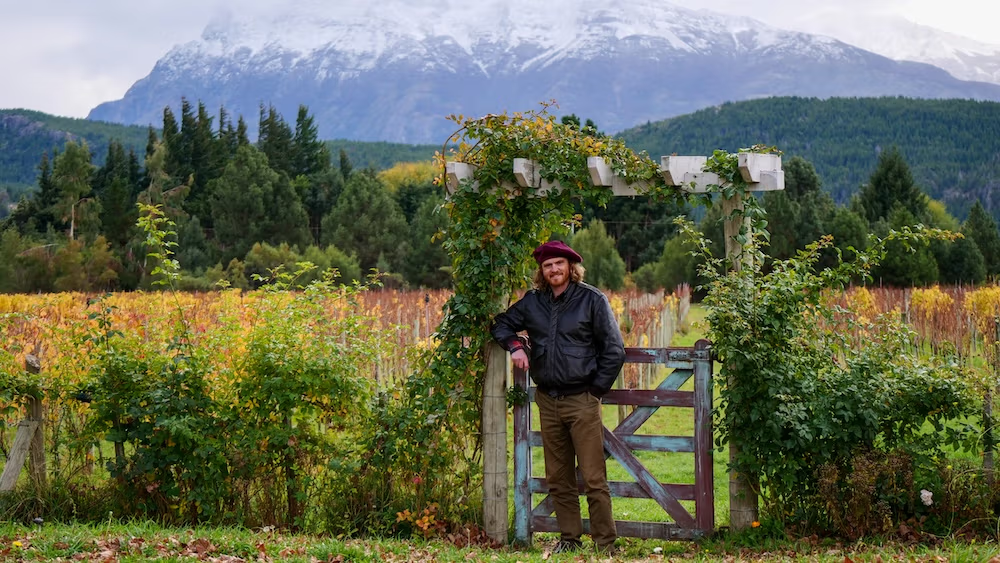
Trevelin translates to “Mill Town,” and the contrast between the arid Atlantic valley and this lush, snow-capped Andean paradise is staggering. It looks like a slice of Switzerland dropped into South America.
Trevelin is globally famous for its Tulip Fields, set against the backdrop of the Andes. New for the 2025/2026 seasons, they’ve even introduced hot air balloon flights over the blooms. But here is the raw, un-fakeable reality of our trip: we missed them entirely.
We showed up at the wrong time of year. The tulip window is aggressively tight—strictly between October 7 and November 7. Outside of that window, it is just an empty farm. It was a massive oversight on our part, but a vital lesson for you: if you are coming for the tulips, you must book your accommodations in Trevelin 8 to 10 months in advance, and you must time your flights perfectly.
What we didn’t miss, however, was the Nant Fach Mill and our final, triumphant tea house experience.
Getting to Nant Fach highlights the Trevelin “Gravel Gap.” GPS makes it look like it’s right outside town. In reality, it involves navigating Route 259, a bone-jarring gravel road that is notorious for shredding rental car tires. If you don’t have a 4×4, take the “Expreso Esquel” bus to the junction and hire a remis (private car) for the final dirt stretch.
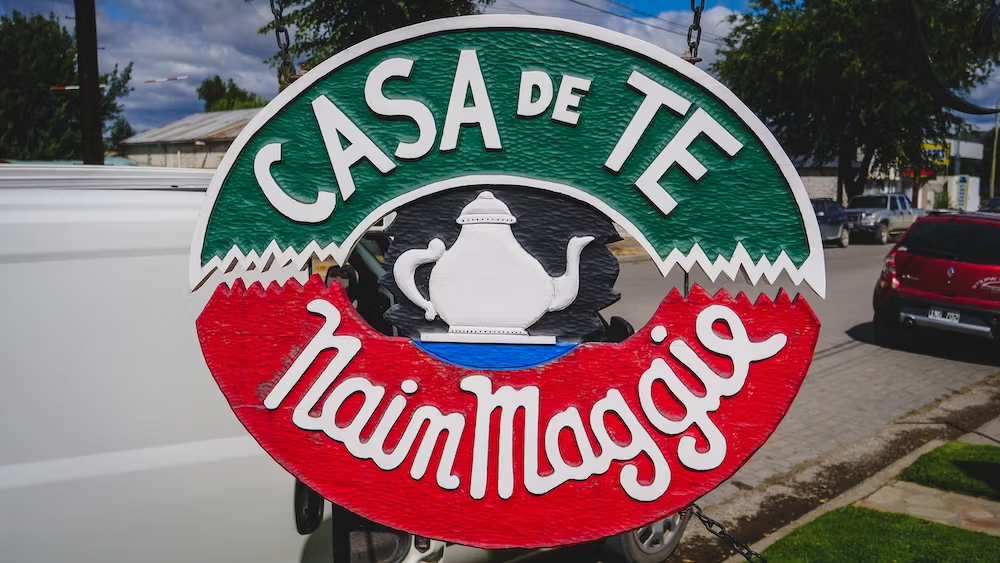
At Nant Fach, you can watch live 19th-century flour grinding ($15,000 ARS for the guided tour). Afterward, we headed back into Trevelin for tea at Casa de Te Nain Maggie (Grandmother Margaret’s).
After days of eating massive Welsh spreads in the lower valley, I can definitively say this: Nain Maggie has the absolute best cake quality of the entire trip. The flavors were sharper, the textures lighter, and the setting feeling incredibly authentic. It was the ultimate culinary payoff.
Trevelin & The Andes Hit List
| Attraction / Venue | 2026 Metric / Price | The Effort & Logistics | The Reward Level |
| Trevelin Tulip Fields | $18,500 ARS Entry | High. Oct 7 – Nov 7 only. Expect massive photo-tour crowds. | High (If timed right). Incredible Andean photography. |
| Nant Fach Mill | $15,000 ARS Tour | Medium. Must navigate the Route 259 “Gravel Gap.” | Medium. Fascinating live history and machinery. |
| Nain Maggie Tea | ~$18,000 ARS | Low. Right in the center of Trevelin. | Maximum. The highest quality Welsh cakes in Patagonia. |
| Regional Museum | $8,000 ARS | Low. Located in the old mill building. | High. Houses the tomb of “Malacara,” the famous horse. |
What Makes Trevelin So Different From the Valley Towns
Trevelin feels completely different from the Welsh settlements near the Atlantic coast.
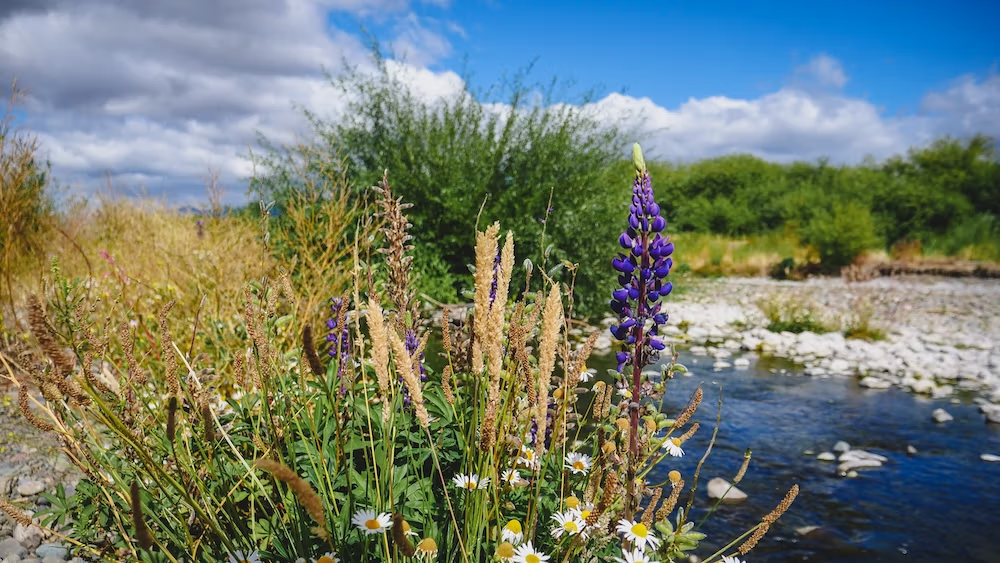
Instead of dusty steppe landscapes, the region sits in a lush Andean valley surrounded by forests and snow-covered mountains.
This dramatic change in scenery is the result of geography.
The Andes capture Pacific moisture, creating a much wetter environment than the desert valleys of eastern Chubut.
Because of this climate, the Welsh settlers who arrived here in the late 1800s were finally able to grow crops that had struggled in the valley towns.
That’s one reason Trevelin developed its own identity within Welsh Patagonia — more alpine, more agricultural, and deeply tied to the surrounding mountains.
How a Wind-Scoured Desert Saved the Welsh Language (The Raw History)
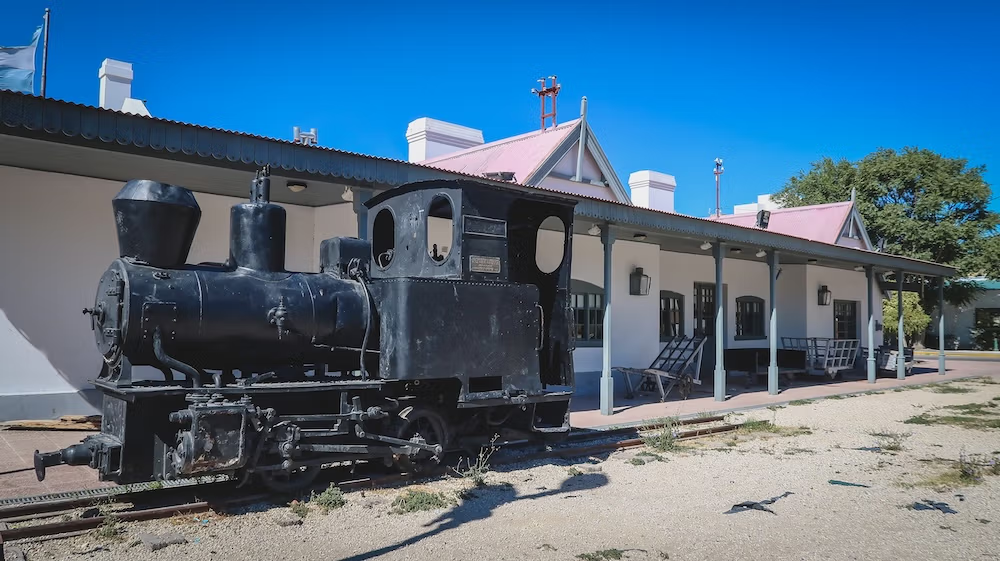
We spent a staggering amount of time eating cake on this trip. But between the sugar comas and the logistical hurdles, we spent hours walking through the old railway station at the Museo Regional Pueblo de Luis in Trelew and the wind-blasted caves at Punta Cuevas in Puerto Madryn. We were trying to figure out why this bizarre, beautiful cultural ecosystem exists in the middle of South America.
The story you get from a quick Wikipedia skim is a neat, tidy tale of pioneers. The reality we uncovered in the local museums is a wild, desperate saga of starvation, indigenous alliances, and a horse named “Bad Face.”
If you want to truly understand what you are looking at when you sip tea in Gaiman or stare at the waterwheels in Dolavon, you have to understand the sheer desperation of 1865.
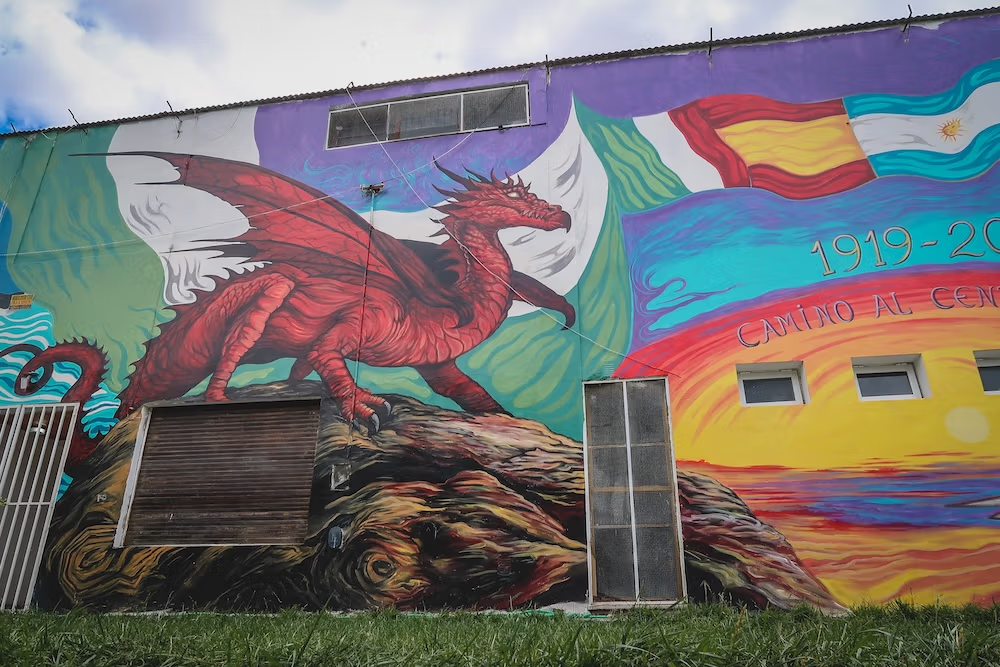
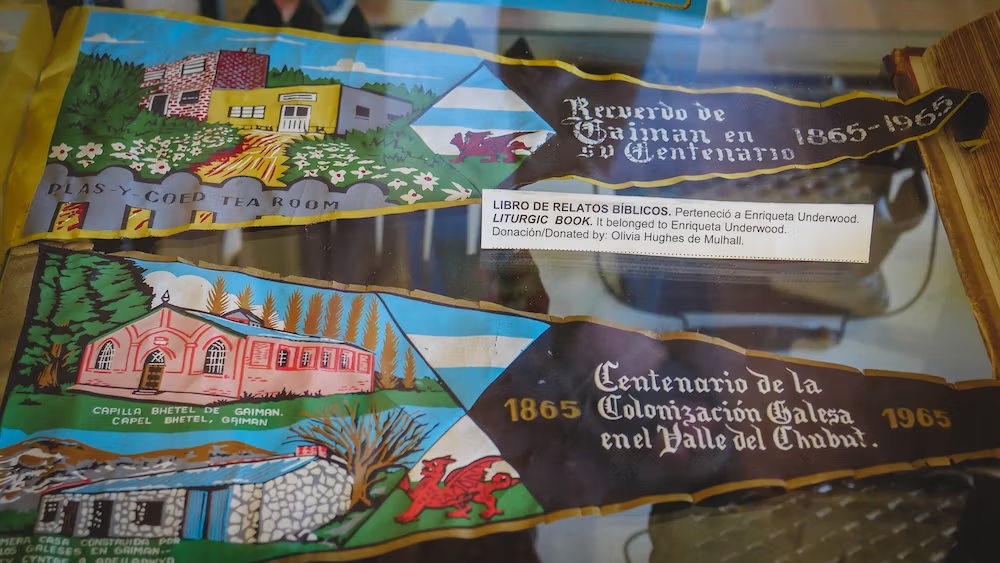
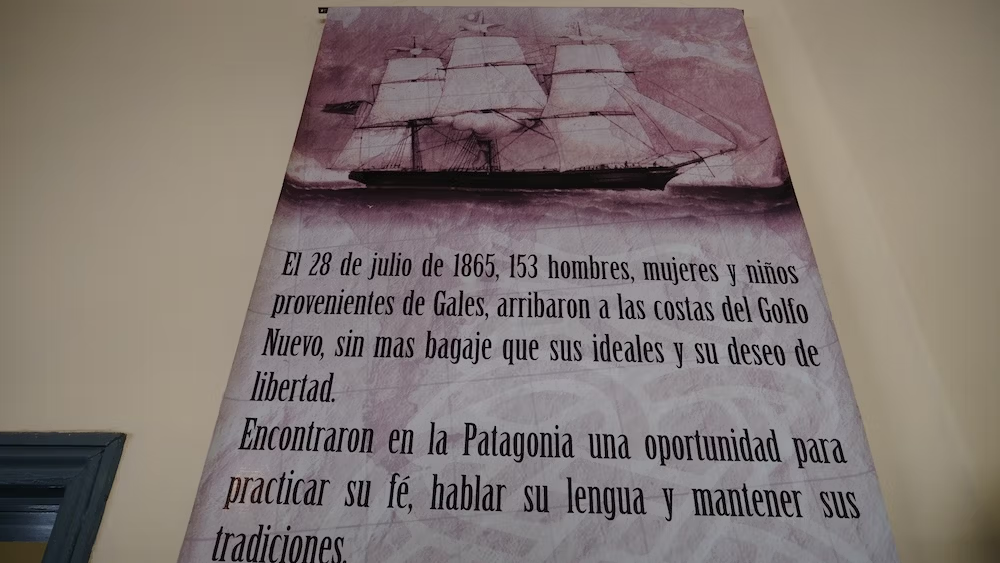
Back in Wales, the Industrial Revolution was crushing the working class, and the English government was aggressively imposing their language, practically outlawing Welsh in schools. Facing cultural erasure and severe poverty, a group of 153 Welsh men, women, and children pooled their resources, chartered a tea-clipper called the Mimosa, and sailed for two months across the Atlantic.
They were promised a lush, green paradise similar to lowland Wales. Instead, they disembarked at Puerto Madryn in the dead of winter, stepping into a freezing, arid, thorny wasteland.
[Samuel’s Museum Reality Check]
When you visit the caves at Punta Cuevas, the wind literally howls through the rocks. Standing there, shivering in modern outdoor gear, it is unfathomable to imagine families digging temporary shelters into the dirt just to survive the winter of 1865. The “romantic pioneer” narrative completely evaporates when you feel that Patagonian wind.
The Tehuelche Alliance: The True Saviors of Y Wladfa
Here is the historical moat that almost every generic travel guide glosses over. The standard colonial narrative in the Americas is one of immediate conquest and violence. The Welsh settlement (known as Y Wladfa) is the stark exception.
The Welsh were starving. They didn’t know how to farm the arid Patagonian soil, and their European crops were failing. They only survived because of the Tehuelche, the indigenous nomadic people of Patagonia.
Instead of war, the two groups established a profound trade treaty and a peaceful coexistence. The Tehuelche taught the Welsh how to hunt guanaco, how to track water, and how to utilize the native flora. In exchange, the Welsh traded bread, sugar, and woven goods. At the regional museums, you can read the firsthand accounts: the indigenous people literally shared their meat to keep the European settlers from starving to death. It is a powerful story of mutual respect that fundamentally shaped the culture of Chubut.
The Cultural Expansion Master Matrix
How did they get from coastal caves to the lush Andes mountains? It wasn’t easy. Here is the chronological breakdown of how the Welsh conquered the geography of Chubut.
| Era / Event | The Geographic Move | The Physical Reality | The Lasting Cultural Impact |
| 1865: The Landing | Puerto Madryn (Punta Cuevas) | Freezing winter, zero infrastructure, desperate cave living. | Madryn remains the spiritual “Plymouth Rock” of the Welsh-Argentine identity. |
| 1880s: The Valley | Trelew, Gaiman, Dolavon | Building massive irrigation canals by hand to turn the desert green. | The creation of the agricultural “breadbasket” and the birth of the Patagonian Tea House culture. |
| 1885: The Rifleros | The Andean Steppe Trek | A heavily armed expedition to find fertile land in the mountains. | John Daniel Evans and his men discover the lush, alpine Cwm Hyfryd (Beautiful Valley). |
| 1902: The Border | Trevelin (The Andes) | Chile and Argentina dispute the border. The Welsh vote to remain Argentine. | Trevelin is firmly established as the Andean Welsh capital, deeply loyal to the Argentine flag. |
The Legend of Malacara (And Why Trevelin Exists)
As you move from the Atlantic coast toward the Andes, the history gets even wilder. If you make the 9-hour bus leap to Trevelin, you have to stop at the Regional Museum of Trevelin (located in the old mill building).
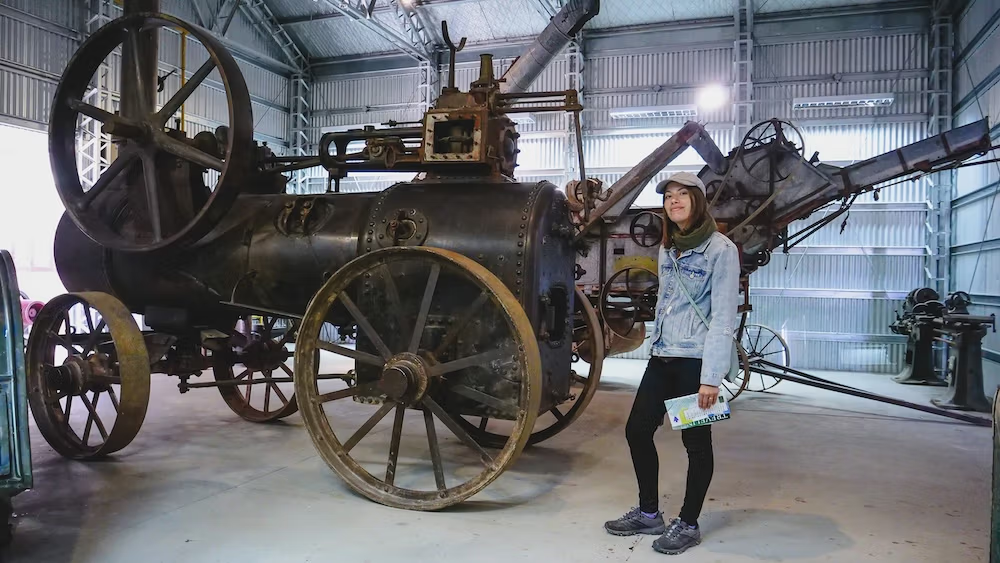
We spent an afternoon wandering through the heavy farming equipment and old tools, but the real draw is on the upper floors, specifically the tomb of a horse named Malacara (Bad Face).
During an expedition into the Andes in 1883, the Welsh explorer John Daniel Evans and his group were ambushed by an Araucanian tribe (a tragic exception to the otherwise peaceful indigenous relations). Evans only survived because Malacara, his loyal horse, leaped down a massive, near-vertical ravine, safely carrying him away from the ambush. Evans went on to found the mill that gave Trevelin its name. When Malacara finally died of old age, Evans buried him with full honors. Standing in a museum looking at the memorial for a 19th-century horse perfectly encapsulates the deep, quirky, and fiercely loyal spirit of Andean Patagonia.
The Eisteddfod: Festival Logistics
The Welsh didn’t just come to survive; they came to sing. The Eisteddfod is a traditional Welsh festival of literature, music, and performance. Amazingly, it is still held across Chubut today, entirely in the Welsh language (specifically Cymraeg y Wladfa, the unique Patagonian dialect that blends Welsh with Spanish loanwords).
If you are planning a trip and want to witness this cultural anomaly in person, you have to time your geography perfectly.
| 2026 Eisteddfod Event | The Location | The Vibe & Focus | Logistical Friction |
| The Trevelin Eisteddfod | Trevelin (May 1–2) | Alpine, intimate, heavily focused on bilingual poetry. | High: May is deep autumn. Expect cold weather and reduced bus schedules from Esquel. |
| The Mimosa Anniversary | Puerto Madryn (June) | Not a true Eisteddfod, but the massive landing celebration. | Medium: Hotels book up quickly. Siesta hours are still strictly enforced despite the parties. |
| The Youth Eisteddfod | Gaiman (September) | Vibrant, chaotic, showcasing the new generation of Welsh speakers. | Low: Gaiman is easily accessible from Trelew via the 28 de Julio bus. |
| The Chubut Eisteddfod | Trelew (October) | The main event. Massive choral competitions and the awarding of the Bardic Chair. | High: Trelew’s infrastructure groans under the weight of visitors. Book accommodations a year out. |
When you sit in a tea house in Gaiman, staring down a mountain of scones, or when you walk the dusty streets of Dolavon on a quiet afternoon, you aren’t just looking at an eccentric tourist trap. You are sitting inside one of the most successful, unlikely cultural preservation projects in human history. They came to the end of the earth to save their voice, and over a century and a half later, the desert is still singing.
The Blueprint for the Welsh Detour
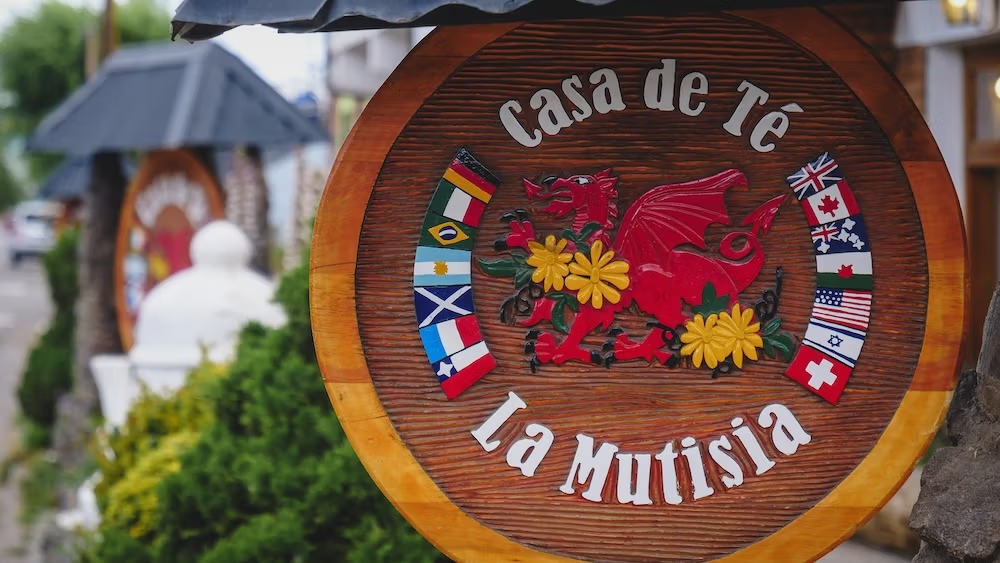
As you’ll see in our upcoming destination guides for deep Patagonia, the Welsh detour is unlike anything else in South America. It is a place where you will eat dense black cake in the desert, stand in the footprints of Butch Cassidy, and learn how a peaceful treaty with the Tehuelche saved a Celtic language from extinction.
But it demands your logistical respect. You need to hoard physical SUBE cards before arriving. You need to respect the Sunday closures and the Monday ghost towns. You need to skip lunch before entering a tea house, and you need to accept that sometimes, a 16-hour bus ride is going to take 19 hours.
Embrace the friction. Drink the tea. And whatever you do, don’t show up in Trevelin in March looking for tulips.

FAQ: Welsh Patagonia: The Most Surprising Cultural Detour in Argentina
Is it possible to visit the Welsh settlements without a rental car?
Absolutely. You can navigate the entire Lower Chubut Valley (Trelew, Gaiman, and Dolavon) using the Línea 28 de Julio buses. However, the Andes are a different beast. While we managed to get around with a mix of buses and a well-timed taxi from Esquel to Trevelin, a car gives you the freedom to hit the tulip fields or the Nant Fach Mill without worrying about the erratic Sunday schedules that nearly stranded us.
Can I just order a single cup of tea and one slice of cake?
Nope. In Gaiman, you are almost always required to pay for the full Servicio de Té. It’s an all-or-nothing cultural experience that includes a massive spread of breads, scones, and various cakes. If you aren’t prepared for a sugar-induced coma, your best bet is to go as a group and see if the house allows a “sharing fee” for an extra pot of tea.
Do I need to speak Welsh to visit?
Never. While you’ll see Welsh on the street signs and hear it spoken during the Eisteddfod festivals, everyone speaks Spanish, and most people involved in tourism speak at least some English. That said, learning how to say Diolch (thank you) will earn you some serious brownie points with the local tea house owners.
Is the tap water safe to drink in these towns?
Yes. The tap water in the urban areas of Chubut is generally safe for consumption. However, if you have a sensitive stomach or you’re out in the more remote Andean areas, sticking to bottled water or using a filtered bottle is a smart “better safe than sorry” move. We personally didn’t have any issues, but the mineral content can vary wildly from the coast to the mountains.
Can I pay with a credit card at the tea houses?
Unlikely. While some of the larger, more “posh” establishments like Ty Te Caerdydd may accept cards, many of the traditional houses and local museums are strictly cash-only. Given Argentina’s fluctuating economy and the occasional “the machine is broken” reality, you should always carry enough Pesos to cover your tea and transit. Don’t be the traveler holding up the line with a spinning credit card reader.
When is the best time to see the Trevelin tulips?
Strictly October. The window is incredibly narrow, usually running from October 7th to November 7th. If you show up in December, you’ll be looking at a field of green stems. We made the mistake of visiting out of season, and while the Andean backdrop is still stunning, you really want to time your visit for that October bloom if you want the “Instagram” shot.
Are there many vegetarian or vegan options in the Welsh spreads?
Depends. Vegetarians will be in heaven with the sheer volume of scones, breads, and jams. However, vegans will find it a struggle. The Welsh tradition is built on a foundation of butter, cream, and eggs. If you’re vegan, you might be limited to the tea itself and perhaps some plain toast, so I’d recommend eating a solid meal beforehand.
Is it safe to wander around Trelew with camera gear?
Generally. But you need to stay alert. We found Trelew to be perfectly fine during the day, especially around the museums. However, the area around the bus terminal can be a bit gritty. Keep your expensive gear tucked away when you’re transiting, and try to avoid walking around the “Ghost Town” streets on Sunday nights with a camera slung over your shoulder.
Project 23 Argentina: This guide is also available in Spanish. [Lea la versión en castellano: Patagonia Galesa: El Desvío Cultural Más Sorprendente de Argentina]