
There is a very specific sound a cheap travel umbrella makes right before a Patagonian gust permanently bends it backward into a useless, soaked metal spiderweb. I learned this while trudging ten blocks through the rain to the bus terminal in Esquel. I had packed for “Summer in Argentina,” an optimistic delusion that lasted exactly forty-eight hours. By day three, I was shivering in Audrey’s borrowed jacket, marching into a local shop to buy thick wool socks and a winter hat just to survive the morning temperature drops.
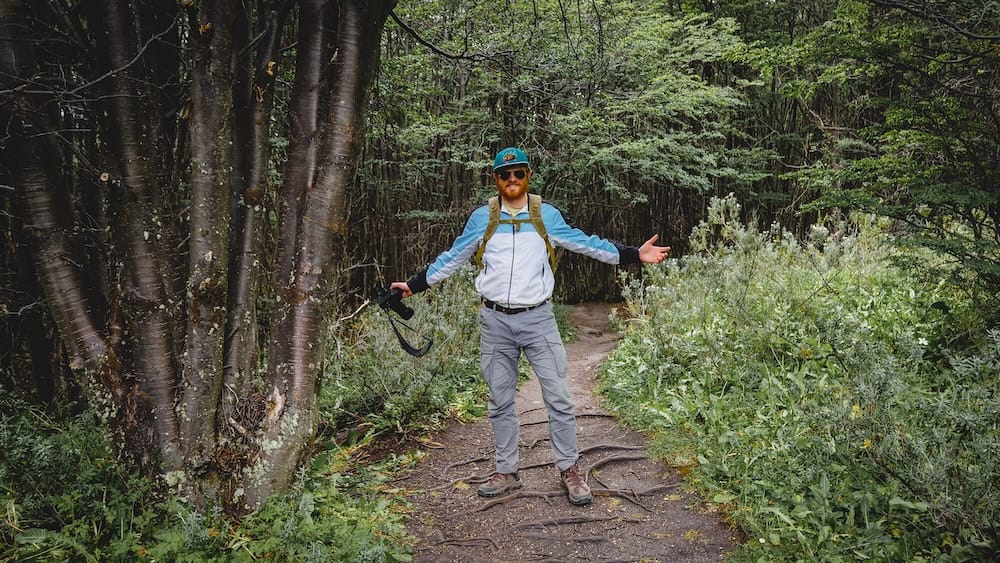
Travel blogs love to talk about the raw, untamed romance of Patagonia. They write poetic prose about conquering the peaks and experiencing four seasons in a single day. But when you are actually boots-on-the-ground, standing on an exposed gravel path while a 50 mph gust tries to push you into a glacial river, the romance fades quickly. You aren’t conquering anything down here; you are negotiating terms of surrender with the atmosphere.
If you’ve followed our YouTube channel for a while, you know we aren’t hardcore, ice-axe-wielding mountaineers. We are enthusiastic, food-motivated travelers who love a good view but also deeply appreciate feeling our toes. We spent our time in Patagonia getting physically blown off trails, battling infrastructure bottlenecks, and desperately seeking caloric refuges. This guide is the ultimate data-dump of what we learned the hard way, cross-referenced with the logistics you need to actually survive and enjoy the bottom of the world.
The Patagonia Wind Damage Matrix: What the Weather Destroys First
Patagonian wind does not hit everything equally. Some items fail almost instantly, while others can survive if you use them correctly.
| Item | What Usually Happens | Why It Fails | Better Move |
|---|---|---|---|
| Cheap travel umbrella | Inverts, bends, dies permanently | Too much surface area, weak frame | Use a hooded waterproof shell instead |
| Rolling luggage | Wheels jam, drag, or break on gravel | Wind plus rough streets is a brutal combo | Use a backpack or duffel |
| Fleece hoodie as outer layer | Wind cuts straight through | No true wind barrier | Put a hard-shell over your insulation |
| Fiberglass tent poles | Snap under gust load | Not built for Williwaw-level force | Use aluminum or DAC poles |
| Car door in an exposed lot | Hyperextends and bends hinges | Sudden side gust | Park facing into the wind and brace the door |
| Bare camera lens | Gets abraded by grit and salty dust | Sandblast effect | Use sacrificial UV filters |
| Thin moisturizer | Gets stripped off almost instantly | Wind and dry air overwhelm it | Use lanolin, beeswax, or petroleum-based barrier creams |
The Kinetic Reality of the Roaring Forties
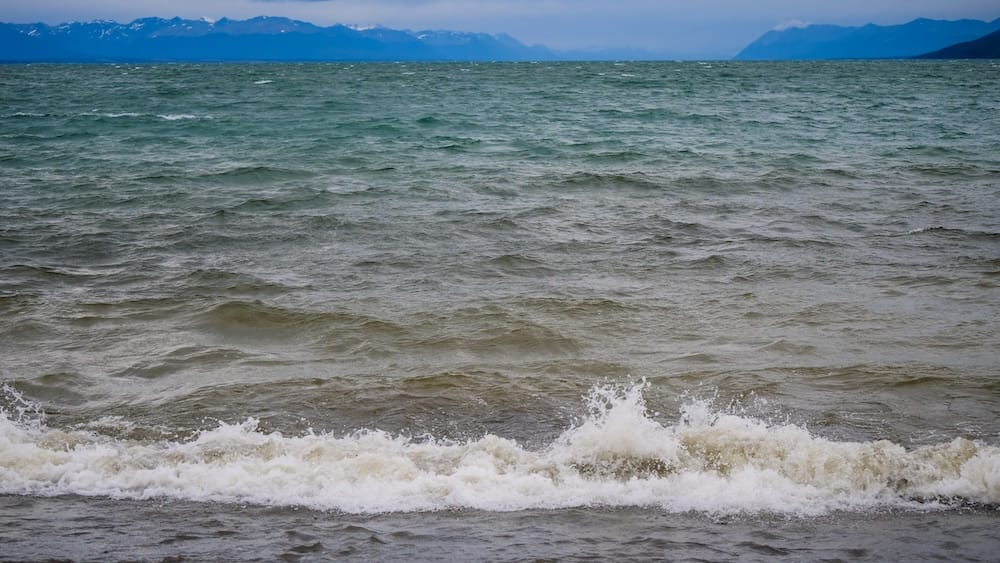
You cannot understand Patagonia without understanding the “Roaring 40s.” These are the prevailing westerly winds that build unbroken kinetic energy across the endless expanse of the South Pacific. Because there are no major landmasses to slow them down, they smash directly into the Andes mountain range at full speed.
The weather here is not just a backdrop; it is a physical force that actively dictates your itinerary, your budget, and the structural integrity of your gear. On a standard Tuesday, you are looking at 20 to 50 mph gusts. On an extreme day, those winds hit 80 mph—literal hurricane force.
When we were in Puerto Madryn, we experienced how deceptive this can be. We started the day enjoying the chill, sunny vibes by the town beach—the ultimate relaxing experience. But the moment we left the sheltered bay to walk out to the Fundación Ecocentro on the edge of town, the environment turned on us. The boardwalk became a fully exposed, super-windy, exhausting slog. We felt like we were stranded in the middle of nowhere, just one block away from paradise.
Patagonian Wind & Weather Translation Matrix
To put this into perspective, we built a matrix of what the meteorological data actually means for your daily logistics.
| Metric / Phenomenon | The Meteorological Reality | The Ground-Level Consequence | Survival Protocol & Gear Triage |
| Standard Westerlies | Sustained 20 – 50 mph gusts across the steppes. | Standard walking requires a forward lean. Dust and gravel are kicked up to eye level. | Wraparound sunglasses are mandatory. Avoid rolling luggage; unpaved streets will destroy the wheels instantly. |
| Williwaws (Gravity Waves) | Sudden adiabatic downdrafts pushing 110+ km/h. | Violent, unpredictable blasts that plunge down eastern slopes into towns like El Chaltén. | Never use fiberglass or carbon fiber tent poles. They will shatter. Park authorities mandate 7001-T6 aluminum or DAC poles and heavy-duty spikes. |
| Perceived Temperature | Air temp: 14°C (57°F). Wind: 40 km/h. | The “feels like” temperature plummets to near freezing. Standard fleece hoodies are utterly useless. | Outer layers must be 100% windproof hard-shells. Insulate underneath. |
| Atmospheric Salinity | High winds carrying atomized seawater up to 5km inland. | Known as “The Sandblast.” Rapidly destroys exposed camera weather seals and severely chaps skin. | Ditch water-based moisturizers for heavy beeswax or Lanolin. Wipe electronics nightly with a damp microfiber cloth. |
| Infrastructure Triggers | 55 knots (aviation) / 80 km/h (maritime). | Immediate local government mandates for airport ground-stops and ferry cancellations. | Never book tight transit connections. Always build a 24-hour buffer for regional flights. |
[Samuel’s Structural Gear Warning]
When you are pitching a tent in Torres del Paine or Los Glaciares, standard backyard protocols will result in a shredded rainfly. Always stake the windward side first before unpacking the rest of the tent body. Insert your poles while the tent is staked flat against the ground—never let it turn into a sail. The second the structure is up, throw your heaviest gear (backpacks, boots) inside as internal anchors.
The High-Stakes Logistics of Patagonian Transit
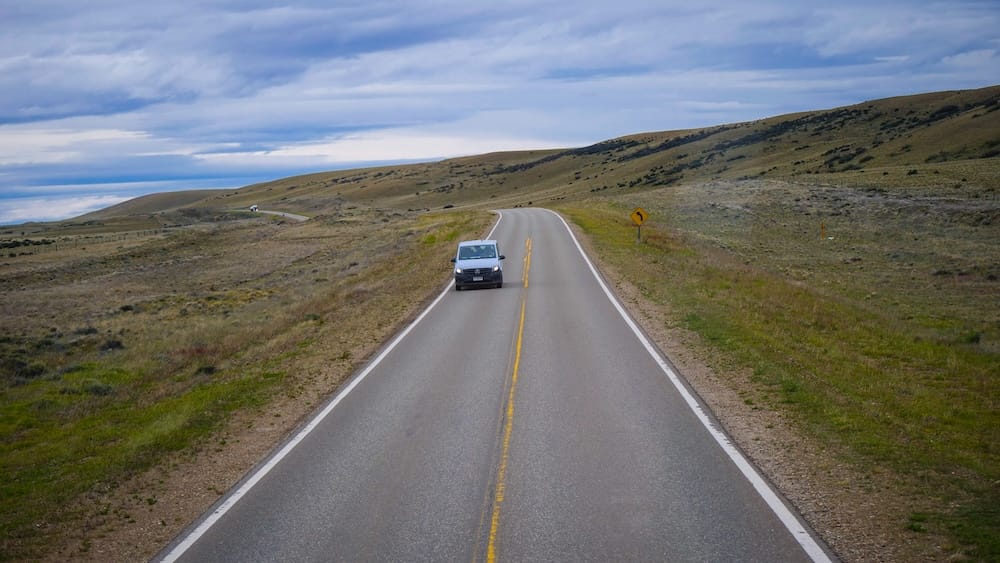
The physical scale of Patagonia is difficult to comprehend until you are sitting on a bus staring at an endless expanse of yellow steppe. Distances are vast, and the wind dictates the pace of human movement.
Take the drive from the Torres del Paine park entrance (Laguna Amarga) to the catamaran dock at Pudeto. It takes over 45 minutes on bone-rattling ripio (corrugated dirt roads). If you suffer from motion sickness, the internal park transit is often worse than the actual hiking. Furthermore, many park roads carry a strict 40 km/h legal speed limit. This isn’t just to protect the guanacos; it’s because a sudden lateral gust across the steppe can easily flip a high-profile campervan driving at highway speeds.
But the most expensive mistake you can make in Patagonia happens in the parking lot.
The Wind-Blown Door Loophole
You haven’t known true rental car anxiety until you are parking a vehicle in Patagonia. Recently, major rental agencies have a deeply buried clause regarding wind damage. If you open your car door and a gust rips it from your hand, hyperextending the hinges and bending the frame, agencies classify this as driver negligence. This instantly bypasses your expensive Super CDW (Collision Damage Waiver) coverage. This split-second mistake currently costs travelers anywhere from $1,105 to over $3,000 out of pocket.
The Fix: Always park the nose of the car facing directly into the wind. Before opening the door, roll down your window two inches to equalize the cabin pressure. Grab the interior handle with both hands, brace the door with your shoulder, and push it open incrementally. Never let go until the latch clicks shut.
The High-Friction Transit Ledger
| Transit Bottleneck | Current Price | The Logistical Friction Point | The Boots-on-the-Ground Fix |
| Catamaran Hielos Patagónicos (Lake Pehoé) | CLP 26,000 (~$27 USD) one-way. | Connects Pudeto to the W-Trek. No advance tickets. Strict first-come, first-served cash basis on the boat. Lines exceed capacity daily. | Arrive 45+ mins early. Have exact change in Chilean Pesos. Do not sit in the cafeteria; stand physically in the wind to hold your place in line. |
| Bus Sur (Pto. Natales to El Calafate) | Approx $35-$45 USD. | Wind frequently causes border authorities to close roads entirely, turning a 5-hour trip into a 10-hour standstill. | Never book a flight out of FTE (El Calafate) on the same day you cross the border. Build a 24-hour buffer. |
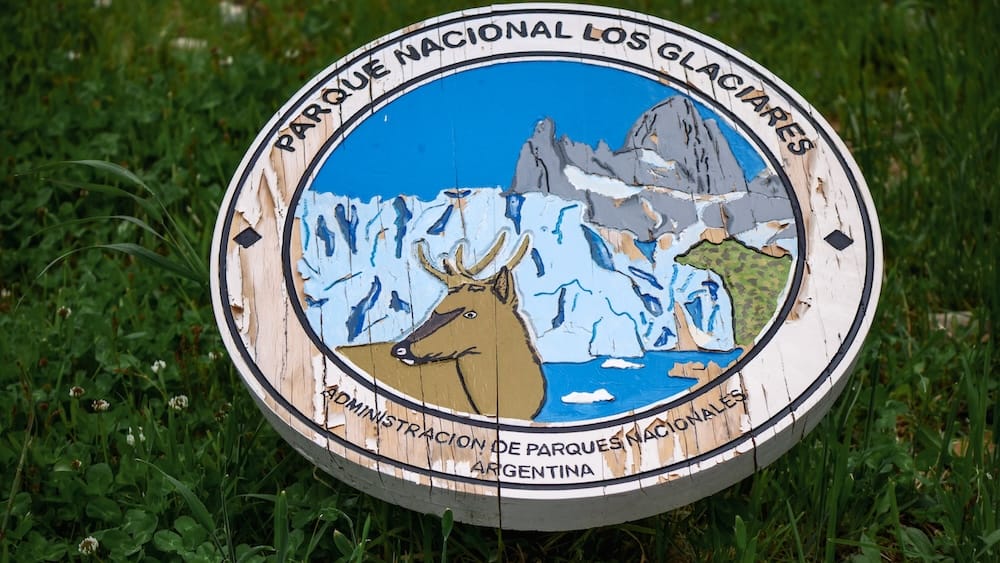
| Los Glaciares National Park Entry | ARS 45,000 (~$45 USD) for non-residents. | Tickets are required at trailheads like Laguna de los Tres, but payment gateways at the gate often fail due to no Wi-Fi. | Pre-purchase your entry online while you still have strong internet in El Calafate or Buenos Aires. |
| CONAF Entry (Torres del Paine) | CLP 9,400 Day Pass / CLP 13,500 for +3 Days. | Mandatory entry requirement. You cannot buy this at the gate anymore. | Must be purchased via pasesparques.cl. Passes activate one day after purchase. |
Trail Realities and the Art of Surrender
In our upcoming destination guides, you’ll see a lot of epic drone shots and triumphant summit photos. What you won’t always see are the times we just gave up. And in Patagonia, giving up is a vital survival skill.
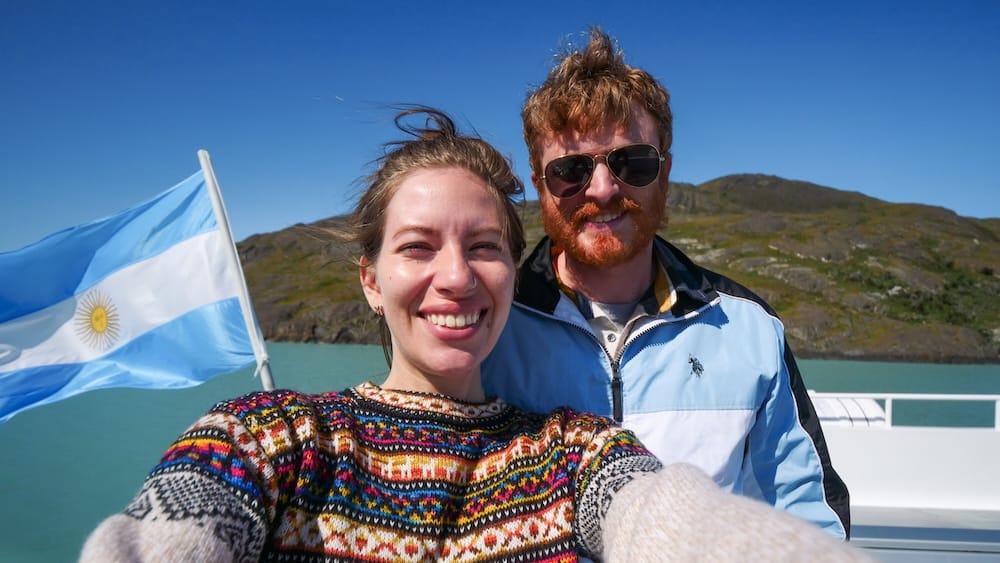
When we were in Esquel, we decided to tackle Cerro de la Cruz. We made it about halfway up the mountain before the wind shifted from “bracing” to “dangerous.” We were getting physically blown off the trail, scrambling for purchase on the loose rocks. We finally made the call to bail and turn around. As we were retreating, we ran into a cheerful French couple descending who casually informed us we still had an hour of steep climbing to go anyway. The relief I felt was immeasurable.
Do not let the toxic “conquer the mountain” narrative force you into a dangerous situation. Patagonian trails do not feature manicured switchbacks. You are navigating massive, uneven boulders, exposed tree roots, and deep mud channels carved by glacial runoff.
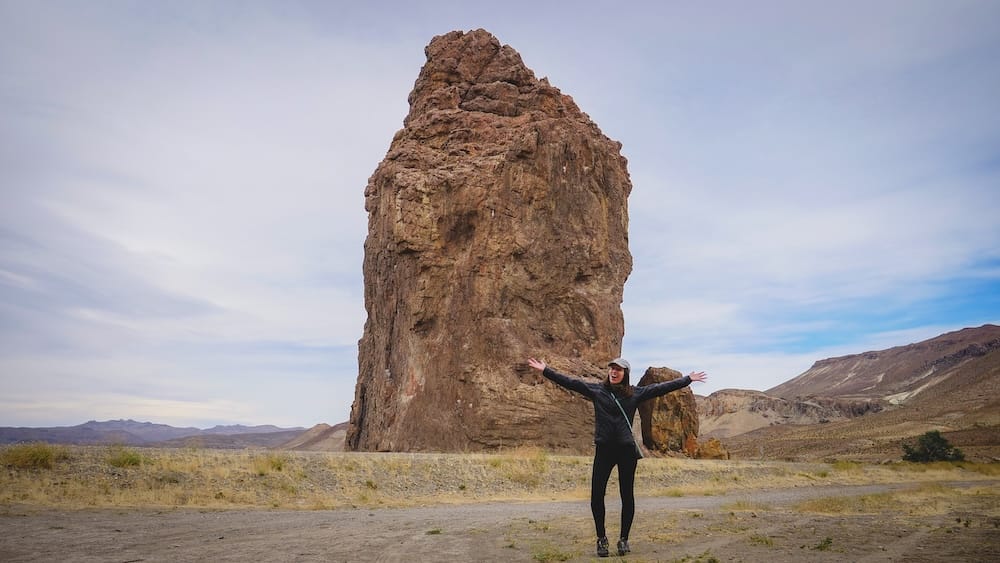
When we hiked into the canyon at Piedra Parada, the locals told us to bundle up. We thought we were prepared. We weren’t. The 4-kilometer hike past the standing rock turned into a wind-tunnel nightmare. The wind funneled through the canyon walls, compounding its speed and dropping the temperature so aggressively that the biting cold pierced right through our “warm comfy clothes.” It was a visceral lesson in localized weather phenomena.
Navigating the Crowds and Closures
If you are tackling the major hitters, timing is everything.
Torres del Paine (Chile): The O Circuit traditionally begins shutting down at the end of March or early April due to unstable weather and daylight loss. In recent seasons, CONAF has enforced strict mid-season closures for safety (frequently shutting down the pass between Coirón to Grey). The W Trek remains open slightly longer into May, but CONAF often requires hikers to be accompanied by certified guides for specific sections late in the season, adding massive unexpected costs that the refugios will not refund.
Los Glaciares (Argentina): The final kilometer to the famous Fitz Roy viewpoint (Laguna de los Tres) is a brutal 400-meter vertical scramble over loose scree. During the high season, inexperienced hikers bottleneck this narrow, exposed path. When the afternoon Williwaws kick up, they frequently knock people off balance, leading to injuries and a terrifying downhill conga line.
The Fix: Start your hike from El Chaltén no later than 6:00 AM. You will beat the tour buses, clear the scree scramble before the afternoon winds peak, and have the viewpoint largely to yourself. Park Rangers now actively patrol the trailheads and strongly enforce a rule forbidding hikers from starting the major treks after 3:00 PM.
Economic Friction & Caloric Refuges
At a certain point during a Patagonian trip, the wind stops being a majestic force of nature and just becomes something you desperately want to hide from.
After days of getting battered by the elements, finding a culinary refuge becomes the highlight of the trip. In the Lake Region near Bariloche, the springtime winds were so aggressive we bailed on our afternoon itinerary entirely and ducked into a famous local chocolate shop. Wrapping my freezing hands around a steaming mug of hot cocoa while Audrey sipped fancy Indian tea felt like a religious experience. The region’s rich culinary culture—heavy on roasted meats, thick stews, and European-style pastries—isn’t just a tourist attraction; it’s a necessary biological coping mechanism.
But paying for that food brings its own unique set of headaches, particularly in Argentina.
[Samuel’s Cash-in-Hand Warning]
El Chaltén is a tiny, highly walkable town (leave the rolling luggage at home; the gravel streets will destroy it), but it is notoriously plagued by terrible internet infrastructure. This means credit card machines frequently go down for days at a time. The few ATMs in town consistently run entirely out of cash by Friday afternoon. Dozens of weekend hikers find themselves completely unable to pay for their post-hike steak dinners or tip their guides.
The Blue Dollar Fix: Bring a stack of crisp, unblemished $100 USD bills from home. (They must be pristine; local exchanges will reject bills with tiny tears or pen marks). Pay for larger meals in USD to receive your change in Argentine Pesos at the highly favorable “Blue Dollar” rate. This ensures you have a steady supply of local cash to survive the weekend internet blackouts.
Caloric Replenishment & Financial Reality Check
| The Caloric Reward | Venue / Location | Price & Payment Reality | Post-Hike Triage Priority |
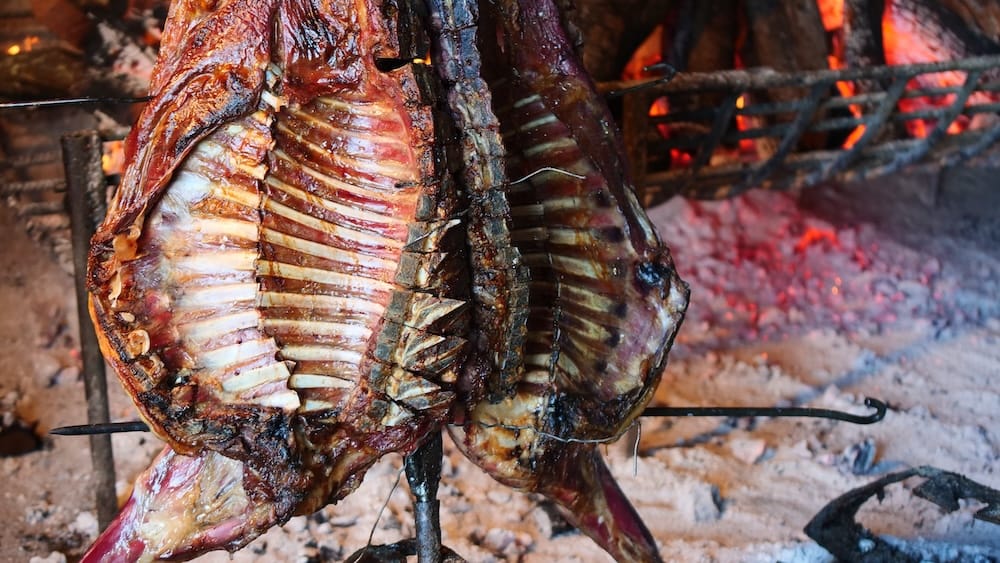
| Traditional Patagonian Asado (Cordero Al Asador) | Various local Parrillas in El Calafate / El Chaltén. | Approx $25-$35 USD per person (Includes wine). Pay in crisp USD to get ARS change. | High. The ultimate protein replenishment. Expect massive portions of slow-roasted lamb, heavy garlic, and Malbec. |
| Artisan Hot Cocoa & Sweets | Bariloche Chocolate Shops (Mamuschka, Rapa Nui). | $5-$10 USD for drinks and a sampler box. Cards widely accepted here. | Critical. Essential mental health reset when the wind breaks your spirit. |
| Las Torres Refugio Meals | W-Trek & O-Circuit Campsites (Chile). | $30 – $45 USD for a basic hot dinner. Must be pre-booked months in advance. | Situational. Expensive, but carrying 5 days of food in 80mph winds is worse. Bookings open in early May. |
The Unvisited Reality: What We Missed But You Shouldn’t
As much as we tried to cover it all in our videos, the sheer scale of Patagonia means you have to make hard choices. While we focused heavily on independent trekking and local food, there are highly structured logistical experiences we bypassed that you absolutely need to know about.
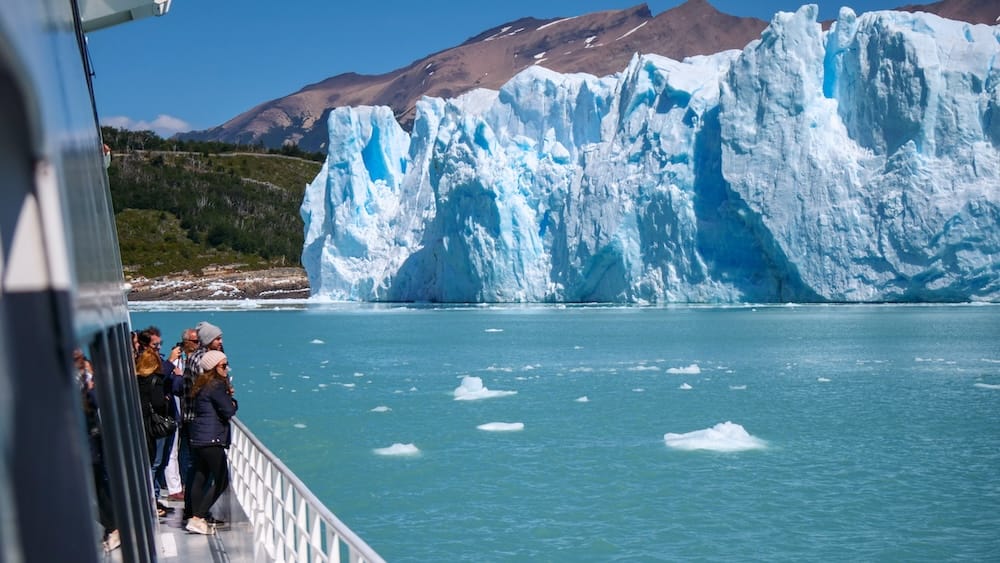
If you have the budget, the Hielo y Aventura Minitrekking on the Perito Moreno Glacier is the gold standard of Patagonian guided experiences. At currently ARS 320,000 (roughly $320 USD) for adults, it is a massive financial commitment. You get a 1.5-hour ice hike using provided crampons, culminating in a glass of scotch served over freshly chopped glacier ice.
The Logistical Reality: If you book this, secure a morning departure (around 8:00 AM). The wind on the face of the glacier is significantly more stable in the early hours before the afternoon thermal shifts kick in. Also, note that this excursion pauses entirely from May through September due to winter conditions.
Similarly, the Las Torres Refugios on the Chilean side require a level of logistical foresight that borders on a part-time job. These are the only legal places to sleep on the Eastern W-Trek. Prices vary wildly—from $30 for a raw patch of dirt to pitch your tent, up to $150+ for a made bed in a shared dorm. The friction here is the booking window. Peak season beds (December to February) sell out months in advance. If you are planning a trip, you need to be refreshing the booking portals daily starting in early May of 2025.
The Hidden Caloric Burn of Isometric Exhaustion
When you are leaning into a 40 mph headwind for six straight hours, your body is essentially performing a continuous, full-body isometric hold. Your neck, traps, and core remain in constant, rigid tension just to keep you upright on the trail and prevent you from being blown into the brush.
You are burning hundreds of hidden calories simply resisting the kinetic energy of the air. This isometric exhaustion is why so many hikers stumble back into town looking like zombies, entirely depleted despite having packed what they thought was enough trail mix.
[The Nomadic Samuel Health Reality Check]
If you follow our channel closely, you know I am heavily invested in personal health and longevity. I keep a systematic workout routine, track my metrics carefully (currently sitting at 172 pounds and grinding my way down to my goal of 160), and I usually travel with a highly specific stack of about 40 different supplements to keep my body optimized. But let me tell you: Patagonia threw my entire optimization protocol out the window. You cannot supplement your way out of a 60 mph wind beating. You need raw, heavy, aggressive triage.
Steppe Dehydration and the Wind-Wick Effect
Compounding the muscle exhaustion is the deceptive nature of the Patagonian steppe. The wind here is incredibly dry. It acts as a hyper-efficient moisture wick, evaporating your sweat instantly before you even feel damp.
Because you aren’t drenched in sweat, your brain tricks you into thinking you aren’t losing fluids. Hikers rarely realize how much water they are hemorrhaging until a massive dehydration headache hits them halfway through the descent.
Quick-Fire Triage Stats:
- Hidden Caloric Burn: Expect to burn 30% to 40% more calories than your standard baseline just from fighting wind resistance.
- Unnoticed Water Loss: You can lose up to 1 liter of water per hour in the high steppe winds without ever feeling sweaty.
- Mandatory Buffer Days: Back-to-back 10-hour hikes in 60 mph winds will compound isometric fatigue and drastically increase your risk of a rolled ankle. Build a recovery day into your itinerary.
The Patagonian Physical Recovery Protocol
The physical recovery protocol down here is not about delicate salads or light stretching. It requires immediate, anti-inflammatory, protein-heavy intervention and aggressive rehydration even when the air temperature feels freezing.
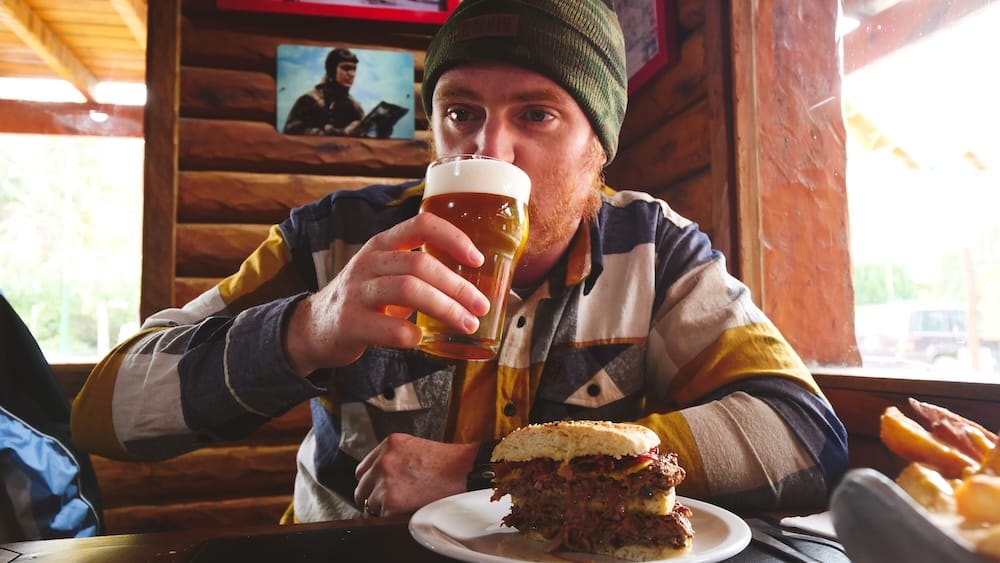
When we finally made it back to town, our first stop wasn’t our beds; it was a local parrilla for massive, garlic-heavy steaks. The rich, salt-crusted Patagonian beef isn’t just a cultural experience; it is a necessary biological intervention to repair wind-battered muscle tissue.
The Biomechanical Triage & Recovery Matrix
| The Physical Toll | The Atmospheric Cause | The Immediate Triage Protocol | Real-World Cost & Logistics |
| Isometric Core Exhaustion | 40-60 mph afternoon headwinds forcing constant muscle tension. | Immediate protein loading. The famous Patagonian Ojo de Bife (Ribeye) or slow-roasted Cordero. | Approx. $37 USD (ARS ~54,000) for a premium steak dinner in El Chaltén. Pay in crisp USD to maximize your Blue Dollar rate. |
| Steppe Dehydration | Extreme low-humidity westerlies evaporating sweat instantly. | Forced hydration scheduling. Drink 1 full liter before stepping onto the trail, regardless of thirst. | Electrolyte packets are critical. Tap water in El Chaltén is pristine glacial melt (free) but completely lacks mineral salts. |
| Wind-Chapped Epidermis | The abrasive “Sandblast” effect of coastal dust and dry mountain air. | Ditch standard water-based lotions. Apply heavy beeswax, Lanolin, or petroleum jelly barrier creams. | $4 – $8 USD at local Farmacias. Buy this in Buenos Aires; mountain town pharmacies frequently sell out during peak season. |
| Auditory Fatigue | 8-hour exposure to howling winds triggering cortisol and stress responses. | Total sensory deprivation. Wear noise-canceling headphones or heavy foam earplugs back at your room. | Free (if you pack them). Absolutely essential for lowering your heart rate and actually getting to sleep. |
The Auditory Fatigue of the Roaring Forties
There is a massive mental toll that comes with listening to an 80 mph wind howl past your ears for eight straight hours. You don’t realize how much a continuous, 90-decibel roar wears on your central nervous system until you get back to your refugio and find yourself inexplicably irritable, snapping at your partner over a misplaced dry bag.
The constant kinetic sound triggers a low-grade fight-or-flight response. It’s an auditory fatigue that catches even the most seasoned couples entirely off guard. You are physically exhausted from the isometric muscle tension we talked about earlier, but your brain is also fried from processing the chaotic noise of the landscape.
When conversation while moving becomes physically impossible, you lose the micro-check-ins that keep a hiking partnership safe and sane. You can’t just casually ask, “Hey, do you need to stop for water?” or “How are your ankles feeling?” If you try to stop and shout over the Williwaws, you just end up swallowing a lungful of abrasive dust.
The Pre-Trailhead Visual Protocol
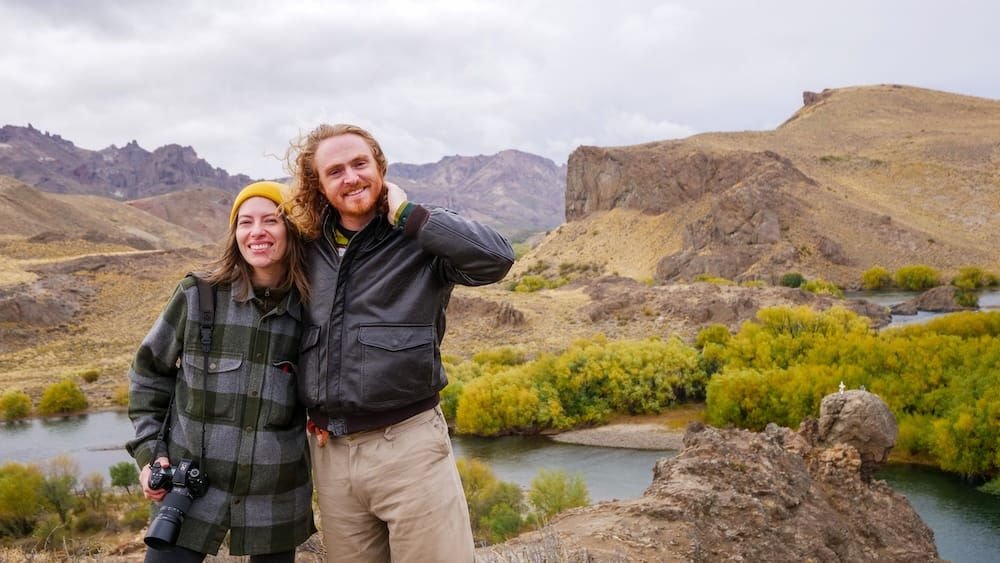
The only workaround to this communication blackout happens before you ever step foot on the trail. You must establish a strict set of basic hand signals with your travel partner in the parking lot or the cafeteria.
We learned the hard way that relying on shouting leads to frustration, misunderstandings, and missed wildlife sightings. Down here, visual cues are your only reliable lifeline.
The Patagonian Trail Signal & Auditory Triage Matrix
| The Visual Signal | The Trail Translation | Situational Context & Action Required | The Auditory Reality (Why it’s necessary) |
| Tapping Top of Head | “I need a physical break / Triage.” | Used when isometric exhaustion hits or a blister forms. Partner must immediately find the nearest windbreak (boulder/tree) to regroup. | Wind chill evaporates sweat so fast you won’t hear a partner panting or struggling to breathe behind you. |
| Pointing at Eyes, Then Target | “Look at this (Wildlife / Hazard).” | Used to point out Andean condors, guanacos, or a dangerous patch of loose scree ahead. | By the time you yell “Condor!” and they hear a muffled syllable, the bird has already caught a thermal and vanished. |
| Flat Hand, Palm Down | “Hold position / Wait.” | Critical on narrow, exposed sections like the John Gardner Pass when a sudden Williwaw downdraft hits. | Yelling “Stop!” into a 110 km/h headwind just pushes the sound directly back down your own throat. |
| The Thumbs Up / Down | “Caloric / Hydration Check.” | A mandatory hourly check-in. Thumbs down means an immediate stop for electrolyte loading or a heavy snack. | You cannot casually converse about hunger levels; by the time someone signals a thumbs down, they are likely already facing a severe caloric deficit. |
Surviving the Patagonian wind as a couple isn’t just about packing the right aluminum tent poles; it’s about adapting how you exist together in space. When the wind strips away your ability to speak, you have to become hyper-observant of each other’s physical cues. The silver lining? When you finally push through the heavy wooden doors of a local restaurant, peel off your windproof layers, and the ambient roar is replaced by the clinking of wine glasses, the return of your voice feels like a genuine luxury.
Town-by-Town Patagonia Weather Personality Snapshot
Patagonia is not meteorologically uniform. The weather personality changes depending on whether you are on the coast, deep in the steppe, or near the mountains.
| Place | Weather Personality | Main Problem | Best Response |
|---|---|---|---|
| Puerto Madryn | Deceptively pleasant in sheltered areas, brutal when exposed | Coastal wind and salt-laced grit | Sunglasses, skin protection, short exposed walks |
| Esquel | Cold swings, rain, and gusty mountain weather | False sense of “summer” comfort | Layers, emergency socks, proper shell |
| El Chaltén | Sudden violent downdrafts and exposed trail sections | Afternoon wind escalation | Early starts and readiness to bail |
| El Calafate | Wind plus logistics | Airport and road disruption | Build buffers into transit plans |
| Torres del Paine | Scenic but relentlessly punishing | Wind, exposed sectors, booking friction | Heavy planning and bombproof gear |
| Piedra Parada | Canyon wind amplification | Localized wind-tunnel effect | Bundle up even if the forecast looks mild |
| Bariloche | Variable mountain weather with refuge temptations | Spring gusts and itinerary disruption | Embrace indoor recovery and flexible plans |
First-Timer Mistakes in Patagonia Weather
The fastest way to have a miserable trip is to make the same assumptions people make everywhere else.
| Mistake | What Happens | Better Move |
|---|---|---|
| Packing for “summer” | You freeze by morning | Pack for wind first, season second |
| Trusting air temperature alone | Wind chill wrecks you | Check gust speeds, not just temperature |
| Booking tight border-to-flight connections | You miss your plane | Leave a full-day buffer |
| Starting major hikes late | You hit crowds and peak winds | Start very early |
| Underestimating hydration needs | Headaches and fatigue hit hard | Force regular water intake |
| Treating bailout as failure | You take unnecessary risks | Normalize turning around |
| Assuming talking on-trail is easy | Communication breaks down | Use hand signals |
The Final Verdict on the Wind
Patagonia is not a destination you conquer; it is a destination you survive, adapt to, and ultimately fall in love with because of its sheer, unapologetic power.
You will likely lose an umbrella. You will definitely get dirt in your eyes. You might find yourself bracing a rental car door with your entire body weight in a dusty parking lot. But when the wind briefly dies down, and you are standing in front of the jagged granite spires of Fitz Roy with a pristine $100 bill in your pocket and the promise of a hot empanada waiting in town, every ounce of logistical friction fades away.
Pack the aluminum tent poles, bring the heavy Lanolin cream, and for the love of all things holy, leave your summer clothes at home.
FAQ: Crazy Patagonian Wind!
Is the wind worse during a specific time of year in Patagonia?
100%. The peak Patagonian summer (December through February) is actually when the winds are at their most violent. The extreme temperature differentials between the cold Pacific ocean and the warming South American landmass supercharge the prevailing westerly winds. If you want slightly calmer skies, aim for the shoulder seasons like April or October, though you’ll be trading the wind for colder baseline temperatures.
Can I just use standard winter layers instead of a windproof hard-shell?
Nope. Standard fleece hoodies or down jackets are completely porous to 50 mph gusts. The wind will strip the heat right off your body, plunging your perceived temperature to near freezing in seconds. Your outermost layer must be a 100% windproof hard-shell. You can wear whatever comfortable, insulating layers you want underneath, but if you don’t block the kinetic force of the air, you will be miserable.
Do they actually close the national parks or trails just because it’s windy?
Frequently. Park rangers in both Los Glaciares (Argentina) and Torres del Paine (Chile) do not mess around. If sustained winds or Williwaw gusts hit dangerous thresholds, they will shut down specific sectors, especially exposed passes like the John Gardner or the final scree scramble to Fitz Roy. This is for your own survival. Always have a backup day hike planned in the lower valleys.
Should I pack a travel umbrella for the rainy days?
Never. There is a very specific sound a cheap travel umbrella makes right before a Patagonian gust permanently bends it backward into a useless, soaked metal spiderweb. I learned this the hard way while trudging 10 blocks in the rain to the bus terminal in Esquel. Leave the umbrella at home and invest the money in a high-quality, hooded rain jacket.
Is driving a rental car in Patagonia dangerous during high winds?
Absolutely. It isn’t just the driving that is dangerous; it’s the parking lot. Now, rental agencies classify wind damage to car doors—when a gust hyperextends the hinges and bends the frame—as driver negligence. This instantly voids your Super CDW coverage and will cost you roughly $1,105 out of pocket. Always park facing directly into the wind, and use two hands and your shoulder to brace the door when opening it.
Will a standard fiberglass camping tent survive the wind?
Not a chance. Patagonian “Williwaws” (adiabatic gravity waves pushing 110+ km/h downdrafts) will shatter standard fiberglass or carbon fiber poles instantly. Park guidelines actively mandate using strictly 7001-T6 aluminum or DAC poles with heavy-duty stakes. Furthermore, you must pitch the tent nose-first into the wind and immediately throw your heavy backpack inside to anchor it.
Will the wind and dust damage my camera gear?
100%. We call it the “Sandblast” effect. In coastal hubs like Puerto Madryn, high winds carry atomized seawater and abrasive grit up to 5km inland. This abrasive mixture will grind into your focus rings and destroy exposed weather seals. Put a cheap, sacrificial UV filter on all your lenses, keep your camera in a sealed bag when not actively shooting, and wipe everything down with a damp cloth every single night.
Should I book my flight out of El Calafate on the same day my bus arrives from Chile?
Terrible idea. The wind frequently causes border authorities to close the roads entirely for hours at a time. A standard 5-hour bus ride from Puerto Natales can easily turn into a 10-hour standstill, causing you to miss tight flight connections out of El Calafate Airport (FTE). Always build a 24-hour buffer into your itinerary when crossing the border.
Project 23 Argentina: This guide is also available in Spanish. [Lea la versión en castellano: Guía de Supervivencia al Viento Patagónico: Cómo se Siente Realmente el Clima en la Patagonia]