
As I stood still for a moment at the Jonker Street Night Market, I could feel beads of sweat running down my forehead and chest. A wave of pedestrians jostled against my body while competing for inches of space that did not exist. When I turned around to greet Audrey, I marvelled out loud, “Isn’t this great!”
Admittedly, not everybody responds to being slowly boiled alive inside a human traffic jam with unbridled enthusiasm. I do.
The beehive of activity known as the Jonker Street Night Market takes over Jalan Hang Jebat in the heart of Chinatown in Melaka, Malaysia. Vendors, performers, locals and visitors converge on an already narrow street to eat, browse, socialize, people-watch and occasionally attempt the ambitious feat of walking in a straight line.
When we filmed our visit, I introduced Jonker Street as one of the biggest night markets I had ever seen and a great place to find food and go shopping. That was not polished hindsight added years later. It was our verdict while heading into the market that night.
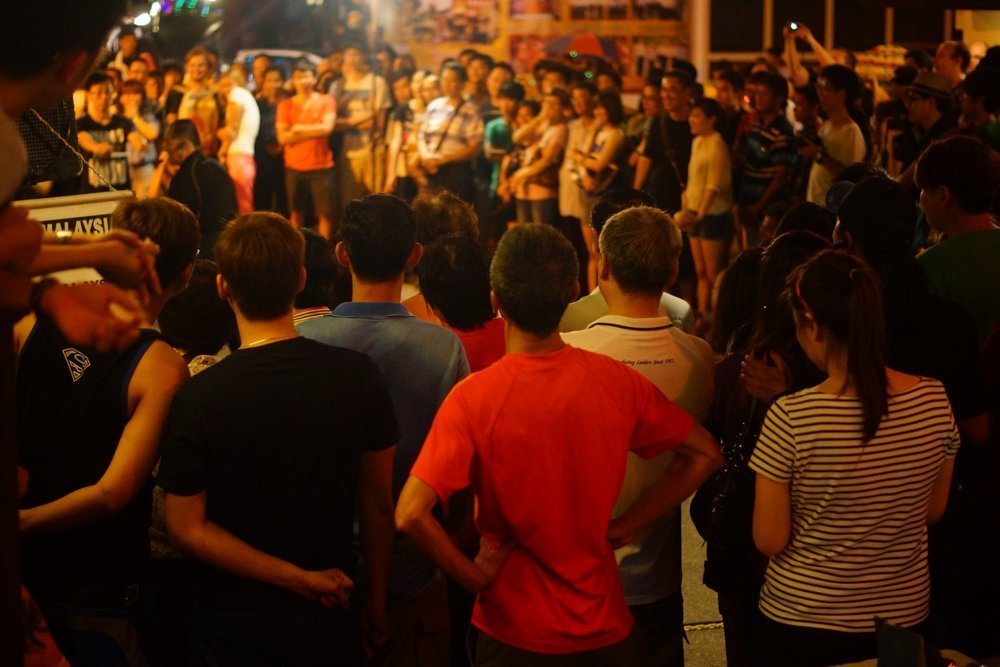
This remains one of my favourite night markets in all of Asia—let alone Malaysia—and considering how extensively I travelled around the region, that is saying quite a lot. Only the marvellous Shilin Night Market in Taipei ranked ahead of it for me.
The photographs below come from visits in 2011 and 2013. They document the market as Audrey and I experienced it then: humid, crowded, theatrical, occasionally ridiculous and endlessly photogenic. We also ate our way through part of the market, cooling down with shaved ice and sugarcane juice before tackling a savoury dish whose name left us deeply suspicious.
The practical guide following the photo essay is for travellers planning a visit now, but the people, performances, food and small human moments in these images belong to those earlier nights.
This is first and foremost a travel photo essay. The guide is here to help you experience the place. It is not here to bury it beneath fourteen tables, six versions of the same packing tip and a conclusion promising “memories to cherish.”
Jonker Street Night Market Quick Guide
| Where | Jalan Hang Jebat in Melaka’s historic Chinatown |
|---|---|
| Regular market nights | Friday, Saturday and Sunday |
| Typical hours | Approximately 6:00 p.m. until midnight |
| Admission | Free to enter |
| Best for | Street food, people-watching, photography, performances and casual shopping |
| Best transport strategy | Walk from the heritage district or use a taxi, ride-hailing service or local bus and finish on foot |
| What to bring | Small notes, water, breathable clothing, comfortable footwear and rain protection |
| Essential warning | The market can become intensely crowded. That is not an unfortunate side effect. It is half the spectacle. |
Those are the regular operating arrangements, but a street market is not an airport departure board. Severe rain, festivals, public holidays and local decisions can affect individual stalls or hours. Confirm locally when your visit falls on an unusual weekend.
Jonker Street Night Market Photo Essay
The hardest part of photographing Jonker Street was not finding a subject. It was separating one subject from the fifty people standing behind it, three people stepping in front of it and one gentleman unexpectedly stopping dead in the middle of the lane.
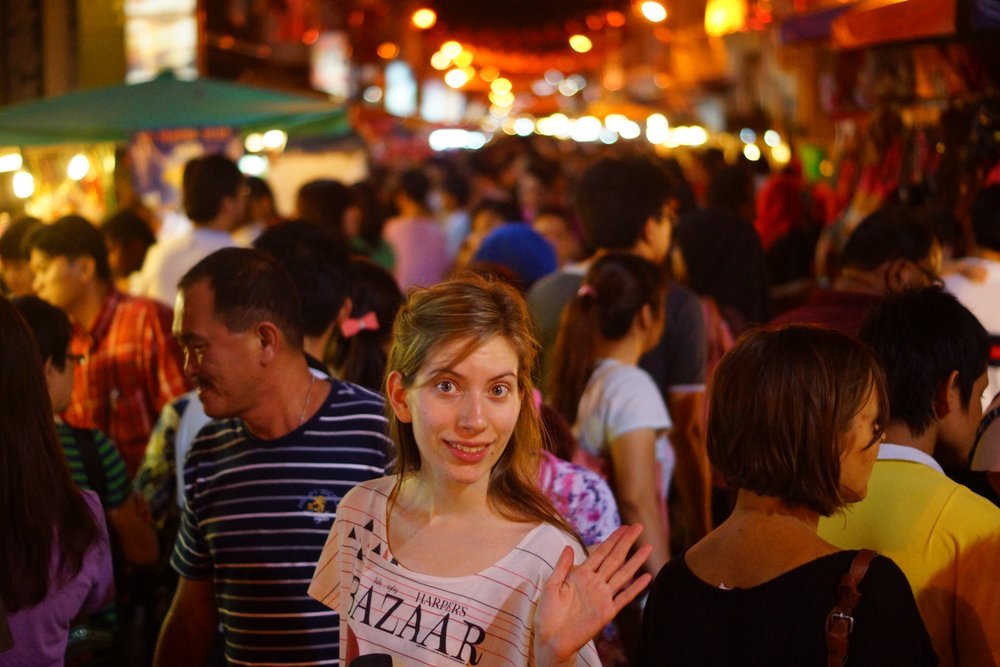
The lovely Audrey Bergner of That Backpacker poses for a crowd-perspective night shot during one of the busiest stretches of the evening.
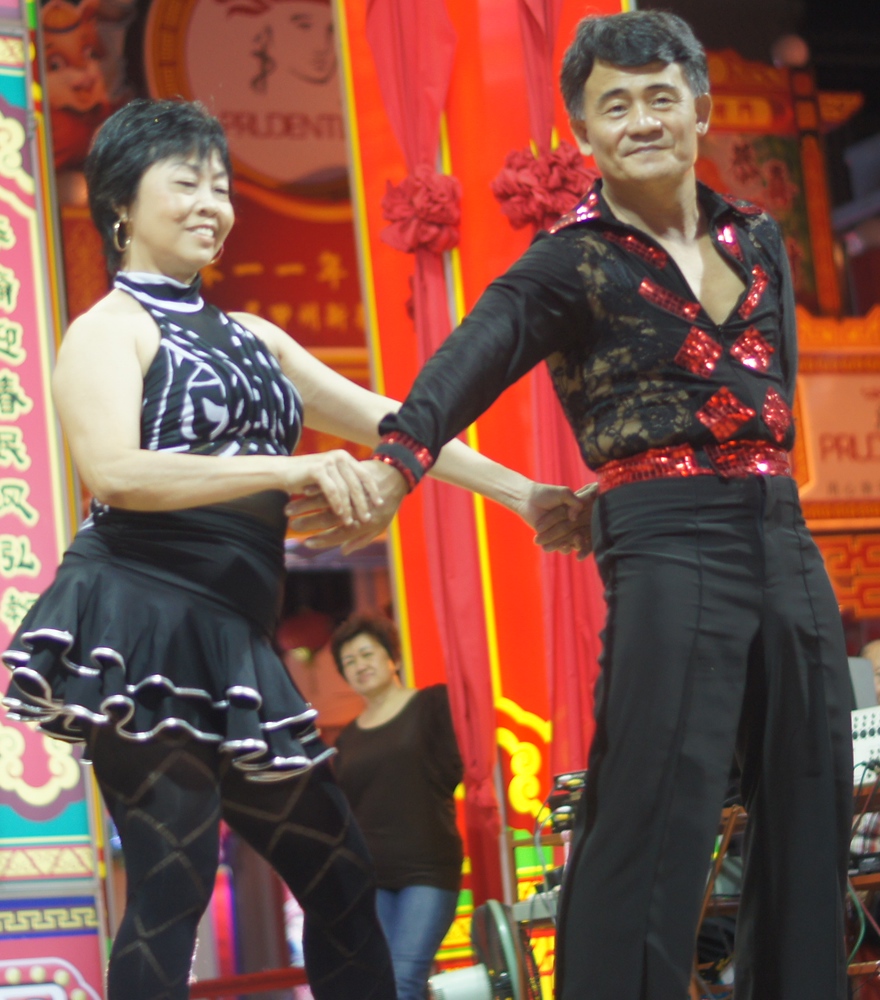
A talented couple perform their dance moves on the largest stage at the end of the Jonker Street Night Market.
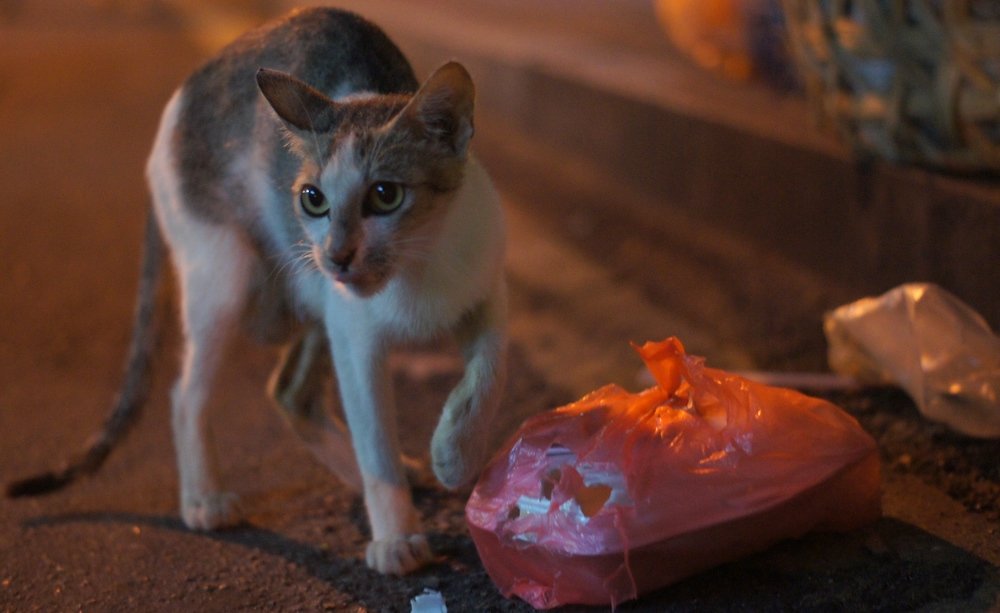
A cat scratches at a bag in search of a few scraps. If you spend enough time wandering around Melaka, you will notice plenty of critters roaming about and quietly conducting their own food tours.
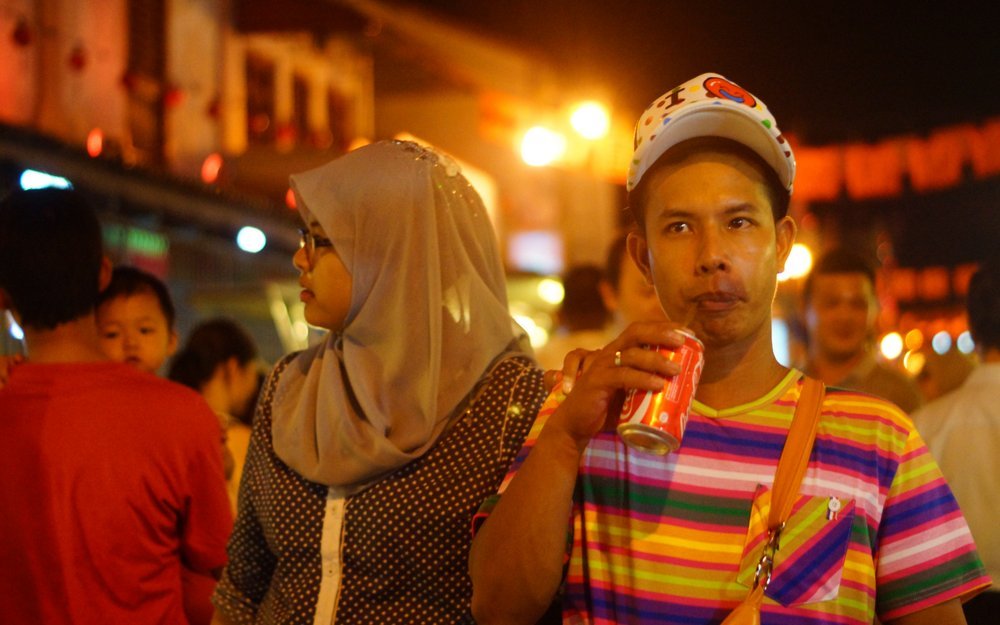
A man strolls down the main strip of the night market while enjoying a refreshment along the way.
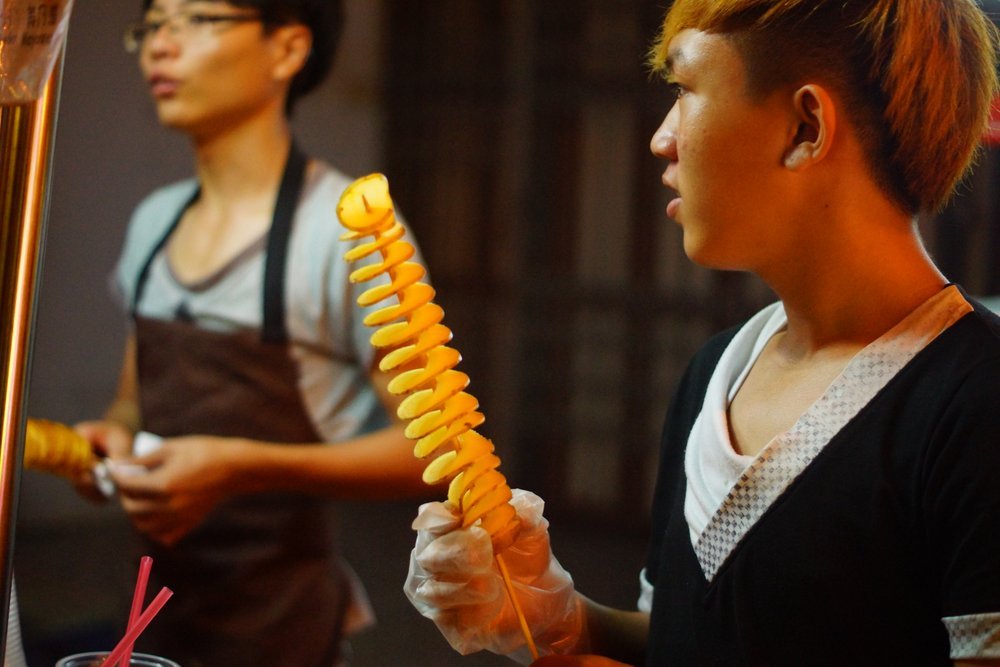
A street vendor prepares a spiral-cut potato on a skewer, commonly known as a tornado potato. I had eaten something very similar in South Korea. This was apparently valuable knowledge I had been carrying around while waiting for the correct potato-based conversation to begin.
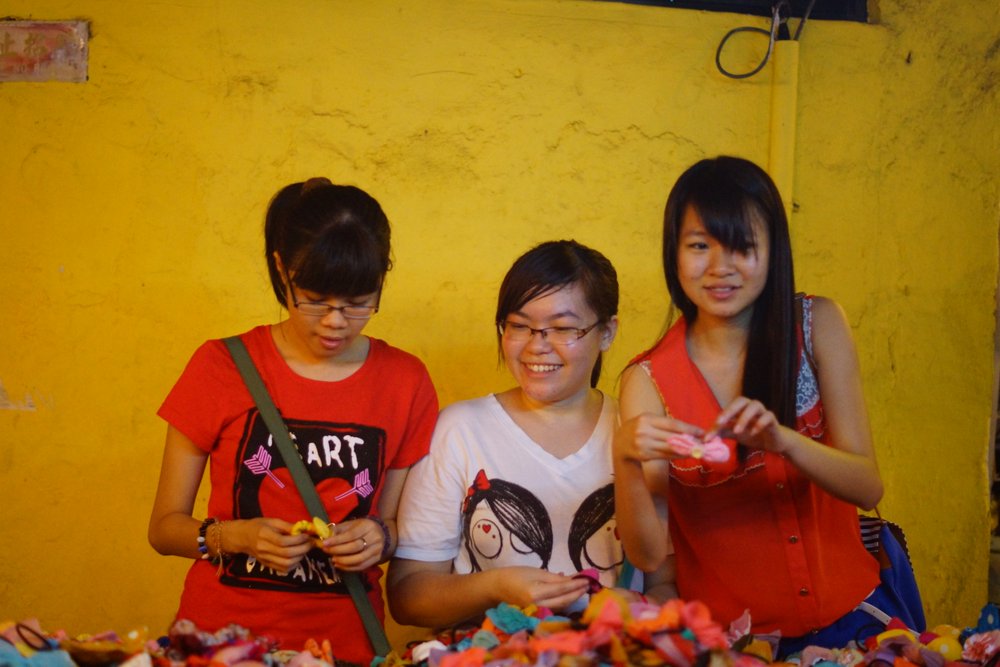
A group of ladies flash candid smiles while browsing the market’s assortment of trinkets.
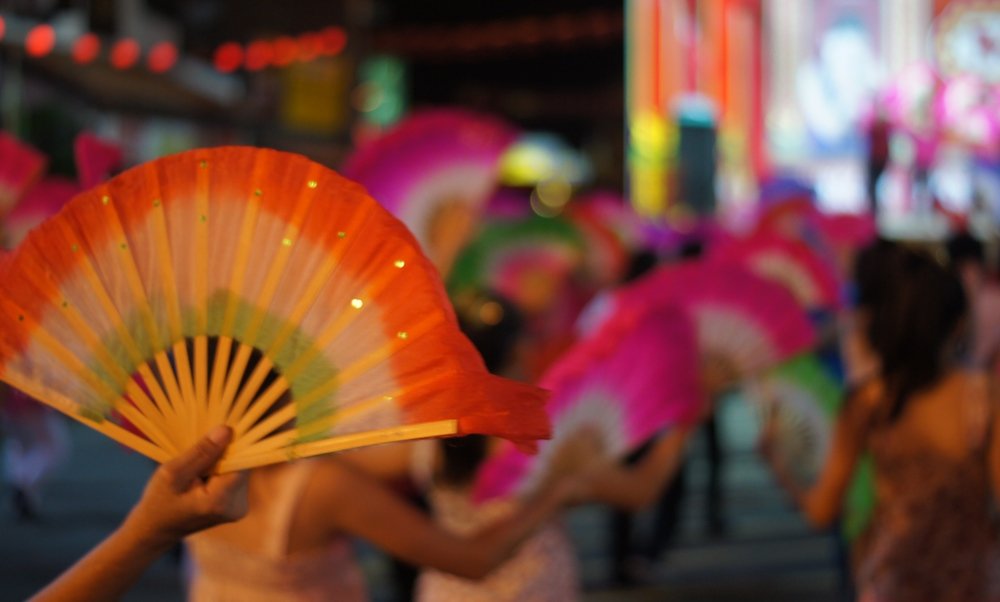
A close-up view of a fan dance performed by a group of Chinese dancers.
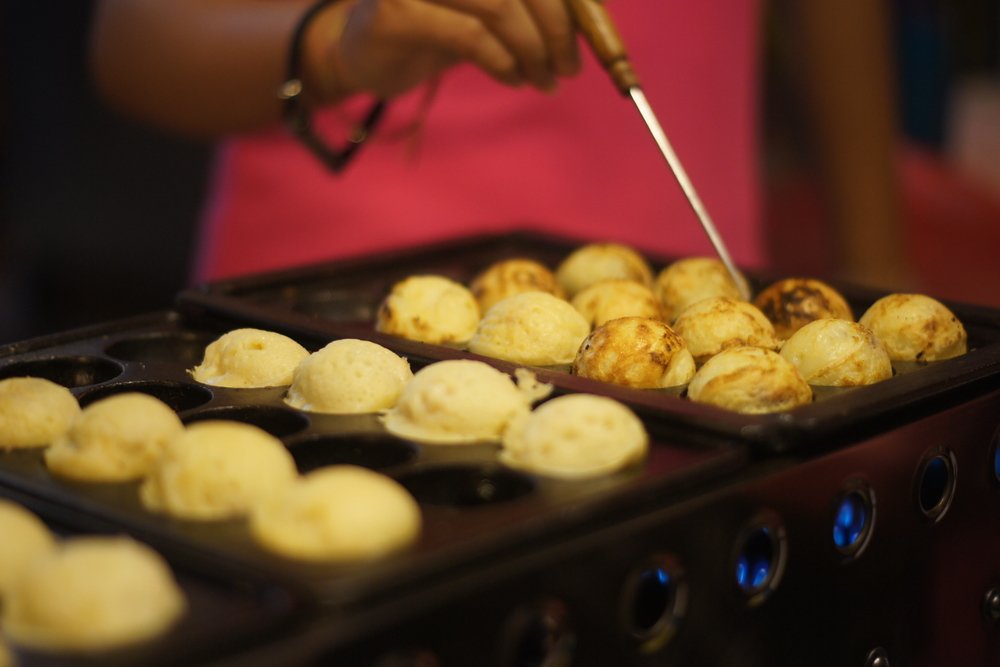
A street vendor carefully flips snacks on a hot cooking surface.

A candid portrait of a woman smiling while enjoying street food at a table. Near the stage end of the street, we found a larger area devoted to food.
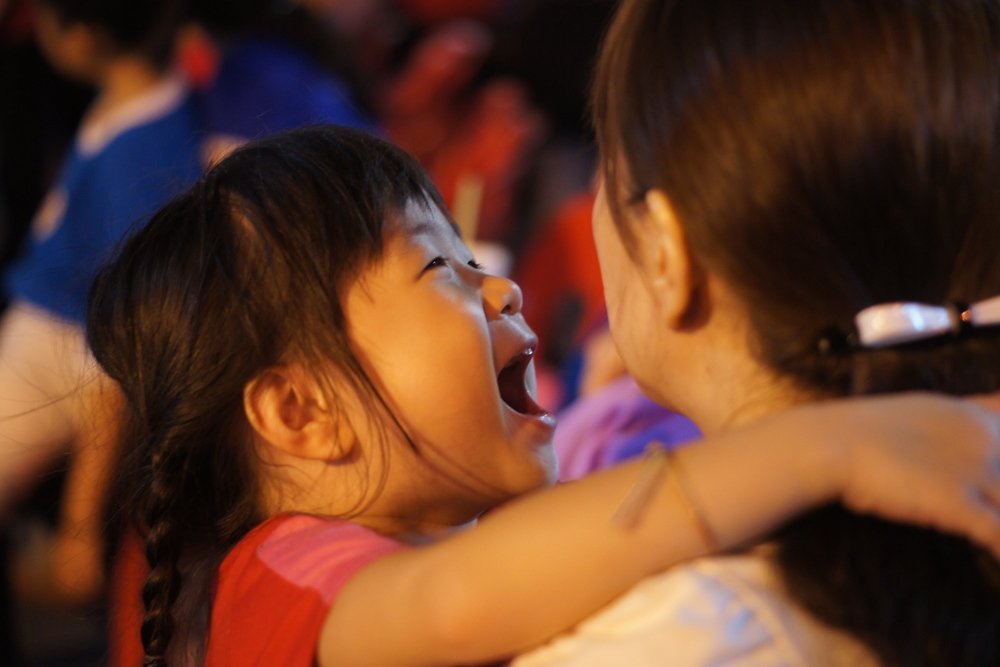
A daughter hugs her mother along Jonker Street. I took this photograph in 2011, but I remember the moment as though it happened yesterday.
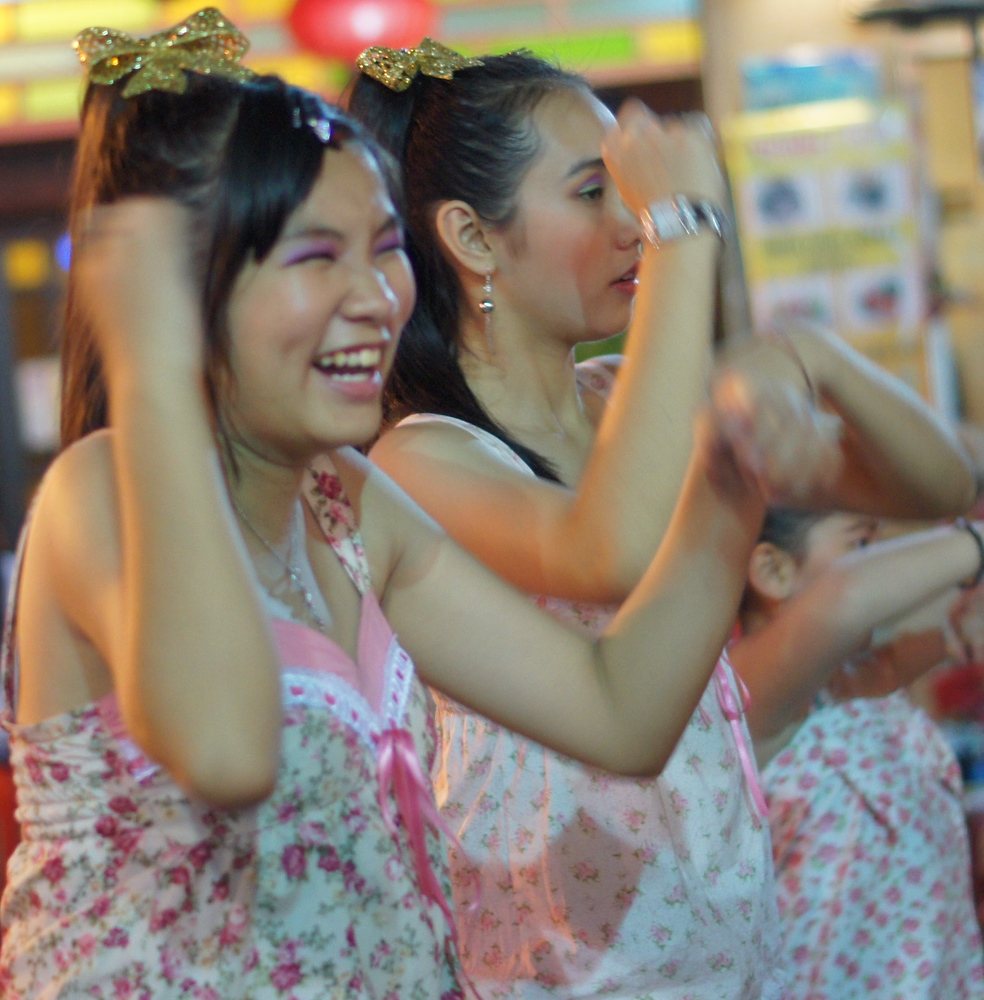
A candid photograph of several girls laughing during a dance. They appeared to be enjoying the performance as much as the crowd did.
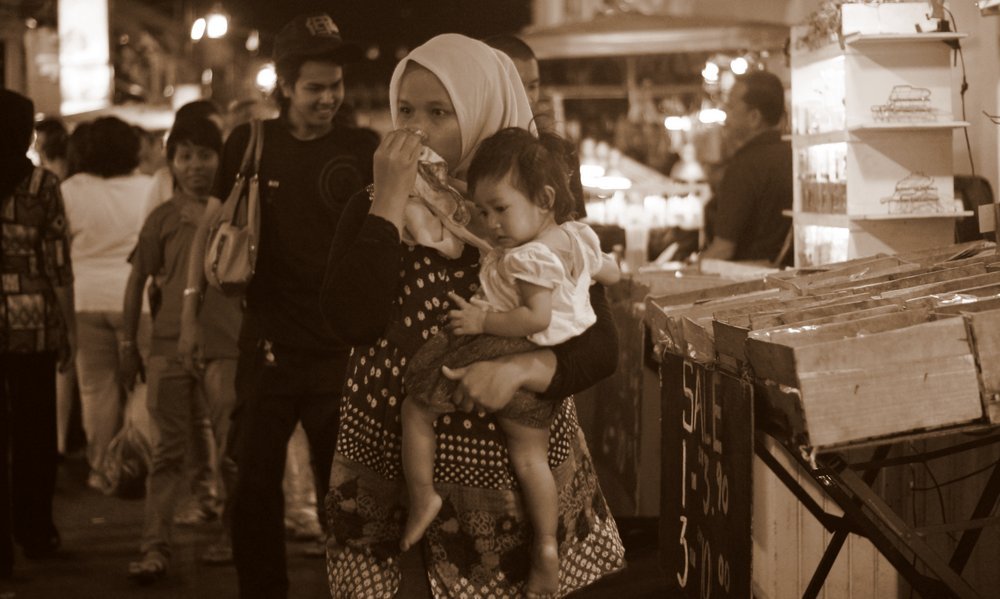
A mother and daughter make their way through the ever-hectic Jonker Street Night Market.
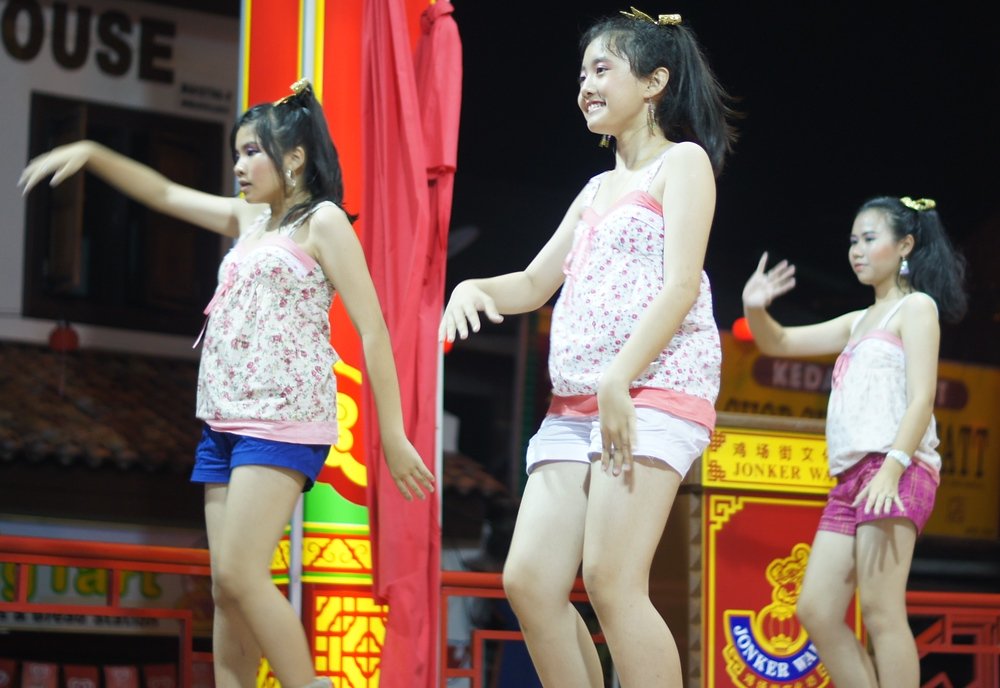
A group of performers dance for the Jonker Street crowd.
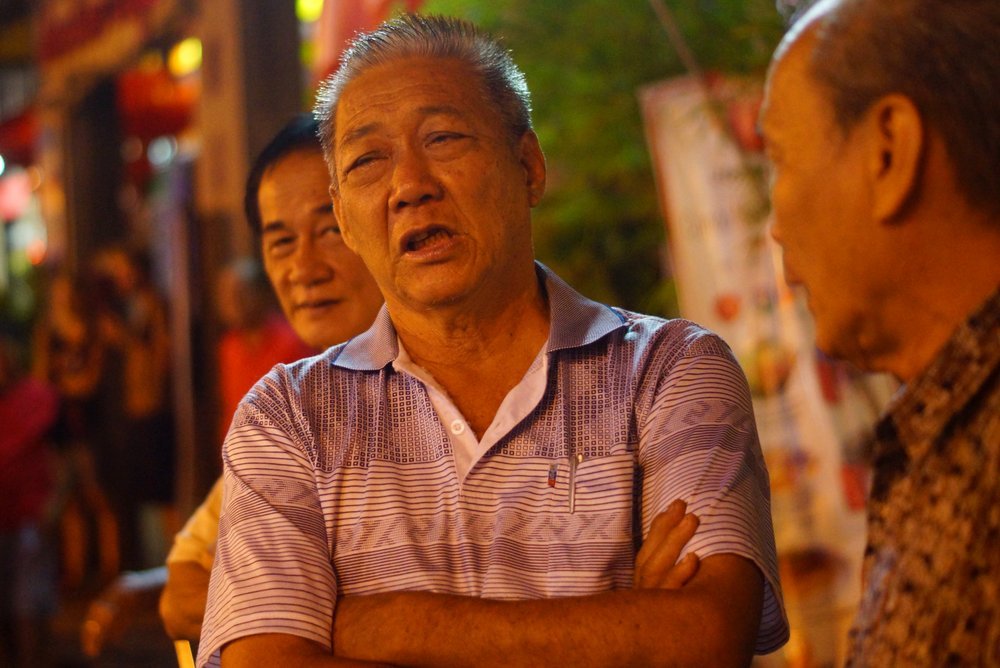
A candid portrait of a man standing with his arms crossed.
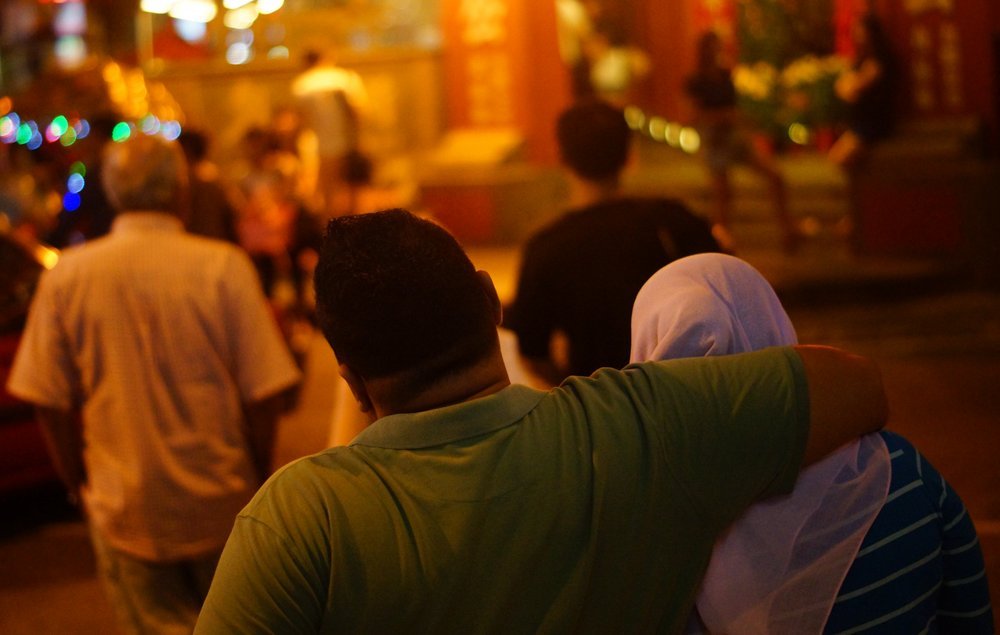
A couple embrace as they enter the night market.
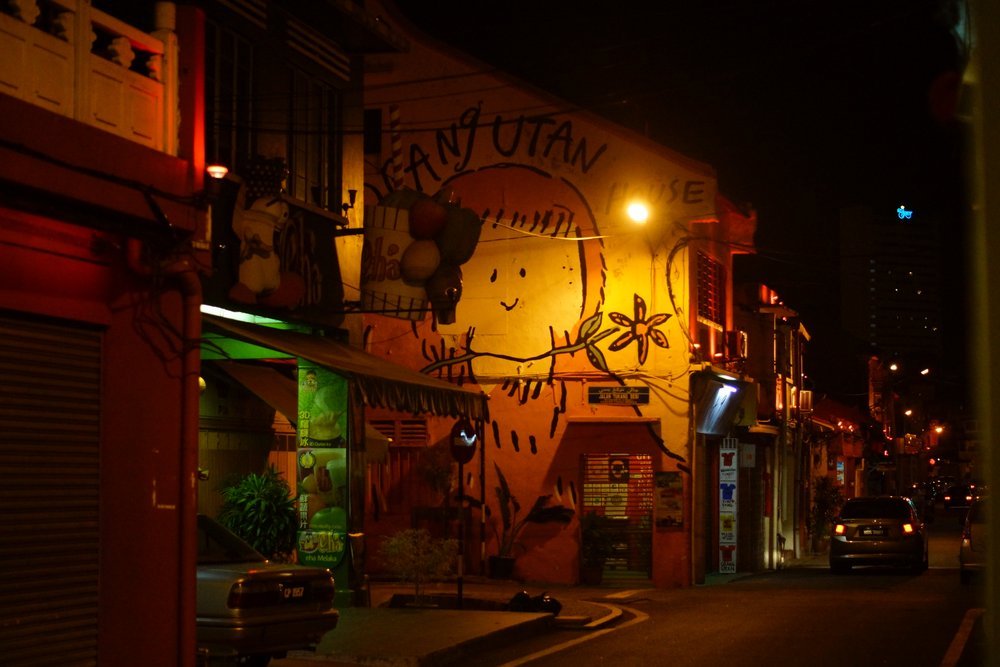
The Orangutan House late at night.
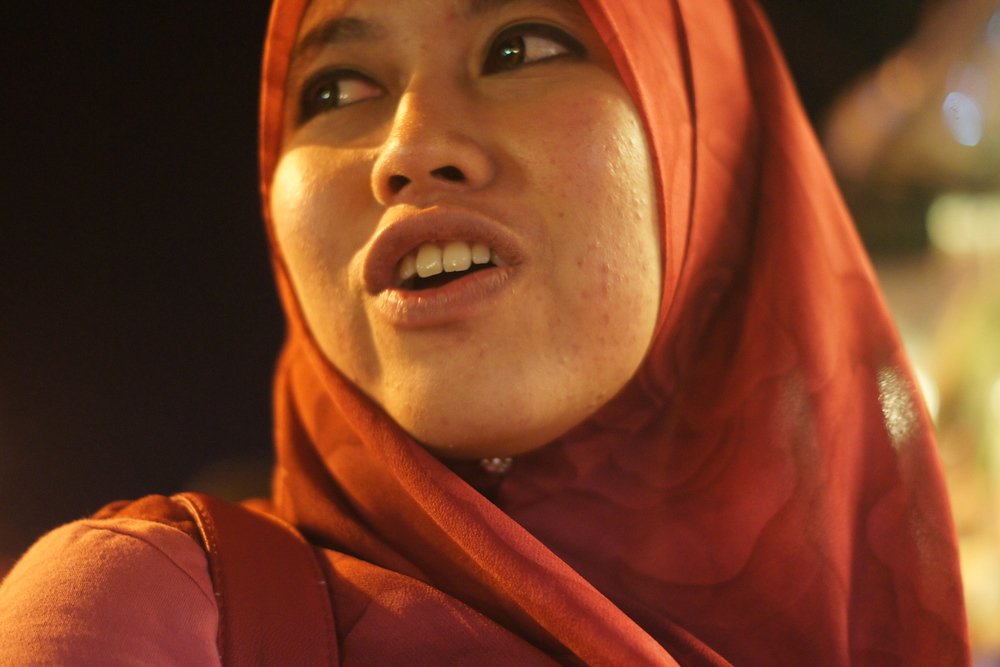
A close-up candid portrait made amid the moving crowd.

A child flashes a lovely grin during the Jonker Street Night Market in Melaka, Malaysia.
Melaka Night Market Travel Video
The still photographs isolate faces and gestures. The video below supplies the missing ingredients: movement, noise, street food and the slightly absurd density of the crowd.
What We Actually Ate at Jonker Street Night Market
Finding the old video transcript filled in a missing piece of this article. We did not merely wander around photographing other people’s dinners. We arrived intending to eat.
In the video, we declared that there was nothing better to do at Jonker Street than indulge in street food. That statement may lack nuance, but it possesses the advantage of being completely honest.
Shaved Ice with Jellies, Beans and Coconut Milk
Our first filmed snack was a bowl of shaved ice with different jellies and beans, sweet coconut milk and cane syrup. We did not clearly name the dessert in the footage, so I am not going to retroactively pretend we delivered a flawless culinary identification while melting beneath the tropical heat.
What we did establish was that it tasted excellent and was “the perfect way to beat the heat.” Given the amount of sweat already discussed in this article, that was not an ornamental observation. Cold shaved ice had become a practical intervention.
The Mysterious Carrot Cake Without Carrots
Next, we ordered a savoury dish being sold as carrot cake.
“I am not seeing any carrots so far,” came the immediate and entirely reasonable assessment.
The dish contained bean sprouts, tofu, egg and peanuts. The best description we managed in the moment was “like a Pad Thai without the noodles.” It smelled good, tasted good and left us no closer to understanding where the carrot portion of the name had gone.
This is exactly the sort of night-market order I enjoy: unfamiliar enough to require questions, inexpensive enough to risk getting wrong and tasty enough that the naming mystery stops mattering after a few bites.
Fresh Sugarcane Juice with Plenty of Ice
We finished the filmed food crawl with fresh sugarcane juice. It was extremely sweet, properly cold and served with plenty of ice.
Our review was not subtle: refreshing, perfect and exactly right for a hot night like this.
Food memories are sometimes attached to technical brilliance or rare ingredients. This one is attached to the primitive relief of holding something cold while the humidity attempts to dissolve you.
What Is Jonker Street Night Market?
Jonker Street is the familiar English name for Jalan Hang Jebat, one of the principal streets running through Melaka’s old Chinatown. You will see both “Melaka” and “Malacca” used in English. Melaka is the official modern spelling; Malacca remains common in older writing, historical references and established English names.
The street existed as a commercial district long before rows of weekend stalls began colonizing it after dark. Merchants, residents, craftsmen and shopkeepers shaped the neighbourhood over generations. The surviving shophouses now contain a mixture of restaurants, cafés, galleries, small museums, antique businesses, souvenir shops and ordinary commercial spaces.
This neighbourhood also belongs to the wider historic core jointly inscribed with George Town as the Historic Cities of the Straits of Malacca UNESCO World Heritage Site. Melaka developed through centuries of trade and contact involving Malay, Chinese, Indian and European communities. That history appears not only in headline monuments but also in the shophouses, religious buildings, food traditions, languages and street life surrounding Jonker.
I tend to recoil whenever a travel article calls an entire neighbourhood a “living museum.” People actually live, worship, cook, sell things, argue, renovate buildings and get stuck in traffic here. Jonker is not frozen inside a display cabinet. That is precisely why it remains interesting.
The weekend market is not the whole history of the street. It is merely the loudest current chapter.
When Does Jonker Street Night Market Take Place?
The regular market nights are Friday, Saturday and Sunday, generally from around 6:00 p.m. until midnight. Vendors do not materialize simultaneously at the stroke of six. Some are still assembling tables and preparing food as early visitors arrive, while others may begin packing before the official end when business is slow, rain becomes heavy or stock runs out.
Choosing Your Arrival Time
| Approximate time | Likely experience | Best suited to |
|---|---|---|
| 5:30–6:30 p.m. | Stalls opening, daylight fading and more room to move | Street photographers, families and crowd-averse visitors |
| 6:30–8:30 p.m. | The market approaches full energy and crowd density rises quickly | Food, atmosphere and anyone who considers personal space overrated |
| 8:30–10:00 p.m. | Still lively, with performances and heavy pedestrian traffic | A balanced first visit |
| 10:00 p.m.–midnight | Crowds may begin thinning and individual vendors start closing | Slower browsing and night photography |
This is a typical rhythm, not a minute-by-minute guarantee. Festival weekends can remain packed late into the night. Rain may temporarily clear the street before everybody erupts from beneath awnings at once, carrying umbrellas and pretending the downpour never happened.
My Preferred Strategy
Do not treat Jonker as a single forced march from one end to the other. Arrive while there is still some light, walk the street once to understand its layout, and then make a second pass for food, photographs and anything you noticed too late the first time.
The second pass will not be fast. Nothing here is fast. Your walking pace will occasionally resemble tectonic drift.
How to Get to Jonker Street Night Market
Jonker Street begins in the compact heritage district immediately north of the Melaka River. From Dutch Square and Christ Church, cross the bridge toward Chinatown and you are essentially at the market entrance.
Walking
Walking is the simplest option when you are staying anywhere around Jonker Street, Heeren Street, Dutch Square or the central riverfront. Melaka’s historic core is compact, and a hotel that appears slightly farther away on a map may still be within an easy walk.
The real advantage becomes obvious at the end of the night. You can leave whenever you reach your personal limit for heat, crowds and food served on sticks without joining a traffic jam or negotiating a pickup point beside seventeen other people staring at identical ride-hailing apps.
From Melaka Sentral
Most intercity buses arrive at Melaka Sentral rather than in the heritage district. Local buses serve the old town, but routes, platforms and operating arrangements can change. Confirm the correct service at the terminal before boarding rather than placing blind faith in an elderly blog post written by somebody who last visited when flip phones were cutting-edge technology.
A taxi or ride-hailing service is easier when you have luggage. Ask to be dropped near the heritage area rather than expecting a vehicle to crawl directly through the market once pedestrian restrictions and weekend congestion take effect.
Driving and Parking
Driving directly toward Jonker Street on a busy market night is usually the least relaxing approach. Roads around the heritage core can clog, access may be restricted and the closest parking spaces disappear early.
Park outside the densest part of the old town and walk the final stretch. Saving three minutes of walking is not a victory when it costs half an hour of circling narrow streets while questioning every decision that led you there.
How to Experience Jonker Street Without Becoming Trapped in the Crowd
Jonker Street is not physically enormous. It only feels enormous when several hundred people stop at once to photograph the same snack.
A sensible visit has three loose stages. I use the word “loose” deliberately because trying to impose military precision upon a Southeast Asian night market is a fine way to ruin your own evening.
- Make an orientation pass. Walk the length of the market before committing to a full meal or purchase. Notice where the denser food areas, stages and useful side streets are located.
- Return for food and shopping. Buy small portions, share where possible and leave room for something better farther down the street.
- Escape sideways occasionally. When the main lane becomes exhausting, step onto a side street or parallel road, regroup and then re-enter. There is no medal for remaining inside the human river continuously.
Crowd Etiquette
- Move to the edge before stopping to inspect a menu or take a photograph.
- Keep backpacks close to your body rather than turning them into blunt instruments.
- Choose a meeting point in case your group becomes separated.
- Do not stand in the middle of the lane conducting a family conference.
- Be patient. Everybody else is negotiating the same bottleneck.
Shopping Without Buying a Suitcase of Regret
The merchandise ranges from inexpensive souvenirs and novelty items to packaged food, clothing, crafts, artwork and antiques sold inside established shops. Much of it is fun rather than rare. Look carefully before treating anything as handmade, historic or uniquely Melakan simply because it has been placed beneath a red lantern.
Shopping was one of the reasons we went to Jonker in the first place, but the video contains considerably more evidence of us eating than buying. This is probably an accurate summary of our priorities.
Some non-food vendors may negotiate, especially when you buy several items, but bargaining is not a compulsory theatrical production. Ask politely, accept the answer and avoid turning a tiny price difference into an international incident.
What to Eat at Jonker Street Night Market
Our own small food crawl involved shaved ice, savoury carrot cake and sugarcane juice. The wider market lineup changes. Vendors rotate, individual dishes sell out and not every famous Melaka food is best eaten from a temporary stall. Treat the market as an opportunity to explore rather than a checklist that must be completed before bedtime.
Also, arrive hungry—but not dangerously hungry. The dangerously hungry version of me makes terrible decisions and buys the first object resembling fried carbohydrates.
Melaka Foods Worth Looking For
- Chicken rice balls: Seasoned rice shaped into compact balls and served with steamed or roasted chicken. This is one of Melaka’s signature dishes, although the best-known versions are often sold by established restaurants around the old town rather than temporary market stalls.
- Nyonya laksa: A Peranakan noodle dish commonly built around a rich, spiced coconut-based broth. Recipes and toppings vary considerably.
- Cendol: Shaved ice with coconut milk, palm-sugar syrup and green rice-flour jelly. The dessert we ate at Jonker used a similar combination of shaved ice, coconut milk, syrup, beans and jellies, although we did not identify it by name in the video.
- Nyonya kuih: A broad family of colourful cakes and sweets commonly made with ingredients such as rice flour, glutinous rice, coconut milk, pandan and palm sugar.
- Sugarcane juice and coconut shakes: Especially appealing after walking through humid evening air while pressed against complete strangers. Our heavily iced sugarcane juice was exactly what the night required.
- Grilled, fried and skewered snacks: Expect a changing mixture of seafood, meat, tofu, vegetables, dumplings and potato-based engineering projects intended to be eaten while moving—or at least while attempting to move.
Tourism Malaysia maintains a broader guide to foods associated with Melaka. It is worth reading before your visit because Jonker Street should be part of your food plan, not necessarily the entire plan.
Travellers who want a local guide to explain what they are eating—and prevent dinner from becoming a sequence of random pointing gestures—can also check availability for this Melaka after-dark food tour on GetYourGuide. I did not take this tour myself, so treat it as a current bookable option rather than one of my firsthand recommendations.
A Better Eating Strategy
Walk through once before buying a full meal. The first stall is not automatically the best stall merely because hunger has destroyed your judgment.
- Start with one savoury item rather than five.
- Share portions when travelling with someone who does not guard food like a territorial animal.
- Look for food being cooked fresh rather than sitting indefinitely in the heat.
- Notice turnover and handling practices.
- Save room for shaved ice, cendol, kuih or another dessert.
- Carry tissues or wet wipes. Elegant street-food dining lasts until the first sauce lands on your shirt.
Vegetarian, Vegan, Halal and Allergy Considerations
Jonker Street is a mixed market serving visitors from different communities. Do not assume a dish is vegetarian, vegan or halal based only on its appearance. Broths, sauces, frying oil and garnishes may contain ingredients that are not immediately obvious.
Our supposedly carrot-based dish contained egg and peanuts, neither of which would necessarily be obvious from the name alone. That is a useful reminder to ask rather than guess.
Ask the vendor directly, look for clearly displayed halal certification where required and explain serious allergies before ordering. When communication is uncertain, choose a simpler dish whose ingredients can be identified more confidently. A crowded night market is a rotten place for optimistic guesswork involving shellfish, peanuts or dietary restrictions.
Cash and Payment
Payment methods vary from stall to stall. Local QR payments are increasingly common, but foreign visitors should not assume that every system will accept their account or card. Carry Malaysian ringgit in small denominations and keep it somewhere accessible but secure.
Attempting to pay for a tiny snack with the largest note in your wallet is one of those preventable mistakes that immediately marks you as the person holding up the queue. I have been that person in enough countries to recognize the symptoms.
Jonker Street Night Photography Tips
Jonker Street is difficult to photograph for exactly the reasons it is interesting. People move constantly. Bright signs compete with dark faces. Food-stall lights create ugly colour casts. Someone will enter the frame at the precise moment you think you have finally composed it.
Accepting some visual disorder produces better photographs than trying to make a night market resemble an empty architectural shoot. Mess is not the problem here. Mess is the subject.
Arrive Before Darkness
The period around sunset gives you more ambient light, less violent contrast and slightly more room to work. It is also the best opportunity to photograph the transition from an ordinary commercial street into a night market.
Use the Crowd Rather Than Fighting It
Photograph layers of people, raised hands, food smoke, signs and performers. A clean frame can be satisfying, but the crowd itself explains Jonker better than a perfectly isolated stall ever could.
Besides, waiting for Jonker Street to empty is roughly equivalent to waiting for a toddler to volunteer for an early bedtime.
Look for Small Human Moments
My favourite photographs from these visits are not necessarily the widest market scenes. They are the daughter hugging her mother, the performers laughing, the solitary expressions and the brief connections that appeared and disappeared inside the larger spectacle.
Those moments are harder to find than another photograph of a food stall, but they are usually the images you still care about years later.
Work From the Edge
Standing in the centre may produce a dramatic crowd photograph, but it also obstructs everyone behind you. Shopfronts, side lanes and breaks between stalls provide more stable positions and often better light.
I say this as somebody who has definitely become an accidental pedestrian obstacle while chasing a photograph. Growth is admitting the problem.
Photographing People Respectfully
Ask permission when making an obvious close portrait, especially when you intend to remain in front of the person rather than capturing a fleeting wider scene. Respect anyone who declines. Performers generally expect cameras, but that does not make every visitor or vendor public property.
Protect Your Equipment
- Use a secure strap in dense crowds.
- Carry as little equipment as possible.
- Keep rain protection accessible rather than buried beneath everything else.
- Avoid changing lenses in the middle of a packed lane.
- Step away from moving pedestrians before reviewing photographs.
Jonker rewards quick reactions more than a heroic quantity of camera gear. The lens left in your hotel room will not injure your shoulder, collect humidity or become coated in mystery sauce.
What to See Near Jonker Street Before the Market Opens
Arriving in the heritage district only after dark means missing much of what gives Jonker Street its context. Spend the late afternoon nearby, then return as the market begins assembling and the street starts losing what little personal space it possessed.
Dutch Square and Christ Church
The red-painted Stadthuys and Christ Church sit across the Melaka River from Jonker Street. This is the obvious starting point for a first walk through the historic centre, although the square becomes busy with visitors and elaborately decorated trishaws of steadily escalating ambition.
Harmony Street
Jalan Tukang Emas runs roughly parallel to Jonker Street and is commonly known as Harmony Street. Cheng Hoon Teng Temple, Kampung Kling Mosque and Sri Poyyatha Moorthi Temple stand within this compact area, reflecting the religious and cultural diversity of the old trading city.
Visit respectfully, observe posted dress and photography rules and remember that these remain places of worship rather than themed attractions assembled for travellers.
Baba & Nyonya Heritage Museum
The Baba & Nyonya Heritage Museum occupies three connected historic houses and provides far more useful Peranakan context than a hurried paragraph about “cultural fusion” ever could. Visit during its daytime operating hours and check whether advance reservations or guided-entry arrangements apply.
Melaka River
The riverfront offers an easy escape from Jonker’s densest crowd. You can walk beside the water, stop for a drink or investigate the current Melaka River Cruise schedule. Confirm departure points, hours and ticket arrangements before building your evening around it.
Heeren Street
Jalan Tun Tan Cheng Lock—widely known as Heeren Street—runs parallel to Jonker and contains historic townhouses, museums and accommodation. It is often calmer than the market street and helps reveal what the neighbourhood feels like when it is not buried under temporary stalls.
Readers who prefer exploring with a guide can compare current Melaka walking tours, heritage tours and day trips on GetYourGuide. Check the route and timing carefully: many daytime excursions include Jonker Street but leave before the night market reaches full swing.
Where to Stay Near Jonker Street Night Market
Staying within walking distance is not merely convenient. It changes the entire evening. You can arrive before the crowd peaks, return to your room when the heat becomes oppressive and walk home without waiting for a vehicle in weekend traffic.
I have not personally stayed at the hotels below, so I am not going to perform the usual travel-blog trick of describing pillows I have never touched. These are current options selected for their practical locations around Jonker Street and the heritage district. Read recent guest reviews, check the map and make sure the property suits your mobility and noise requirements before booking.
Four Practical Hotel Options Near Jonker Street
- TheBlanc Boutique Hotel: Located directly along Jonker Street, this is the option for travellers who value immediate market access more than being peacefully detached from the action. Check rooms and current rates at TheBlanc Boutique Hotel on Booking.com.
- Liu Men Melaka: A polished heritage-style property close to Jonker Street, Cheng Hoon Teng Temple and the Baba & Nyonya Heritage Museum. See availability at Liu Men Melaka on Booking.com.
- Casa del Rio Melaka: A higher-end riverfront option within a short walk of Jonker Street, useful for travellers who want strong access without sleeping directly above the market. Compare rooms at Casa del Rio Melaka on Booking.com.
- JonkeRED Heritage Hotel: Positioned near Dutch Square and the bridge into Chinatown, making it practical for combining daytime sightseeing with the night market. Check current prices at JonkeRED Heritage Hotel on Booking.com.
| Area | Advantages | Trade-offs |
|---|---|---|
| Jonker Street and immediate side lanes | Maximum convenience and atmosphere | Weekend noise, dense foot traffic and difficult vehicle access |
| Heeren Street | Heritage character and easy walking access | Some properties occupy older buildings with stairs or compact rooms |
| Melaka River and Dutch Square area | Good access to both daytime sights and the night market | Popular riverfront sections can remain lively after dark |
| Outside the heritage core | Potentially quieter rooms, larger hotels and easier parking | You will depend more heavily on transport |
Do not judge a property only by straight-line distance. A hotel across a bridge or on the wrong side of a restricted road can be less convenient than a slightly farther property connected by an easy pedestrian route.
Also check whether the building has an elevator, especially when booking a converted shophouse. Historic character becomes less charming while carrying a heavy suitcase up several flights of narrow stairs in tropical humidity.
For a wider search, compare hotels and guesthouses across Melaka on Booking.com. Use the map rather than trusting vague claims such as “near the city centre.” Every hotel on Earth appears to be near something when the marketing department controls the ruler.
Visiting With Children, Limited Mobility or a Dislike of Crowds
Families and Strollers
Families regularly visit the market, but a full-sized stroller becomes difficult to manoeuvre at peak time. Arrive early, use a compact stroller or carrier where appropriate and agree on a meeting point with older children.
The market contains lights, toys, sweets, hot cooking equipment and dense pedestrian traffic—the complete recipe for children wanting to move in six directions while their parents attempt to move in one.
Limited Mobility
The main street is comparatively level, but that does not make the experience fully accessible. Expect uneven surfaces, drains, curbs, temporary stall equipment, older shop entrances with steps and people changing direction without warning.
An early-evening visit offers more room. Remaining near the edge of the street also makes it easier to stop without being absorbed into the central flow. Accessibility varies considerably among individual shops, restaurants, museums and heritage hotels, so verify specific requirements directly.
Travellers Who Strongly Dislike Crowds
Visit near opening time, make a short pass and leave before the street reaches full capacity. Jonker is still worth seeing, but there is no reason to prove anything by enduring the busiest two hours while becoming progressively more miserable.
I love the chaos. You are under no contractual obligation to share this defect.
Weather, Clothing and Personal Safety
Melaka remains warm and humid after sunset. Our own footage confirms the obvious: we were actively seeking shaved ice and heavily iced sugarcane juice to cool down. Wear breathable clothing and comfortable footwear that can handle wet pavement.
Carry water, but do not assume you will enjoy holding a giant bottle while also balancing food, a camera and whatever inexplicable object you have just purchased.
A compact umbrella or light rain jacket is useful. Vendors can often continue through passing showers beneath awnings and temporary coverings, but severe rain can disrupt individual stalls and performances.
Practical Safety
- Keep bags closed and valuables secure in dense sections.
- Do not place a phone or wallet in an easy-to-reach back pocket.
- Watch for curbs, drains, cables and temporary stall equipment.
- Let hot food cool before attempting to eat it while walking.
- Move out of the crowd before checking directions on your phone.
- Choose a recognizable meeting point if visiting with a group.
The primary difficulties are usually heat, congestion and minor carelessness rather than cinematic danger. Keep your belongings close, pay attention to where your feet are going and resist the urge to walk while simultaneously filming, eating and studying a map.
A Sensible One-Evening Jonker Street Plan
You do not need a military itinerary for a night market, but a little sequencing prevents the evening from becoming one long queue punctuated by poor food decisions.
- Late afternoon: Explore Dutch Square, the riverfront, Heeren Street or Harmony Street while the light is still good.
- Around opening time: Enter Jonker Street before the main crowd arrives and photograph the stalls taking shape.
- First pass: Walk the market without immediately purchasing a full meal and three souvenirs.
- Second pass: Eat several small items, browse the shops and stop for performances. A cold drink or shaved-ice dessert is not a bad idea once the humidity begins winning.
- Later evening: Return to the river, take another photographic pass or leave while you still remember where your hotel is.
One strong evening is enough to understand the market. A second market night gives photographers and determined eaters more room to slow down, but it is not mandatory for every Melaka itinerary. Two nights are useful. Seven would begin raising questions.
Jonker Street Night Market Final Thoughts
Jonker Street is crowded, humid and deeply inefficient. You will occasionally find yourself trapped behind someone who has stopped without warning to photograph a skewer. You may emerge sweatier than you entered. None of this makes me like it less.
What stayed with me was not one particular snack or souvenir. It was the mixture of performances, shopfronts, vendors and ordinary human moments unfolding inside the larger commotion. A daughter hugged her mother. Performers laughed during their routine. Audrey stood in the middle of the crowd while I tried to make a photograph. A cat investigated a bag for leftovers.
We ate shaved ice loaded with jellies and beans, puzzled over carrot cake containing no visible carrots, and drank sugarcane juice with enough ice to make the heat briefly surrender. Those details seem small. They are also what makes the memory feel like an actual evening rather than a destination summary.
The historic buildings give Jonker its setting, but the people give it life.
That is why it ranked among my favourite night markets in Asia then, and why these photographs and the old video still mean something to me now. Arrive with time, patience, an empty stomach and a willingness to accept that personal space will temporarily become a theoretical concept.
And when you are wedged between two strangers, sweating through your shirt and unable to move more than six inches, try to appreciate it.
Isn’t this great?
For another market-centred travel photo essay, have a look at my photographs from the Mauerpark flea market in Berlin.
The number of public restrooms is limited for such a large crowd, and keeping them clean seems to be a challenge, especially during peak hours.
Extremely limited parking spaces consistently frustrate visiting customers😔
I heard that the night market in Malaysia is now becoming a great destination for those who want to get great deals for shopping. Is it true?
Great shots well done! I haven’t been to the night market here, but when we go back to Malaysia, I’ll have to check it out. cheers.
Great shots dude.
Thanks man!
Great photos Sam, glad you’re back on the road, will look forward to many more.
Thank you! I’m so happy to be back on the road 🙂
Swoon! Your photos are absolutely stunning!
Thank you Lillie 🙂
The pictures and the video wonderfully capture the ambiance of the night market. Despite looking out the window at an ugly, foggy, depressing Chicago spring day, I feel like I am in Malaysia.
Thanks Ted! I’d love to be in Chicago to watch Da Hawks now!
I’ve never been to Malaysia but I think that this might have to be the next SE Asian country I visit. Your great pics have inspired me.
Thank you Bianca 🙂
I sure hope you get to go soon!
some great shots there dude….will have to check it out when I’m in Malaysia later this year 🙂
Thanks dude! I think you’ll like it. Some great beaches out here.
Great pics. Takes me right back there.
Thanks Adam! Malacca is a city I love to revisit.
Fantastic pictures as usual!
Thanks Angela 🙂
Wow, the market is super busy!
It really is!