
If you think “windy” means a gentle breeze that might mess up your hair, El Chaltén is here to humble you.
In this town, the wind doesn’t just blow; it has a personal vendetta against your comfort. It screams down from the Southern Patagonian Ice Field with the subtle grace of a jet engine, and if you aren’t prepared, it will try to peel your face off.
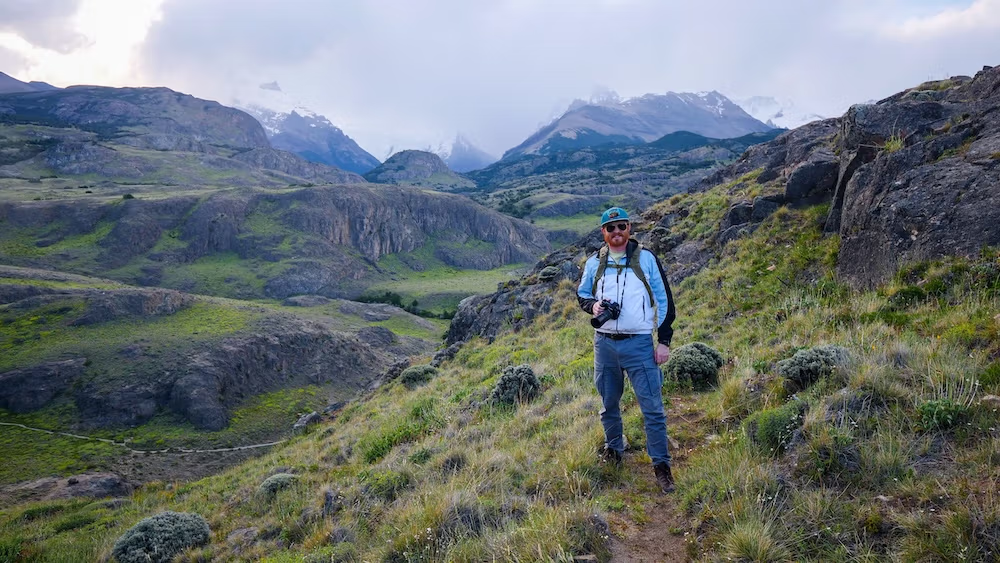
When Audrey and I arrived in El Chaltén, we were in what I affectionately call “full-on, full-throttle foodie mode.” We had spent weeks eating our way through Argentina, consuming enough milanesas, sorrentinos, empanadas, pizza, dulce de leche and red wine to reach a state of “bulbous plumptitude.” We arrived with “unearned hiking confidence,” assuming that our ability to walk to the fridge was sufficient training for the trekking capital of the world.
Spoiler: It wasn’t.
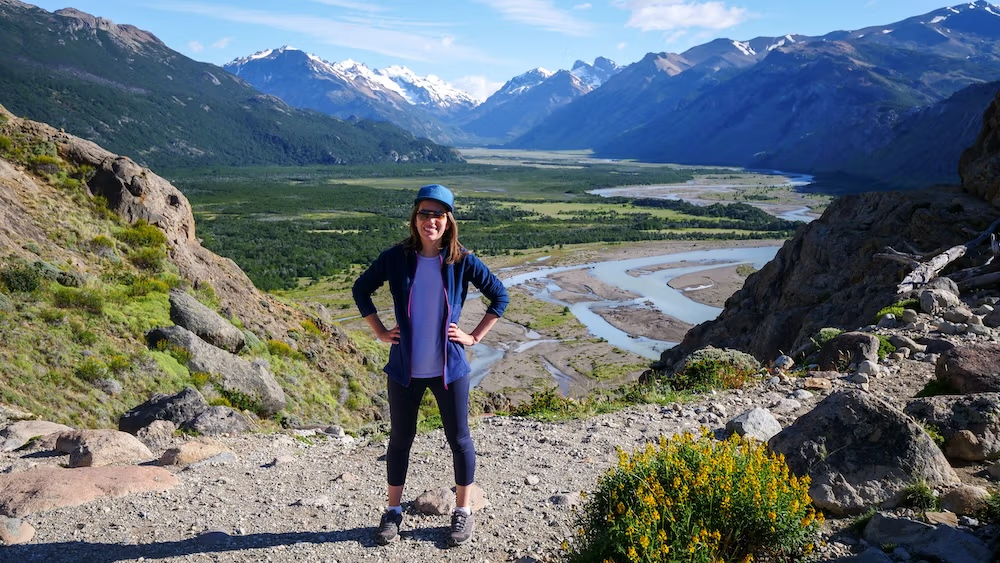
After a week of being battered by the elements, surviving on $10 lunchboxes, and fantasizing about being airlifted off trails in a sedan chair, we learned a few hard lessons about gear. We went from “foodies” to “faux trekkers” who learned the hard way that denim is the enemy and trekking poles are not just for old people—they are for survival.
This is not your standard, dry packing list. This is the Nomadic Samuel Survival Guide to packing for El Chaltén, born from the reality of blisters, sore Achilles heels, broken salad bowls, and wind so strong it made us question our life choices.
The “Wind Tunnel” Reality: Understanding Patagonian Weather
Before we talk about what to put in your bag, you need to understand the battlefield. The weather in Patagonia is not “weather”—it is a mood swing.
We experienced days where we woke up to “hardly a cloud in the sky” and felt like we were in paradise. But we also had days that were a “total write-off” where the winds were so “insane” we could “barely stand on our feet.” There is a reason they call the Roaring Forties and Furious Fifties the wildest latitudes on Earth.
You need to pack for four seasons in one day. Seriously. You will sweat on the uphill, freeze in the shade, get blasted by UV rays in the valley, and get sandblasted by grit on the ridges. If your clothing strategy is “I’ll just wear a t-shirt,” you are going to have a bad time.
The “Leggings Logic”: Strategy for Your Lower Half
Let’s address the elephant in the room (or rather, the elephant in the jeans). By the time we reached El Chaltén, we had gained a significant amount of weight from our “gormandizing” exploits. As I noted in my journal: “Audrey’s jeans don’t fit so she’s wearing leggings. And I could sure have used some super-duper-flexie sweat-pants.”
This turned out to be a happy accident. Jeans are the absolute worst thing you can wear in Patagonia. They are heavy, they restrict movement, and if they get wet (which they will), they stay wet until you die of hypothermia.
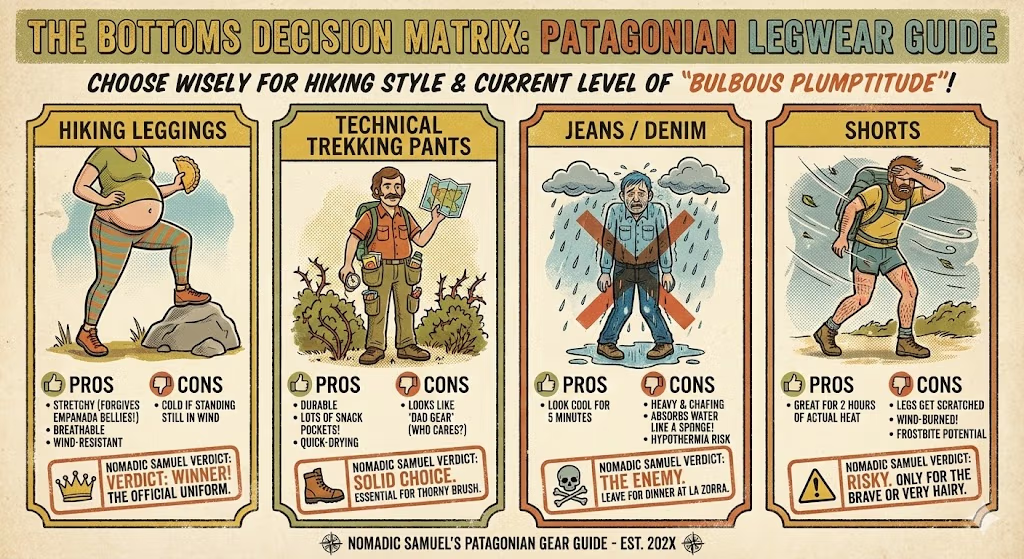
The Bottoms Decision Matrix
Here is how to choose what covers your legs based on your hiking style and current level of “bulbous plumptitude.”
| Garment Type | Pros | Cons | Nomadic Samuel Verdict |
| Hiking Leggings | Stretchy (forgiving of empanada bellies), breathable, wind-resistant. | Can get cold if standing still in high wind. | Winner. The official uniform of our trip. |
| Technical Trekking Pants | Durable, lots of pockets for snacks, quick-drying. | Can look like “dad gear” (but who cares?). | Solid Choice. Essential for the thorny brush. |
| Jeans / Denim | You look cool for 5 minutes. | Heavy, chafing, absorbs water like a sponge. | The Enemy. Leave them for dinner at La Zorra. |
| Shorts | Great for the 2 hours of actual heat. | Your legs will get scratched and wind-burned. | Risky. Only for the brave or the very hairy. |
Recommendation: Bring 2 pairs of high-quality hiking leggings or soft-shell trousers. You want something that allows you to high-step over rocks without fearing a seam blowout.
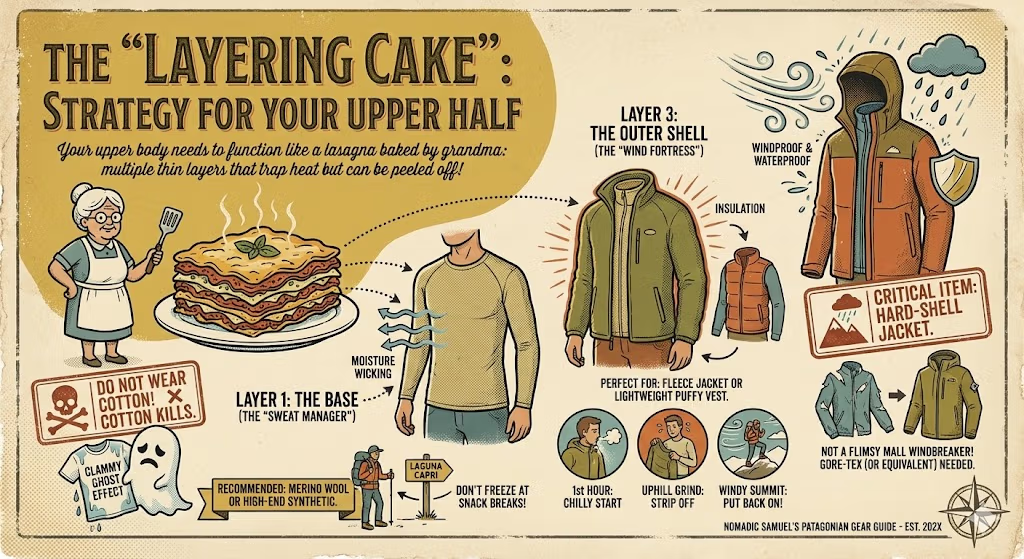
The “Layering Cake”: Strategy for Your Upper Half
Your upper body needs to function like a lasagna baked by grandma: multiple thin layers that trap heat but can be peeled off when you start sweating on the ascent to Laguna de los Tres.
Layer 1: The Base (The “Sweat Manager”)
Do not wear cotton. Cotton kills. When cotton gets wet with sweat, it loses all insulating ability and sticks to your skin like a clammy ghost. We recommend Merino wool or a high-end synthetic. It wicks moisture away from your skin so you don’t freeze the second you stop for a snack break at Laguna Capri.
Layer 2: The Mid-Layer (The “Warmth Hug”)
This is your insulation. A fleece jacket or a lightweight puffy vest is perfect here. You will wear this for the first hour of the hike when it’s chilly, strip it off during the “Turtle Pace” uphill grind, and desperately put it back on when you reach the windy summit.
Layer 3: The Outer Shell (The “Wind Fortress”)
This is the most critical item in your bag. You need a Hard-Shell Jacket. Not a flimsy “windbreaker” that you wear to the mall. You need something Gore-Tex (or equivalent) that is waterproof and windproof.
When we were at Laguna de los Tres, the wind was “ferocious.” We literally had to “duck behind rocks to shield ourselves” just to eat a granola bar. Without a hard shell, that wind cuts right through your layers and steals your body heat in seconds.
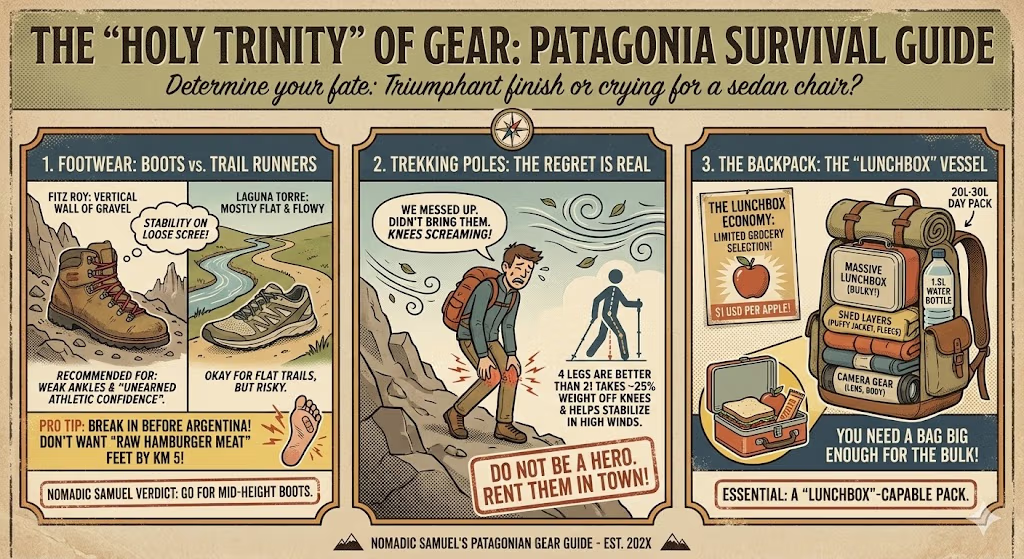
The “Holy Trinity” of Gear: Boots, Poles, and Packs
These three items will determine whether you finish the hike feeling triumphant or whether you finish it crying and asking for a sedan chair.
1. Footwear: Boots vs. Trail Runners
The trails in El Chaltén are a mixed bag. The hike to Laguna Torre is mostly flat and flowy, while the final kilometer of Fitz Roy is a “vertical wall of gravel” that is rocky and slippery.
By the end of our big hike, our feet were “throbbing.” If you have weak ankles (or “unearned athletic confidence” like us), go for Mid-Height Hiking Boots . They provide stability on the loose scree.
Pro Tip: Break your boots in before you get to Argentina. Do not unbox pristine boots in El Chaltén unless you want your feet to look like raw hamburger meat by kilometer 5.
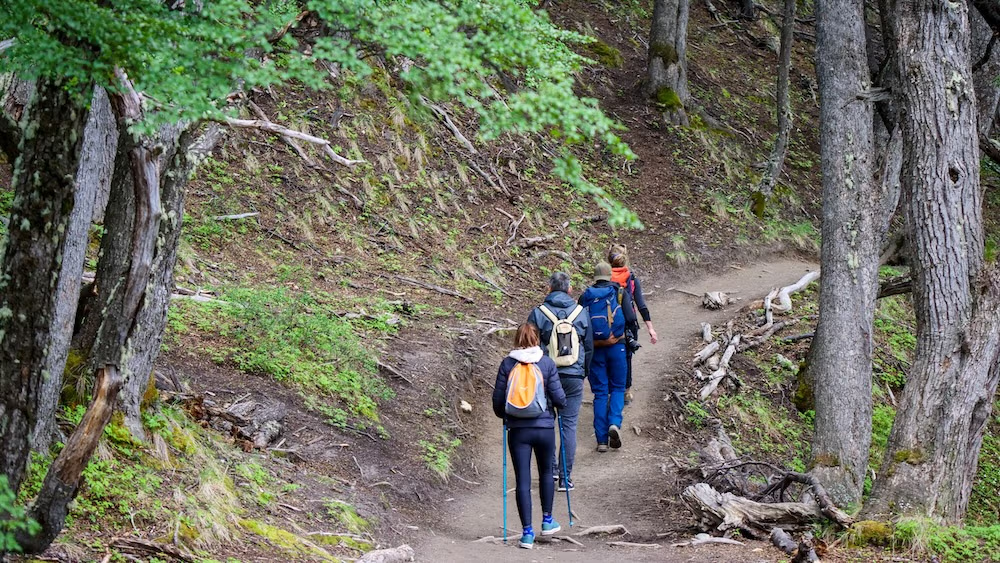
2. Trekking Poles: The Regret is Real
I will admit this freely: We messed up. We didn’t bring trekking poles.
On the way down from Laguna de los Tres, my knees were screaming. “Trekking poles would have been a good idea.” The descent is steep, jarring, and hard on the joints. Having four legs instead of two takes about 25% of the weight off your knees and helps you stabilize in the high winds. Rent them in town if you didn’t pack them. Do not be a hero.
3. The Backpack: The “Lunchbox” Vessel
You need a Day Pack between 20L and 30L. Why? Because of the Lunchbox Economy.
Since grocery selection in town is “limited beyond belief” (and expensive—$1 USD per apple!), we relied on the packed lunches sold by our hotel. These boxes are bulky. You need a bag big enough to hold:
- The massive lunchbox.
- At least 1.5 liters of water.
- Your shed layers (puffy jacket, fleece).
- Your camera gear.
The “Lunchbox Survival” Kit: Small Items, Big Impact
Sometimes, it’s the little things that break you. Here are the quirky essentials that saved (or would have saved) our sanity.
1. Durable Tupperware (The Salad Tragedy)
Here is a tragic story from the trail. We ordered the lunchbox, which came with a rice salad. Sometime during the ascent, disaster struck: “My bowl broke on the hike up so I really need to eat it otherwise I’m eating a salad in my bag.”
The flimsy plastic containers provided by hotels often crush under the weight of your gear. If you are a serious “foodie hiker,” bring a lightweight, collapsible Tupperware container from home to transfer your lunch into. Save the salad; save the bag.
2. Sun Protection (The Ozone Hole)
Patagonia sits right under a thin layer of ozone. The sun here is radioactive. Even on cloudy days, you can get scorched. Bring:
- High SPF Sunscreen: Apply it religiously.
- Polarized Sunglasses: Essential for glare off the glaciers and water.
- A Hat (Ideally Two): A beanie for the cold morning wind, and a baseball cap for the sunny afternoon descent.
3. The “Muffin Protection” System
Our lunchboxes often came with what we called the “Muffin of Life.” You do not want this crushed. Ziploc bags are your best friend here. They keep your trash organized (Pack In, Pack Out!) and protect your precious carb rewards from exploding inside your pack.
Tech & Logistics: Surviving the “Digital Blackout”
El Chaltén is a digital detox, whether you want it to be or not. As we discovered immediately upon arrival: “There’s basically no internet… Data mobile not working.”
We even struggled to process our hotel payment because the Wi-Fi kept going down. Here is the tech you need to survive the void:
Offline Maps
Download Maps.me or the offline area on Google Maps before you leave home. While the trails are well-marked with “markers at every kilometer”, having a GPS backup is essential for safety.
Power Bank (Portable Charger)
Cold weather drains phone batteries faster than you can say “Dulce de Leche.” Since we were “distracted by our cameras” constantly, our phones were dying by early afternoon. A 10,000mAh power bank is non-negotiable.
Camera Cleaning Kit
The wind in El Chaltén carries fine grit and dust. If you change lenses on the trail, you are inviting dust spots onto your sensor. Bring a microfiber cloth and a blower. Protect your gear.
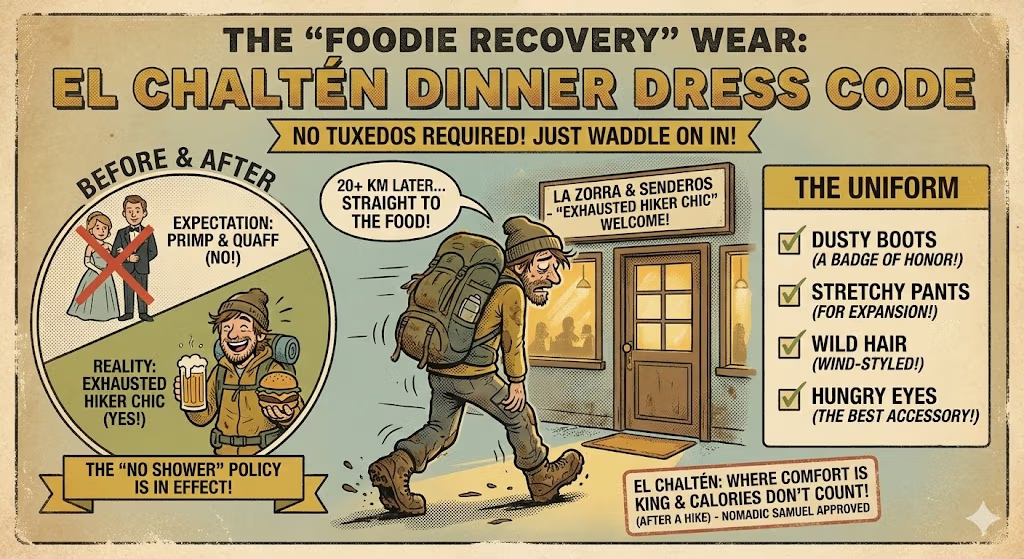
The “Foodie Recovery” Wear: What to Wear to Dinner
After hiking 20+ kilometers, you are not going to want to shower, primp, quaff and the dress up to impress in a tuxedo. You are going to want to “waddle on-in” directly to a restaurant.
El Chaltén is incredibly casual. The “dress code” at virtually every restaurant—including our favorites like La Zorra and Senderos—is “exhausted hiker chic.”
However, you do need:
- Clean Socks: For the love of your fellow diners, change your socks before you enter a restaurant.
- Camp Shoes / Sandals: Getting your swollen feet out of hiking boots and into Crocs or slides is a spiritual experience.
- Cash (Pesos/USD): While some places take cards, the connection often fails (as we learned the hard way). Always have backup cash for your post-hike burger.
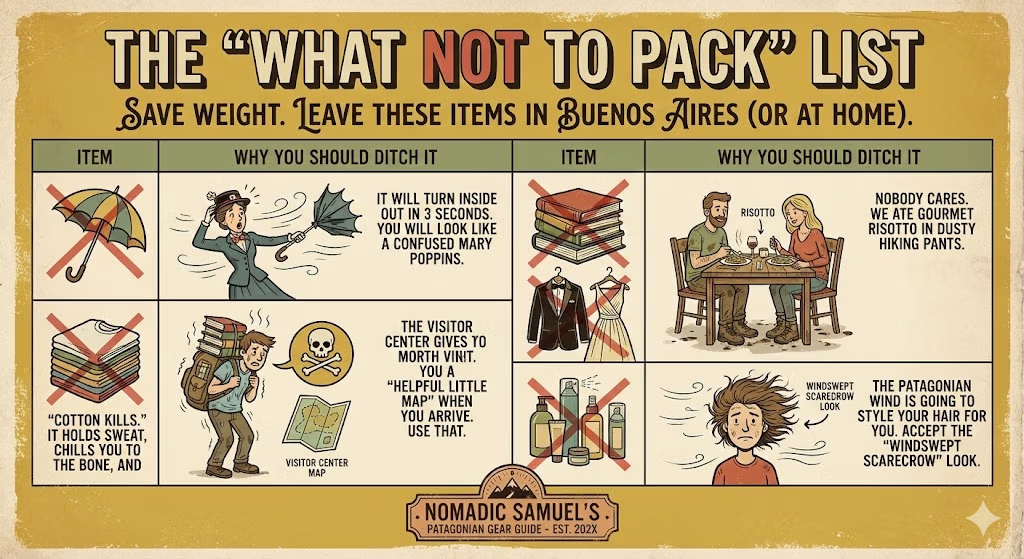
The “What NOT to Pack” List
Save weight. Leave these items in Buenos Aires (or at home).
| Item | Why You Should Ditch It |
| Umbrella | It will turn inside out in 3 seconds. You will look like a confused Mary Poppins. |
| Cotton T-Shirts | “Cotton kills.” It holds sweat, chills you to the bone, and smells terrible. |
| Heavy Guidebooks | The Visitor Center gives you a “helpful little map” when you arrive. Use that. |
| Fancy Dinner Clothes | Nobody cares. We ate gourmet risotto in dusty hiking pants. |
| Hair Styling Products | The Patagonian wind is going to style your hair for you. Accept the “windswept scarecrow” look. |
Final Thoughts: Embrace the “Faux Trekker” Life
Packing for El Chaltén is about survival, comfort, and calories. You don’t need to be an Olympic athlete to hike here—we certainly aren’t. We arrived as “foodies” and left as “faux trekkers” with stronger legs and a deeper appreciation for a good windbreaker.
Just remember: If you find yourself at Kilometer 9, crying into the wind, knees throbbing, fantasizing about a sedan chair rescue… you probably should have packed the trekking poles.
But hey, the burger and beer combo at the end is well-worth it.
FAQ: El Chaltén Packing Logistics
Can I rent gear in El Chaltén?
Yes! If you don’t want to pack trekking poles or need a heavier jacket, there are several rental shops in town. However, prices can be high, and supply is limited in peak season.
Do I need a sleeping bag?
Only if you plan to camp at sites like De Agostini or Poincenot. If you are day-hiking and staying in a hotel like we did (Vertical Lodge), you do not need camping gear.
How cold does it get in summer?
It varies wildly. We had days of “cooling down rapidly” and “chilly winds,” but the sun can be warm. Expect temperatures to range from 5°C (40°F) at night to 20°C (68°F) on a sunny afternoon.
Is there anywhere to buy gear if I forget something?
Yes, there are outdoor shops, but they are expensive. It is much better to arrive prepared. Also, grocery selection is limited, so bring your specific trail snacks from El Calafate if you are picky!
Is there cell phone reception on the trails?
No. In fact, there is basically no mobile data signal even in the town of El Chaltén itself. We strongly recommend downloading offline maps (like Maps.me or Google Maps) and your entertainment (music/podcasts) before you arrive.
Do I need to pay a park entrance fee?
No. Unlike Torres del Paine in Chile, access to Los Glaciares National Park from El Chaltén is currently free. You just walk right onto the trails from town.
Should I bring cash or rely on credit cards?
Bring cash (Pesos or USD). While many restaurants accept cards, the internet connection required to process payments goes down constantly. We struggled to pay for our hotel because of this, so having cash backup is essential for food and gear.
Is the water on the trail safe to drink?
Yes, most hikers drink directly from the glacier-fed streams. However, you should bring a reusable water bottle to fill up. If you have a sensitive stomach, bring a filter or purification tablets just to be safe.
What size backpack do I need for day hikes?
We recommend a 20-30 liter day pack. You need enough space to carry the bulky hotel lunchbox, at least 1.5 liters of water, your camera gear, and the layers you’ll shed once you warm up.
Are there bathrooms on the trails?
There are basic pit toilets located at the designated campgrounds (like Laguna Capri, Poincenot, and De Agostini). There are no facilities at the summits or along the open trail sections, so plan accordingly.
How do I handle laundry if I’m packing light?
We ended up hand-washing our laundry in the hotel sink to save money and time. If you plan to do this, pack quick-drying fabrics (like merino or synthetics) and bring a small amount of travel detergent.
Do I need a guide for the main hikes?
Not necessarily. The trails are very well marked with signage every kilometer. Unless you are doing technical climbing or venturing off the main paths, it is very much a “do-it-yourself” trekking destination.
What should I do if a town dog follows me?
You will see many friendly dogs in town, but do not let them follow you onto the trails. This is strictly enforced to protect the endangered Huemul deer that live in the park. Be friendly in town, but firm about leaving them behind when you hike.
Can I buy specialized dietary foods in town?
It is difficult. The grocery selection is “limited beyond belief”—we struggled to find variety beyond basics like apples and bananas. If you need specific protein bars, gluten-free items, or electrolyte mixes, buy them in El Calafate or bring them from home.
Project 23 Argentina: This guide is also available in Spanish. [Lea la versión en castellano: Lista de Equipaje para El Chaltén: Cuando el Viento te Arranca la Cara]