
We arrived in the trekking capital of Argentina carrying weeks of heavy, wine-soaked foodie indulgence. Audrey’s jeans no longer fit, forcing a strategic retreat into stretchy leggings. I was personally complaining of my own “bulbous plumptitude,” a newly discovered physical state where I felt more rotund than rugged. And yet, here we were in El Chaltén, stepping off a bus surrounded by jagged granite peaks and elite athletes, realizing our first major hurdle wasn’t going to be a mountain. It was simply figuring out how to move our own skeletons.
Welcome to the unvarnished reality of couples travel in Patagonia.
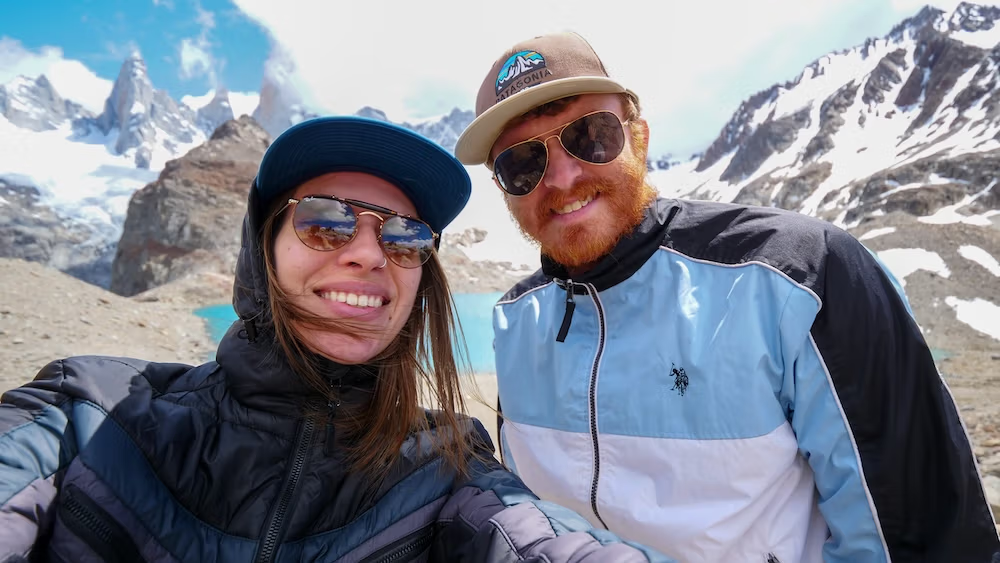
If you are looking for a guide written by superhuman trail-runners who skip up 1,000-meter inclines before breakfast, you are in the wrong place. We are foodies who essentially pretended to be trekkers for a week. We endured the pain, we felt the stiffness, and we ultimately conquered the trails. But we did it our way: with strategic rest days, massive carbohydrate payloads, and a healthy dose of self-deprecation.
Here is exactly how to survive El Chaltén with your relationship—and your calves—intact.
The Frontier Shock: $1 Apples and the 2026 Logistics Shift
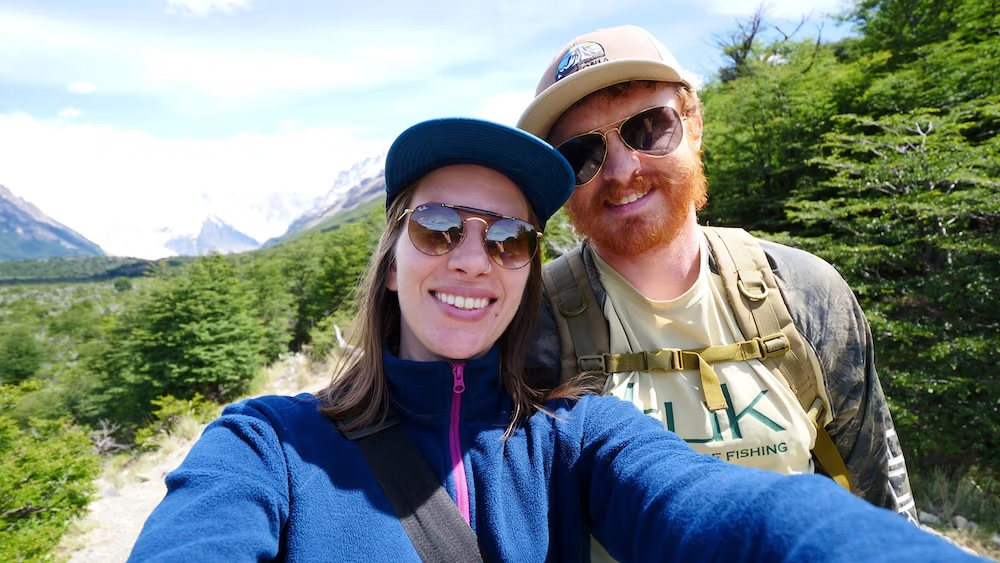
We dumped our bags at Vertical Lodge, a surprisingly spacious spot that cost us an incredibly reasonable $54 USD a night (with breakfast included). Eager to prep for the trails, we immediately hit the local general store, fully expecting to stock up for a week of cheap, healthy trail meals.
Instead, we were met with a harsh economic reality. The food selection was beyond limited, and the few sad-looking apples available were clocking in at roughly a dollar apiece. It was a swift, expensive introduction to the logistics of frontier living. Furthermore, our grand plans of seamlessly paying for our hotel hit a massive wall when the town’s Wi-Fi repeatedly dropped, leaving us completely unable to process a simple credit card transaction until the connection miraculously resurrected itself hours later.
[The Nomadic Samuel Reality Check] > Our connection struggles are now a piece of Patagonian history. As of 2026, the “offline” era of El Chaltén is officially dead. Starlink (both Mini and Roam) has aggressively infiltrated the town. You will now find high-speed, low-latency internet in cafes and hotels. However, the financial landscape has fundamentally shifted in other ways that you absolutely must prepare for.
While we waltzed into the northern sector of Los Glaciares National Park without paying a dime during our visit, the rules have drastically changed. As of 2026, foreign visitors are hit with a 45,000 ARS day pass.
Planning a quick day-trip without a hotel booking? Expect to be slapped with the newly implemented “Tasa de Uso Urbano” municipal tax right at the town entrance. This fee is currently tied to the price of two liters of YPF Super gasoline (roughly 3,018 ARS). And whatever you do, do not rely on the local El Chaltén ATMs. They are a notorious financial trap, currently capping withdrawals at a mere $15 USD equivalent while charging a staggering $10 USD fee. Bring all the physical Argentine Pesos you need directly from Buenos Aires or El Calafate.
The 2026 Ground Rules Matrix
| Logistical Hurdle | The Brochure Myth | The 2026 Reality |
| National Park Access | “The trails are completely free to enter!” | False. Foreigners now pay 45,000 ARS for a 1-day pass. Hack: This ticket gives you a 50% discount on a second consecutive day if scanned within 72 hours. |
| Connectivity | “Prepare to disconnect; there is zero Wi-Fi.” | Outdated. Starlink is everywhere. You can upload reels from your guesthouse. |
| Town Entry Fees | “Just drive in and start hiking.” | New Tax. Day-trippers without local lodging pay a municipal tax of approx 3,018 ARS via QR code. |
| Cash & Payments | “Cards are widely accepted everywhere.” | Risky. While Visa offers the MEP rate instantly, the ATMs cap at $15 USD with a $10 USD fee. Bring thick stacks of ARS cash. |
The Laguna de los Tres Crucible: Broken Bowls and Sedan Chairs
We woke up early, fueled by a 6:00 AM hotel breakfast designed specifically to shove eager trekkers out the door and onto the dirt. We were ambitious. We were ready.
We were also completely lost.
In a classic newbie mistake, we left our trail map sitting on our hotel nightstand. As a result, we spent a solid 45 minutes just wandering to the opposite end of town trying to find the actual trailhead signage. By the time we hit kilometer two, my backpack had already claimed a casualty: the plastic bowl holding my expensive $10 USD hotel-provided lunchbox had shattered.
So, at exactly 9:00 AM, I sat on the side of a mountain aggressively shoveling a rice, egg, cheese, and vegetable salad into my mouth before it could permanently coat the inside of my bag.
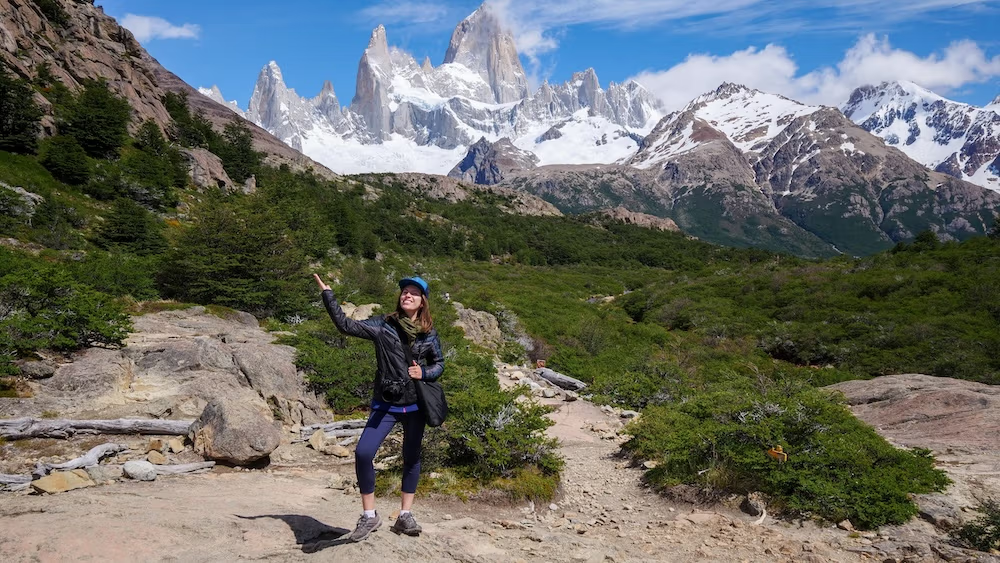
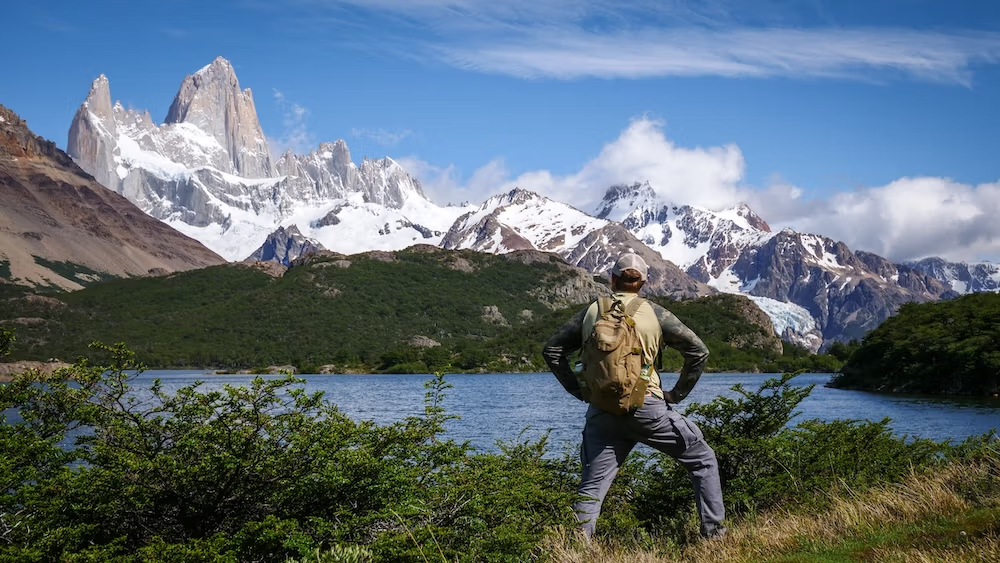
The first eight kilometers of the Laguna de los Tres hike lure you into a false sense of athletic superiority. We were making incredible time. We were energized by the sweeping vistas and the sheer, CGI-like majesty of Mount Fitz Roy looming in the distance. It truly felt like the most magnificent mountain we had ever laid eyes on. We even spotted three majestic condors circling overhead.
But then, kilometer nine happens.
[The Faux-Trekker Truth]
They tell you the final stretch is “intermediate.” They are lying. The last kilometer of Laguna de los Tres is where relationships go to die. It is a brutal, steep, loose-gravel bottleneck that shreds your calves and actively tests your sanity. If you do not hike regularly, your legs will violently protest.
The wind at the summit was ferocious, forcing us to huddle behind a large rock just to devour our remaining candy and a single granola bar. The cerulean waters and the towering peaks were astonishing, making the agony undeniably worth it.
The descent, however, was somehow worse. My feet were throbbing so violently that I spent a significant portion of the hike down genuinely fantasizing about calling an emergency number to be airlifted, or at the very least, being carried out of the park on a velvet sedan chair. We took breaks not to admire the view, but purely out of sheer exhaustion and soreness. Brutal.
Trail Breakdown: Laguna de los Tres vs. The Alternatives
| Trail Metric | Laguna de los Tres (Fitz Roy) | Laguna Capri (The Bailout Option) |
| Distance | 24 km round trip (8-9 hours). | 8 km round trip (4 hours). |
| Elevation Gain | 1,040 meters (400m in the last KM). | ~200 meters. |
| The Reality | A grueling endurance test. The final push is a loose-scree nightmare. | A perfectly reasonable half-day hike offering stunning Fitz Roy views without the pain. |
| Couple Friction Risk | Extreme. Hangry arguments are highly probable on the descent. | Low. A leisurely stroll suitable for late starters. |
Relationship Management at Kilometer 20
When you are twenty kilometers deep into a hike, your feet are actively throbbing, and the Patagonian wind is relentlessly howling in your ears, your partner’s heavy breathing can suddenly sound like a deliberate personal attack.
Trekking in El Chaltén is the ultimate couples stress-test. You are pushing your physical limits in extreme weather, far from the comforts of home. Here is exactly how Audrey and I survived six days in the trekking capital of Argentina without leaving each other stranded on a glacier.
The Hangry Protocol is Non-Negotiable Most guesthouses and hotels offer a pre-packed lunchbox for about $10 USD. Buy them. It is incredibly convenient. But do not stop there. In our lunchboxes, alongside the rice salads, we specifically made sure to pack an apple, mini muffins, granola bars, and a whole bunch of candies.
Why? Because when we hit the infamous kilometer nine bottleneck on the Laguna de los Tres trail—that brutal, steep, gravelly section where literally everyone is exhausted —sugar was the only thing preventing a full-scale meltdown. Feed your partner before they realize they are hungry. And whatever you do, do not pack your salad in a fragile plastic bowl that will break in your backpack by kilometer two.
Establish a “No-Guilt” Write-Off Day If you are foodies rather than elite athletes, your bodies will eventually rebel. Our day three was a total, unmitigated write-off. We were incredibly sore, unimaginably stiff, and we ended up sleeping for 10 to 12 hours.
As a couple, you must explicitly agree that taking a zero-activity recovery day is a victory, not a failure. Do not guilt-trip your partner into “pushing through” when they are actively fantasizing about calling an emergency number to be airlifted out on a sedan chair. Your relationship will benefit far more from a 12-hour coma than another forced march.
Leverage the Power of the “Foodie Sprint”
Shared suffering requires shared rewards. We completely aligned our trail pacing by focusing intensely on exactly what we were going to eat when we finally got back to civilization.
We literally shaved massive time off our Laguna Torre return trek. Instead of the estimated three hours, we blitzed the descent in exactly two hours and twenty minutes. Why? Because we both had a spontaneous realization at the exact same moment: we desperately wanted loaded bacon burgers from La Zorra. Use culinary bribery to keep your partner’s morale high.
Respect the Wind (And Don’t Blame Each Other) The weather here is chaotic, and it will ruin your plans. On day four, the winds were so insane we tried going out but could barely stand on our feet. When nature forces you to cancel a hike, immediately pivot to a cafe day. Do not take Patagonian weather out on your spouse.
The Trail Friction & Resolution Matrix
| The Trail Crisis | The Internal Monologue | The Nomadic Samuel Solution |
| Pacing Mismatches | “Why are they walking so fast? Do they want me to die?” | Use the kilometer markers to set mutual break points. The faster hiker stops at the next marker and waits. |
| The Uphill Meltdown | “I cannot take another step. This was a terrible idea.” | Deploy the emergency candies. Blame the mountain, never each other. |
| The Rain/Wind Ambush | “I told you we should have brought the heavier jackets.” | Retreat. Accept the loss. Order a massive pizza at Patagonicus and try again tomorrow. |
| The Post-Hike Zombie State | “Do not speak to me until I am horizontal.” | Silent, synchronized waddling to the nearest craft beer and burger establishment. |
The 12-Hour Coma and Patagonian Hostility
If you read generic travel blogs, they imply you can conquer Fitz Roy on Tuesday and skip gracefully up to Cerro Torre on Wednesday.
The reality for two out-of-shape foodies? Wednesday was an absolute, unmitigated write-off.
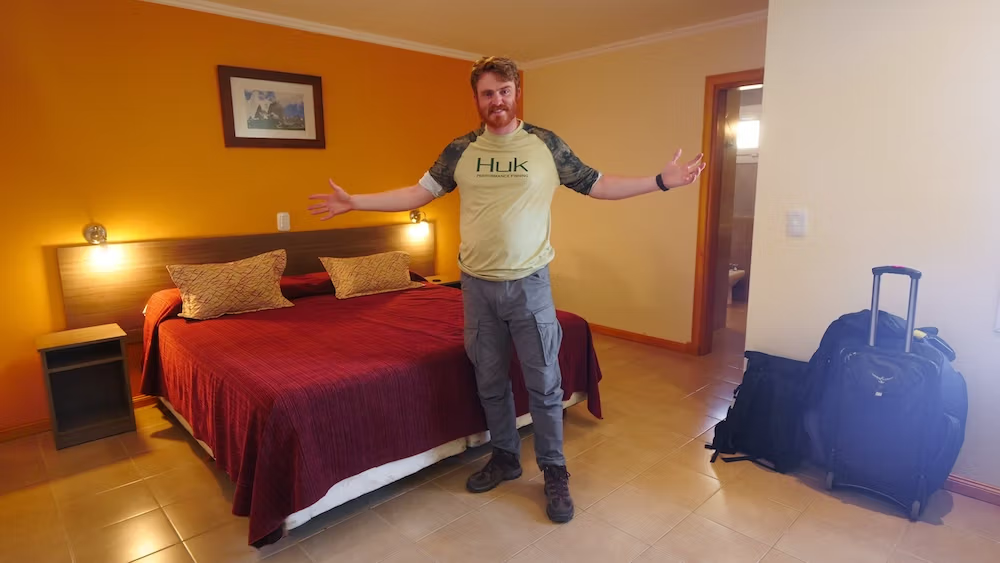
We were so spectacularly stiff from the 20-plus kilometers of abuse that leaving the hotel room felt like a herculean task. I hardly left the room at all. We eventually waddled out solely to acquire sustenance, immediately retreating to our king-sized bed to sleep for 10 to 12 straight hours.
And nature wasn’t done humbling us. By day four, El Chaltén decided to remind us exactly where we were on the map. The notorious Patagonian winds were so horrendous and violent that we could barely remain standing on our feet. We completely abandoned any lingering hiking ambitions, seeking refuge in a local cafe and surrendering to the chaotic, unpredictable weather patterns that define the region.
Laguna Torre: The Art of the “Easy” Hike and “Café au Lait” Waters
By day five, our legs had miraculously regained some semblance of function. The weather cleared, and we tackled the 18-kilometer Laguna Torre trail.
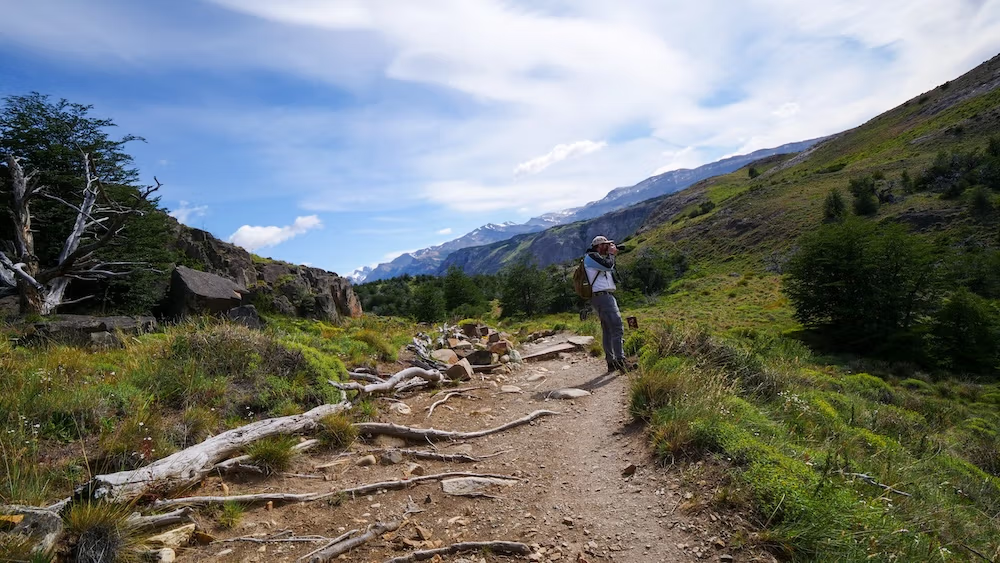
After surviving the crucible of Fitz Roy, this trail felt like a scenic, comfortable victory lap. The initial 250 meters of elevation gain happen early in the trek, leading you through incredibly diverse landscapes. We passed the powerful Cascada Margarita waterfall, crashing violently into the river below, and hiked through varied woodlands—from sun-dappled groves of massive trees to sections that looked exactly like a haunted forest.
We weren’t rushed. There was no sense of urgency. It was just pure joy, culminating in the realization that I was jumping like a silly goat over sticks on the trail.
[The Weather Reality]
We arrived at Laguna Torre expecting a pristine, magazine-cover view. Instead, the iconic peaks of Cerro Torre were completely shrouded in dense clouds, and the severe lack of sunlight rendered the lagoon a murky, muted “café au lait” color. We even saw small icebergs floating in the gray water.
It lacked the immediate, heart-stopping wow-factor of a clear Fitz Roy day. But honestly? We didn’t care. In terms of the actual hiking experience, Laguna Torre was vastly superior.
In fact, we were so comfortable on the flat, wide valley return trip that we shoved our cameras into our bags and shaved significant time off our descent. We completed the supposed three-hour return trip in two hours and twenty minutes. We weren’t fleeing incoming weather; we were blinded by a singular, ravenous mission for craft beer and loaded burgers.
The Faux-Trekker’s Foodie Recovery Protocol
You do not burn thousands of calories in the Andes just to eat a light salad. You do it to earn catastrophic amounts of carbohydrates. As self-proclaimed foodies, our recovery protocol in El Chaltén was aggressive, unapologetic, and highly effective.
After the physical destruction of the Fitz Roy hike, we hobbled into a hidden gem near the bus terminal called Senderos. Tucked inside a high-end boutique guesthouse, this tiny restaurant only held about six or seven tables. It was an oasis of gourmet comfort.
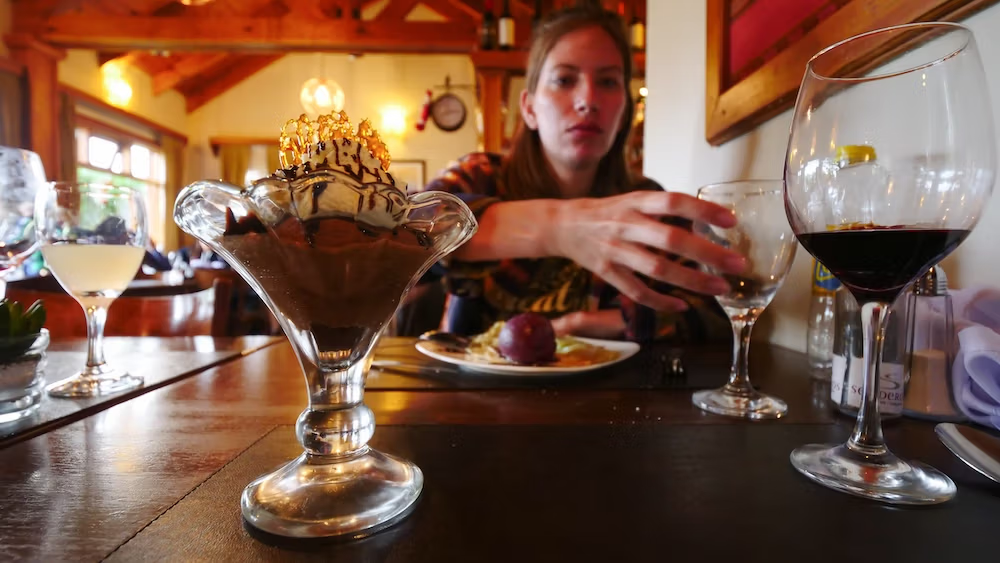
I ordered a decadent blue cheese risotto packed with walnuts and sun-dried tomatoes, while Audrey inhaled a hearty lentil and vegetable casserole. To wash it down, we ordered a full bottle of Syrah. It was a deliberate, refreshing break from my usual, beloved Malbec, and the exact pairing required to soothe our aching muscles. We capped the decadent meal with chocolate mousse and a panqueque de manzana (apple pancake) before waddling back to the lodge and passing out by 8:30 PM.
Following our high-speed descent from Laguna Torre, our aforementioned burger sprint led us straight to the doors of La Zorra. Here, we fully embraced the bottom-feeding barrel of foodie glory. Audrey tackled a spicy, Mexican-style jalapeño burger loaded with guacamole and hot sauce, while I devoured a massive bacon burger. We paired these with cheesy fries generously topped with even more bacon bits, washing the entire chaotic meal down with golden craft beer pints secured during happy hour.
And because we operate on a different level of gluttony, we immediately followed the burgers with waffle cones of artisanal ice cream on the main drive—super dulce de leche for me, and a mascarpone and pistachio combo for Audrey.
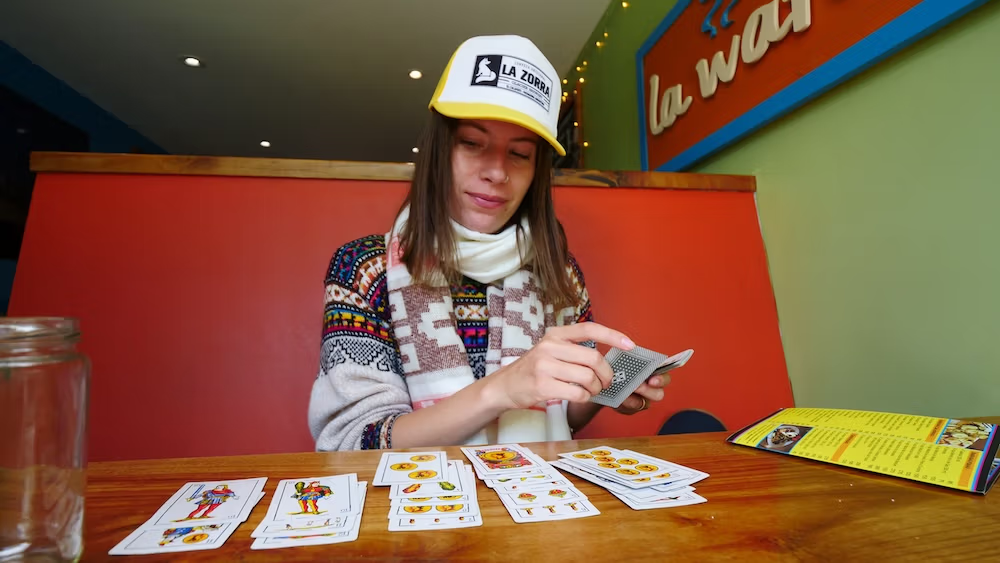
Later in the week, we found ourselves at La Waflería, intentionally playing cards and sipping lattes just to drag out our visit long enough to justify ordering a second round of their incredible gourmet waffles.
The Ultimate El Chaltén Foodie Matrix
| Cravings & Needs | Where to Go | The Nomadic Samuel Order |
| Gourmet & Quiet | Senderos (Inside boutique hotel) | Blue cheese & walnut risotto; Lentil casserole; Full bottle of Syrah. |
| Caloric Annihilation | La Zorra | Spicy Jalapeño burger; Bacon burger; Cheesy bacon fries; Happy hour craft pints. |
| Sweet Indulgence | La Waflería | Order a waffle. Play cards. Order a second waffle. Drink lattes. |
| Healthy Reset | Cúrcuma | Quinoa bowls and roasted vegetables when the guilt finally sets in. |
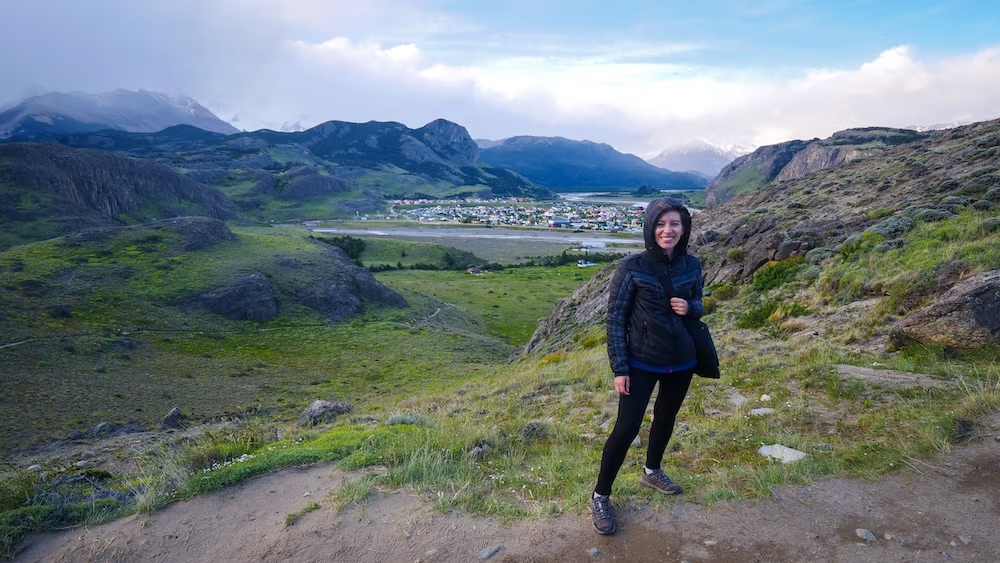
The 6-Day Couples Itinerary: Why Rushing is a Mistake
The biggest logistical mistake couples make when planning a trip to El Chaltén is budgeting two or three days, expecting perfect sunshine and limitless physical stamina.
We booked six nights in the trekking capital, and we genuinely needed every single one of them.
We are foodies who enjoy walking, not “true hikers” accustomed to scaling vertical rock faces. We required an entire day off just to physically recover from the Laguna de los Tres hike, and we lost another full day to horrific, blinding winds that made stepping outside impossible.
If you try to compress Fitz Roy and Cerro Torre into a 48-hour window, you are playing a dangerous game of Patagonian roulette. A bad weather day will ruin your only chance at seeing the peaks, and the physical toll of back-to-back 20-kilometer hikes will likely result in miserable, blistering arguments on the trail.
A six-day buffer ensures you can actually enjoy the destination. It gives you the flexibility to hike on the clearest days, sleep for 12 hours when your legs turn to concrete, and spend an entire afternoon eating pizza and garlic bread without an ounce of guilt.
El Chaltén is breathtaking, exhausting, and utterly unforgiving. Arrive fit, bring plenty of cash, guard your plastic salad bowls with your life, and never underestimate the motivating power of a post-hike bacon burger.
Worth it? Absolutely. But next time, I’m finding out exactly how much that emergency airlift costs.
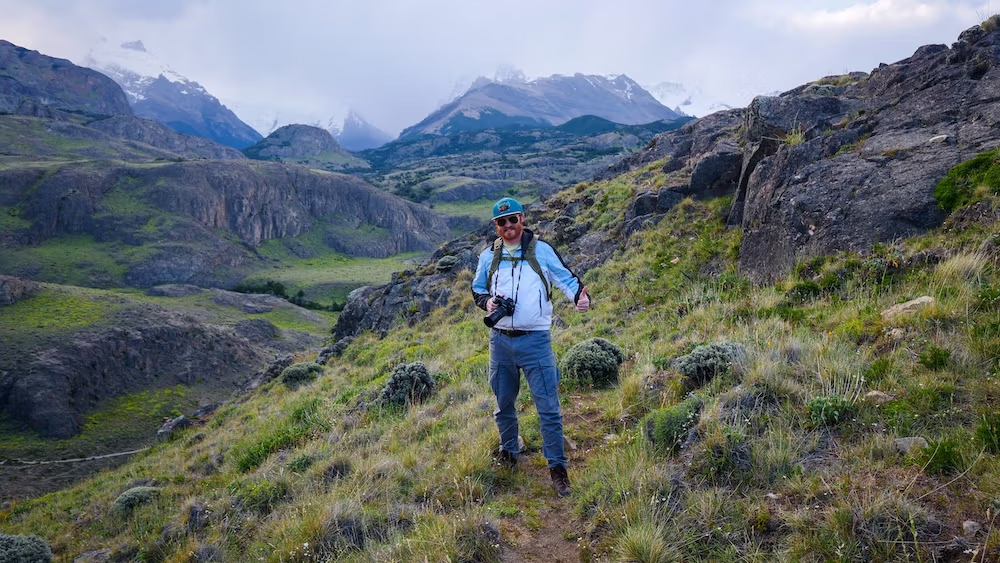
FAQ: Couples Travel in El Chaltén: Surviving the Trails Together
Do you need to pay an entrance fee to hike in El Chaltén?
Absolutely. The days of free trekking in Los Glaciares National Park are over. As of 2026, foreign visitors must pay a 45,000 ARS day pass at the new access portals. There is a silver lining, though: if you return to scan your ticket within 72 hours, you get a 50% discount on your second day.
Is there any Wi-Fi or cell service in town?
100%. Forget the outdated blogs warning you about going completely off the grid. While our cell data was useless during our initial trip, the town is now fully equipped with Starlink. You’ll find high-speed, low-latency internet in most hotels, cafes, and restaurants, making it perfectly fine to stay connected.
How hard is the Laguna de los Tres (Fitz Roy) hike, really?
Deceptive. The first eight kilometers will trick you into thinking you are an elite mountaineer. The final kilometer will aggressively correct that assumption. It gets rocky, a bit gravely at times, and it’s just really steep. It tests your legs, your lungs, and your relationship. Bring trekking poles and emergency candy.
Should we buy groceries and pack our own trail lunches?
Depends. If you want to spend an hour hunting for $1 apples in sparsely stocked general stores, go for it. As foodies, we quickly pivoted to buying the $10 USD pre-packed lunchboxes from our hotel. They usually come packed with a hearty rice salad, a muffin, an apple, and candy. Just transfer any salads out of fragile plastic bowls before stuffing them in your backpack.
Can we just do a day trip to El Chaltén from El Calafate?
Nope. It’s a roughly three-and-a-half-hour bus ride each way. Doing that in a single day leaves you exhausted with zero margin for bad weather. Plus, as of 2026, day-trippers who don’t have local accommodation booked are hit with a new municipal tax (roughly 3,018 ARS) at the town entrance. Book at least three nights, though we were incredibly thankful we decided to have six days.
Are the local ATMs reliable for getting cash?
Never. The ATMs in El Chaltén are effectively a financial trap. They currently cap withdrawals at the equivalent of $15 USD while slapping you with a staggering $10 USD withdrawal fee. While Visa and Mastercard are accepted at many restaurants via Starlink terminals, you still need physical Argentine Pesos for tips, small purchases, and emergencies. Bring thick stacks of cash from Buenos Aires or El Calafate.
Which hike is better for a relaxing couples day: Laguna Torre or Fitz Roy?
Laguna Torre. While Laguna de los Tres (Fitz Roy) has the world-famous views at the summit , Laguna Torre is a far superior hiking experience. It’s an 18-kilometer trek , but it flattens out beautifully around kilometer 3.5 to 4. You’ll stroll through haunted-looking forests and open valleys, making it easy to hold a conversation instead of just gasping for air.
What happens if the Patagonian weather is bad?
Surrender. The weather here is chaotic and will dictate your schedule. We lost an entire day to winds so horrendous we could barely stand on our feet. Do not try to force a hike in dangerous winds or blinding rain. Pivot immediately to a cafe day, order some gourmet waffles or a massive pizza, and try again tomorrow.
Project 23 Argentina: This guide is also available in Spanish. [Lea la versión en castellano: Viajar en Pareja por El Chaltén: Cómo Sobrevivir Juntos a los Senderos]