
There comes a distinct, humbling moment on day four in Bariloche when your favorite hiking jeans simply refuse to button. You can blame the high altitude of the Andes. You can blame the laundry machines at the Airbnb shrinking your clothes. But staring at the mirror, the real culprit is undeniable: you are officially “rotund-ing.”
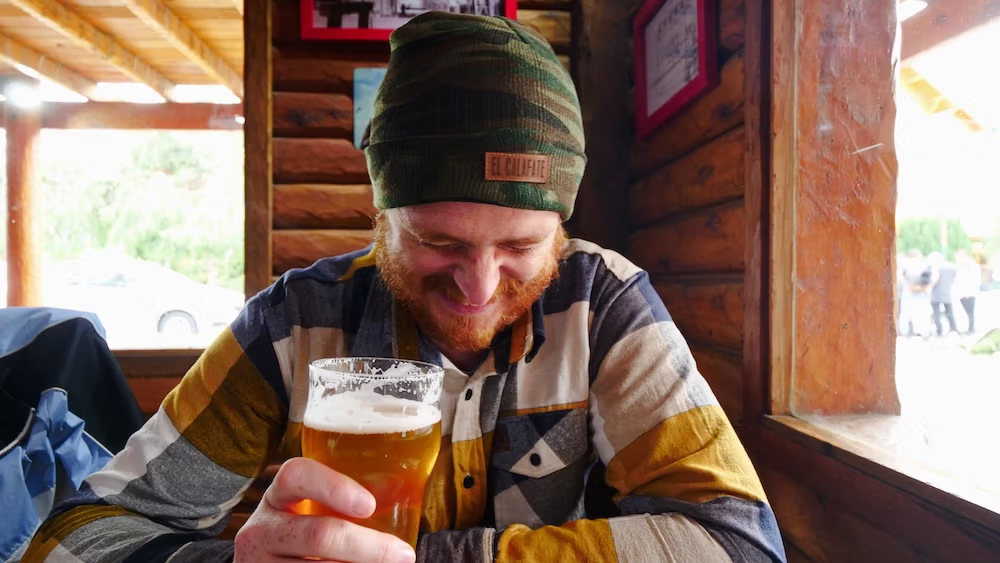
Audrey and I had been drowning perfectly flaky trout in pools of mushroom cream for three days straight, chasing it with literal kilos of artisanal chocolate. We needed to move, but the physical reality of Patagonia’s diet had anchored us. If you’ve watched our YouTube channel, you know we travel to eat. But what nobody tells you about the bottom of the world is that Patagonian food isn’t just one thing. It is a dramatic, heavy, evolving beast.
As you move from the alpine lakes of the north down to the jagged, wind-whipped steppes, and finally to the icy end of the world, the culinary landscape shifts completely. What you eat, how much you pay, and the sheer logistical friction of getting a table changes with every degree of latitude. Let’s break down exactly what you are walking into, what it actually costs, and how to avoid the hidden traps that will wreck your travel budget.
The Patagonian Culinary Gradient: A North-to-South Master Matrix
Before we dive into the granular realities of exactly where to eat, what to pay, and how to avoid the hidden tourist taxes, you need to understand the playing field. Patagonia is not a single destination; it is a massive, climatically diverse subcontinent. You cannot order fresh King Crab in the alpine north, and if you try to order wild boar at the end of the world, you are eating something pulled from a deep freeze.
To help you strategize your route—and your calorie intake—here is the 30,000-foot cheat sheet mapping the culinary evolution from the northern pines down to the glacial edge.
| 📍 The Latitude (Region) | 🏔️ The Culinary Identity | 🥩 The Signature Proteins | 🔥 The “Rotund-ing” Factor | 💰 Budget & Friction Reality |
| The Northern Lakes (Bariloche, San Martín) | Alpine European meets Indigenous Roots. Heavy Swiss/German chocolate culture clashing with ancient Mapuche earth-oven traditions. | Farm-raised Trout (Ahumada or Black Butter), Wild Boar, Venison. | Extreme. Drowning in mushroom cream, cheese fondues, and kilos of artisanal truffles. | High Friction. Winding Bustillo traffic jams and brutal 2-hour queues for top steakhouses. Mid-to-High cost. |
| The Central Steppe (Chubut & Santa Cruz) | The Estancia Survival Diet. Wind-scoured, isolationist ranching culture mixed with historic Welsh and Italian immigrant hubs. | Cordero al Palo (Spit-roasted Lamb), Guanaco Carpaccio, Artisanal Italian Pasta. | Heavy Meat & Sugar. Massive intakes of slow-rendered animal fat and pure-sugar Welsh cakes (Torta Negra). | Moderate Friction. Combating 50mph winds to walk to dinner. Beware the “Sauce Surcharge” on pasta. High cost for lamb. |
| The Atlantic Coast (Puerto Madryn) | The Nautical Bounties. Unpretentious, deep-water maritime culture. Less focused on grilling, completely obsessed with stews and frying. | Atlantic Prawns, Calamari, Mussels, Scallops. | Moderate. A welcome break from heavy red meat, though often offset by eating massive half-shrimp pizzas. | Low Friction. Highly walkable, flat coastal towns. Massive budget victories (cheap seafood skillets and 50% off pizzas). |
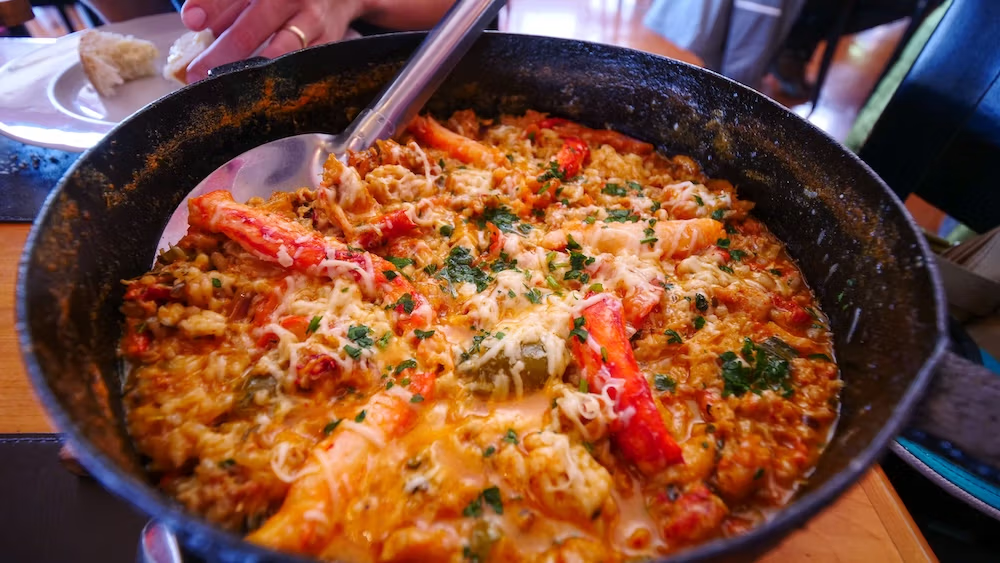
| The Deep South (Ushuaia / Tierra del Fuego) | The Sub-Antarctic Splurge. The absolute limit of global dining. Focuses entirely on pulling massive, expensive creatures out of freezing, treacherous waters. | Centolla (Magellanic King Crab), Merluza Negra (Deep-sea Black Hake). | Light but Expensive. Seafood is inherently lighter, but you will wash it down with heavy white wines to stay warm. | High Friction. Exhausting uphill mountain walks to Airbnbs. Eye-watering prices ($118+ for crab) and strict seasonal windows. |
Keep this gradient in mind. As the latitude drops, the wind speeds rise, the flavors get wilder, and the logistics get significantly more intense. Let’s break down exactly how to conquer each zone.
The Alpine Indulgence: Trout, Chocolate, and Bustillo Traffic
Northern Patagonia looks and eats like a Swiss fever dream. Towns like San Carlos de Bariloche and San Martín de los Andes are defined by deep blue lakes, dense pine forests, and a culinary scene heavily influenced by Central European immigrants and native Mapuche traditions.
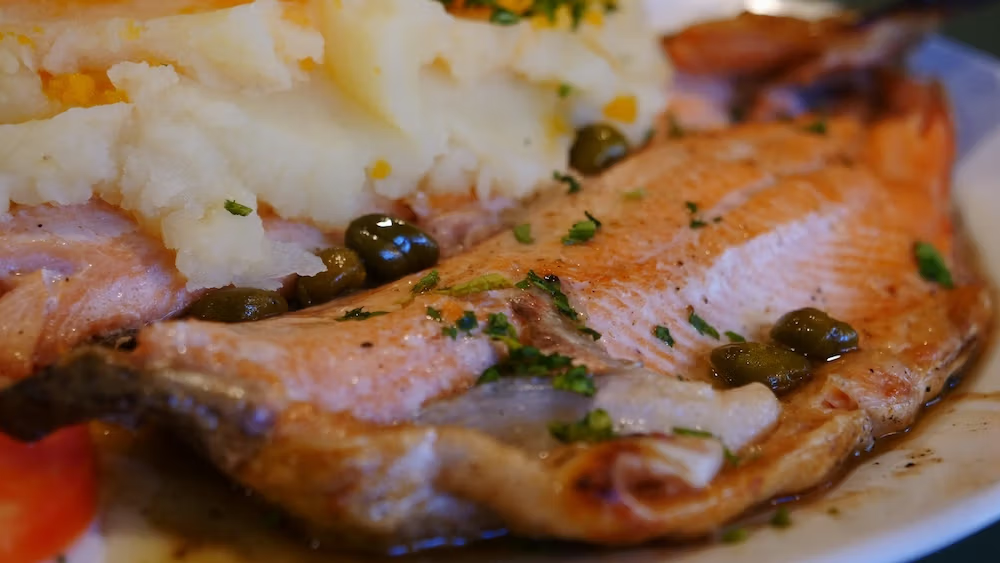
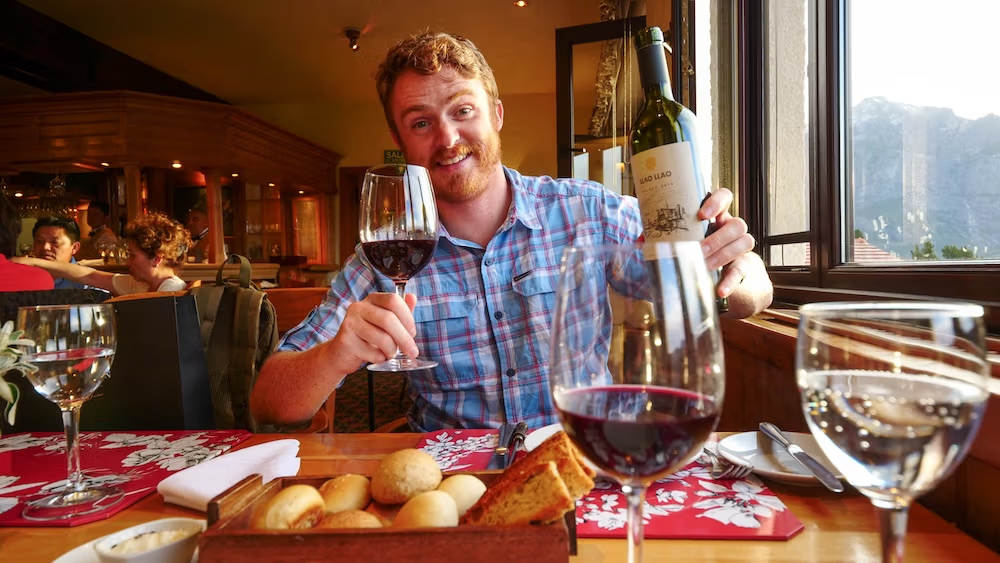
I vividly remember sitting down for breakfast at the iconic Llao Llao resort. I ordered a trout omelet, expecting the standard folded diner fare. What arrived was a revelation—it had the fluffy, airy texture of a Japanese-style rolled omelet, with a rich, creamy trout center that melted instantly. This is the baseline for the North. The trout is ubiquitous, usually farm-raised in the glacial lakes (wild-caught is rare and seasonal), and often prepared Ahuman (smoked) or pan-fried in black butter.
But the sheer density of the food here comes with a geographical tax. To get to the famous breweries like Cervecería Patagonia at Km 24.7 or the high-end dining spots, you must travel down Avenida Bustillo. This winding, two-lane road hugging the lake becomes a total traffic bottleneck between 5:00 PM and 7:00 PM. A 10km drive can easily take 45 minutes. And don’t plan on catching an Uber back to the city center after a few IPAs at 10:00 PM; the app is practically useless here due to local taxi union disputes. You must pre-schedule a Remise (private radio taxi) via WhatsApp at least four hours in advance.
[Samuel’s Steakhouse Queue Reality Check]
If you want beef in Bariloche, you go to El Boliche de Alberto. But here is the trap: they strictly do not take reservations. If you arrive at a normal Argentine dinner time (9:00 PM), you will stand on the sidewalk for two hours. Treat it like an American dinner. Arrive at 7:15 PM to physically guard your spot in line before the doors open at 8:00 PM.
The Northern Lakes Culinary Hit-List
| Venue / Experience | Signature Item | Price Reality (USD Est.) | The Micro-Logistics & Effort |
| El Boliche de Alberto (Bariloche) | Bife de Chorizo (Massive sirloin cuts) | $25 – $35 per steak | Effort: High. Massive calf-burning stairs from the waterfront. Arrive at 12:00 PM for lunch to skip the brutal evening queues. |
| Mamuschka / Rapanui | Frappanuí & Artisanal Truffles (Trufas) | ~$1.50 per individual truffle | Effort: Low. Located on flat Mitre St. Rapanui stays open until 1:00 AM for the late-night ice cream crowds. |
| Llao Llao Hotel Dining | Fluffy Trout Omelet / Smoked Meats | $40 – $60 for mid-day dining | Effort: Medium. 25km down Bustillo. Book a remise; do not rely on hailing a cab off the street. |
The Steppe Transition: Welsh Illusions and the Italian Surcharge
Driving south into Chubut, the lush pines abruptly vanish, replaced by the vast, wind-scoured Patagonian steppe. Here, the food pivots wildly into two unexpected directions: historic Welsh tea houses and heavy, artisanal Italian pasta.
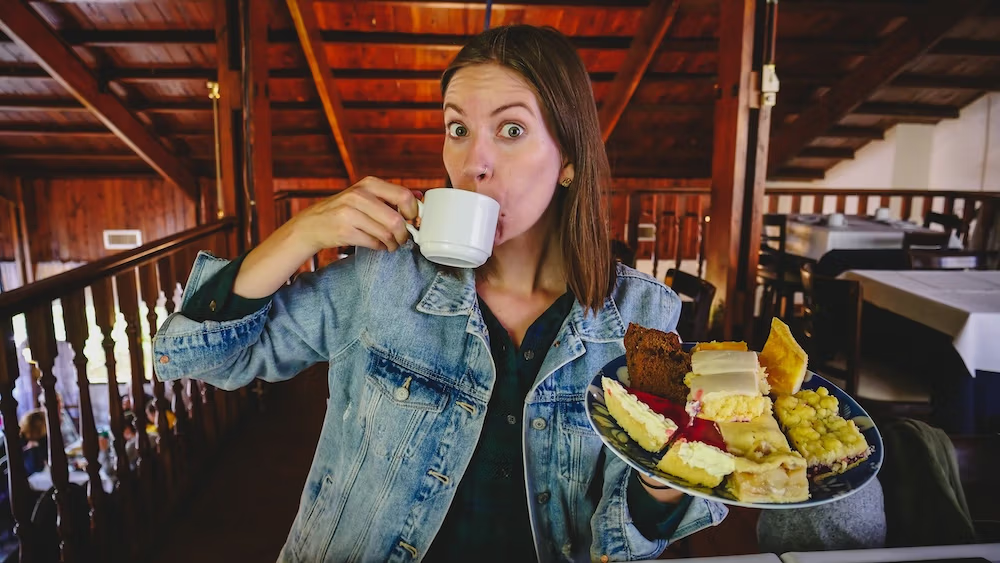
We stopped in the Welsh settlement of Gaiman, desperate for a mid-afternoon sugar hit. We found a place called Ty Gwyn and ordered the traditional Welsh tea spread. The table groaned under the weight of scones, clotted cream, white bread with massive blocks of cheese, and various cakes. I immediately reached for the Torta Negra. It looked like the richest, densest chocolate cake on earth. I took a massive bite. It was a lie. A delicious, pure-sugar lie. The famous “black cake” contains zero chocolate; it gets its pitch-black color entirely from deeply caramelized sugar, raisins, and walnuts.
Later that week in Trelew, we hit a wall of meat-fatigue and sought out comfort food. I ordered a plate of spinach and ricotta cannelloni with white sauce. One bite in, and I was transported back in time. It tasted exactly like my Argentine mother’s home cooking—a sudden spike of profound nostalgia in a random restaurant at the edge of the desert. But that nostalgia came with a harsh lesson in local economics.
[The Budget-Breaking Sauce Surcharge]
Ordering Italian food in Argentina comes with a hidden tax that breaks the bravest of backpackers. It’s called the “Sauce Surcharge.” When you look at a menu, the price listed is often just for the plain pasta. You must then select a sauce from a separate list, which often costs just as much as the noodles. If you aren’t paying attention, your $12 comforting bowl of gnocchi is suddenly a $24 line item on your bill. Always check if salsa is included.
The Deep South: Gaucho Fire, Ghost Towns, and Border Contraband
As you push further south into Santa Cruz (home to El Calafate and El Chaltén), the weather turns violent. The wind here regularly hits 40-50 mph. Walking 15 minutes to dinner is a freezing, exhausting endeavor, even in the dead of summer. This is the land of the Estancia (ranching) culture, where calories are survival.
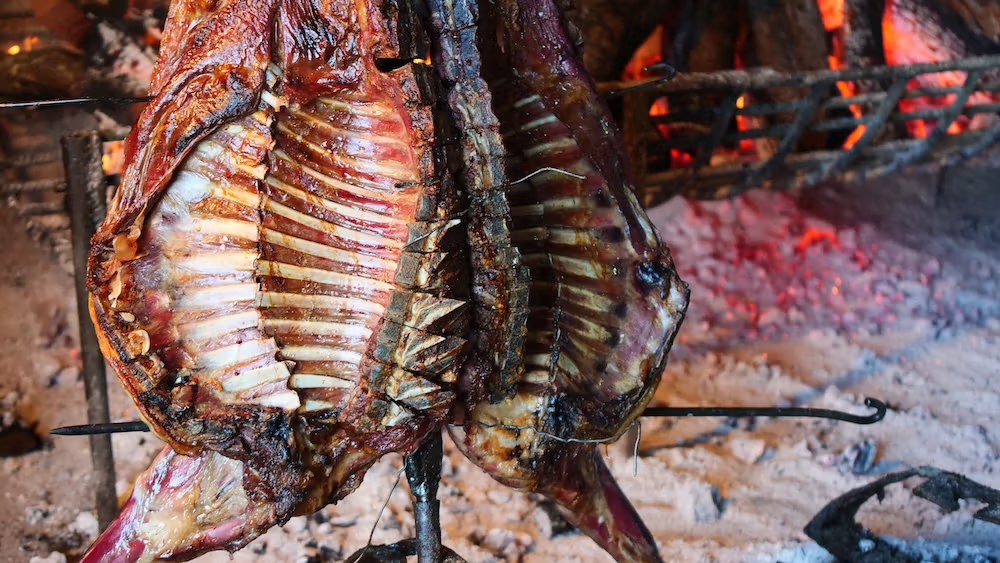
The undisputed king of the central steppe is Cordero al Palo—Patagonian lamb splayed on an iron cross and slow-roasted over an open wood fire for four to six hours. At a local asado, we stood by the fire watching the fat drip, and I was handed a piece of chinchulín (intestine) right off the grill. Guides often describe traditional offal as “melt-in-your-mouth.” I prefer reality: it has a highly distinct, rubbery texture. You chew it out of respect for the animal and the gaucho who cooked it, but it takes grit.
If you are hunting for the best restaurant lamb, you’ll likely target La Tablita in El Calafate. But do not let the sleepy town vibe fool you.
I had meticulously plotted the perfect foodie itinerary on Google Maps for our time in the deep south. Then Monday rolled around. I opened my phone, and my screen went entirely blank. Nearly every top-tier restaurant in these southern towns treats Monday and Tuesday as a ghost town, shutting their doors completely. If they are open, the tables are fiercely guarded for local tour groups and hotel concierges. You must book a table 48 to 72 hours in advance during the summer peak (Dec-Feb).
[Samuel’s Border Trail Mix Warning]
When you eventually cross from Argentina into Chile to hike Torres del Paine, you will deal with the SAG (Chilean customs). They are notoriously strict about agricultural products. The Loophole: They will absolutely confiscate your expensive raw almonds and trail mix, but they will allow roasted or salted nuts through. Buy roasted. Save yourself $50 in confiscated hiking fuel.
The Central Steppe Survival Guide
| Venue / Reality | The Signature Draw | Logistics & Pricing | The Friction & Fix |
| La Tablita (El Calafate) | Cordero Patagónico (Lamb on the cross) | $30 – $45 USD per lamb portion | Problem: The “Cubierto” Shock. Upscale spots charge a mandatory cover for bread/water. Fix: This does not go to the waiter. Add $4 to your mental budget, and still leave a 10% cash tip. |
| The Wind Walk | Getting to dinner in El Chaltén | Free (Cost is your dignity) | Problem: 50mph gusts. Fix: Do not wear nice clothes to dinner. Wear your Gore-Tex shell. The town is flat, but the wind makes a 10-minute walk brutal. |
| Guanaco Meat | Lean, wild alternative to beef | $20 – $30 USD (often braised in Malbec) | Problem: Highly seasonal/rare. Fix: Look for it as a Carpaccio appetizer if the mains are sold out. |
The Coastal Pivot: Discount Pizza and The End of the World
Eventually, you have to choose: do you go East to the Atlantic coast, or South to the end of the world? We did both.
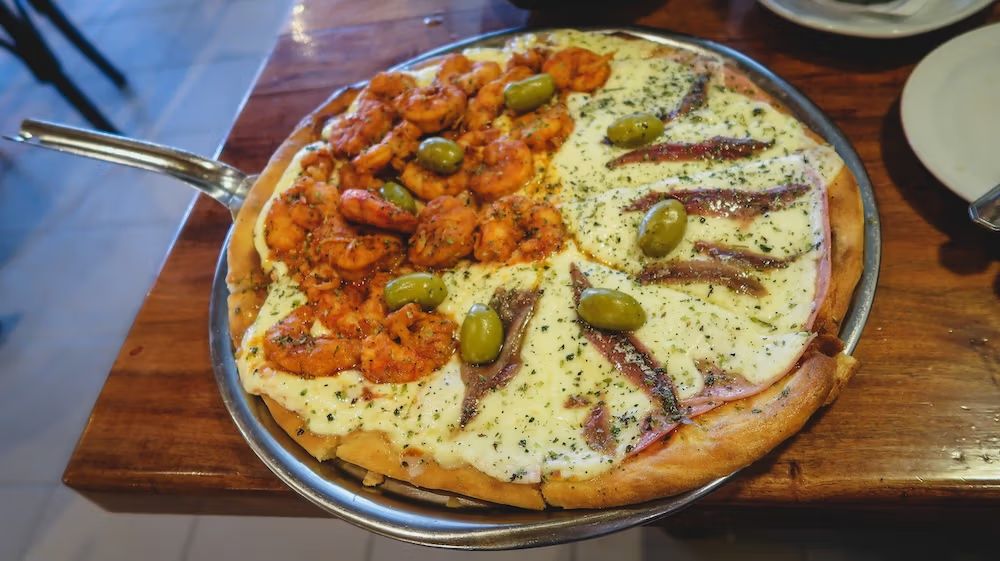
On the Atlantic side, in places like Puerto Madryn, the diet flips entirely to deep-water seafood. After weeks of heavy red meat and expensive, upscale dining, we found a local joint near the water serving half-shrimp, half-anchovy pizzas at a 50% discount. It was a massive, victorious, budget-traveler triumph. We sat there tearing through cheese and fresh Atlantic prawns, proving that you don’t need to empty your wallet to eat incredibly well in Patagonia.
But if you push to the very bottom—to Ushuaia in Tierra del Fuego—your wallet will be tested. This is the domain of the Centolla (King Crab) and Merluza Negra (Black Hake, effectively the wagyu of the sea).
The epicenter for crab is El Viejo Marino, a no-frills maritime institution located down on the flat port road of Maipú. A full crab meal for two runs about $118 USD. The waiters pull live crabs from the tanks, often holding up two massive crustaceans for your photo op.
[The “One Crab or Two” Trap]
Do not let the photo op fool you. Because of the high price tag, tourists assume they are getting a mountain of food. The waiter holds up two crabs for the show, but often only serves one medium crab for the table to share. It comes al natural (in seawater)—no melted butter, and strangely, often no lemon. The Fix: Explicitly clarify exactly how many crabs are included in your order. Bring your own lemon if you are a purist, and order a hearty seafood stew as a backup so you don’t leave hungry.
Also, heed the geography of Ushuaia. The downtown hugs the water, but the city immediately climbs straight up the Martial Mountains. If your hotel or Airbnb is located more than three blocks inland (anything past Deloqui street), you are facing a severe, exhausting uphill hike. Walking up a 30-degree incline in the freezing rain after a heavy meal of crab and white wine is a miserable way to end the night. Spend the $3 on a taxi.
The “End of the World” Seafood Index
| Venue / Specialty | The Draw & Flavor Profile | Reality & Price | Effort vs. Reward |
| El Viejo Marino (Ushuaia) | Fresh King Crab (Centolla al Natural) | ~$118 USD for two. | Reward: High. Sweet, briny, incredibly fresh. Effort: High. No reservations. Arrive by 7:15 PM or wait 50+ minutes in the cold. |
| Merluza Negra | Deep-sea Black Hake (Buttery, rare) | $45 – $65 USD per plate | Reward: Extreme. Melts in your mouth. Worth the splurge if you can find it on a menu. |
| Atlantic Pizza Joints (Puerto Madryn) | Shrimp/Prawn Pizza | ~$10 – $15 USD | Reward: High (Budget Triumph). A perfect palate cleanser from heavy meats. Highly walkable flat streets. |
The Extreme Latitude Liquid Matrix
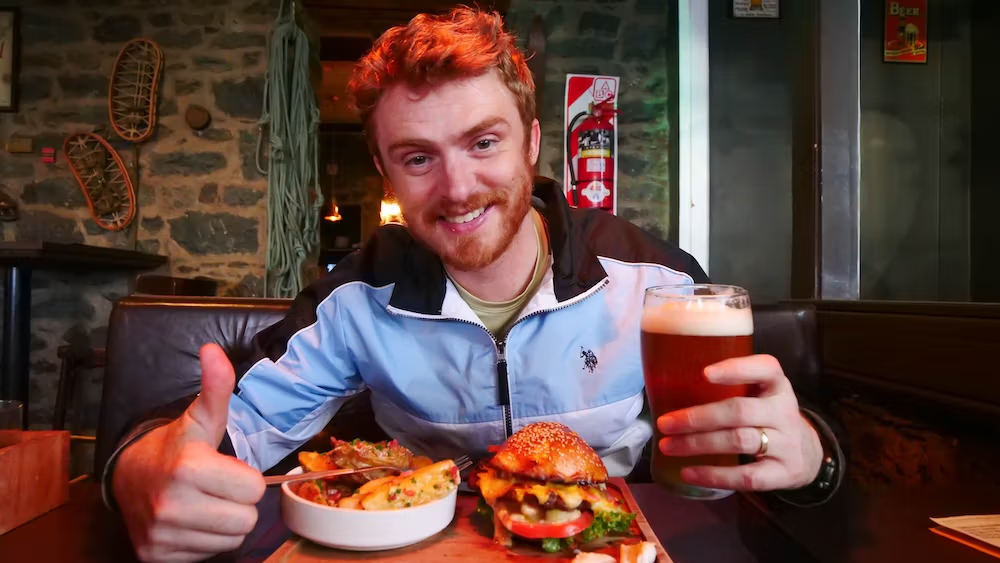
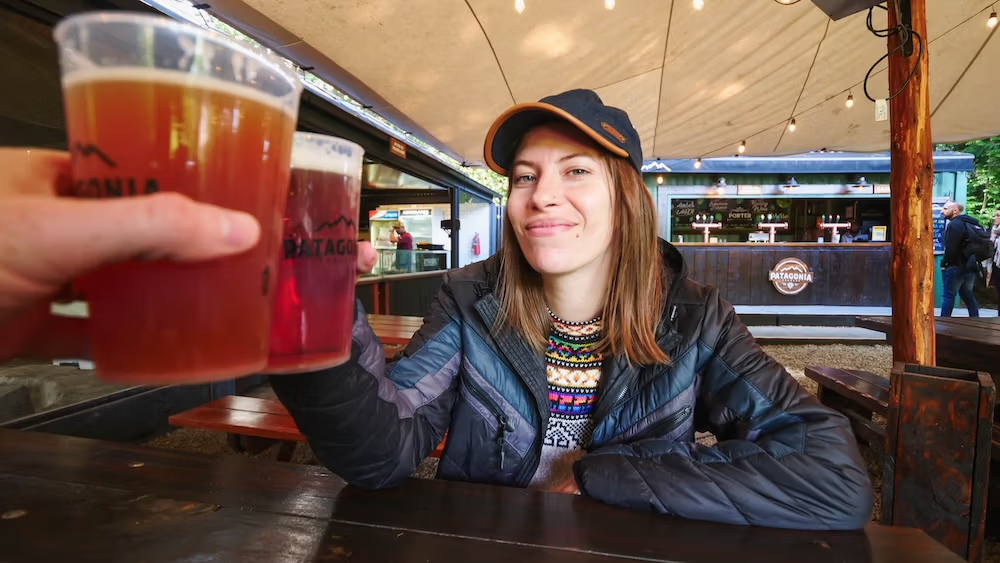
My 160-pound goal didn’t stand a chance. After twenty kilometers of brutal, knee-grinding descent from the Laguna de los Tres trail in El Chaltén, the only thing driving me forward was the promise of unapologetic grease and malt. I limped straight into the La Zorra taproom, dropped my pack, and ordered their signature Bacon Burger with cheesy fries and a pint of Golden Ale. When you are hiking Patagonia, you are burning thousands of calories in the freezing wind, and the local culinary scene has evolved to aggressively replace them. But what you drink to wash it all down changes drastically depending on where you are on the map.
If you are following our adventures on our flagship Samuel and Audrey channel, you know we treat regional beverages as a cultural compass. In Patagonia, that compass spins wildly. The liquid landscape here transitions from the massive, established craft beer titans of the northern lakes down to the absolute razor-edge of global viticulture in the deep southern steppes. This isn’t just about grabbing a drink after a hike; it’s about tasting the geographical isolation of the continent.
The Northern Comfort: Craft Beer and Classic Malbec
In the northern stretches of Patagonia—around Bariloche, El Bolsón, and the Río Negro valley—the beverage culture is anchored by glacial water and historic European immigration. This is the heartland of Argentine craft beer and the birthplace of Patagonian wine.
Before the extreme southern vineyards proved viable, estates like Bodega Humberto Canale set the standard in the Alto Valle of Río Negro. If you order a classic Humberto Canale Gran Reserva Malbec at a local parrilla, you are getting the deep, dark fruit and rich oak that traditionalists expect, priced at a very reasonable $35 to $40 USD a bottle. It pairs perfectly with the rich, heavy trout and smoked wild boar dishes that dominate the alpine menus.
But as you push south into the steppe, the comforting warmth of the northern valleys is violently stripped away by the climate.
The Roaring Forties: Tasting the Extreme Frontier
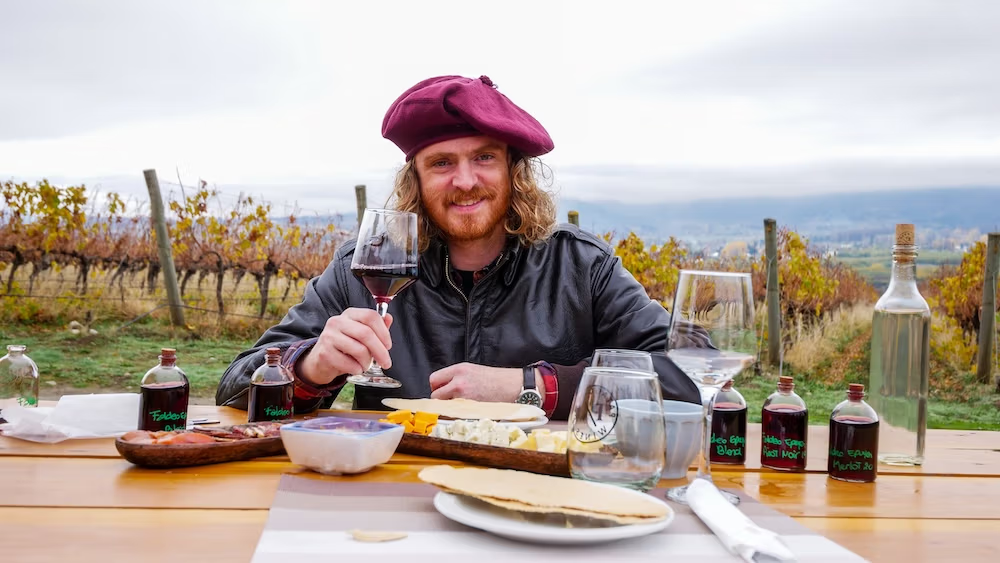
Down in the Chubut province, sitting at the intense 45.33° S parallel, you hit the absolute limit of commercial winemaking. This is the domain of Bodega Otronia, literally the southernmost commercial vineyard on earth.
Drinking wine from Otronia is an entirely different sensory experience than pouring a standard Mendoza Malbec. The vines here survive by enduring the “Roaring Forties”—relentless, freezing winds that whip across the steppe, thickening the grape skins and drastically lowering the yields. The result is a wine defined by sharp, piercing acidity and intense mineral character. When you order their flagship 45 Rugientes Pinot Noir (which currently runs about $45 to $50 USD), you aren’t tasting dark jammy fruit; you are tasting wind-whipped red berries, pink pepper, and the sheer survival of the vine.
[Samuel’s Isolation Tax Reality Check]
Whether you are ordering a craft beer in El Chaltén or a high-end Pinot Noir in Chubut, you must budget for the isolation premium. Bringing heavy liquid supplies into the deep south is incredibly expensive. At a place like La Zorra, a pint of craft beer isn’t priced like a standard domestic bottle in Buenos Aires; it costs what you’d pay in a mid-tier North American city. Look for the late-afternoon happy hour deals where you can often score a full pint for the price of a half-pint to save your budget.
When you are planning your Patagonian dining strategy, you have to match the drink to the latitude. You drink the dark, comforting Malbecs when you are sheltered in the northern pines, and you switch to the sharp, high-acidity Pinot Noirs when you are eating spit-roasted lamb in the wind-scoured south.
The Patagonian Liquid Index
| Beverage / Producer | Geographic Zone | The Flavor Profile & Pairing | Price Reality (USD Est.) |
| Golden Ale (La Zorra) | El Chaltén (Santa Cruz) | Crisp, malt-forward. Pairing: Cheesy bacon fries and physical exhaustion. | $5 – $8 per pint (Check for 5:00 PM Happy Hours). |
| 45 Rugientes Pinot Noir | Sarmiento (Chubut) | High acidity, pink pepper, tart red fruit. Pairing: Slow-roasted Cordero al Palo. | ~$45 – $50 per bottle. |
| Humberto Canale Gran Reserva | Alto Valle (Río Negro) | Deep plum, vanilla, structured tannins. Pairing: Smoked Patagonian wild boar. | ~$35 – $40 per bottle. |
| Calafate Sour | El Calafate (Santa Cruz) | Sweet, earthy berry mixed with sharp Pisco. Pairing: Pre-dinner aperitif. | $10 – $14 per cocktail. |
The Ultimate Patagonian Menu: Eating from the Alpine Pines to the Glacial Edge
If there is one thing that unifies our flagship Samuel and Audrey channel, it’s our absolute inability to turn down a local specialty. But staring down a menu in Patagonia is an exercise in geographical whiplash. The food here is fiercely territorial. You cannot order fresh King Crab in the northern lakes, and if you try to order wild boar in the deep south, you are getting something pulled from a deep freeze.
To truly conquer this region, you have to eat with the map. We spent a month aggressively testing the limits of our hiking pants so you don’t have to guess what is worth your travel budget. Here is the exhaustive, all-encompassing breakdown of exactly what you need to eat, where it lives on the compass, and what it costs to put it on your plate.
The Carnivore’s Compass: Meat on the Edge of the World
In Argentina and Chile, meat is a religion, but Patagonia practices a very different denomination than the beef-heavy pampas of Buenos Aires. The harsh climate demands fattier, wilder, and slow-cooked proteins.
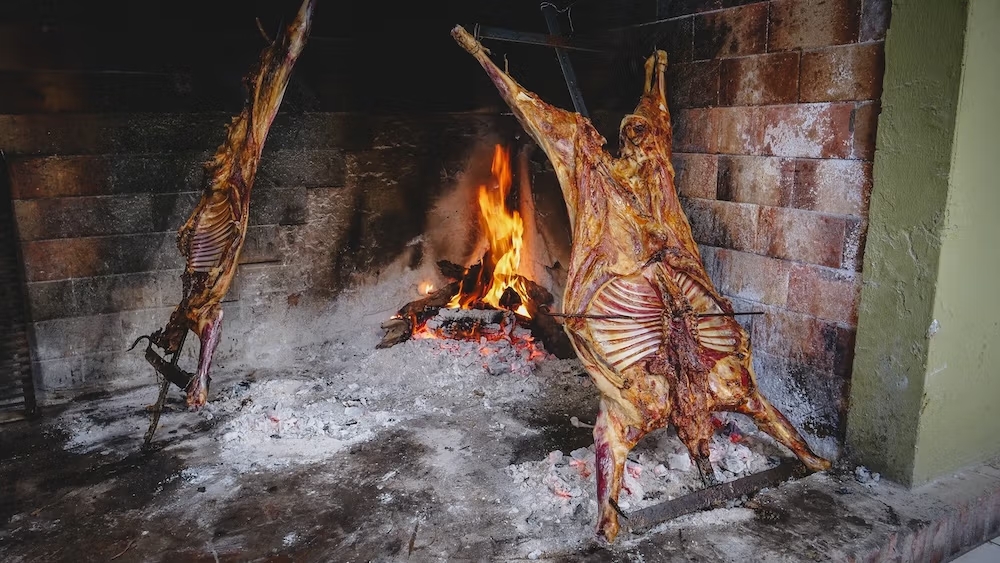
- Cordero al Palo (Spit-Roast Lamb) | Location: South & Central This is the undisputed king of the steppe. The lamb is splayed open on an iron cross and slow-roasted over a crackling lenga wood fire for four to six hours. The constant battering of the Patagonian wind and the open flame renders the fat down until the skin is shatteringly crisp and the meat falls apart. The Logistics: You will pay between $30 and $45 USD for a massive portion at institutions like La Tablita in El Calafate. Do not ask for it rare; it is served well-done by design.
- Wild Boar (Jabalí) | Location: North Introduced to the alpine regions by European settlers, wild boar has become the signature game meat of the northern lake district around Bariloche and San Martín de los Andes. It is intensely rich and much leaner than domestic pork. The Logistics: It is typically served two ways: slow-braised in a stew or sliced as smoked cold cuts (fiambres) on a picada board. A wild boar main will run you $20 to $28 USD, often brilliant paired with a sweet, tart plum or local berry reduction.
- Guanaco | Location: South & Central You will see these wild, llama-like camelids grazing right next to the highways as you drive toward Torres del Paine. Because they are wild and extremely active, the meat is incredibly lean and can become tough if overcooked. The Logistics: Top-tier restaurants serve Guanaco as a raw Carpaccio or gently braised in Malbec. Expect to pay $20 to $30 USD. It is highly seasonal, so grab it if you see it on a chalkboard special.
- The Authentic Asado & Chinchulín | Location: Both No matter where you are, the traditional mixed grill (Parrillada) is ubiquitous. But reality check: an authentic gaucho asado includes the offal. I stood by a fire in El Bolsón and was handed a piece of chinchulín (small intestine). It has a distinct, rubbery texture that takes some serious jaw work. The Logistics: A mixed grill for two costs around $35 to $50 USD. If you don’t want the organs, explicitly ask for solo carne (only meat).
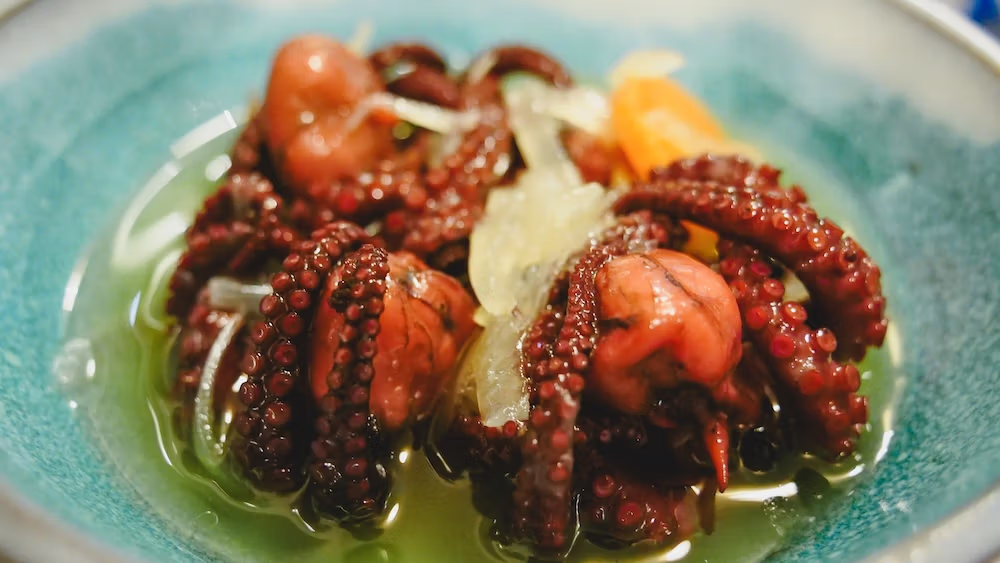
Freshwater Rivers to the Deep Antarctic: The Seafood Divide
The seafood in Patagonia is completely bipolar. You are either eating delicate freshwater fish pulled from a glacial stream, or you are eating deep-sea monsters dragged out of the sub-Antarctic ocean.
- Trucha Patagónica (Rainbow & Brown Trout) | Location: North The lakes of northern Patagonia are teeming with trout. At the Llao Llao hotel, I had an unexpected, Japanese-style fluffy trout omelet that redefined hotel breakfasts for me. For dinner, it is most traditionally served pan-fried in black butter (a la Manteca Negra) or heavily smoked (Ahumada). The Logistics: A premium trout dinner costs $25 to $35 USD. Note: Almost all restaurant trout is farm-raised locally; wild-caught is a rarity reserved for exclusive fishing lodges.
- Centolla (Magellanic King Crab) | Location: Deep South This is the ultimate prize of Tierra del Fuego. The crabs are pulled from the freezing, treacherous waters of the Beagle Channel. The meat is sweet, briny, and massive. The Logistics: A whole crab at a waterfront joint like El Viejo Marino in Ushuaia costs roughly $118 USD for two people. Crucial Timing: The fresh season runs November to mid-March. If you order this in July, you are paying a massive premium for previously frozen meat.
- Merluza Negra (Patagonian Toothfish) | Location: Deep South Often marketed internationally as Chilean Sea Bass, this deep-water fish is the wagyu of the sea. It has a buttery, melt-in-your-mouth texture because the fish requires a high fat content to survive at depths of 1,000 meters. The Logistics: This is the most expensive fish on the menu, routinely clocking in at $45 to $65 USD per plate.
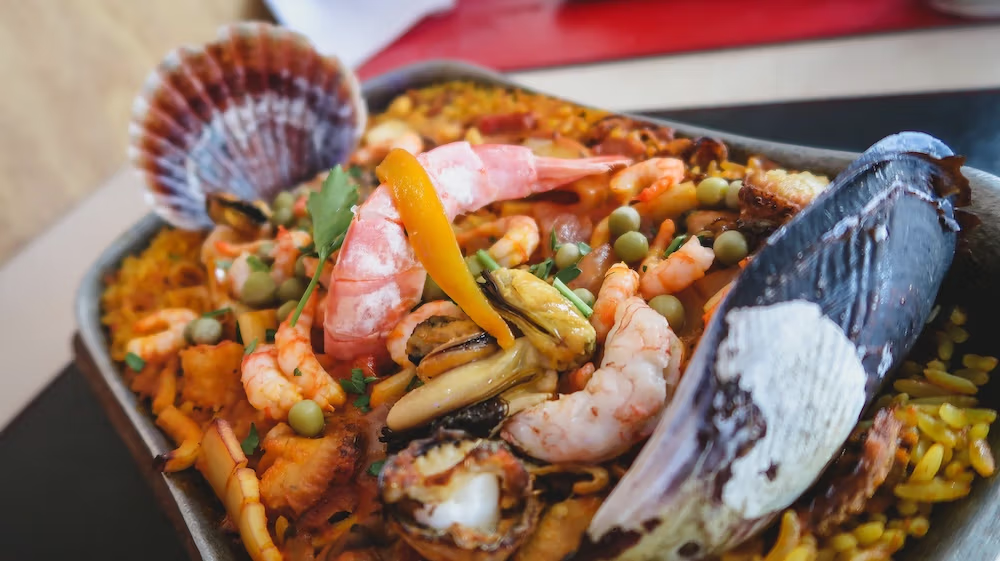
- Atlantic Prawns & Cazuela | Location: Coastal (East/West) If you hit the Atlantic coast (Puerto Madryn) or the Chilean fjords, the diet shifts to dense seafood stews (Cazuela or Paila Marina) loaded with mussels, octopus, and massive Atlantic shrimp. The Logistics: This is your budget savior. A massive seafood rice skillet or a half-shrimp pizza at a local nautical cantina will only set you back $10 to $18 USD.
[Samuel’s Trail Food Reality Check] When you are hiking the Fitz Roy massif or the W-Trek, you cannot carry a hot cazuela in your backpack. Your absolute best friend is the Empanada de Cordero (Lamb Empanada). Every bakery (panadería) in El Chaltén and Puerto Natales sells these piping hot in the morning. Buy four of them at 7:30 AM for about $1.50 USD each. By 1:00 PM at the glacier viewpoint, they will be cold, dense with fat, and the greatest caloric reward you have ever tasted.
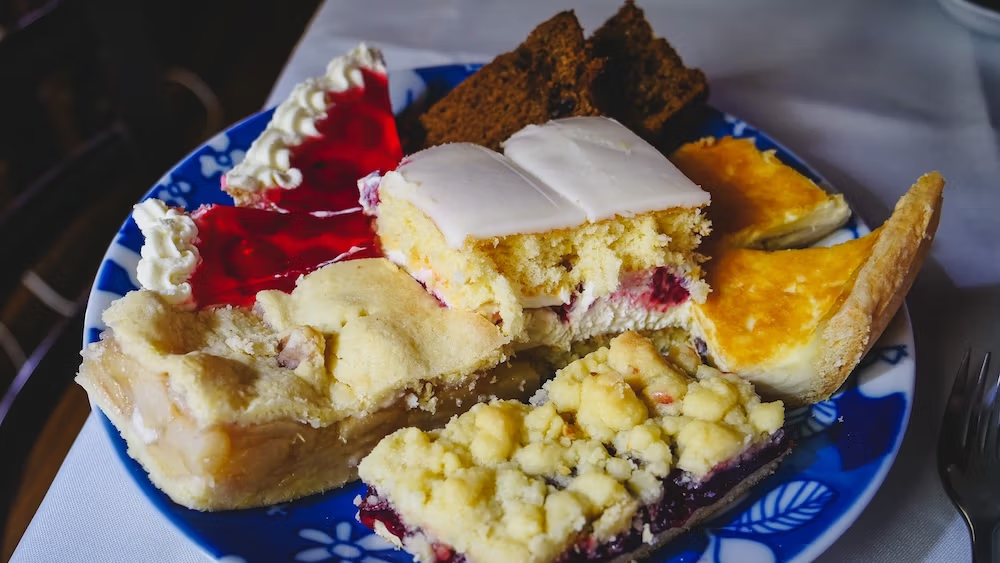
Indigenous Roots and European Settlers: The Historical Comfort Foods
Patagonia’s food tells the story of whoever managed to survive the winters here, from the ancient Mapuche tribes to the desperate European immigrants.
- Curanto (The Earth Oven) | Location: North (Specific to Mapuche/Chiloé cultures) Curanto literally translates to “hot stone.” This is less of a meal and more of a deeply rooted indigenous ritual. A massive hole is dug in the ground, filled with hot river stones, and loaded with sausage, chicken, potatoes, and shellfish, all covered with giant nalca leaves and buried in dirt to steam for hours. The Logistics: To experience this authentically, you must go to Colonia Suiza (near Bariloche) on a Sunday or Wednesday. The unearthing happens exactly at 11:30 AM. A massive communal portion costs about $15 to $20 USD.
- Welsh Tea & Torta Negra | Location: Central (Chubut) Deep in the arid steppe of Chubut, Welsh immigrants built oasis towns like Gaiman and Trevelin. They brought their afternoon tea traditions with them. You will sit down to an absurd spread of scones, clotted cream, and the infamous Torta Negra. The Logistics: A full tea service costs around $18 USD per person. As I learned the hard way, the Torta Negra contains zero chocolate—it is entirely made of dark caramelized sugar and fruit.
- Artisanal Pasta | Location: Both (Heavy in Central) Thanks to massive Italian immigration, incredible homemade pasta is everywhere. In Trelew, a plate of spinach and ricotta cannelloni hit me with a wave of intense childhood nostalgia. The Logistics: Beware the “Sauce Surcharge.” The pasta ($10) and the sauce ($10) are billed separately.
The Sugar and Shrubs: Sweets, Berries, and Chocolate
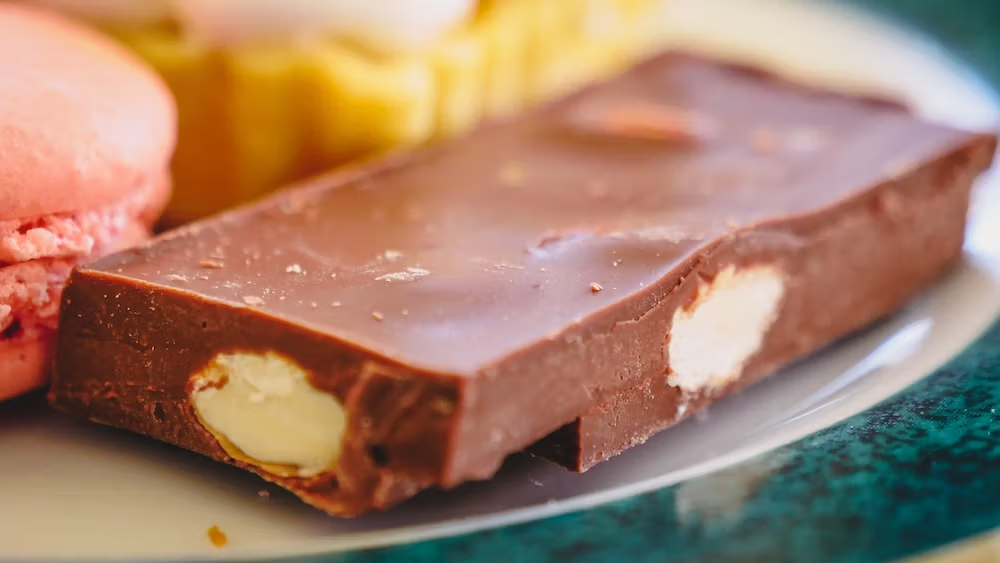
- Artisanal Chocolate | Location: North Bariloche is the chocolate capital of South America, heavily influenced by Swiss/German founders. The main street (Mitre) smells entirely of cocoa. The Logistics: Don’t buy the pre-boxed stuff. Go to the glass counters at Mamuschka or Rapanui and buy premium trufas (truffles) by weight. Individual truffles run about $1.50 USD.
- The Calafate Berry | Location: South This tiny, tart, dark blue berry grows on thorny bushes across the southern steppe. The local legend dictates that anyone who eats the Calafate berry is destined to return to Patagonia. The Logistics: Finding fresh berries is tough unless you are hiking in January/February. Instead, order a Calafate Sour (a cocktail mixed with Pisco or Gin, lemon, and Calafate syrup) for $10 to $14 USD as a pre-dinner victory drink.
- Rosa Mosqueta (Rosehip) | Location: North/Central You will see these bright red wild rosehips growing everywhere along the trails. The locals turn them into an incredibly thick, tart jam (dulce de rosa mosqueta) that tastes like a citrusy apple butter. The Logistics: Skip the standard jam at your hostel breakfast and buy a small jar from a local artisanal market for $4 USD. It changes the morning toast game entirely.
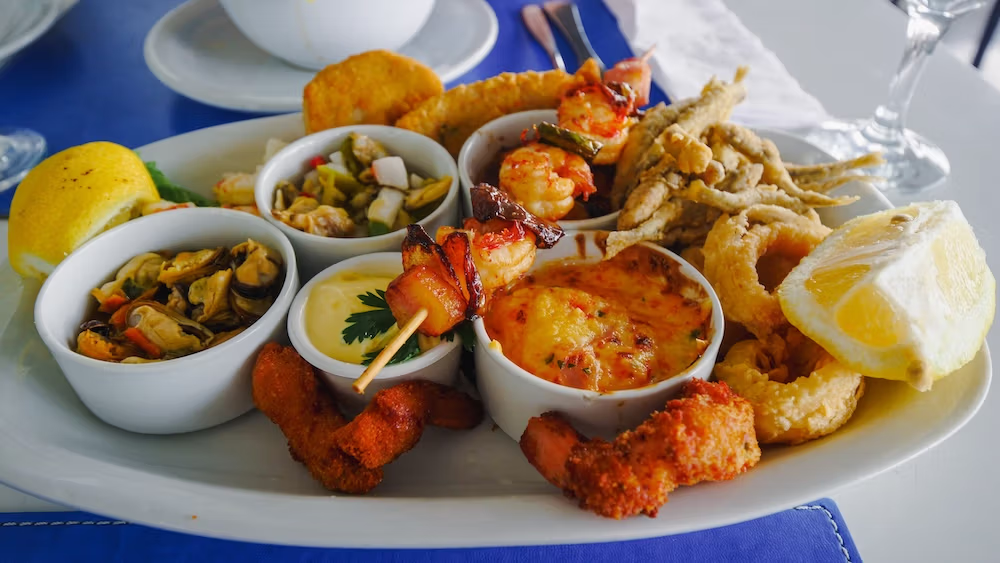
The Patagonian Culinary Master Index
To make this completely idiot-proof for your trip planning, I’ve built a master matrix of everything we just covered. Screenshot this, save it to your phone, and use it to cross-reference the menus as you travel south.
| The Dish / Ingredient | Compass Zone | Flavor Profile & Best Form | Avg Price (USD) | Samuel’s Field Note |
| Cordero al Palo | South / Both | Smoky, fatty, ultra-crispy skin. | $30 – $45 | You will wait in line for this. Order with a bold red wine to cut the heavy fat. |
| King Crab (Centolla) | Deep South | Sweet, massive, briny. | $118 (for two) | Clarify exactly how many crabs you are getting before the waiter walks away. |
| Trout (Trucha) | North | Flaky, delicate. Best smoked or in butter. | $25 – $35 | Seek out a trout omelet for breakfast. It is shockingly fluffy and rich. |
| Wild Boar (Jabalí) | North | Lean, gamey, deeply savory. | $20 – $28 | Order it braised in a stew if the weather is freezing. It is the ultimate comfort bowl. |
| Guanaco | South / Central | Lean red meat, earthy. | $20 – $30 | Best eaten raw as carpaccio. If grilled, it must be medium-rare or it turns to leather. |
| Curanto | North | Earthy, smoky, meat-and-seafood medley. | $15 – $20 | A total logistical commitment. You must dedicate a Sunday morning to witness the unearthing. |
| Welsh Tea Spread | Central | Pure carb-loading sugar shock. | $18 per person | Do not eat lunch beforehand. The Torta Negra will defeat you. |
| Lamb Empanadas | Both | Flaky pastry, heavy savory filling. | $1.50 – $2.50 ea | The ultimate hiking fuel. Buy them at 7 AM before the bakeries sell out to the trekking crowds. |
| Calafate Berry | South | Tart, blueberry/blackberry hybrid. | $10 – $14 (Cocktail) | You are drinking the legend. Order the Calafate Sour at the bar while waiting for your lamb. |
| Artisanal Chocolate | North | High-cacao, endless variations. | $1.50 per truffle | Rapanui stays open past midnight. It is the perfect post-steak digestive walk. |
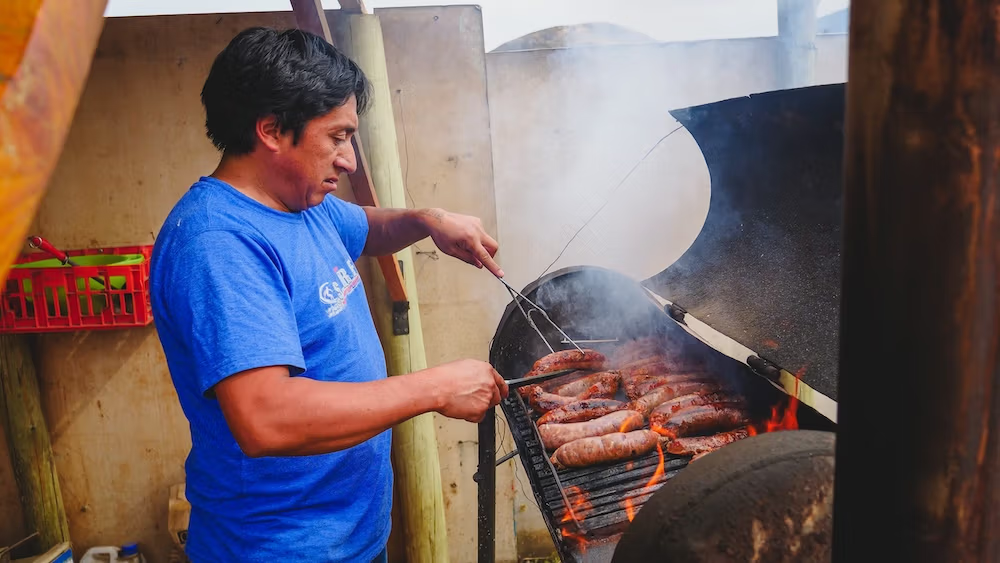
What Most Travelers Get Wrong About Patagonia Food
Patagonia food humbles people fast. The mistake is thinking you can eat the same way everywhere and somehow come out victorious. You can’t. The menu changes with latitude, the prices get weirder, and the effort required to get fed can swing wildly from one town to the next.
| Mistake | What Actually Happens | Better Move |
|---|---|---|
| Expecting beef everywhere | Patagonia shifts hard by region: trout and wild boar in the north, lamb and Welsh tea in the steppe, seafood on the coast, king crab and black hake in the deep south. | Order what the zone does best instead of forcing the same cravings onto every menu. |
| Underestimating southern prices | Ushuaia and the deep south can absolutely torch your budget, especially once centolla, wine, and a few extras hit the bill. | Save your splurges for the true signature dishes and check prices before you get emotionally attached. |
| Not planning reservations | In places like Bariloche and El Calafate, popular spots can mean long waits, no reservations, or ghost-town closures on the wrong day. | Book ahead when you can and eat earlier than the local dinner rush. |
| Misreading portions | Some meals are absurdly generous, while others look theatrical and still leave you hunting for backup food. | Ask what is included, how big it is, and whether it is enough to share. |
| Trusting menu prices blindly | Pasta can come with the infamous sauce surcharge, and upscale spots may tack on cubierto. | Read carefully and always check whether sauce, bread, or cover charges are included. |
| Assuming expensive means filling | The king crab photo op is not always the same thing as a mountain of meat arriving at the table. | Clarify exactly how many crabs or portions you are actually ordering. |
“Your Patagonia Food Game Plan”
| If You Are… | Focus On | Skip |
|---|---|---|
| Budget traveler | empanadas, choripán, bakeries | king crab |
| Foodie traveler | lamb, wine, seafood platters | generic pasta |
| Short trip (3–5 days) | pick ONE region to eat deeply | trying everything |
| Long trip | follow north → south food progression | repeating same meals |
| Adventure traveler | quick fuel foods + hearty dinners | long fine dining |
Patagonia rewards people who eat with the map. Go north for trout, chocolate, and wild boar. Lean into lamb, Welsh tea, and comfort carbs in the central steppe. Reset with seafood on the coast. Then brace your wallet for the deep south. Stretchy pants help, but strategy helps more.
Patagonia will humble you. It will shrink your pants, freeze your face, empty your wallet if you aren’t paying attention, and reward you with some of the most intense, hyper-local flavors on the planet. From the Japanese-fluffy trout omelets in the North to the pure-sugar Welsh cakes in the desert, and the brutal queues for King Crab at the end of the world, you just have to know how to navigate it. Pack your stretchy pants, bring your own lemon to Ushuaia, and whatever you do, double-check if the pasta sauce is included.
For more raw logistical breakdowns and to see us completely fail at hiking off our chocolate weight, check out our full Patagonia video series on the Samuel & Audrey YouTube channel, and stay tuned for our upcoming micro-guides on Chilean Patagonia.
FAQ: Your Patagonia Food Questions Answered
Is food in Patagonia expensive?
Depends. If you are surviving on $1.50 lamb empanadas from local bakeries and splitting 50%-off pizzas on the Atlantic coast, you can keep your budget completely intact. But if you want the legendary $118 King Crab in Ushuaia or a premium wild boar stew in Bariloche, your wallet will feel it. The further south you go, the higher the isolation tax gets on your plate.
Do I need to tip at restaurants in Patagonia?
Absolutely. Do not confuse the mandatory “Cubierto” (cover charge) with a gratuity. That $3 to $5 fee on your bill just pays for the bread basket and goes straight to the restaurant, not the waiter. You still need to leave a standard 10% tip, ideally in cash, for your server.
Are there good vegetarian options in Patagonia?
Barely. This is a harsh region built on estancia ranching and survival calories. The traditional culture revolves entirely around meat and fish. If you are vegetarian, you will be heavily relying on massive cheese plates, pizzas, and artisanal Italian pasta. Just remember to watch out for that sneaky “Sauce Surcharge” when ordering Italian.
Can I bring my own trail snacks across the Argentina-Chile border?
Careful. Chilean customs (SAG) are notoriously strict when you cross the border to hike Torres del Paine. They will immediately confiscate your raw almonds, fresh fruit, and cured meats. The loophole? They allow roasted and salted nuts. Buy roasted trail mix before you cross to save your expensive hiking fuel from the garbage bin.
Do restaurants in Patagonia take credit cards?
Sometimes. While major hubs like Bariloche and Ushuaia are largely card-friendly, remote trekking towns like El Chaltén frequently lose their Wi-Fi and cell connections because of the fierce winds. When the internet drops, card machines become expensive paperweights. Always carry enough physical cash to bail yourself out of a dinner bill.
What is the best time of year to eat fresh King Crab in Ushuaia?
November to March. This is the official fresh catch window for Tierra del Fuego. If you roll into the end of the world in July expecting the ultimate culinary experience, you are going to pay top dollar for meat that was pulled from a deep freeze months ago.
Is it actually necessary to make dinner reservations?
100%. Do not wing it. Iconic spots like La Tablita in El Calafate book up 48 to 72 hours in advance during the summer peak. Furthermore, many top-tier spots in the southern steppes turn into total ghost towns on Mondays and Tuesdays. Plan your meals ahead or risk eating cold snacks from a gas station.
Do they eat spicy food in Patagonia?
Nope. Both Argentine and Chilean cuisines are famously mild. The flavor profiles down here rely heavily on wood smoke, salt, rich animal fat, and a healthy dose of garlic or chimichurri. If you are someone who needs aggressive heat on your food, you better pack a bottle of your own hot sauce in your luggage.
Project 23 Argentina: This guide is also available in Spanish. [Lea la versión en castellano: Cómo cambia drásticamente la comida en la Patagonia de norte a sur]