
There is a specific, humbling kind of surrender that happens when you realize the only open establishment in a 50-mile radius is a YPF gas station, and your new best friends are three stray dogs.
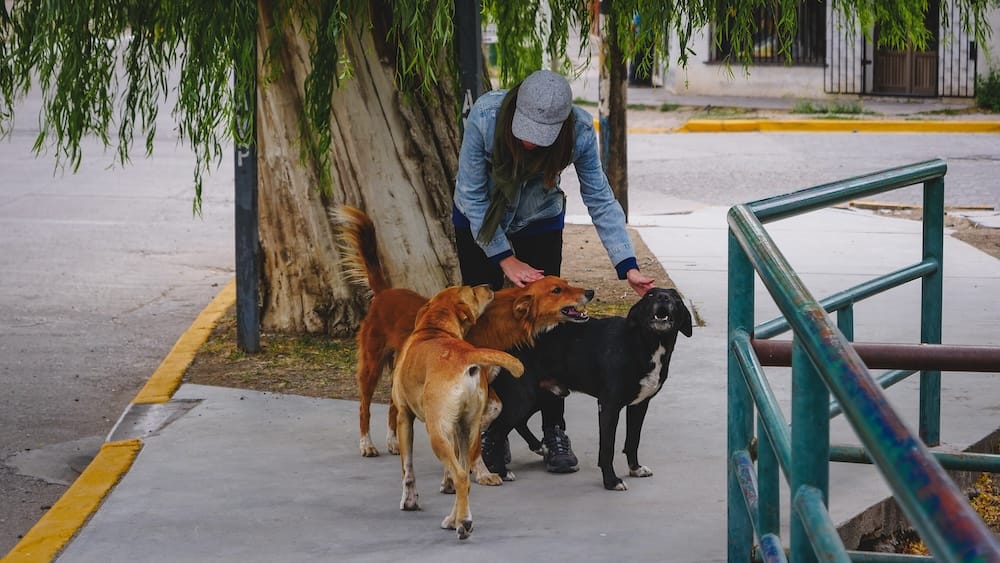
We had arrived in Dolavon on a Monday, fully expecting to film a quaint, historical tour of 19th-century Welsh flour mills for our YouTube channel. Instead, we hit a brick wall of Patagonian reality. The museums were padlocked. The cafes had their metal shutters drawn. Even the stray cats seemed to be observing siesta. We survived by finding a random local fast-food joint called “Lightning Bolt,” ordering a mountain of aggressively cheap, blisteringly hot empanadas, and retreating to the curb of the local gas station with a liter of Paso de los Toros pomelo soda.
This is the Patagonia the glossy brochures edit out.
When you veer off the main tourist artery of El Calafate and Bariloche, you enter a wildly unpredictable, deeply rewarding frontier. The winds will destroy your gear, the transit logistics will baffle your mind, and the portion sizes will permanently alter your center of gravity. After spending months filming across the south of Argentina, these are the 10 hidden towns you absolutely must not miss—and exactly how to survive them when you get there.
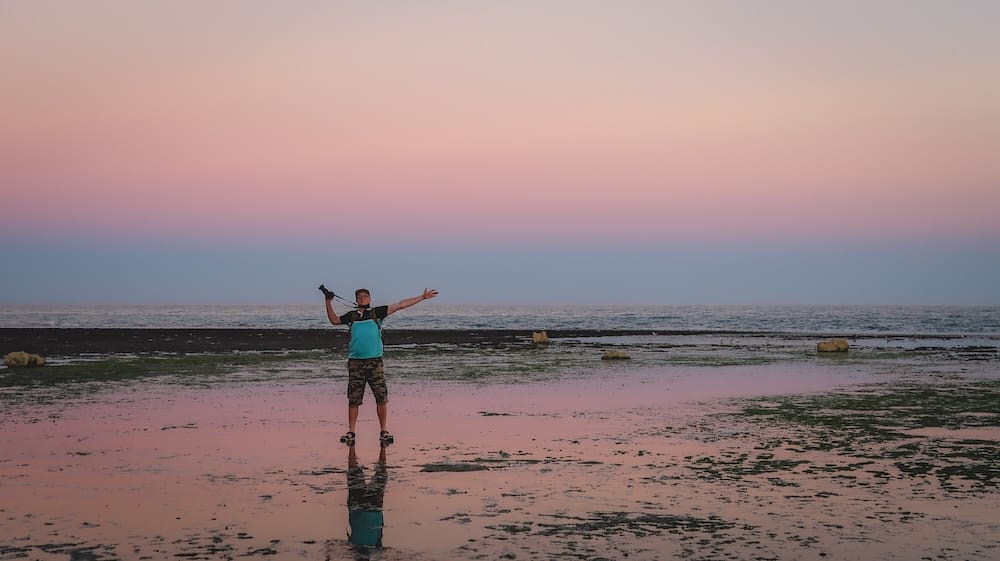
The Hidden Patagonia Matrix: The 10 Towns You Can’t Miss
| The Hidden Town | The Postcard View | The Raw Reality (Why You Need to Go) | The 2026 Logistical Catch |
| Gaiman | Pristine gardens and the undisputed epicenter of Argentine-Welsh culture. | The ultimate caloric challenge. Surviving an 8-cake spread (including the rum-soaked Torta Negra) exactly where Princess Diana had her tea. | The Schedule Trap: The entire tourist corridor shuts down completely on Mondays and Tuesdays. |
| Dolavon | “Meadow on the River” featuring a historic 1940s water-powered flour mill. | Unfiltered small-town grit. When the museums are locked, sitting on the curb eating cheap empanadas with the local stray dogs is a core memory. | Zero Infrastructure Days: If you visit early in the week, your only dining option is the local YPF gas station. |
| Trelew | The transit hub of the Atlantic Steppe and home to the massive MEF Dinosaur Museum. | Drinking a Quilmes and getting the meat sweats over a towering picada board in the exact room where Butch Cassidy hid from the law. | The Siesta Deadzone: Between 1:00 PM and 5:00 PM, the city completely shuts its doors. Plan your meals accordingly. |
| El Bolsón | The bohemian “hippie capital” hidden in a lush, green mountain valley. | Hand-forged knives, phenomenal craft IPAs, and eating a monstrous, egg-topped “Patagonian Pizza” with your bare hands after a long hike. | The Cash Crunch: The town’s ATMs are entirely drained of physical pesos by 1:00 PM on market days. Bring a thick stack of cash. |
| Lago Puelo | Turquoise glacial waters surrounded by a surprisingly warm microclimate. | Foraging for incredibly sweet, wild Murra berries right off the trail while trading the sugar hit for scratched-up calves from the thorny vines. | The Transit Quirk: The local bus forces you to physically disembark and switch buses at the invisible provincial border. |
| Epuyén | A deeply protected, strictly motorless glacial lake. | The loudest silence you will ever hear in Patagonia. Crystal-clear waters totally free from the noise of jet skis or speedboats. | The 130-Car Limit: If you arrive after 10:30 AM, you will be locked out of the lot and forced to hike 3km up a dusty highway. |
| Cholila | A lush valley famous for world-class beef and an original 1901 outlaw cabin. | Experiencing an authentic, unpolished Gaucho party where half the cowboys are nursing brutal hangovers from drinking wine until 4:00 AM. | Wildfire Recovery: Following the early 2026 fires, some deep backcountry trails may be impacted. Stick to the town and the meat. |
| Esquel | The rugged Andean gateway and home to the La Trochita steam train. | Eating a heavy lamb lasagna under antique plows at Don Chiquino to recover from the brutal, umbrella-destroying mountain winds. | Train Bureaucracy: La Trochita foreigner tickets ($122 USD) sell out weeks in advance. Pet fees are strictly enforced. |
| Tolhuin | The “Heart of the Island” sitting right on Tierra del Fuego’s Route 3. | The legendary Panadería La Unión. A glorified, chaotic truck stop that serves as the undisputed cultural epicenter for weary travelers. | Parking Lot Warfare: It is a daily madhouse of semi-trucks and rental cars. Fight for a spot, grab your medialunas, and get back on the road. |
| Las Grutas | A coastal resort town boasting the warmest ocean waters in Argentina. | Exploring the Salinas del Gualicho at night and eating a massive pollo al disco served directly on the glowing white salt flats. | The Tidal Illusion: The beach literally disappears at high tide. You must consult the daily Tabla de Mareas before going down the cliff stairs. |
The Atlantic Steppe: Welsh Cakes and Dinosaur Bones
If you look at a map of Chubut, the towns of Trelew, Gaiman, and Dolavon form a neat little triangle near the Atlantic coast. It looks like a simple afternoon road trip. It is not.
Dolavon and Gaiman: The Sugar Coma Protocol
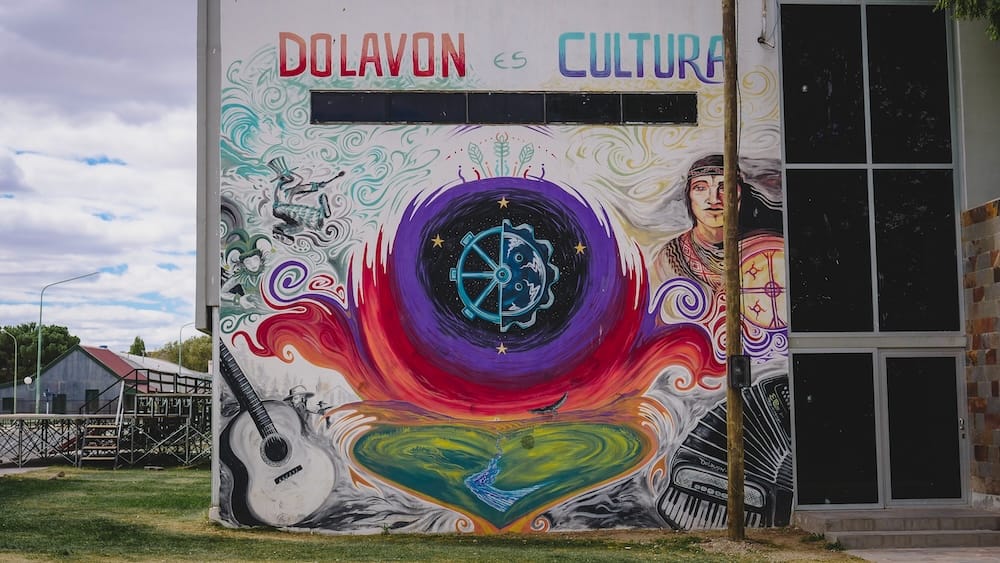
Our gas station picnic in Dolavon wasn’t a fluke; it was a massive logistical failure on our part. Translating to “Meadow on the River” in Welsh, Dolavon is the smallest and most remote of the historic Welsh settlements in the Chubut Valley. We showed up on a Monday, cameras fully charged, expecting a quaint, educational tour of 19th-century architecture. Instead, we hit a brick wall of Patagonian reality.
The entire Welsh settlement corridor effectively shuts down on Mondays and Tuesdays to recover from the weekend tourist rush. If you want to see the Molino Harinero (the fully restored flour mill and canal system), you must time your visit between Wednesday and Sunday. Entry will run you roughly 5,000 ARS ($4.50 USD), and the sprawling river meadow views are worth the wait. Because we ignored this reality, we spent our afternoon peering through padlocked iron gates at the water wheels, desperate for any sign of life.
When the hunger set in, our options were zero. We crisscrossed the dusty streets until we miraculously stumbled upon a tiny local fast-food window called “Lightning Bolt.” For under $5 USD total, we walked away with a mountain of blisteringly hot, deep-fried beef and ham-and-cheese empanadas, plus a heavy side of fries. With every park and plaza closed for siesta, we retreated to the curb of the local YPF gas station. Sitting on the concrete, drinking a liter of Paso de los Toros pomelo soda, and sharing our fries with a squad of five local stray dogs wasn’t the glamorous cultural immersion we planned, but it was exactly the authentic friction you have to embrace here.
| Dolavon Logistics | 2026 Reality Check | The Triage Strategy |
| Molino Harinero | Entry: ~5,000 ARS. Restored 1940s water mill. | Closed Mon/Tue. Visit Wed-Sun only. |
| Food Availability | Restaurants shut down early in the week. | Look for “Lightning Bolt” or the YPF station for survival empanadas. |
| Walkability | Extremely small, flat, and entirely walkable. | Cobblestone and dirt paths; leave the rolling luggage behind. |
A mere 30-minute drive east brings you to Gaiman, the undisputed epicenter of Argentine-Welsh culture. Getting here requires its own micro-strategy: you need to catch the green and yellow 28 de Julio bus out of Trelew. The ride costs pocket change, but you must explicitly ask the driver if they are taking “Route 7.” This is the scenic dirt-road route that weaves through rural farmland, offering a much better visual payoff than the paved highway.
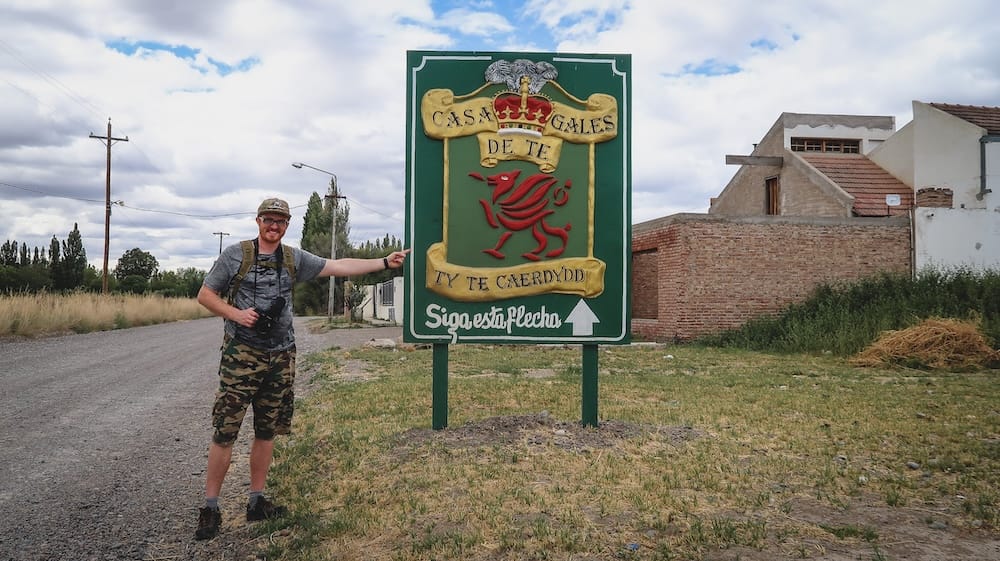
Before hitting the tea houses, we took a detour to the outskirts of town to visit Quintas Narlu, a local farm where you can walk the lavender fields and buy freshly picked raspberries. It was idyllic, right up until we realized we had to walk back into the center of town. Princess Diana probably didn’t arrive at the Ty Te Caerdydd tea room dripping in sweat, covered in trail dust, and desperately craving a glass of ice water. But then again, she didn’t walk 40 minutes from the Narlu farm in the blazing midday Patagonian sun wearing black flannel like I did.
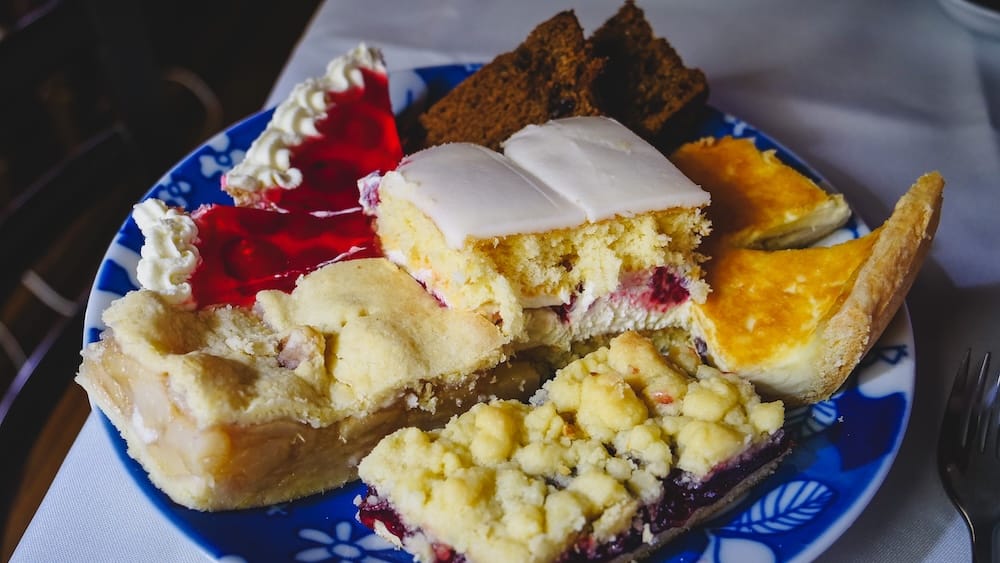
By the time we stumbled into the immaculately manicured, rose-filled gardens of the tea house, we were comically underdressed. But Patagonian hospitality doesn’t care about your dusty hiking boots. For exactly $15 USD per person, we were subjected to a relentless, beautiful onslaught of carbohydrates in the exact room where royalty once dined.
[The Foodie Reality Check]
Do not eat lunch before a Welsh Tea. You will be served a bottomless pot of loose-leaf tea (cut with a splash of cold milk, true to Welsh tradition) alongside plates of homemade crustless sandwiches, scones with clotted cream, and artisanal jams. And then, the main event: a plate bearing eight completely different dense cakes. This includes the legendary Torta Negra (a heavy, dark cake loaded with brown sugar, rum, raisins, and walnuts) and a ridiculously decadent cream pie. When faced with an 8-cake spread, there is zero shame in waving the white flag and asking for a doggy bag.
We packed up the leftover apple pies and sponge cakes, rolling out of the tea house in a complete sugar coma. We practically waddled back to the bus stop, clutching our white pastry boxes like trophies. Gaiman isn’t just a historical footnote; it is a test of your physical endurance when faced with endless butter and sugar.
| Gaiman Tea Protocol | The Hard Data | The Sugar Coma Metrics |
| Ty Te Caerdydd | ~$15 USD per person (Cash/Card accepted). | Gardens are immaculate; dress code is surprisingly relaxed. |
| The Cake Roster | 8 varieties per table. | Standouts: Torta Negra (Rum/Walnut) and the Cream Pie. |
| Transit to Town | 28 de Julio Bus (Route 7). | Tell the driver “Route 7” for the scenic, 45-minute rural detour. |
Trelew: Outlaws and Paleontology
Trelew is the bustling engine room of the Atlantic steppe. Most travelers use the local airport (REL) as a mere transit point to rush off to see the penguins in Puerto Madryn, and then immediately leave. That is a massive mistake. We initially thought a quick morning pass-through would suffice, but Trelew is a city of rugged, frontier layers that demands a full day of your itinerary.
First, the city houses the MEF (Museum of Paleontology Egidio Feruglio). Following a massive 2026 expansion that tripled its exhibition space, this is arguably the most advanced dinosaur museum in the Southern Hemisphere. For about 15,000 ARS ($13.50 USD), you can walk into the main hangar and stand directly underneath the Patagotitan mayorum—a 37-meter-long replica of the largest creature to ever walk the earth. Standing beneath its ribcage is a genuinely humbling experience that puts your tiny human transit problems into immediate perspective.
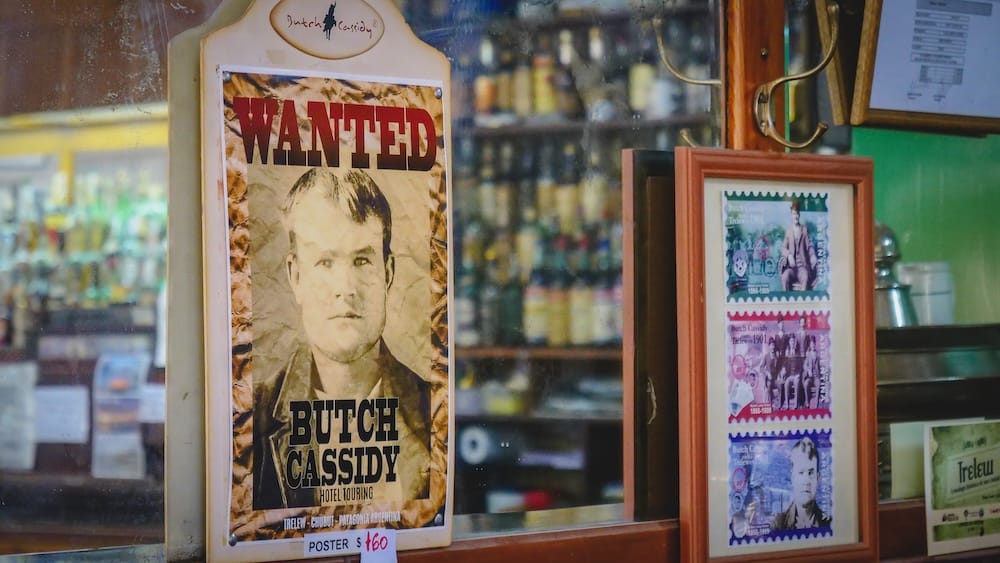
But the real, gritty magic of Trelew requires a 10-minute walk downtown to the vintage Hotel Touring Club. Stepping through the doors is like walking onto a Wild West film set. The high ceilings, dark wood finishes, and dusty shelves lined with century-old alcohol bottles haven’t changed much since 1901.
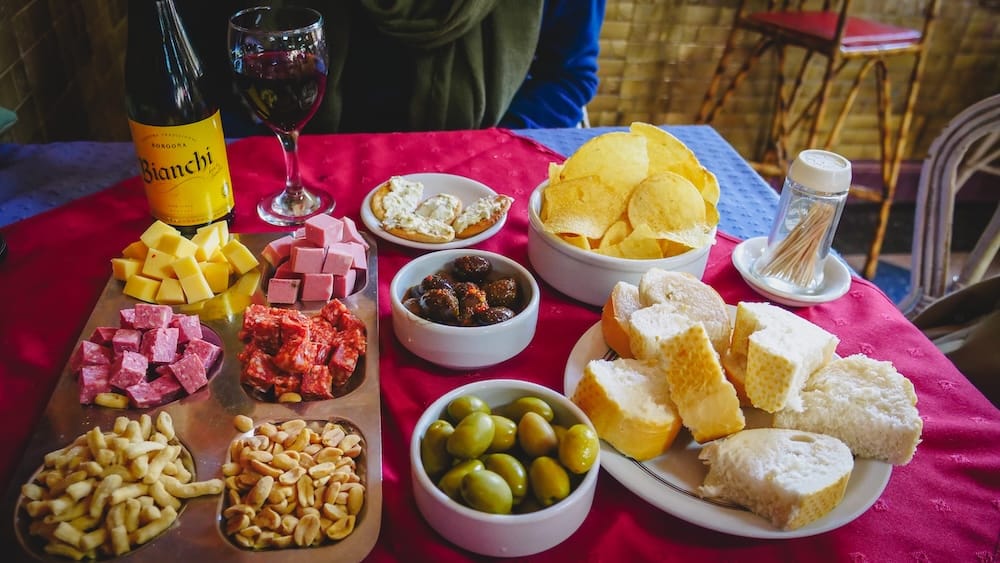
Sitting in the main salon, we ordered a traditional picada—a towering wooden board piled high with thick cuts of local salami, sharp cheeses, and briny olives for about 22,000 ARS ($20 USD). As we sat there giving ourselves the meat sweats, we realized we were drinking Quilmes beer in the exact room where Butch Cassidy and the Sundance Kid used to hide out from the Pinkertons.
[Samuel’s Meat Sweat Advisory]
A “Picada para dos” (Picada for two) in Trelew is actually a caloric challenge for four grown adults. Do not underestimate the density of Patagonian cured meats. Also, keep an eye on the clock. Trelew fiercely protects its Siesta Culture. Between 1:00 PM and 5:00 PM, the streets go completely dead. This is your cue to find a corner in the Touring Club and settle in for a long, slow lunch—outlaw style.
Las Grutas: The Tidal Illusion and Salt Flat Lockouts
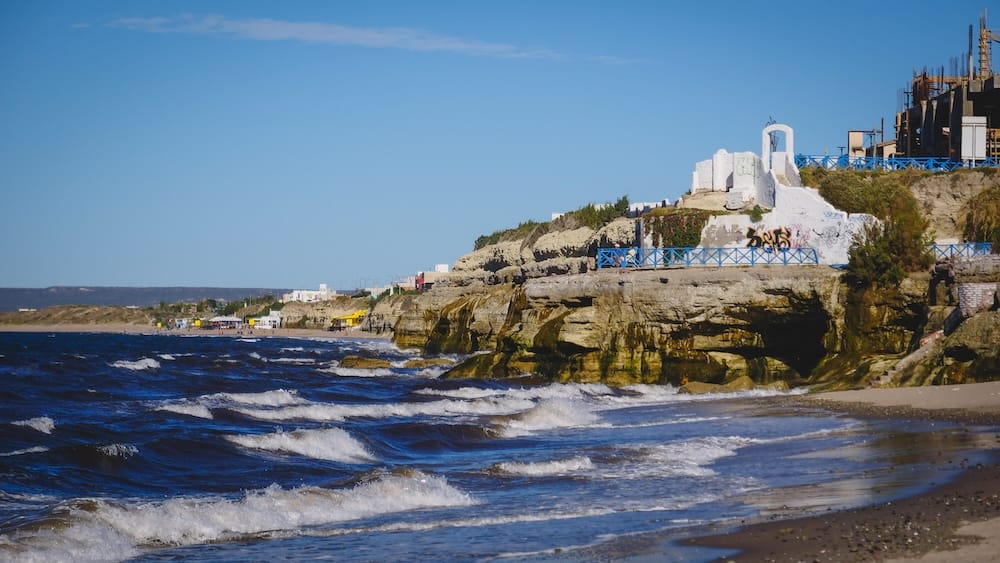
Heading north into the Río Negro province, you hit Las Grutas, a bustling coastal town famous for having the warmest ocean waters in Argentina (reaching a balmy 25°C / 77°F in summer). But there is a massive geographical catch to this beach paradise: The Tide Rule.
The “warm water” pools exist because of an extreme tidal shift. When the tide recedes for literal kilometers, it exposes vast stretches of bedrock that bake in the intense Patagonian sun. When the ocean finally returns over these hot rocks, it acts like a natural bath heater. However, if you ignore the daily Tabla de Mareas (Tide Table) and walk down the steep cliff stairs at the wrong time, you will find the ocean slamming violently against the concrete sea wall. The beach simply does not exist at high tide. You don’t just show up to the beach in Las Grutas; you have to schedule an appointment with the moon.
If you venture inland to see the Salinas del Gualicho (the massive salt flats located 73 meters below sea level), you will encounter another harsh logistical reality. Do not try to drive your rental car there for a romantic sunset. Independent travelers regularly follow their GPS, hit private industrial mining gates belonging to the ALPAT alkali plant, and are swiftly turned around by security.
You must book a licensed 4×4 off-road excursion (like the ones run by Desert Tracks or Ocasión Turismo). For roughly 60,000 to 106,250 ARS ($55 to $95 USD), they will drive you through the restricted gates in vintage military trucks. The premium tours include stargazing with infrared goggles and a massive pollo al disco (chicken cooked over a plow disk) served directly on the glowing white salt.
Data Matrix: Atlantic & Steppe Logistics
| Town / Venue | Exact Cost (2026) | The Standout Feature | Logistical Friction & Triage |
| Gaiman / Ty Te Caerdydd | 20,000 ARS ($18 USD) | Torta Negra & unlimited tea in pristine gardens. | Closed Mon/Tue. Peak sugar rush is 4:00 PM to 5:30 PM. Walkable from center. |
| Trelew / MEF Museum | 15,000 ARS ($13.50 USD) | The 37-meter Patagotitan dinosaur exhibit. | Buy tickets online. Avoid on rainy days when locals flood the newly expanded building. |
| Trelew / Hotel Touring Club | ~22,000 ARS ($20 USD) | Butch Cassidy’s favorite vintage picada board. | Massive portions. Siesta dead-zone between 1 PM and 5 PM means you must eat late or early. |
| Las Grutas / Salinas Tour | 60,000 – 106,250 ARS ($55 – $95 USD) | Salt flat stargazing with pollo al disco dinner. | Private Gates: Cannot self-drive at night. Requires 4×4 tour booking 24hrs in advance. |
| Las Grutas / The Beach | Free | Warmest ocean water in Argentina (25°C). | Tidal Violence: Beach disappears at high tide. Must check the Tabla de Mareas daily. |
The 42nd Parallel: Hippies, Gauchos, and Hidden Lakes
When you cross into the Andean lake district, the arid yellow steppe violently shifts into towering green pines and turquoise waters. This is the backpacker and digital nomad heartland, but navigating it requires aggressive cash management.
El Bolsón: The Cash Crunch and Caveman Pizza
As you cross the 42nd parallel into the Andean lake district, the arid, yellow Patagonian steppe violently shifts into towering green pines, jagged snow-capped peaks, and turquoise waters. Nestled right in the heart of this transition is El Bolsón. Known for decades as Patagonia’s ultimate “hippie capital,” it is a haven for trekkers, hop farmers, and digital nomads seeking mountain cabin isolation.
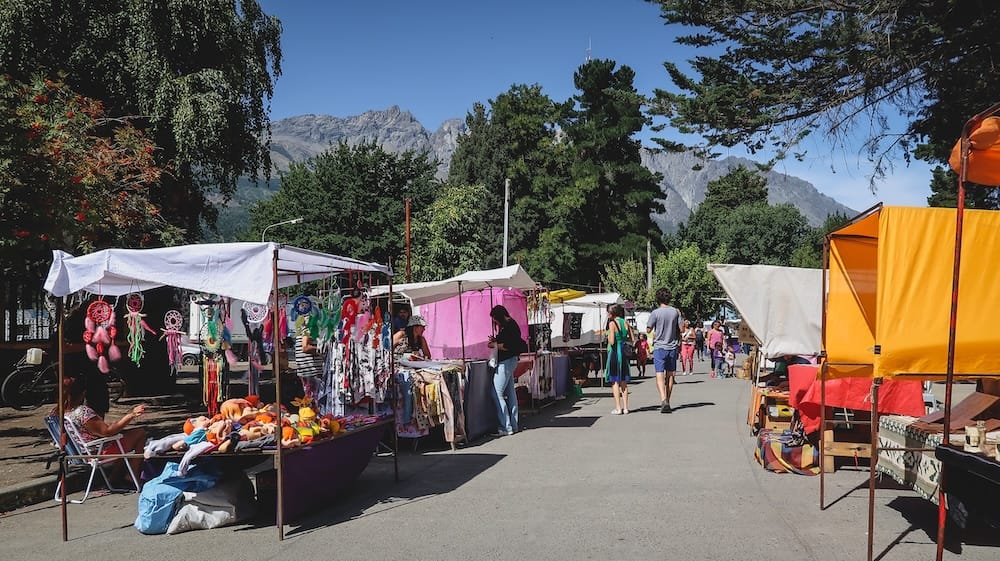
The town’s beating heart is the massive Feria Artesanal that takes over the main plaza (Plaza Pagano) every Tuesday, Thursday, and Saturday. It is an absolute sensory overload. You walk through dense clouds of incense while navigating over 200 stalls selling hand-forged steel knives, local boysenberry jams, and heavy-hitting craft IPAs (El Bolsón produces the vast majority of Argentina’s hops). But behind the relaxed, bohemian vibe lies a harsh financial reality that catches almost every foreigner off guard.
[Samuel’s Cash-in-Hand Warning]
The artisan market operates almost entirely on paper cash. While some vendors use MercadoPago, tourists often cannot access this app without an Argentine DNI. By 1:00 PM on a sunny Saturday market day, the two ATMs on the main plaza will be completely drained of bills. Do not show up relying on plastic. Bring a thick stack of ARS cash straight from a Western Union in Bariloche, or you will be reduced to window shopping while everyone else eats fresh empanadas.
Away from the market, we decided to tackle the Laberinto Patagonia—one of the largest hedge mazes in South America. We made the amateur mistake of starting the labyrinth just as we were losing daylight, with the sun already dipping behind the surrounding mountains. After getting wonderfully, exhaustingly lost in the sprawling green corridors for over an hour, our desire for a refined dinner completely evaporated.
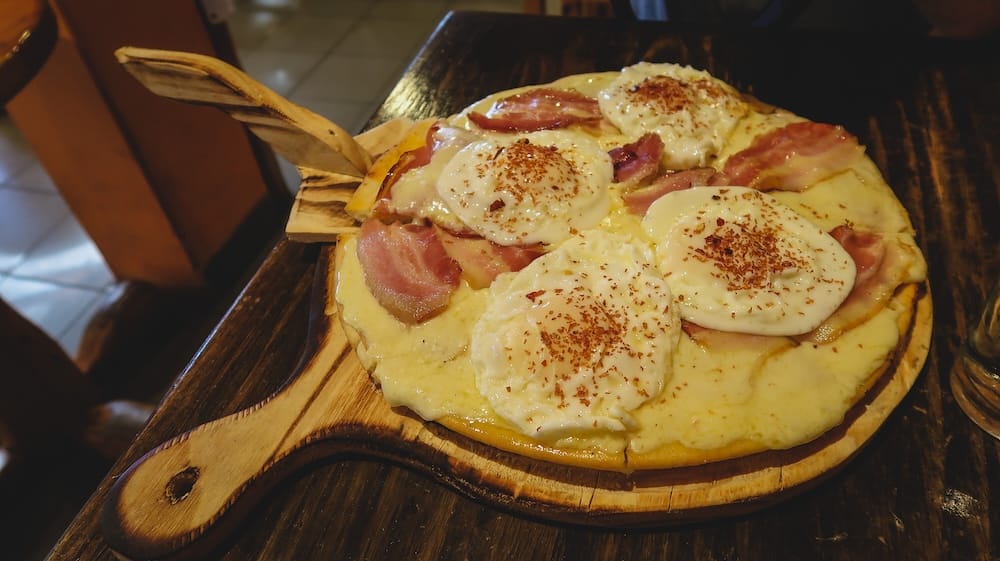
We abandoned all pretense of fine dining, walked into a bustling local joint, and ordered a massive “Patagonian Pizza.” This isn’t delicate Neapolitan fare. This is a monstrous, heavy dough creation topped with an ungodly amount of mozzarella, thick-cut bacon, and literal fried eggs cracked right onto the cheese. Utensils felt useless. I ate it with my bare hands like an exhausted caveman, yolk dripping everywhere. For roughly 3,500 ARS, it was the best culinary triage we could have possibly asked for.
Lago Puelo and Epuyén: Transit Quirks and Motorless Waters
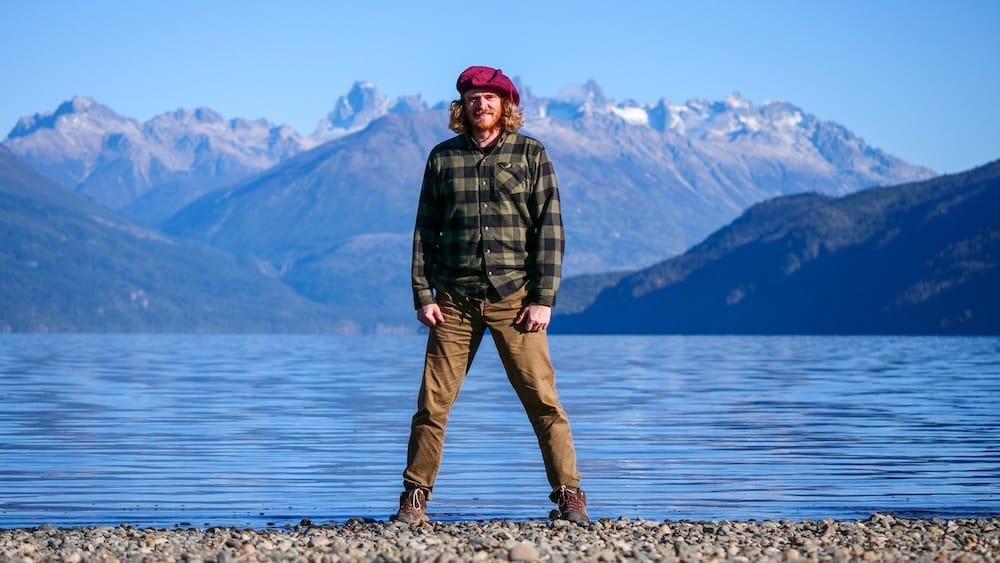
Moving between the mountain lakes requires patience and a good sense of humor. Lago Puelo sits at a surprisingly low altitude (only 200 meters above sea level), which creates a unique microclimate that is noticeably warmer than the surrounding Andes. But getting there from El Bolsón involves one of the most bizarre transit quirks in the region.
You catch the local La Golondrina bus in El Bolsón. You hand over roughly 75 cents in crumpled pesos, settle into your cracked vinyl seat, and ride for a grand total of 15 minutes before the bus abruptly hits the brakes in the middle of nowhere. Because El Bolsón is in the province of Río Negro and Lago Puelo is in Chubut, strict provincial transit laws apply. The driver forces the entire bus to disembark, walk across an invisible border line on the dirt road, and immediately board a second bus operated by the exact same company. Don’t ask questions. Just grab your backpack and get on the second bus.
Once inside the Lago Puelo National Park (which requires a 15,000 ARS / $13.50 USD entry fee paid strictly in cash at the ranger gate), you can walk the raised wooden boardwalks of the Bosque de las Sombras (Forest of Shadows). But the real reward is hiking the Mirador trail. Keep an eye out for wild Murra bushes along the path. These local blackberries are protected by vicious, thorny vines that will absolutely slice up your calves if you aren’t wearing pants, but reaching into the briar patch for that sun-warmed, hyper-sweet fruit provides a spectacular mid-hike sugar hit that no energy bar can match.
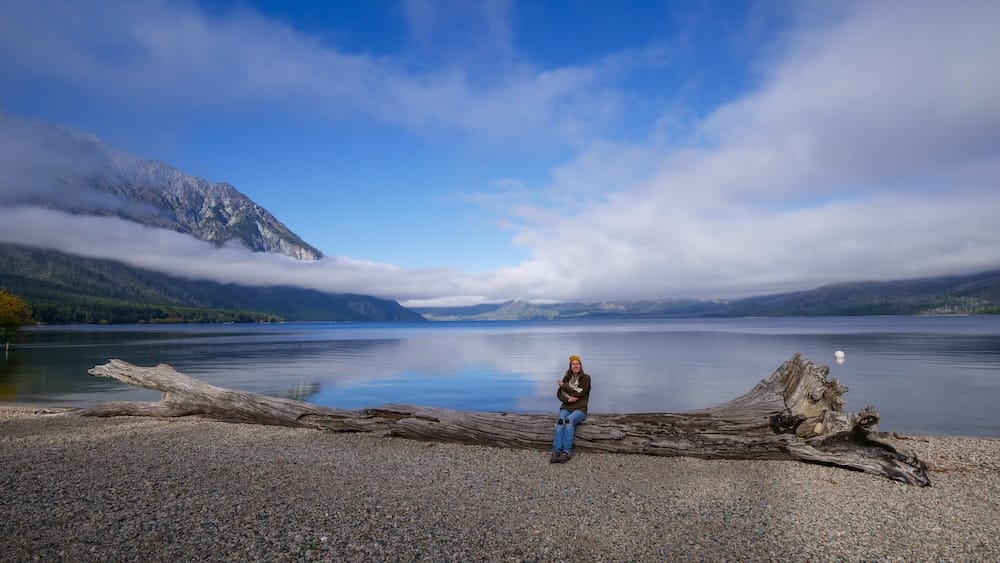
Further south lies Epuyén. It is arguably the most pristine body of water in Patagonia because local laws strictly ban all motorboats. There are no jet skis or speedboats—only kayaks, sailboats, and a silence so deep it actually rings in your ears. However, accessing the beautiful pebbled beaches of Puerto Bonito in 2026 requires military-level punctuality.
To protect the environment, Local Ordinance 0911 legally caps the Puerto Bonito parking lot at exactly 130 vehicles. In peak summer, this quota is usually hit by 10:30 AM. Once that 130th car pulls in, the physical barrier drops. If you arrive at 10:45 AM, you will still pay your 5,000 ARS parking fee, but you will be forced to leave your rental car on a dusty highway shoulder kilometers away and hike straight uphill in the heat just to reach the actual trailhead. Set your alarm.
Cholila: The Meat Capital and Hungover Cowboys
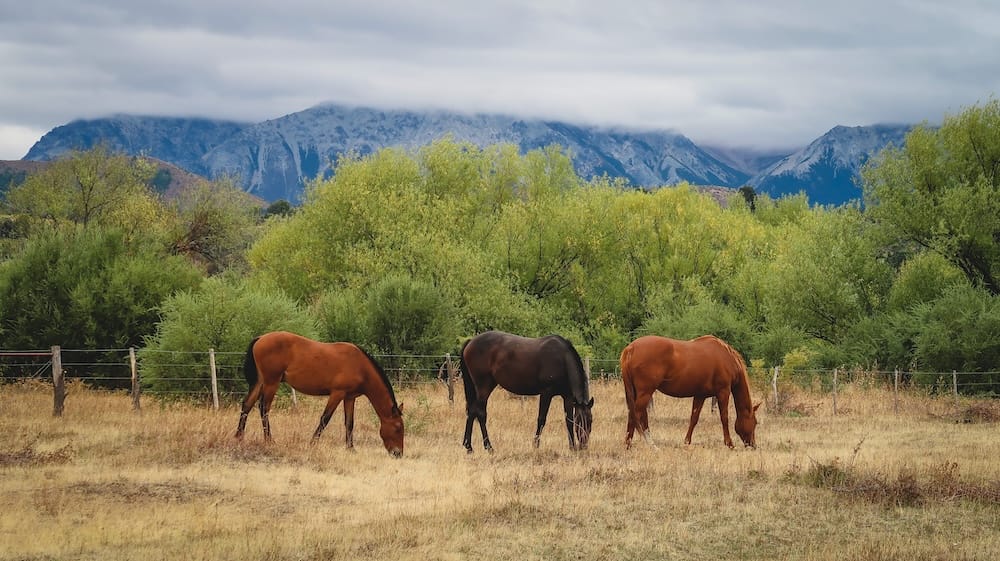
Nestled in a lush pre-cordillera valley, Cholila is a town globally known for outlaws, but locally revered for beef. If you drive down Provincial Route 71, you can simply pull over to the side of the road and walk right up to the original 1901 log cabin built by Butch Cassidy, the Sundance Kid, and Etta Place. There are no massive velvet ropes or expensive ticket booths—just pure, unregulated history sitting quietly in a field. You can leave a small donation and walk the same floorboards the outlaws paced while hiding from the law.
But the real religion in Cholila is the Fiesta Nacional del Asado. Held every February, this is a meat-lover’s paradise of staggering proportions. Over 15,000 kilos of premium beef and Patagonian lamb are splayed out on massive iron crosses and slow-roasted over open fire pits. The smoke can be seen for miles.
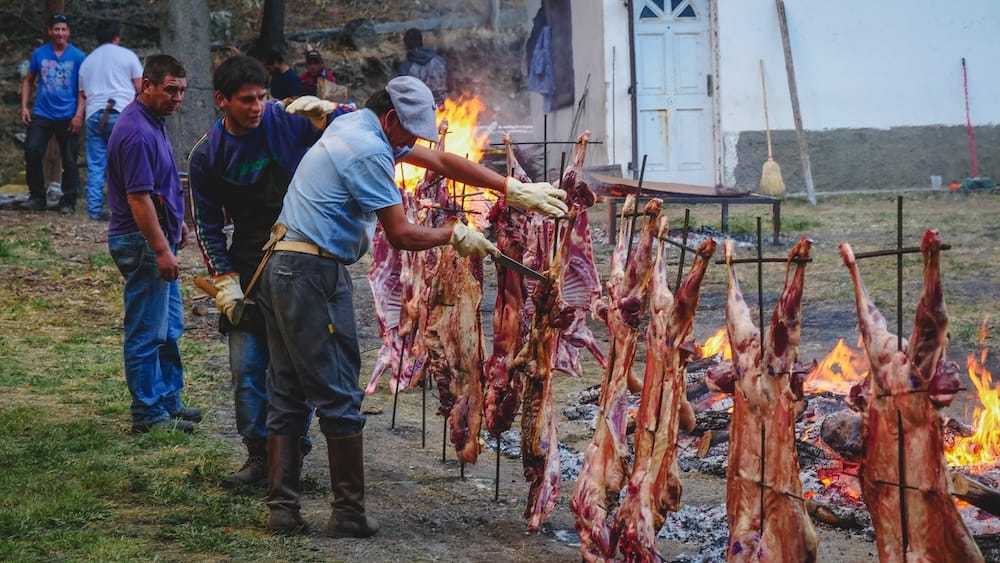
While we got to experience the official festival, our Airbnb host also managed to score us an invite to an authentic Gaucho party in the nearby El Manso valley. We showed up expecting the polished, high-octane rodeo action you see in tourism brochures—galloping horses, lasso tricks, and stoic cowboys. Instead, we found glorious, unfiltered reality. The famous horseback games moved at a hilariously sluggish pace because half the gauchos were nursing brutal, world-ending hangovers. They had been up drinking red wine around the fire until 4:00 AM. Watching a traditionally dressed Patagonian cowboy slowly and painfully navigate his horse around a barrel while clutching his head completely shattered the polished myth, making the entire experience wildly authentic and deeply relatable.
Data Matrix: The 42nd Parallel Deep Dive
| Location & Venue | Essential Cost (2026) | The Specific Reward | The Brutal Reality & Friction |
| El Bolsón / Feria Artesanal | Free Entry (Cash required for goods) | Over 200 stalls of hand-forged crafts and local craft IPAs. | ATM Failure: By 1:00 PM on market days, cash is entirely gone from the plaza. |
| Lago Puelo / National Park | 15,000 ARS ($13.50 USD) cash at gate | Microclimate warmth and wild Murra berry foraging on trails. | Transit Trap: The absurd La Golondrina provincial bus switch on the dirt road. |
| Epuyén / Puerto Bonito | 5,000 ARS (Parking Fee) | Absolute motorless tranquility and crystal-clear glacial swimming. | The 130 Rule: Arrive before 10:30 AM or hike 3km uphill on a dusty shoulder. |
| Cholila / Butch Cassidy Cabin | Free (Small cash donations accepted) | Step inside the original 1901 outlaw log cabin. | Unregulated daylight hours; literally just sitting exposed on the side of Route 71. |
The Deep South: Winds, Steam Trains, and Bakeries
As you push further south toward the bottom of the world, the weather stops being a backdrop and becomes an active antagonist.
Esquel: The Umbrella Massacre
As you push further south toward the bottom of the world, the weather stops being a beautiful backdrop and becomes an active, aggressive antagonist. The Patagonian wind doesn’t care about your meticulously planned itinerary, and it certainly doesn’t care about the flimsy umbrella you bought at a pharmacy in Buenos Aires.
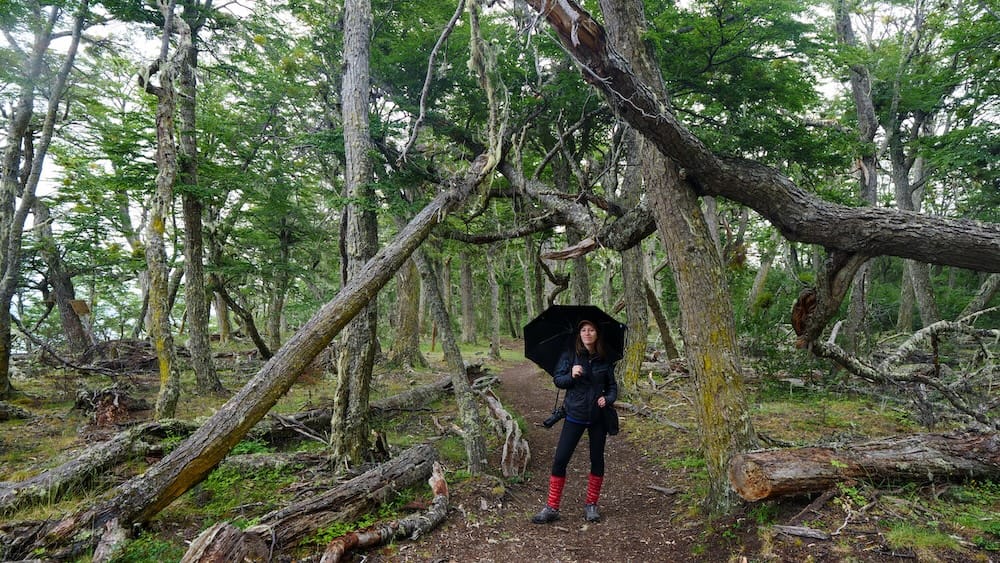
Walking the few blocks to the Esquel bus terminal, a violent gust of wind instantly inverted, bent, and permanently destroyed my umbrella within three seconds of opening it. We were freezing. We immediately aborted our transit mission and marched into a local outfitter, where Sam had to drop cash on a thick flannel shirt and an authentic, wide-brimmed wool Gaucho hat just to survive the morning chill. If you pack light for Esquel, the town will punish you.
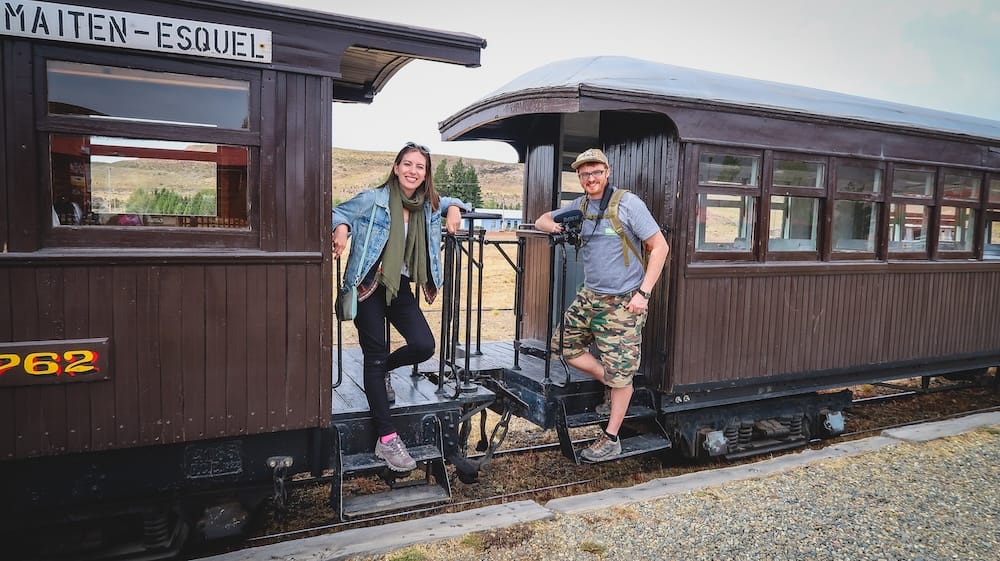
Esquel serves as the gateway to the deep southern Andes and Los Alerces National Park, but its crown jewel is La Trochita (The Old Patagonian Express). This is a 75-centimeter narrow-gauge steam train, utilizing original Baldwin and Henschel locomotives, that chugs through the steppe to the Mapuche settlement of Nahuel Pan. Do not show up at the station expecting to casually buy a ticket on a Tuesday morning. Foreigner tickets cost roughly 136,000 ARS ($122 USD) and regularly sell out weeks in advance during the summer season.
[The Micro-Logistics Pet Warning]
Traveling through Patagonia with a dog? La Trochita is notoriously bureaucratic. You cannot simply carry a small dog onto the wooden carriages. You must pay a highly specific 18,750 ARS pet fee at the station, present physical, up-to-date vaccination records, and have a leash and muzzle ready to go, or the conductor will flatly deny boarding without a refund.
After surviving the wind and the transit bureaucracy, Esquel offers immense culinary comfort. Seeking refuge, we found Don Chiquino, a legendary local pasta house. We ordered a phenomenally heavy, rich Patagonian lamb lasagna that completely erased the morning’s freezing temperatures. The venue itself is delightfully eccentric; I spent the entire meal staring up at massive pieces of antique farm equipment and vintage plows suspended directly from the ceiling over our table. For about 25,000 ARS ($22 USD), it is the ultimate caloric triage.
Tolhuin: The Tierra del Fuego Pitstop
If you make it all the way down to Tierra del Fuego, you will inevitably pass through Tolhuin. Sitting on the shores of the massive Lake Fagnano, it serves as the exact midway point on National Route 3 between the industrial hub of Rio Grande and the “End of the World” in Ushuaia.
Tolhuin is not a quaint, walkable alpine village. It is a sprawling, dusty grid bisected by a major trucking highway. But it holds a legendary sanctuary: Panadería La Unión. Founded by Emilio Sáez, this bakery burned to the ground in a devastating 2021 fire, only to be completely rebuilt by the community. Today, it is a glorified, massive truck stop that serves as the beating heart of the island, welcoming up to 5,000 visitors on a single weekend.
It is also deeply quirky. Inside, you will find a life-size statue and a “Dignity Corner” museum dedicated to Dr. René Favaloro (the famous Argentine cardiologist). More importantly, Emilio has built a dedicated rest area featuring free beds and hot showers exclusively for exhausted bikepackers and cyclists attempting to pedal to the end of the continent.
You do not simply “stroll” into La Unión. You pull off the highway, fight fifty other cars and semi-trucks for parking in the gravel lot, and battle the 10:00 AM madhouse inside. You grab your number, wait your turn, buy your fresh coffee and medialunas (roughly 4,500 ARS), leave a sticker on the wall, and get back on the road. It is a mandatory, aggressive, and entirely unforgettable Patagonian highway ritual.
Data Matrix: Southern Triage & Transit
| Hub / Venue | Exact Cost (2026) | The Vibe | Logistical Friction & Reality |
| Esquel / La Trochita | 136,000 ARS ($122 USD) | Vintage steam train magic on a 75cm gauge track. | Bureaucracy: Must book 3 weeks ahead. Pet fee is strictly 18,750 ARS with a required muzzle. |
| Esquel / Don Chiquino | ~25,000 ARS ($22 USD) | Heavy lamb lasagna eaten under antique farm plows. | Reservations highly recommended on weekends; the wind outside the restaurant is brutal. |
| Tolhuin / La Unión | ~4,500 ARS (Coffee & Pastry) | Tierra del Fuego’s grand, chaotic pitstop. | Total parking lot chaos; it is a mandatory but crowded highway stop. |
| Tolhuin / Cyclist Haven | Free | Safe harbor for international bikepackers. | Must prove you are actually traveling by bicycle to use the free beds and hot showers. |
Hidden Towns Patagonia: Quick Planning Snapshot
If you’re skimming or mapping out a route, this is your cheat sheet for Patagonia’s most underrated towns—the highlights, the time needed, and the one thing that might trip you up if you’re not paying attention.
| Town | Region | Best For | Time Needed | Watch Out For |
|---|---|---|---|---|
| Gaiman | Chubut Valley | Welsh tea culture | Half day | Sugar overload |
| Trelew | Chubut | Museums + food | 1 day | Siesta closures |
| Las Grutas | Río Negro | Beaches + salt flats | 1–2 days | Tide timing |
| El Bolsón | Río Negro | Markets + hippie vibe | 2–3 days | Cash-only spots |
| Lago Puelo | Chubut | Quiet lake nature | 1 day | Bus quirks |
| Epuyén | Chubut | Hidden lakes | Half day | Parking limits |
| Cholila | Chubut | Gaucho culture | 1–2 days | Dirt roads |
| Esquel | Chubut | Trains + parks | 2 days | Wind |
| Tolhuin | Tierra del Fuego | Bakery + road trip stop | 2–4 hrs | Crowds |
| Dolavon | Chubut | Small-town vibe | Half day | Closed attractions |
Patagonia Hidden Towns Route Ideas
If you’re trying to stitch these places together into something that actually works in real life (and doesn’t fall apart the moment a museum closes or a bus disappears), these route ideas will save you a lot of guesswork.
Atlantic + Welsh Corridor (3–5 days)
Trelew → Gaiman → Dolavon → Las Grutas
This route feels like stepping into a slightly surreal version of Patagonia where Welsh traditions, dusty roads, and coastal oddities all collide.
- Start in Trelew for museums and a proper sit-down meal
- Head to Gaiman for tea (pace yourself—you won’t)
- Detour to Dolavon for quiet riverside wandering
- Finish in Las Grutas where the ocean only shows up if the moon says so
Best for: culture, food, quirky history
Reality check: opening hours and tide schedules will dictate your entire plan
Andean Lakes + Slow Travel (4–7 days)
El Bolsón → Lago Puelo → Epuyén → Cholila
This stretch is where Patagonia slows down—but only if you’re willing to adapt to its rhythm.
- El Bolsón for markets, pizza, and hippie energy
- Lago Puelo for calm water and no-motor tranquility
- Epuyén for a blink-and-you-miss-it lake escape
- Cholila for gauchos, smoke, and outlaw legends
Best for: nature, markets, off-grid vibes
Reality check: cash is king, buses are weird, and nothing runs on your schedule
Deep South Adventure (3–5 days)
Esquel → Tolhuin → Ushuaia
This is Patagonia at its rawest—less polished, more wind, and a constant feeling that you’re at the edge of something.
- Esquel for steam trains and national park access
- Tolhuin for bakery stops and highway rituals
- Continue to Ushuaia if you want the full “end of the world” experience
Best for: frontier energy, dramatic landscapes, fewer crowds
Reality check: the wind will test your patience (and your gear)
What to Eat in Patagonia’s Hidden Towns
Food in these towns isn’t just something you fit between activities—it is the activity. It’s how you recover from long drives, missed buses, and the general chaos that comes with traveling this far off the main circuit.
Must-Try Experiences
- Welsh tea in Gaiman – come hungry, leave questioning your life choices
- Picada in Trelew – cured meats, cheese, and the kind of meal that demands a nap afterward
- Patagonian pizza in El Bolsón – thick, heavy, and exactly what you need after a day outdoors
- Lamb dishes in Esquel – rich, slow-cooked, and deeply satisfying
- Medialunas in Tolhuin – chaotic bakery scene, but worth every second in line
Patagonia Food Snapshot
| Town | Food Experience | Why It Matters |
|---|---|---|
| Gaiman | Welsh tea | Cultural identity |
| Trelew | Picada | Social + historic |
| El Bolsón | Pizza | Backpacker staple |
| Esquel | Lamb | Regional specialty |
| Tolhuin | Medialunas | Legendary stop |
Across all of these towns, one thing becomes clear pretty quickly:
You don’t just eat in Patagonia—you recover, celebrate, and occasionally overdo it.
And honestly, that’s part of the experience.
The Patagonian Reality Check: Why the Friction is the Destination
The true magic of Patagonia doesn’t live in the perfectly framed Instagram spots of the major glaciers. It lives in the chaotic, wind-whipped, sugar-fueled moments in between. When we set out to film this region for our YouTube channel, we thought we knew what to expect from the deep south. We were wonderfully wrong.
The Atlantic Steppe: Sugar Comas and Salt Flat Lockouts
The real Patagonia is the quiet camaraderie of drinking a Paso de los Toros soda on a curb at a closed gas station in Dolavon, and the humbling surrender of slipping into a massive sugar coma after devouring a Torta Negra in the pristine gardens of Gaiman. It’s sitting in a century-old Trelew bar nursing the meat sweats exactly where outlaws once hid, and learning the hard way that the inviting beaches and salt flats of Las Grutas are entirely held hostage by the moon and private industrial gates.
The 42nd Parallel: Heavy Carbs and Strict Limits
This trip tested our patience, our gear, and our waistlines. It’s about inhaling a monstrous, egg-topped pizza with your bare hands in El Bolsón because you’re simply too exhausted for utensils. It’s the physical tax of getting your calves sliced open by wild Murra bushes for a sweet mid-hike snack in Lago Puelo, and racing against the clock to beat the strict 130-car parking limit just to earn a moment of motorless silence in Epuyén.
The Deep South: Wind, Cowboys, and Chaos
You don’t get these stories on a luxury tour bus. You get them by crashing a local party full of hungover cowboys in Cholila, watching the Esquel wind violently massacre your umbrella before eating a heavy lamb lasagna under antique plows, and fighting fifty tired truckers for a single medialuna at the legendary Tolhuin bakery in Tierra del Fuego.
Embrace the Friction
If you are planning your own route down the 40 or the 3, be sure to dive into our full Patagonian video series on the Samuel and Audrey channel, where we documented every single one of these beautiful, logistical misadventures on camera.
Until then, leave the rolling luggage at home. Pack heavy layers, carry a much thicker stack of physical pesos than you think you could ever possibly need, and embrace the friction. The chaos is exactly what makes the bottom of the world so deeply unforgettable.
FAQ: The Small Towns Of Patagonia
Is it really necessary to carry physical cash in Patagonia?
Absolutely. While big hubs like Bariloche take cards, smaller towns operate on a strict cash economy. In places like El Bolsón, the local ATMs are completely drained of bills by 1:00 PM on market days. Bring a thick stack of Argentine Pesos directly from a Western Union in a major city, or you’ll be window shopping instead of eating.
How far in advance do I need to book tickets for La Trochita in Esquel?
Weeks. Do not show up to the station expecting to buy a ticket on the platform. The Old Patagonian Express is highly regulated, and foreigner tickets (running around $122 USD) sell out fast in the summer. Also, if you are traveling with a dog, you must pre-pay a highly specific 18,750 ARS pet fee and bring a muzzle.
Can I self-drive my rental car to the Salinas del Gualicho in Las Grutas?
Nope. Independent travelers who try to navigate to the salt flats at night will hit locked industrial mining gates owned by the ALPAT alkali plant. You have to book a licensed 4×4 excursion (which costs between $55 and $95 USD) because the tour operators hold the physical keys to the private gates.
What should I pack for the summer weather in the southern Andes?
Layers. The Patagonian wind acts as an aggressive antagonist and does not care what season it is. I had a cheap umbrella instantly destroyed by a gust of wind in Esquel and immediately had to buy a heavy wool Gaucho hat just to survive the morning chill. Pack a windproof shell and leave the flimsy gear at home.
Are the Welsh towns of Gaiman and Dolavon open every day of the week?
Rarely. Or at least, not early in the week. The entire Welsh settlement corridor effectively shuts down on Mondays and Tuesdays to recover from the weekend tourist rush. If you show up on a Monday expecting to see the flour mill in Dolavon, you’ll be eating empanadas on the curb of a gas station. Plan your visit between Wednesday and Sunday.
How do local buses work when crossing provincial borders in Patagonia?
Chaotically. Because of strict provincial transit laws, a simple 15-minute bus ride from El Bolsón (Río Negro) to Lago Puelo (Chubut) requires a bizarre ritual. You literally have to get off the La Golondrina bus at the invisible border, walk across the dirt road, and board a second bus operated by the exact same company. Just go with the flow.
What is the parking situation like at Lake Epuyén during peak summer?
Brutal. To protect the motorless tranquility of the lake, Local Ordinance 0911 strictly caps the Puerto Bonito parking lot at exactly 130 vehicles. Once that limit is hit (usually around 10:30 AM), the barrier drops. If you are car 131, you will be forced to park on a dusty highway shoulder kilometers away and hike uphill. Set an early alarm.
Are the wild berries safe to eat along the trails in Lago Puelo?
100%. The wild Murra (blackberry) bushes lining the Mirador trail are completely safe and provide an incredible mid-hike sugar hit. Just be warned: the thorny vines are vicious. If you aren’t wearing thick hiking pants, your calves will get sliced up reaching into the briar patch for the fruit.
Project 23 Argentina: This guide is also available in Spanish. [Lea la versión en castellano: Qué hacer en la Patagonia Oculta: 10 pueblos que pocos conocen]