
El Chaltén is one of those places where you can be alone with your thoughts… and then immediately be alone with your thoughts while 87 other people are also being alone with their thoughts within the exact same 3-meter radius.
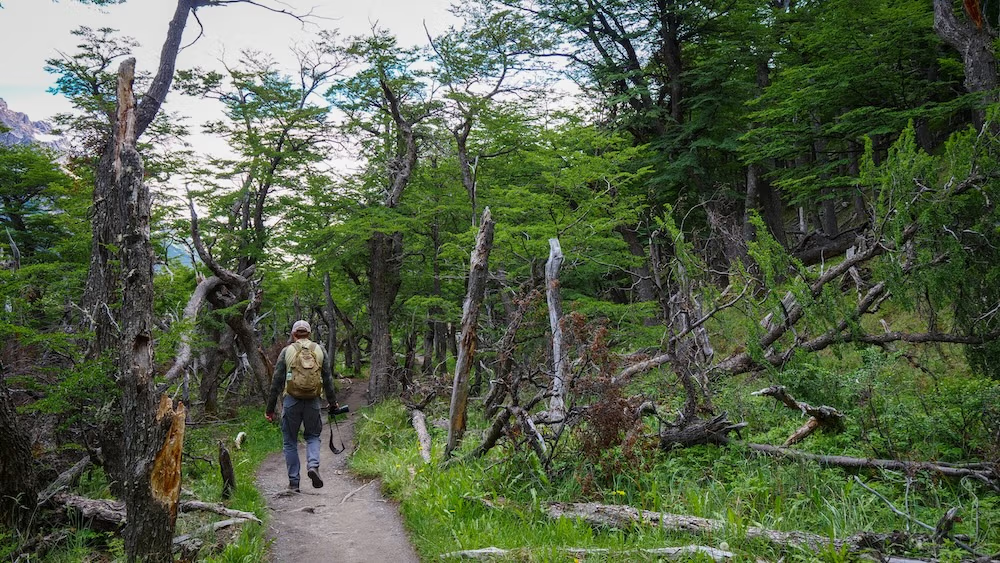
We learned this the fun way.
On our first afternoon in town we tried to squeeze in Mirador de los Cóndores at sunset, did the classic “we can totally make it before dark” shuffle, and discovered we were not the only geniuses with this plan. The trail itself is short. The panic is optional. But the golden-hour surge? Very real.
Over six nights in El Chaltén Audrey and I did the big-ticket hikes—Laguna de los Tres (Fitz Roy), Laguna Torre (Cerro Torre), plus the easier wins like Chorrillo del Salto and the town miradors. We also did the other essential Patagonian activity: looking at the wind, looking at each other, and agreeing that today is a café day.
And that’s the secret sauce. Crowd avoidance in El Chaltén isn’t about one magic start time or some mystical “hidden trail” that only locals know. It’s about stacking small advantages—timing, trail choice, and a handful of simple hacks—until you’re walking in the same mountains as everyone else… but not always in the same human traffic jam.
This guide is the full playbook. It’s part strategy, part field notes from our own trip, and part “please don’t do what we did at least once.”
The Crowd Map: Where El Chaltén Actually Gets Busy
El Chaltén crowds aren’t evenly distributed. They clump. They surge. They spawn at predictable locations. Like a video game. Except the loot is views and the boss fight is your own calves.
Here’s where congestion really happens:
- Trailheads and portals (the “everyone starts here” problem)
- First steep hour out of town (the “warm-up choke”)
- Famous mid-hike payoffs (the “let’s all eat lunch here” problem)
- The final push to the iconic viewpoints (the “slow walkers meet gravity” problem)
- Anywhere the trail narrows, steepens, or turns into loose rock (the “human zipper”)
In other words, you don’t need to avoid people everywhere. You need to avoid people at the pinch points—then enjoy the quiet in the long in-between stretches where hikers naturally spread out.
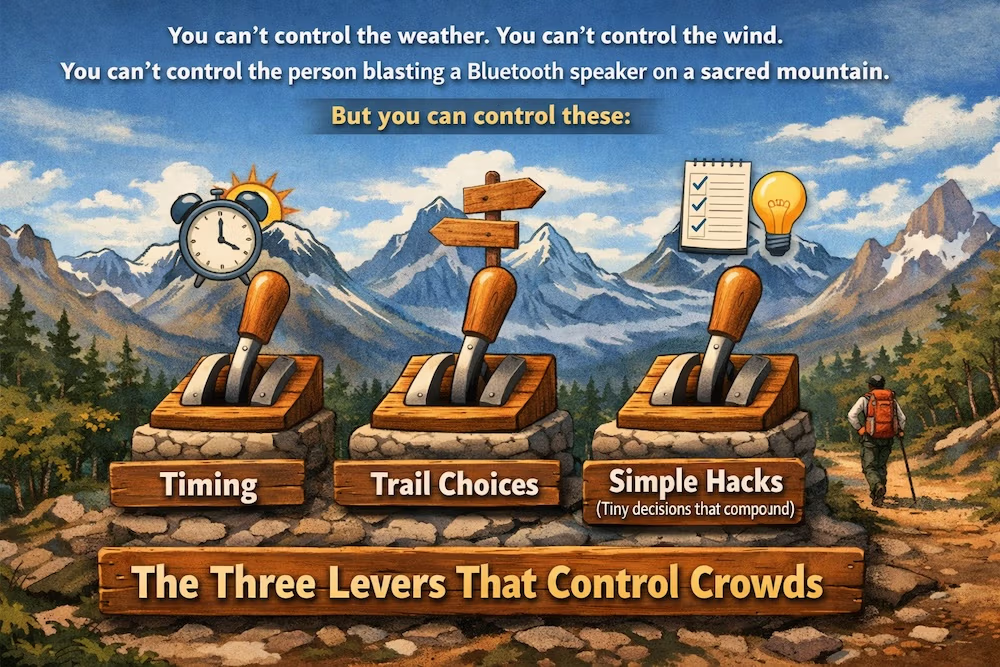
The Three Levers That Control Crowds
You can’t control the weather. You can’t control the wind. You can’t control the person blasting a Bluetooth speaker on a sacred mountain.
But you can control these:
- Timing
- Trail choices
- Simple hacks (tiny decisions that compound)
Use all three. And I guarantee you’ll have moments that feel private—even in peak season.
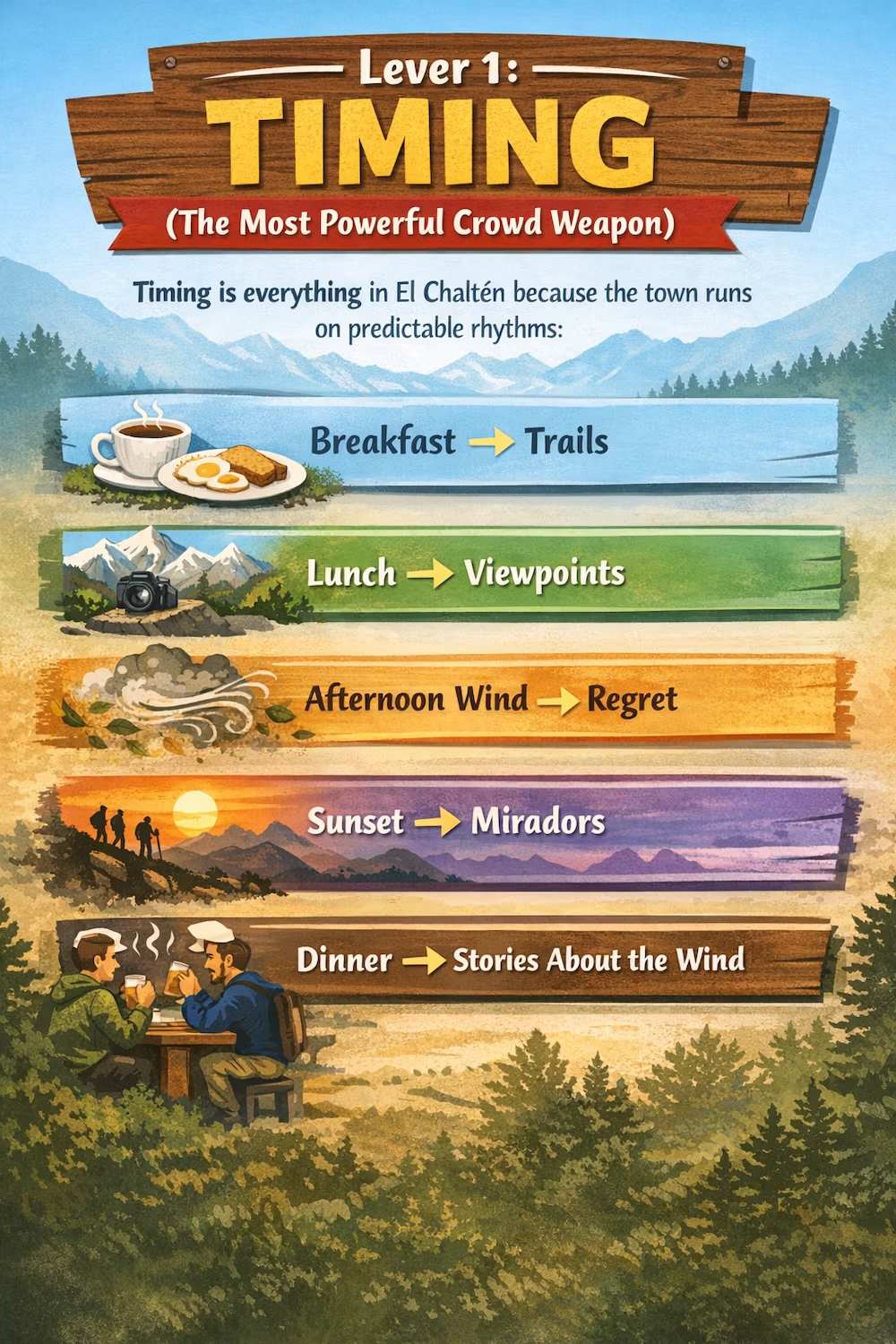
Lever 1: Timing (The Most Powerful Crowd Weapon)
Timing is everything in El Chaltén because the town runs on predictable rhythms:
- Breakfast → trails
- Lunch → viewpoints
- Afternoon wind → regret
- Sunset → miradors
- Dinner → stories about the wind
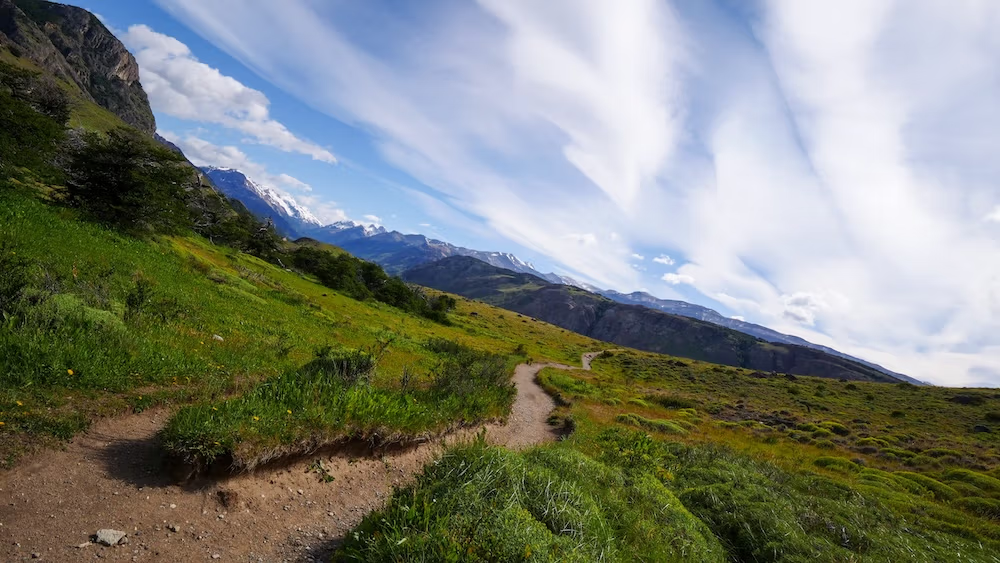
Season Timing: When to Visit for Fewer People (Without Sacrificing the Trip)
There’s no moral victory for visiting when everything is closed and the weather is trying to remove your face. The goal is “less crowded” not “miserable.”
Here’s the realistic season logic:
| Season | Crowd level | Trail conditions | Daylight | Our take |
|---|---|---|---|---|
| Peak summer (Dec–Feb) | High | Best overall access | Long | Crowds are real, but timing tricks work |
| Shoulder (Oct–Nov / Mar–Apr) | Medium | Often excellent | Medium | The sweet spot if you want balance |
| Winter (May–Sep) | Low | Variable / limited | Short | For experienced, flexible travelers |
If you want “fewer people” without turning your trip into a survival doc, shoulder season is the happy compromise. Not empty. Just more breathable.
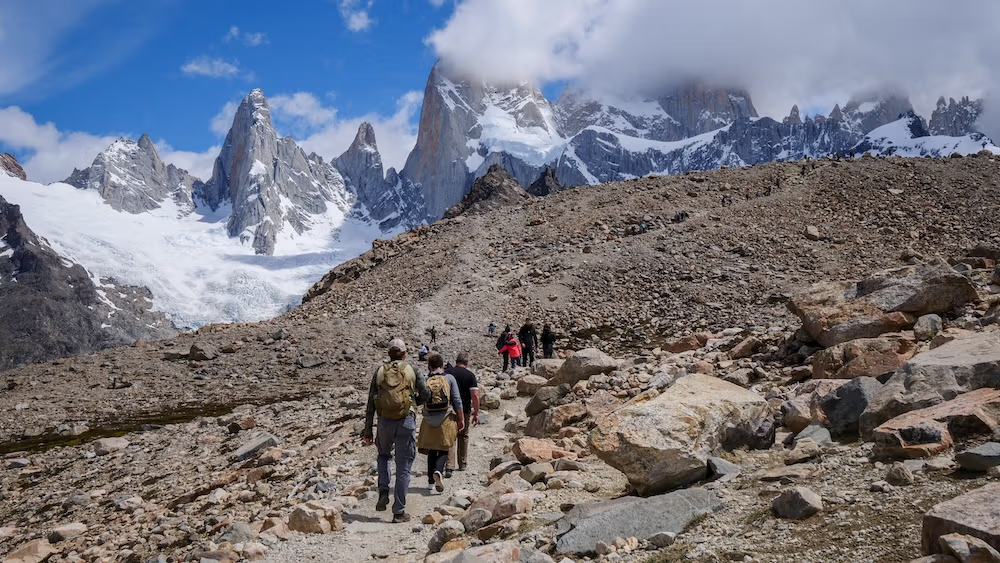
Weekday Timing: The Easiest Win No One Brags About
Weekends attract:
- People doing quick trips from El Calafate
- Travelers on tight itineraries
- Anyone with a work schedule who finally escaped civilization
So if you can plan one thing, plan this: put your trophy hike on a weekday.
It’s not a guarantee. But it tilts the odds in your favour a lil’ bit more.
The Day-Tripper Pulse: Buses Create Crowd Waves
El Chaltén isn’t only crowded because it’s famous. It’s crowded because buses deliver hikers in predictable batches.
Buses between El Calafate and El Chaltén run multiple times per day, take about three hours, and the schedules create predictable “arrival floods” and “departure drains.” When day-trippers arrive, the trailheads get busy. When they leave, certain trails suddenly feel quieter.
Use this pattern instead of fighting it.
The Portal + Fee System
El Chaltén’s trail network sits inside Parque Nacional Los Glaciares (Zona Norte), and access is managed through portals.
What to know about fees (and why this matters for crowds):
- The official Los Glaciares tariff list sets a general entrance fee of AR$ 45.000 (with discounted categories for residents, students, etc.).
- For Zona Norte (El Chaltén), tickets are typically obtained online only (often via the website or by scanning a QR code at the portal), and payment is generally by credit/debit card rather than cash.
- Multi-day promos exist (Flexipass and similar). A common pattern is a second-visit discount within 72 hours—useful if you want to split a big hike into two calmer days or keep timing flexible.
- Policies and categories can change, so treat this as “current baseline,” not eternal truth.
The three main portals in El Chaltén (Zona Norte) and what they feed:
| Portal | Trails that start here | Crowd implication | Crowd-dodging move |
|---|---|---|---|
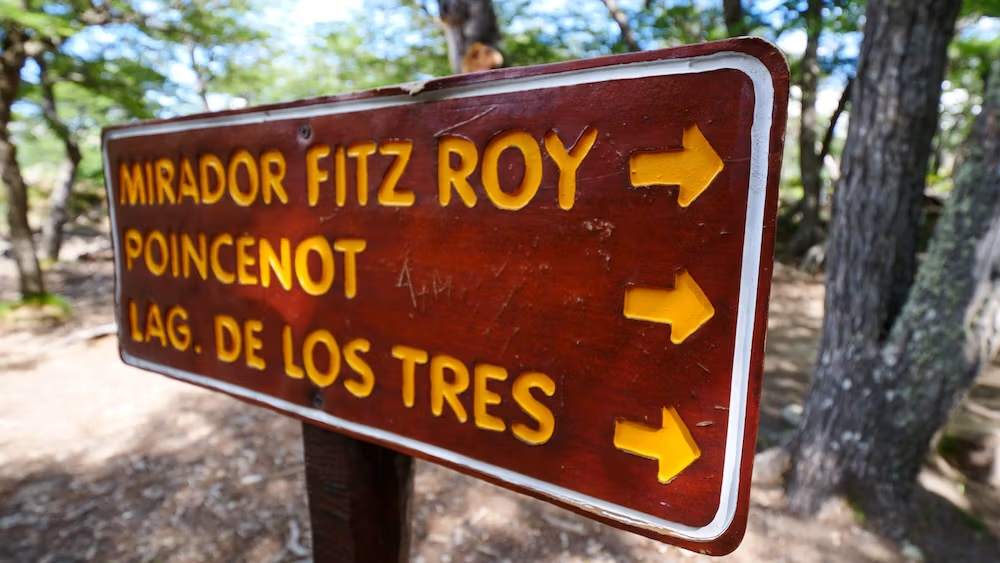
| Los Cóndores | Mirador de Los Cóndores / Águilas, Pliegue Tumbado, Laguna Toro | Short hikes + sunset mirador traffic = spikes | Go early afternoon or after dinner; don’t default to sunset |
| Base Fitz Roy | Torre, Laguna de los Tres, Chorrillo del Salto | Biggest “everyone starts here” funnel | Beat the breakfast wave or accept it and keep moving |
| Río Eléctrico | Piedra del Fraile, Mirador Piedras Blancas, Laguna de los Tres | Alternate access spreads hikers out | Use it to change your timing on Fitz Roy days |
If you do nothing else, at least do this: arrive at the portal when other people aren’t arriving. It sounds obvious, but it’s the difference between strolling onto a trail and standing around with a crowd.
Bus Timing, Specifically: When the Wave Hits
Buses between El Calafate and El Chaltén run throughout the day in season. The trip is about 3 hours (roughly 215 km), which creates an obvious crowds: late-morning arrivals → midday trailheads → afternoon turnarounds.
You don’t need to memorize every timetable. You just need to understand the shape:
- Depart El Calafate early morning → arrive El Chaltén late morning
- Depart El Calafate around midday → arrive mid/late afternoon
- Depart El Chaltén late afternoon/evening → day-trippers leave town and trails thin out
The bus-wave cheat sheet (general pattern)
- Early morning: overnight visitors and early starters (often quieter)
- Late morning to early afternoon: peak congestion at classic trailheads
- Late afternoon: thinning trails as day-trippers turn back or head to buses
- Sunset: mirador mini-surge in town
If you’re staying overnight, your superpower is simple: you’re not trapped by bus timing.
Start Time vs Arrival Time: Think Like a Crowds Engineer
“Start early” is fine advice. “Arrive early” is better.
Most people choose a start time based on:
- breakfast
- vibes
- the belief that time is infinite
Instead, choose your arrival time for the main payoff.
Example: Laguna de los Tres has a major bottleneck near the final section. Even with fit hikers, people slow down, bunch up, and form a human accordion. I hit that “km 9 gut check” moment where the trail becomes a shared experience whether you want it or not.
So the question is: when do you want to share it?
Two crowd-friendly options:
- Dawn arrival: fewer people, colder, more dramatic light
- Late afternoon arrival: quieter again, warmer, but you must budget daylight for the descent
Midday arrival is the “we all had the same lunch plan” zone.
The Patagonia Wind Factor: Timing Isn’t Only Crowds—It’s Sanity
Wind changes everything. Even if you ignore crowds, wind can turn an exposed viewpoint into a medieval punishment.
Our trip had a full “wind is illegal today” day where hiking made no sense. It wasn’t a failure day. It was a strategy day. You can’t crowd-avoid if you’re forcing yourself onto the busiest, most exposed trail on the one day everyone else also decided to stay near town.
So timing also means: choose your big days based on the forecast window, not the calendar.

Lever 2: Trail Choices (Pick Your Crowd Shape)
El Chaltén has famous hikes, and famous hikes have famous crowds. That’s not a bug. It’s the price of a view that looks like it was rendered by a fantasy movie studio.
But “avoid crowds” doesn’t mean “skip the classics.” It means choosing your trail with eyes open.
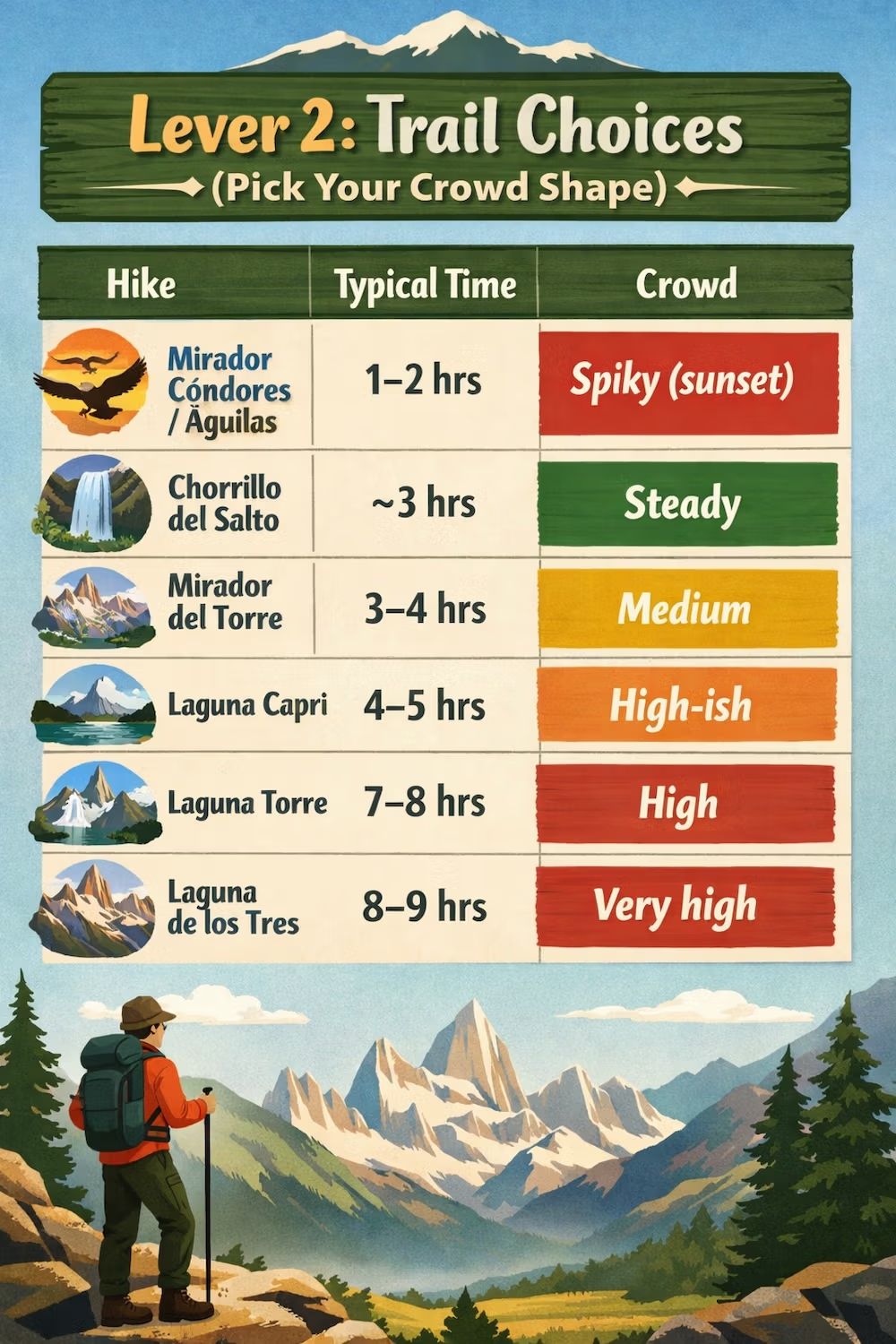
Quick realities about the classic hikes
| Hike | Typical time | Difficulty vibe | Crowd vibe | Why it crowds |
|---|---|---|---|---|
| Mirador Cóndores / Águilas | 1–2 hrs | Short and punchy | Spiky (sunset) | Close to town, perfect “bonus hike” |
| Chorrillo del Salto | ~3 hrs | Easy | Steady | Accessible for everyone |
| Mirador del Torre | 3–4 hrs | Easy | Medium | The “I only have half a day” pick |
| Laguna Capri | 4–5 hrs | Easy | High-ish | Big payoff without full-day commitment |
| Laguna Torre | 7–8 hrs | Moderate | High | Iconic, but spreads out more |
| Laguna de los Tres | 8–9 hrs | Moderate + brutal finale | Very high | Trophy hike, narrow finale |
The important part isn’t the exact time. It’s the crowd factors behind each hike.
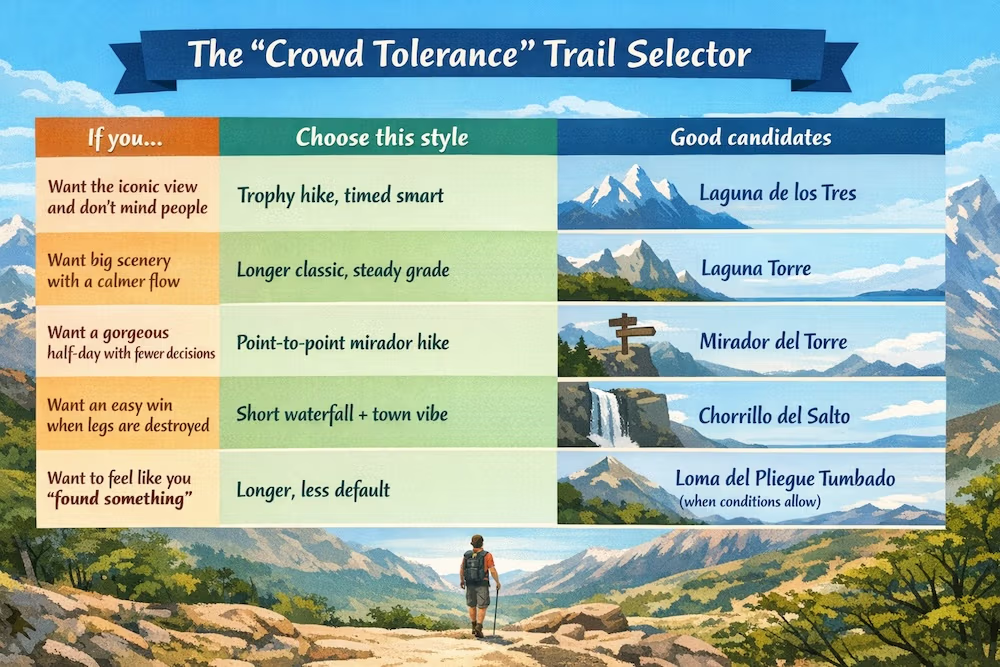
The “Crowd Tolerance” trail selector
| If you… | Choose this style | Good candidates |
|---|---|---|
| Want the iconic view and don’t mind people | Trophy hike, timed smart | Laguna de los Tres |
| Want big scenery with a calmer flow | Longer classic, steady grade | Laguna Torre |
| Want a gorgeous half-day with fewer decisions | Point-to-point mirador hike | Mirador del Torre |
| Want an easy win when legs are destroyed | Short waterfall + town vibe | Chorrillo del Salto |
| Want to feel like you “found something” | Longer, less default | Loma del Pliegue Tumbado (when conditions allow) |
On our trip, Laguna Torre was the best example of “still famous, but not a constant conveyor belt.” I definitely passed people and saw other folks on the trail, but it wasn’t the nonstop flow we felt on Fitz Roy routes. That alone changes the mood of a long hike.
The “Alternate Trailhead” move (for Fitz Roy days)
If you’re doing Laguna de los Tres, one crowd-smart tactic is to start from an alternate access point (often described as the Río Eléctrico / El Pilar side) and finish in town, or vice versa. This spreads people out early and changes which sections you hit at peak times.
This isn’t about being secret. It’s about being asymmetric.
Translation: you’re still hiking the same dreamscape. You’re just entering the dreamscape from a different door.

Lever 3: Simple Hacks (Tiny Decisions That Change the Day)
These are the practical, low-drama moves that actually reduce crowd pain.
1) Start earlier than you think, but don’t cosplay misery
An early start doesn’t mean suffering. It means:
- coffee + breakfast
- headlamp ready (in case)
- and being on trail while the town is still stretching
You don’t need 4:00 a.m. hero energy. You need “not 10:30 a.m. with everyone else” energy. The goal is to arrive at the good stuff before the crowd wave, not to win an award for being awake. If you can leave your lodging with a warm drink and a full stomach, you’re already ahead of the chaos. And yes, the mountains look extra smug when you see them while most people are still zipping up their backpacks in town.
2) Walk 10 minutes past the obvious lunch spot
Crowds aren’t only on the trail. They’re at pauses.
If everyone stops at the first perfect rock with a view, you can:
- keep walking for 10 minutes
- eat where it’s still beautiful
- and let the human pile-up happen behind you
This works absurdly well. Most people choose lunch spots like they choose airport gates: first one they see, immediate commitment. That means the “best” spot often becomes the loudest spot, not the prettiest one. Walk a tiny bit farther and you’ll usually find the exact same view—just with fewer elbows and fewer crunchy wrappers.

3) Build a “two-summit rule” for miradors
Town miradors get slammed at sunset because everyone wants the same golden moment.
So pick one:
- Either go early afternoon (quiet, less dramatic light)
- Or go after dinner for a twilight stroll if daylight allows
I did the buzzer-beater version. It was fun, but it was not a solitude retreat. Sunset is the default setting, and defaults are where crowds live. If you want quiet, you need to behave slightly “wrong” compared to the herd. Even shifting your mirador hike by an hour can turn it from a social event into a peaceful little victory lap.
4) Treat the first hour as a toll booth
The first steep hour out of town is usually the densest because everyone is still together.
Two ways to win:
- Start early and cruise through it before the surge
- Or start later and accept it will be busy, then enjoy the quieter mid-sections
The losing move is arriving exactly when everyone else does and then being surprised that other folks exist. Think of this section like paying a toll to access the good scenery beyond. You can pay that toll in “early alarm minutes” or you can pay it in “slow-moving people minutes.” Either way, once you get past the initial funnel, the trail tends to breathe—and suddenly El Chaltén feels like Patagonia again instead of a hiking convention.
5) Pack food like you’re preparing for a small apocalypse (a tasty one)
Lunchboxes and snacks aren’t only about energy. They’re about independence.
If you don’t need to:
- return to town at peak lunch time
- compete for café seats
- or stand in line for a sandwich while your legs file a complaint
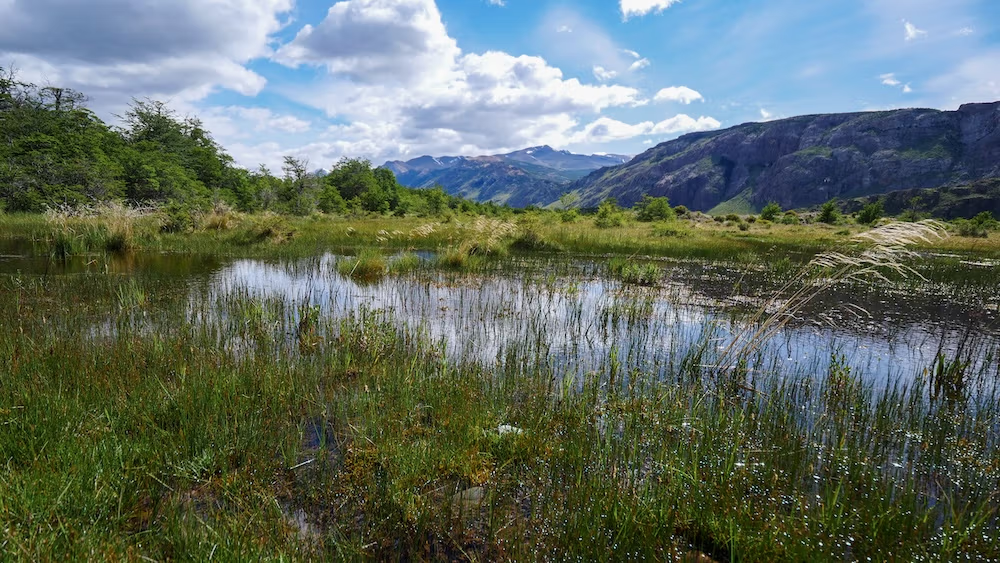
…your whole day feels less crowded. Food is freedom in El Chaltén—especially on the days when everyone has the exact same idea to “grab something quick.” A pocket full of snacks lets you take breaks where you want, not where the nearest café dictates. Also, nothing is more “in-the-moment-rewarding” than being able to bribe yourself uphill with chocolate at precisely the stage your body begins negotiating a bail-out strategy.
6) Have a “Plan B hike” for every Plan A hike
Crowds spike when the weather finally looks good.
So if you wake up and the forecast screams “this is the best day,” assume everyone else saw that too.
Have a Plan B that still feels like a win:
- Swap Fitz Roy for Torre
- Swap a full-day for a mirador + waterfall combo
- Or do your hard hike early and keep your afternoon flexible
El Chaltén runs on weather windows. And the crowd follows the same window like it’s a group text. Plan B isn’t a consolation prize—it’s your secret way of dodging the herd without sacrificing the experience. Audrey and I built our trip around flexibility, and honestly, that’s the difference between “iconic hike” and “iconic hike plus 100 new closest friends.”
7) Use a “quiet hour” rule at the payoff
If you reach the main viewpoint and it’s packed, don’t instantly leave disappointed.
Do this instead:
- take a photo
- go sit somewhere slightly removed
- wait 20–30 minutes
Crowds churn. People arrive, snack, take 400 photos of the same mountain, and then leave.
A little patience can buy you a quieter moment. Viewpoints have turnover, and most folks don’t linger long once they’ve secured the proof of life for Instagram. If you can resist the urge to zoom-hike away, you’ll often get a calmer pocket without changing your route at all. It’s the easiest crowd hack because it requires no extra fitness—just a little self-control and maybe an extra snack.
8) The “reverse photo” tactic: shoot on the way down
Most people treat the summit as the only photo place.
But on the way down:
- the light can be better
- you can frame fewer people
- and you’re no longer fighting the arrival wave
We got some of our favorite “this can’t be real” moments when we stopped in places the crowd didn’t treat like a checkpoint. On the ascent, everyone’s in mission mode. The trail feels like a conveyor belt. On the descent, spacing increases, the urgency drops, and you can actually notice the scenery you were too busy breathing hard to appreciate earlier. Plus, shooting “backwards” often gives you cleaner compositions because the crowd is behind you instead of parked directly in your foreground.
9) Skip the trailhead chaos with micro-logistics
A few minutes matter:
- Pack tonight for tomorrow
- Fill water before bed
- Have shoes, poles, layers ready
- Know your portal/ticket situation before you’re standing in line
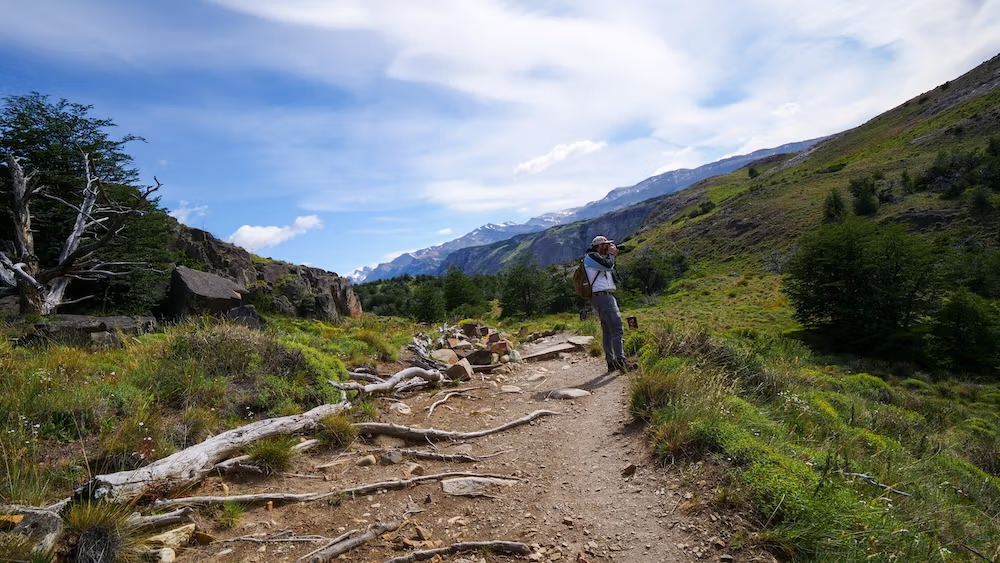
When everyone has the same 9:00 a.m. start, anyone who is ready at 8:00 quietly wins. Crowds love disorganized mornings because disorganized mornings create late starts. Late starts create portal bottlenecks, café line-ups, and that classic “why is everyone here?” feeling. A tiny bit of prep the night before is basically a cheat code for getting onto the trail whilst the masses are still searching for their missing sock.
10) The “two-day flex pass” crowd advantage
If you’re paying an entry fee anyway, multi-day structures can make it easier to:
- split a big route into two calmer days
- do a sunrise attempt without rushing
- or simply choose trails based on crowd conditions instead of “we must get our money’s worth today”
The worst crowd decisions often come from the pressure to cram everything into one “perfect” day. A multi-day mindset lets you hike like a strategist instead of a desperate gambler chasing the one clear forecast slot. And when you’re not forcing the entire trip into a single day, you can pick the quieter window—because you’re not negotiating with the clock and your own sunk costs.
Town Logistics That Quietly Decide Your Trail Experience
Half of “avoiding crowds” happens in town.
If you burn an extra hour every morning hunting for snacks, waiting for a café table, or trying to download maps on shaky Wi-Fi, you’ll start late, arrive at the portal late, and merge into the sameness you were trying to dodge.
Groceries: Stock Up in El Calafate, Top Up in El Chaltén
El Chaltén is small, remote, and seasonal—grocery shopping can feel more like a general store than a supermarket. We read the warnings and still underestimated how limited the selection could be (especially produce and proper trail snacks). Ah, those $1 apples FTW!
A practical move: buy most of your trekking food in El Calafate before the bus, then treat El Chaltén runs as “nice to have.”
Our simple list:
- snacks you’ll actually eat (nuts/chocolate/bars)
- quick lunches (tortillas + tuna/cheese/crackers)
- electrolytes (wind + sun is sneaky dehydration)
Breakfast Is a Crowd Strategy
I loved staying somewhere with an early breakfast because it made “start early” feel normal. Our Vertical Lodge breakfast began around 6:30 a.m., which meant we could eat, pack, and still be moving before the sleepy-town surge.
Restaurant Timing: Don’t Queue With Every Other Hungry Hiker
El Chaltén restaurants can get slammed after a good weather day. Pick a strategy:
| Your vibe | Dinner time | Why it works |
|---|---|---|
| Early-bird recovery | Early | Beat the post-hike rush |
| Late-night debrief | Late | Crowds thin out |
Maps and Tickets: Offline Wins
Download offline maps, keep ticket confirmations accessible without service, and pack the night before. When you can leave quickly and confidently, you hike on your schedule—not the town’s.
Crowd-Avoidance Itineraries (Built from Our Actual Trip)
These aren’t fantasy itineraries. They’re realistic schedules that include the two things every El Chaltén trip needs:
- weather flexibility
- leg survival
The 2-Day “We’re Here, We’re Tired, We Still Want a Mountain” Plan
| Day | Morning | Afternoon | Crowd play |
|---|---|---|---|
| 1 | Arrive + settle | Mirador Cóndores / Águilas (not sunset if you can help it) | Avoid the golden-hour surge |
| 2 | Choose one classic: Torre or Tres | Easy town dinner | Start early, arrive before lunch wave |
The 4-Day “Do the Classics Without Being Crushed” Plan
| Day | Main plan | Backup | Crowd play |
|---|---|---|---|
| 1 | Mirador + town logistics | Chill walk | Don’t waste your first afternoon in lines |
| 2 | Trophy hike (Tres or Torre) | Swap to other classic | Start early, bring food |
| 3 | Recovery day | Chorrillo del Salto | Let the day-trippers take the trails |
| 4 | Second classic | Mirador + café day | Use your best forecast window |
The 6–7 Day “Crowds Don’t Control Us” Plan (Our vibe)
| Day | Main plan | What it protects | Crowd play |
|---|---|---|---|
| 1 | Arrival + Mirador | Energy | Short hike, avoid peak trailhead hours |
| 2 | Laguna de los Tres (best forecast) | The big view | Early start, manage choke points |
| 3 | Recovery | Knees + morale | Let the day-trippers take the trails |
| 4 | Wind / café day | Sanity | Crowds also cluster in town—go off-peak |
| 5 | Laguna Torre | Second classic | Steady pace, fewer bottlenecks |
| 6 | Chorrillo + Águilas | Closure | Choose times outside the surges |
Notice what’s missing: the idea that you must hike hard every day. That’s how you end up making the same choices as everyone else.
The “Crowd Forecast” for Each Classic Hike (Practical, Not Perfect)
This is the section that turns your plan into something you can actually use in real life when the forecast changes and your legs are negotiating.
Laguna de los Tres (Fitz Roy)
Crowd pain points:
- first steep hour out of town
- midpoints like Capri
- the final steep section where hikers compress
Crowd-avoidance moves:
- start early enough that you’re ahead of the main wave
- avoid long stops at the obvious checkpoints
- consider an alternate trailhead to change your timing
- treat the final section like a timed appointment, not a casual stroll
Our honest note: this was our hardest day. The payoff is absurd. The last section is where you earn it, and where crowds feel most “real” because everyone slows down together. It’s not just people. It’s physics.
Laguna Torre (Cerro Torre)
Crowd pain points:
- early trailhead if you start late
- viewpoint zones where people cluster
Crowd-avoidance moves:
- treat it as a “steady classic” and keep moving
- enjoy the quieter sections where hikers naturally spread out
- aim for a slightly earlier start than your instincts
This was our more comfortable long hike. It’s still iconic, but the crowd flow felt calmer, and our bodies didn’t file a complaint the next day.
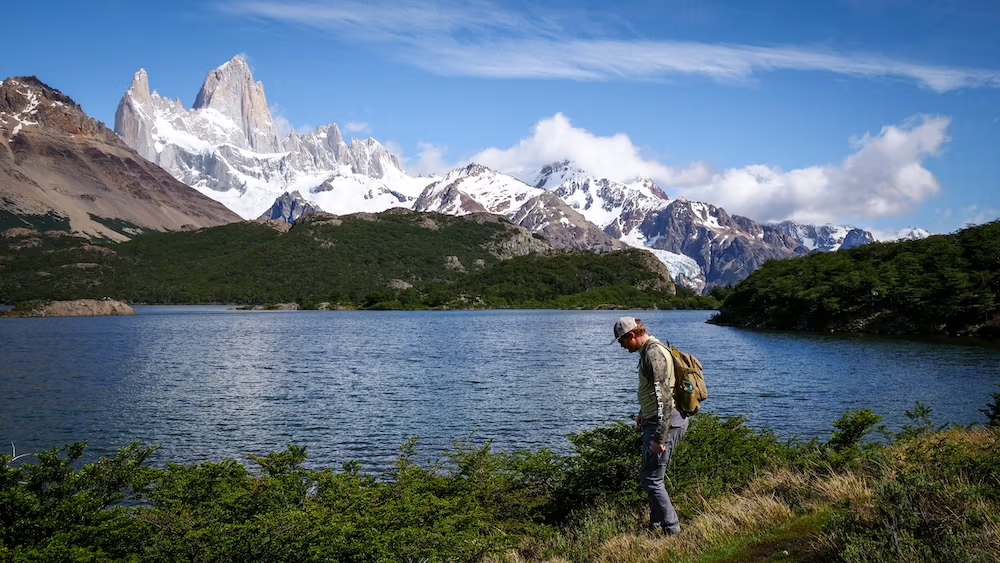
Laguna Capri
Crowd pain points:
- it’s the perfect “big view without full-day commitment”
- so it attracts everyone with normal knees
Crowd-avoidance moves:
- go early or late
- walk past the first obvious lakeside cluster
- if it’s busy, pause somewhere slightly away from the main photo rock
Mirador del Torre (half-day)
Crowd pain points:
- perfect for day-trippers and casual hikers
Crowd-avoidance moves:
- start early, finish early
- or start late and accept the first part will be busy
Chorrillo del Salto
Crowd pain points:
- it’s easy, short, and close to town
Crowd-avoidance moves:
- go early morning or later afternoon
- enjoy it as a quick win, not a pilgrimage
- treat the waterfall as the start of your chill, not the end of your patience
Town miradors (Cóndores / Águilas)
Crowd pain points:
- sunset surge is real
Crowd-avoidance moves:
- go when the town is eating
- or go earlier and trade drama for quiet
The Big List of Crowd-Avoidance Hacks (Pick the Ones That Fit You)
- Put your trophy hike on a weekday
- Start before the breakfast wave
- Choose arrival time for the viewpoint, not just start time
- Bring your own lunch and snacks
- Walk 10 minutes past the obvious lunch spot
- Take photos on the descent
- Don’t linger at the first scenic checkpoint
- Use a recovery day to avoid herd behavior
- Swap Fitz Roy and Torre based on forecast and crowd mood
- Use alternate access points when possible
- Keep a “mirador + waterfall” combo ready for wind days
- Begin hikes when day-trippers are still in transit
- Return when day-trippers are leaving (afternoon thinning)
- Pack the night before so you can start early without chaos
- Fill water before bed; don’t queue in the morning
- If the viewpoint is packed, wait 20–30 minutes; the crowd churns
- Sit slightly away from the main photo rock; the view doesn’t care
- Hike at a consistent pace; bunching happens when everyone stops together
- If you’re going to take a long break, do it somewhere off the main trail flow
- Keep layers handy so you don’t stop and reorganize in the narrowest section
- Use trekking poles if you have them; faster descent = more timing flexibility
- Don’t underestimate wind; “quiet trails” don’t matter if you’re miserable
- Embrace early dinners; sunset miradors are optional, not mandatory
- If your feet are toast, pick an easy win and enjoy it fully
- Remember: your goal is a great day, not winning El Chaltén
Crowd Avoidance Without Being “That Person”
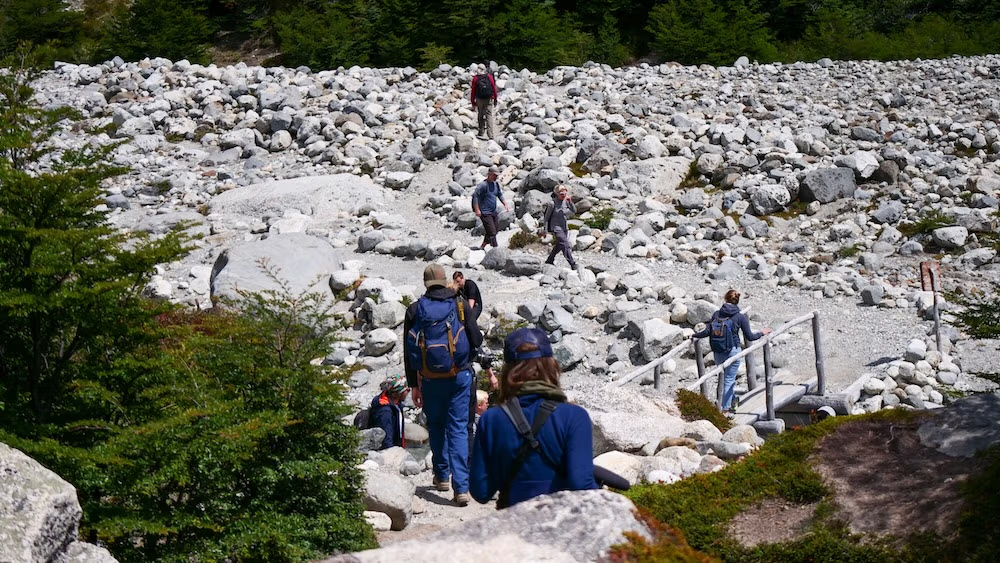
There’s a version of crowd avoidance that is just selfishness with a spreadsheet.
Let’s not do that.
A few etiquette and safety moves keep the trails pleasant:
- Yield on narrow sections and let faster hikers pass
- Keep conversations and music to yourselves (mountains do not need a soundtrack)
- Stay on trail; shortcuts create erosion and make trails worse for everyone
- Pack out trash, including food scraps
- Don’t encourage dogs to follow you onto long hikes
- Plan your day so you’re not descending in panic-light
The Bottom Line: You Don’t Need Empty Trails—You Need Better Timing
El Chaltén is popular because it deserves to be. The goal isn’t to “escape” people like you’re allergic to society. The goal is to build enough flexibility that you get your own moments in the middle of the most iconic landscape on earth.
We found those moments:
- in early starts
- in patient pauses
- on the way down when everyone else was rushing up
- on the “café day” when we chose comfort over stubbornness
- and on the quieter stretches of the classics when the trail opened up and it was just wind, mountains, and that feeling that you’re lucky to have legs at all
Now you’ve got the playbook. Use it. And if you see us on the trail, don’t worry—we’ll be the ones quietly bribing ourselves forward with snacks like it’s our day job.
El Chaltén Crowd-Dodging FAQ: Real Questions Travelers Ask When They’re Trying to Avoid the Human Stampede
What’s the single best way to avoid crowds in El Chaltén?
Start earlier than the main breakfast wave and plan your arrival time at the viewpoint. Even in peak season, being 60–90 minutes ahead of the average start changes everything.
Is sunrise hiking worth it for Laguna de los Tres?
Yes—if you’re prepared. The light is dramatic, the vibe is calmer, and you’ll beat the midday compression at the final section. Bring a real headlamp and layers.
Can we avoid crowds by hiking late instead?
Sometimes. Late afternoon can be quieter as day-trippers head back, but you must budget daylight for the descent and be honest about your pace.
Which classic hike is usually less crowded: Torre or Tres?
Both are popular, but Tres tends to feel more congested because of its trophy status and the final steep pinch point. Torre often has longer stretches where hikers naturally spread out.
Is Laguna Capri a good “less crowded” alternative?
It’s beautiful and shorter, but it’s also a favorite for people who want a big view without a full-day commitment. Your best crowd move is timing it early or late.
How do day trips from El Calafate affect crowds?
They create pulses. Many hikers arrive around the same late-morning window and aim for the same half-day classics. If you’re overnighting in El Chaltén, you can hike outside that window.
Do we need to pay an entrance fee for trails around El Chaltén?
As of current National Parks rules, access fees apply to Zona Norte trail portals and tickets are generally purchased online. Check the official site close to your trip because rules can change. And they do often. So stay up-to-date.
Are there “secret trails” with zero people?
Not zero. But some longer or less default hikes can feel quieter simply because fewer short-stay visitors choose them. The trade-off is more commitment and greater weather sensitivity.
What if the main viewpoint is packed when we arrive?
Take your photos, then wait 20–30 minutes. Crowds churn. People rarely linger long, and your best “quiet moment” might arrive simply because you were more patient than others.
How do we avoid crowds at the miradors near town?
Avoid the sunset surge. Go earlier in the afternoon, or go at an odd hour when most people are eating dinner.
Is it better to hike in bad weather to avoid crowds?
Only if it’s safe and you’re equipped. Wind and visibility can turn “uncrowded” into “unpleasant and risky.” A café day is also a valid strategy. That’s what we did.
What did you wish you knew before doing Laguna de los Tres?
That the last section is a shared experience. It’s steep, it compresses people, and it’s where your timing matters most. Also: snacks are morale.
How many days do we need to “outsmart” the crowds?
You can do it in two days with smart timing, but three to five days gives you real flexibility. More nights means you can pick your trophy day based on forecast, not desperation.
What’s the best crowd strategy for families or slower hikers?
Choose shorter classics early, avoid the midday crush, and treat miradors and waterfalls as main events. The mountains do not require suffering to be legitimate.
Is it rude to pass people on narrow trails?
It’s normal. Be polite, ask to pass, and don’t make it a whole performance. Everyone’s out there trying to have a good day.
Project 23 Argentina: This guide is also available in Spanish. [Lea la versión en castellano: Cómo evitar las multitudes en El Chaltén: horarios, rutas y trucos simples]
Further Reading, Sources & Resources
If you want to double-check the most important logistics (fees, portals, and transport) right before your trip—or you’re the kind of traveler who sleeps better after reading the fine print—these are the most useful official and planning-friendly references.
Park fees and official rules (the “what you’ll actually pay” stuff)
- https://www.argentina.gob.ar/interior/ambiente/parquesnacionales/losglaciares/tarifas
The official source for current entrance fees, categories, and any updates to pricing structure for Parque Nacional Los Glaciares.
Trail info and classic hike planning (times, basics, and what’s “normal”)
- https://elchalten.com/v4/es/laguna-de-los-tres-el-chalten.php
Practical overview of the Laguna de los Tres hike (time estimate, planning notes, and the essentials most people need to sanity-check before committing).
Transport and bus logistics (the “crowd pulse” creator)
- https://elchalten.com/v4/es/transporte-buses-en-el-chalten.php
A helpful reference for bus schedules, timing, and transport options—useful for understanding when day-tripper waves tend to hit town.
Access fees and portals (the “where the funnel starts” explanation)
- https://trekkingelchalten.com/cobro-acceso-senderos-el-chalten/
Clear, traveler-friendly breakdown of how access fees/portals work in practice, with the kind of context that helps you plan smarter.
Notes on accuracy
- Fees and entry rules change (sometimes quickly). Always confirm the latest information on the official Argentina.gob.ar page close to your travel dates.
- Bus schedules vary by season and can shift due to demand, weather, or operator changes—check the transport page again just before your trip.
- When in doubt, assume El Chaltén operates on the principle of: “the mountains are timeless, but logistics are not.”
This is hilarious. Very well done.