
You haven’t truly experienced Patagonia until you abandon your second-story bedroom to sleep on the ground floor, genuinely convinced the “Roaring 40s” wind is about to rip the roof off your A-frame cabin.
When Audrey and I stepped off an 18-hour bus ride into Puerto Madryn, operating in pure, unfiltered “zombie mode,” the romanticized brochure version of Patagonia evaporated instantly. Most travelers picture this region as a single destination featuring jagged granite peaks, glacial ice, and pristine alpine lakes. But the Atlantic side of Patagonia — the coastal route — is an entirely different beast. It is a massive, wildly diverse expanse of flat, arid steppe, salt-whipped air, and raw marine wildlife that is surprisingly easy to misunderstand if it is your first visit.
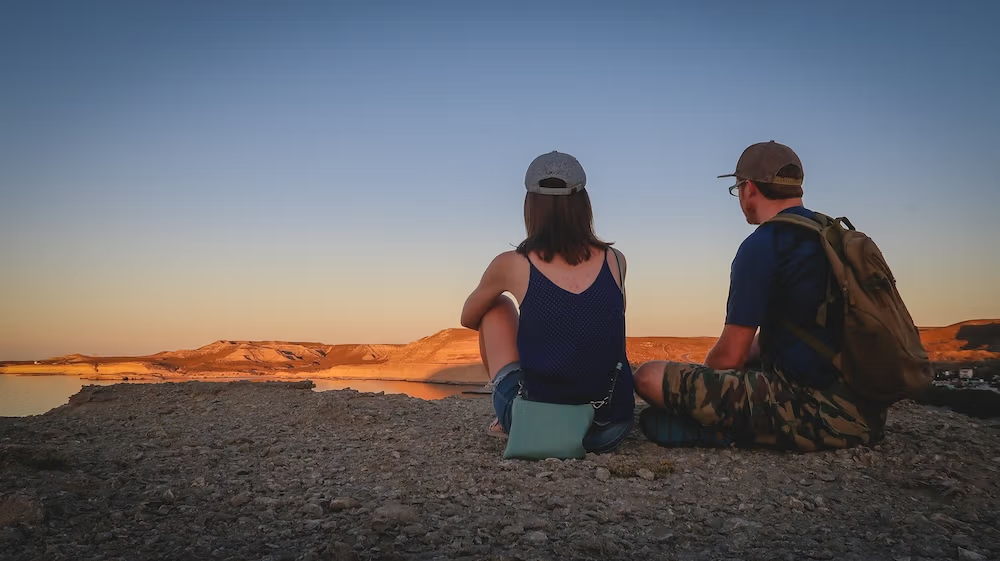
This is the Patagonia where the wind will physically push your rental car across the highway, where the sun is sneaky enough to give you a permanent “farmer’s feet” sunburn through your Teva sandals, and where the distances are so unfathomably vast that an 11-hour drive is considered a short hop. We learned these lessons the hard way so you don’t have to. If you are ready to trade the crowded trails of El Chaltén for an encyclopedic dive into the marine wildlife hubs, Welsh settler towns, and gritty oil cities of Argentina’s Atlantic coast, grab a coffee. You are going to need it.
The Coastal Patagonia Reality Matrix
If you are trying to map out this 2,500-kilometer stretch of Atlantic coastline, throw out the glossy brochures. Here is the un-sugarcoated, ground-level reality of every major stop on the coastal route — including the exact logistical friction you will face and the necessary culinary triage required to survive it.
| Destination | The Raw Reality & Vibe | Hard Logistics & Current Costs | The Friction Factor | Post-Survival Culinary Antidote |
| Las Grutas | Santorini-style architecture with the warmest waters on the coast, but highly susceptible to the off-season “ghost town” effect. | N/A (Northern Gateway) | High (Off-Season): If you arrive outside the December–February peak, expect shuttered doors. | A massive salpicón seafood splash and marinated octopus at Del Azul. |
| Puerto Madryn | The ultimate logistical launchpad. A walkable, slow-paced city with excellent Wi-Fi and giant alien-like calamari in its free museums. | 18-hour bus ride from Mar del Plata (~$64 USD for a cama seat). | Medium: The transit fatigue from the overnight bus will leave you in pure “zombie mode.” | Half-price seafood pizza loaded with giant shrimp at Chona or Puerto Mitre. |
| Península Valdés | The undisputed wildlife crown jewel. 600,000 Magellanic penguins, elephant seals, and guanacos jumping fences. | Park Gate: ARS 30,000 (~$30 USD). Estancia San Lorenzo: $60 USD hidden fee. | High: Remote gate card machines frequently lose Wi-Fi. If you don’t have physical cash, you are turned away. | A massive platter of Cordero Patagónico (lamb roasted on the cross). |
| Puerto Pirámides | A raw, off-grid eco-village right on the sand with spectacular clifftop sunrises. | Free to wander, but requires the Valdés gate fee. | Extreme: Hiking to the lobería means surviving 38.5°C (101°F) heat with zero shade. | The giant Patagonian lamb burger stuffed with sun-dried tomatoes at La Cucaracha. |
| Trelew | The commercial bridge to Welsh Patagonia. Home to massive dinosaur fossils at the MEF museum. | 1-hour local bus from Madryn ($3.25 USD). | Medium: The city essentially shuts down into an eerie ghost town on Sundays. | A historic picada board and a shot of anise at Butch Cassidy’s old hideout, Hotel Touring Club. |
| Gaiman | A bizarre, wonderful pocket of 1865 Welsh settler history tucked into the Chubut River valley. | 45-min local bus from Trelew. Requires an 85-peso reloadable card. | Low: Easy transit, but pace yourself — afternoon tea starts at 2:00 PM, not noon. | The 8-cake endurance event at Ty Te Caerdyd ($14–$15 USD), featuring Torta Negra. |
| Dolavon | The most remote Welsh outpost, famous for its historic 19th-century flour mill and water wheels. | 1-hour local bus further down Route 7. | Extreme: Do not visit on Mondays or Tuesdays. The entire town, including the mill, blacks out. | Eating gas station alfajores and Paso de los Toros soda with friendly street dogs. |
| Comodoro Rivadavia | A gritty, wealthy, highly developed oil town that tourists skip. Excellent internet and top-tier dining. | ~4.5 hours south of Trelew. | High: The wind creates literal mini-tornadoes on the sidewalks that blast dirt into your face. | Hot seafood cazuela and pisco sours at Cayo Coco del Mar. |
| Rada Tilly | A wealthy, immaculate seaside resort town with impossibly wide beaches and bizarre Aegean-style mansions. | 30-min local bus (Line 10) from Comodoro for 55 pesos (~$0.55 USD). | Low: The only friction is accidentally crushing a pristine seashell your spouse just found. | Saffron seafood risotto and a Volcán de Dulce de Leche at IN right on the sand. |
| Punta Tombo | The undisputed penguin capital of the continent. A 3.5km boardwalk through a massive colony. | ARS 18,000 entrance fee. | Medium: Between 11:00 AM and 3:00 PM, cruise ship buses from Madryn flood the reserve. | Arriving right at the 8:00 AM gate open to have the boardwalks entirely to yourself. |
| Bahia Bustamante | A private, highly exclusive eco-lodge operating as a secret seaweed-fishing village. | $2,200+ USD (Multi-day, full-board packages — verify directly, prices change seasonally). | Extreme (Financial): You cannot just “drop by”; advance booking and deep pockets are mandatory. | Multi-course, full-board lodge dining after walking with your own private penguin colony. |
| Cabo Raso | The ultimate escape hatch from Ruta 3 boredom. An abandoned coastal settlement via Provincial Route 1. | Free public gravel road (RP 1 detour). | High: The ripio (washboard gravel) road demands driving under 60 km/h to avoid shattered windshields. | Pure, unadulterated silence and shipwreck views far from the paved highway. |
Surviving the Concrete Ocean: Transit Realities on Ruta 3
The golden rule of coastal Patagonia is to respect the sheer scale of the map. It is 2,500 kilometers from north to south, and the paved artery connecting it all is Ruta 3. This highway is a spectacular but monotonous black line cutting through flat, grey-green scrubland.
If you decide to brave the bus network instead of driving, you are looking at epic overnight hauls. Our journey from Mar del Plata down to Puerto Madryn clocked in at a soul-crushing 18 hours.
[Samuel’s “Cama” Seat Survival Rule]
When you book a long-haul journey in Argentina—especially during the peak summer season—you must pay the premium for a “Cama” (bed) or “Ejecutivo” ticket. Do not try to budget your way into a “Semi-Cama” seat for an 18-hour overnight haul. For roughly $64 USD, the Cama seats recline up to 180 degrees, are incredibly spacious, and are the only thing standing between you and complete physical ruin the next morning. It is essentially a budget hotel room on eighteen wheels.
[Samuel’s Rental Car Reality Check]
If you are renting a car for Ruta 3, your biggest danger isn’t the terrain; it’s the fuel gaps and the wind. The stretch between Trelew and Comodoro Rivadavia is a desolate void. The absolute law of the road here is the “YPF Golden Rule”: if you see an operational gas station, you pull over and fill the tank to the brim, even if you are three-quarters full. Furthermore, when you stop, park facing into the wind. When you open your door, hold it with two hands, because the Patagonian wind will literally yank it out of your grip and hyperextend the hinges.
If you are planning your own road trip, here is what the macro-logistics of the coastline actually look like.
The Macro-Logistics Matrix: Coastal Route Overview
| Destination Hub | Drive Time (from previous) | The Vibe & Core Utility | Effort vs. Reward Ratio |
| Las Grutas | N/A (Start) | Santorini-style architecture, warm waters, high off-season closure risk. | Low Effort / High Reward (in peak summer). |
| Puerto Madryn | ~4 Hours (from Las Grutas) | The ultimate logistical launchpad. Fast Wi-Fi, great seafood, easy tour bookings. | Low Effort / High Reward. |
| Trelew & Gaiman | ~1 Hour (from Madryn) | Welsh history, dinosaur bones, and aggressive sugar comas. | Very Low Effort / High Cultural Reward. |
| Comodoro Rivadavia | ~4.5 Hours (from Trelew) | Industrial grit, mini-tornadoes, and surprisingly phenomenal dining. | Medium Effort / High Culinary Reward. |
Las Grutas: The Northern Warm-Up and the Ghost Town Effect
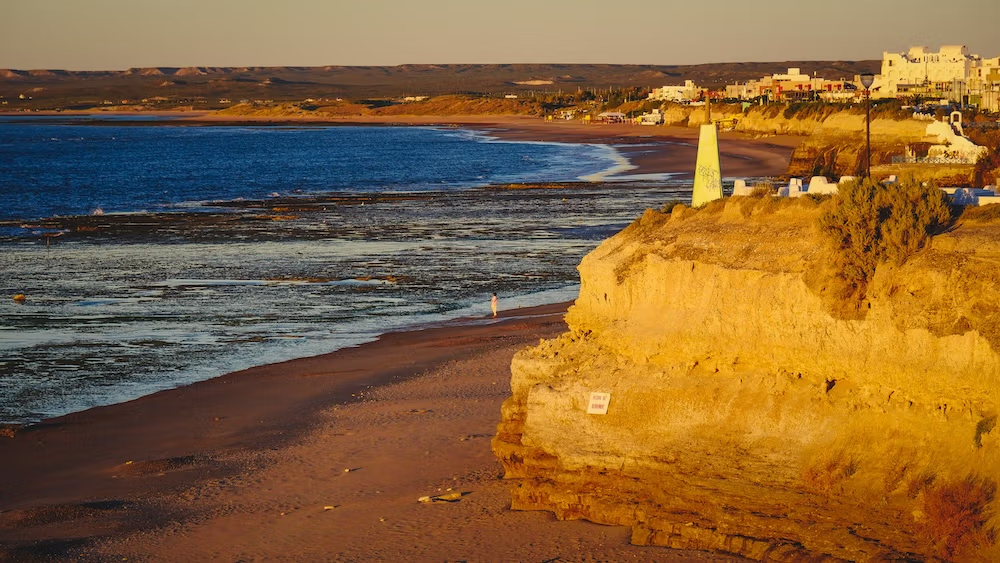
For many, the introduction to the coast begins in the province of Río Negro at Las Grutas. Locals rave about this place because the tides in the San Matías Gulf give it the warmest waters along the Argentine coast. Walking through the town, you might genuinely suffer a double-take; the buildings are painted entirely in white and blue, making it look like a displaced slice of Santorini overlooking the Atlantic Ocean.
However, the reality of traveling Patagonia is that many destinations are ruthlessly seasonal. We arrived right at the end of the tourist season, and the “ghost town effect” was in full swing. Hotels, shops, and tour operators were shuttered. If you arrive outside of the core December-to-February window, expect limited options.
Thankfully, we stumbled into Del Azul, a restaurant run by Chef Leonardo Perazzoli. This is where the Patagonian seafood obsession begins. For our first dinner, we devoured a sampler platter featuring ceviche, salpicón (a citrusy splash of seafood), tender marinated octopus, and a warm, spicy mussel broth called chola. Pair this with a local Patagonian Pinot Noir blend served slightly chilled, and you will quickly realize that Argentina is about far more than just beef and Malbec.
Puerto Madryn & Península Valdés: The Wildlife and Wallet Crisis
Puerto Madryn is the undisputed logistical capital of the coast. After our grueling bus ride, the slow, leisurely pace of this city was exactly what we needed to reset. It is highly walkable, features a sprawling boardwalk, and houses two phenomenal (and free) museums, including the Museo del Hombre y el Mar (Museum of the Man and the Sea), which features an alien-like giant calamari exhibit.
But you don’t come to Madryn just to walk the beach; you come to stage your assault on Península Valdés, a UNESCO World Heritage site and a global hotspot for marine wildlife.
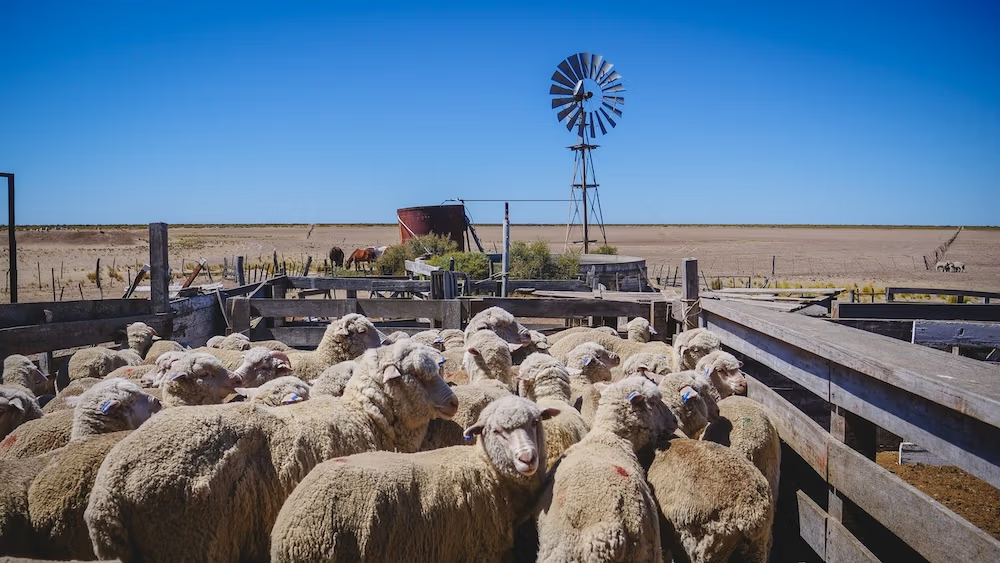
Our excursion started bright and early at 8:00 AM with Argentina Vision. The drive out to the peninsula introduces you to the raw Patagonian steppe. It is dry, arid, and populated by guanacos (wild llamas) casually jumping fences.
[Samuel’s Cash-in-Hand Warning]
To enter Península Valdés, you must stop at the isthmus booth to pay the provincial park entrance fee, which is currently set at ARS 30,000 (roughly $30 USD) for international visitors. Here is the critical friction point: the internet out here is notoriously spotty. We watched tourists panic because the credit card machines were completely down. If you rely on plastic at Patagonian park gates, you will be turned away. Bring crisp, unblemished USD or a thick stack of Argentine Pesos to cover all entrance fees, lunch, and tips.
The Estancia San Lorenzo “Double Fee” Trap
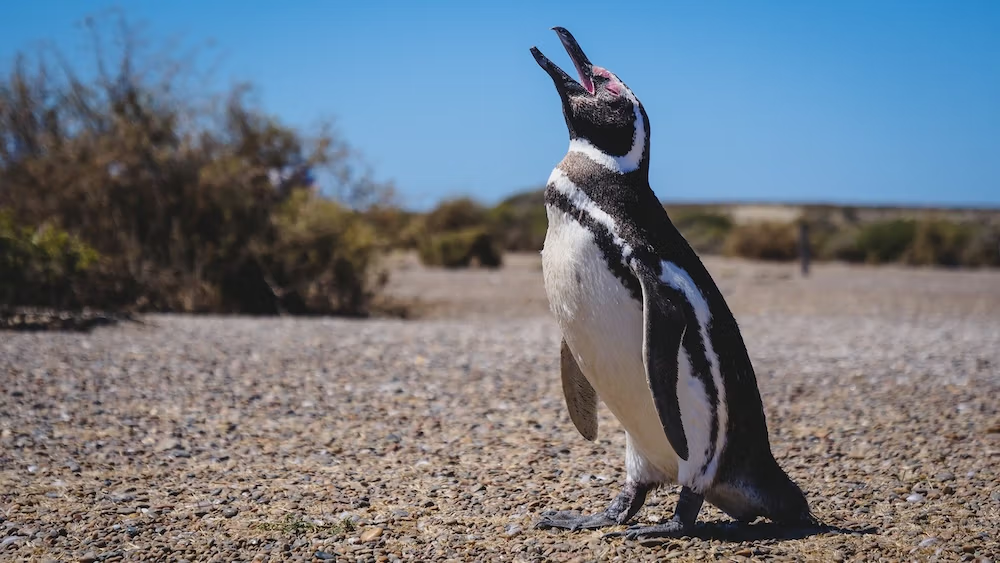
The highlight of northern Valdés is Estancia San Lorenzo, home to a colony of an estimated 600,000 Magellanic penguins during peak season. Walking the trail marked by white stones as thousands of penguins waddle around you, completely unafraid of humans, is a core memory.
But here is the microscopic detail the generic itineraries omit: accessing this specific, private colony requires an additional fee on top of your provincial park entrance ticket. Currently, this runs about $60 USD per person. Many tourists who book a generic “Valdés Full Day Tour” (usually costing around $120 USD) arrive expecting everything to be included, only to be hit with this massive secondary fee. Verify exactly what your tour operator covers before handing over your credit card.
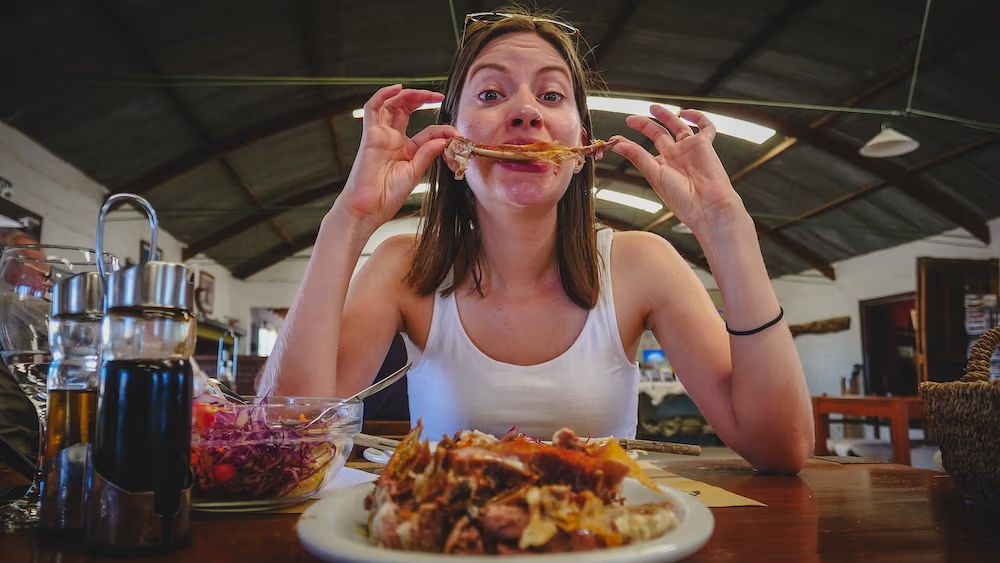
If you are going to pay the premium, you absolutely must sit down at the Estancia’s restaurant for the Cordero Patagónico (Patagonian lamb). Because the sheep graze on the salty, ocean-permeated vegetation of the peninsula, the meat has a naturally seasoned, incredibly unique flavor profile. The meat is fibrous, tender, and served on massive platters right off the cross-style asador.
The Puerto Pirámides Desert March
If you have the time, do not just day-trip the peninsula. Book a night in Puerto Pirámides, the only actual town inside the reserve. We stayed at Oceano Patagonia, an eco-hotel situated literally on the sand. Waking up to hike the nearby cliffs at dawn, watching the first light hit the secret, empty beaches, is the single most beautiful visual payoff of the entire coast.
But by 9:00 AM, the brochure aesthetic ends, and the physical reality of the environment takes over. We decided to walk to the lobería (the sea lion colony), which we were told was a casual 5 to 7-kilometer stroll. What generic guides fail to mention is that there is zero shade. We found ourselves trekking through an arid desert landscape in punishing 38.5°C (101°F) heat. The sun down here is incredibly sneaky; you must pack heavy-duty sunscreen, a hat, and excessive amounts of water. We were so dehydrated and exhausted that we ended up hitching a ride with a kind tourist from the Netherlands, and on the way back, missed the trail entirely and had to awkwardly walk the shoulder of the main highway.
The triage protocol for surviving a day like this? Dragging your sweaty, sunburnt body into a local spot like La Cucaracha and ordering a massive Patagonian lamb burger stuffed with sun-dried tomatoes, or a giant plate of ravioli stuffed with prawns in a mussel cream sauce.
Península Valdés Micro-Logistics Matrix
| Venue / Park Zone | Exact Current Price (2026) | The Highlight & Vibe | Crucial Friction Point |
| Península Valdés Gate | ARS 30,000 (~$30 USD) | Gateway to whales, seals, and dramatic coastal cliffs. | Cash only when the Wi-Fi drops (which is often). |
| Estancia San Lorenzo | ~$60–$80 USD | 600,000 Magellanic penguins + world-class lamb roast. | The hidden “double fee” not covered by basic tour buses. |
| Puerto Pirámides (Town) | Free to wander | Laid-back, off-grid atmosphere, solar-powered eco-lodges. | Afternoon siesta means finding a cold drink at 4 PM is impossible. |
| Zodiac Boat Tours | ~$20–$30 USD | Getting eye-level with sea lions and cormorant colonies. | High wind cancellations are common; book for the morning. |
The Welsh Detour: Sugar Comas and Ghost Towns
Just an hour south of Puerto Madryn, the coastal narrative fractures completely. In 1865, Welsh settlers fleeing poverty and the suppression of their language arrived on these harsh, unfertile shores to build a new life. The result is a bizarre, fascinating pocket of Celtic culture thriving in the middle of the Argentine desert.
We set up base in Trelew, a town that acts as the commercial hub for the surrounding Welsh villages. Trelew is famous for the Museo Paleontológico Egidio Feruglio (MEF), which houses over 30 dinosaur skeletons and massive fossils discovered in the region. It is an incredible facility, but Trelew itself is not a tourist town. On a Sunday, it turns into an eerie, desolate ghost town where finding an open restaurant requires serious investigative skills.
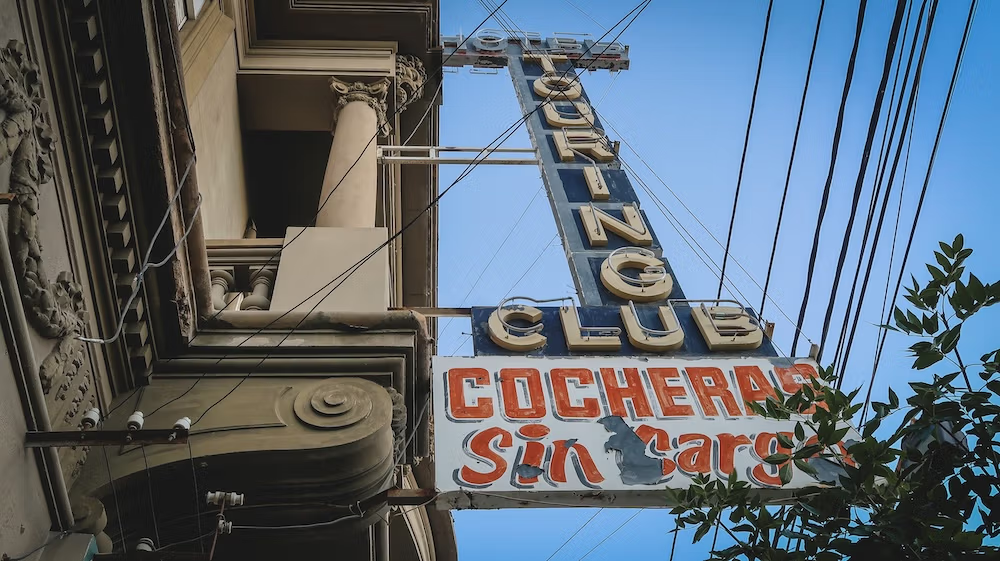
Pro-Tip: If you are stuck in Trelew, head to the historic Hotel Touring Club. This was a popular hangout for Butch Cassidy when he fled the US to hide in Patagonia. The walls are covered in vintage posters and dusty bottles, and you can order a massive picada (a charcuterie board of salami, cheese, olives, and bread) paired with a half-bottle of red wine for an incredibly cheap, atmospheric lunch.
Gaiman: The Eight-Cake Endurance Event
To actually experience the Welsh culture, you must take the local 28 de Julio bus (using the 85-peso reloadable transit card) 45 minutes west into the Chubut River valley to the town of Gaiman. If you want the scenic route through the old farmlands, specifically ask the driver if the bus follows Route 7.
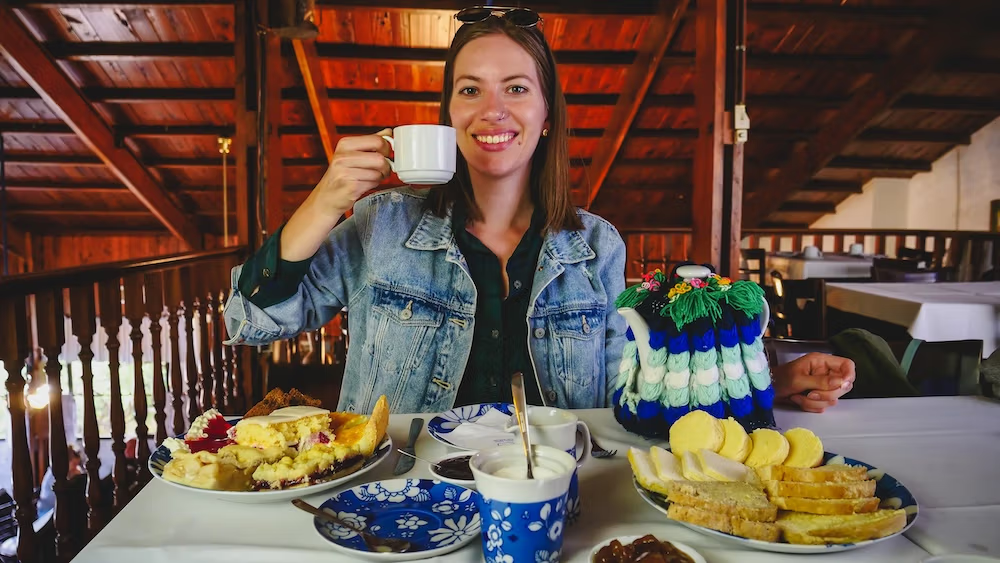
Gaiman is famous for its Casas de Té (Tea Houses), but you need to recalibrate your expectations. This is not a light afternoon snack. It is a gluttonous endurance event. We visited Ty Te Caerdyd, a luxurious, posh tea house surrounded by rose gardens where Princess Diana once famously had tea.
For about $14 to $15 USD per person, the waiters drop a terrifying amount of carbohydrates on your table. It begins with artisanal breads, scones, homemade jams, and sandwiches de miga (crustless ham and cheese sandwiches). Then, the cakes arrive. We were served eight distinct types of cake simultaneously. You must try the Torta Negra (a dense, dark Welsh cake made with brown sugar, raisins, and walnuts), the cream pie (a layer of pie crust, clotted cream, and jam), and the apple pie.
We literally joked about needing a wheelbarrow to roll our sugar-spiked bodies back to the bus stop. Do not eat lunch before coming here.
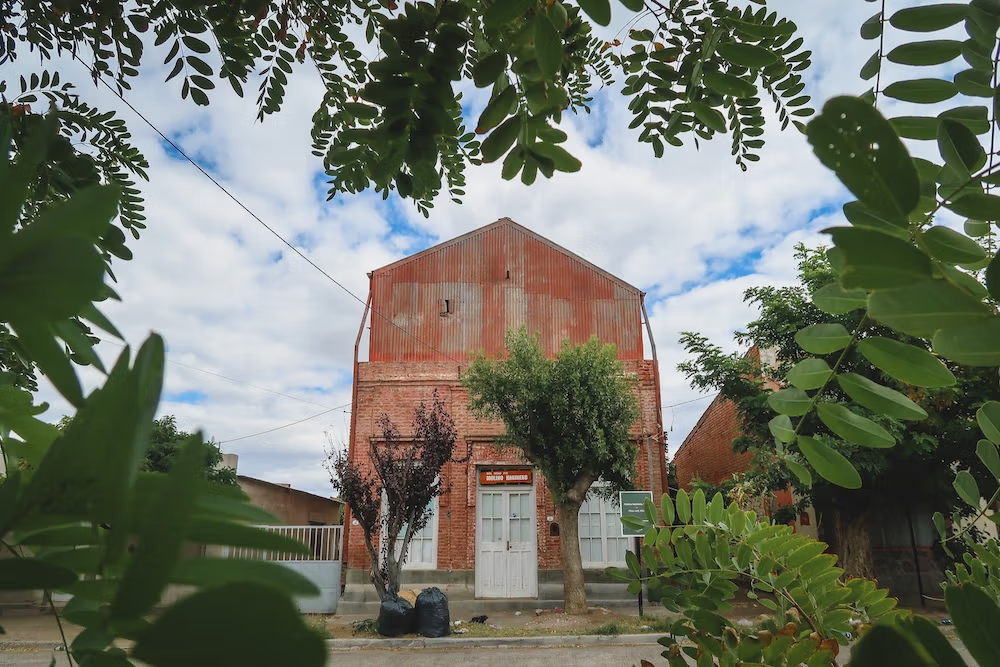
Dolavon: The Monday/Tuesday Blackout
Feeling confident after Gaiman, we pushed further down the valley to Dolavon, the most remote of the Welsh towns, famous for its historic flour mill and water wheels.
Here is a raw reality anchor for your itinerary: do not visit Dolavon on a Monday or a Tuesday. We arrived excited to tour the mill and eat at the local farm-to-table restaurant. We quickly discovered that virtually the entire town takes these two days off. The museums were locked. The cafes were dark. After walking miles of dusty, empty streets, our grand cultural immersion ended with two professional travel creators eating Paso de los Toros (a bitter grapefruit soda) and alfajores at the local gas station, sharing our luxurious banquet with a pack of five friendly street dogs.
If you want to see the Welsh towns functioning, your primary window of attack is strictly Wednesday through Sunday.
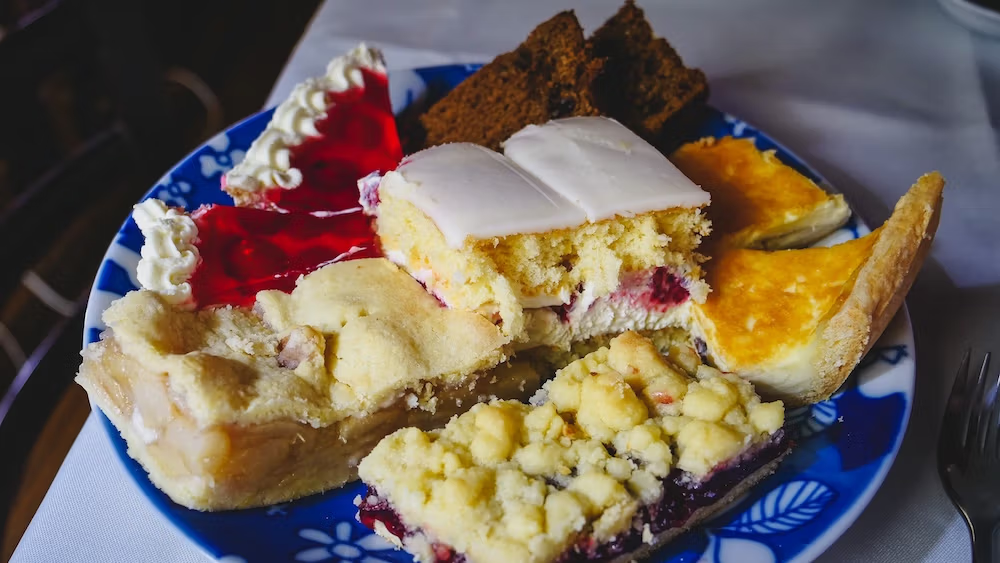
The Welsh Sugar Coma Index
| Welsh Hub | Key Attraction | The Culinary Reality | Effort to Reach (from Trelew) |
| Trelew | MEF Dinosaur Museum | Historic picadas at the Touring Club. | Basecamp (Zero Effort). |
| Gaiman | Ty Te Caerdyd Tea House | 8-cake spreads, bottomless tea, severe sugar crashes. | 45-min local bus (Low Effort). |
| Dolavon | Historic Water Wheels | Excellent fried empanadas at El Rayo (when open). | 1-hour bus (High friction on Mon/Tues). |
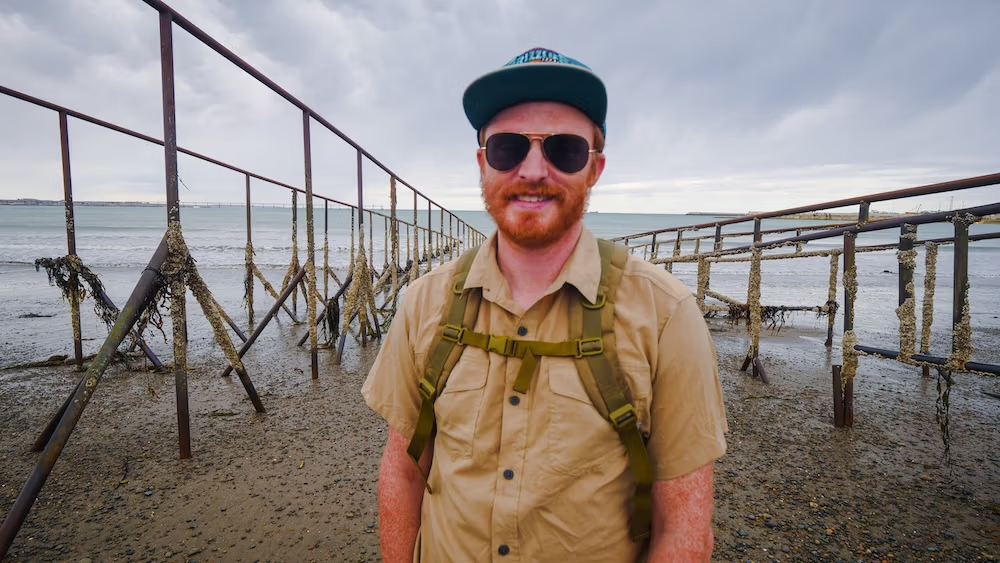
The Southern Grit: Comodoro Rivadavia & Rada Tilly
If you push 400 kilometers further south, you hit Comodoro Rivadavia. Most travelers skip it entirely, writing it off as a gritty, industrial oil town. The city was born in 1907 under circumstances that turned out to be considerably more interesting than the official version. Drilling crews had been sent to find water for the parched settlement — or so the story went. What our museum guide later explained was almost certainly a government cover-up: the crew had drilled over 500 meters into the earth, far deeper than any water search would require, before striking oil. The telegrams between the crew and the Argentine president make for suspicious reading. The “looking for water” story appears to have been a convenient way to keep outside parties from staking claims while the state secured the resource. The origin story of Patagonia’s second-largest city — larger than every Chilean Patagonian city — turns out to be a founding myth.
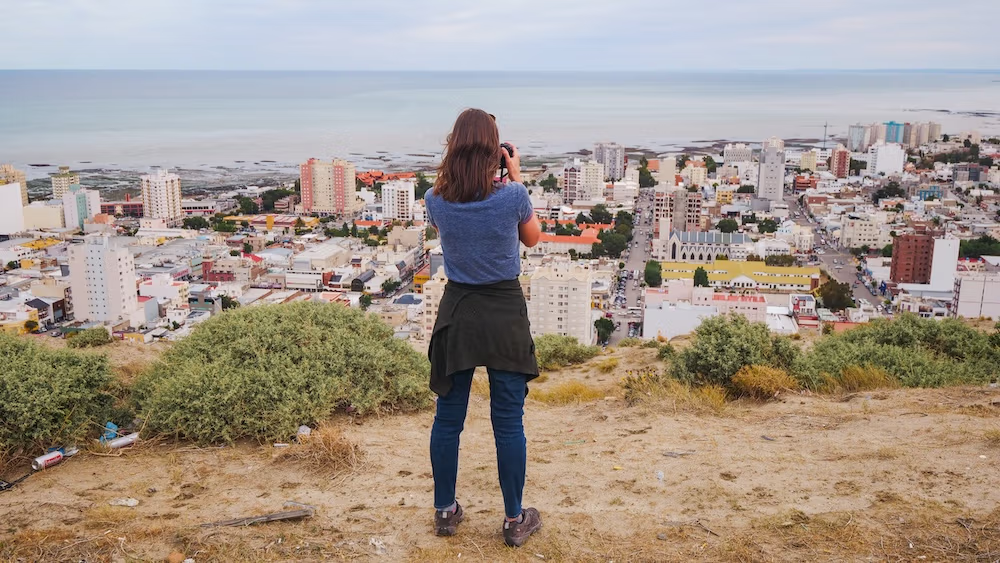
Comodoro is functional, highly developed, and aggressive. The wind here doesn’t just blow; it creates localized “mini-tornadoes” that whip down the sidewalks and blast dirt directly into your retinas. But because tourists skip it, the culinary scene punches far above its weight.
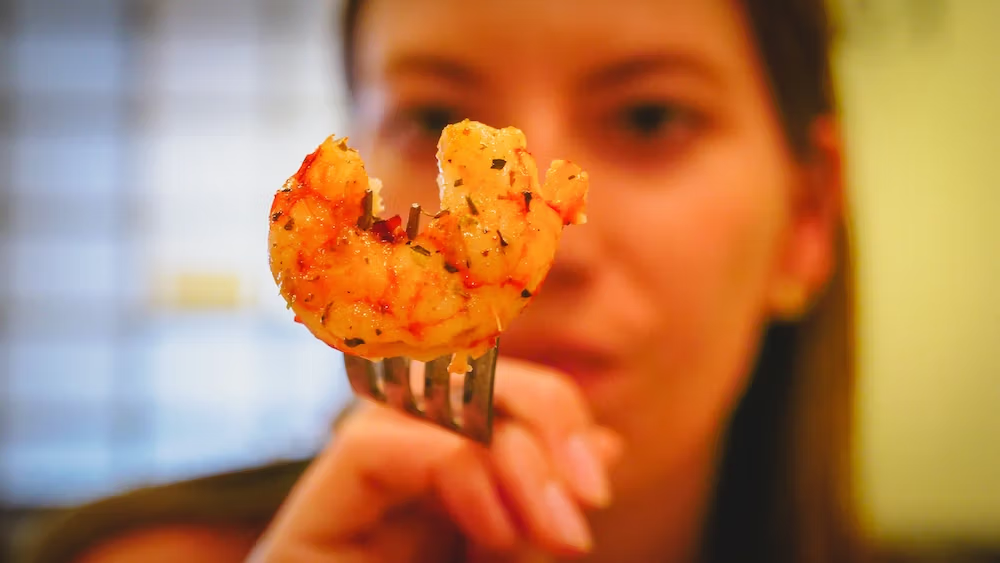
We had arguably the best seafood of our entire Argentine trip here at Cayo Coco del Mar. We ordered massive pisco sours, a piping hot seafood cazuela (stew) loaded with mussels and shrimp, and a staggering hot-and-cold combination platter featuring perfectly fried calamari. The next night, exhausted by the wind, we retreated to a local pizzeria called Puerto Mitre and ordered the regional specialty: a thick, cheesy pizza completely buried under giant Patagonian shrimp and red peppers.
You don’t visit Comodoro for the aesthetics; you visit to eat like absolute royalty before hopping on your next bus.
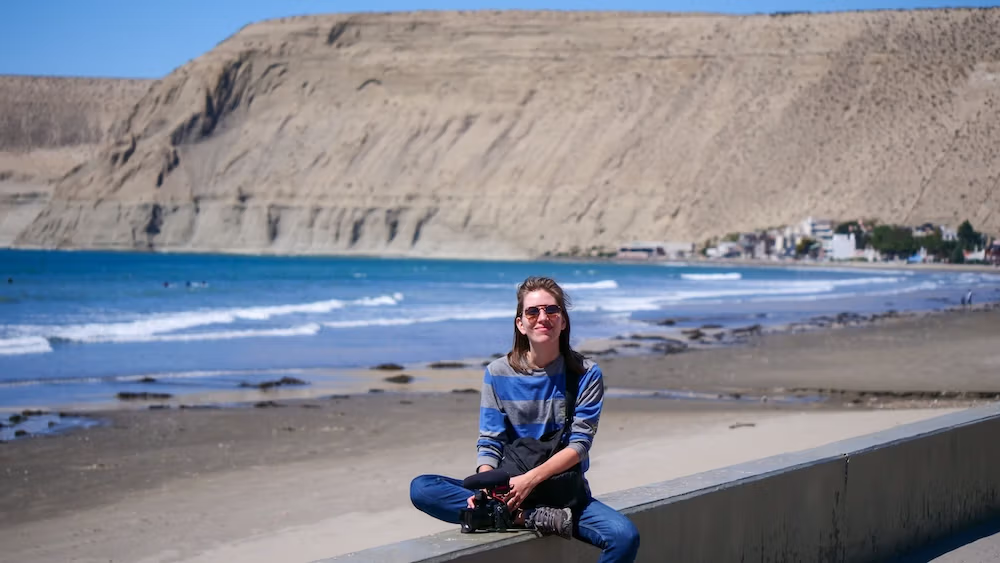
Rada Tilly: The Unexpected Luxury Retreat
Just a 30-minute, 55-peso ride on the Number 10 local bus from Comodoro’s terminal lies the southernmost seaside resort in the country: Rada Tilly. The contrast is whiplash-inducing. Where Comodoro is gritty and vertical, Rada Tilly is flat, wealthy, and immaculate. The waterfront is lined with gorgeous, distinct mansions — including one baffling property featuring blue domes and minarets that looks violently teleported from the Aegean Sea.
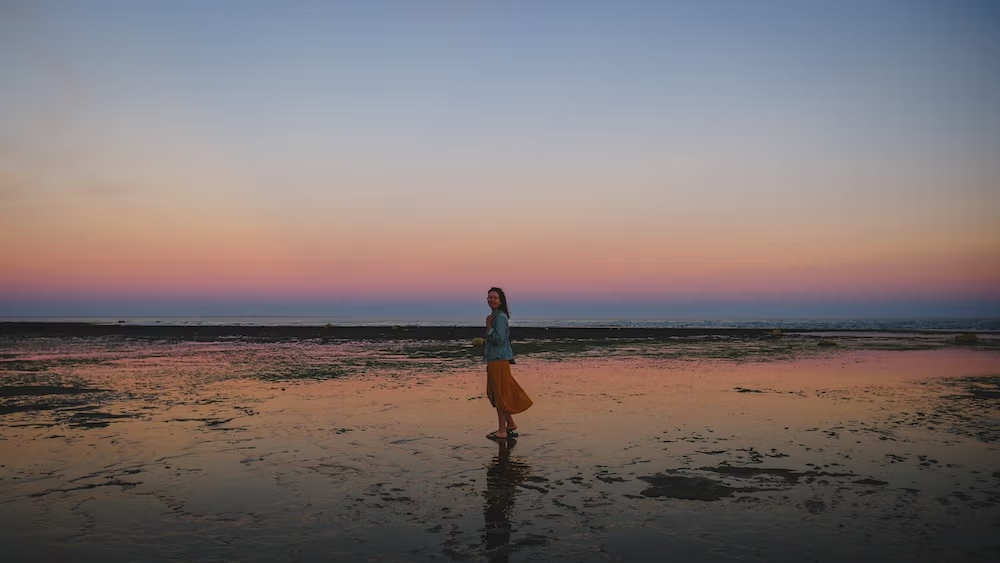
The beach here is impossibly wide at low tide. It was so pristine that Audrey spent the morning beachcombing, proudly locating a flawless, snow-white seashell—the ultimate souvenir until, well, we’ll get to that later.
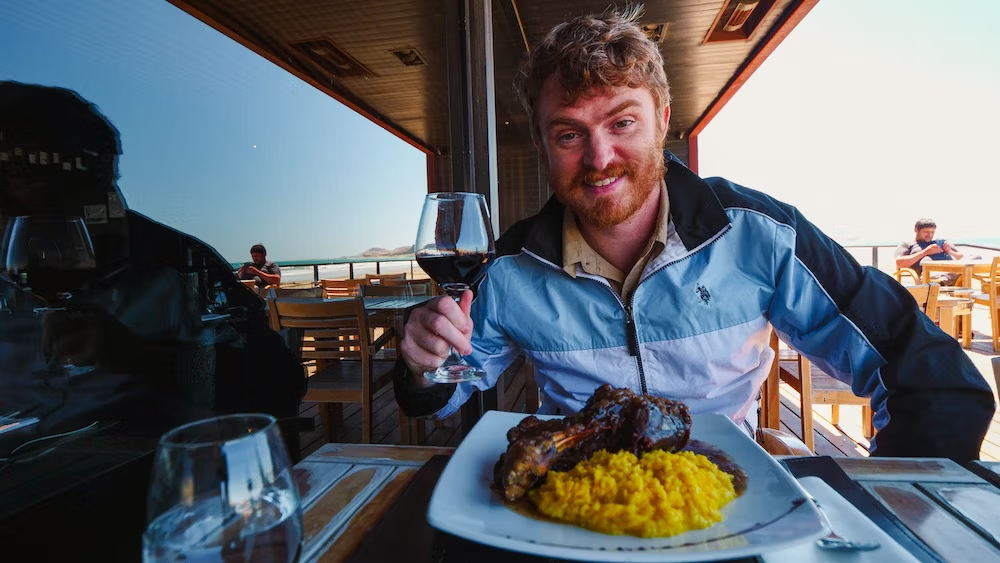
[The Foodie Reality Check: The IN Restaurant Splurge]
Do not leave Rada Tilly without eating at IN, a restaurant situated right on the sand. We came looking for sushi, but pivoted to their hot menu. I ordered the Patagonian lamb served over a creamy saffron risotto. It was the most tender, flavorful lamb I have ever eaten in my life. We finished with a Volcán de Dulce de Leche — a chocolate lava cake that oozes molten Argentine caramel when broken open. At $50 USD total for two massive mains, a full bottle of wine, and dessert, it was a splurge for Argentina, but an absolute steal globally.
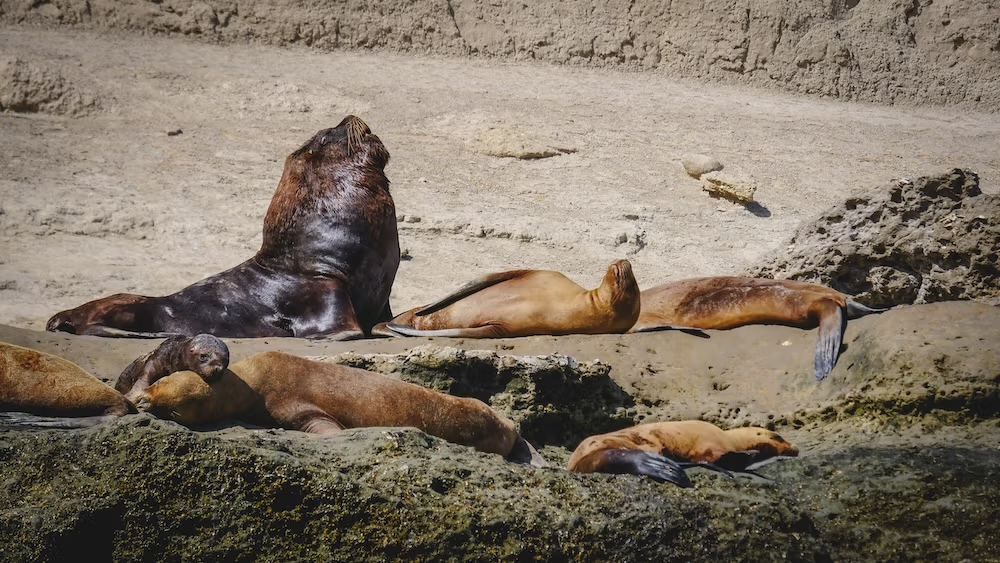
The Patagonian Roulette: Wildlife Calendars and Geographic Traps
Our arrival in Las Grutas at the tail-end of the season was a stark reminder that Patagonia operates on a strict, unapologetic biological clock. Coastal Patagonia is not an all-year theme park where the attractions are permanently bolted to the floor. If you arrive in February expecting to see the bay of Puerto Madryn boiling with Southern Right Whales, you will be staring at an empty, quiet ocean. Timing your coastal road trip is an absolute gamble if you don’t understand the migration schedules.
[Samuel & Audrey’s Geographic Warning]
Before we even talk about when to go, we need to talk about where you are actually going—because one of the most expensive rookie mistakes in all of Patagonia involves two places sharing the exact same name. There is the famous Perito Moreno Glacier, located far south near El Calafate. Then there is the town of Perito Moreno, located in the northern inland steppe of Santa Cruz, where there is no ice, no glacier, and no crampons required. If you book a 15-hour bus to the town expecting to hike a glacier, you will be deeply disappointed. The town is, however, the necessary launchpad for the spectacular Cueva de las Manos. Know exactly which one you are booking before you buy your ticket!
If you successfully navigate the map, you have to sync your driving schedule with the marine wildlife. The undisputed stars of the region are the Southern Right Whales, which use the calm gulfs of Península Valdés as a massive breeding ground. They begin arriving in late May and stick around through mid-December. If you want the absolute peak experience — where mothers are teaching their calves to breach and the weather is actually tolerable for a zodiac boat tour — aim your trip for September or October.
Conversely, if you are chasing the high-octane, National Geographic-level drama of Orcas intentionally stranding themselves on the beach to hunt sea lion pups, you need to completely shift your calendar. To witness this terrifyingly brilliant hunting technique, you must be at Punta Norte on Península Valdés between February and April, and you must arrive strictly during high tide.
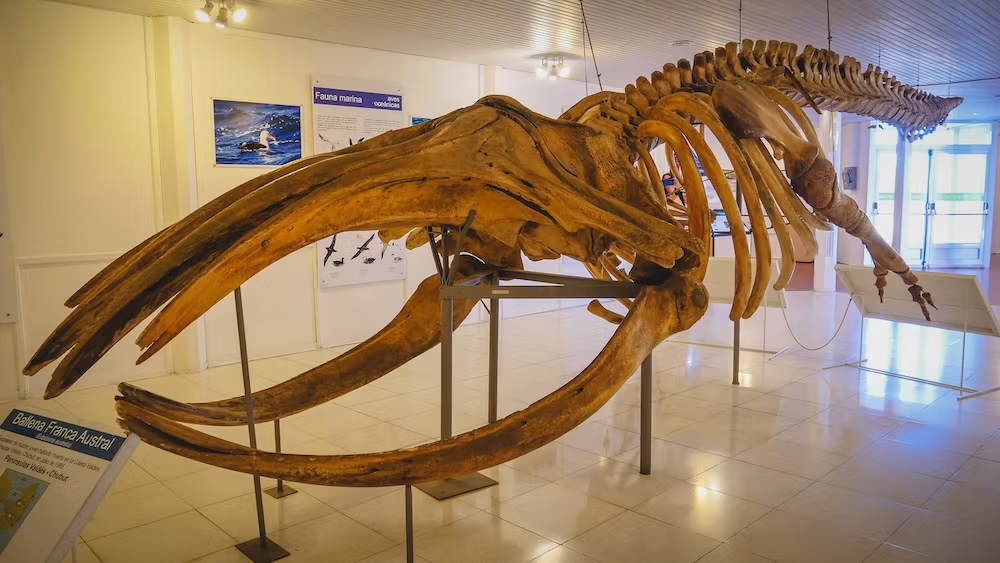
For those pushing further south on Ruta 3 past Comodoro Rivadavia, the landscape shifts from marine life to ancient, sun-baked geology. Right before the province of Santa Cruz truly empties out, you will hit the turnoff for Bosques Petrificados de Jaramillo (Jaramillo Petrified Forest). Do not expect a quick roadside stretch of the legs. It requires a 50-kilometer detour down Provincial Route 49, which is entirely washboard ripio (gravel). But here is the ultimate rarity in heavily-monetized Patagonia: the entrance to this National Park is completely free. After vibrating your rental car to pieces on the gravel, you can walk in total silence among fossilized tree trunks that stretch up to 50 meters long.
To help you avoid arriving to an empty ocean or booking a bus to the wrong side of the province, here is the exact timing you need to hit the region’s biggest milestones.
The Coastal Timing & Detour Matrix
| The Target | The Biological Window | Peak Viewing Logistics | The Friction & Effort |
| Southern Right Whales | Late May to mid-December. | Best boat tours run in Sept/Oct from Puerto Pirámides. | Medium: Winter months (June–August) offer shore viewing, but the coastal wind is freezing. |
| Orca Hunting (Stranding) | February to April. | Must be at Punta Norte exactly at high tide. | High: Highly dependent on tide charts, weather, and pure luck. |
| Magellanic Penguins | September to March. | Punta Tombo or Estancia San Lorenzo. | Low: But avoid the 11:00 AM–3:00 PM cruise ship rush at Punta Tombo. |
| Cueva de las Manos | Spring/Summer (Nov–March). | Gateway is the town of Perito Moreno (not the glacier). | Extreme: Deep inland detour off Ruta 3; confusing names lead to costly booking errors. |
| Bosques Petrificados | Year-round (weather permitting). | 50km gravel detour via RP 49. Free entry. | Medium: Slower driving required to protect your rental car’s windshield. |
What We Missed (But You Shouldn’t): The Alternative Coastal Route
Our itinerary was governed by the public bus network, meaning we had to stick to the major transit hubs. If you are renting a car, you have the tactical advantage of exploring the deepest cuts of the Atlantic coast. Based on our intense logistical research for our YouTube channel and upcoming destination guides, here is the factual data on the spots we couldn’t reach, but that you should actively target.
- Punta Tombo (The Penguin Capital): Located south of Trelew, this is the largest Magellanic penguin colony on the continent, featuring a 3.5km wooden boardwalk. The Reality Check: Admission is roughly ARS 18,000. Do not visit between 11:00 AM and 3:00 PM. This is the exact window when the massive cruise ships docked in Puerto Madryn bus thousands of passengers into the reserve. Arrive right when the gates open at 8:00 AM, or wait until the golden hour light after 3:30 PM to have the boardwalks to yourself.
- Bahia Bustamante (The Exclusive Edge): Billed online as a rugged, secret seaweed-fishing village, the reality is that this is a highly exclusive, privately-owned eco-lodge. You cannot just “drop by” on a road trip. Packages start at over $2,200 USD for multi-day, full-board stays — though prices change seasonally, so verify directly before budgeting. The financial premium buys you private access to penguin islands and petrified forests with zero crowds.
- The Cabo Raso Escape (Provincial Route 1): If the endless, hypnotic pavement of Ruta 3 starts driving you insane, bail out onto Provincial Route 1 (RP 1) near Punta Tombo. It is an 80km, well-graded gravel (ripio) detour that takes you through the abandoned coastal settlement of Cabo Raso. You won’t see another vehicle, but you must respect the gravel: drive under 60 km/h to avoid shattered windshields and overturned vehicles.
The Final Word
The coastal route of Argentina won’t give you the standard Instagram shot of a glacier calving into a turquoise lake. It requires more patience, a higher tolerance for wind-induced exhaustion, and a willingness to eat your body weight in both seafood pizza and Welsh cake.
But if you are willing to survive the 18-hour bus rides, carry a stack of emergency cash for offline park gates, and embrace the sheer, lonely scale of the steppe, you will find a version of Patagonia that feels raw, uncrowded, and deeply authentic.
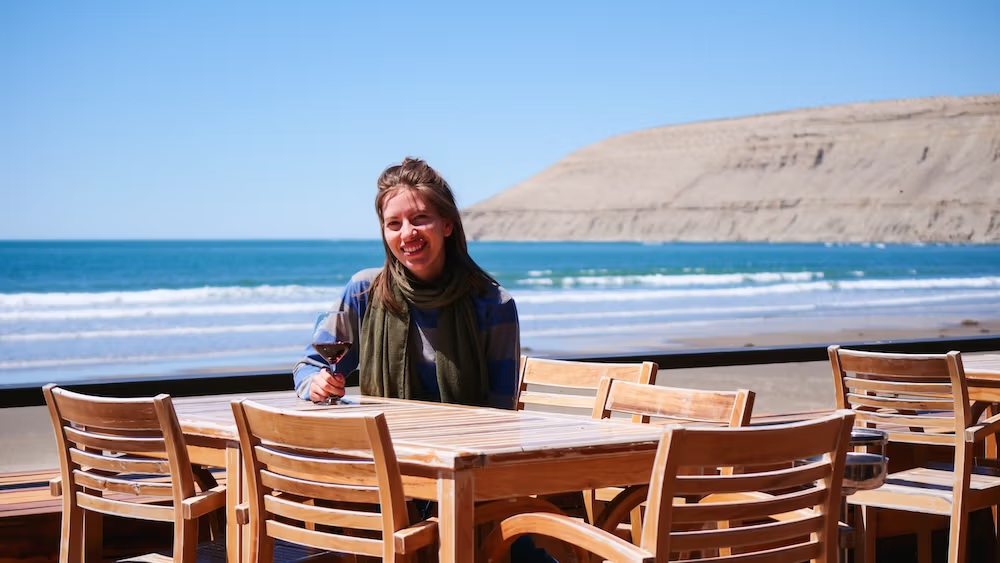
The best moment of our entire coastal trip? Standing in Rada Tilly with a glass of Patagonian wine, watching low tide expose a beach so wide it looked like the ocean had simply decided to leave — then watching Audrey locate that perfect seashell, right before I accidentally stepped on it and shattered it, earning a glare with the intensity of someone who has been wronged by gravity. That is coastal Patagonia. Spectacular and slightly ridiculous in equal measure. For more visual proof of the wind, the food, and the sheer volume of penguins, check out our deep-dive video series on YouTube. Until the next massive plate of Patagonian lamb — stay hungry, keep moving.
Frequently Asked Questions: The Coastal Patagonia Route
Is it worth driving the entire length of Ruta 3?
Depends. If you are a fan of vast, meditative landscapes and have a high tolerance for staring at shrubs for six hours straight, you’ll love it. But let’s be real: it is a long, monotonous grind. Most travelers are better off flying into Puerto Madryn or Trelew, renting a car locally for a few days to hit the wildlife hubs, and then flying further south to Ushuaia to avoid the “Concrete Ocean” fatigue.
Can I see penguins and whales on the same trip?
100%. If you time your visit between September and early December, you hit the “Patagonian Trifecta.” The Southern Right Whales are active in the gulfs, the Magellanic penguins are nesting in massive colonies like Punta Tombo, and the elephant seals are lounging on the beaches. Outside of that window, you’re playing roulette with migration schedules.
Is the water actually warm enough for swimming in Las Grutas?
Surprisingly. It’s the warmest in Argentina thanks to the gulf’s tides, but “warm” is a relative term in Patagonia. It’s not the Caribbean, but it is a hell of a lot more inviting than the fridge-temperature waters further south in Santa Cruz. Just watch out for the tides; the beach literally disappears against the cliffs twice a day.
Do I really need an international driving permit?
Probably not. Most rental agencies in Argentina just want to see your valid home country license and a credit card with a high enough limit to hold the massive deposit. However, if you plan on crossing the border into Chile at any point, having that International Driving Permit (IDP) can save you a massive headache during a random police checkpoint.
Is the Coastal Route safe for solo travelers?
Absolutely. The coastal towns like Puerto Madryn and Rada Tilly are generally much safer and more laid-back than the big hubs like Buenos Aires or Rosario. The biggest “danger” you’ll face is a flat tire in a dead zone or a rogue guanaco jumping in front of your car. Just keep your wits about you in the industrial parts of Comodoro Rivadavia at night.
Can I get by with just English on the coast?
Nope. In the bigger hotels in Puerto Madryn, you’ll find English speakers, but the moment you step into a Welsh tea house in Gaiman or a gas station in Dolavon, you’re going to need some Spanish. Or Welsh, if you’ve got it. Download an offline translation app; it’ll be your best friend when you’re trying to decipher a seafood menu in Comodoro.
Are there any hidden fees at the National Parks?
Always. As we mentioned with the Estancia San Lorenzo “double fee,” private land access within national reserves is common. Beyond that, keep an eye out for “municipal taxes” at some hotels or small “conservation fees” at trailheads. It’s rarely a scam, just the way the local infrastructure is funded. Carry extra cash to be safe.
Should I book my bus tickets in advance?
Definitely. During the peak summer months (January and February), the high-quality “Cama” seats sell out days in advance. Argentines love their long-haul bus travel. If you show up at the terminal hoping for a sleeper seat on the night bus to Comodoro, you might find yourself cramped in a “Semi-Cama” seat next to a snoring stranger for 15 hours.
Project 23 Argentina: This guide is also available in Spanish. [Lea la versión en castellano: La Ruta Costera de la Patagonia — La Región Más Ignorada de Argentina]