
For many travellers the process of getting from point A to B is cumbersome. Maybe I have a few too many loose screws, but for me personally, it’s one of the true joys of travel. I absolutely love being on the road and the physical act of moving from place to place is something I derive immense pleasure from. Over the years I’ve discovered that I have certain fondness for certain modes of transportation over others. The following are my favorite two ways of getting around.
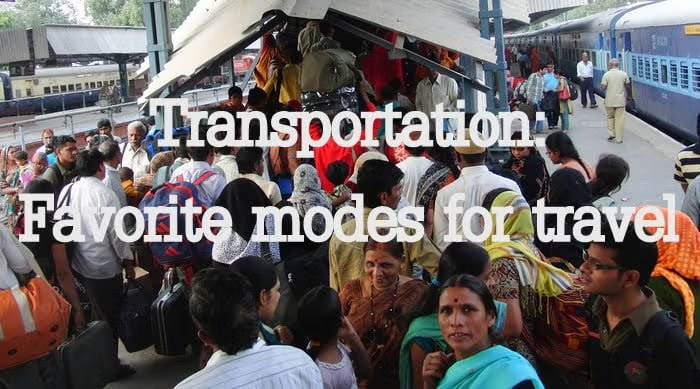
My Favourite Modes Of Transportation
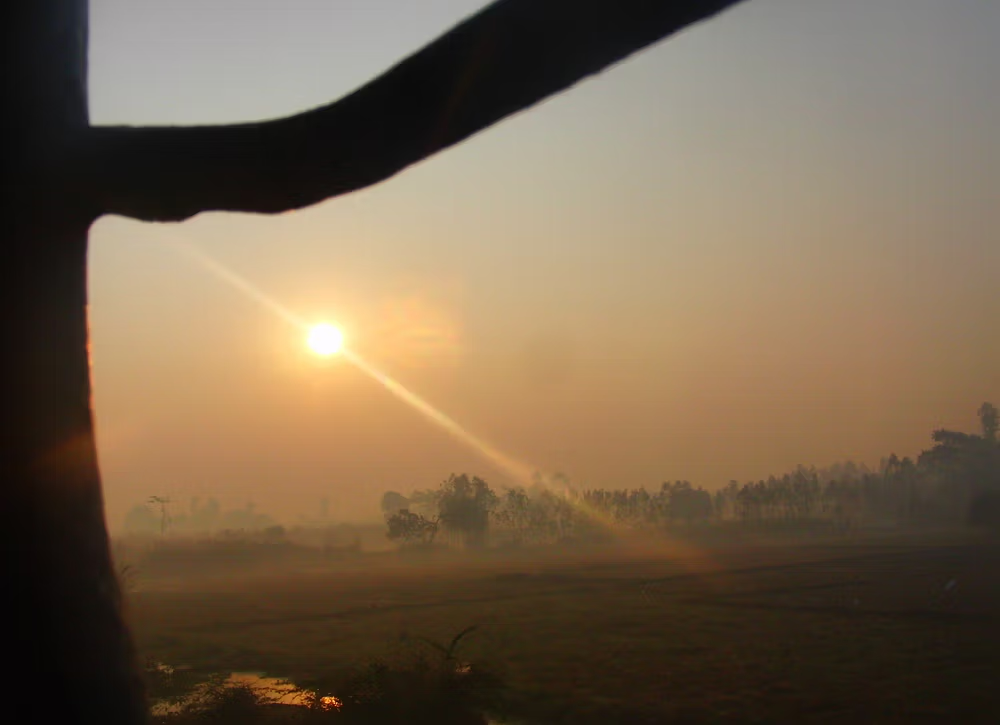
Train
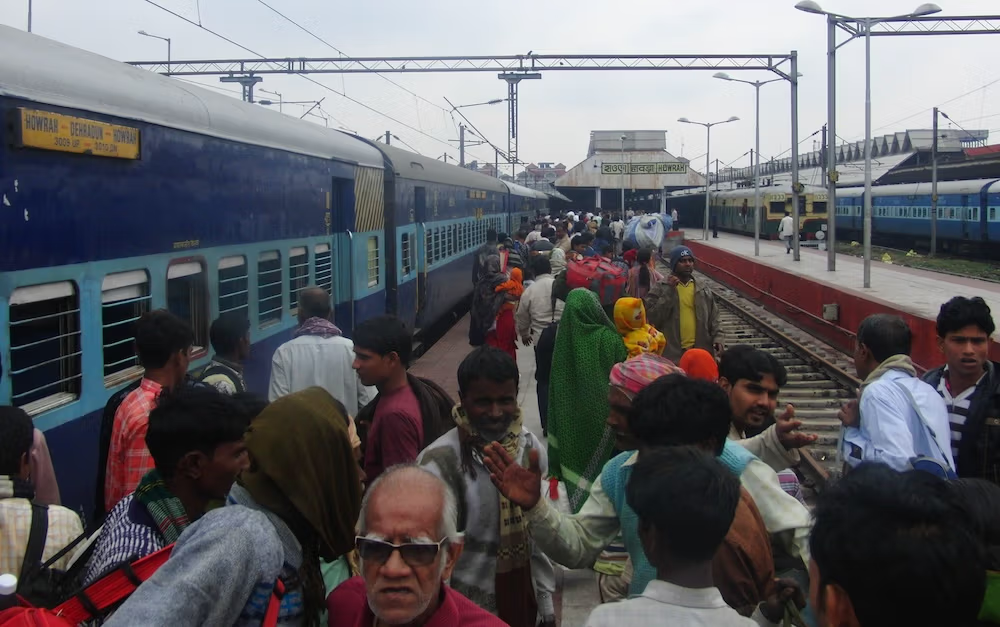
Traveling by train is hands down my favorite mode of transportation. If I only had to pick one way to travel for the rest of my life (excluding everything else) I would immediately without the slightest sense of hesitation choose to travel by train. All of my favorite journeys have been via rail. No train journey has been as monumental as the one I took across India back in 2010. The video below captures some of my favorite clips (including many high speed sequences) from my entire circuit, and to this day, remains one of the most popular youtube videos I’ve ever created:
When I’m travelling by train, my eyes are often glued to what is going on outside of the window. On any given day, I might witness a magnificent sunrise; pass through a slum; get off at a local station to indulge my taste buds; or strike up conversation with a fellow passenger. When I’m not looking out the window I’m often at my creative best – which often manifest itself in the form of the creation of blog posts, video and photo editing or total indulgence in a book I’m reading. I love the constant steady motion of the train and the noise it creates rattling along the tracks. While on board a train, it’s one of the few times I can actually get restful sleep. When traveling by plane I rarely can doze off. While on the train I can sleep through the night without any problems. I just feel that relaxed and comfortable.
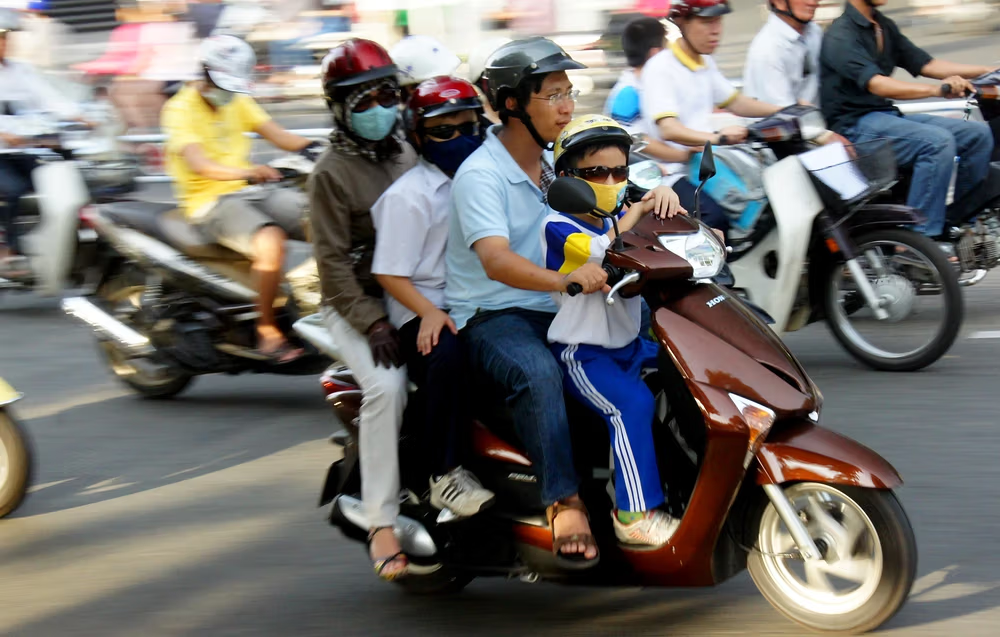
Moped
The freedom to roam around a city or countryside on my own terms is something I constantly crave. Being at the mercy of bus schedules and routes, tuk-tuk and taxi drivers who aren’t always looking out for my best interests or physically walking from place to place can often cause a lot of physical and mental wear and tear over time. Whenever possible I like to hop on a moped and scoot around town with no limitations I find it exciting to weave in and out of traffic and maneuver my way through certain back-roads and alleys that are otherwise off-limits to larger vehicles. One thing I’m extremely cautious about revolves around making sure I have excellent insurance, such as purchasing moped insurance from Swinton to cover all of my little jaunts around town. One of my favorite places to ride a moped is in Saigon where chaos reigns supreme.
Although I often take planes and buses to get around they’re rarely my method of choice. How about you? I’d love to hear your favorite ways of getting around.
Other Modes Of Transportation For Travelers
When it comes to traveling, transportation is an essential factor to consider, and while trains and mopeds may be popular options, there are plenty of other modes of transportation available that can provide an equally enriching and exciting experience.
Tuk-Tuks: A Fun and Local Experience
Tuk-tuks are a popular mode of transport in many countries, especially in Southeast Asia and parts of Africa. These three-wheeled vehicles offer a quick and affordable way to get around, and they add a layer of local charm to your travels. The open-air design allows you to soak in the sights, sounds, and scents of your surroundings as you zip through bustling streets.
- Unique Experience: Riding in a tuk-tuk gives you a closer connection to the local environment, making it an unforgettable part of your travel experience.
Bicycles: Eco-Friendly and Flexible
Biking is a fantastic way to explore both urban and rural areas. Many cities around the world have embraced bike-sharing programs, making it easy for travelers to rent a bicycle and explore at their own pace. Biking is not only eco-friendly but also allows you to access areas that are off the beaten path, providing a unique perspective on your destination.
- Healthy and Sustainable: Cycling is great for your health and the environment. It’s an ideal way to see the sights while reducing your carbon footprint.
Rickshaws: Traditional and Cultural
In some parts of the world, particularly in South Asia, rickshaws offer a slower, more intimate way to travel. Whether pulled by hand or cycle-powered, rickshaws allow you to take in the scenery at a leisurely pace. They are often used for short distances and are a great way to experience the local culture up close.
- Cultural Connection: Riding in a rickshaw is more than just transportation; it’s a cultural experience that offers insight into traditional ways of life.

Boats and Ferries: Scenic and Serene
In regions with abundant waterways, such as Venice, Thailand, or the Maldives, boats and ferries are common modes of transport. These waterborne journeys offer stunning views and a peaceful alternative to road travel. Whether you’re navigating through narrow canals, crossing rivers, or island-hopping, boat rides provide a unique and tranquil way to explore.
- Scenic Journeys: Traveling by boat offers a serene and scenic experience, often giving you access to places unreachable by land.
Cable Cars and Funiculars: Elevated Views
For destinations with challenging terrain, like mountains or cliffs, cable cars and funiculars provide an exciting and efficient way to get around. These modes of transport not only save you from a strenuous hike but also offer breathtaking panoramic views that you wouldn’t get otherwise. Cities like San Francisco, Hong Kong, and Rio de Janeiro are famous for their iconic cable cars and trams.
- Spectacular Views: Riding a cable car or funicular gives you a bird’s-eye view of your surroundings, making the journey itself a memorable experience.
Local Experiences Through Transportation
Transportation is more than just a way to get from one place to another—it’s a gateway to authentic local experiences. Whether it’s a rickshaw ride through the narrow lanes of an old town or a bus journey through the countryside, different modes of transport immerse you in the daily life of the place you’re visiting. Public transport, in particular, offers a window into the local culture, allowing you to observe and participate in the rhythms of everyday life.
- Tuk-Tuks and Rickshaws: These vibrant, three-wheeled vehicles are synonymous with cities across Asia. A tuk-tuk ride isn’t just about reaching your destination; it’s about feeling the pulse of the city. The sights, sounds, and smells of the streets are all around you, and the friendly banter with the driver often leads to unexpected recommendations and stories.
Connecting with Locals: Personal Stories from the Road
Public transport isn’t just about convenience—it’s about connection. Taking a bus, train, or shared taxi can lead to meaningful interactions with locals, offering insights into their lives that you wouldn’t get otherwise. These encounters often result in memorable stories and deeper cultural understanding.
- A Train Ride in India: On a crowded train ride from Jaipur to Delhi, I found myself seated next to a family traveling home after a wedding. They shared their food with me, and we spent hours chatting about everything from Bollywood to cricket. By the end of the journey, I felt like I had made new friends, and they even invited me to visit them in their hometown.
- Biking Through a Dutch Village: Renting a bike in the Netherlands led to one of my favorite travel memories. While cycling through a small village, I stopped to ask an elderly man for directions. He not only guided me but invited me to join him for coffee at his home. We spent the afternoon talking about Dutch history and his experiences during World War II. It was an intimate glimpse into a culture rich with stories.
Why These Experiences Matter
Traveling through local modes of transportation transforms the journey itself into a cultural experience. It’s about slowing down, engaging with the people around you, and seeing the world from a different perspective. These moments of connection and discovery are what make travel truly enriching.
- Immersive Encounters: Whether it’s a brief conversation on a bus or an invitation into someone’s home, these interactions are often the highlight of a trip. They remind us that despite cultural differences, we share common human experiences and emotions.
Turning Getting Around Into Part of the Adventure
If you treat transport as a necessary evil, your trip is always going to feel a bit rushed and slightly annoying around the edges. Missed connections. Overpriced taxis. Hauling luggage up a hill because you got off one stop too early.
But if you start to think of how you move as part of the experience, the whole thing opens up.
A night train turns into a rolling hotel with constantly changing views.
A moped day becomes your excuse to get lost in back roads and tiny villages.
A ferry ride turns into the calmest hour of your day.
The trick is not to pick the “best” mode of transport in some absolute sense, but to choose the right one for the trip you’re actually taking.
Let’s make that concrete.
How to Choose the Right Way to Get Around
Before you book anything, it helps to ask three simple questions:
- How much time do you really have?
- How much are you willing to spend to save that time?
- How tired do you want to be when you arrive?
Different modes of transport answer those questions very differently.
Quick Decision Table: What Fits Your Trip?
| If your priority is… | Best primary mode(s) to consider |
|---|---|
| Saving money | Buses, slower trains, shared taxis |
| Seeing the landscape | Trains, scooters/mopeds, bicycles, boats |
| Minimizing stress | Direct trains, private transfers, simple flight hops |
| Meeting locals | Local buses, 2nd-class trains, shared songthaews |
| Maximum flexibility | Scooter/moped, rental car, bike |
| Speed above all | Direct flights, high-speed trains |
Most trips end up being a mix:
- Long legs by train or bus
- Short hops and exploring by moped, bike, or on foot
- Occasional flight when distance/time makes overland unrealistic
Once you embrace that mix, planning becomes a lot more fun.
Planning Great Train Journeys
I’m still convinced trains are the sweet spot between comfort, romance, and practicality. They’re where you can actually feel the distance under your feet without getting wrecked in the process.
When Trains Really Shine
Trains tend to be at their best when:
- You’re traveling between major cities on the same route
- There’s an overnight option that lets you skip a hotel
- The route is famous for its scenery (mountains, coastlines, rural landscapes)
- You want to work, read, or edit photos on the move
They’re less ideal when:
- You’ve got lots of tiny towns on your route with no stations
- You’re in a country where the rail network is limited or unreliable
- You’re carrying absolutely everything you own in multiple bags and hate stairs
Booking Seats and Sleepers Without Stress
You don’t need to be a train nerd to get decent tickets. A few simple habits help:
- Book key routes in advance if they’re popular (weekends, holidays, famous lines)
- For overnight trains, choose lower berths if you want easier access and slightly more space
- If you’re tall or like to spread out, look for compartments over “open plan” seating when possible
- Don’t overthink classes: often the sweet spot is one notch above the rock-bottom option – still local, but much more comfortable
When in doubt, I like a simple rule:
If it’s under 4 hours, I’ll happily take a seat.
If it’s over 8 hours, I start looking hard at overnight sleeper options.
What to Pack for a Long Train Ride
The difference between a blissful 12-hour journey and a miserable one often comes down to what you threw into your daypack:
- Light layers – air-con can swing from “tropical sauna” to “Arctic blast”
- Earplugs and an eye mask – for snorers, lights, and endless announcements
- Snacks and a backup meal – never assume the food trolley is coming
- Big bottle of water – staying hydrated makes a massive difference in how you feel at arrival
- Power bank – don’t assume functioning outlets in older rolling stock
- Flip-flops or easy-on shoes – for midnight bathroom runs
- Your own toilet paper / tissues – just trust me on this one
If you treat your seat or bunk as a temporary little home and set it up accordingly, you’ll arrive feeling surprisingly human.
Scooters and Mopeds: Freedom With a Helmet On
Scooters are where things get spicy. They’re fun, they’re flexible, and they’re also where a lot of travelers get into trouble.
Used thoughtfully, they’re an incredible tool. Used carelessly, they’re a fast track to a hospital visit and an awkward insurance email.
When Renting a Scooter Actually Makes Sense
A scooter is ideal when:
- Distances are too far to comfortably walk, but too short to constantly use taxis
- You’re in an area with light to moderate traffic, not six lanes of highway madness
- You want to reach waterfalls, lookouts, or villages that public transport barely touches
- You’re willing to take it easy and not treat the road as a video game
It’s less ideal if:
- You’ve never driven any two-wheeled vehicle before and the roads are chaos
- You’re on steep, wet mountain roads and it’s your first week on the bike
- You’re the kind of person who routinely loses sunglasses, phones, and hotel keys – because you’ll probably lose the bike key too
Licenses, Insurance, and Deposits (The Boring Stuff That Saves You)
Before you twist the throttle, it’s worth sorting three things:
1. Licenses
- Many countries officially require a motorcycle endorsement on your license for anything above a small engine.
- Sometimes police don’t care… until you crash or they need an easy fine.
- At minimum, carry:
- Your home license
- An International Driving Permit if your destination uses it
Even if everyone else “just does it,” consider what happens if you’re involved in an accident and the paperwork isn’t in your favour.
2. Insurance
- Travel insurance often excludes scooter accidents if:
- You weren’t licensed for that vehicle type
- You weren’t wearing a helmet
- You were drunk or reckless
- At the rental shop, ask:
- What exactly is covered if the bike gets damaged or stolen
- Whether there’s a deductible
- If they have written terms, not just promises and smiles
3. Deposits
Some places hold your passport as collateral. I avoid that whenever possible.
Safer alternatives:
- Leave a cash deposit
- Leave a photo of your passport and local contact details
- Rent from reputable shops that work on trust + payment, not hostage documents
Staying (Relatively) Safe on the Road
You can’t control everything, but you can stack the odds in your favour:
- Helmet always – ideally your own if you’re staying a while
- Ride sober and during daylight – night + booze + unfamiliar roads is a brutal combo
- Start in quiet areas to get used to the bike before tackling traffic
- Watch local riders – notice how they merge, turn, and signal (or don’t)
- Assume everyone else will do something unpredictable and give yourself space
If you ever feel tense and clamped to the handlebars the whole time, it’s a sign to slow down, take a break, or switch to another mode altogether. Pride is cheap; medical bills are not.
Building a Transport Mix Into Your Trip
Most journeys feel best when you let each mode of transport do what it does best instead of forcing everything through one channel.
Classic Combos That Work Well
- Plane + Train
Fly into a continent or country, then use trains for the internal legs. Great in Europe, Japan, parts of India and China. - Train + Scooter
Use trains for long city-to-city hops, then rent scooters for countryside and day trips. - Bus + Boat
Common in river or island regions where buses get you to the pier and boats handle the rest. - Bike + Public Transport
Perfect in bike-friendly cities with metros or trams – ride further than you’d walk, then hop on a train when your legs revolt.
Example: A One-Week, Transport-Heavy Adventure
Here’s a rough 7-day structure you can apply in different countries (swap in your own cities and towns):
Day 1 – Big City Arrival (Train + Walking)
Arrive in the main city by train or plane. Use your first afternoon to walk, ride a tram or metro, and get a feel for the local transport system without going too far.
Day 2 – City Exploration (Bike + Metro)
Rent a bike or use a bike-share system for parks and neighbourhoods, then switch to metro/buses for longer hops. End the day with a sunset viewpoint accessed by cable car or hill tram, if available.
Day 3 – Scenic Train Ride to Smaller Town
Take a daytime train to a smaller city or mountain town. Grab a window seat, snacks, and treat the journey as your main activity. Evening stroll and early night.
Day 4 – Scooter Day in the Countryside
Rent a scooter for a full day. Chase lakes, villages, small temples or churches, lookouts. Avoid major highways, stick to smaller roads, and find a family-run place for lunch.
Day 5 – Boat or Ferry Day
Head to a river, lake, or coastline and get on the water: ferry, longtail boat, lake cruise. It slows the pace and gives you completely different angles on the landscape.
Day 6 – Another Train or Bus Leg
Move on to your next base by train or bus. If it’s long, consider a night route; if it’s short, travel in the morning and spend the afternoon exploring on foot.
Day 7 – Slow Exit
Final city or town: keep it simple with walking, a couple of last rides on local transport, and a relaxed journey out. No heroics on your last day.
You can run this template through Vietnam, Italy, Japan, the Balkans, or half of Latin America and it works with only minor tweaks.
Budgeting for Getting Around
Transport has a sneaky way of eating your budget if you only focus on hotels and restaurants. The good news is, once you’ve done a couple of trips, you start to see clear patterns.
Rough Relative Costs by Mode
This will vary wildly by country, but as a relative guide:
| Mode | Cost (relative) | Good for | Watch out for |
|---|---|---|---|
| Local buses | Very low | Short hops, budget travelers | Crowds, indirect routes |
| Intercity buses | Low–medium | Longer legs on a budget | Comfort, delays |
| Regular trains | Low–medium | Scenic routes, mid-range comfort | Reservation fees in some countries |
| High-speed trains | Medium–high | Fast city-to-city connections | Need advance booking for best price |
| Scooters/mopeds | Low–medium | Day trips, flexibility | Fuel, insurance, accidents |
| Bike rentals | Low | City exploration, countryside loops | Weather, hills |
| Boats/ferries | Low–high | Islands, rivers, unique access | Weather disruptions |
| Taxis/rideshare | Medium–high | Late nights, early starts, heavy bags | Scams, surge pricing |
| Flights | Medium–very high | Very long distances, time savings | Airport transfers, baggage fees |
Simple Ways to Keep Transport Costs Down
- Travel slower – fewer long transfers, more depth in each place
- Use day passes for metros/trams where they exist
- Group sights by geography to avoid criss-crossing cities
- Share taxis/rideshares with other travelers when public transport stops running
- Be flexible with departure times – early or odd-hour buses and trains are often cheaper
You don’t have to take the absolute cheapest option every time. The aim is balance: save on the legs that don’t matter much to you so you can splurge occasionally on sleeper trains or a scenic ferry.
Common Transport Mistakes (So You Don’t Repeat Them)
Everyone has a transport horror story or two. The idea isn’t to avoid all mishaps forever—you can’t—but to dodge the most predictable traps.
Booking Too Much in Advance
It’s tempting to lock in every bus, train, and boat before you even leave home. The downside:
- You lose flexibility if you fall in love with a place and want more time
- You feel pressured to leave too soon or arrive too early just because a ticket says so
- You can end up paying change fees or eating the cost entirely
A middle path tends to work best:
- Pre-book first and last legs and any famously busy routes
- Leave some space in the middle to be spontaneous
Underestimating Transfer Times
On paper, “train at 10:00, ferry at 11:00, bus at 11:30” looks efficient. In real life, it’s a mess.
Build in:
- Time to find your platform or pier
- The chance that your train/bus is late
- A snack or bathroom stop in between
- A buffer for ticket confusion, language hiccups, or the wrong station
Arriving early is almost never a problem. Arriving 7 minutes late often is.
Ignoring Local Advice
Locals usually know:
- Which road is a nightmare at rush hour
- Which bus station is sketchy after dark
- Which pier is more reliable in rough seas
- Which taxi stand is safe versus a tourist trap
If your guesthouse owner, barista, or taxi driver says, “In the evening, just take a tuk-tuk instead of walking that stretch,” it’s worth listening.
Forgetting About Your Luggage
Your backpack or suitcase also has to make the journey, not just your romantic notion of yourself staring wistfully out a window.
- On crowded buses/trains, keep valuables on your lap or between your feet
- Use a small daypack for the items you need during the journey
- Avoid packing so heavy that walking 15 minutes from a train station feels like a Himalayan expedition
- If you’re planning to take scooters or motorbikes a lot, think about how your bag will strap on or be carried safely
Travel feels lighter when your bag does too.
Travel Transportation Questions Answered: Best Ways To Get Around, Safety, Comfort & Budget Tips
How do I decide which mode of transportation makes the most sense for a trip?
It depends. I usually look at three things: distance, time, and how much energy I want to have left when I arrive. For very long legs where I’d lose days overland, I’ll consider a flight; for mid-range distances between big cities, trains are often the sweet spot; and for short hops plus exploring, I lean into buses, scooters, bikes, or just walking. When you line your options up against your real schedule and stamina (not your fantasy version), the best choice becomes clearer.
Are trains really better than buses for long-distance travel?
Often, yes. Trains usually give you more legroom, smoother motion, windows you actually want to look out of, and the freedom to get up and wander to the café car or corridor. Buses can be great where rail networks are limited or tickets are much cheaper, but for overnight journeys and scenic routes, trains tend to win on comfort, atmosphere, and the feeling that the journey is part of the trip rather than just endurance.
Is it safe to rent a moped or scooter if I’ve never ridden one before?
Not really. I know it’s tempting, especially in places where “everyone” seems to be doing it, but learning to ride in live traffic is a fast way to end up with injuries and a ruined trip. If you’re keen, try to get some basic practice at home first, start on quiet roads, and be brutally honest about your coordination and comfort level. In chaotic cities or on steep mountain roads, it’s usually smarter to choose a different mode of transport than to prove a point on two wheels.
What should I check in my travel insurance before renting a scooter or motorbike?
Absolutely, read the fine print. Many policies only cover motorbike or scooter accidents if you hold the correct license for that engine size, were wearing a helmet, and weren’t under the influence of alcohol or drugs. Some also exclude any damage to the bike itself. Before you rent, look specifically for wording about motorcycles, scooters, “powered two-wheel vehicles,” and license requirements. If it’s vague or restrictive, either upgrade your cover or skip the scooter altogether.
How can I turn transport days into enjoyable parts of the trip instead of wasted time?
The big shift is to treat long rides like slow travel days, not dead space between “real” experiences. I’ll bring a good book or podcast, download offline playlists, keep my camera or phone handy for window shots, and treat station or roadside food stops as mini adventures. On trains in particular, I love using the motion time to journal, edit photos, or sketch out future plans so I arrive feeling like I’ve already done something with the day.
Are overnight trains actually comfortable enough to sleep on?
Yes. As long as you manage your expectations and pick the right class, overnight trains can be surprisingly restful. Proper sleeper compartments with bunks, bedding, and a door almost always beat trying to sleep upright on a bus or in an airport chair. Earplugs, an eye mask, and a light layer make a huge difference, and I always secure my small valuables close to my body so I can relax. You won’t get spa-level sleep, but waking up in a new city without losing a full day is hard to beat.
What’s the smartest way to book transport without overplanning my whole trip?
I like a hybrid approach. I’ll book the high-risk pieces in advance: first and last legs, popular overnight trains, and anything around national holidays or weekends. Then I leave some middle sections open so I can stay longer if I fall in love with a place or move on faster if it doesn’t click. Having anchor reservations plus a few flexible days keeps you from feeling locked into a rigid timetable while still avoiding sold-out routes.
How do you keep your luggage safe on crowded buses and trains?
Vigilance over paranoia. I keep my main backpack or suitcase close whenever possible, and all valuables live in a smaller daypack that stays on my lap or between my feet with a strap looped around my leg. If bags have to go overhead or under the bus, I separate essentials (passport, money, electronics) so they never leave my sight. On overnight journeys, simple tricks like using your bag as a pillow or securing zips with a small carabiner make opportunistic theft a lot less likely.
Is public transport actually a good way to meet locals when I travel?
Yes. Buses, trains, shared taxis, and ferries are where everyday life happens, and people are often curious and open to a bit of conversation. I’ve had invitations to family dinners, tips about hidden viewpoints, and long chats about football, politics, and food just because I was the obvious foreigner on a regular bus. You don’t need to be “on” the whole time, but a smile, a few local words, and a willingness to chat can turn a dull ride into a genuine connection.
What are some red flags that a taxi or tuk-tuk driver might be trying to scam me?
A few patterns show up everywhere. Big warning signs include refusing to use the meter when it’s standard in that city, insisting your hotel is “closed” or “full” and steering you somewhere else, pushing heavily priced “shopping stops,” or quoting a flat fare that feels wildly high compared to what locals pay. I like to ask for an approximate price at my hotel first, agree on a fare (or insist on the meter) before getting in, and walk away politely if something feels off.
Are trains, buses, and boats suitable for travelers with limited mobility?
It depends. In some countries, newer trains and buses have ramps, priority seating, and accessible toilets, while in others you still face big steps, crowded aisles, and rough boarding conditions. If mobility is a concern, it’s worth checking photos of specific services, reading recent traveler reviews, and contacting operators ahead of time when you can. I also recommend building extra buffer time into your schedule so boarding and disembarking never feel rushed or stressful.
How can I keep transport costs under control without always choosing the absolute cheapest option?
The trick is to know where you’re happy to pay for comfort and where you genuinely don’t care. I’m usually willing to spend a bit more on overnight journeys and very long legs so I arrive functional, but I’ll happily take cheaper local buses or metros for short hops around town. Booking some tickets in advance, traveling at off-peak times, and grouping sights by area so you’re not zigzagging also keeps costs down. Think in terms of “value per hour of sanity” rather than price tags alone.
What can I do if I get motion sickness on buses, boats, or winding roads?
Brutally honest: motion sickness can make even the best trip miserable, so it’s worth tackling head-on. I try to sit where movement feels smoothest (over the wings on planes, near the middle on boats, front or over the wheels on buses), keep my eyes on the horizon rather than my phone, and avoid big greasy meals right before travel. Having ginger candies or tablets, hydration, and any medication that works for you in your daypack—not buried in your main bag—can rescue a bad ride quickly.
Is it realistic to use trains and local transport when traveling with kids?
Absolutely. Plenty of families travel happily by train, metro, tram, and bus—it just takes a bit more planning. I’d keep legs shorter, build in snack breaks and playground stops, and aim for services that let kids move around a bit rather than locking everyone into cramped seats. Booking seats together, traveling at kid-friendly times (not past bedtime if you can help it), and treating the journey as an event—games, snacks, window-spotting—turns “getting there” into part of the fun rather than a battle.
What’s your go-to mix of transport for a one- or two-week trip?
For me, a great short trip usually looks like this: one flight or big train to get into the region, then regular trains or intercity buses between major hubs, plus bikes, trams, metros, or scooters (where it’s sensible) for local exploring. I try to sneak in at least one scenic daytime ride or boat trip where the journey is the highlight, and I’m careful not to stack too many long back-to-back travel days. When the mix is right, the way you move becomes one of the best memories of the trip.
What Is Your Favorite Mode Of Transportation?
As we have seen, there are a variety of modes of transportation available to travelers, from the classic options like trains and planes to more unique modes like hot air balloons and camels. Each mode of transportation has its own advantages and disadvantages, and the choice ultimately depends on the destination, budget, and personal preferences of the traveler.
I’m interested in hearing from you. What is your favorite way to get around when traveling? Do you prefer the speed and convenience of flying, the flexibility and adventure of driving, or the local charm of a tuk-tuk or horse-drawn carriage? Let us know in the comments!
I agree. Train is far and away the best mode of travel. You can comfortably sit, stand, eat, pee, sleep. My other favorite mode is on foot- though it takes more planning and is appropriate for shorter distances.
I absolutely love train travel as well. But I have to say that my all-time favorite is hitchhiking. Sure you may end up stuck in a cramped car with a very creepy person, but I’ve met some truly wonderful people this way. And I’ve actually never been on a moped before. I will definitely have to try that sometime soon!
Hitchhiking is the most adventurous and would leave you would the best stories to tell afterwards 🙂
Great post and movie! really kick me back to my train journeys in India… There is nothing like the Indian trains. Some of my best travel experiences are from the trains. I love the fact that the train cabin become a microcosms of India with the smells, sounds, the shouting of the Chai wallas and the oily snacks, animals getting on and the train and off it… but the best thing is the Indians you meet there, I saw it all – Philosophical conversations, transgenders dancing in the cabin, children acrobatic performances, Indian food feasts with a family of 10 and so much more.. Its worth to go to India only for some god 20 hours or so train journey.
Omri Shamir
Most definitely Omri, I feel I could write a book just on my encounters on the trains 🙂
Mine has to be tuk-tuk! I get such a buzz riding on the back of one of those, plus I don’t trust myself driving a moped, otherwise that would be it.
I love taking the tuk-tuk as well. What an adventure!
I love traveling by train. And mopeds are just plain fun.
That’s cool! Did you travel by moped on your epic journey?
Trains are a very convenient way to travel. It is also less expensive than travelling by plane.
That’s a great point!
train is best for travel . I love riding bike in cities
Indeed, indeed 🙂
All fun and games until the moped comes screening off the road and you gracefully shit yourself than have to stitch up your own knee cause you can’t trust the third world medic who’s cleaning the needle with a flame…. true story.
Yikes, I’ve heard this story too many times. It is a bit risky being on one. It’s not so much you, as the driver, but others on the road that drive like maniacs.
I have to agree with you regarding trains. I also love riding bikes through cities. Whenever I am riding through a city, I am right in the action of it all, and I almost feel like a local.
Totally agree with you John. I just rode around Malacca on bike and it was fantastic!
I agree entirely Samuel! I love overland travel, and would much rather spend time on a train or Moped and see my surroundings than fly over it all the time.
Like Victoria said in one of the other comments: travel for me is about the journey as much as the destination!
John
Great way to put it John – the journey is what keeps me going 🙂
I agree, but I love buses! I love being able to chat to the driver at every ciggie break and the mysterious goods you can buy out of the window whenever the bus approaches a town!
That’s cool Becci, I have to admit taking buses is my least favorite method 🙂
Trains are definitely the fastest and easiest way to travel especially here in India!!
And the most fun! 🙂
Ditto! By far, my two resounding favourite modes of transportation are the train and the moped. I’ve done some pretty crazy train stunts (including the inaugural Ultimate Train Challenge in 2011).
And scooters/mopeds: love ’em. I used to ride motorcycles in one of my “former lives” (pre-travel), and until recently – I owned a scooter in Grenada.
http://www.theprofessionalhobo.com/2013/01/unique-transportation-ode-to-the-scooter/
Ironically a month ago, however, I was hit head-on by a car while riding the scooter, and my life changed. So to anybody looking at renting or buying a two-wheeled beast: enjoy….and be careful! 🙂
I really hope you and your partner recover soon Nora 🙂
man mopeds scare the shit out of me – hated the one day I did in Thailand on them!
Personally I like boats, slow boats, long tails or ferries. Nothing better than relaxing on deck in the sun whilst travelling through the jungle or to a tropical island 🙂
Boats are the perfect mode to chillax!
Yes, I totally agree – I love the journey just as much as the destination. People often think about the time it takes to get somewhere as a deterrence, but I think of it as part of the fun of travel! I think my 2 favorite forms of transportation are definitely train and the second is harder to choose, but I’d say tuk tuk!
I’ve seen you post that train clip before but never watched it. Wow dude, it’s amazing! I was transfixed. Gives you a real insight into life in India. I hope to get around on a moped when I travel, but Im definitely learning in England first before I take to the crazy roads of Asia!
Thanks Kate!
Taking the train in India was my highlight of my entire Asia trip back in 2011 🙂
Hey Sam,
Couldn’t agree more with your 2 choices of getting around! Train journeys are so comfortable. I love being able to walk around and stretch out my legs while meeting local people, it’s fantastic. Moped gives you so much freedom to go wherever, whenever, we always rent scooters/motorbikes and always love it!
Check out the many modes of transportation we’ve taken over the years…the good, the bad, and the very uncomfortable! http://goatsontheroad.com/modes-of-transportation-the-good-the-bad-the-very-uncomfortable/
Cheers!
Dariece
Woah, you guys have done it all!
You’re not alone! We love the act of traveling as much as the destination. Heck, sometimes the trip is actually BETTER than the destination. While we do love a good train ride, for us, the ultimate mode of transport is the car.
I completely agree with you Ken! I haven’t traveled much by car. I can’t afford one yet 😉
Funny enough, we have only been on very short train rides. The US is terrible when it domes to passenger rail. I’ll make a deal wi you. If you are ever in my neck of the woods I’ll take you in all the driving trips you want, and if I’m ever near you we can take a train trip somewhere 🙂